Programming is evolving fast, and staying ahead means knowing which languages are gaining traction. Using the latest TIOBE Index, we analyzed the 10 most popular programming languages of 2026 based on real-world usage and developer demand. From Python’s dominance in AI to C++’s rising popularity, this list helps you stay competitive in a fast-changing industry.
Whether you're a beginner choosing your first language or a pro keeping up with trends, this ranking offers valuable insights. Let’s dive in and explore what’s shaping the future of programming!
Want to compare different languages and frameworks? Explore Skill vs Skill!
How We Selected These Programming Languages
We used the TIOBE Programming Community Index to choose programming languages. This index ranks languages based on how often they appear in online searches. It measures how often people search for a programming language using the phrase "<language> programming" on major search engines. This method helps identify languages that are widely used and discussed.
TIOBE collects data from 25 search engines, including Google, Bing, and Wikipedia. A language qualifies for the index if:
- It has a dedicated Wikipedia page stating it is a programming language.
- It is Turing complete (able to perform general computations).
- It receives at least 5,000 search results on Google.
The ranking of these popular programming languages is calculated by:
- Counting how many times each language appears in search results.
- Filtering out false positives using confidence factors.
- Normalizing the data so that all language scores add up to 100%.
Key Takeaways
1. Python is still the most popular language
- Python remains the undisputed leader, with a massive +8.72% increase in ratings. This suggests that:
- It continues to be the go-to language for AI, data science, automation, and web development.
- Its simplicity and vast ecosystem make it appealing to both beginners and professionals.
- The rise of AI tools and frameworks (e.g., TensorFlow, PyTorch) likely contributes to its growing dominance.
2. C++ is gaining traction, while C is declining
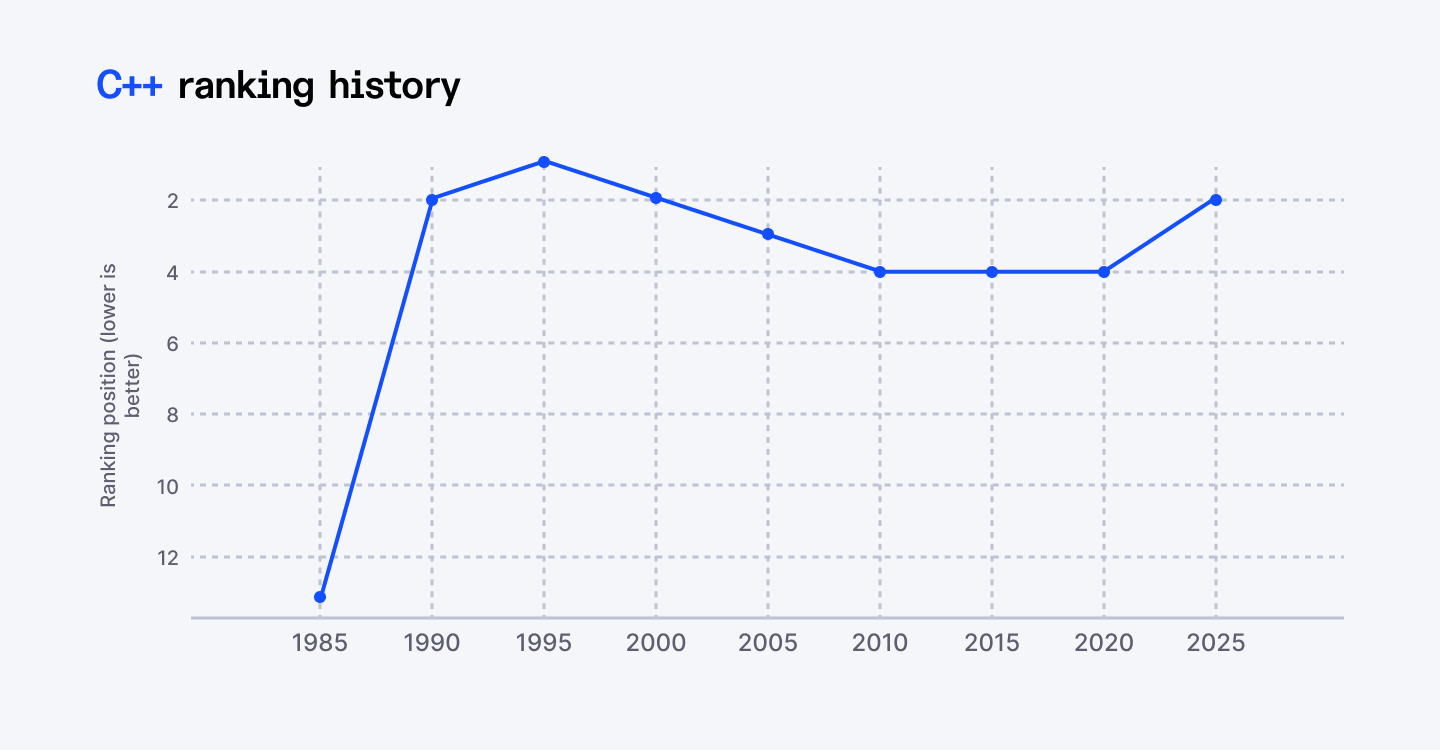
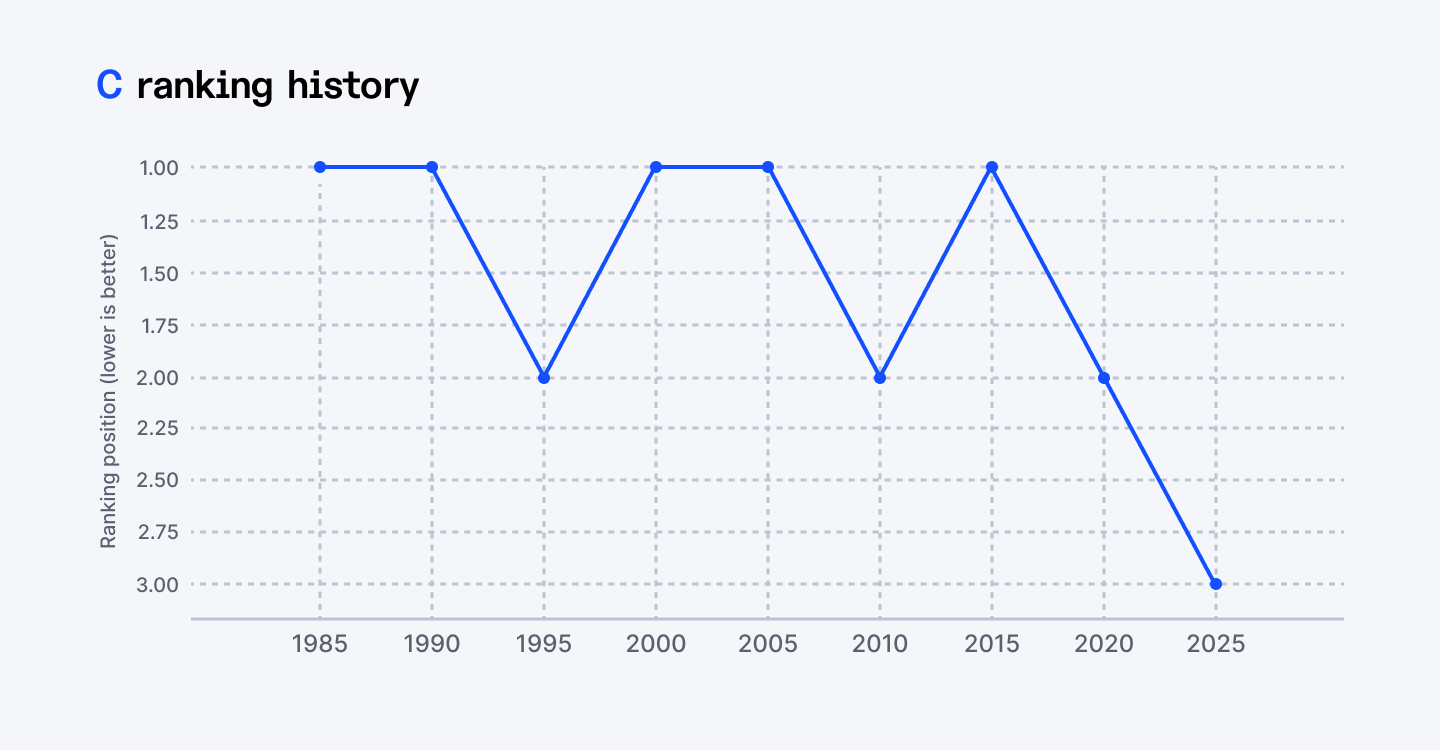
- C++ moved up to #2, overtaking C, with a slight +0.84% gain.
- C dropped to #4, with a decline of -1.14%.
- This suggests that while both languages remain important for systems programming, game development, and performance-critical applications, developers may prefer C++ due to modern features and better abstractions.
3. Java is holding strong despite newer competition
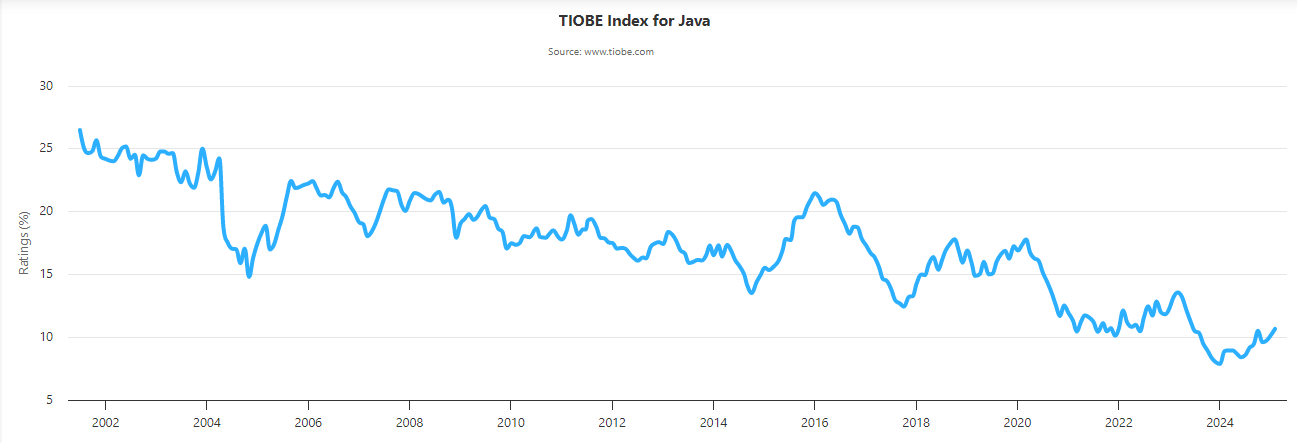
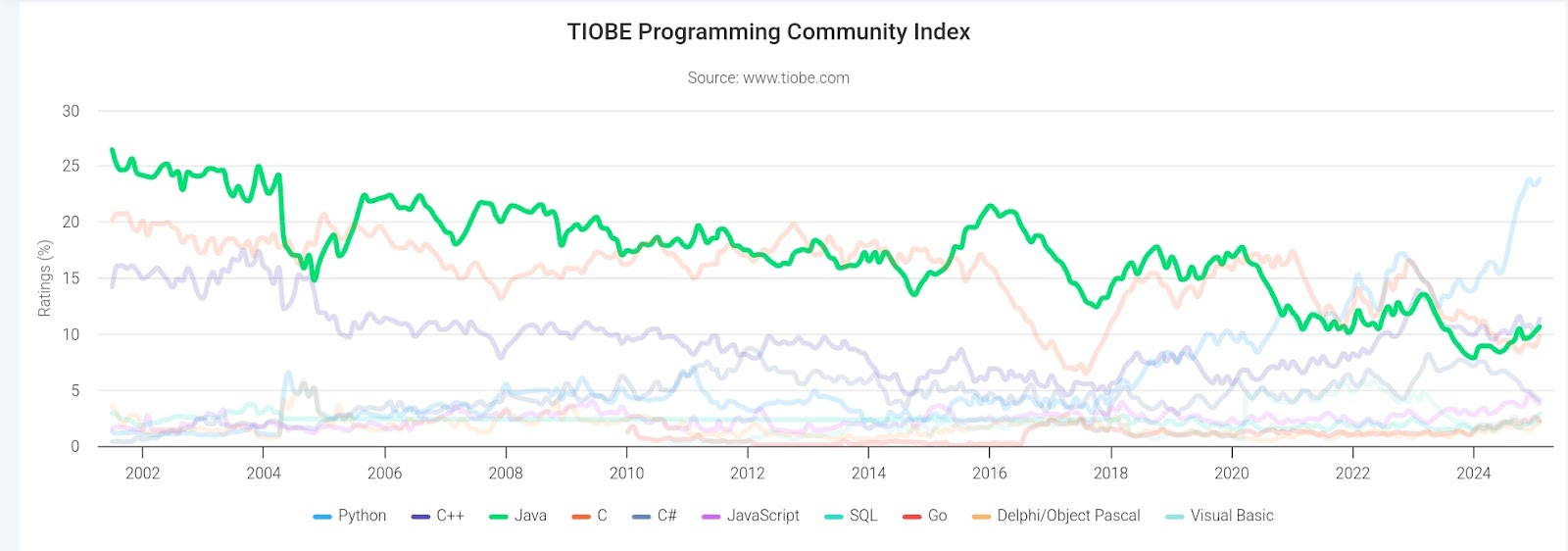
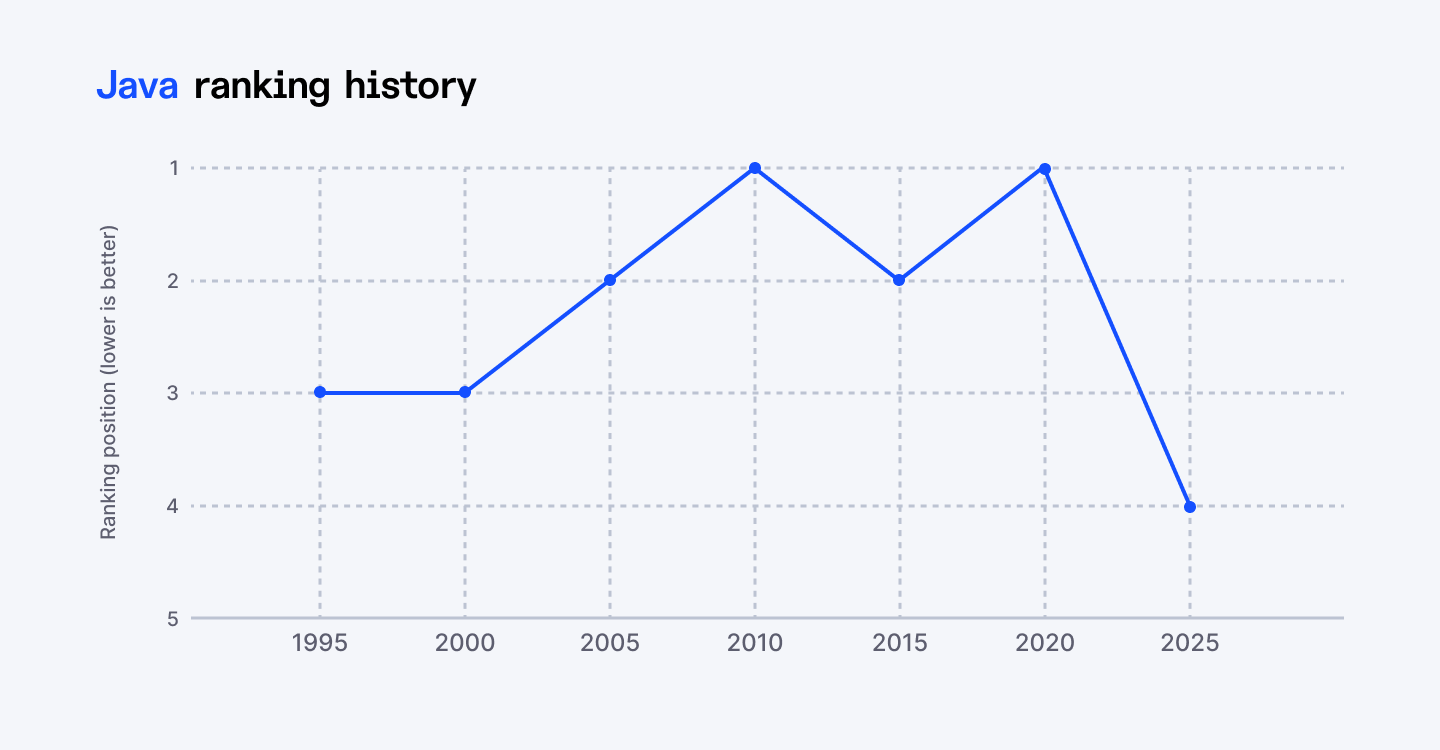
- Java moved from #4 to #3, with a +1.79% boost.
- Despite competition from newer languages like Kotlin and Go, Java remains widely used in enterprise software, Android development, and backend systems.
4. C# is Struggling
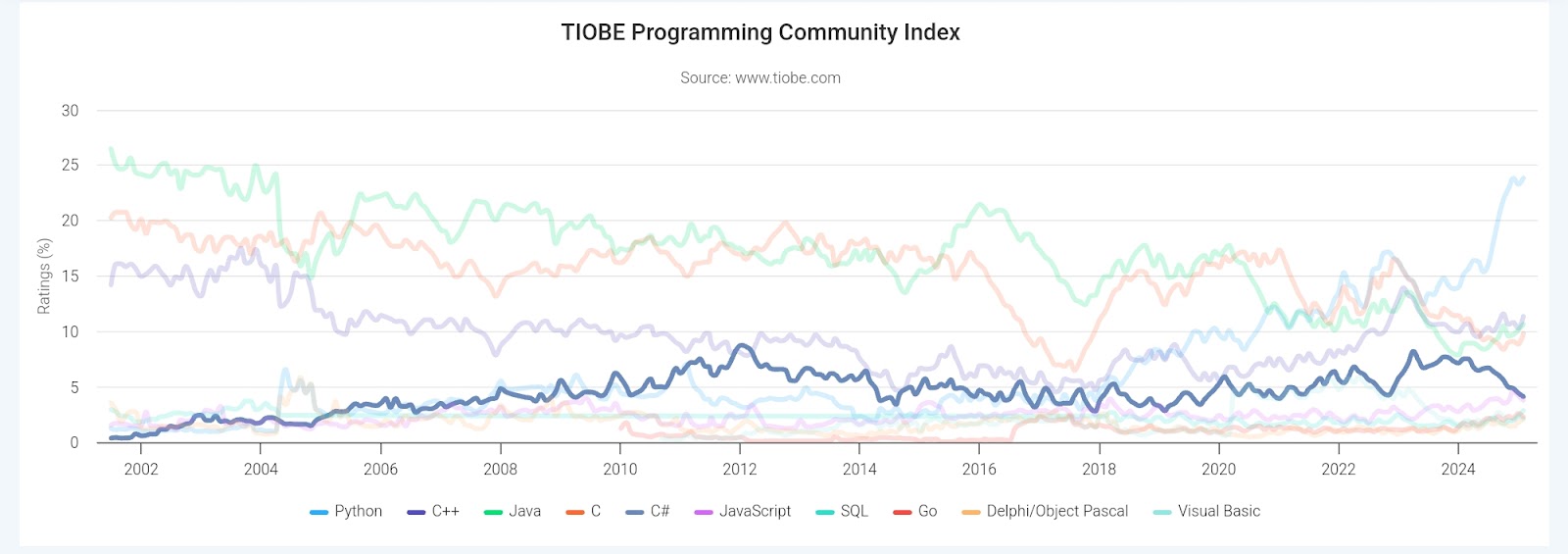
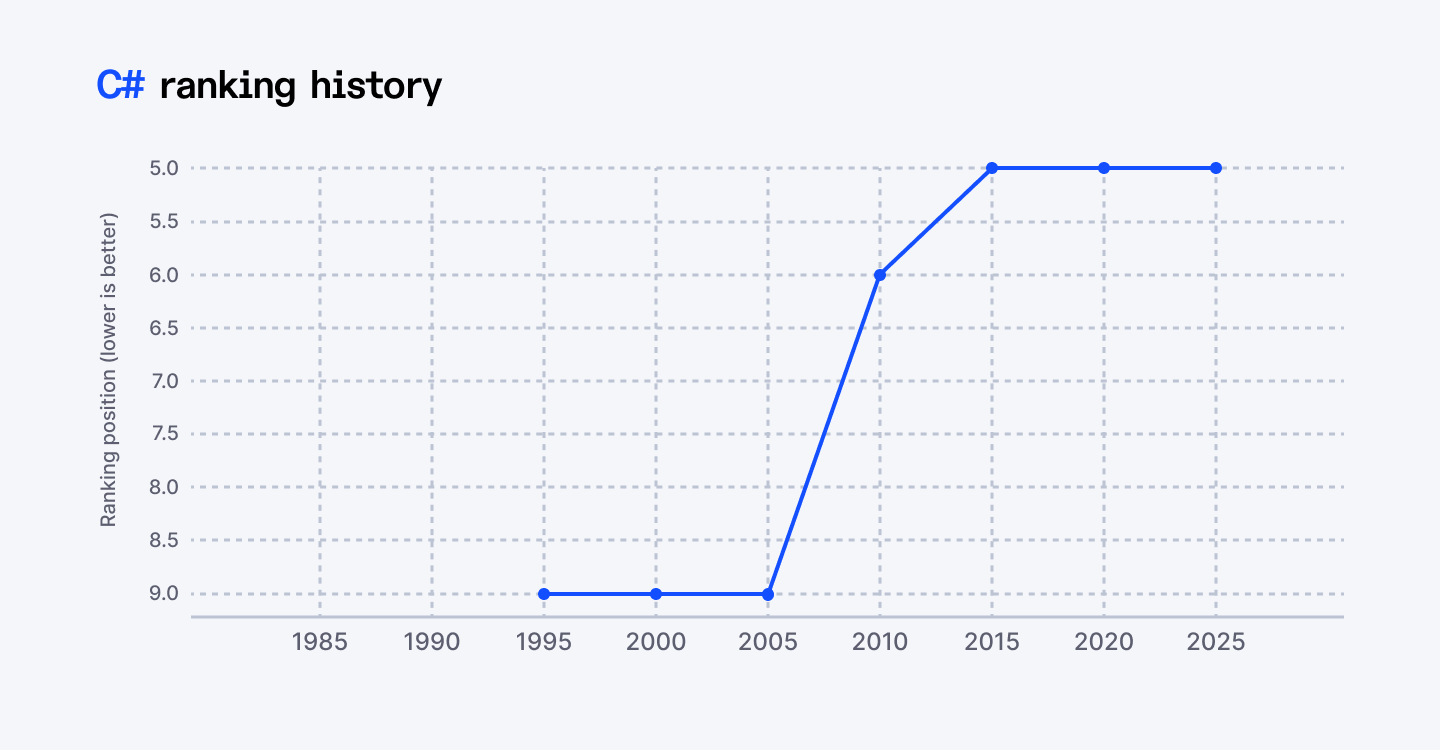
- C# remains at #5, but it suffered the biggest drop in ratings (-3.41%).
- This could be due to:
- Shift away from Windows-based development (as more applications move to cross-platform frameworks).
- Competition from Python, Java, and JavaScript, which offer more flexibility.
5. JavaScript, SQL, and Go are stable but growing slowly
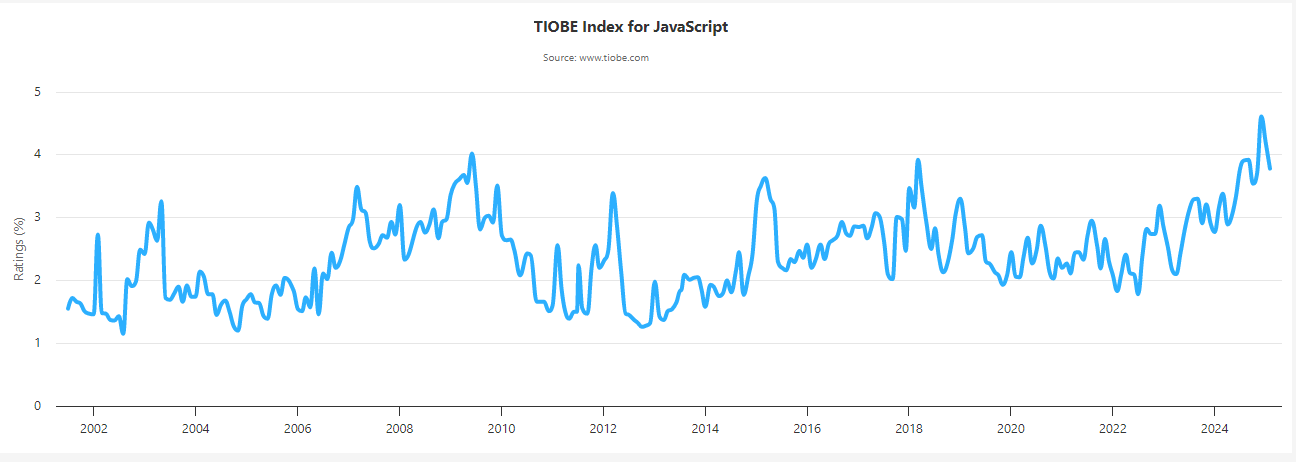
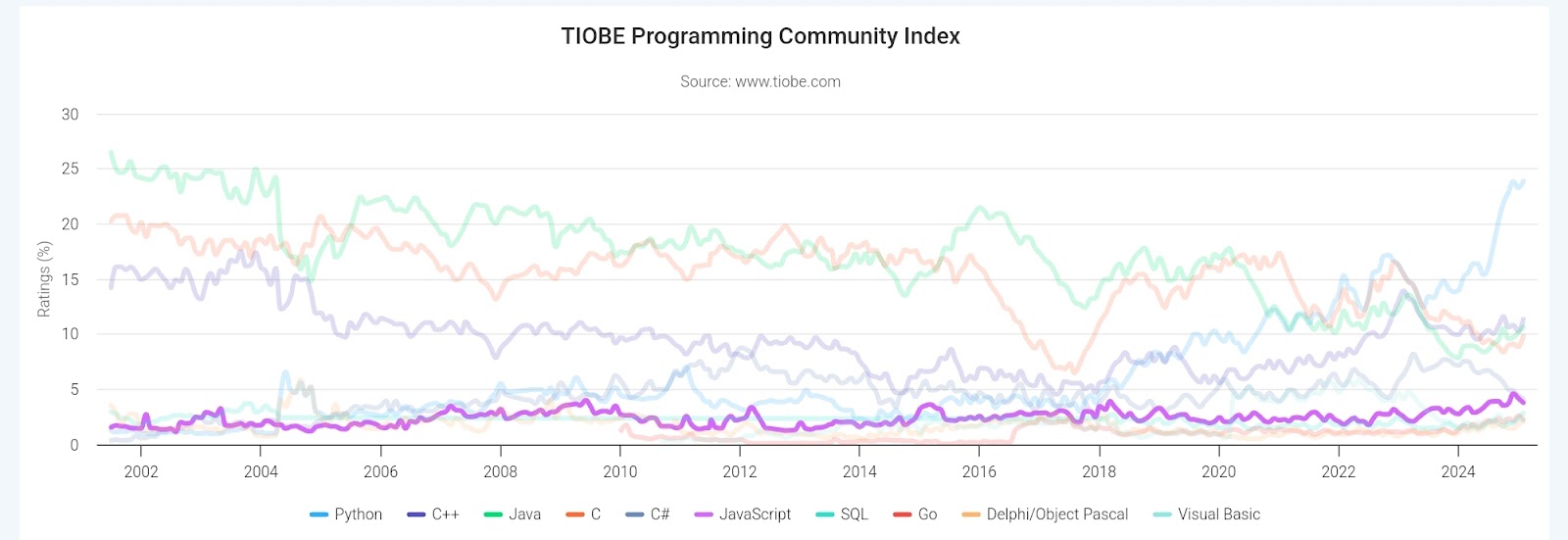
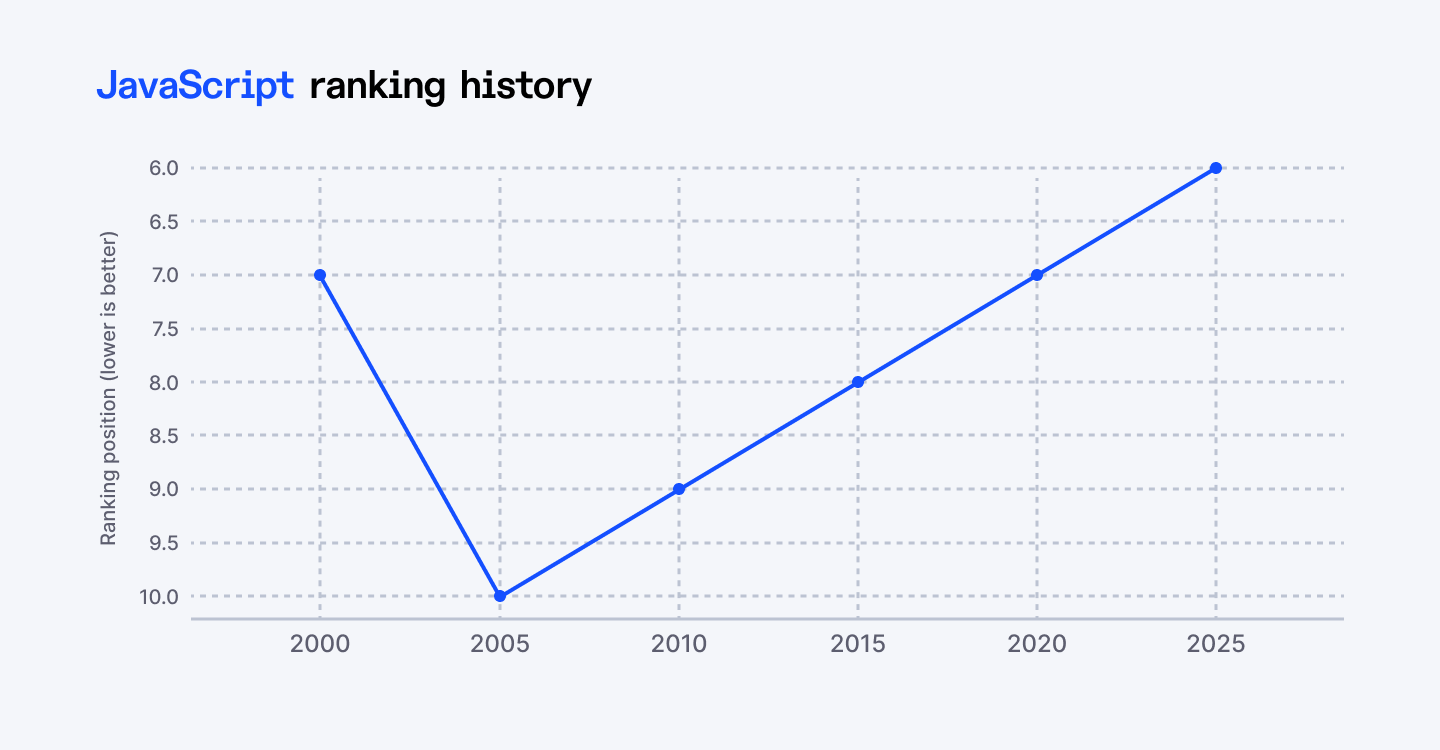
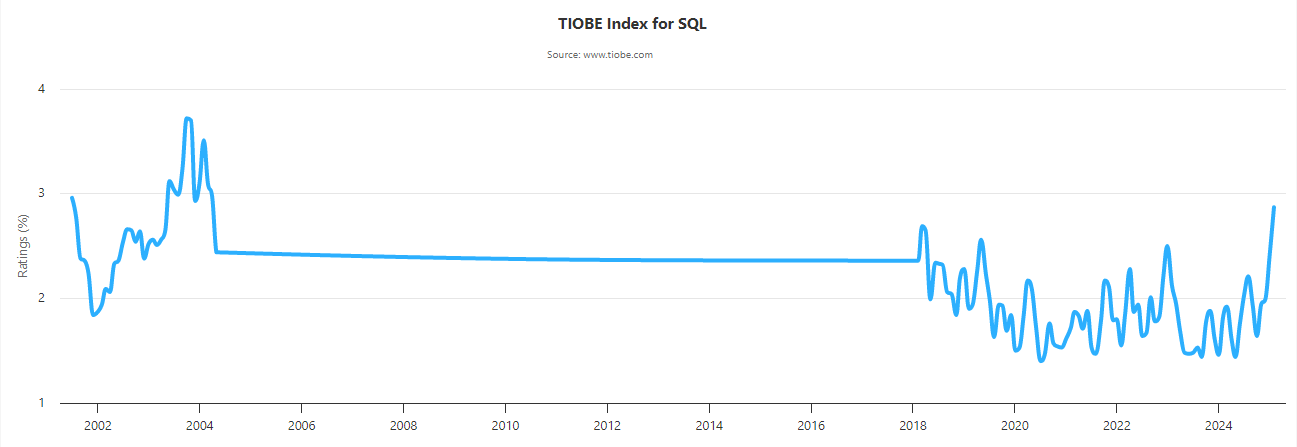
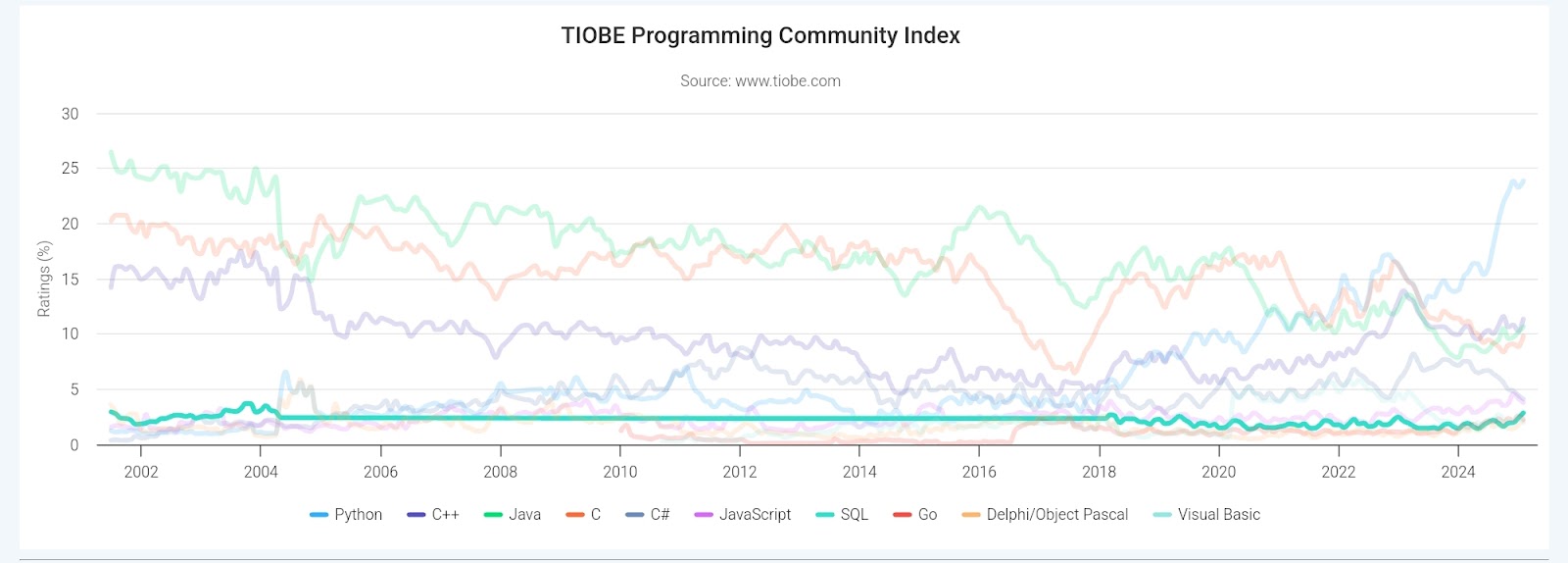
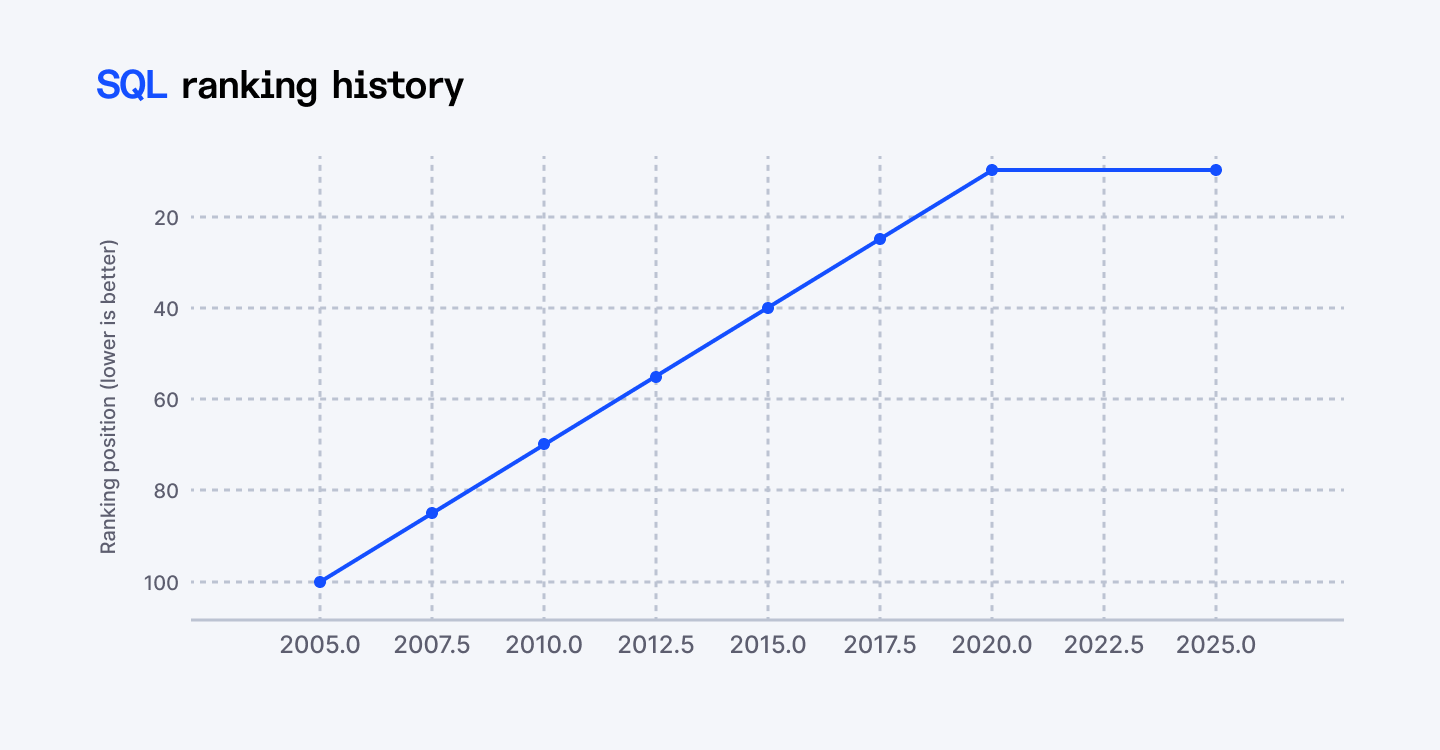
- JavaScript (#6), SQL (#7), and Go (#8) remain in the same positions.
- All three saw small rating increases, suggesting consistent demand but not explosive growth.
- JavaScript remains essential for web development.
- SQL remains crucial for databases and data-driven applications.
- Go is gaining popularity for cloud services and backend development, but at a steady pace.
6. Delphi/Object Pascal is making a comeback
- Moved from #12 to #9, showing a noticeable jump.
-
This could indicate:
- A resurgence in legacy applications requiring maintenance.
- A niche but loyal developer base keeping it alive.
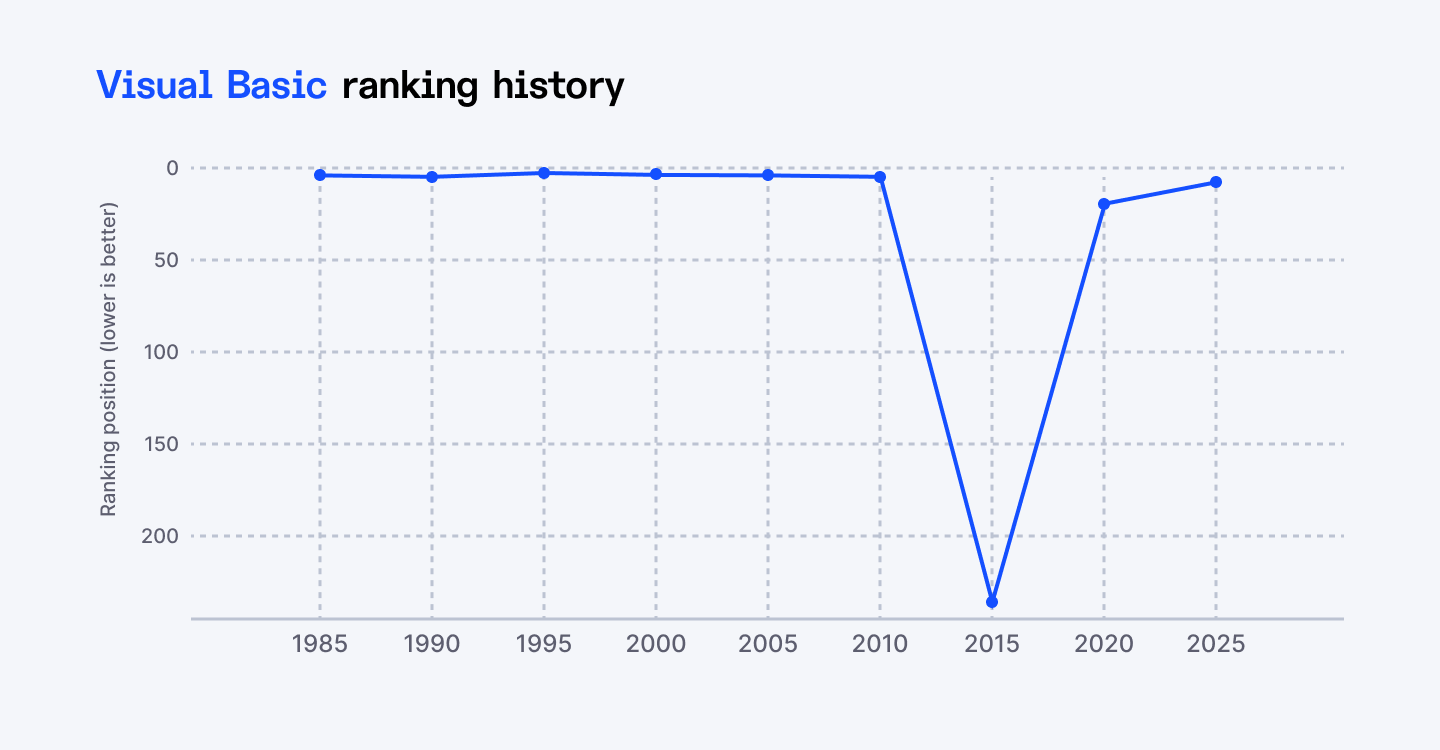
7. Visual Basic is fading
- Dropped from #9 to #10, despite a slight rating increase.
- This suggests it still has some legacy usage but is slowly losing importance.
Table Comparison
Here’s the full list of popular programming languages worldwide:
| Rank (April 2026) | Programming Language | Ratings | Change in Ratings (in 1 year) |
| 1 | Python | 23.88% | +8.72% |
| 2 | C++ | 11.37% | +0.84% |
| 3 | Java | 10.66% | +1.79% |
| 4 | C | 9.84% | -1.14% |
| 5 | C# | 4.12% | -3.41% |
| 6 | JavaScript | 3.78% | +0.61% |
| 7 | SQL | 2.87% | +1.04% |
| 8 | Go | 2.26% | +0.53% |
| 9 | Delphi/Object Pascal | 2.18% | +0.78% |
| 10 | Visual Basic | 2.04% | +0.52% |
| 11 | Fortran | 1.75% | +0.35% |
| 12 | Scratch | 1.54% | +0.36% |
| 13 | Rust | 1.47% | +0.42% |
| 14 | PHP | 1.14% | -0.37% |
| 15 | R | 1.06% | +0.07% |
| 16 | MATLAB | 0.98% | -0.28% |
| 17 | Assembly language | 0.95% | -0.24% |
| 18 | COBOL | 0.82% | -0.18% |
| 19 | Ruby | 0.82% | -0.17% |
| 20 | Prolog | 0.80% | +0.03% |
Most Popular Programming Languages (Worldwide)
Follow the below structure for the top 20 languages:
1. Python
- Ranking: 1
- Learning Curve: Easy
Growth trajectory:
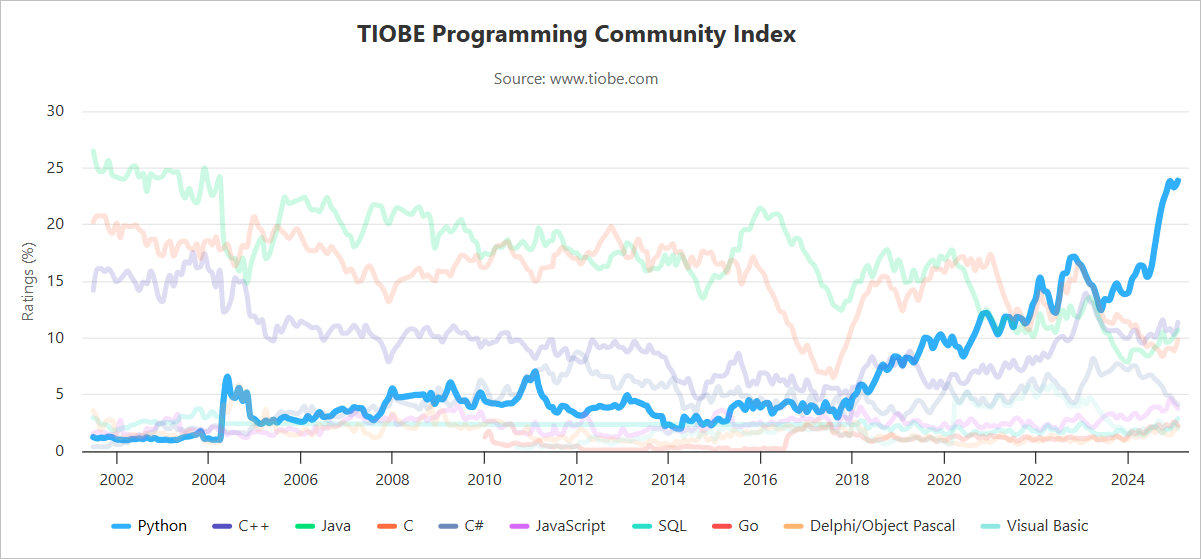
Python ranking history:
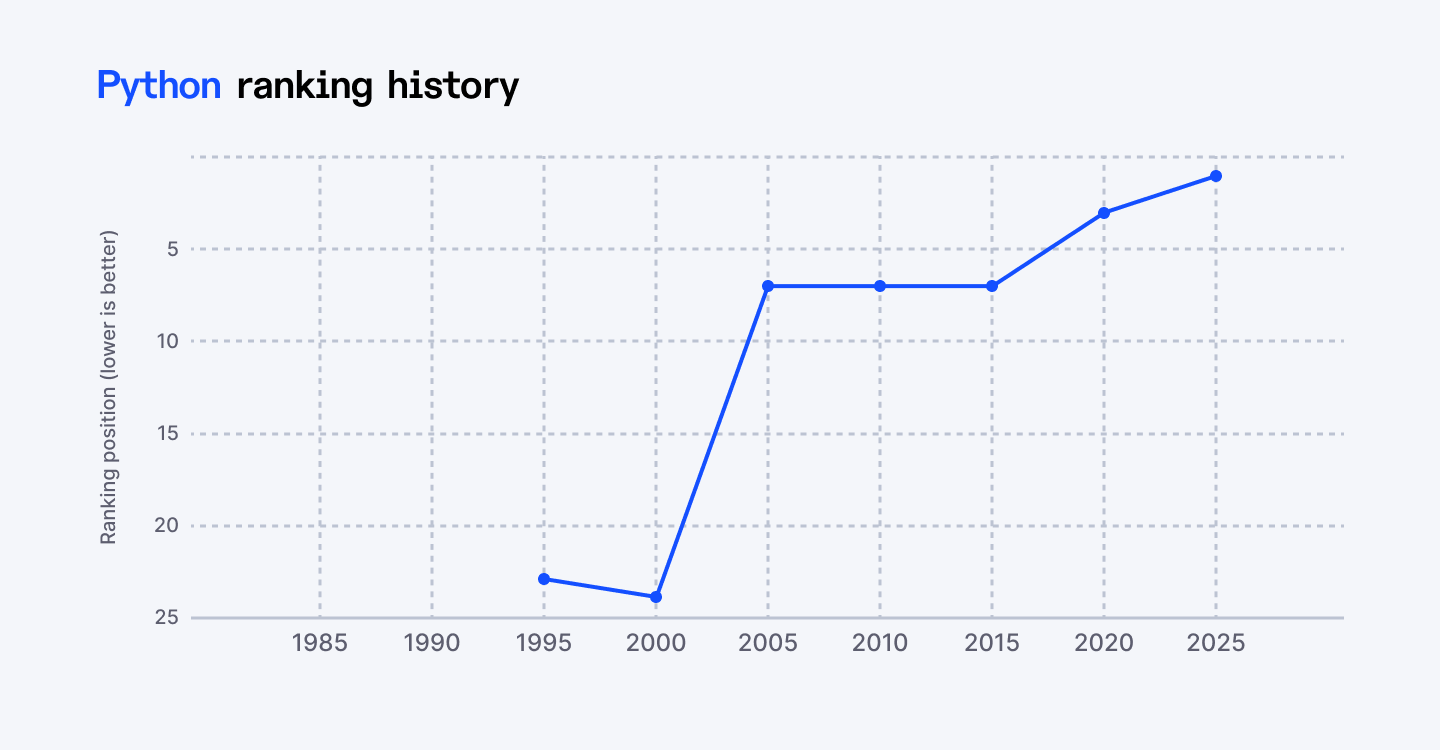
What it is:
Python is a popular programming language known for its simplicity and readability. It uses easy-to-understand syntax, making it great for beginners and experts alike. Developers use Python to build websites, automate no 6tasks, analyze data, and create artificial intelligence (AI) models. It runs on different platforms like Windows, Mac, and Linux, making it a flexible choice for programmers.
Why it’s getting popular:
- Dominance in AI & Data Science – Python is the go-to language for AI, machine learning, and data science, with powerful libraries like TensorFlow, PyTorch, and Pandas.
- Large Developer Community & Support – A vast community ensures continuous improvements, extensive documentation, and fast troubleshooting.
- Versatility & Simplicity – Python is beginner-friendly yet powerful enough for complex applications across multiple domains.
- Adoption in Automation & DevOps – Python is widely used in scripting, cloud automation, and DevOps tools like Ansible.
- Web & Software Development – Frameworks like Django, Flask, and FastAPI make web development seamless.
- Corporate & Enterprise Adoption – Major companies like Google, Netflix, and Meta use Python for various applications.
- Expanding Role in Cybersecurity – Ethical hackers and cybersecurity professionals use Python for penetration testing and network security
Use cases:
- Web Development – Django, Flask, and FastAPI build dynamic and scalable websites.
- Data Science & Analytics – Pandas, NumPy, and Matplotlib for data analysis and visualization.
- Machine Learning & AI – TensorFlow, PyTorch, Scikit-learn for predictive modeling and AI-driven applications.
- Automation & Scripting – Automate tasks using Selenium, Scrapy, PyAutoGUI, and shell scripting.
- Cybersecurity & Ethical Hacking – Python is used for penetration testing, network scanning, and encryption.
- Game Development – You can use Pygame and Panda3D to create interactive games.
- Embedded Systems & IoT – MicroPython and CircuitPython for IoT devices and robotics.
- Finance & FinTech – Algorithmic trading, fraud detection, and risk assessment using Python-based financial libraries.
- Cloud & DevOps – Automating cloud operations with AWS Lambda, Azure Functions, and Kubernetes.
2. C++
- Ranking: 2
- Learning Curve: Moderate
Growth trajectory:
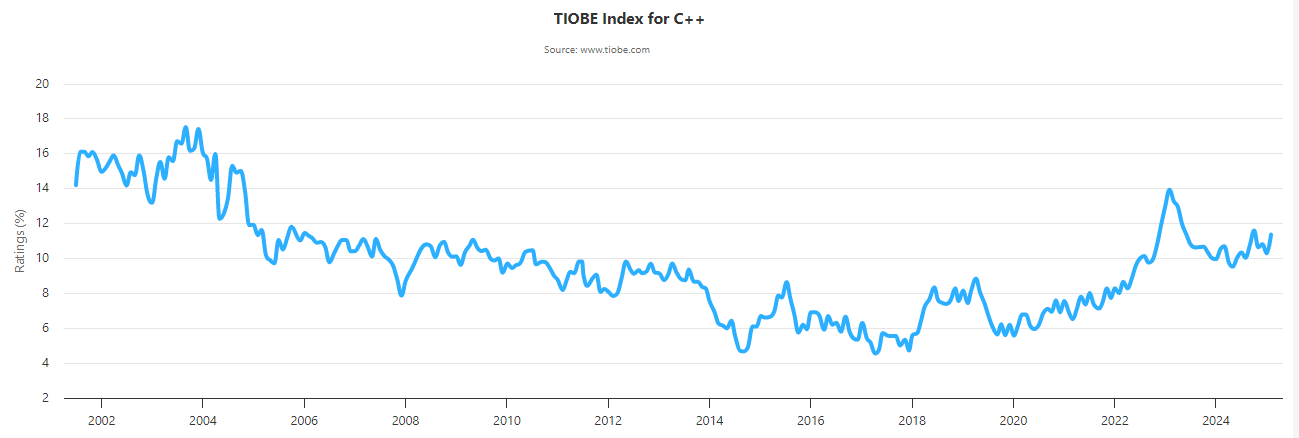
Programming Community Index (C++):
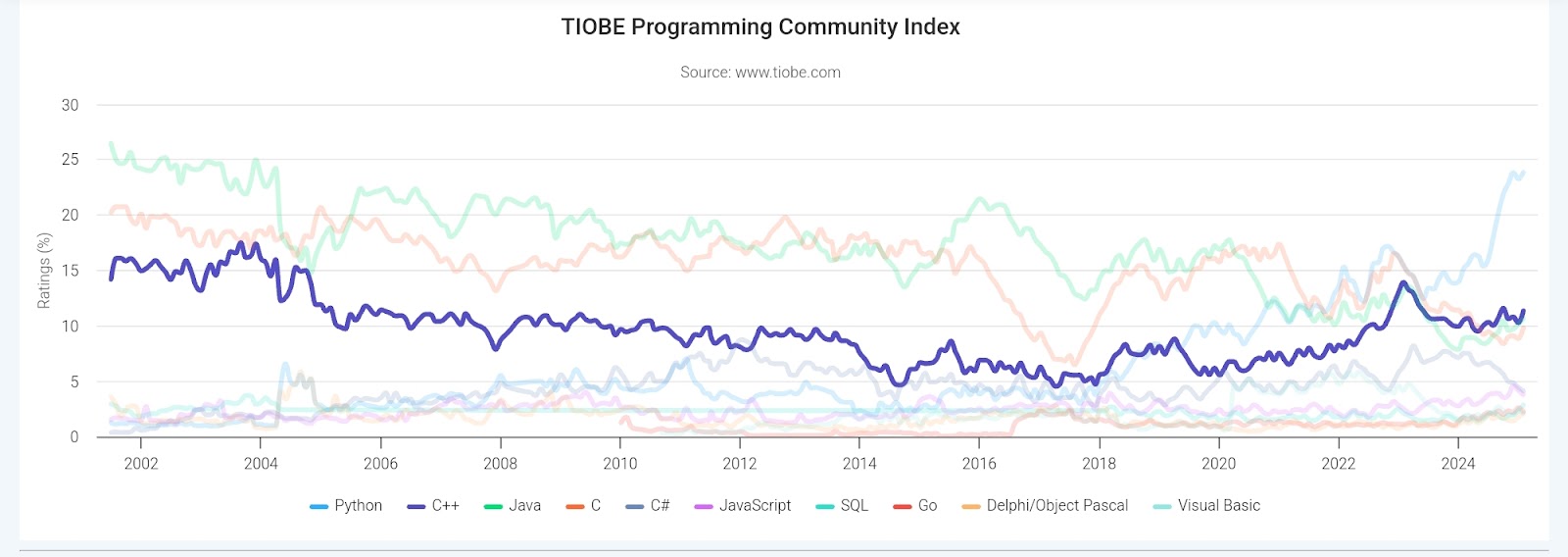
TIOBE programming community index
C++ ranking history:
What it is:
C++ is a powerful programming language used to create software, games, and applications. It is an upgraded version of C and adds features like object-oriented programming. C++ helps developers write fast and efficient programs. Many big companies use C++ because it controls how computers use memory and process tasks.
Why it’s getting popular:
- High Performance – C++ runs faster than many other languages, making it perfect for speed-critical programs.
- Game Development – Most popular games are built using C++ because it handles graphics and physics well.
- System Software – Operating systems like Windows and macOS use C++ at the core.
- Embedded Systems – C++ runs on small devices like smartwatches and cars.
- Strong Community – Many developers contribute to improving C++ and creating helpful tools.
Use cases:
- Game Development – C++ is used in Unreal Engine to create high-quality games.
- Operating Systems – It helps build Windows, macOS, and Linux components.
- Software Development – You can use C++ in developing desktop and mobile applications.
- Embedded Systems – It runs on embedded systems devices like microwaves and cars.
- Finance & Trading – C++ can speed up the stock market calculations.
- Cybersecurity – It helps develop security software and encryption tools.
3. Java
- Ranking: 3
- Learning Curve: Moderate
Growth trajectory:
Programming community index:
TIOBE programming community index (Java)
Java ranking history:
What it is:
Java is a popular programming language for building software, websites, and apps. It runs on many devices, from computers to mobile phones. Java is known for its "Write Once, Run Anywhere" feature, which means code written in Java can work on different operating systems without changes. It is object-oriented, which helps developers organize code better. Java is also secure, fast, and widely used in the banking, gaming, and e-commerce industries. Students can receive additional support in learning Java from academic tutors.
Why it’s getting popular:
- Platform Independence – Java runs on different devices without modification.
- Android App Development – Most Android apps use Java.
- Enterprise Software – Big companies trust Java to build secure business applications.
- Strong Community Support – Millions of developers improve and support Java, which ensures developers get strong community support.
- High Demand for Java Developers – Many companies hire Java programmers, especially for building enterprise applications.
Use cases
- Android App Development – Java is used to create mobile apps.
- Web Applications – This programming language helps build websites and online services better.
- Banking Systems – It powers the development of secure banking and finance applications.
- Game Development – You can use Java for Game development, like Minecraft.
- Cloud Computing – It helps run applications on the internet.
4. C Programming Language
- Ranking: 4
- Learning Curve: Moderate
Growth trajectory:
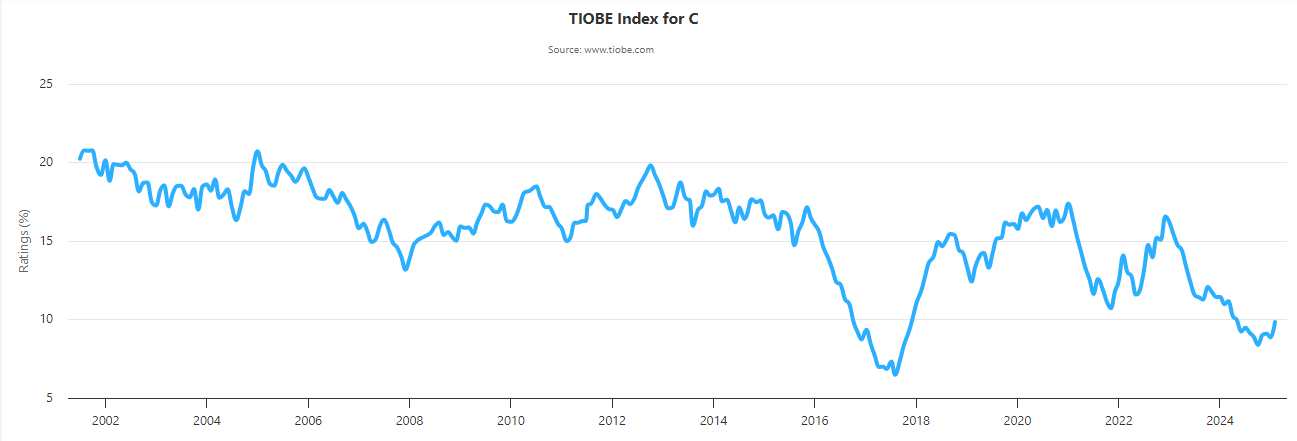
Programming community index:
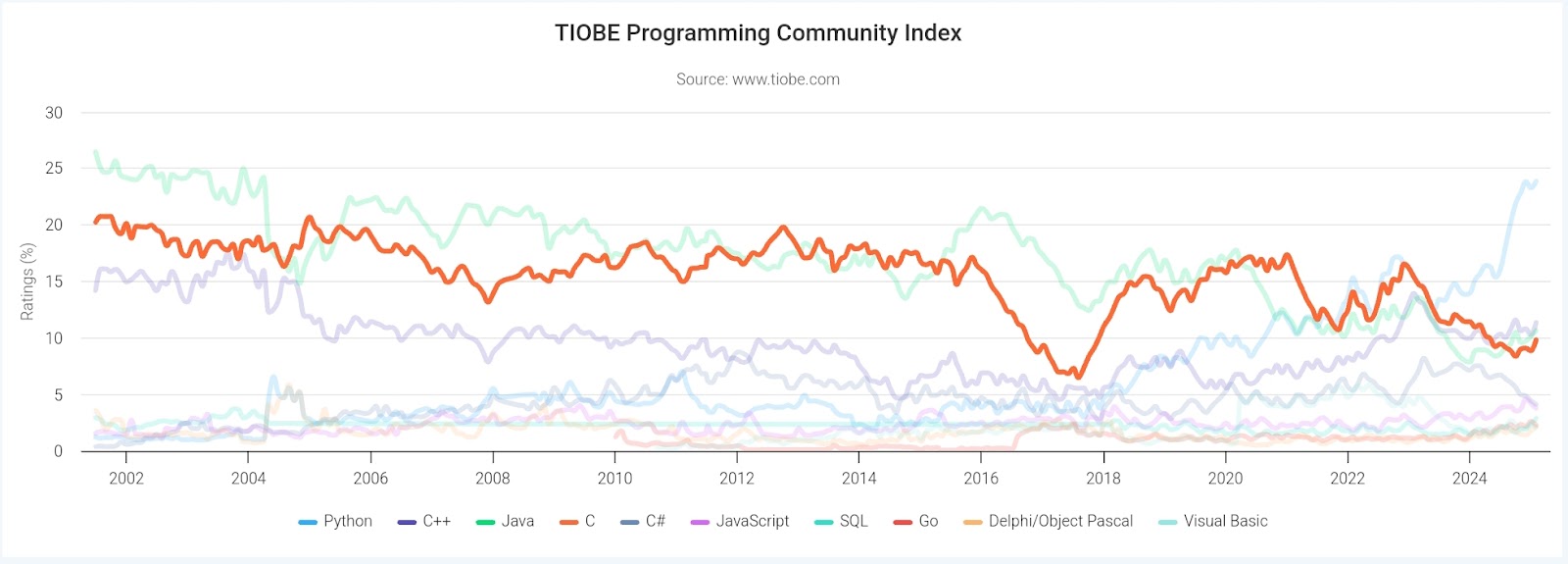
TIOBE programming community index (C)
C ranking history:
What it is:
C is one of the oldest and most powerful programming languages. It is known for its speed and efficiency. Developers use C to create operating systems, software, and hardware drivers. The embedded controllers running modern HVAC equipment rely on that same kind of low-level programming, which is why manufacturers work with a HVAC recruiter who understands both the mechanical and the technical sides of the job.
Many modern programming languages, like C++ and Java, are based on C. It gives complete control over computer hardware, making it an excellent choice for building system software. Even though it is old, C is still widely used because it is simple, fast, and reliable.
Why it’s getting popular:
- Fast and Efficient – C runs quickly and uses less memory, making it a fast and efficient programming language for developers.
- Foundation for Other Languages – Many programming languages are based on C, often known as the “mother of all languages.”
- Used in System Programming – Multiple operating systems like Windows, Linux, and macOS rely on C.
- Works on Any Device – C runs on computers, mobile phones, and embedded systems.
- Strong Community Support – Many developers use and improve C daily, so you get constant community support.
Use cases
- Operating Systems – It is used in Windows, Linux, and macOS.
- Embedded Systems – C runs in microwaves, cars, and medical devices.
- Game Development – You can use C to build game engines.
- Cybersecurity – C helps in the development of security tools.
- Database Management – It helps store and organize data efficiently.
- Networking – It supports the internet and communication systems.
5. C#
- Ranking: 5
- Learning Curve: Moderate
Growth trajectory:
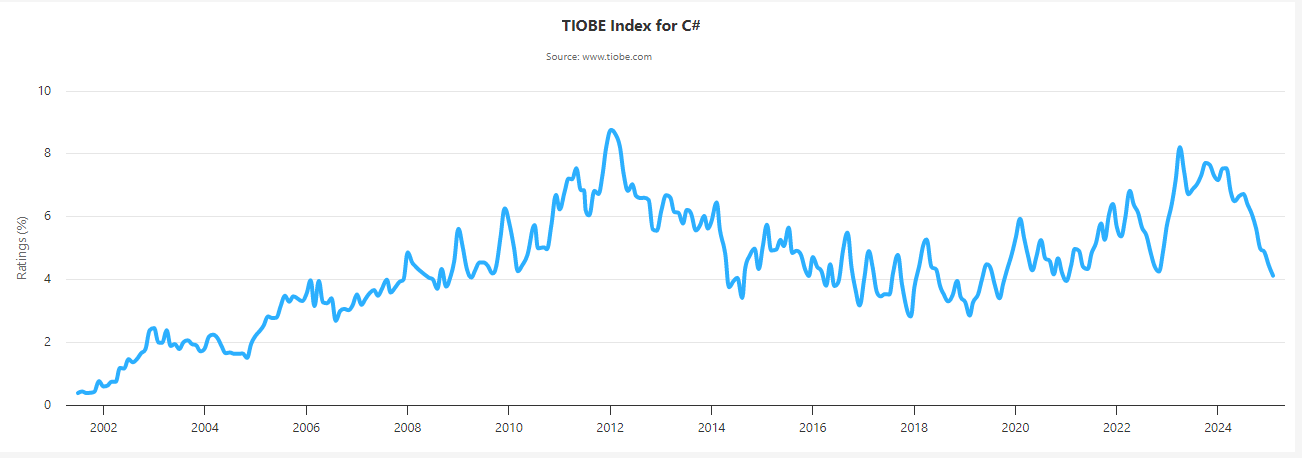
Programming community index:
TIOBE programming community index (C#)
C# ranking history:
What it is:
C# (pronounced "C-Sharp") is a programming language created by Microsoft. It is mainly used for building apps that run on Windows, but it also works on other platforms. C# is easy to read and write, making it a great choice for beginners and professionals. It is an object-oriented language which helps organize code into reusable parts. Many game developers use C# because it works well with the Unity game engine. With its strong performance and security, C# is an excellent language for beginners and experts.
Why it’s getting popular:
- Game Development – Many popular games use C# with Unity.
- Web Applications – C# helps create dynamic websites and services.
- Microsoft Support – Microsoft constantly improves and updates C#.
- Cross-Platform Development – Apps built with C# can run on Windows, Mac, and Linux.
- Strong Community – Many developers contribute to making C# better.
Use cases
- Game Development – C# powers Unity engine for 2D and 3D games.
- Web Development – It is used in ASP.NET to build websites.
- Desktop Applications – You can use C# to create Windows software.
- Mobile Apps – It supports cross-platform apps with Xamarin.
- Cloud Computing – C# works with Microsoft Azure for cloud services.
- AI and Machine Learning – It helps develop intelligent applications.
6. JavaScript
- Ranking: 6
- Learning Curve: Easy
Growth trajectory:
Programming community index:
TIOBE programming community index (JavaScript)
JavaScript ranking history:
What it is:
JavaScript is a popular programming language used to create websites and web applications. It makes web pages interactive by adding animations, buttons, pop-ups, and more. Unlike some languages that only work on the backend, JavaScript runs directly in a web browser. This means you don’t need special software to see its effects—just open a webpage. Developers also use it to build mobile apps, games, and even server-side applications.
Why it’s getting popular:
- Powers the Web – Almost every website uses JavaScript.
- Runs Everywhere – It works on browsers, servers, and mobile devices, so JavaScript runs everywhere.
- Easy to Learn – Beginners can start coding quickly with knowledge of Javascript.
- Strong Community – Millions of developers share tools and knowledge on the internet, helping you in the development process.
- Supports Modern Apps – It helps create fast and responsive web applications.
Use cases
- Web Development – It makes websites interactive and engaging.
- Mobile Apps – JavaScript is used in frameworks like React Native for mobile development.
- Game Development – You can build browser-based games using JavaScript.
- Server-Side Programming – It works efficiently with Node.js to run web servers.
- AI and Machine Learning – JavaScript supports intelligent applications in the browser.
- Automation & Scripting – It helps automate tasks on websites.
7. SQL
- Ranking: 7
- Learning Curve: Easy
Growth trajectory:
Programming community index:
TIOBE programming community index (SQL)
SQL ranking history:
What it is:
SQL (Structured Query Language) helps manage and organize data in databases. Businesses, websites, and apps use SQL to store and retrieve information. It allows users to search, update, and delete records quickly. Many companies rely on SQL to handle large amounts of data, making it an essential tool for developers and data analysts. It works with different database systems like MySQL, PostgreSQL, and Microsoft SQL Server.
Why it’s getting popular:
- Manages Big Data – Businesses need SQL to handle large databases.
- Works with Many Technologies – SQL supports web apps, mobile apps, and cloud systems.
- High Demand for Data Skills – Companies need experts to organize and analyze data.
- Simple Yet Powerful – Even beginners can learn SQL easily.
- Used in Almost Every Industry – Banks, hospitals, and e-commerce sites all use SQL.
Use cases
- Website Databases – SQL stores user accounts, orders, and product details for websites.
- Banking Systems – It helps manage transactions and customer records in a banking system.
- Data Analysis – SQL assists in retrieving and processing large datasets easily.
- Inventory Management – You can track products in warehouses easily with SQL.
- Cloud Computing – It stores data for online applications.
- Healthcare Systems – SQL helps organize patient records and appointments.
8. Go
- Ranking: 8
- Learning Curve: Moderate
Growth trajectory:
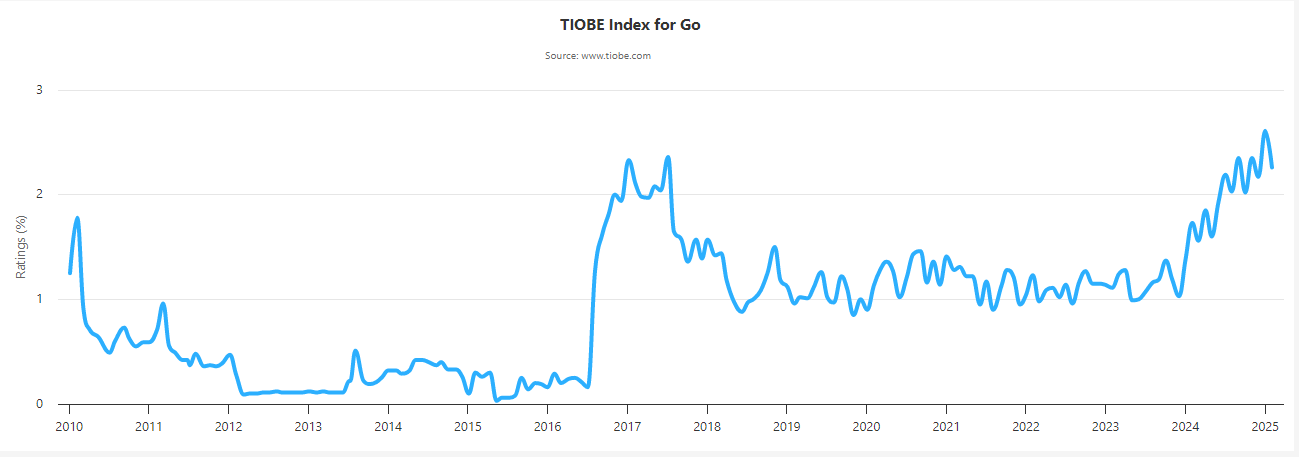
Programming community index:
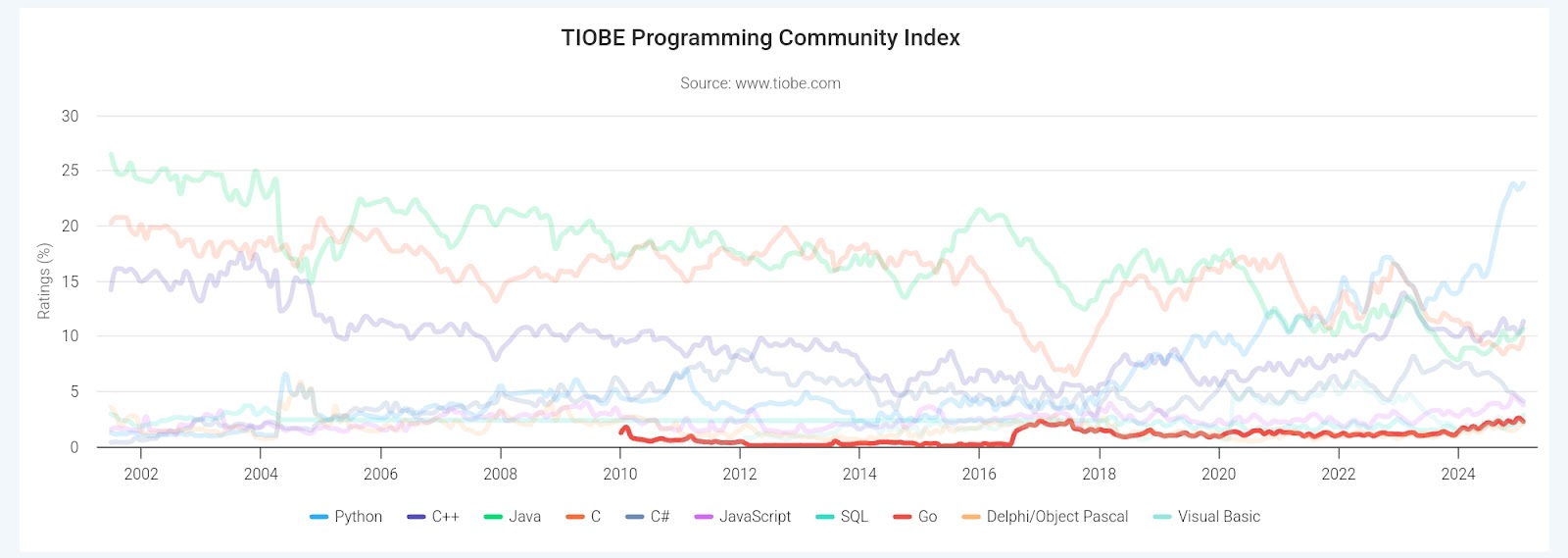
TIOBE programming community index (Go)
Go ranking history:
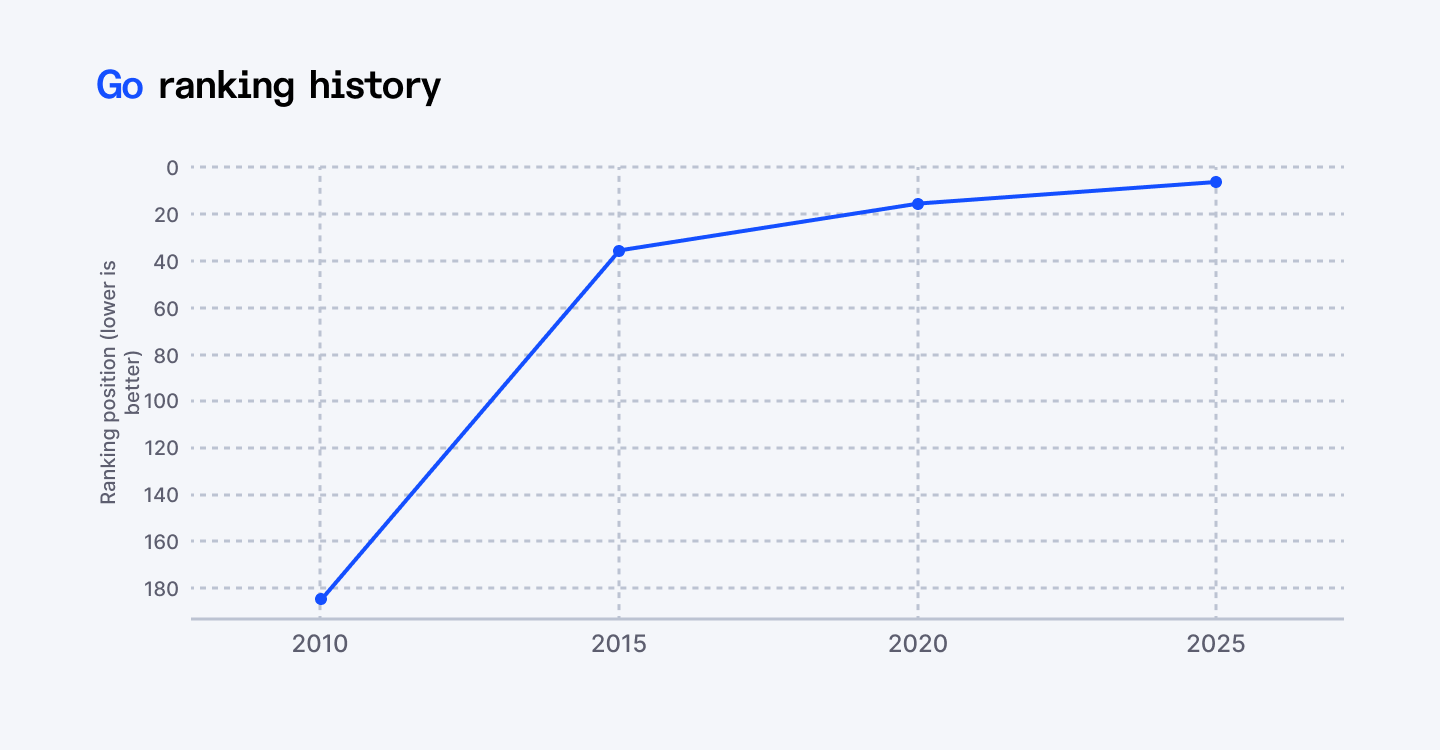
What it is:
Go (or Golang) is a fast and simple programming language created by Google. Developers use it to build web applications, cloud services, and networking tools. It is designed to handle multiple tasks at the same time, making it great for large-scale software. Go is easy to read and write, so programmers can develop applications quickly. Many tech companies use Go to power their systems because it runs efficiently and processes data fast.
Why it’s getting popular:
- Fast and Lightweight – Go applications run quickly and use less memory.
- Built for Cloud Computing – Many cloud services rely on Go.
- Handles Many Tasks at Once – It supports concurrency, making programs run efficiently.
- Backed by Google – Google actively improves and maintains Go.
- Easy to Learn – Its simple syntax helps developers write clean code.
Use cases
- Web Development – It builds fast and scalable web applications.
- Cloud Computing – GO provides cloud services like Kubernetes and Docker.
- Networking Tools – You can use GO to develop secure and efficient network software.
- Data Processing – It helps handle large amounts of information.
- System Programming – Go runs background services and server applications.
- Microservices – This programming language supports modern software architecture for better performance.
9. Delphi/Object Pascal
- Ranking: 9
- Learning Curve: Easy/ Moderate/ Steep
Growth trajectory:
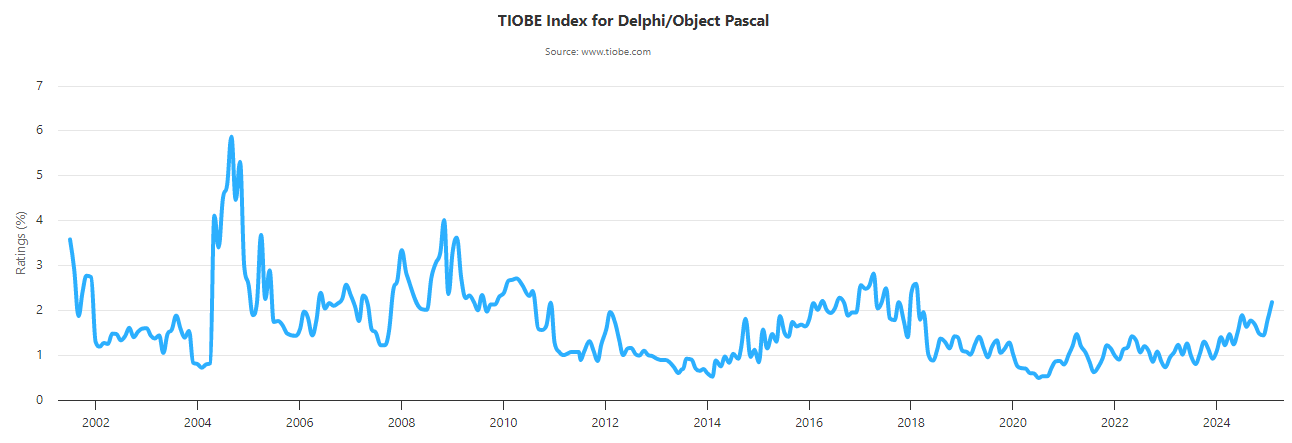
TIOBE index for Delphi/Object Pascal
Programming community index:
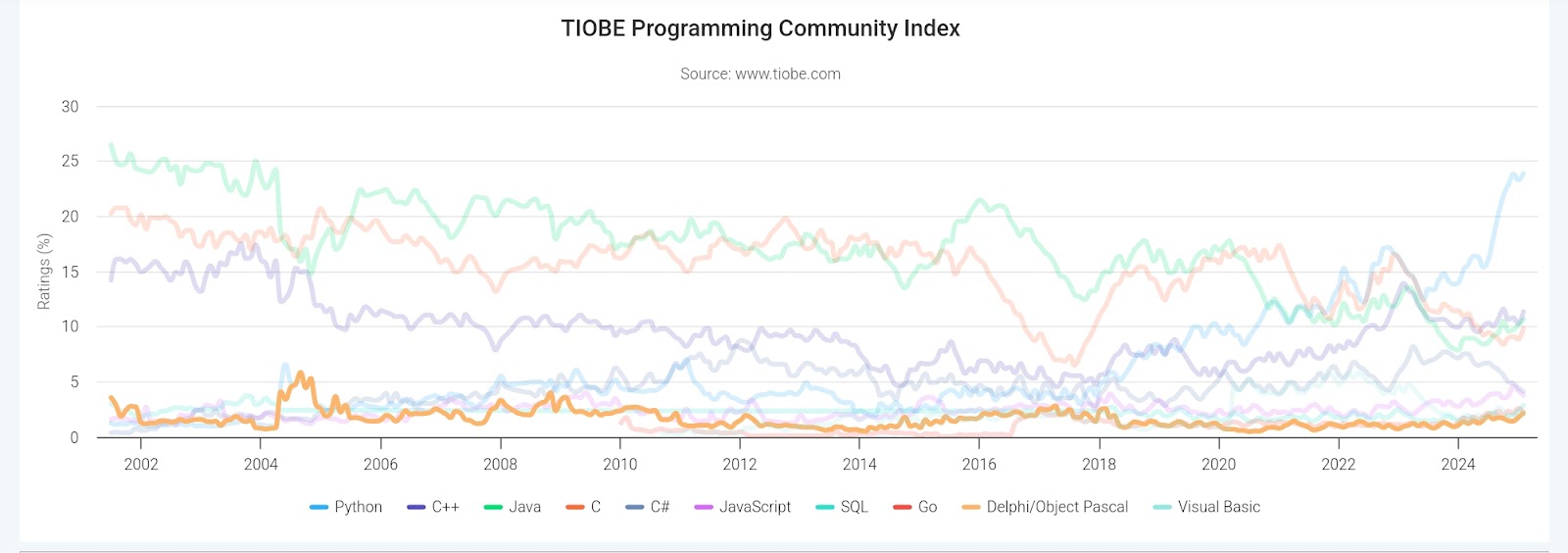
TIOBE programming community index (Delphi/Object Pascal)
Delphi/Object Pascal ranking history:
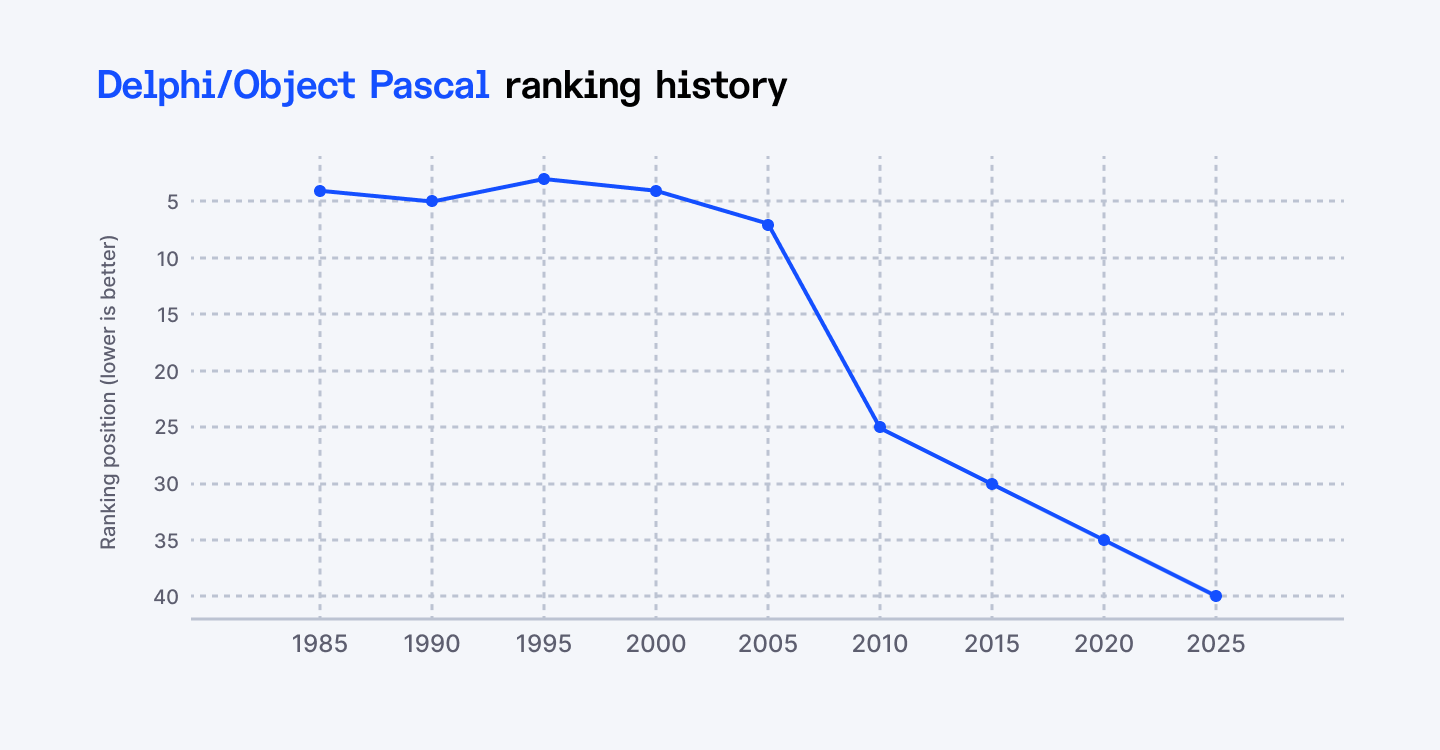
What it is:
Delphi (also known as Object Pascal) is a programming language used to build desktop, mobile, and database applications. It is known for its speed and ease of use. Developers use Delphi to create Windows applications with graphical interfaces. It has a strong focus on object-oriented programming, making it easier to organize code. Many businesses rely on Delphi to develop software for finance, healthcare, and industrial automation.
Why it’s getting popular:
- Fast Development – Delphi allows programmers to build applications quickly.
- Strong GUI Support – It helps create user-friendly desktop applications.
- Cross-Platform Development – Developers can write Delphi code once and run it on Windows, macOS, Android, and iOS.
- Reliable for Business Applications – Many companies trust Delphi for enterprise software.
- Easy to Maintain – Clean syntax of Delphi makes debugging and updating applications simple.
Use cases
- Windows Applications – Delphi helps building desktop software.
- Mobile App Development – It supports development of Android and iOS applications.
- Database Management – It assists in creating software that stores and processes data.
- Finance & Accounting Software – Delphi is used for banking and financial tools.
- Industrial Automation – This programming language runs systems that control machinery and production lines.
- Medical Software – You can use it to manage patient records and healthcare systems.
Explore More: 12 Programming Languages That Will Get You Hired at FAANG
10. Visual Basic
- Ranking: 10
- Learning Curve: Easy
Growth trajectory:
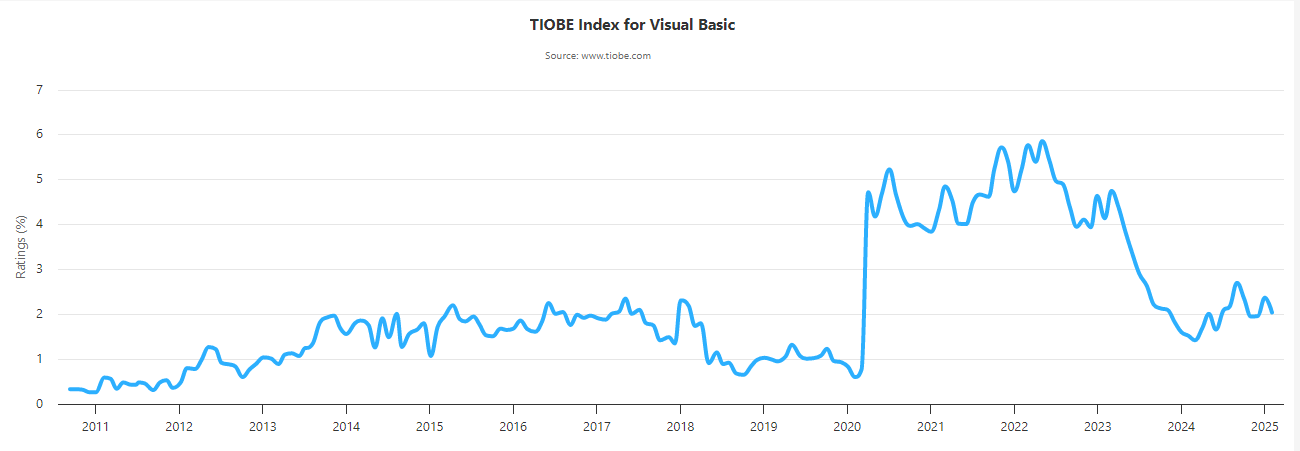
Programming community index:
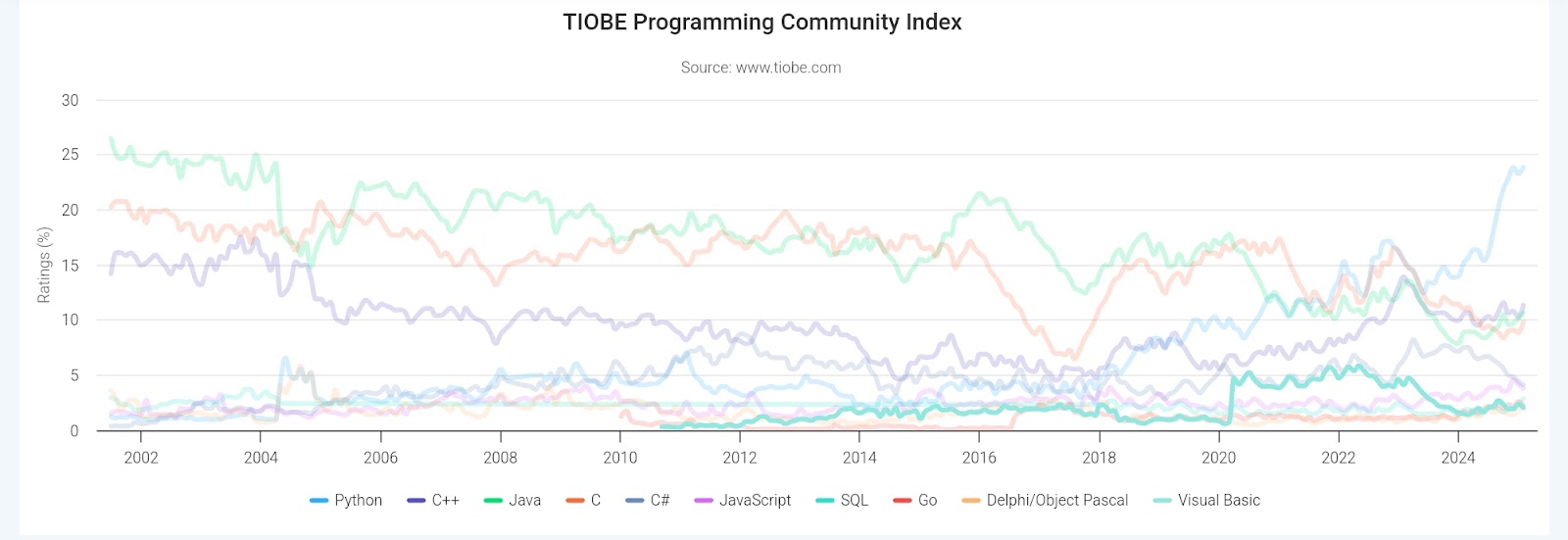
TIOBE programming community index (Visual Basic)
Visual Basic ranking history:
What it is:
Visual Basic (VB) is a programming language created by Microsoft. It allows developers to build Windows applications quickly using a simple drag-and-drop interface. VB is easy to learn because its code looks like plain English. Many businesses use it to develop software for data entry, accounting, and office automation. Although newer languages are more popular, Visual Basic still plays a role in maintaining older systems and building small applications.
Why it’s getting popular:
- Simple and Beginner-Friendly – New programmers can learn VB easily.
- Fast Application Development – Developers build software quickly with VB’s visual tools.
- Strong Microsoft Support – VB works well with Windows and Microsoft Office.
- Automates Office Tasks – Many businesses use VB to create macros and automation tools.
- Supports Legacy Applications – Older businesses still rely on VB-based software.
Use cases
- Windows Applications – VB builds simple desktop programs.
- Database Management – It helps store and manage business data.
- Office Automation – You can use VB to create macros for Excel, Word, and Access.
- Education Software – Visual Basic develops tools for schools and training programs.
- Customer Support Systems – It powers call center and ticketing applications.
- Retail and Inventory Management – VB helps track sales and stock levels.
Here is the list of 10-20th most popular programming languages:
11. Fortran
- Ranking: 11
- Learning Curve: Moderate
What it is:
Fortran is a programming language used for scientific and engineering tasks. It was created in the 1950s but is still growing because of its speed in handling complex math problems.
Use cases:
- Scientists use Fortran to solve physics and chemistry problems.
- Engineers use it to design aircraft and buildings.
- Weather experts use Fortran to predict storms and climate changes.
- Supercomputers use this programming language for high-speed calculations.
12. Scratch
- Ranking: 12
- Learning Curve: Easy
What it is:
Scratch is a block-based programming language for beginners. It helps kids and beginners learn coding through drag-and-drop blocks. Users create animations, games, and stories without writing complex code.
Use cases
- Scratch helps build fun and interactive games.
- It can create animations and cartoons.
- This language is suitable for designing simple storytelling projects.
- You can learn basic coding concepts like loops and variables.
- Developers share projects with a global Scratch community.
13. Rust
- Ranking: 13
- Learning Curve: Steep
What it is:
Rust is a programming language that focuses on speed and safety. It helps developers write fast and secure code without crashes. Many programmers like Rust because it prevents common mistakes found in other languages.
Use cases
- Developers use Rust to build web browsers like Firefox.
- Game developers use it to create fast and reliable games.
- Companies use Rust to make safe and efficient operating systems.
- Rust helps in creating secure networking and cloud systems.
14. PHP
- Ranking: 14
- Learning Curve: Easy
What it is:
PHP is a popular programming language for making websites. It helps developers create dynamic web pages that change based on user actions. Many big websites, like Facebook and WordPress, use PHP.
Use cases
- Developers use PHP to build websites and web applications.
- It helps create login systems and manage user data.
- Many online stores run on PHP-powered platforms.
- It connects websites to databases for storing information.
- PHP is useful for automating tasks on a website.
15. R
- Ranking: 15
- Learning Curve: Moderate
What it is:
R is a programming language used for data analysis and statistics. Scientists, researchers, and analysts use it to understand data and make decisions. It has many built-in tools for graphs, charts, and calculations.
Use cases
- Scientists use R to study data from experiments.
- Businesses analyze customer trends using R.
- Doctors and researchers find health patterns with R.
- Finance experts use R to track stock markets.
16. MATLAB
- Ranking: 16
- Learning Curve: Moderate
What it is:
MATLAB is a programming language used for math, science, and engineering. It helps people solve complex problems using numbers, graphs, and formulas.
Use cases
- Scientists use MATLAB to analyze data and create models.
- Engineers design and test machines with it.
- Students learn math and coding through MATLAB.
- Companies use it to make AI and image processing tools.
- Financial experts use it for risk analysis and predictions.
17. Assembly Language
- Ranking: 17
- Learning Curve: Steep
What it is:
Assembly Language is a low-level programming language that talks directly to the computer’s hardware. It uses short codes instead of long instructions. It runs very fast because it controls the CPU directly.
Use cases
- Assembly Language helps create operating systems like Windows and Linux.
- It is used to program microcontrollers in robots and gadgets.
- Hackers and security experts use Assembly Language to find system weaknesses.
- Gamers use this programming language to make high-speed graphics and animations.
18. COBOL
- Ranking: 18
- Learning Curve: Moderate
What it is:
COBOL (Common Business-Oriented Language) is a programming language used for business and finance. It has been around since the 1960s but is growing again because many banks and governments still rely on it.
Use cases
- Banks use COBOL to handle transactions safely.
- Governments rely on it to manage social security and tax systems.
- Large businesses process payroll and employee records with COBOL.
- Insurance companies use it for policy management and claims processing.
19. Ruby
- Ranking: 19
- Learning Curve: Moderate
What it is:
Ruby is a programming language known for being simple and easy to read. It helps developers write clean and fast code. Many people use it for web development.
Use cases
- Developers use Ruby to build websites and web apps.
- Companies use it to create online stores and social media platforms.
- Cybersecurity experts use it to test software security.
- People automate tasks with Ruby to save time.
20. Prolog
- Ranking: 20
- Learning Curve: Steep
What it is:
Prolog is a logic-based programming language good for solving complex problems. It works with facts and rules to find answers. Instead of giving step-by-step instructions, programmers define relationships, and Prolog figures out the rest.
Use cases
- It helps build artificial intelligence (AI) programs.
- People use Prolog to create expert systems that solve difficult problems.
- It is useful in natural language processing, helping computers understand human speech.
- Researchers use Prolog for medical diagnosis systems.
Also Check Out: 10 Programming Languages that Will Land You a Salary of $100k in the US
Python remains dominant, while C++ and Java rise as C declines. C# sees the biggest drop, while Rust, Scratch, and Delphi/Object Pascal gain traction. PHP and MATLAB lose ground. Prolog enters the top 20. Overall, modern and system languages are growing, but legacy languages still hold niche demand.
What This Means for Developers
- If you're learning a new language: Python is the safest bet.
- If you're in system programming: C++ is overtaking C, making it the better long-term investment.
- If you're in enterprise or backend development: Java is still a strong player.
- If you're into cloud and backend engineering: Go is a good option for the future.
- If you're working with legacy systems: Languages like Delphi/Object Pascal still have demand.
For Developers: Join Index.dev to connect with global companies and build a global remote career as a top developer.
For Tech Companies: Hire the best developers through Index.dev and access the elite 5% of vetted talent with fast matching and a free trial.