The ten AI coding agents shipping the most production work in 2026 are Devin 2.0, Cursor Composer, Claude Code (Anthropic), Windsurf (formerly Codeium), Qodo, GitHub Copilot agent mode, OpenAI Codex CLI, Aider, ChatDev, and Postman. Claude Code and Devin 2.0 lead SWE-bench Verified at 71-73%. Pick by workload, model coverage, and on-prem requirements.
We are not doomed. AI agents are not replacing developers. But AI has stopped being a fancy autocomplete: in 2026, agents plan, write, debug, run tests, open pull requests, and ship code with light human oversight. AI agents in software engineering are now a measurable productivity lever, not a demo.
This guide cuts through the marketing for the ten most-used AI software-development agents in 2026, with current pricing, current model coverage (Claude Opus 4.7, Claude Sonnet 4.5, GPT-5.5, Gemini 3.1 Pro), and current SWE-bench Verified scores where the vendor publishes them. Five of these tools (Cursor Composer, Claude Code, Aider, OpenAI's Codex CLI, and GitHub Copilot agent mode) did not exist in their current form in early 2024. The other five (Devin, ChatDev, Qodo, Windsurf, Postman) have each released a major new version since the last refresh of this list.
Build your remote career with top global companies: join Index.dev to get matched with high-paying, long-term software development projects.
5 Key Takeaways
- Claude Code and Devin 2.0 lead SWE-bench Verified. Claude Code on Sonnet 4.5 scores ~73%; Devin 2.0 hits 71%, up from 13.86% at the original 2024 launch. The 2024-2025 leap is real.
- Cursor is the developer favorite and growing fastest. Cursor passed $300M ARR by mid-2025 and overtook Copilot among individual developers, with Cursor Composer agent now driving most of its usage.
- Codeium rebranded to Windsurf in 2024 and pivoted from a plugin to an AI-native IDE with on-prem and air-gapped deployment, which Cursor still does not match.
- Claude Code is the fastest-growing CLI agent. It runs in your terminal, edits files in place, and crossed a million weekly active developers within 6 months of GA. Sonnet 4.5 / Opus 4.7 power most of it.
- AI agent engineers are the highest-paid software role in 2026. Senior AI agent engineers in the US earn $190K-$280K base, with a $30K-$80K bonus premium for SWE-bench leaderboard contributors.
What Is an AI Agent in 2026?
An AI agent for software development is an LLM-driven system that can plan, take actions on a developer's behalf, observe the results, and iterate. The key difference from a 2023-era coding assistant: an agent does not just suggest a line of code. It opens files, runs tests, reads logs, hits APIs, drafts pull requests, and decides what to do next. The 2025-2026 generation of agents (Devin 2.0, Claude Code, Cursor Composer, Codex CLI, GitHub Copilot agent mode) all share that loop.
Most teams in 2026 deploy AI agents on three workloads:
- Bounded refactors and code migrations (e.g. React 17 to React 19 codemods, Java 8 to 21 upgrades, dependency bumps).
- Bug triage and reproduction from issue trackers, with the agent landing a draft fix PR.
- Test generation and coverage for legacy code that humans never wrote tests for.
Roles where AI agents are not (yet) reliable in 2026: greenfield architecture decisions, security-critical changes, anything that requires inspecting production data, and any task that needs a senior engineer's tacit knowledge. The right framing is "junior teammate who never sleeps and needs a code review," not "replacement for a senior engineer."
Also check out: AI agents in software engineering, the next frontier of development.
Top 10 AI Agents Transforming Software Development in 2026
We pulled current pricing, model coverage, and SWE-bench results directly from each vendor's pricing page and benchmark posts in May 2026. The ten are ordered roughly by current production adoption among Index.dev customer teams. Numbers move fast in this category, so always sanity-check against the live pricing page before committing.
1. Devin 2.0 (Cognition AI)
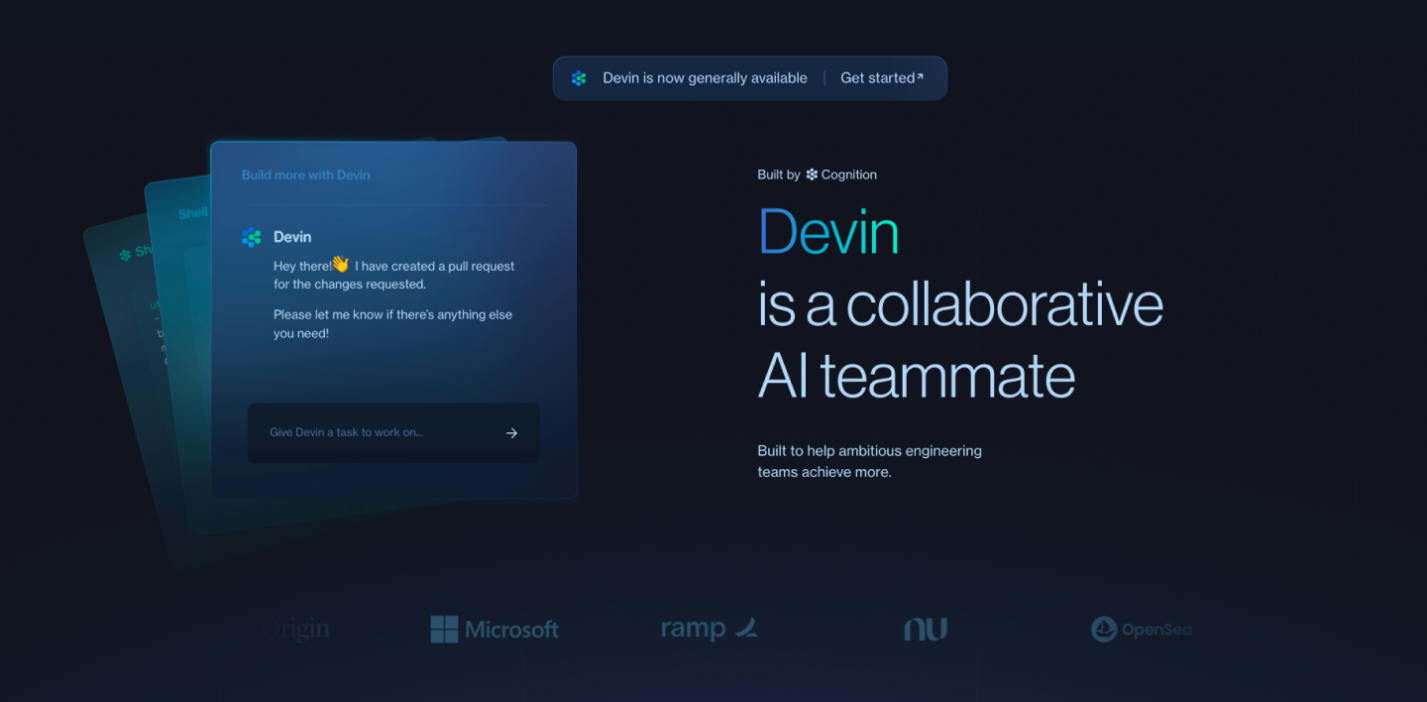
Devin from Cognition launched in March 2024 as the first agent to claim "fully autonomous" software-engineering work. The launch demo was contested, and the original Devin 1 hit only 13.86% on SWE-bench Verified. Devin 2.0, released in late 2025, hits 71% on SWE-bench Verified, putting it within striking distance of Claude Sonnet 4.5 and Opus 4.7 on the same benchmark. It is now a real production tool for refactors, test gen, and bug fixes.
Devin runs in a Cognition-hosted VM with its own shell, code editor, browser, and Slack integration. You assign it a task, it works in the background, and it opens a draft PR.
Perfect For
- Automating repetitive refactor and migration tickets in a backlog.
- Catching bugs and writing the regression test that would have caught them.
- Owning the long tail of small "we should fix this" tickets that never make it into a sprint.
Pricing (May 2026)
The Devin Core plan starts at $20/month for individuals with metered ACU usage. The Team plan sits at $500/month and includes 250 Agent Compute Units (ACUs) per month; extra ACUs are $2 each on pay-as-you-go. Enterprise pricing is custom. Check the live Devin pricing page for current numbers.
2. Cursor Composer (Anysphere)
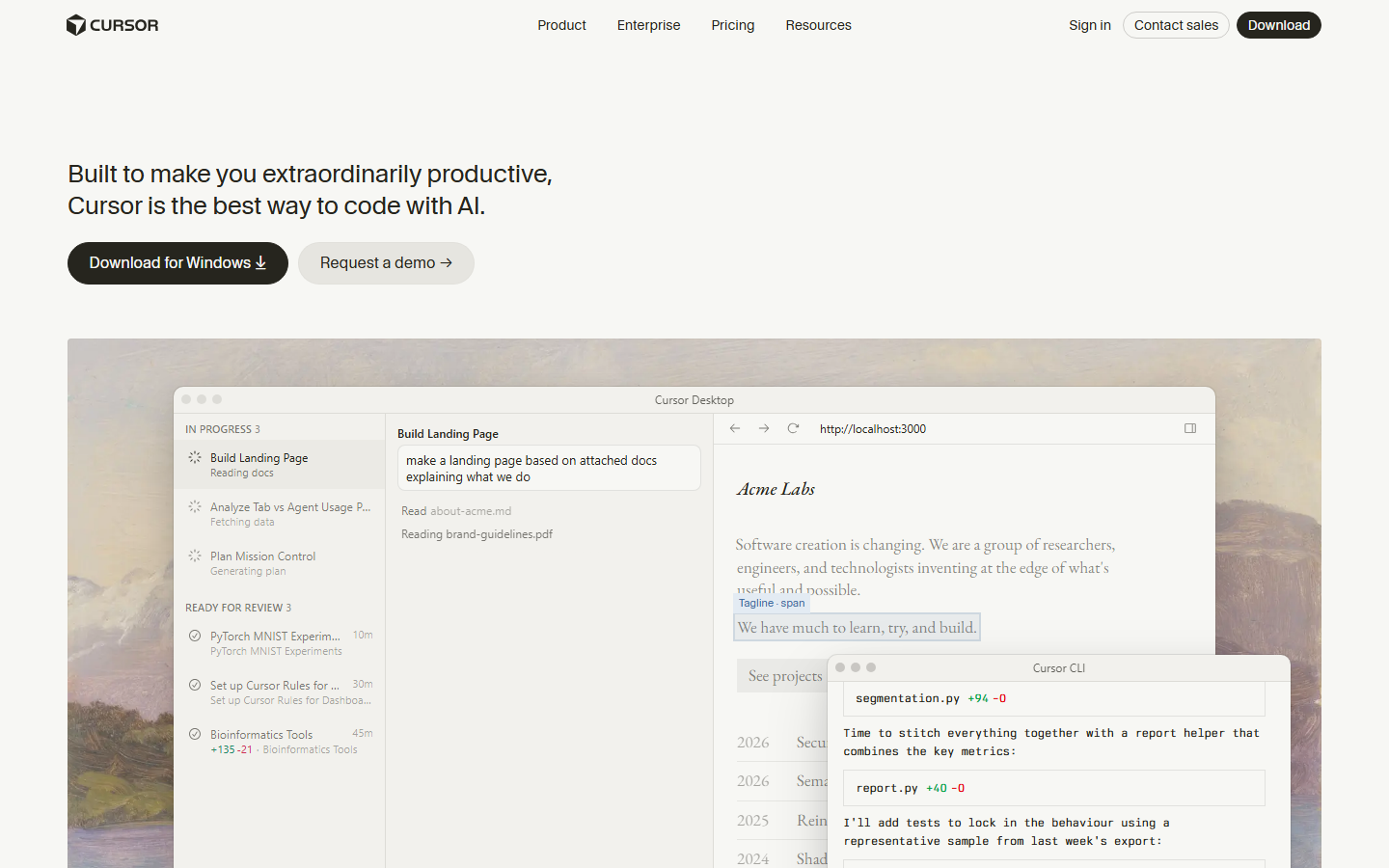
Cursor is the AI-first code editor that overtook GitHub Copilot among individual developers in 2024-2025. Anysphere, the company behind it, passed $300M ARR by mid-2025, the fastest jump from $0 to $300M in dev-tools history. Cursor Composer is its multi-file agent: it reads the whole repo, plans the edit, applies it across files, and runs the tests. Cursor exposes a model picker covering Claude Sonnet 4.5, Opus 4.7, GPT-5.5, and Gemini 3.1 Pro on the Pro plan.
The Composer agent now drives most of Cursor's usage in production, not autocomplete. On SWE-bench Verified with Sonnet 4.5, it lands around 68%. The main gap versus Windsurf is on-prem deployment, which Cursor still does not match for regulated industries.
Perfect For
- Solo developers and small teams who want the best UX-per-dollar in any AI editor.
- Multi-file refactors and "edit this feature across the whole repo" workloads.
- Teams that want to A/B-test models (Sonnet 4.5 vs GPT-5.5) for their specific codebase.
Pricing (May 2026)
Hobby is free with limited Composer credits. Pro is $20/user/month and unlocks unlimited completions, 500 fast Composer requests, and the model picker. Business is $40/user/month and adds SSO, admin dashboard, and zero data retention. Enterprise pricing is custom.
3. Claude Code (Anthropic)
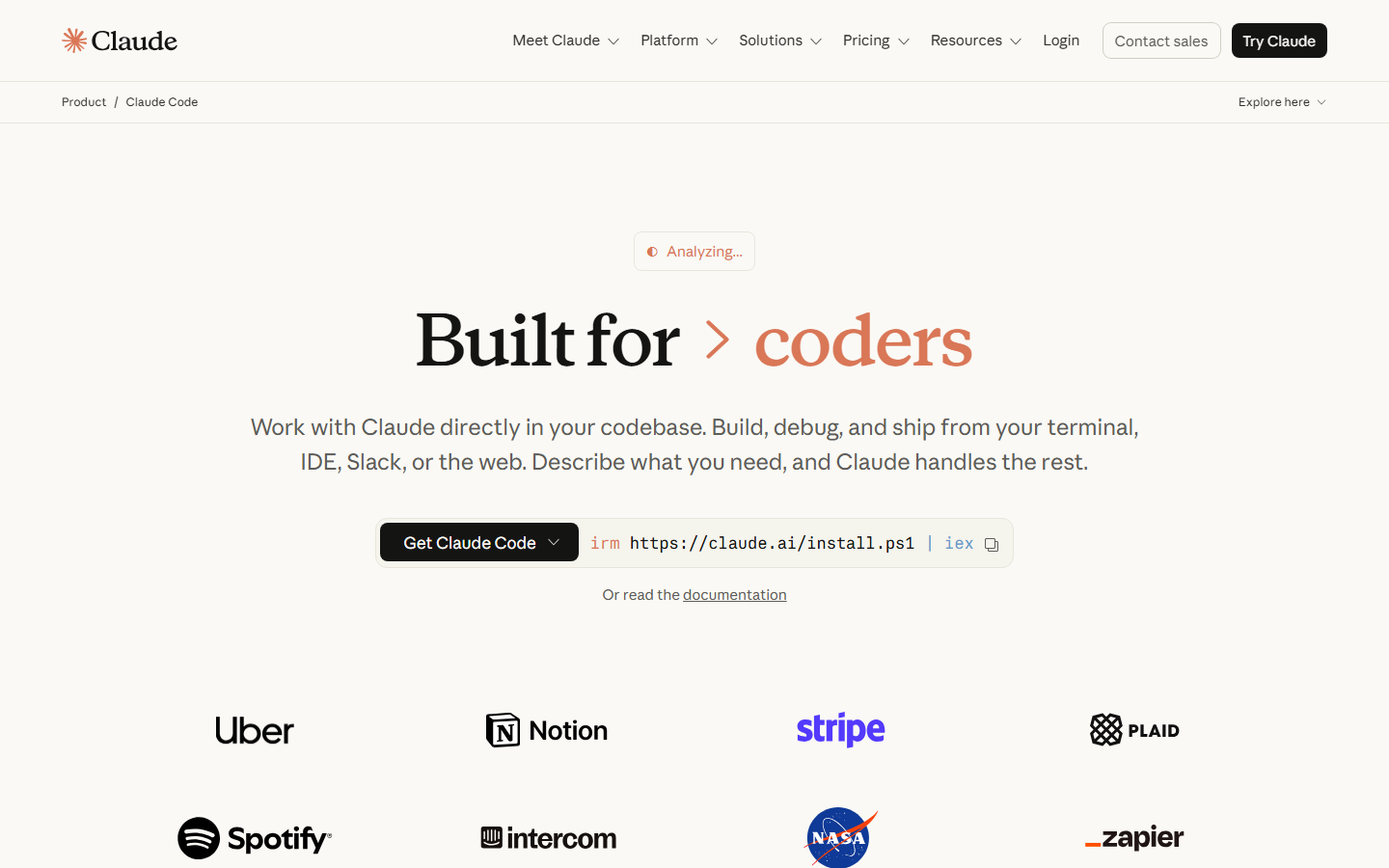
Anthropic's Claude Code launched in 2025 as a terminal-native agent that reads, edits, and runs code on your local machine via a CLI. Where Cursor and Windsurf are GUI editors, Claude Code lives in your shell, hooks into git, and respects your existing dev environment. On SWE-bench Verified, the Sonnet 4.5 + agentic harness configuration scores ~73%, the current public leader.
Claude Code is the agent of choice for senior engineers, infrastructure work, polyglot codebases, and anyone whose editor is not VS Code (Neovim, Helix, Zed, JetBrains users). It is the most aggressive on MCP support: every Claude Code install ships with the MCP client built in, so you can plug it into Linear, Sentry, Postgres, Slack, or any MCP server in seconds.
Perfect For
- CLI / terminal-first engineers who don't want a new IDE.
- Polyglot codebases (Rust, Go, Python, TS, Swift in one repo).
- Teams that want MCP-native integration with internal tools.
Pricing (May 2026)
Claude Code is bundled into Claude Pro ($20/month), Claude Max ($100-$200/month), and Claude Team / Enterprise plans, with metered usage above plan limits. Standalone Anthropic API pricing applies for headless / programmatic use. Most engineers run on the Max plan for the larger context and higher rate limits.
4. Windsurf (formerly Codeium)
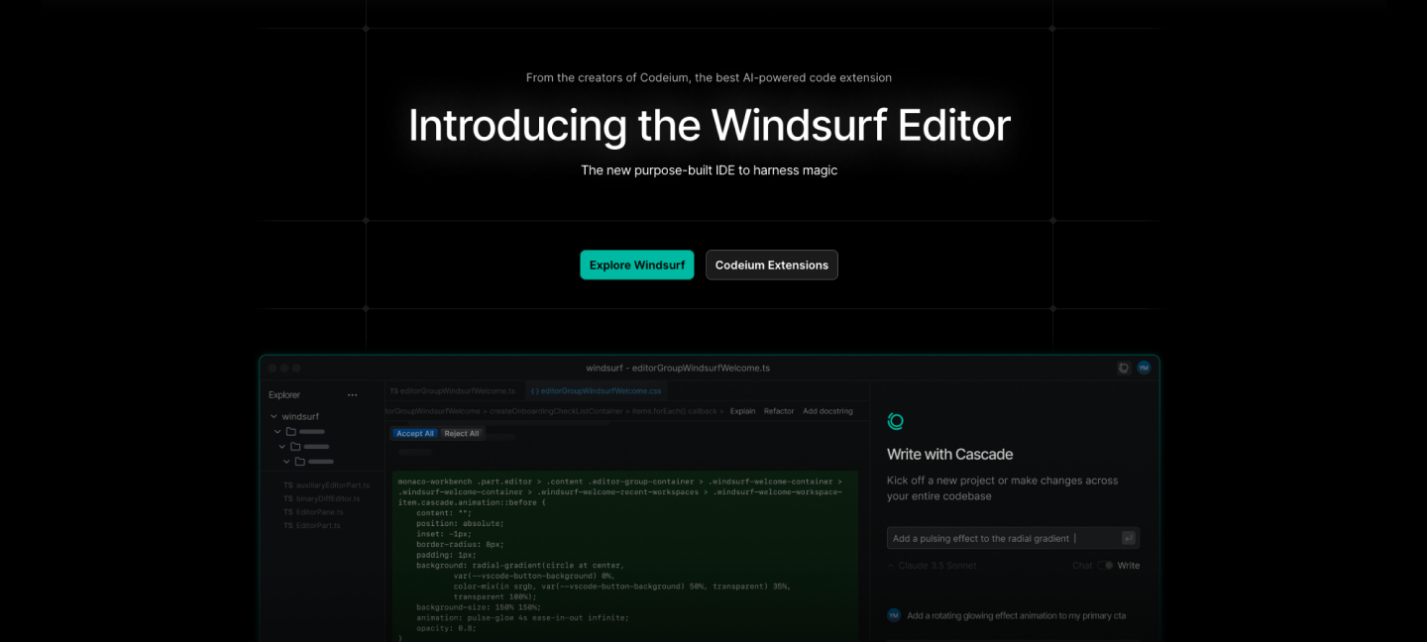
Codeium rebranded to Windsurf in November 2024 when the team pivoted from a code-completion extension to a purpose-built AI IDE. Windsurf's headline feature is Cascade, an agent that runs inside the editor, reads your whole codebase, and makes multi-file edits with a single instruction. The original Codeium completion extension still exists for VS Code and JetBrains users who don't want to switch IDEs.
Windsurf's pitch in 2026 is "Cursor competitor with stronger enterprise story." It ships on-prem and air-gapped deployment options that Cursor still does not match, plus zero-data-retention enterprise controls. That makes it the safer pick for regulated industries.
Perfect For
- Daily coding inside an AI-native IDE without losing IDE performance.
- Polyglot teams that switch between Python, TS, Go, Java, and Rust in one editor.
- Security-conscious teams that need on-prem or VPC deployment.
Pricing (May 2026)
Windsurf has a Free plan with unlimited autocomplete, in-editor chat, and limited Cascade credits. Pro is $15/user/month and Pro Ultimate $60/user/month, both with priority access to larger models. Teams sits at $35/user/month and Teams Ultimate at $90/user/month, with org analytics, SSO, and zero-data-retention. Enterprise SaaS, Hybrid, and Airgapped (VPC or on-prem) deployments are available with custom pricing. The legacy Codeium pricing page still redirects to Windsurf.
5. Qodo
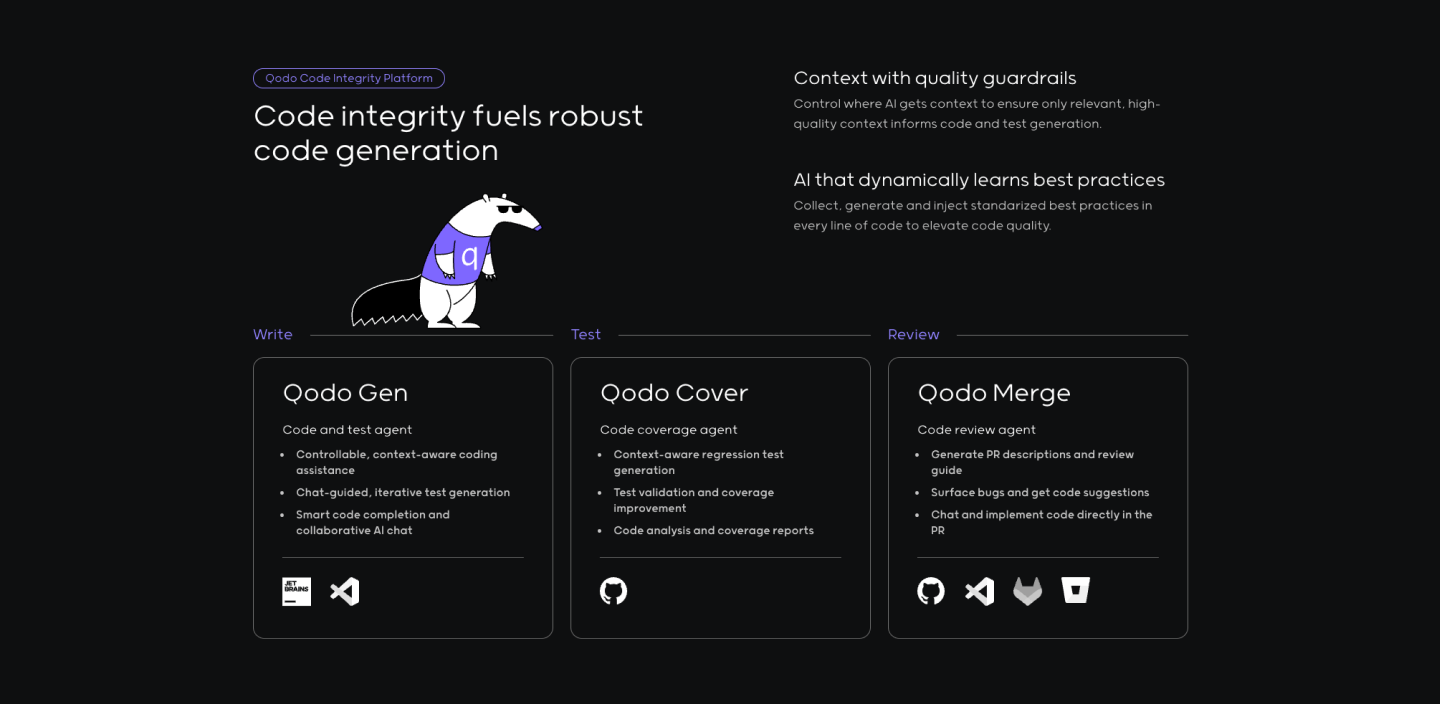
Qodo (formerly CodiumAI) is the senior-engineer-on-your-shoulder agent. Where most coding agents focus on writing new code, Qodo focuses on code integrity: it ships three agents working together: Qodo Gen (code and test agent), Qodo Cover (coverage agent), and Qodo Merge (PR review agent). It plugs into JetBrains, VS Code, GitHub, GitLab, and Bitbucket.
Qodo's differentiator in 2026: quality guardrails on top of any model. It controls what context the LLM sees, injects best practices, and validates output against the existing codebase. That makes it the strongest pick for regulated teams who want AI-generated code but can't afford hallucinated APIs in production.
Perfect For
- Improving code quality through AI-suggested refactoring backed by review agents.
- Large-scale debugging that would normally take days of senior-engineer time.
- Finding architectural inefficiencies and hidden performance bottlenecks.
Pricing (May 2026)
Qodo runs a tiered subscription. The Developer plan is free and covers Qodo Gen and Qodo Merge with community support. The Teams plan is $19/user/month and adds automated PR descriptions, ticket compliance analysis, and standard private support. The Enterprise plan starts at $45/user/month and includes the full Qodo platform, enterprise support, analytics, and self-hosted deployment. Qodo offers model choice across all plans (GPT-5.5, Claude Opus 4.7, Gemini 3.1 Pro, DeepSeek-V3, and Llama 3.3). See the live Qodo pricing page.
6. GitHub Copilot Agent Mode + Copilot Workspace
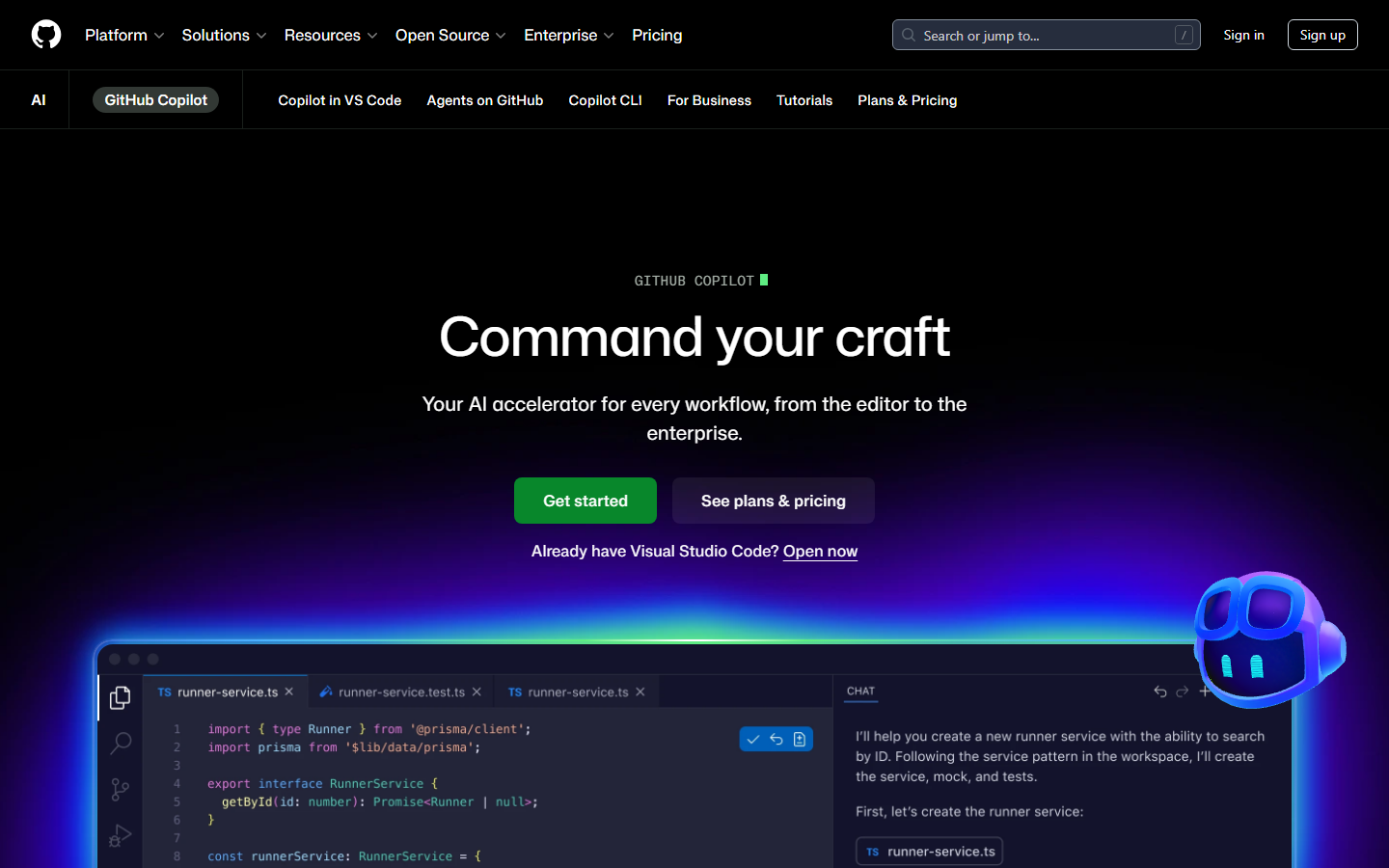
GitHub shipped Copilot agent mode (issue-to-PR automation) and Copilot Workspace (a full plan-edit-test loop) in 2024-2025. Both run on a model picker covering Claude Sonnet 4.5, GPT-5.5, and Gemini 3.1 Pro. For teams already on GitHub Enterprise, Copilot agent mode is the lowest-friction way to deploy AI agents because the auth, RBAC, and audit logs are already in place.
SWE-bench Verified result for Copilot Workspace lands around 62%, behind Devin and Claude Code but inside the band where it is genuinely useful for backlog work. The Enterprise plan also covers Copilot for Pull Requests (auto-review), Copilot in the CLI, and Copilot Chat in Slack and Teams.
Perfect For
- Teams already on GitHub Enterprise that want zero-friction AI agent rollout.
- Issue-to-PR automation across a large backlog with full audit logs.
- Org-wide deployment with existing SSO and RBAC.
Pricing (May 2026)
Copilot Pro is $10/user/month for individuals, Copilot Business $19/user/month, and Copilot Enterprise $39/user/month with full agent mode, Workspace, and Copilot Chat enterprise features. Copilot for OSS maintainers is free.
7. OpenAI Codex (CLI + Cloud Agent)
OpenAI relaunched Codex in 2024-2025 as both a hosted cloud agent (codex.openai.com inside ChatGPT) and a local CLI. It is integrated with GPT-5.5 and includes built-in sandboxes, internet access, file uploads, and PR drafting. SWE-bench Verified scores land around 70% on the agentic harness.
For OpenAI customers already on ChatGPT Plus, Team, or Enterprise, Codex is the most "official" general-purpose agent in the OpenAI stack. It pairs cleanly with the OpenAI Agents SDK for engineers who want to build custom agentic workflows on top of GPT-5.5.
Perfect For
- Teams already on ChatGPT Team or Enterprise that want a bundled agent.
- Long-running asynchronous tasks in the hosted cloud sandbox.
- OpenAI Agents SDK users who want a vendor-blessed reference implementation.
Pricing (May 2026)
Codex is bundled into ChatGPT Plus ($20/month), ChatGPT Team ($30/user/month annually), and ChatGPT Enterprise (custom). Metered usage above plan limits routes through standard OpenAI API billing.
8. Aider
Aider is the open-source CLI agent that pioneered the "pair-programming with a model on git" pattern. It edits files, runs commands, and commits clean diffs you can review. Free, MIT licensed, bring-your-own model: GPT-5.5, Claude Opus 4.7, Gemini 3.1 Pro, local Llama 3.3, Qwen Coder 3, DeepSeek-V3. Aider has 30,000+ GitHub stars and is the agent of choice for engineers who want full local control and zero vendor lock-in.
SWE-bench Verified result with Sonnet 4.5 lands around 64%, behind Devin and Claude Code but ahead of most editor-bundled agents. The killer feature is the deterministic git workflow: every edit becomes a labeled commit, so rolling back is one command.
Perfect For
- Open-source maintainers and indie hackers who refuse vendor lock-in.
- Teams using local or self-hosted models for compliance reasons.
- Engineers who want every agent edit captured as a reviewable git commit.
Pricing (May 2026)
Aider is free and MIT-licensed. Your cost is whatever your underlying model charges. On Sonnet 4.5, a small refactor typically costs $0.10-$0.60; a larger feature can hit $5-$15 in tokens.
9. ChatDev
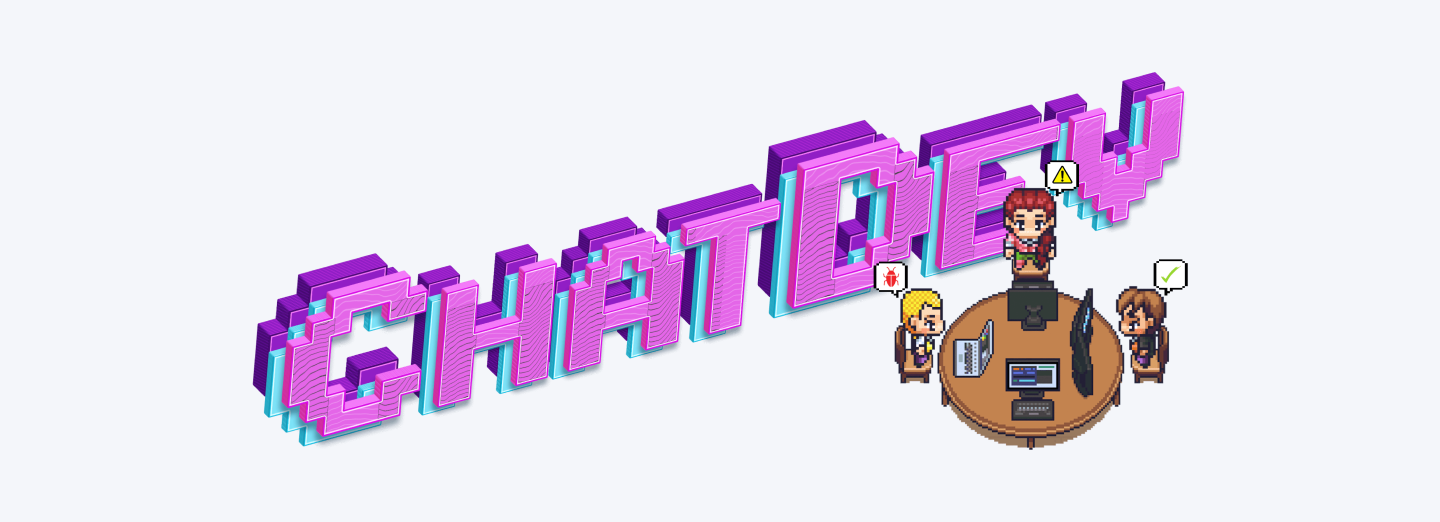
ChatDev is the open-source multi-agent framework that turns a one-line product spec into a small working application by running it through a virtual software company: CEO, CTO, programmer, tester, designer. Each role is a specialized LLM agent, and they coordinate through "functional seminars" that mirror real product meetings. ChatDev passed 27,000 GitHub stars in 2025.
ChatDev is the easiest way to understand how multi-agent collaboration works in practice. The trade-off is that it shines on prototypes, not on real, large codebases. Most production teams in 2026 have moved to AutoGen 0.5, CrewAI, or LangGraph for serious multi-agent work, but ChatDev remains the best teaching example and a useful research playground.
Perfect For
- Building prototypes and proof-of-concept apps without a human team.
- Teaching software development workflow to students with a working example.
- Researching how AI agents coordinate (the "collective intelligence" question).
Pricing
ChatDev itself is free and open-source. You bring your own OpenAI, Anthropic, or local-model API key, so cost depends on the underlying model and the size of the project. With GPT-5.5, expect $1-$5 per small project run.
10. Postman (Postbot + AI Agent Builder)
Postman is the odd entry in the list, because it is an API tool first and an AI agent platform second. It belongs here because almost every production AI agent in 2026 calls APIs, and Postman's AI Agent Builder plus Postbot have become the default test harness for LLM tool-calling, MCP servers, and agent workflows.
The AI Agent Builder gives engineers a visual canvas to wire up an agent: pick an LLM, define tools (each is a Postman collection), set guardrails, and test runs end-to-end. For teams shipping internal AI agents on top of OpenAI, Anthropic, or Bedrock, Postman is the easiest place to test that the API contracts actually work under load.
Perfect For
- Testing LLM integrations and tool-calling schemas before pushing to production.
- Building custom AI agents that connect to existing API infrastructure.
- Creating automated test suites for AI-powered features and MCP servers.
Pricing (May 2026)
Postman's Free plan ($0) covers basic API testing for individuals and tiny teams (3 users), with limited collection runs. Basic is $14/user/month annually, Professional is $29/user/month, and Enterprise is $49/user/month with org-wide security, audit logs, and priority support. Annual billing saves around 25%. AI Agent Builder usage is metered separately on Professional and above. See the live Postman pricing page.
SWE-bench Verified: How These Agents Actually Score
SWE-bench Verified is the closest thing the field has to a standardized "can it actually fix bugs in real open-source projects" benchmark. Scores from each vendor's late-2025 / early-2026 publications. Numbers move every quarter, so treat as a snapshot.
| Agent | SWE-bench Verified (late 2025 / early 2026) | Underlying model | Notes |
|---|---|---|---|
| Claude Code (Anthropic, Sonnet 4.5) | ~73% | Claude Sonnet 4.5 | Terminal-native, MCP-native |
| Devin 2.0 (Cognition) | 71% | Mix incl. Sonnet 4.5 | Up from 13.86% at 2024 launch |
| OpenAI Codex (cloud agent, GPT-5.5) | ~70% | GPT-5.5 | Bundled in ChatGPT Plus / Team |
| Cursor Composer | ~68% | Model picker (Sonnet 4.5, GPT-5.5) | Best when paired with Sonnet |
| GitHub Copilot Workspace | ~62% | Sonnet 4.5 / GPT-5.5 | Lowest-friction for GitHub Enterprise |
| Aider | ~64% with Sonnet 4.5 | BYO model | Open-source, fully local |
| Qodo | Vendor does not publish | Model picker | Focus is integrity, not raw SWE-bench |
| Windsurf Cascade | Vendor does not publish | Model picker | Strong real-world feel, no public bench |
| ChatDev | Not measured on SWE-bench | BYO model | Multi-agent prototype generation, not bug fix |
| Postman AI Agent Builder | N/A (not a coding agent) | BYO model | API and tool-calling test harness |
What to Look for in an AI Agent in 2026
Pricing pages all sound the same. The four things that actually matter in 2026 are model coverage, on-prem availability, MCP support, and the eval / leaderboard story behind the marketing.
1. Model Coverage Across Vendors
Pick an agent that lets you swap models. Single-vendor lock-in is the biggest risk in this category, because the SOTA model changes every 6 months. Qodo, Cursor, Windsurf, Aider, and GitHub Copilot all expose a model picker covering Claude Opus 4.7, Claude Sonnet 4.5, GPT-5.5, Gemini 3.1 Pro, and at least one open-weights option (Llama 3.3 70B, DeepSeek-V3, or Qwen Coder 3). Devin and Codex are mostly single-vendor by design.
2. Autonomous Task Execution and MCP Support
The 2025-2026 shift was from "complete the next line" to "plan the change, edit the files, run the tests, open the PR." Ask for a live demo on your repo, not the vendor's curated demo. Also check for Model Context Protocol (MCP) support: MCP became the standard for letting agents access your internal tools (Linear, Sentry, your DB) in 2025, and any agent without MCP support in 2026 is behind.
3. Speed and Cost per Task
Run a real workflow against your codebase before committing. The vendor demo always looks fast; your monorepo will not. Track time-to-first-PR and cost-per-merged-PR, not just monthly subscription fees. Agents that use Sonnet 4.5 for planning and switch to Haiku 4.5 for tool calls are usually 3-5x cheaper than always-Opus configurations at similar quality.
4. Security and Data Posture
LLMs are trained on huge datasets, which makes the data-handling story load-bearing. Verify the vendor's policy on training on your code, retention windows, audit logs, and zero-data-retention options. On-prem or VPC deployment is now table stakes for regulated industries (financial services, healthcare, defense). Windsurf and Qodo lead here; Cursor and Devin still have gaps.
Which AI Agent Should You Pick? Decision Matrix for 2026
| You are | Primary pick | Strong alternative | Why |
|---|---|---|---|
| Solo developer / indie hacker | Cursor Composer ($20/mo) | Claude Code, Aider | Best UX, best model picker, lowest cost |
| CLI / terminal-first engineer | Claude Code or Aider | OpenAI Codex CLI | Lives in your shell, MCP-native |
| GitHub Enterprise team | Copilot agent mode + Workspace | Cursor + GitHub Actions | Auth, RBAC, audit logs already in place |
| Regulated industry (banking, health) | Windsurf (on-prem) or Qodo Enterprise | Self-hosted Aider with local model | Air-gapped, zero data retention |
| Backlog-eater / async work | Devin 2.0 Team plan | Copilot Workspace | Runs unattended, opens PRs |
| Code-quality and review focus | Qodo Merge + Qodo Gen | GitHub Copilot review | Built around integrity, not novelty |
| API / LLM-product testing | Postman AI Agent Builder | Custom + MCP Inspector | Mature API tooling for tool-calling |
| Multi-agent research / prototype | CrewAI or LangGraph | ChatDev, AutoGen 0.5 | Production multi-agent orchestration |
AI Agent Engineer Hiring Rates in 2026
AI agent engineering is the highest-paid software role in 2026. Bands below are for US-based senior contributors with 5+ years of experience (3+ years of LLM / agent work), per Levels.fyi, Hired, and Hitmarker AI-job data, May 2026. Remote contractors hired through global platforms typically land in the lower third.
| Role | Senior US base (2026) | Total comp incl. equity | Where roles cluster |
|---|---|---|---|
| AI Agent Engineer (general) | $190K-$280K | $280K-$500K | OpenAI, Anthropic, Cognition, Google, Meta |
| Applied AI / LLM Engineer | $170K-$240K | $240K-$420K | Cursor, Windsurf, Vercel, every AI startup |
| MLOps + Agent Platform | $160K-$220K | $220K-$380K | Databricks, Snowflake, AWS Bedrock teams |
| SWE-bench / Evals Engineer | $200K-$300K | $300K-$600K | Frontier labs (OpenAI, Anthropic, GDM) |
| MCP / Tool Integration Engineer | $160K-$220K | $230K-$380K | Anthropic, GitHub, Cursor, Linear |
| AI Agent Developer Advocate | $160K-$210K | $210K-$350K | All major LLM vendors |
The Contrarian Take: Most Teams Should Not Deploy a Fully Autonomous Agent in 2026
Devin 2.0 at 71% SWE-bench Verified sounds impressive until you remember that 29% of the time it ships a broken PR. That gap is exactly why teams pair autonomous agents with dedicated AI agents testing that validates every agent-generated change before it reaches production.
For real product code, the "let an agent merge unattended" pattern still fails in 2026: it produces silent regressions, leaks secrets into logs, and adds dependencies you never wanted. Most teams should run AI agents in human-in-the-loop mode through the end of 2026 and treat any autonomous-merge claim with skepticism.
The exception: narrow, well-scoped workloads where the agent has tight guardrails and a strong test suite. Codemod-style refactors, dependency bumps, doc generation, and test-writing on already-covered code are safe. Anything that touches auth, billing, infra, or production data is not.
Read also: best AI coding assistants compared.
A 90-Day AI Agent Rollout Plan for Engineering Teams
Buying an AI agent is the easy part. Most teams stall at adoption because they skip the rollout work. A practical 90-day plan, based on what we see work at Index.dev customers in 2026:
- Days 1-15: Pick one agent and one workload. Cursor or Claude Code for individual productivity, Qodo for PR review, or Devin / Copilot Workspace for async backlog. Don't roll out three at once.
- Days 15-30: Define your eval set. Take 25-50 real merged PRs from the last 6 months. Run the agent against the issue body and grade the diff against the human PR. This becomes your private "SWE-bench" for go/no-go.
- Days 30-60: Pilot with 3-5 senior engineers. Track time-to-first-PR, cost-per-merged-PR, and reviewer time. Compare against baseline.
- Days 60-90: Roll out with guardrails. Mandatory code review on every agent PR, dependency lockfile changes flagged, secrets scanning on every diff. Publish results internally to drive adoption.
Learn more: 25 must-have developer tools to supercharge your coding in 2026.
Further reading: how to build a useful AI agent from scratch.
Final Thoughts
AI agents are no longer hype. The 2024-2025 leap from 13.86% to 71%+ on SWE-bench Verified means the best agents now ship real engineering work. The five original agents (Devin, ChatDev, Qodo, Windsurf, Postman) still anchor the category, and the five challengers (Cursor, Claude Code, Aider, Codex CLI, Copilot agent mode) are where most net-new adoption now lands.
The right framing has not changed: these are tools that serve your engineers, not replacements for them. Pick the agent that matches your workload, your security posture, and the model you trust. Then put it in front of a real workflow and measure.
Hire Vetted AI Agent Engineers, Fast
Need senior engineers who can ship production AI agents on Claude Opus 4.7, GPT-5.5, Gemini 3.1 Pro, or open-weights models? Index.dev connects you with the top 1% of AI agent talent from a community of 27,000+ human-interviewed engineers, selected from 2.5 million+ candidates at a sub-3% acceptance rate. Customers report a 95% successful placement rate and save up to 40% versus US in-house cost, with 3 to 5 matched candidates inside 48 hours.
Next Steps
For Tech Talent
Ready to build a global remote career? Join the Index.dev talent network: a community of 27,000+ human-interviewed engineers, the top 1% from 2.5 million candidates at a sub-3% acceptance rate. We match senior AI agent, LLM, and applied-AI engineers with long-term remote roles at vetted US, UK, and EU companies.
For Tech Companies
Need AI agent developers who already ship with Claude Code, Cursor, Devin, and MCP? Index.dev's network of 27,000+ pre-vetted engineers, the top 1% from 2.5 million candidates, is ready to plug into your team. Customers report a 95% successful placement rate and save up to 40% versus US in-house hiring, with 48-hour matching.