Imagine if, instead of jumping between different apps for emails, documents, shopping, and scheduling, you could just tell your device what you need, and it would take care of everything. No more switching tabs or figuring out which tool to use—just a seamless digital assistant that understands you.
This is the promise of AI agents. Unlike traditional apps, which perform specific tasks in isolation, AI agents can handle a wide range of requests using natural language. They can learn from your preferences, anticipate your needs, and act on your behalf, like a highly capable personal assistant but powered by artificial intelligence.
Recent advances in AI have made this future possible. AI agents aren’t just changing how we interact with technology; they’re reshaping the entire software industry. From automating workflows to revolutionizing user experiences, they represent the biggest shift in computing since the rise of smartphones.
Let’s explore how AI agents work, the different types, and the impact they will have on software development.
Need top AI developers fast? Hire from Index.dev’s elite talent pool in 48 hours with a 30-day free trial!
What Are AI Agents?
AI agents are intelligent software tools that can think, learn, and act on their own. They don’t just process information—they make decisions, adapt to new data, and take action without needing constant human input. Unlike traditional AI models that require instructions for every step, AI agents can operate independently, solving problems and automating tasks dynamically.
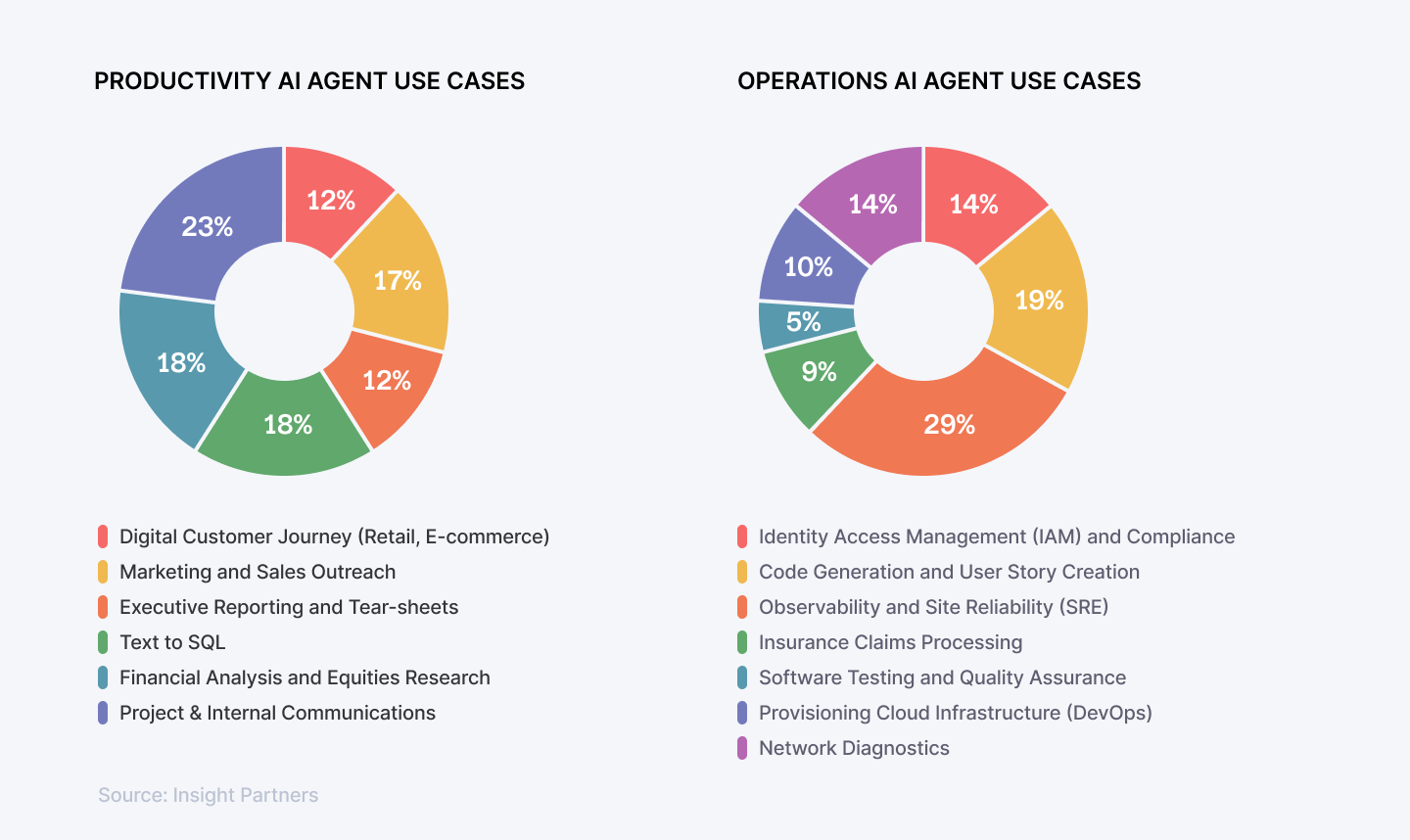
In software development, AI agents can write and optimize code, debug errors, test software, and even manage deployment pipelines. Instead of developers manually reviewing lines of code, an AI agent can detect inefficiencies, suggest improvements, and even implement fixes in real time.
For example, imagine an AI agent specialized in debugging. It could automatically scan a codebase, identify performance bottlenecks, and rewrite problematic sections—saving engineers hours of tedious work. Another agent could streamline DevOps, managing CI/CD workflows by running automated tests, monitoring infrastructure, and rolling back faulty updates before they cause major issues.
Some AI agents go even further, acting as project managers. They can track development progress, assign tasks based on team capacity, and predict potential delays—essentially functioning as an AI-powered scrum master.
Learn More: How GenAI Transforms Software Development in 11 Ways
How AI Agents Work
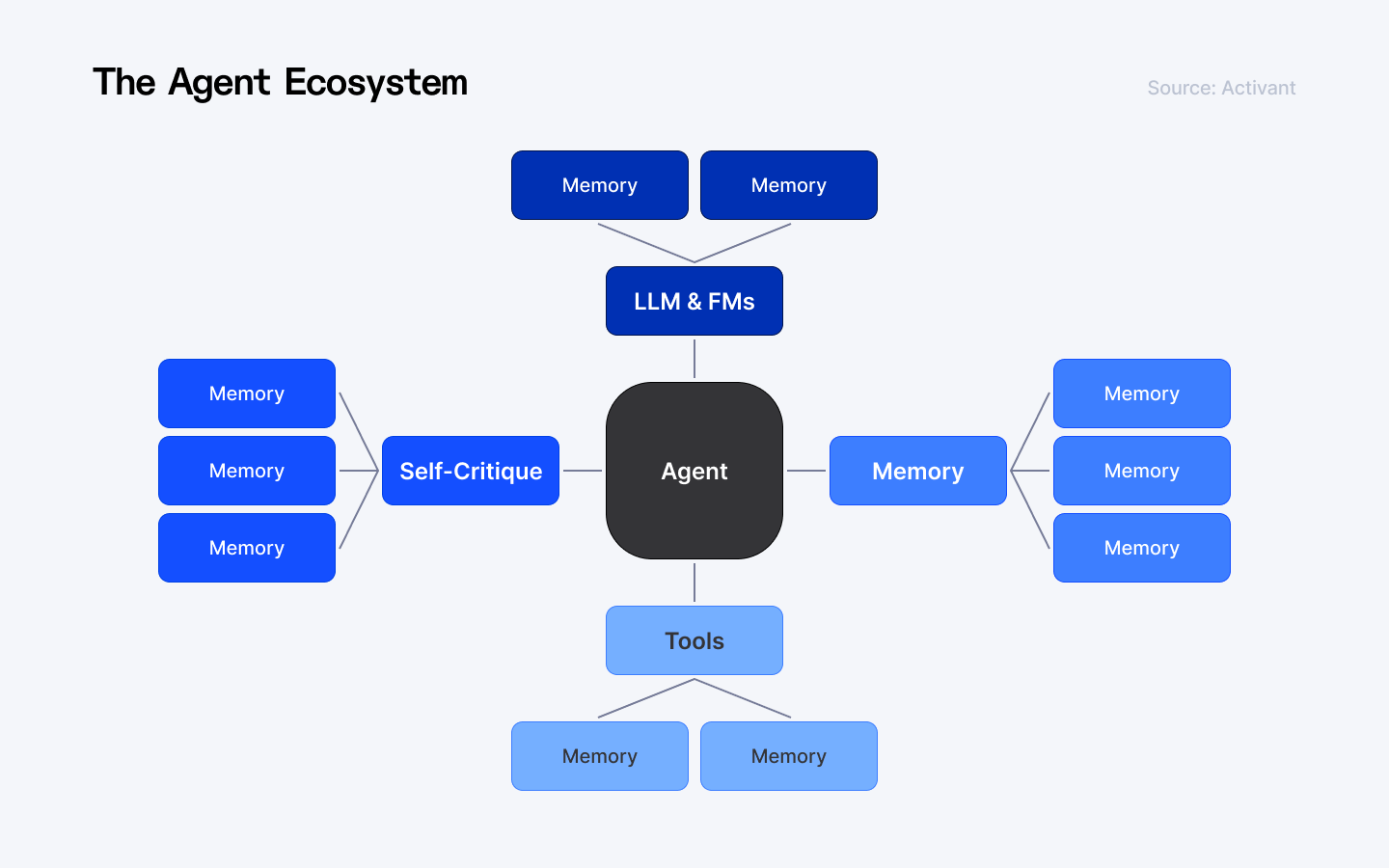
AI agents combine advanced algorithms, machine learning, and decision-making processes to operate autonomously. Here’s a breakdown of how they function:
Architecture and Algorithms
AI agents rely on complex systems to process vast amounts of data and make informed decisions. Machine learning enables them to learn from experience, improving their accuracy and efficiency over time. Think of them as self-improving problem solvers, constantly refining their approach based on new data.
Workflow and Processes
An AI agent starts with a goal, formulates a plan, executes necessary steps, and adapts based on real-time feedback. This cycle of learning and adjusting ensures that AI agents continually enhance their performance, much like a developer refining code after testing.
Autonomous Actions
Unlike traditional software that waits for instructions, AI agents take action on their own. In software development, this means automating tasks like code reviews, vulnerability detection, or even writing documentation—saving engineers from repetitive work and allowing them to focus on more complex challenges.
The Evolution
When ChatGPT first arrived, it could discuss theories and explain concepts but struggled with basic arithmetic. However, once connected to an external calculator, its capabilities improved. Today, AI agents are evolving beyond simple responses. Large language models (LLMs) act as their "brains," while additional algorithms and plugins extend their functionality. Take AutoGPT, for example—a proof-of-concept AI agent that can autonomously execute marketing campaigns, like scanning Reddit for product-related questions and generating responses.
The Future
Now, companies like GitHub are pushing AI agents even further with multi-agent systems, such as GitHub Copilot Workspace, where multiple AI agents collaborate to automate complex software development tasks. Imagine an AI that not only writes code but also tests, deploys, and optimizes it—effectively acting as an entire development team.
Types of AI Agents
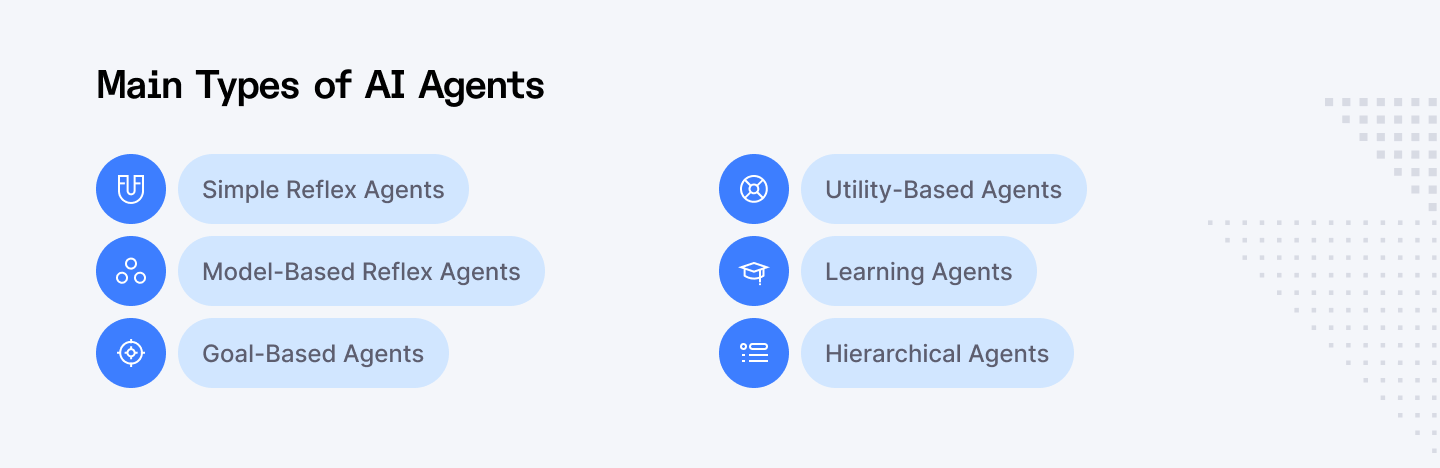
Organizations create and deploy different types of AI agents. Here are the most common examples:
1. Simple Reflex Agents
These agents operate purely on predefined rules, responding to specific conditions without considering past experiences. Think of them as AI-driven reflexes—if X happens, they do Y. They’re useful for straightforward tasks like automatically resetting passwords when a user types “forgot password.” However, they can’t handle more complex decision-making beyond their set rules.
2. Model-Based Reflex Agents
Unlike simple reflex agents, these agents build an internal model of their environment to make better decisions. Instead of just reacting, they analyze patterns and consequences before acting. For example, a model-based agent in software testing can track past bug reports and anticipate potential errors in future code updates.
3. Goal-Based Agents
These agents don’t just react; they think ahead. They evaluate different possible actions and choose the best path to achieve a specific goal. This makes them ideal for complex tasks like natural language processing (NLP) or robotics. A chatbot powered by a goal-based agent, for instance, can analyze multiple responses before selecting the most relevant reply.
4. Utility-Based Agents
These agents aim to maximize a specific outcome by comparing different choices and selecting the one with the highest value. They go beyond simple goals by considering multiple factors. For example, a travel booking agent can find the best balance between price, travel time, and layovers—not just the cheapest ticket.
5. Learning Agents
These agents continuously improve by learning from past experiences. They use feedback mechanisms and adaptive learning techniques to enhance their performance. A coding assistant AI, for instance, can refine its code suggestions over time based on how developers use its recommendations.
6. Hierarchical Agents
These agents work in a structured, multi-tier system where higher-level agents break down complex tasks and delegate them to lower-level agents. It’s like a well-organized company: the CEO (high-level agent) sets strategic goals, while managers (mid-level agents) assign tasks to employees (low-level agents). In software development, a hierarchical agent system could manage a complete CI/CD pipeline, automating everything from coding to deployment.
| Agent Type | Characteristics | Examples | Real Tools |
| Simple Reflex Agents | Acts based on predefined rules without considering past events | Password reset systems, Basic chatbots | Rule-based spam filters, IFTTT |
| Model-Based Reflex Agents | Uses internal models to understand patterns before acting | Software testing systems, Weather prediction systems | Selenium testing framework, Jenkins |
| Goal-Based Agents | Evaluates multiple options to achieve specific goals | Navigation systems, Advanced chatbots | GPT-3 powered chatbots, A* pathfinding algorithms |
| Utility-Based Agents | Chooses actions that maximize specific values or outcomes | Travel booking systems, Resource allocation tools | Expedia's booking engine, Google Maps route optimizer |
| Learning Agents | Improves performance through experience and feedback | Code assistants, Recommendation systems | GitHub Copilot, Netflix recommendation engine |
| Hierarchical Agents | Works in organized layers with task delegation | CI/CD pipeline managers, Project management systems | Azure DevOps, Jenkins Pipeline |
Explore More: ChatGPT vs Claude for Coding: Which AI Model is Better?
AI Agents in Software Engineering
AI agents are transforming how software is built, tested, and secured. They automate tedious tasks, speed up workflows, and strengthen code quality, freeing developers to focus on creative problem-solving. Here are some ways in which AI agents can help developers:
- Code Reviews: AI agents can automatically analyze code, spot issues, and suggest fixes—like an ever-vigilant reviewer that never gets tired. They help catch errors early, ensuring clean, high-quality code.
- Automated Testing: Instead of manually running tests, AI agents handle unit, integration, and regression testing without requiring constant human oversight. Think of them as virtual QA engineers who work 24/7, making sure new changes don’t break anything.
- Faster Deployments With CI/CD: AI agents can help get code changes into production quickly. This speeds up Continuous Integration/Continuous Deployment (CI/CD) by automating builds, running tests, and ensuring smooth releases. Developers can push updates faster, with fewer bugs focusing more on coding and less on managing processes.
- Smart Security Checks: AI agents act as security scanners, constantly hunting for vulnerabilities in your code and ensuring software remains secure throughout its lifecycle. They analyze dependencies, flag risks, and suggest fixes before threats become real problems.
Coding agents are a subset of AI agents. Think of them as intelligent assistants, reducing repetitive work and allowing developers to focus on building better software. As AI continues to evolve, these tools will become even more integrated into development workflows, making software engineering more efficient and scalable.
Also Check Out: AI Application Development Cost: Key Estimation and Optimization Strategies
AI Coding Agents: Three Ways They Impact Coding
AI is transforming coding in three major ways:
FIRST
Developers are using large language models (LLMs) like ChatGPT, Claude, and others as coding assistants. These models generate code from text descriptions, improve existing code, and help debug errors. Providers like Claude have introduced features like Artifacts, which allow users to run and iterate on generated code directly within the chatbot interface.
SECOND
Advanced AI assistants are now integrated into IDEs, offering more context and supporting complex tasks. GitHub Copilot, launched by Microsoft a year before ChatGPT, was the first major example. It started as a simple tool for code snippets but has evolved into a full development assistant. Similarly, Amazon’s coding assistant Q provides autocomplete, design agents, and even migrates code between languages. Other players include Replit, which powers its own AI-driven coding environment, and Codeium, which supports numerous IDEs.
THIRD
The most advanced AI systems act as multi-agent teams, collaborating to complete complex coding tasks. Multiple LLMs can be assigned different roles in a project—one might design a project plan, another breaks it into smaller steps, a third writes the code, while another reviews and tests it. This approach mimics how human development teams work. One example of this is Devin, created by AI startup Cognition and branded as “the first AI software engineer.” It uses LLMs and tools like browsers, IDEs, and compilers to gather information, write code, and evaluate its results.
The videos shared by Cognition AI featured Devin handling various assignments, including taking on a computer vision project from UpWork. This sparked discussions about whether AI agents could soon take over software engineering jobs. While Devin isn't available to the public yet, it has inspired open-source alternatives like OpenDevin and GPT-engineer, both showing the potential for AI to handle end-to-end software engineering tasks.
AI coding agents are still in the early stages but have already shown that they can automate routine tasks, helping developers be more efficient and focus on higher-level work.
The Biggest Technical Challenges with AI Agents Today
AI agents hold great promise, but they are far from perfect. Developers face two major challenges when building and improving these agentic AI systems:
1. Unpredictability and Lack of Explainability
AI models don’t always behave in predictable ways. Given the same prompt, they can generate different responses, making it difficult to anticipate what they will say or do next. This lack of consistency makes debugging and evaluating AI agents a challenge. Even more, we don’t fully understand how these models arrive at their conclusions. Today’s models still operate as black boxes, making it hard to explain their reasoning or trust their decisions.
2. Debugging and Evaluation Complexity
Because AI agents don’t follow rigid logic, they can solve problems in unexpected ways. A good analogy comes from chess: AI-powered chess engines often make moves that seem illogical to human players but ultimately lead to victory. Evaluating AI agents is also tricky. Did an agent improve because of better engineering, or was it simply a result of a more powerful model? Developers struggle with setting reliable benchmarks, choosing meaningful metrics, and gathering user feedback to assess performance effectively.
Hype or Reality?
AI assistants like GitHub Copilot have been shown to boost developer productivity by reducing time spent searching for solutions. Tools like ChatGPT and Claude are also becoming regular tools for drafting software designs, generating initial code versions, and learning new programming concepts.
But not all the hype around AI coding assistants is justified. For example, many of Devin’s widely shared demos turned out to be carefully controlled, and AI agents are still far from handling the full workload of a mid-level or senior software engineer.
There are also concerns about code quality and security. AI-powered tools can generate unsafe code, sometimes pulling insecure patterns from their training data or the user’s own codebase. To mitigate this, providers are continuously adding safeguards. Another risk is "automation blindness"—developers might rely too much on AI-generated code without reviewing it, leading to unpredictable errors that take extra time to debug.
Interestingly, the rise of AI is driving more demand for developers, not less. As these tools evolve, they will reshape—not replace—the role of software engineers.
A Future Look on AI Agents
In short, AI agents are on track to transform nearly every aspect of life and work. Their impact on the software industry will be palpable. Building an app or service may no longer require coding or design skills. Instead, you’ll simply describe what you want, and your AI agent will handle everything—writing code, designing the interface, creating a logo, and even publishing the app. OpenAI’s GPT is just an early glimpse into a world where anyone can create and deploy their own digital assistants.
Beyond software development, AI agents will change how we interact with technology. They could replace search engines by delivering personalized answers instead of endless links. E-commerce may shift as agents find the best prices across multiple vendors, eliminating the need to browse stores. Productivity tools like word processors and spreadsheets might also be replaced by AI-driven systems that generate and format content for you.
Industries that are currently separate—search engines, online shopping, advertising, and productivity software—could merge into a one AI ecosystem. The future isn’t just about improving existing tools; it’s about redefining how we use technology altogether.
Explore More: Your 5 Biggest AI Hiring Questions, Answered
Final Thoughts
People want AI to do things for them, and for developers, AI agents are becoming impossible to ignore.
No matter what kind of engineer you are—frontend, backend, or full-stack—an AI assistant can help. For frontend engineers, AI can assist with creating responsive designs and optimizing user interfaces. Backend engineers can use AI to improve database queries, manage server resources, and strengthen security. Full-stack engineers can get support across the board, from writing better code to handling deployments.
A recent Gartner report predicts that 80% of software engineers will need to reskill as generative AI takes on more programming tasks. But AI won’t replace developers—it will need them to review, refine, and guide its work.
Agentic AI, which focuses on autonomous decision-making instead of just generating code, is the next step. It will push AI coding assistants beyond simple suggestions and towards AI-native software development. The tools will get smarter, but experienced developers will always be needed to make sure the results are solid.
Transform your development process with AI agents! Index.dev connects you with skilled AI agent engineers for your projects. Our remote talent has top technical skills, strong work ethics, and global experience.
What we offer:
- The top 5% of AI, ML, LLM engineers
- Hard-to-find experts for your toughest roles
- No hidden fees and a 30-day risk-free trial
Sign up on Index.dev to access a network of highly skilled developers for your project.