It took over 16 years for the first 100 million people to use a mobile phone, and seven years for 100 million people to get online. But ChatGPT hit 100 million users in just two months.
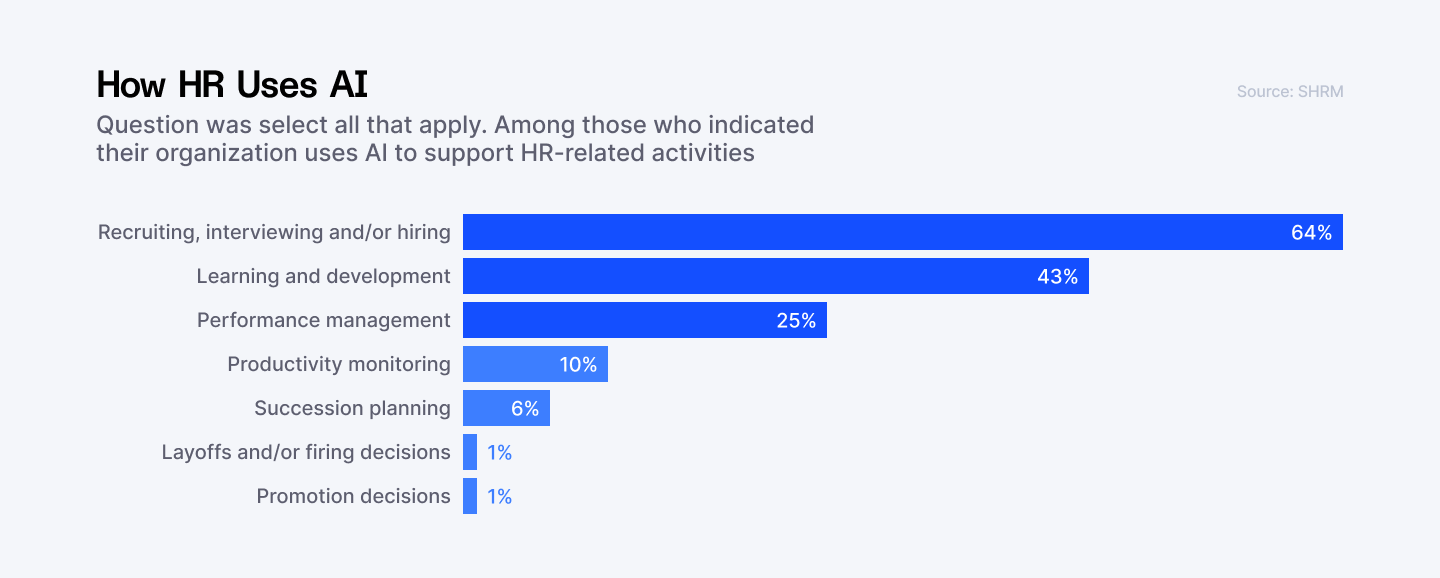
The speed of AI adoption has been unprecedented. This is pushing businesses to adopt AI quickly, but with a sense of responsibility and strategy. Gallup’s latest study on AI adoption reveals that 93% of Fortune 500 CHROs say their organizations have already started using AI tools to improve business operations. And it’s making a big impact on hiring too. The top three areas where AI is being used in HR are recruitment, interviewing, and hiring (64%), learning and development (43%), and performance management (25%).
But even with all this progress, CEOs, CTOs and HR teams still have questions about AI—especially how it affects the workplace and employees. This article will tackle 5 key AI hiring questions that are on the minds of tech leaders like you, so you can start filling in the blanks on AI's biggest uncertainties. We'll discuss everything from how AI can simplify hiring to whether it will replace humans. Exciting? Read on!
Need top AI developers fast? Hire from Index.dev’s elite talent pool in 48 hours with a 30-day free trial!
1. How Can AI Simplify or Automate Aspects of Hiring?
HR tools have always aimed to lighten the load when it comes to sourcing, screening, interviewing, and onboarding candidates, allowing your team to focus on the core business. AI takes this to a whole new level. Let’s use a kitchen analogy to help explain AI adoption and its various stages:
- Microwave: General AI tools, like ChatGPT or office copilots, are your starting point. They are easy-to-use, quick solutions that can help with tasks like generating job descriptions or creating interview questions.
- Blender: Specialized AI tools, such as those designed for specific tasks in HR, like candidate screening, talent matching, or automating workflows, are a bit more advanced and tailored for specific purposes within your organization.
- Oven: Highly specialized, in-house AI solutions built to solve unique hiring challenges. These are the most complex to create but can be incredibly powerful if your team has the resources to build them.
While building custom solutions might be a stretch, it's important for hiring managers to learn about AI and explore the tools available. This way, you can collaborate with partners to choose the right tech for your hiring needs. Start small—experiment with simple tasks like creating interview prompts or analyzing resumes. Over time, you can take on bigger challenges as your confidence grows. AI is especially helpful for smaller HR teams that don’t have the resources of larger organizations. It can help match the best candidates to your job requirements, automate repetitive tasks like candidate screening, and even expand your reach to qualified talent. Plus, it frees up recruiters to focus on high-impact activities, like engaging with candidates and building relationships.
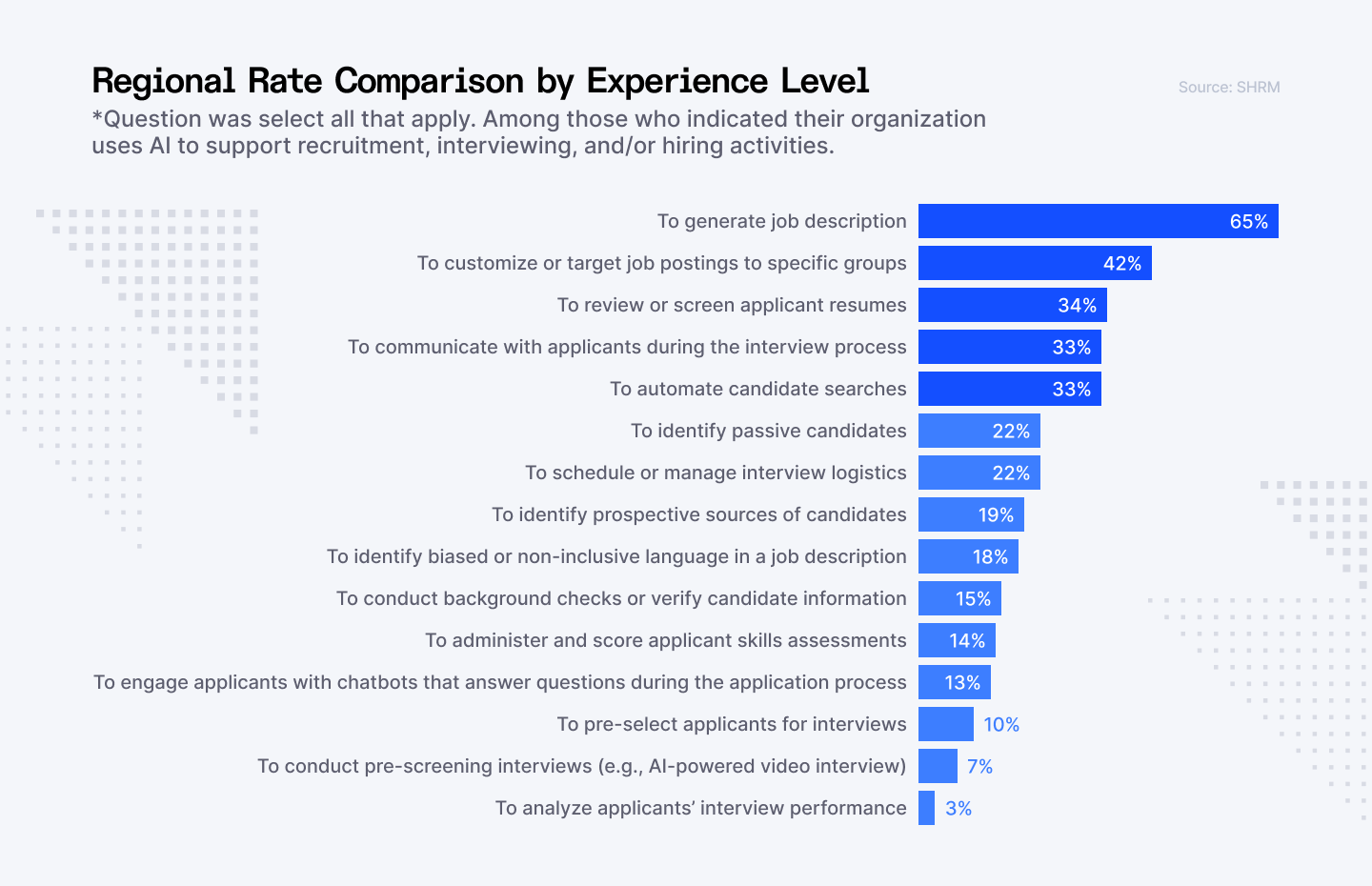
But here’s the key: Think of AI as your copilot, not autopilot. You’re not just handing over the reins and letting it do the work. Instead, use it as a thought partner—brainstorming, researching, and improving your productivity. It can speed up processes like time-to-hire and cost-to-hire, but human oversight will always be essential.
Read More: Top 17 AI Recruiting Tools for Hiring Engineering Talent
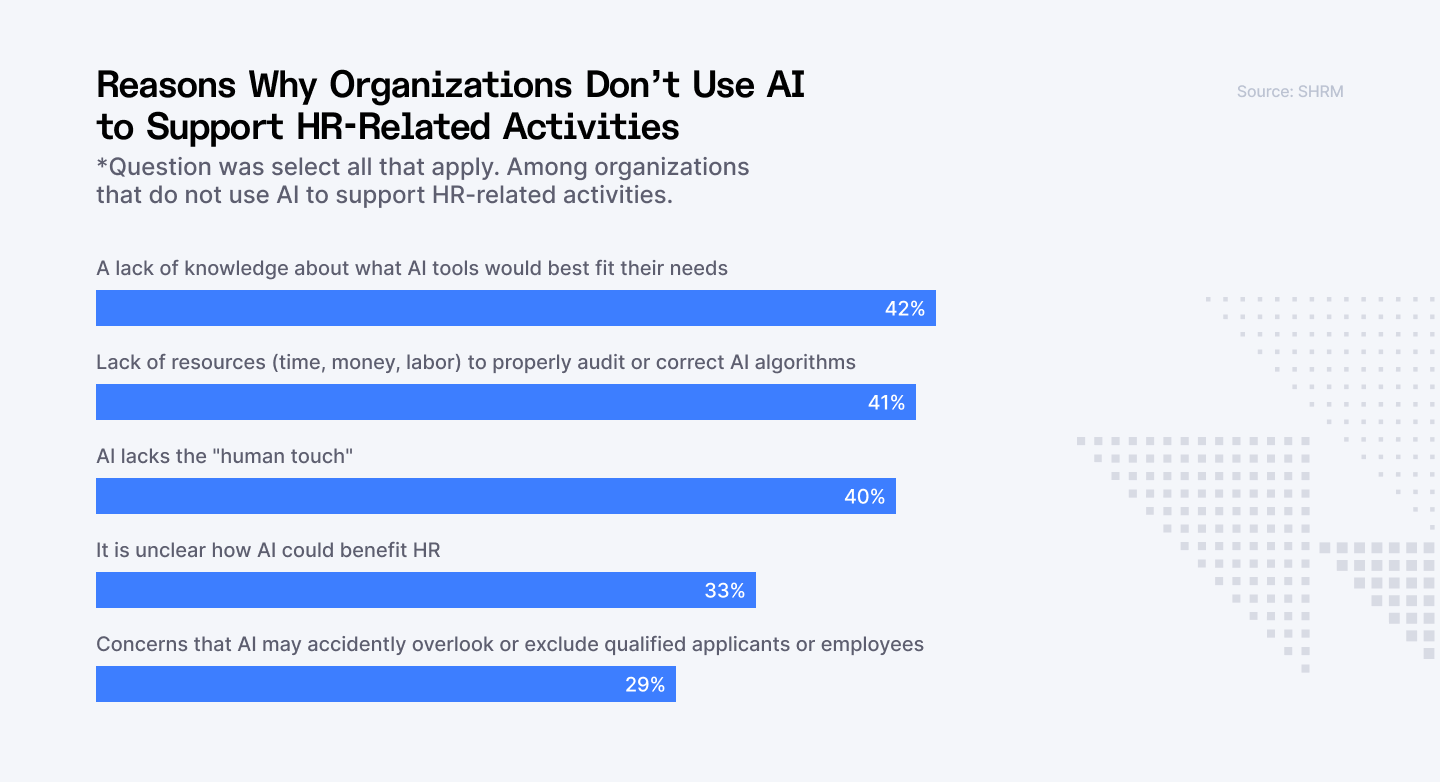
2. How Should I Get Ready to Integrate AI into My HR Activities?
Integrating AI into HR is a different kind of challenge compared to adopting past technologies. Think back to when typewriters replaced pens, and later, computers replaced typewriters. Each new tool made tasks faster but didn’t fundamentally change the way people worked—drafting, revising, and editing remained the same.AI, however, doesn’t just speed up tasks. It reshapes how you work entirely. It finds patterns you might not notice, generates insights, makes predictions, and even creates content autonomously. Instead of seeing AI as just another tool, think of it as a system you work with, not just something you use.
To introduce AI effectively into your HR processes, focus on three things:
First, build a digital mindset in your HR team.
Your team doesn’t need to become AI experts or data scientists, but they do need to embrace a new way of thinking. A digital mindset is all about seeing opportunities in data, algorithms, and AI-driven tools. Encourage your HR managers to experiment with AI in recruiting—like using AI for crafting personalized job descriptions, strengthening candidate screening, or predicting talent success within the job. Aim for at least a basic level of fluency in topics like AI systems, machine learning, and data-driven decision-making. This doesn’t mean coding; it means understanding enough to work alongside AI tools effectively. Change is inevitable.
Second, foster a culture of continuous adaptation.
AI adoption isn’t a one-and-done task. Your HR team needs to be ready for ongoing changes and advancements. Start by introducing AI tools gradually and encourage experimenting with their potential. Your company should also focus on breaking down silos. Create centralized knowledge repositories where data and insights can be shared easily. This not only strengthens collaboration but also prepares your team for the faster, more integrated workflows AI enables. Flexibility is key—both in mindset and operations.
Third, integrate AI into your operating model.
Static systems lead to static organizations, while adaptable systems drive growth. For example, Amazon famously solved its scalability issues by requiring all teams to communicate through APIs, which encouraged data sharing and collaboration. While you may not need such a drastic shift, you should think about how AI can transform your hiring operations. How can it help dismantle silos and make hiring more efficient? Building AI into your workflows ensures it doesn’t just sit on the sidelines—it becomes a core part of how you operate. The result? A more agile, data-driven hiring strategy ready for today’s challenges—and tomorrow’s opportunities.
Read More: 5 Worrying Workplace Trends Managers Can’t Ignore in 2025
3. How Concerned Should I Be About AI Taking Over Jobs?
It’s natural to feel some anxiety about how AI might impact jobs, especially when nearly 1 in 4 HR professionals share this concern. But history shows us a reassuring pattern: technological revolutions tend to create more jobs than they eliminate. The rise of automobiles, for instance, may have ended the era of horse-and-buggy drivers, but it also led to entirely new industries—manufacturing cars, running gas stations, and repairing vehicles. Similarly, AI is not about replacing humans but empowering them. Tools like OpenAI’s Codex can autogenerate programming code for routine tasks, freeing developers to focus on complex challenges such as systems architecture and user experience. This doesn’t make programmers obsolete; it makes them more effective.
AI won’t take your job—but someone who uses it might.
This sentiment captures the essence of how AI will impact the workforce. Organizations and individuals that embrace AI effectively will gain a competitive edge, while those who don’t risk falling behind. It’s about collaboration, not competition, between humans and technology. AI excels at automating repetitive tasks, allowing workers to concentrate on higher-value contributions like decision-making, creativity, and strategy. In fact, a SHRM report found that HR professionals at companies already using AI are 16 times more likely to say AI is transforming jobs rather than displacing them. This reinforces the notion that AI doesn’t eliminate jobs—it evolves them.
4. What Hiring Tasks Are Better Left to Humans Rather Than AI?
Yes, there can be bias in AI, but there’s bias in humans too. Maybe together we can cover those gaps for each other. AI is incredibly powerful, but it’s not a one-size-fits-all solution for HR activities. There are areas where it falls short and where human involvement is essential to ensure fairness, accountability, and emotional intelligence in decision-making. It’s up to HR to assess and justify any decision that’s made with AI input. The following are some of the ugly uses of AI in hiring:
Complex decision-making.
AI struggles with decisions that require deep understanding and emotional intelligence. For example, some decisions, like hiring or firing employees, demand a level of accountability that AI cannot provide. The “black box” nature of many AI systems makes it difficult to fully understand how decisions are made. Another example like evaluating a candidate's fit within your company's culture or handling sensitive employee issues needs human judgment. AI systems operate on data and algorithms, which don’t account for the unique culture and values of an organization.
Bias mitigation.
Although AI can help reduce bias, it can also perpetuate it if not carefully monitored. If the data used to train AI contains biases, those biases will likely appear in its recommendations. This can lead to unfair hiring practices.
Legal and compliance issues.
Laws like New York City’s hiring regulations require businesses to evaluate AI tools to ensure they don’t disadvantage protected groups. Oversight by human HR professionals is critical to ensure compliance and to assess whether decisions made by AI align with ethical and legal standards.
Building personal connections.
HR is about managing people and relationships. Overusing AI to replace regular human interactions, such as in performance reviews or employee feedback sessions, can make the workplace feel impersonal.
Accountability and oversight.
When AI makes a recommendation that leads to a poor outcome, who is responsible? The lack of clear accountability can undermine trust in HR processes. Human oversight is crucial to validate AI-generated decisions and to provide a layer of accountability that technology cannot offer.
AI excels at automating routine tasks, analyzing large datasets, and offering insights that humans might overlook. However, it cannot replace the human touch needed for tasks involving judgment, empathy, and accountability. Always keep a balance between leveraging technology and maintaining the human touch in your HR processes.
5. Where Can I Find AI-skilled Talent?
Finding skilled AI workers can feel like a big challenge, but the solution might already be within your reach—or across the globe. Here’s how you can approach it effectively:
Upskill your existing team.
Why hire new talent when you can train the people you already trust? Upskilling and reskilling your team is a smart, cost-effective way to prepare for the future. But here’s the thing: this isn’t just an HR project. It’s a full-on change management strategy. If you’re a leader, this is your chance to connect your company’s goals with your team’s growth. Help them understand how AI is changing the game and show them where they fit in. Partner with experts, invest in training programs, and focus on building the AI skills that align with your strategy.
Look beyond borders.
Sometimes the talent you need isn’t local, and that’s okay. Global talent platforms and regional hiring agencies can help you find the right fit. Don’t limit yourself—there’s a world of opportunity out there. Expand your search to global talent pools in regions like Central Eastern Europe or Latin America. These areas are packed with skilled professionals who can do the job just as well as local hires—but at a lower cost. Focus on skills in key programming languages like:
- Python: Perfect for AI workflows, thanks to its rich libraries like TensorFlow and Scikit-learn.
- R: Great for statistical analysis.
- Julia: Built for high-performance modeling.
- Java: Flexible and easy to integrate.
- Others like Haskell, Lisp, and Prolog for more specialized AI tasks.
Engage early with emerging talent.
Don’t wait for AI talent to come knocking. Take the lead. Partner with universities and sponsor hackathons or tech events. This way, you connect with talented students and fresh graduates who are already diving into AI. Show them you’re serious about innovation by offering internships or real-world projects.
Use AI to onboard new hires.
Why not let AI help you welcome new team members? Tools like ChatGPT and Microsoft Copilot can act as onboarding guides, teaching new hires your processes, policies, and company culture.
Redefine career paths to include AI.
AI is changing the way we work, so it’s time to update job descriptions. Highlight AI skills and responsibilities in your roles. Consider creating new positions like “AI Specialist” or “AI Project Manager” to attract talent with specific expertise.
Explore More: 5 Best Programming Languages For Artificial Intelligence
Wrapping Up: What Is the Future of AI?
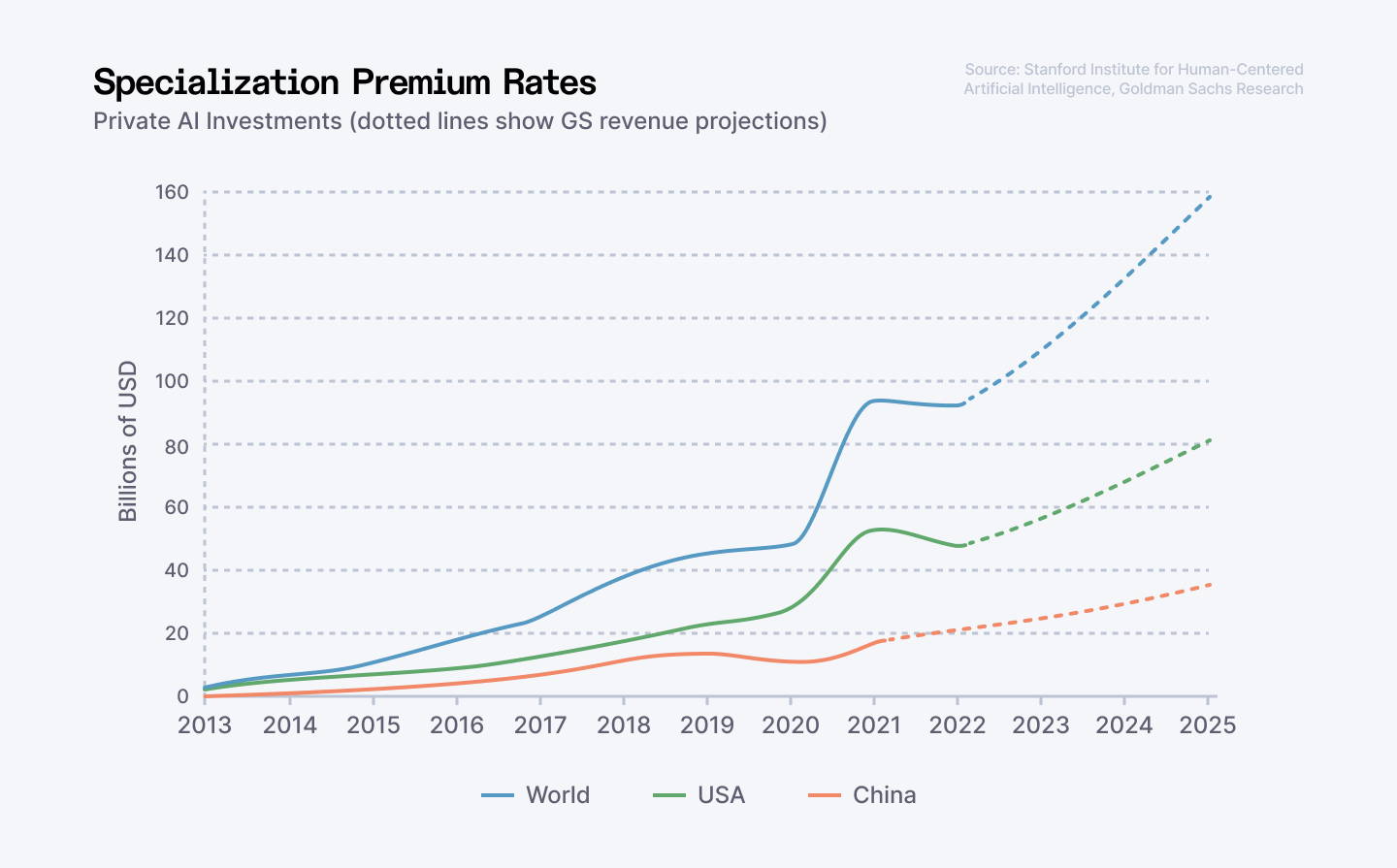
AI is changing the world in ways we’re only beginning to understand. McKinsey says it could boost labor productivity by up to 0.6% annually through 2040. Goldman Sachs predicts a 7% rise in global GDP, and China might see a 26% jump by 2030. By 2025, AI investment is expected to hit $200 billion, driving the market to $207 billion by 2030.
One thing remains true: hiring is about people. No technology can fully replace human judgment. AI tools, no matter how advanced, are built by humans and can make mistakes. That’s why balance is key. Use AI thoughtfully. Build and deploy AI tools with equity and empathy at the forefront. Take proper precautions to ensure data security and prevent biases. Use AI as a tool to complement human judgment. Communicate how AI will help your organization achieve its goals. Invest in ongoing training to help your team evolve alongside the technology. Yes, it’s a lot of work. But it’s also what will set your business apart. That’s how you win the AI race.
…
Index.dev connects you with vetted AI engineers for your projects. Our remote talent has top technical skills, strong work ethics, and global experience.
What we offer:
- The top 5% of AI, ML, LLM engineers
- Hard-to-find experts for your toughest roles
- No hidden fees and a 30-day risk-free trial
Sign up on Index.dev to access a network of highly skilled developers for your project.