Scaling applications is a crucial and indispensable element in the rapidly evolving field of contemporary software development. The increasing user bases and traffic for applications and services necessitate the adaptation of software systems to effectively manage higher workloads while ensuring optimal performance and dependability. This paper explores the fundamental principles, difficulties, and optimal methods associated with scaling applications.
This guide provides developers and system administrators with essential knowledge to achieve sustainable growth for their applications. It covers a wide range of topics including vertical and horizontal scaling approaches, microservices, load balancing, caching, database optimization, cloud-based scaling, monitoring, and performance management. Achieving smooth user experiences and satisfying the needs of a broader audience in the current era of digital technology is greatly dependent on the capacity to efficiently expand apps.
Join Index.dev for remote work opportunities on innovative projects in the US, UK, and Canada, with competitive pay and career growth. Sign up today!
What Is Application Scalability?
Scalability of an application refers to its capacity to expand over time and effectively manage an increasing number of requests per minute (RPM). It is not only a basic adjustment that can be toggled; it is a thorough and extensive procedure that affects nearly every component in your stack, encompassing both the hardware and software aspects of the system.
Should issues arise, one can continue to augment the CPUs or raise the RAM limitations. However, it is important to note that these actions primarily enhance the throughput rather than the performance of the application. Departing from this approach is not advisable when you observe that your application is beginning to exhibit efficiency issues. Scaling the application is a complex task, so it is advisable to have a thorough understanding of your application before considering the strategic decisions on how and when to expand it.
Types of Scaling
There exist two main methodologies for scaling applications:
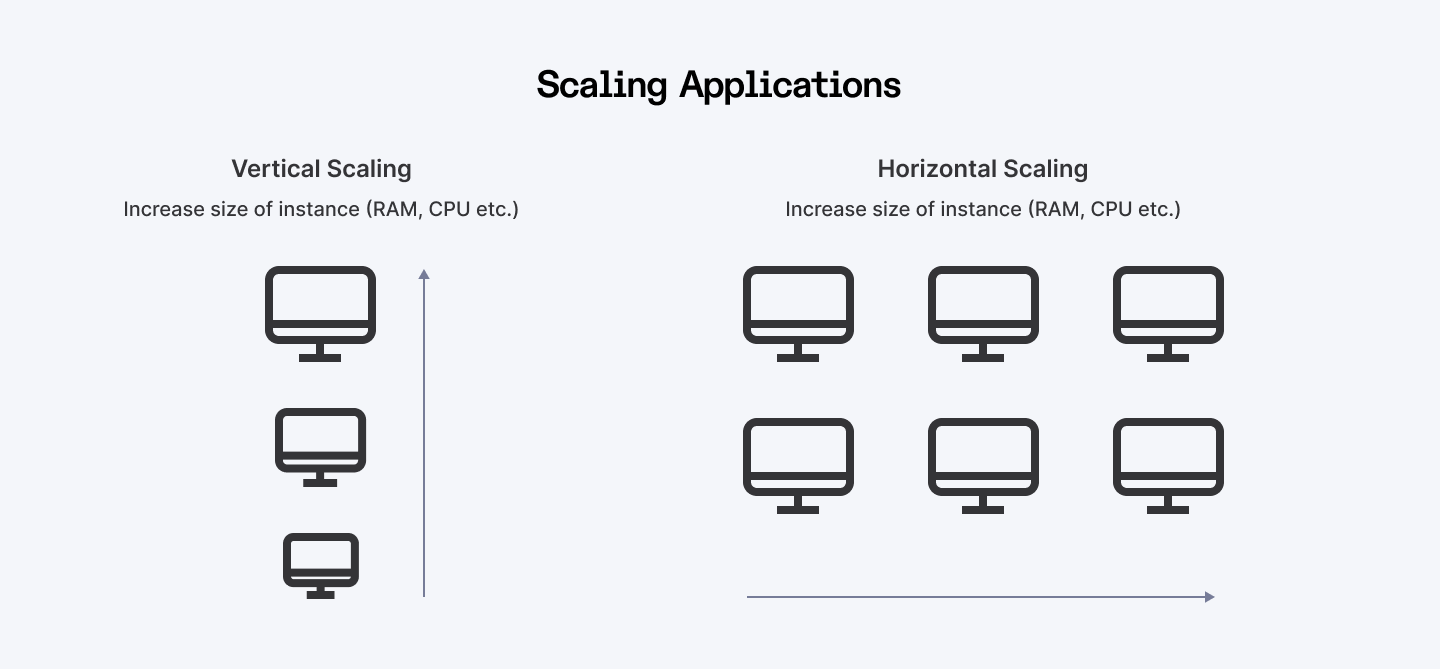
Vertical Scaling
Vertical scaling, also referred to as "scaling up," is the process of augmenting the capabilities of a single server or node by investing additional resources. This usually entails increasing the CPU, RAM, storage, or network bandwidth. Implementing vertical scaling is reasonably simple but has constraints due to a maximum capacity restriction on the workload that a single server can manage. Furthermore, it might result in escalated expenses for hardware.
Horizontal Scaling
Horizontal scaling, or "scaling out," is the process of effectively dispersing the application burden over several servers or nodes. Horizontal scaling places emphasis on augmenting the system by adding more servers, rather than allocating additional resources to a single server. This strategy offers greater flexibility and scalability by enabling the application to expand horizontally in response to demand.
By distributing traffic evenly among several servers, horizontal scaling may effectively manage much larger workloads compared to vertical scaling. Furthermore, it provides enhanced fault tolerance by allowing several servers to provide traffic service even in the event of one or more node failures.
The Problems with Application Scaling
Frequent occurrence of scalability problems arises when an application becomes excessively large, however the ability of the program to expand is mostly determined by the fundamental system design. Although constructing the project using The Rails Way may not be the most optimal strategy when your application is undergoing fast evolution, it does not imply that scaling a Rails application is always a challenging task. Indeed, while Twitter transitioned from Rails to Scala, Shopify has been consistently expanding with Rails as its backend for almost a decade, handling more than 50,000 requests per minute and achieving a response time of 45ms.
Numerous frameworks are extremely specialized, however the choice of a framework is contingent upon application requirements, framework popularity, cost, support, and other relevant considerations.
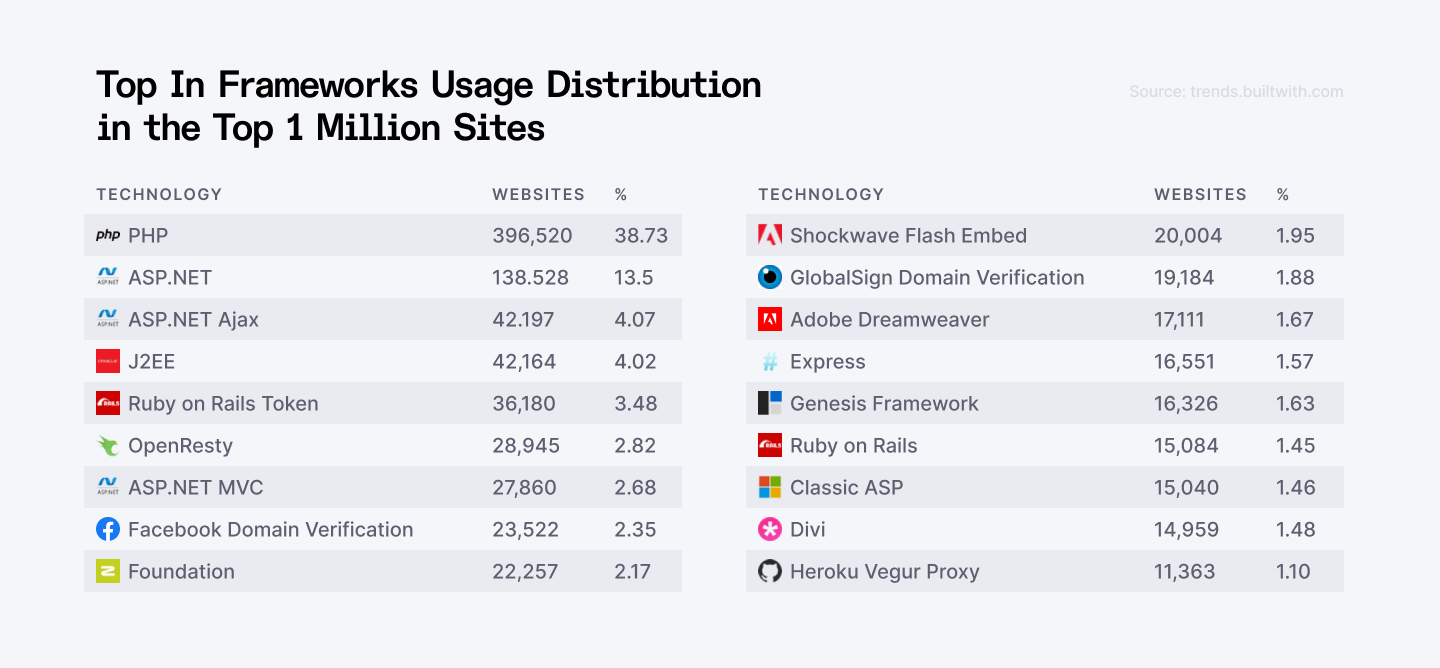
Even in the absence of performance or scalability issues similar to those experienced by Twitter or Shopify, doing thorough design and development of the application is quite valuable. Scaling can provide a multitude of distinct challenges. Potential underlying causes of your issues may be associated with:
- Finite physical resources such as memory and CPUs;
- Improper memory hierarchy;
- Suboptimal database engine performance;
- Complex database structure, inadequate indexing;
- Substandard execution of database queries;
- Incorrect server setup;
- Limitations of application servers;
- In general, spaghetti code;
- Suboptimal caching;
- Insufficient monitoring instruments;
- Excessive reliance on external depend;
- Inadequate job design for background positions Increasingly problematic.
Irrespective of personal opinions, Rails is an excellent framework supported by a vast community and a wealth of pre-known answers available online. There are several excellent open-source tools available for immediate integration into your stack, as well as a wide range of profiling and analysis tools that assist in identifying the bottlenecks of your system.
When is Scaling an Application Necessary?
Prior to proceeding, it is imperative to carry out performance testing in the event that a narrow user base utilizes your application. Next, you may analyze the server's performance and ascertain the estimated user capacity it can support. Upon the server's failure at its optimal capacity, it is important to carry out thorough scalability testing. Subsequently, you are presented with two alternatives: horizontal or vertical scaling.
Vertically scaling the software offers several notable advantages:
- Modifying the application code of web applications is strictly prohibited.
- Minimize server expenses.
- Elimination of data discrepancies due to the consolidation of all data onto a single computer.
Nevertheless, by horizontally scaling, you may use the performance of several servers distributing tasks, resulting in speedier service for each simultaneous request. An inherent drawback of this method is the need for altering the application code and reworking the structures of the online application. However, it undeniably improves scalability.
Read More: AI Application Development Cost: Key Estimation and Optimization Strategies
The Most Popular Application Scaling Techniques
If your intention is to construct a static website devoid of dynamic content, it will be enough to insert a load balancer between the client and server machine. Its function is to only transmit the requests from the client to the server and vice versa.
However, the narrative departs from that of a dynamic web application, which creates material dynamically using databases. Millions to billions of read requests to the same database in such systems might cause the front-end servers to break before the database itself.
Hence, proficiency in database methods, as outlined more below, is essential.
1. Cache database queries
An examination of query logs may be conducted to identify queries that yield a quicker response time compared to those that take longer to answer. It is possible to temporarily store the results of requests that required longer response times into the memory of your web server. Thus, in the event of simultaneous requests to these queries, your application code will utilize the data stored in the cache.
2. Database Sharding
Another strategy to enhance the scalability of the application is the implementation of database sharding. This approach involves dividing a single dataset among several databases. The allocation of reading requests from a single database to many databases would result in a distribution of the workload that a single database used to manage.
As previously said, database sharding involves both horizontal and vertical scaling. Under the previous approach, it is necessary to position supplementary nodes in order to distribute the workload of reading processes. Vertical scaling is the technique of enhancing the data processing capabilities of a single database server by optimizing the CPU count and expanding the RAM or storage capacity.
Furthermore, apart from horizontal and vertical scaling, it is possible to duplicate the data into many databases. This approach is crucial for developing a scalable architecture in situations where geo-location routing is necessary. This involves deploying database server replicas to various places globally, depending on the locations of users. Although this approach has a few advantages, it also has some disadvantages. Specifically, anytime you do a write action, you must duplicate it to every replica.
3. Manual scaling
So far, we have discussed strategies for expanding the size of your database. Now let us direct our attention towards the HTTP requests that emerge simultaneously. The aforementioned solution involves the implementation of a load balancer that routes client requests to various servers depending on the geographical location of the request. To achieve manual scalability, you can define the IP addresses of many servers to accept and handle incoming traffic.
Nevertheless, major performance concerns of this method include that if the load balancer malfunctions, the entire program will also fail. So, to surmount these limitations, the cloud environment offers automatic scalability.
4. Automated scaling
Cloud computing services provide an automated scaling capability that adjusts the amount of computing resources dynamically according to the specific needs of your web application at that moment. Autoscaling encompasses not only the expansion of resources during periods of heavy traffic, but also the reduction of computing resources gradually when traffic decreases, all at a reasonable cost.
Upon a client's request to the server, it is directed to load balancers that establish communication with the server regarding the decision to either increase or decrease the connection capacity based on the volume of traffic.
5. Content Delivery Network (CDN)
The main goal of the CDN is to provide services to users operating in several geographic regions. A Content Delivery Network (CDN) is a repository for common front-end libraries such as jQuery, Bootstrap, and other JS or CSS frameworks. Suppose an Indian web developer programming a PHP application requires access to the Bootstrap CSS framework hosted on a server in the United States.
Connecting to this server in the United States would result in network congestion. Nevertheless, the presence of a Content Delivery Network (CDN) in Singapore would result in minimal network delay. Greater proximity of the CDN to the client improves scalability. Likewise, if your online application has a large number of photos, video, and audio files, you may deploy a Content Delivery Network (CDN) across several dispersed sites to enhance network performance.
What Are the Advantages of Scaling Apps?
Improved user experience
It is clear that a greater number of users will not utilize an application that has significant scalability problems. Their most probable course of action is to remove it from their devices and proceed to another application. Their decision would not be contingent upon rectifying all the issues in the application. At that juncture, it is unrealistic to anticipate any swift expansion of your application.
Delivers exceptional performance
When an application meets high performance standards, irrespective of the user base (1000 or 10 million), it will function as anticipated from the early phases. Therefore, it is crucial to strategically plan the scalability of the app right from the creation stage.
Saves money
In the case of any commercial application, the depletion of financial resources results in a decline in the number of users. If one cannot accurately forecast the early scalability of an application, it is advisable to opt for a Minimum Viable Product (MVP). This involves constructing the product with essential functionality catered to a small number of customers.
You can then track the performance of the program as the number of users grows and strategically plan its scalability. Starting from that juncture, if you continue to employ the same infrastructure as during the development of the MVP, your web application is likely to encounter scalability challenges. For applications with a substantial user base, it is imperative to incorporate scalability from the initial planning phase. This will result in time and cost savings without the need to restructure the code and architecture.
Scaling Strategies and Best Practices
In order to get effective application scaling, developers and administrators must employ a range of mechanisms and optimal methodologies:
Microservices Architecture
A microservices architecture is a decomposition of a huge monolithic application into smaller, autonomous services that may be created, implemented, and expanded separately. In order to optimize resource use and scalability, each microservice assumes responsibility for a distinct business feature. Through the process of decoupling services, microservices facilitate the concurrent work of teams on independent components, therefore resulting in expedited development and deployment cycles.
Load Balancing
Load balancing is a basic method used to equally distribute incoming networking traffic among several servers or instances. The use of this strategy guarantees that no individual server is swamped, therefore mitigating any adverse impact on performance. Load balancers can function at many levels of the network stack, including the application layer and the transport layer. They may be deployed using either hardware load balancers or software load balancers.
Caching
Data caching refers to the practice of storing often used data in a fast-access storage system. Through the implementation of data caching at several levels such as the application level, database level, or content delivery network, the application may optimize the retrieval of information, therefore minimizing the burden on backend servers and databases. The implementation of efficient caching techniques may greatly enhance the speed and response times of applications.
Database Optimization
Databases frequently act as a limiting factor while expanding scalable programs. Ensuring optimal database performance is essential for managing growing workloads. Implementing strategies such as database indexing, query optimization, and denormalization may significantly improve the performance of databases. Furthermore, the process of sharding, which involves dividing the database, may effectively spread data among several nodes, therefore drastically lowering the workload on individual database instances.
Asynchronous Processing
The approach of asynchronous processing involves the execution of time-consuming operations in the background, therefore enabling the program to swiftly reply to user requests. By delegating non-essential or time-consuming tasks to background queues or workers, the primary application may concentrate on managing user interactions. In operations that do not need instant user response, such as email alerts or batch processing, asynchronous processing is especially advantageous.
Automatic Scaling
Automated scaling, or auto-scaling, is a method of automatically scaling resources according to predetermined criteria. Auto-scaling features are frequently provided by cloud service providers, enabling applications to automatically allocate or deplete resources in response to demand. For instance, when CPU use exceeds a specific level, auto-scaling can allocate more instances to manage the higher workload, and when the workload drops, it can reduce resources to save expenses.
Redundancy and Failover
Implementing redundancy in the application infrastructure is essential to guarantee both high availability and fault tolerance. Redundancy refers to the establishment of duplicate servers or resources in several geographical locations. Should a breakdown occur, a failover mechanism will promptly shift traffic to backup resources, therefore guaranteeing little interruption to the availability of the application.
Technical Tips When Scaling an Application
To now, you have acquired a comprehensive understanding of the attributes of scalable programs and the strategies to leverage both hardware and software aspects in order to get enhanced scalability. Now, let us go into some technical procedures to successfully get app scalability.
A culmination of both vertical and horizontal scrolling
Vertical and horizontal orientations are not mutually exclusive. Nevertheless, it is possible to employ them simultaneously to enhance the processing capabilities. You may have encountered scenarios in which a portion of your application increases in vertical dimension while the remaining portion increases in horizontal dimension.
The consideration of the following is crucial while transitioning between the two scaling modes:
- To achieve this, it is necessary to develop the system architecture with separation of services from the outset.
- Proper data partitioning is necessary to prevent data sharing between concurrent server units.
- This thought is also relevant to databases, however it is imperative to guarantee the consistency of data.
Assess whether scalability is a must
Indeed, it is more convenient to become all engrossed in the enthusiasm around scalability. Preceding any scaling of an application, a comprehensive study should be conducted. You may discover that scaling is not the optimal approach for your application or that the issue is located elsewhere.
Hence, during load testing, it is necessary to evaluate all of the following:
- Can the application scale to accommodate a growth in users? To enhance the user experience, it is advisable to take into account concurrency and latency. A higher latency resulting from increased load would be detrimental.
- In the event of a rise in latency caused by an increase in concurrent users, what storage capacity are you intending to expand? Is the hardware the sole component, or will the file storage be included?
- Lastly, what resources are available to you in the event that you encounter a substantial workload?
Read More: The Ultimate Checklist for Releasing Your Full-Stack Web Application
Real World Examples
Netflix: The Evolution of a Global Streaming Powerhouse
Netflix, formerly a DVD rental firm, underwent a tremendous transformation into a worldwide streaming behemoth. An essential determinant of its success was its capacity to expand its infrastructure to accommodate the needs of millions of users globally.
Netflix's approach included:
- Cloud adoption: Migrating its infrastructure to AWS in order to take advantage of its scalability and availability.
- Microservices architecture: The architectural approach of dividing a monolithic program into smaller, independent services in order to enhance flexibility and scalability.
- Content Delivery Network (CDN): Utilizing a worldwide CDN to provide material in closer proximity to users, therefore minimizing delay and enhancing performance.
Notwithstanding its achievements, Netflix had obstacles such as:
- Peak traffic: Effectively handling abrupt surges in traffic during the premiere of popular shows or holidays.
- Data center outages: Guaranteeing uninterrupted company operations in the event of hardware malfunctions or natural calamities.
Netflix gained important insights from its experiences in scaling, such as the need of: Proactive capacity planning: Anticipating future demand and adjusting infrastructure accordingly.
- Continuous monitoring: Employing sophisticated monitoring tools to detect possible bottlenecks and performance problems.
- Automation: Implementing automated infrastructure provisioning and scaling to minimize manual labor and enhance efficiency.
Uber: Expanding a Worldwide Transportation Infrastructure
The ride-sharing app Uber has seen exponential expansion in cities throughout the globe. In order to satisfy the growing demand, Uber adopted many scaling strategies:
- Serverless architecture: Utilizing AWS Lambda for event-driven operations such as matching riders with drivers, so minimizing infrastructure management overhead. Distributed databases: Utilizing scalable databases like Cassandra to store and process vast quantities of data.
- Dynamic pricing: Modifying fares in response to demand to optimize resource utilization and balance supply and demand conditions.
Nevertheless, Uber encountered obstacles, such as:
- Geolocation accuracy: Guaranteeing exact tracking of the location for both passengers and drivers.
- Fraud prevention: Safeguarding its platform from fraudulent activity such as counterfeit rides or pilfered accounts.
The growth trajectory of Uber underscored the significance of:
- Data-driven decision-making: Employing data analytics to enhance operational efficiency and enhance user satisfaction.
- Security best practices: Enforcing strong security protocols to safeguard user data and deter fraudulent activities.
- Scalability testing: Consistently performing load and stress tests to detect possible bottlenecks and enhance performance.
Conclusion
Application scalability is a crucial element of modern software development. By comprehending the different scaling techniques, ideal methods, and possible obstacles, developers and system administrators may construct resilient, scalable programs that satisfy the requirements of an expanding user population while preserving peak performance and dependability.
Continuous monitoring, performance improvement, and smart utilization of cloud resources are crucial for attaining long-term growth for any application. Given the ongoing evolution of technology, it is imperative for developers to be updated on the most recent trends and advancements in the domain of application scalability.
For Clients: Need a skilled developer? Index.dev connects you with experienced developers who excel in application scaling. Ensure optimal app performance and avoid bottlenecks. Start your free trial now!
For Developers: Ready to build scalable applications for high-growth companies? Join the Index.dev talent network and connect with top employers. Help businesses handle massive user bases with confidence! Sign up today!