Businesses worldwide are racing to hire for their AI teams today, and truthfully speaking, "AI jobs" no longer equate to hiring an additional Python developer.
Job titles such as AI Engineer, Prompt Engineer, and AI UX Designers are some of those fastest growing this year, and if you still think that AI hiring is only about data scientists and programmers, you are already behind.
Quick stats you need to know:
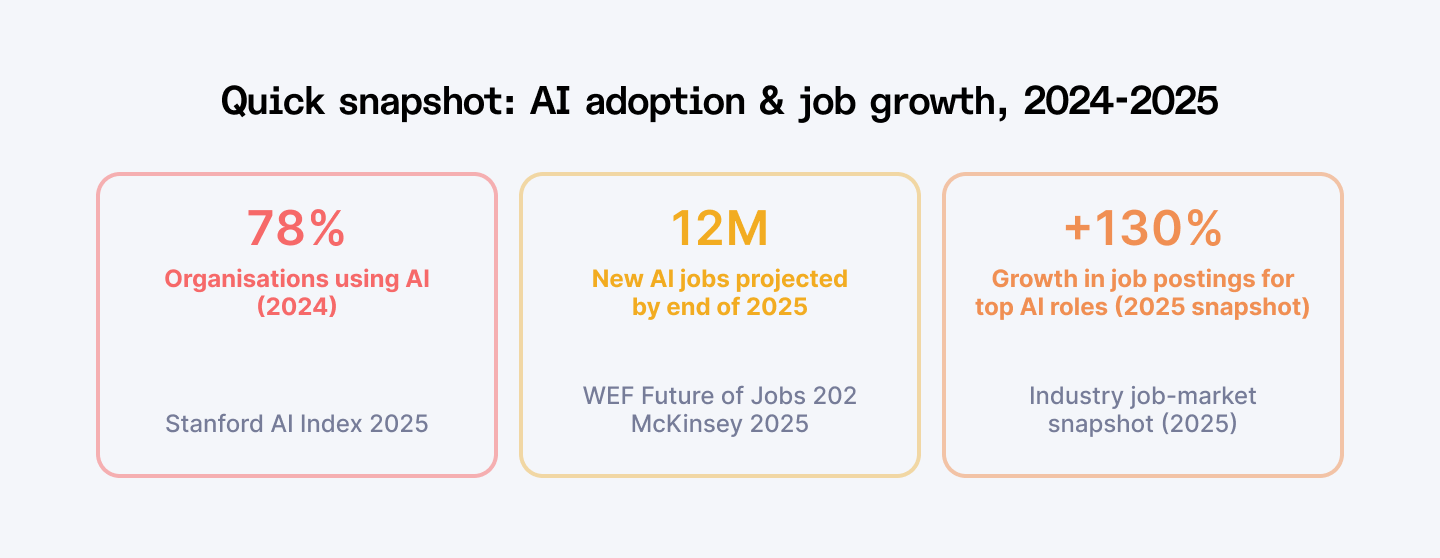
- 78% of organizations used AI in 2024 (up from 55% in 2023 according to the Stanford AI Index reports)
- 12 million new AI jobs expected globally by end of 2026
- 143.2% growth in AI Engineer roles, 135.8% in Prompt Engineer positions, 134.5% in AI Content Creator roles
This article maps out the 10 emerging AI roles that smart hiring teams are prioritizing in 2026. We'll explain why each one matters, show you what to look for when hiring, and most importantly, give you a framework for how they fit together.
Because here's what we've learned:
AI requires specialists who can manage risk, understand human context, create compelling output, and drive product strategy. Not just more people who can write code.
Stay ahead in AI hiring. Access the top 5% of vetted developers and AI talent with Index.dev: 48-hour matching and a free 30-day trial included.
The Shift That's Already Happening
AI stopped being a "let's test it" conversation somewhere around mid-2024. Now we're deep into "how do we scale this without breaking everything" territory. 92 million roles will be displaced by these same trends, but here's the thing, there will also be a net employment increase of 78 million jobs.
Businesses need specialists who can bridge the gap between raw AI capability and actual human value. The companies succeeding right now aren't the ones who figured out how to translate AI pilots into measurable business results. And that gap, between having cool AI demos and actually moving revenue needles, that's exactly where these new roles live.
The Reality Check: Why These Roles Exist
AI stopped being an experiment in 2024. Now companies face a different challenge: translating pilots into business results.
The World Economic Forum’s Future of Jobs 2025 and McKinsey’s 2025 surveys show companies are still struggling to translate AI pilots into business results, and that gap is what’s creating a market for new roles that go well beyond “developers.” Think ethics experts who prevent your company from making headlines for all the wrong reasons, creative directors who can wrangle AI tools without losing brand voice, and strategists who know when to say "maybe we shouldn't automate this just because we can."
The gap isn't technical, it's operational.
Organizations struggle with governance nightmares, safety concerns, data quality issues, and user adoption problems. Below-listed roles fix specific failure modes that turn AI investments into expensive proof-of-concepts.
Find out which are the 20 most popular programming languages based on developer demand and real-world usage.
The 4-Layer Framework
Layer 1: Safety & Governance
- AI Ethicist
- AI Security Specialist
Layer 2: Data & Training
- AI Data Curator
- AI Trainer
Layer 3: Human Interface
- Prompt Engineer
- AI UX Designer
- Generative AI Content Creator
Layer 4: Business & Adoption
- AI Product Manager
- AI Marketing Strategist
- AI Adoption Consultant
Each layer builds on the previous one. Safety enables clean data. Clean data powers better UX. Better UX unlocks business value.
The Top 10 Roles to Hire For
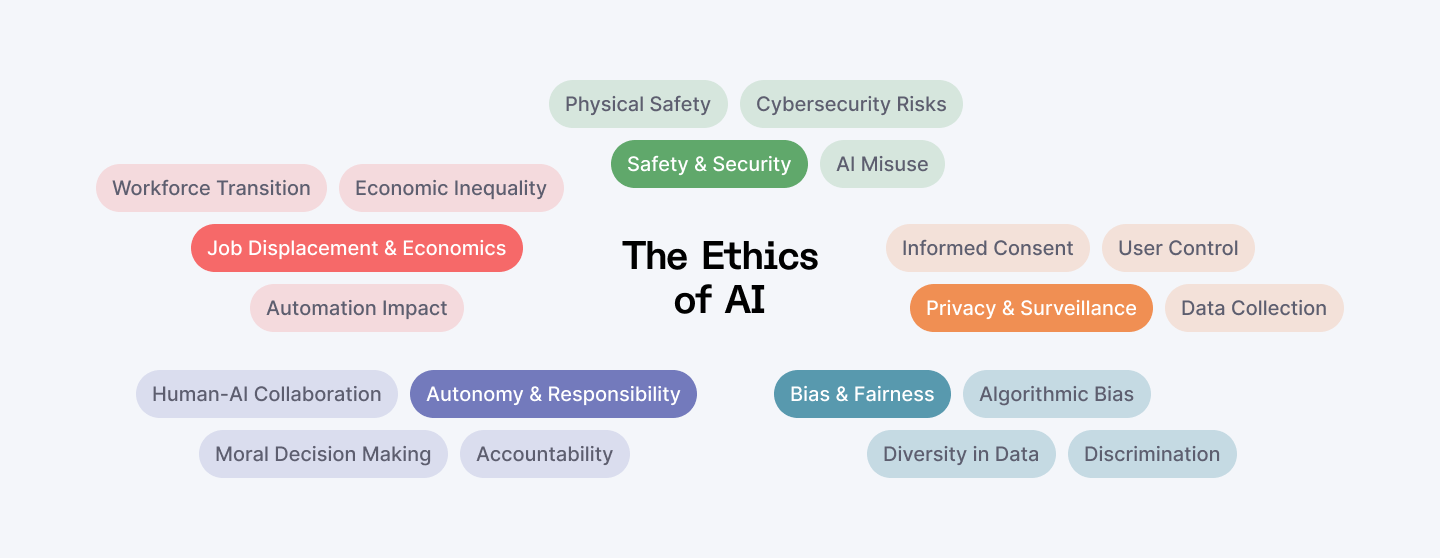
1. AI Ethicist (aka Responsible AI Lead)
What disasters this prevents
Legal liability from biased hiring algorithms. PR nightmares from discriminatory lending decisions. Regulatory penalties that cost millions.
Why this role is non-negotiable
When AI affects real people's lives—employment decisions, loan approvals, medical diagnoses—you need someone preventing costly mistakes. According to MIT research, biased AI systems cost companies an average of $2.4 million per incident in legal fees and reputation damage.
Organizational placement
Cross-functional role touching legal, product, and data science teams. Must have decision-making authority before AI systems go live.
Hiring signals that matter
- Portfolio of implemented governance frameworks (not just theoretical papers)
- Experience operationalizing AI ethics policies at scale
- Background mixing ethics, policy, and hands-on analytics
2. Prompt Engineer (or LLM Interaction Designer)
What business problems this solves
Inconsistent AI outputs that destroy user trust. Generic responses that don't match your brand voice. Hallucinations that create support tickets.
The technical reality
Prompt engineering isn't about writing clever one-liners. It's building systematic approaches for consistent, reliable outputs. Companies using structured prompt engineering report 40% fewer hallucinations and 60% better brand alignment in AI communications.
Whether you're building a legal document summarizer, customer chat assistant, or internal knowledge system, these specialists know how to construct repeatable prompt patterns that minimize hallucinations and keep outputs on-brand. (Coursera’s 2025 guides and specialist industry write-ups document the role’s ongoing evolution.)
Where they belong
Embedded in product or content teams where they understand business context and user needs.
What to validate in interviews
- Domain expertise in your industry (healthcare, finance, legal)
- Documented experiments showing output quality improvements
- Understanding of prompt optimization methodologies
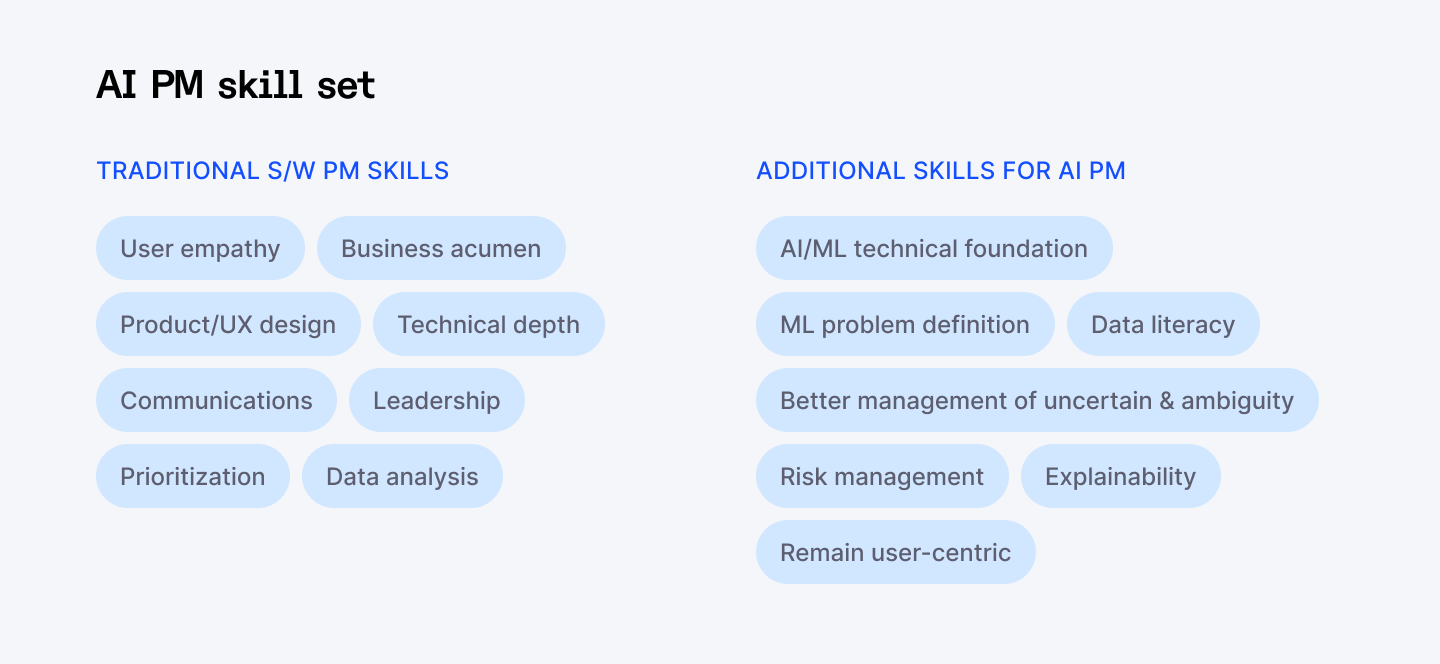
3. AI Product Manager (AI PM)
The expensive mistake this prevents
Building AI features nobody wants to pay for. Starting with cool technology instead of customer problems.
Why regular PMs struggle here
AI products require different metrics, risk considerations, and user education approaches. Traditional product management frameworks break down when dealing with probabilistic outputs and model uncertainty. In simple terms, most AI initiatives fail because they begin with "look what this model can do" instead of "here's a problem customers will pay us to solve," and the AI PMs know just what to do here.
Critical capabilities
- Experience shipping ML features to real users
- A/B testing model outputs and measuring business impact
- Translating model performance into executive-friendly KPIs
Organizational fit
Within existing product teams, reporting to the Head of Product or CTO, with authority over AI feature decisions.
4. AI Trainer (Human-in-the-Loop Specialist)
What performance problems this solves
Model drift in production. Poor handling of edge cases. Quality degradation over time. Think: improving model behavior and reliability via data and supervision.
The supervision reality
Models need continuous human feedback to maintain performance. Without active training loops, AI systems start producing unreliable results that damage user trust — whether that's training chatbots to handle customer complaints appropriately, fine-tuning recommendation engines, or ensuring computer vision models work reliably on your specific use cases.
Key responsibilities
- Large-scale annotation project management
- Quality assurance process design
- Instruction tuning for domain-specific use cases
Where they excel
Close collaboration with data science teams, with direct access to production feedback and user data.
5. AI UX Designer
The adoption killer this prevents
User confusion about AI capabilities. Poor interface design that hides AI uncertainty. Lack of fallback options when AI fails. Think: making the model usable, explainable, and trusted by people.
Why AI needs specialized UX
Traditional interface design doesn't account for probabilistic outputs, model confidence levels, or the need to educate users about AI limitations. Companies with dedicated AI UX designers see 3x higher adoption rates for AI features.
Portfolio examples that matter
- Conversational interface design with clear error states
- Explainability features that help users understand AI decisions
- Data visualization making model outputs actionable
But most importantly, look for measurable outcomes. Did their explainability redesign reduce help-desk tickets? Did users complete more tasks after they redesigned an AI-assisted workflow? That's the signal you're after.
Team integration
Embedded in product design, working directly with ML engineers and AI PMs throughout development.
6. AI Security Specialist
The attack vectors this prevents
Adversarial inputs designed to fool models. Training data poisoning. Model theft and IP extraction.
Why standard cybersecurity isn't enough
AI systems create new attack surfaces that traditional security teams don't understand. ML-specific threats like model inversion attacks or adversarial examples require specialized knowledge.
Technical expertise needed
- Red-team testing of ML systems
- Secure training pipeline design
- Experience with adversarial defense mechanisms
Organizational placement
Security teams or ML infrastructure groups, depending on company structure.
7. Generative AI Content Creator / Media Designer
The brand consistency problem this solves
Generic AI-generated content that doesn't match your brand voice. Slow creative processes that can't leverage AI tools effectively.
The content velocity opportunity
Teams with dedicated AI content creators produce 5x more content variants while maintaining brand quality. They know how to use AI for rapid prototyping while applying human editorial judgment to curate quality, maintain brand standards, and integrate AI workflows into existing creative processes.
Key capabilities
- AI-assisted campaign development and execution
- Rapid iteration and A/B testing of creative assets
- Brand guideline enforcement across AI-generated content
Best organizational fit
Marketing, creative studios, or product marketing where content velocity directly impacts revenue.
8. AI Data Curator
The performance ceiling this removes
Poor model results from biased, incomplete, or low-quality training data.
Why data quality determines everything
"Garbage in, garbage out" isn't just a saying, it's the fundamental constraint on AI performance. Models can only be as good as their training data.
Critical responsibilities
- Dataset representativeness and bias detection
- Privacy compliance and annotation quality
- Synthetic data generation for filling gaps
Hiring priorities
- Experience with large-scale annotation platforms
- Privacy impact assessment capabilities
- Domain knowledge of your industry's data challenges
- Data engineering or ML operations teams experience

Data curators add value at filtering, annotation and validation stages to improve model performance.
9. AI Marketing Strategist (AI-powered Growth Lead)
The ROI problem prevents
Marketing spends on AI experiments that don't drive measurable results. Generic personalization that doesn't improve conversions.
The analytical advantage
AI Marketing Strategists combine creative skills with data science capabilities. They build personalization systems that actually move conversion metrics. They translate model outputs into measurable marketing lift.
Success metrics that matter
- AI-driven campaign performance improvements
- ML-backed funnel optimization results
- Integration of AI tools into go-to-market strategies
Organizational accountability
Direct ownership of AI-driven marketing performance metrics within growth teams
10. AI Adoption Consultant (Change & Ops Lead)
The organizational failure this prevents
Employee/organizational resistance to AI tools. Process friction that kills implementation. Training gaps that limit AI utilization.
Why technical success isn't enough
Most AI projects fail due to people and process issues, not technical limitations. Organizations need structured change management for AI adoption — training programs, change management roadmaps, and pilot frameworks.
Change management expertise
- Cross-functional adoption program development
- Training curriculum design for AI tools
- Process redesign for AI workflow integration
Measurable outcomes to validate
- Platform adoption rate improvements
- Productivity metrics after AI implementation
- Organizational readiness assessments
Where they belong
Transformation teams or as external consultants, with authority to redesign processes and implement training programs.
Your 3-Phase Hiring Strategy
Don't make the mistake of hiring these roles in isolation. Think about this as a phased approach that builds momentum:
Phase 1 (Months 0-3): Foundation
- Start with AI Product Manager + core team: Prompt Engineer, Data Curator, AI Trainer
- Goal: Ship one measurable pilot
Phase 2 (Months 3-9): User Experience
- Add AI UX Designer + Generative Content Creator
- Goal: Improve adoption and reduce churn
Phase 3 (Months 9-18): Scale & Governance
- Layer in AI Ethicist + Security Specialist + Adoption Consultant
- Goal: Handle risk and organizational scaling
Parallel track: AI Marketing Strategist runs business-aligned pilots from day one.
This approach gives you quick wins while building the infrastructure for safety and scale. It prevents the classic trap of having impressive prototypes that nobody actually uses in production.
Where to Find These Specialists
The talent market for these roles is competitive and specialized. Here are approaches that actually work:
- Use specialist hiring platforms that vet AI and engineering talent quickly. For example, Index.dev helps teams find vetted engineers and specialists with a fast matching process, useful if speed and quality matter.
- Build partnerships with universities and bootcamps that specifically focus on AI ethics and ML operations training. Source domain experts from your industry for trainer and curator roles.
- Run targeted skill assessments and short paid projects (3-6 weeks) to validate capabilities in prompt engineering, dataset curation, or AI UX design before making full-time offers.
Explore the 10 most in-demand tech skills.
Quick Hiring Checklist for Each Role
- AI Ethicist:
- Portfolio showing governance frameworks they've built plus evidence of successfully operationalizing policy in real organizations.
- Portfolio showing governance frameworks they've built plus evidence of successfully operationalizing policy in real organizations.
- Prompt Engineer:
- Prompt experiments, performance metrics, case studies of reduced hallucinations or improved output quality.
- Prompt experiments, performance metrics, case studies of reduced hallucinations or improved output quality.
- AI Product Manager:
- Shipped ML features to users, measured ROI, cross-functional leadership through technical complexity.
- Shipped ML features to users, measured ROI, cross-functional leadership through technical complexity.
- AI Trainer:
- Leadership experience with annotation projects, dataset improvement case studies, and evidence of model performance improvements.
- Leadership experience with annotation projects, dataset improvement case studies, and evidence of model performance improvements.
- AI UX Designer:
- Examples of explainable AI flows or conversational design, or data visualization that made complex model outputs usable.
- Examples of explainable AI flows or conversational design, or data visualization that made complex model outputs usable.
- AI Security Specialist:
- Adversarial testing results, secure pipeline implementations, or incident response experience.
- Adversarial testing results, secure pipeline implementations, or incident response experience.
- Generative Content Creator:
- AI-assisted campaign case studies with measurable performance improvements.
- AI-assisted campaign case studies with measurable performance improvements.
- AI Data Curator:
- Annotation standards, privacy/compliance frameworks experience, and data quality measurement.
- Annotation standards, privacy/compliance frameworks experience, and data quality measurement.
- AI Marketing Strategist:
- AI-driven campaign with documented lift and ROI metrics.
- AI-driven campaign with documented lift and ROI metrics.
- AI Adoption Consultant:
- Change management programs that increased platform adoption metrics with measurable organizational impact.
Closing: Hire for Orchestration, Not Just Coding
2026 transforms AI from experimental technology to core business infrastructure. Success requires teams combining technical judgment, user-centered design, responsible governance, and domain expertise.
These 10 roles create sustainable AI adoption: safer models, better experiences, measurable impact, and organizational adoption that drives revenue.
If speed matters (and it always does), Index.dev’s hiring engine can connect you with vetted talent quickly, from AI PMs who know how to ship products to designers who make AI interfaces people can trust and use effectively.
See Index.dev’s hiring page to explore profiles and timelines. Get matched in 48 hours with experts skilled in ethics, prompt design, UX, and more.