
Remote fintech teams have grown rapidly, driven by digital transformation and demand for innovative financial services.
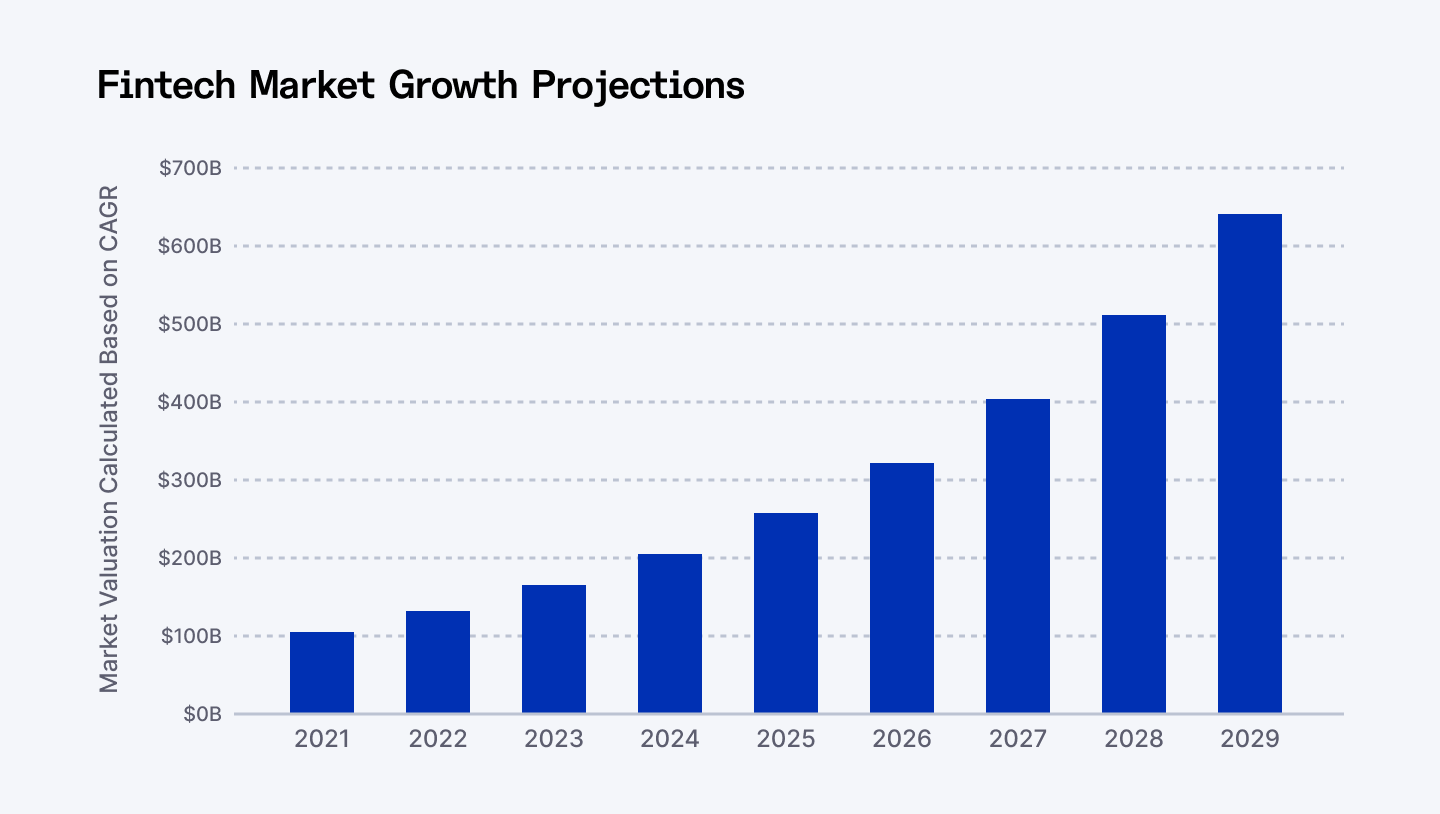
With constant transformation and tech adaptation, the fintech market reached a whopping $209.7 billion in 2024 and is projected to surpass $644 billion by 2029, growing at a 25.18% CAGR. As finance products become more complex, finance stack choices directly impact time-to-market, security posture and operational resilience.
Understanding a financial tech stack that aligns with your business is important. Whether you are a startup integrating fintech services or an enterprise specialising in financial services, integrating an ideal set of fintech stacks and tools is a must.
To help you understand which tech stack for fintech suits your business, we have put together this blog that explores tools and tech stacks for a remote-first world.
Skip the hiring process by using Index.dev's pre-vetted remote Fintech talent now.
What Is a Finance Tech Stack?
It is a set of tools, platforms and infrastructure used for managing financial products/services. Remote-first fintech companies are increasingly adopting a stack that supports collaboration, security and compliance.
It combines:
- Core systems (core banking, payment processors, ledgers)
- APIs (for integrations, open banking, third-party services)
- Data pipelines (ETL, analytics, real-time stream processing)
- Security/compliance layers (encryption, KYC/AML tools, audit logs)
- Cloud/DevOps (serverless, containers, CI/CD)
- AI/ML models (fraud detection, risk scoring, personalisation)
The Impact of Remote-First Tools on Fintech Stack Development
Not only is remote collaboration a practical approach in today’s workplace, but it is essential as well. Financial technology teams heavily rely on varied remote-first solutions for communication, collaboration and uninterrupted workflow as a part of their financial tech stack:
- Collaboration & Communication:
Remote teams connect using tools like Zoom, Microsoft Teams and Slack.
- Project management:
Jira, Trello and Asana assist in managing agile processes, monitoring progress and adhering to deadlines.
- Version Control & CI/CD:
Tools like Jenkins, Circleci, GitHub and GitLab facilitate automated deployments and code integration.
- Monitoring & Analytics:
With tools like Datadog and the ELK Stack, teams can monitor performance and resolve problems.
- Security & Compliance:
Sensitive data can be protected using OneTrust for compliance and Okta for identity management.
In order to attain and sustain productivity levels, performance, and cooperation at a remote level, these remote-first solutions are essential parts of a financial tech stack.
Explore the top 5 tech stacks for speed, efficiency, and future-proof web app development.
Core Financial Functions and Their Finance Tech Stack Requirements
Every financial function has its own set of challenges and technical requirements. One needs to understand the same as well as the tech stacks aligned with each financial function before diving into development.
Digital Banking Financial Stack
Digital banking solutions or payment platforms facilitate real-time transactions, offer high availability and abide by strict financial regulations. While handling sensitive customer data, the financial stack of digital platforms needs to prioritise scalability and robust security.
Tech Stack
- Frontend: React.js and Angular
- Backend: Java (Spring Boot), Python (Django) and Node.js
- Databases: PostgreSQL and MongoDB
- Cloud Services: AWS and Google Cloud Platform
- Security: OAuth 2.0, JWT and SSL/TLS encryption
Example
Ohpen is a cloud-based banking platform that offers savings accounts and lending services by integrating modern finance tech stacks for scalability and efficiency. Similar infrastructure can support secured lending products such as HELOC loans, where borrowers access credit based on their home equity.
Trading Platforms Fintech Stack
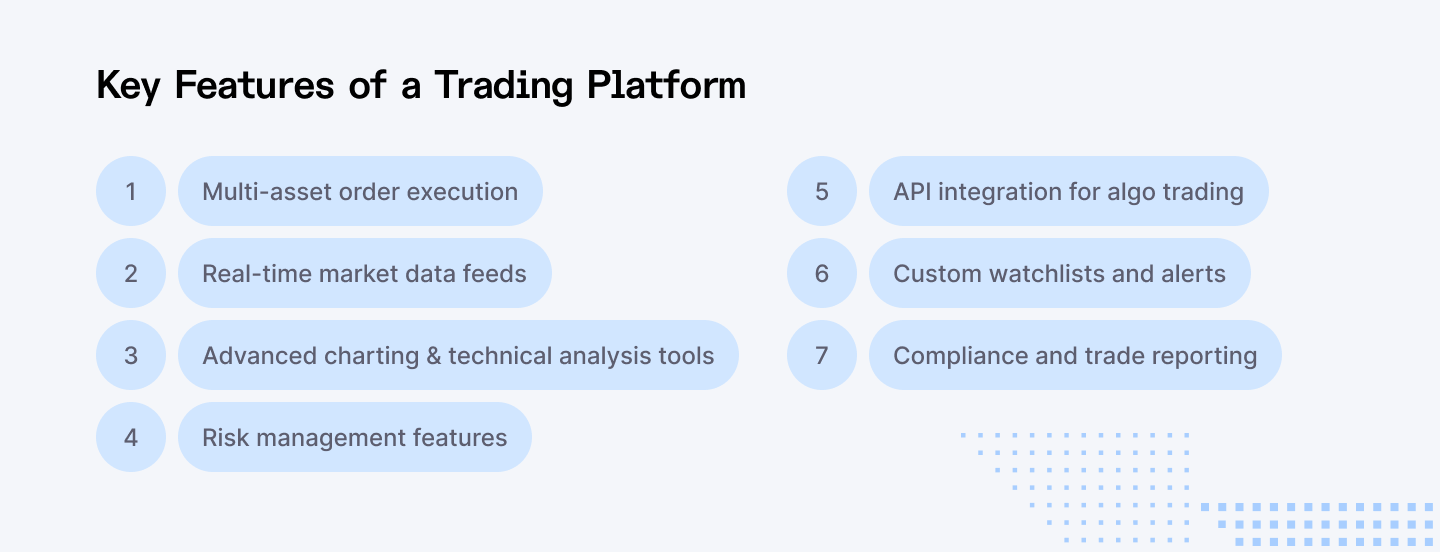
In order to analyse massive chunks of data in real time, trading platforms require the lowest latency. Cloud services offer the required auto-scaling capabilities to handle spikes in trading activity. For effective computation and data processing, a fintech stack comprising Go and Python is an ideal bet.
Tech Stack
- Frontend: React.js and Vue.js
- Backend: Go, Python (Django) and Java
- Databases: Cassandra and PostgreSQL
- Cloud Services: Google Cloud Platform and AWS
- Security: Multi-factor authentication and data encryption
Example
Citadel Securities emphasises the requirement for speed and dependability in their financial tech stack by testing high-performance trading algorithms on cloud platforms such as Google Cloud.
Lending Platforms Financial Stack
For risk management and credit scoring, lending platforms require advanced data analytics. Further, these require the ability to interact with third-party credit bureaus. Rapid development of these platforms is made possible through a trusted financial stack that includes technologies like Django and Node.js. These help preserve the required data security and compliance.
Tech Stack
- Frontend: Angular and React.js
- Backend: Python (Django) and Node.js
- Databases: MongoDB and PostgreSQL
- Cloud Services: AWS and Azure
- Security: Role-based access control and data encryption
Example
AWS-powered fintech stack to help businesses apply for a loan more efficiently, expediting loan approvals, including payday loans, while effectively managing risk.
Payment Processing Tech Stack for Fintech
Payment processing platforms require both robust fraud protection and real-time transaction management. An ideal financial stack for such platforms must comprise frameworks like Node.js and Ruby on Rails that facilitate agile development and dependable cloud services. This helps safely manage large transaction volumes.
Tech Stack
- Frontend: React.js and Angular
- Backend: Ruby on Rails and Node.js
- Databases: PostgreSQL and MongoDB
- Cloud Services: AWS and Azure
- Security: PCI DSS compliance, tokenisation and encryption
Example
Leading payment processor Stripe provides easy payment options all around the world by utilising its strong financial tech stack.
Personal Finance Management Fintech Stack
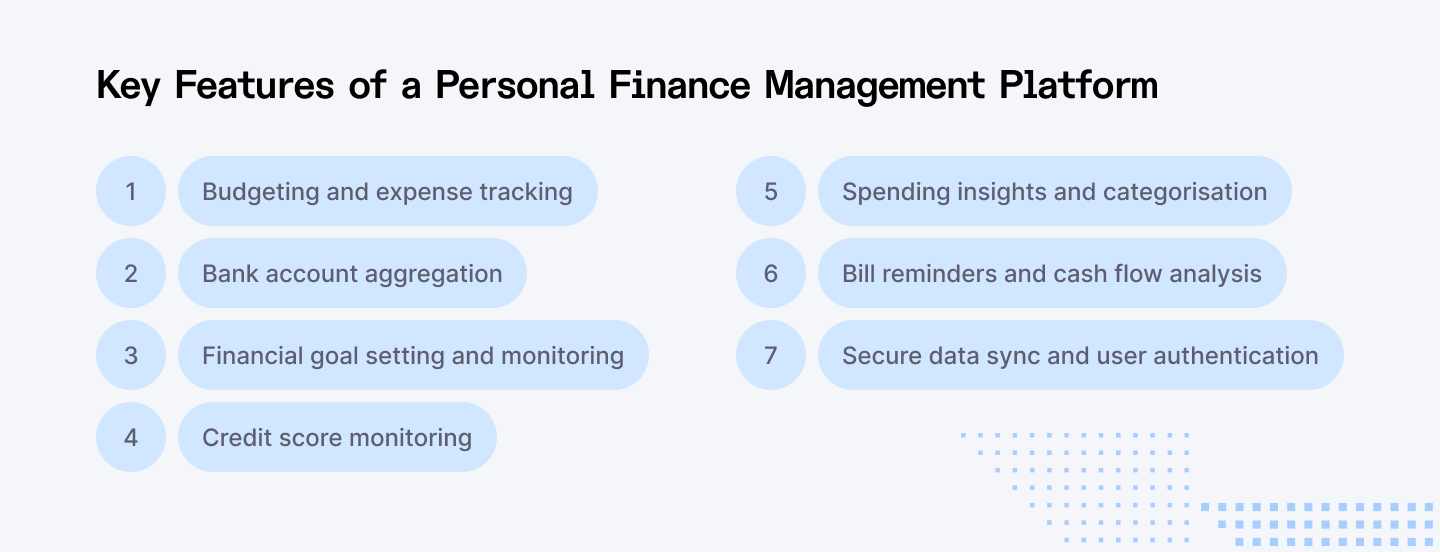
Apps for managing personal finances have an easy-to-use interface for collecting and evaluating data. A dedicated financial stack makes it possible to handle personal financial data securely and to provide seamless, interactive experiences on mobile devices.
Tech Stack
- Frontend: React Native and Flutter
- Backend: Python (Django) and Node.js
- Databases: PostgreSQL and MongoDB
- Cloud Services: AWS and Google Cloud Platform
- Security: OAuth 2.0 and data encryption
Example
Through an interactive smartphone app developed on a cutting-edge finance tech stack, Cleo provides a conversational digital assistant for savings and budgeting, providing tailored financial information.
InsurTech Finance Tech Stack
InsurTech platforms need to handle massive amounts of data daily. A financial stack comprising Python, MongoDB and Angular facilitates automation, analytics, and adherence to insurance laws.
Tech Stack
- Frontend: Angular and React.js
- Backend: Python (Django, Flask) and Node.js
- Databases: MongoDB and PostgreSQL
- Cloud Services: AWS and Azure
- Security: Data encryption and stringent compliance
Example
‘Bought By Many’ platform utilises Python-based frameworks and AWS services in its finance tech stack. This helps it offer innovative insurance products tailored to modern consumer needs.
WealthTech Financial Tech Stack
To offer customized financial advice, wealthtech platforms use machine learning algorithms. Further, these platforms use a dedicated fintech stack to secure client interactions, data analytics and intricate calculations.
Tech Stack
- Frontend: React.js and Angular
- Backend: Python (Django) and Go
- Databases: PostgreSQL and MongoDB
- Cloud Services: AWS and Google Cloud Platform
- Security: Multi-factor authentication and end-to-end encryption
Example
Robinhood uses advanced tech stacks for fintech in its robo-advisory operations to provide a smooth experience.
RegTech Financial Stack
These platforms analyse regulatory data and generate reports in real time. To undertake these tasks, these platforms must abide by regulatory norms and compliance. For this purpose, the RegTech platforms rely on finance tech stacks that offer data integrity.
Tech Stack
- Frontend: React.js and Angular
- Backend: Python (Django) and Java
- Databases: PostgreSQL and MongoDB
- Cloud Services: AWS and Azure
- Security: Integration with regulatory systems
Example
ComplyAdvantage offers fraud prevention through a finance tech stack powered by AI and cloud infrastructures.
Top Tech Stack for Fintech
Selecting the right finance tech stack is like laying down a digital foundation for a financial institution. Choose wisely, and your remote fintech teams deploy faster, maintain compliance and scale smoothly across markets.
Here are two battle-tested fintech stack approaches deployed by engineering teams today:
Startup Tech Stack
Built for early-stage fintech ventures that are busy balancing rapid iterations. This financial stack prioritises developer productivity: This lightweight fintech stack enables agile teams to validate market fit without overinvesting in infrastructure.
Component |
Technologies |
Rationale |
| Frontend | React, Vue.js (often with TypeScript) |
- React: Architecture for fast rendering via virtual DOM - Vue.js: Simple and flexible, easy to integrate |
| Backend | Node.js with Express.js, Django (Python), Ruby on Rails |
|
| Databases | PostgreSQL, MongoDB |
- PostgreSQL: Supports ACID compliance - MongoDB: Flexible for unstructured data |
| Monitoring & Analytics | Sentry, Datadog, Google Analytics |
|
| Payment Integration | Stripe, PayPal |
|
| Security | OAuth 2.0, HTTPS, JWT |
|
Launching a startup? Discover the top 5 tech stacks to build scalable, efficient applications.
Enterprise Tech Stack
Geared toward scaled fintech platforms handling millions of users, strict audits and global operations—and if you need an experienced delivery partner for this scope, a financial software development company can help. This tech stack for fintech balances resilience, traceability and real-time data flow.
Component |
Technologies |
Rationale |
| Frontend | React, Angular (often with TypeScript) |
- React: Flexible with a large ecosystem - Angular: Two-way data binding and TypeScript support |
| Databases | Oracle, SQL Server, PostgreSQL, MongoDB |
- Oracle: Enterprise-grade compliance - SQL Server: Strong Microsoft integration |
| Monitoring & Analytics | Splunk, New Relic, Tableau |
|
| Payment Integration | Braintree, Authorize.Net |
|
| Security | Okta, Azure Active Directory, OAuth 2.0 |
|
Comparison of Tools Used by Leading Fintech Companies
Company |
Cloud Platform |
Frontend |
Backend Technologies |
Databases & Infrastructure |
Security Measures |
Notable Practices |
| Stripe | AWS | React.js | Ruby on Rails | PostgreSQL, Kafka, Redis | OAuth 2.0, PCI DSS | High developer velocity with strong internal tooling |
| Revolut | GCP | Angular | Java, Kotlin | PostgreSQL, Cassandra, RabbitMQ | Okta | Cloud-native stack with automated testing |
| Robinhood | AWS | React Native | Python (Django), Go | PostgreSQL, Redis, Kafka, Spark | JWT, OAuth | Real-time event-driven architecture |
| Plaid | AWS | React | Go | PostgreSQL, Redis | OAuth | Emphasis on observability and API reliability |
| Monzo | AWS | Swift (iOS), Kotlin (Android) | Go, Java | Cassandra, Kafka | OAuth 2.0 | Event-driven microservices for digital banking |
| Wise | AWS | React | Java (Spring Boot) | PostgreSQL, Kubernetes | OAuth 2.0 | Scalable international money transfers |
| Square | AWS | React | Ruby, Java | MySQL, Elasticsearch | PCI DSS | Hybrid backend for agility and performance |
| Chime | AWS | JavaScript | Ruby on Rails, Go | PostgreSQL, Redis | OAuth 2.0 | Emphasis on scalability and user experience |
| Nubank | AWS | React Native | Clojure, Java | DynamoDB, PostgreSQL | OAuth 2.0 | Microservices architecture with a focus on scalability |
| Affirm | AWS | React | Python (Flask) | PostgreSQL, Redis | PCI DSS | Instalment lending with robust risk assessment |
Summing Up
Selecting the optimal finance tech stack is not complicated. All you need to do is opt for an ideal mix of development speed, security posture, regulatory compliance and distributed collaboration. Whether you are building a real-time transaction engine for a fintech credit card or an enterprise ledger, the most effective financial stacks exhibit a few common characteristics.
The most effective financial stacks exhibit a few common characteristics, like readiness for rapid iteration through Node.js with TypeScript or enterprise-grade resilience through Go-based microservices. These stacks offer flexibility as your business scales. Furthermore, these provide a robust set of tools for geographically distributed teams.
To maintain a competitive edge in this ever-evolving fintech landscape, companies need to pair the right finance stack with thoughtful engineering practices. So choose wisely!
Ready to accelerate your fintech development under the guidance of experts? Explore our vetted developer network specialising in cloud-based finance tools.


