
One of the most exciting innovations of recent years is Generative AI – a branch of artificial intelligence that has the real prospect to revolutionize the activities of enterprises in different sectors. While the previous types of AI were designed to realize patterns in data and provide interpretations, generative AI takes the next step by generating completely new content, ranging from realistic images and engaging music to innovative drug designs and individualized learning experiences.
This is because it has very strong algorithms derived from huge datasets, which let it learn patterns and connections between various facts. In this way, generative AI can go beyond replicating creativity and use it as a springboard to expand the frontiers of progress across various domains.
Find high-paying, long-term remote Generative AI jobs with top US, UK, and EU companies at Index.dev. Join now!
Revolutionizing Industries Through Effective Design
Now, the true potential of generative AI depends not only on its capabilities but on how it will be applied. Here's why designing these applications thoughtfully is paramount:
- Optimizing Performance: A good generative AI model looks into factors such as the quality of the training data, the types of models to use when designing, and the hyperparameters. They define rather strongly such aspects of the outputs as their quality, accuracy, and the speed and effectiveness of the computations.
- Aligning with Business Goals: AI writing is indeed very creative but it requires a lot of guidance. Appropriate choice of the application guarantees that specific business goals will be met and concentrates on the tasks and processes that will provide the most benefits from AI-driven generation. Applications from various companies such as Adobe and Microsoft have also been integrated into the generative AI model to offer creative collaboration to users.
- Ensuring Explainability and Trust: Similar to any other AI system, it is essential always to know how a generative model arrives at the outputs. There is still a need for human supervision of the process, with the interpretability techniques helping to develop the trust that allows for it, especially in sensitive fields such as the healthcare sector or finance.
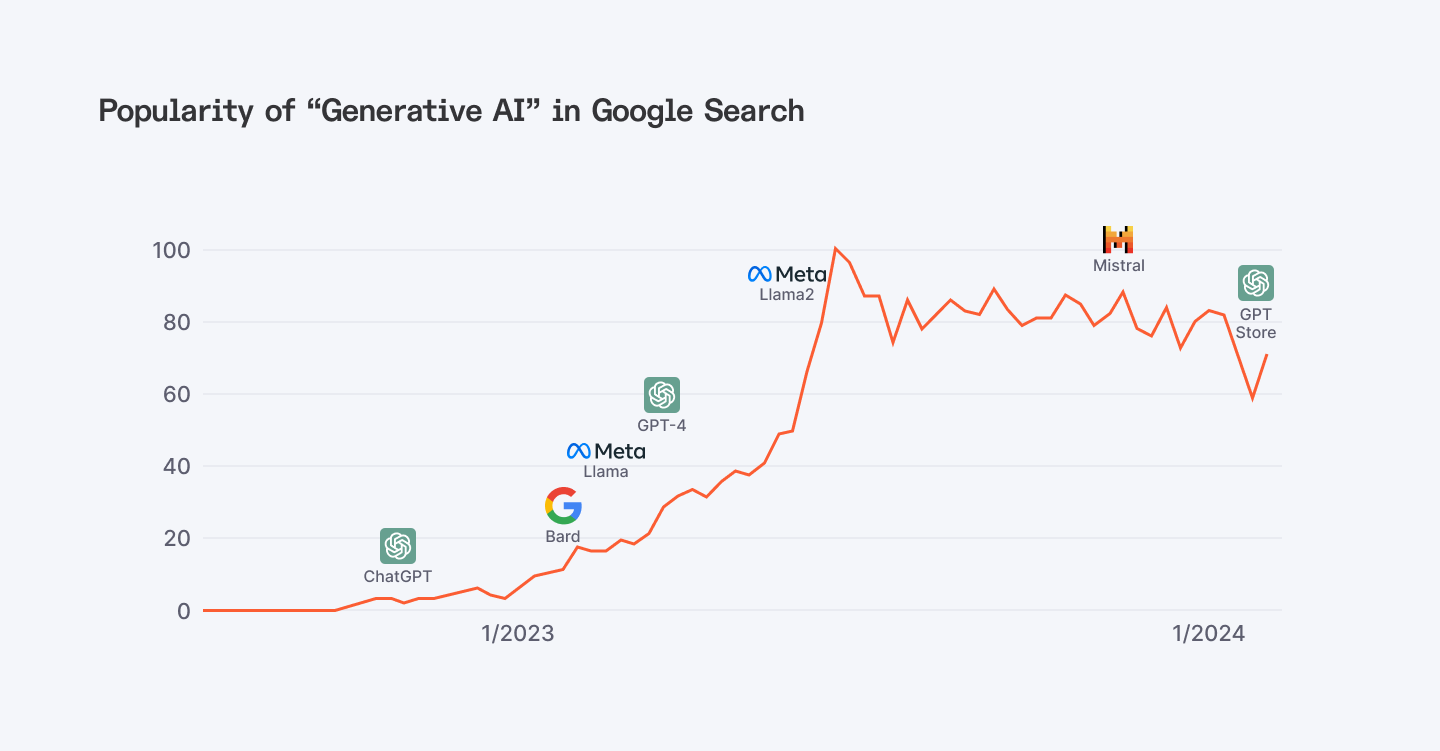
Key Principles for Designing Generative AI Applications
Principle 1: Design for Generative Variability
When it comes to generative AI applications, one of the most important considerations to make is on generative variability. This principle focuses on the capability of the model to generate multiple different yet appropriate products, which promotes idea generation, discovery, and user interaction.
Why Generative Variability Matters
Suppose there is a generative model for designing various types of furniture. However, if it produces the same armchair design every time regardless of the input that is given to the system, then it serves as a very limited purpose. On the other hand, a model that has variability can create a range of the armchair style, from the traditional carved wing back to long, sleek chaise lounge. This makes it possible for users to go round the design to try different options and also get a designed output which accommodates their needs towards the utilization of application hence get more values from it.
Generative variability is critical for several reasons:
- Enhancing Creativity: Generative AI applications can have diverse outputs, which can help in idea generation and creative freedom. In cases like product development, advertising or music creation, this freedom of thinking, this lack of rigid right answer, leads to creativity and discovery of something new.
- Addressing User Needs: Users viewed from various perspectives and their needs are unique for a given system. It must be noted, however, that generative variability enables applications to address these needs by defining the variation of the generated outputs. For instance, an AI writing assistant might give its users options to select the type of writing, the language, and the length of the text to be written.
- Improving Model Robustness: The models which give the same output again and again may carry the bias which was present in the data used for training. This problem can be addressed to some extent with the help of generative variability that allows the model to search the expanded set of possibilities within the learned latent space.
Strategies for Achieving Generative Variability
There are several key strategies to promote generative variability in your generative AI application:
- Prompt Engineering: Prompts direct the model towards a specific type of output. One has full control over the content generated by entering different prompts, which can guide the generation process. For instance, a signal for the image generation may indicate the object that needs to be drawn (for example, “cat”), but will not describe its breed, position, and the background.
- User-Controlled Parameters: Another approach to variability is the freedom of users to choose certain parameters while generation is in progress. They could be stylistic (e. g., realistic/abstract), content based (e. g., including specific objects/characters), or technical (e. g., color scheme, image resolution).
- Temperature Control: It is worth to note that the majority of generative models, including the ones based on neural networks, incorporate the temperature parameter. This parameter determines the amount of randomness that is introduced in the generated sequence. Generally, higher temperatures produce more varied and potentially lower quality images, whereas smaller temperatures result in images that may deviate from the model’s normal output.
- Ensemble Methods: Variability can also be achieved when using a variety of generative models which will have their advantages and limitations. Ensemble methods essentially use the differing outputs of each model to generate a wider range of options.
Real-World Examples of Generative Variability
Here are some real-world examples of how generative variability is being used in various applications:
Drug Discovery:
Generative AI is being explored to design novel drug candidates. By introducing variability into the molecular structure generation process, researchers can explore a wider range of possibilities, potentially leading to the discovery of more effective and targeted medications.
Personalized Learning
Generative AI can create customized learning materials like practice problems or writing prompts tailored to individual student needs and learning styles. This variability ensures students are challenged appropriately and engaged in the learning process.
Marketing Content Creation:
AI-powered tools can generate various marketing materials, such as social media posts or ad copy, with different tones, styles, and visuals. This allows marketers to A/B test different options and identify the most effective content for their target audience.
By incorporating strategies for generative variability into your application design, you can unlock the full potential of generative AI. This empowers users to explore creative possibilities, personalize outputs, and ultimately, derive greater value from this powerful technology. The following sections of this blog will delve deeper into the remaining key principles, exploring factors like model architecture selection, loss function design, and the importance of ethical considerations when developing generative AI applications.
Read more: 7 Best-Paying Tech Skills Companies Are Hiring for Now
Principle 2: Design for Co-Creation
Generative AI is not simply a question of machines copying the human creative process. Certainly, one of the greatest benefits of this technology is co-creation, an arrangement where individuals and Artificial Intelligence complement each other to achieve a given goal. Thus, co-creation opens up new opportunities for generating content, developing designs, and solving problems by using the best features of both approaches.
Benefits of Co-Creation in Generative AI
Co-creation offers several key advantages in generative AI applications:
- Enhanced Creativity: The human aspect is the most valuable in this case because it enriches decision-making with domain knowledge, personal insights, and context awareness. They can help lead the AI towards more innovative and relevant results towards the goals of the user in question.
- Improved Control and Refinement: Co-creation enables users to take control of the generation process more than in an individualistic manner. Users are also capable of offering feedback and consecutive modifications of the output, which allows maintaining the coherent view of the information and achieving the stated goals of the application.
- Reduced Bias: When generative models are trained on data from the real world, the models themselves can already have pre-existing biases. These biases can be contained by human involvement and interactivity in the generation process since such concepts as human values and ethical concerns compose human-centred approaches.

Real-World Examples of Generative AI
Strategies for Enabling Co-Creation
Here are some key strategies to promote co-creation in your generative AI application:
- User-Friendly Interfaces: It must be user-friendly and easily operable irrespective of the user’s technological background. This will enable the users to engage with the model appropriately, so that they are able to contribute their inputs and become active in the co-creative process.
- Prompting Guidance: It is essential to have clear instruction on how to develop teaching prompts that will help learners in performing complex tasks. This gives the users control over making sure that they convey their desired results correctly in order to guide the generation process in the right manner.
- Iterative Refinement Options: The application should enable the user to view the generated outputs and make modifications if necessary for several cycles. This might include asking for changes to be made to certain components of the work, requesting comments on style or content, or buttoning for changes when the obtained results differ from the desired ones.
- Visualization Tools: Thus, it is ever possible to advance co-creation by including visualization tools. For example, the visualization of the model’s latent space may help users identify which generative directions are worth refining further.
Examples of Co-Creation Applications
Several generative AI applications leverage co-creation for content generation and design tasks:
AI-powered Design Tools:
These tools let the designers work with the AI in order to come up with the first proposed design or modifications of concepts in-design. It allows users to give suggestions, reduce certain aspects of a design and improve it further to meet the needs of the organisation. You can even use tools like an AI logo generator in this creative process to generate logo ideas quickly.
Content Marketing Platforms:
Some platforms use AI to help with content creation tasks, for example, with writing a blog post or a caption for social media. There are two main ways that human and AI collaboration make the content creation process efficient; Users can contribute starting concepts, search terms, or target demographic data, after which the AI can build the content that requires a fun, imaginative, and targeted concept.
Scientific Research:
AI can be also incorporated in scientific reasoning and contribute to creating a hypothesis or plan an experiment. This way, the model can be trained with a set of domain-specific features and information by the researchers; experts can further modify the produced hypotheses or experiment drafts for better research direction or results.
By designing for co-creation, generative AI applications are no longer the mechanism of automated work, but rather a collaborative creation process. This enables users to harness the creative capabilities of AI without sacrificing creativity and autonomy over the results. The subsequent parts of this blog are going to investigate the rest of the main principles, such as the factors like deciding on the model architecture, constructing a suitable loss function, and the issues of ethical implication while developing the generative AI applications.
Ready for a high-paying remote Generative AI career? Join Index.dev and connect with top companies in the UK, EU, and US. Register now!
Principle 3: Design for Control and Explainability
Although generative AI tools promise a high level of creativity, the preservation of user choice and the possibility to understand how the model works is crucial for proper application. This principle underlines the significance of permitting users to control the process of data generation, enabling them to comprehend the procedures behind the outcomes and, thus, trusting artificial technologies.
The Importance of User Control and Explainability
Here, one can imagine a music composition tool that has been created through AI but does not matter whether you want a hip-hop, pop or even country song; the AI will create a piece of classical symphony. This lack of control reduces its efficiency considerably, which is quite a big drawback. Also, if the user cannot determine how the AI gets to the outputs the user will not be able to have faith in the AI as well as cannot best utilize the produced content.
Here's why control and explainability are crucial:
- Improved User Experience: Applications that enable the user to enter data into the generation process are also more dynamic in comparison. This provides user control and allows them to get the best results as per desired and necessity from the software.
- Enhanced Decision-Making: The generated content also enables the users to decide on whether to use the content based on reasons behind the content. This is especially the case in sensitive fields such as Healthcare and or Finance where it is important to understand how an AI arrives at its conclusion.
- Reduced Bias and Error: There are two main categories of explainability techniques which may be usable to address bias; bias in the training data or bias within the training model. This assists in reducing unfairness and bias of the produced outputs so that they can be credible.
Strategies for User Control
Several strategies can be implemented to provide users with control over the generation process:
- Parameter Setting: When users have the ability to modify one or more aspects of the content, the model’s appearance and/or use of specific features, they have control over how the output will be generated. For example, an image generation application could have parameters like image resolution, colors, or level of details.
- Style Selection: Features such as compatible style templates or the option to upload images to use as references enable users to set the preferred creative tone for the content being generated. This is very beneficial in cases such as in making music or art works, among other examples.
- Interactive Exploration: Some of the applications can include features where the user gets an interface where they can explore the model’s latent space in an interactive manner. This allows them to move from idea to idea and choose the concepts that are better to be developed next.
- Feedback Mechanisms: Adding feedback loops into the application gives users a chance to give input on the created outputs and suggest how the model should modify to better suit them. This can be done through features such as rating or being able to request specific alterations to the product.
Examples of Control and Explainability in Action
Here are some examples of generative AI applications that incorporate clear control mechanisms and explainability features:
Generative Design Platforms:
These platforms allow designers to set specific design constraints and objectives. The AI then generates design options that adhere to these parameters, while also providing insights into the rationale behind each suggestion.
AI-powered Copywriting Tools:
Some copywriting tools allow users to specify the target audience, desired tone, and key message for the generated content. The tool then provides explanations for the stylistic choices it makes and offers users the ability to adjust the content further.
Scientific Discovery Applications:
AI is being explored to generate hypotheses or research questions for scientific inquiry. These systems can explain the reasoning behind their suggestions, allowing scientists to understand the rationale and make informed decisions about their research direction.
By designing for control and explainability, generative AI applications can move beyond "black box" models and establish trust with users. This empowers them to leverage the creative power of AI effectively while maintaining control over the final outcome. The following sections of this blog will delve deeper into the remaining key principles, exploring factors like model architecture selection, loss function design, and the importance of ethical considerations when developing generative AI applications.
Read more: Top 10 Python Libraries For Data Visualization
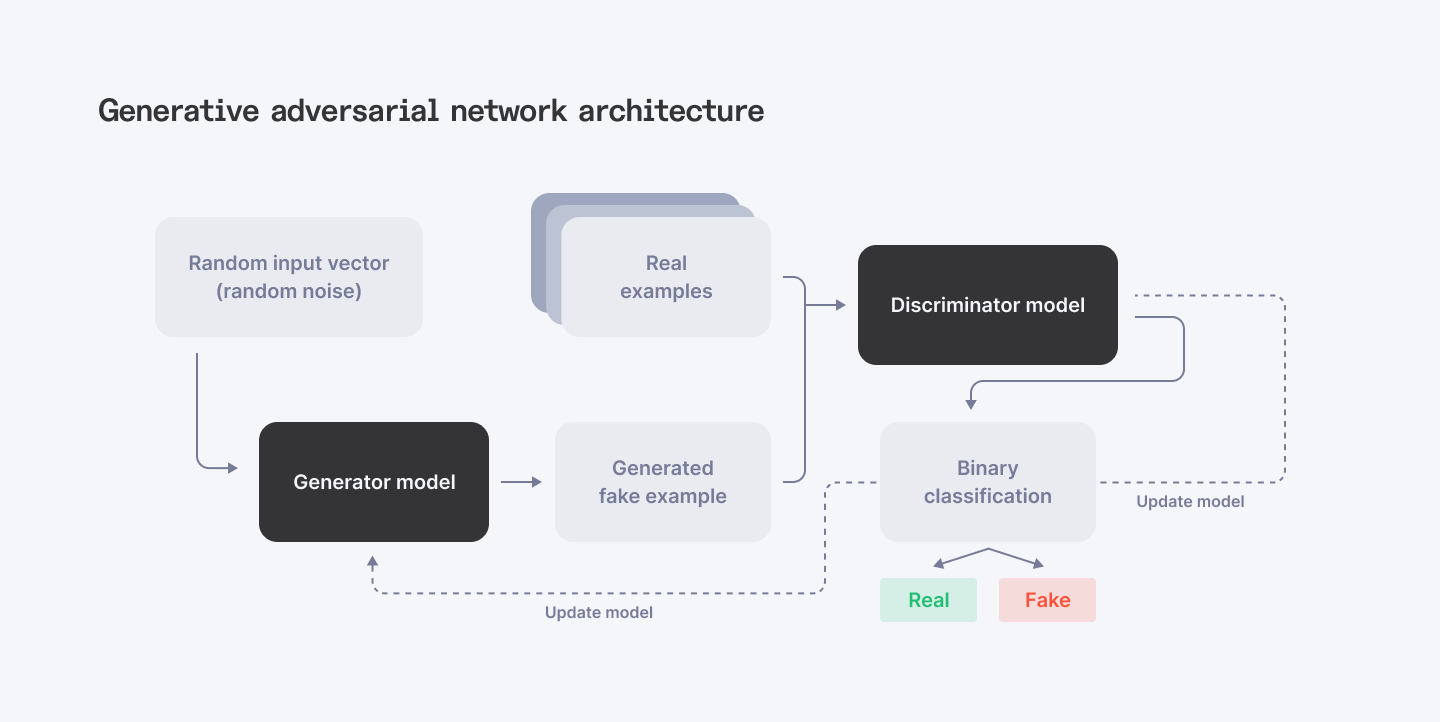
Principle 4: Design for Human-in-the-Loop
One should bear in mind that perfection is not always the goal of generative AI or machine learning – the idea is to present results that complement human decision-making and problem-solving skills. This principle belongs to the so-called HitL (Human-in-the-Loop) working model, which implies that the decision-making of experts becomes an essential intermediate step in creating generative AI systems. Thus, by engaging the collaboration between the artificial intelligence and the human experts who employ the HITL applications, the outcomes are better, more credible and useful as compared to relying solely on fully automated systems.
Benefits of Human Oversight and Interaction
AI generation has also expanded significantly in recent years, but it has been accompanied by some significant challenges. Human oversight offers several key advantages:
- Domain Expertise: To be more specific, humans are knowledgeable and have an understanding of the particular domain in which they operate. These are crucial competencies for evaluating the relevance and accuracy of the generated content in relation to a specific task, field, or standards.
- Quality Control and Bias Detection: Human beings can detect and control biases, which may be included in the training dataset or imposed in the model. This helps in ensuring that the generated outputs are free from any bias and apt for the intended purpose as required.
- Ethical Considerations: It is important to note that there are issues related to ethics when using generative AI in certain capacities. Human supervision makes it possible to incorporate ethical aspects at every stage, starting from the development of the AI and ending with its utilization.
Collaborative Refinement goes beyond simple oversight. By incorporating feedback mechanisms and iterative refinement processes, human-in-the-loop design fosters a truly collaborative environment:
- The AI generates initial content based on user prompts or parameters.
- Humans review and provide feedback on the outputs.
- The AI incorporates this feedback to refine the content in subsequent iterations.
This back-and-forth process allows for continuous improvement and ensures the generated outputs are aligned with human expectations and specific needs.
Strategies for Integrating Human Feedback Loops
Here are some key strategies for integrating human feedback loops into your generative AI application:
- Editing Tools: Enabling users to modify the outcome of the application process means providing them with more control over the text features, image attributes, or even melody in case of necessity. This makes it possible for them to work on the output as they try to produce something with certain properties.
- Validation Steps: It is recommended that critical applications that produce high risk outputs should incorporate a validation process in which the generated content is reviewed and sanctioned by human operators. This can be especially relevant in certain sectors for example the medical ones or when developing legal documents.
- Collaborative Refinement Processes: An interface that enables the successive refinement of the application entails having the end-users of the application to provide any imput that will improve the generation process for the best outcome. This could range from aspects such as profiling, features or hints to suggest that one should ask the system to redo the work in a particular manner based on an earlier outcome.
Examples of Successful Human-in-the-Loop Implementations
Here are some examples of successful human-in-the-loop implementations in generative design and content creation:
Drug Discovery with Generative AI:
One approach to the design of drugs is to use AI to create a first set of molecules that are drug candidates. However, it is noteworthy that these suggestions are then assessed by the human chemist who determines whether these possibilities can be implemented and identifies higher possibilities as the probable subsequent steps that need to be investigated and tested in the chemical laboratories.
AI-powered Content Marketing Tools:
These tools can help to build the initial drafts of possible topics for the blog or posts for social media profiles. These are then sent for more human treatment to enhance them for brand tone and direction that is relevant to the target audience.
Generative Design Platforms:
Some of these platforms utilize human-in-the-loop design by allowing engineers to critically assess the design options created by AI. It is then used to improve the subsequent steps making them even better and extremely efficient.
Therefore, by applying such HITL principles to generative AI applications, it is possible to move from the automation of existing systems to creating working platforms for people and AI. This leads to a symbiotic relationship in which human and machines’ intelligence work hand in hand to achieve better outcomes in a given line of work.
Principle 5: Design for Ethical Considerations
On the one hand, generative AI is a promising and potentially revolutionary approach that can affect a vast number of industries and society as a whole, on the other hand, the usage of generative AI raises essential ethical questions connected to the procedures of creating and using such technology. This last principle requires engineers to proactively consider these ethical implications during the designing phase. By creating different protection methods and using generative AI models properly, one can facilitate the advancement and positive impact of the technology without becoming a problem.
Why Ethical Considerations Matter in Generative AI
Generative AI models are designed based on massive data sets, and these data contain societal prejudice and inequality. If these biases are left unhandled, they can manifest themselves in the generated text, potentially producing discriminative or unfair results.
Here are some key ethical considerations:
- Bias and Fairness: Since generative models operate with the idea that the model learns from the data that is introduced into the model, the prejudices of the data shall be reflected. This could be dangerous especially in areas of loan provision or employment opportunities to mention but a few.
- Transparency and Explainability: Some of the generative models are ‘black box’, which makes it difficult for one not to understand how the model arrived at the result. This lack of definition can sometimes lead to confusion and uncertainty and also contribute to a lack of recognition or removal of potential biases that are arising.
- Privacy and Security: In most generative AI developments, there are typically unique cases when the application requires the user data for training or further tuning. Security cannot be left out when sharing personal information because it only takes the lapse of time to compromise any individual’s information.
Strategies for Mitigating Ethical Risks
Fortunately, several strategies can be implemented to mitigate these ethical risks:
- Debiasing Techniques: Another category of strategies is the ones that can be applied during model development, through fairness-aware model training or post-processing that aims at stripping the bias from the model.
- Explainability Tools: The reliability of the tool is established by making it possible to comprehend why the content has been produced; it also makes it possible for people to trust the machine and spot the issues. This can include such processes as attention visualization or feature attribution methods.
- Safeguards Against Misuse: For example, the possibility of using digital watermarks or any other method to track or identify the source of the generated content can be considered as measures that prevent the use of generated content in negative ways.
- Responsible Use Guidelines: It will be important to provide clear guidelines on the appropriate use of generative AI applications as well as that is a crucial path that needs to be taken when defining the rules. Such guidelines should improve transparency, accountability, and the ethical consideration of the AI at the design stage onwards.
In other words, just to ensure that generative AI gets it right and to ensure that this exciting tool is used appropriately, we need to put ethical considerations as the top priorities right from the conception part. It would be most appropriate to state that the efforts are in developers, policymakers, and users to establish the fundamental principles of the proper use of this revolutionary technology. Regarding the special role of generative AI, it is to transform many industries, however, its proper ethical design and positioning is to work on people’s confidence and to build the new world with the help of general AI as tools for people.
We have to also note that the process of the gradual formation of the principles of constructing responsible artificial intelligence is quite great. Contemporary awareness of existing literature in generative AI and active participation in the emerging debates towards the appropriate use of this tool for the greater-good will help achieve the expected goal.
Accordingly, following these guidelines will allow leaders to maximize the value of generative AI and develop various fields.
Work from anywhere, get paid well: Apply for remote JavaScript projects on Index.dev. Sign up now!
Generative AI Design Patterns
Just like software engineers leverage design patterns to create efficient and reusable code structures, generative AI development benefits from a similar approach. Generative AI design patterns are established methodologies for structuring and implementing generative models to achieve specific outcomes. These patterns provide a foundation for building robust, user-friendly, and effective generative AI applications.
Here, we'll delve into two common generative AI design patterns and explore their benefits and use cases:
- Prompt-based Generation
- User-guided Exploration of Design Space
1. Prompt-based Generation
Concept:
Prompt-based generation is a fundamental design pattern where user-provided prompts guide the model towards a desired output. This is particularly valuable for creators working with AI-powered image generation where well-crafted prompts can dramatically influence the final result.
These prompts can be textual descriptions, code snippets, reference images, or even a combination of these elements.
Benefits:
- User Control and Creativity: Prompts empower users to steer the generation process and inject their own creative vision into the outputs.
- Flexibility and Adaptability: This design pattern can be applied to various generative tasks, from text generation to image creation to music composition, by tailoring the prompt format to the specific domain.
- Explainability: By analyzing the prompt and the resulting output, it's often easier to understand the model's reasoning, fostering a degree of explainability.
Use Cases:
- AI-powered Content Creation Tools: These tools allow users to create content like marketing copy, social media posts, or even scripts by providing prompts that specify the desired tone, style, and topic.
- Generative Design Platforms: In product design, prompts can be used to communicate design requirements, materials, or target functionality, allowing the AI to generate initial design concepts that meet these specifications.
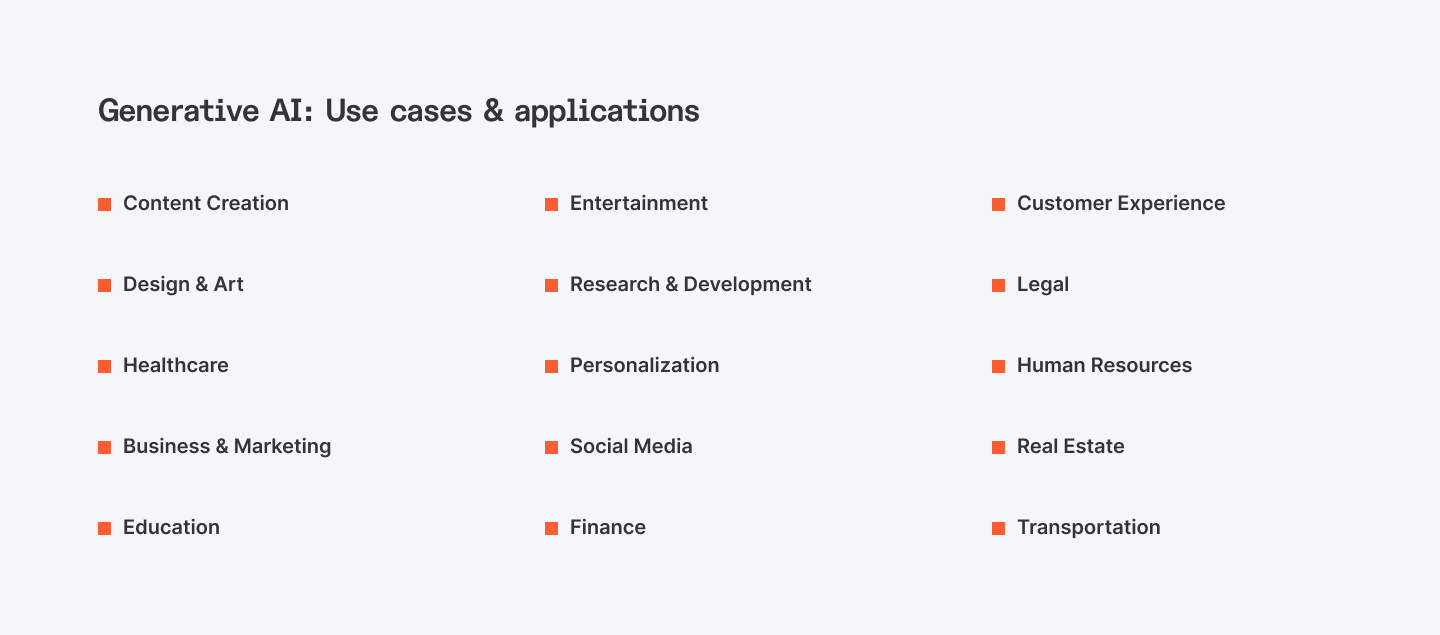
2. User-guided Exploration of Design Space
Concept:
This design pattern empowers users to interactively explore the possibilities within the model's latent space, the underlying representation learned during training. By providing different controls or visualization tools, users can navigate this space and discover new creative variations.
Benefits:
- Enhanced Creativity and Discovery: By actively exploring the design space, users can uncover unexpected and potentially groundbreaking creative ideas that might not have emerged from a single prompt alone.
- Refined Control Over Outputs: This pattern allows users to fine-tune the generated content by iteratively exploring variations and selecting options that best align with their needs.
- Reduced Bias: By actively guiding the exploration process, users can mitigate potential biases present in the model's training data.
Use Cases:
- Generative Art Platforms: These platforms allow artists to explore different artistic styles or color palettes by manipulating controls that influence the latent space of the generative model.
- Music Composition Tools: Composers can use this pattern to experiment with different musical arrangements or melodic variations by interactively navigating the model's latent space of musical elements.
Read more: Unlocking Efficiency and Clarity in Python Development with Enumerate
The Bottom Line
Generative AI offers a powerful toolkit for innovation and creative exploration. We encourage you to delve deeper into this field, experiment with the design principles covered in this blog post, and share your thoughts and experiences in the comments section below.
Consider Index.dev if you're looking to hire Generative AI engineers. Index.dev’s senior generative AI engineers excel in data analytics and machine learning model training. They use their expertise in statistics, programming, and data visualization to empower enterprises to navigate complex data, extract insights, and refine data strategies efficiently. They also offer custom generative AI development services, leveraging foundational models like GPT-4, Llama, and PaLM-2 to unlock transformative capabilities. This enhances workflow automation, driving productivity and operational excellence.
By integrating these services, Index.dev enables clients to harness the full potential of generative AI, driving innovation and efficiency in their software engineering projects.


