The AI talent space is moving fast, and a lot of it is being built on automation first, trust second.
In late March 2026, Mercor, a fast growing platform used by companies like OpenAI and Anthropic, confirmed it was caught in a supply chain attack tied to LiteLLM, a popular open-source library with 97 million monthly downloads. The attack was carried out by a group called TeamPCP, which embedded credential-harvesting malware directly into two LiteLLM package versions. Those packages were live for roughly 40 minutes. That was enough. Extortion group Lapsus$ later claimed to have walked away with 4 terabytes of Mercor's data, including source code, a user database, video interview recordings, and identity verification documents.
Mercor wasn't the only company hit. Thousands were. But Mercor was the first to confirm it publicly, and the scale of what may have been exposed made it impossible to ignore. Meta suspended its collaboration. OpenAI and Anthropic are investigating. A class action lawsuit has already been filed on behalf of over 40,000 people.
This wasn't a targeted attack on Mercor specifically. It was a cascading supply chain failure. A poisoned dependency auto-pulled by CI/CD pipelines across the industry. And Mercor was just visible enough to become the face of it.
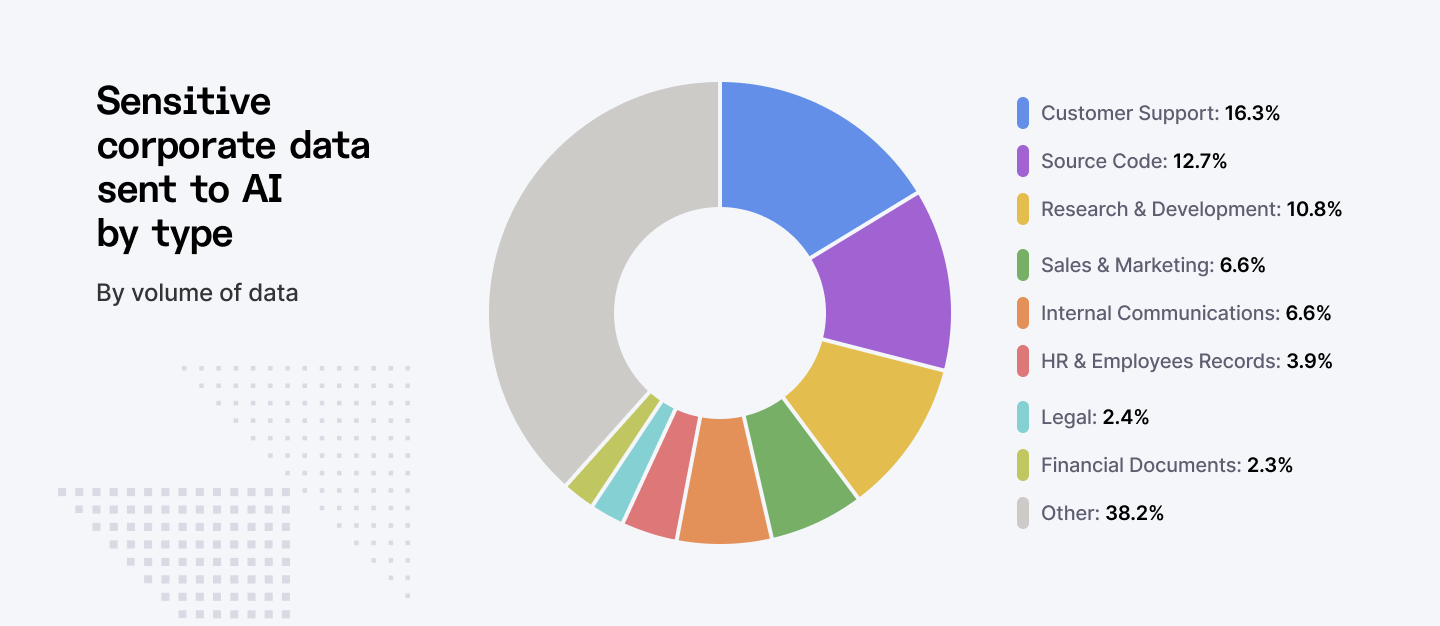
That's the risk of building your talent and data pipeline on automated, highly connected infrastructure with minimal manual oversight.
Build your AI team without the breach risk. Access the top 2% of STEM and AI talent through Index.dev →
How We Judged the Top Mercor Alternatives
Before you choose a platform, it helps to know what matters behind the scenes. We evaluated these alternatives based on pillars that directly impact your security and delivery:
- Supply chain integrity: We prioritized platforms that show exactly how talent is sourced and verified. We looked for Human-in-the-Loop verification processes over 100% automated scraping to avoid the dependency risks seen in recent attacks.
- Specialization vs. generalization: AI training isn't generic software work. We looked for competitors that provide STEM talent—PhDs, researchers, and domain experts who understand RAG, LLM fine-tuning, and robotics.
- Operational security: We assessed each platform's commitment to data privacy and how they handle the secrets of the AI models they help train, focusing on decentralized risk models.
What Mercor Does
Mercor is an AI-powered talent marketplace that connects domain experts, think doctors, lawyers, Goldman analysts, and scientists, with AI labs like OpenAI, Anthropic, and Meta to generate training data. It essentially automates the process of recruiting and paying specialized contractors at scale. Over $2 million in daily payouts. A $10 billion valuation.
The model works because modern AI labs can't rely on public datasets anymore. They need human judgment in specific domains to train models on nuanced tasks. Mercor found that gap and built fast around it.
But "fast" has tradeoffs. The automation-first approach that makes Mercor efficient is the same reason one compromised open-source dependency could cascade so broadly. When your infrastructure is optimized for throughput, security surface area grows with it.
And if you are a founder or CTO building with external talent, this raises a simple question:
How well do you know and control your talent supply chain?
Because this is where most platforms look similar on the surface but work very differently underneath. Some focus on speed and scale through “automation.” Others take a more controlled, human-led approach to sourcing, verifying, and managing talent.
…
In this article, you will see alternatives to Mercor, how they compare, and which one makes the most sense depending on how you build and scale your AI training teams.
1. Index.dev

Index.dev helps you build AI and software teams fast, but with more control over who you’re bringing in. It overlaps with platforms like Mercor in AI training, expert sourcing, and global talent access. The key difference is how it handles trust.
Instead of relying mostly on automated matching, Index.dev uses human-led verification at every step. That means every engineer, researcher, or domain expert is reviewed by real people before they ever reach you. This reduces noise, but more importantly, it reduces risk in your talent supply chain. If you’re training models, building AI systems, or scaling engineering capacity, that level of control matters more than speed alone.
Main features
- Human-verified talent network: Index.dev screens engineers and STEM experts through a multi-stage process: profile review, online interviews, technical evaluations, code reviews, and soft skill assessment.
- Specialized AI & STEM labs: On-demand access to PhD-level talent for LLM fine-tuning, RAG, and complex evaluation across coding, robotics, and healthcare.
- End-to-end delivery management: Unlike regular marketplaces, Index.dev stays engaged to manage contracts, compliance, and performance throughout the project.
- Long-term engagements: Index.dev prioritizes stable, long-term placements over volume. You're working with the same engineers over time, not a rotating pool of contractors. You know who has access to your codebase, your data, and your systems.
- Compliance is handled end-to-end: Index.dev manages payments, legal compliance, and integration across 160+ countries. That removes a class of third-party vendor risk where payment processors, compliance tools, and contractor management platforms all become potential attack surfaces.
Pros
- Strong control over talent quality and identity
- Lower risk compared to fully automated pipelines
- Covers both AI training and product development
- Fast ramp up without long hiring cycles
- Ongoing support, not just introductions
Cons
- More human involvement can mean slightly less instant matching
- Better suited for serious builds than quick, low-cost tasks
- Requires some alignment upfront on roles and scope
Pricing
Flexible monthly billing. No upfront costs to start a search. You pay for the talent’s time, typically structured as monthly rates or project-based pricing, with options to convert talent in-house. Index.dev handles the global payroll, compliance, and overhead.
2. Surge AI

Surge AI is probably Mercor's closest peer in terms of quality and client profile. Surge built its entire model around elite annotators from day one, including Fields Medal mathematicians and Supreme Court litigators. It crossed $1 billion in revenue in 2025 without raising external capital, which says something about the business fundamentals. It’s widely used by AI labs that need structured datasets and RLHF workflows.
Main features
- Rich human labeling: High-quality data labeling for LLMs, including creative writing and complex reasoning.
- Multilingual support: Access to native speakers in 30+ languages for localized model training.
- Safety & alignment: Specialized workflows to help "red-team" models and ensure they follow safety guidelines.
- Custom data collection: Tailored datasets designed to solve specific "hallucination" problems in AI.
- Real-time analytics: Tools to monitor the accuracy and consistency of the labeling workforce.
Pros
- Strong reputation in data quality
- Built for large-scale AI training
- Works well for structured workflows
Cons
- Can be expensive for massive, simple datasets
- Limited support outside data operations
- More pipeline-driven than flexible
Pricing
Project-based. Pricing typically scales based on the complexity and volume of the data being labeled.
3. hackajob

hackajob is a reverse-marketplace where companies apply to candidates. It uses a data-driven approach and skill-based challenges to match technical talent with roles based on their coding performance rather than just their resumes.
Main features
- Skill-based matching: Uses technical challenges to verify candidate abilities.
- Reverse marketplace: Candidates remain anonymous until they choose to engage with a company.
- Insightful analytics: Provides data on your employer brand and how you compare to other hiring companies.
- Dedicated account support: Helps you optimize your job descriptions and outreach.
- ATS integration: Plugs directly into your existing hiring software.
Pros
- Focus on real skills, not just CVs
- High response rates from talent
- Efficient for standard hiring needs
Cons
- Mostly focused on traditional software roles
- Less specialized on AI/STEM research talent
- Limited support for complex team builds
- Less control over supply chain risks
Pricing
Annual license. Typically requires a subscription fee to access the platform and its candidate pool.
4. Eightfold AI

Eightfold AI is a massive, enterprise-grade Talent Intelligence platform. It’s less about "finding a contractor" and more about using AI to manage your entire global workforce and recruitment pipeline.
Main features
- Career site customization: Uses AI to show candidates the best-fit roles on your site.
- Diversity & inclusion tools: Anonymizes profiles to reduce bias in the hiring process.
- Talent rediscovery: Automatically finds people in your existing database for new roles.
- Workforce planning: Predicts what skills your company will need in 2–3 years.
- Upskilling recommendations: Suggests training for current employees to fill skill gaps.
Pros
- Strong enterprise capabilities
- Deep analytics and insights
- Covers full talent lifecycle
Cons
- Complex to implement
- Less focused on external AI training talent
- More HR-oriented than engineering-focused
Pricing
Enterprise quote. Highly customized based on company size and specific module needs.
5. Tech1M

Tech1M focuses on automating sourcing, screening, and hiring workflows using AI. It’s designed for startups and growing teams that want faster hiring cycles.
Main features
- Automated skill assessment: Quick technical tests to filter applicants early.
- AI candidate matching: Ranks applicants based on how well their experience fits the job description.
- Recruitment CRM: A central hub to manage all candidate communications.
- Branded career pages: Easy-to-build pages to attract talent.
- Efficiency analytics: Tracks time-to-hire and cost-per-hire metrics.
Pros
- Speeds up early-stage hiring
- Easy to use for small HR teams
- Reduces manual recruiting work
Cons
- Limited depth in AI and STEM roles
- Relies heavily on automation
- Less suited for complex or sensitive projects
Pricing
Tiered subscription. Offers different levels based on the number of active job slots or hires.
Comparison at a Glance
Here is how the top Mercor alternatives stack up for engineering and AI leaders:
Alternative | Best for | Why it’s a strong contender |
| Index.dev | AI teams that need speed with control | Human-verified talent, strong AI and STEM expertise, and real delivery support. You get speed without fully relying on automation. |
| Surge AI | High-quality AI data labeling | Known for elite annotators and strong RLHF workflows. Built for accuracy at scale. |
| hackajob | Skill-based developer hiring | Matches developers through real coding challenges, not just CVs. Strong for standard engineering roles. |
| Eightfold AI | Enterprise talent management | Strong for workforce planning, internal mobility, and large-scale hiring with deep analytics. |
| Tech1M | Automated hiring for startups | Focused on speeding up sourcing and screening with simple AI workflows. Easy to adopt early on. |
Other Mercor Alternatives Worth Knowing
Scale AI is the incumbent, now partially owned by Meta following a $14 billion stake acquisition in mid-2025. That move triggered an exodus of clients including OpenAI and Google, who didn't want a Meta-affiliated entity touching their training methodology. Scale is still massive and capable, but the neutrality question is real and unresolved.
Turing and Invisible Technologies are broader platforms with annotation and engineering capabilities. They're flexible and established, but neither positions itself primarily around high-skill domain expertise the way Surge or Index.dev does.
Appen, the original data annotation giant, has seen four consecutive years of revenue decline. Its model, built on high-volume, lower-skill offshore labor, has increasingly been displaced by LLMs handling the tasks it used to charge for.
The Gap in the Automate-First Model
Mercor’s success was built on using AI to index millions of resumes and automate interviews. It’s brilliant for volume, but as the recent breach shows, it creates a massive, centralized honeypot of data dependent on third-party libraries.
If your AI training data involves specialized domain experts—doctors, lawyers, or high-end engineers—you aren't just hiring "gigs." You are handling intellectual property. When a vendor's supply chain is compromised, your "AI industry secrets" are the ones at risk.
How Index.dev Secures the Talent Supply Chain
While the industry moves toward total automation, Index.dev takes a different, more resilient approach. It isn't about being "anti-AI," but about where you place the human in the loop.
1. Human-verified integrity vs. AI indexing
Instead of purely automated scraping and indexing, Index.dev focuses on a rigorous, multi-step verification process. You get the speed of a platform but the security of a closed-loop system.
2. Decentralized risk
By avoiding over-reliance on a single "black box" automated gateway, Index.dev ensures that candidate data and client proprietary needs are compartmentalized. It doesn’t treat your training requirements as just another data point in a massive, vulnerable lake.
3. Focus on "high-trust" talent
Mercor leans heavily on volume from markets to fuel daily $2 million payouts. Index.dev focuses on high-retention, high-trust engineering talent. When the stakes are "training the next frontier model," you need partners who prioritize security protocols over sheer throughput.
A Shift in the Trend
In 2026, 80% of enterprise code now comes from open-source libraries, making supply chain attacks the #1 threat to AI startups. The Mercor breach wasn't a failure of their AI—it was a failure of their dependencies.
If you're building something that depends on specialized human expertise, whether for AI training, core engineering, or both, you owe it to yourself to understand how your vendor vets people, manages relationships, and thinks about the security of your data.
Speed is table stakes. Trust takes more work. But it's what protects you when things go sideways.
Whether you choose Index.dev or another vetted alternative, the goal is the same: keep your secrets safe and your talent supply chain unbreakable.
➡︎ Secure your AI talent supply chain today. Index.dev offers human-verified STEM and AI experts to help you ship quality models safely.