Tech giants like Google, Apple and Meta aren't just filling talent gaps with contractors, they're fundamentally reshaping their workforce strategies around them. Google's contractor headcount now nearly matches its full-time workforce, while Apple regularly taps specialized contractors for discrete product development cycles.
These companies have discovered that contractors deliver three critical advantages:
- Specialized expertise on demand: Rather than maintaining full-time AR/VR teams year-round, Meta brings in specialist contractors during intense development phases.
- Project-based flexibility: When Google launches new AI initiatives, they assemble contractor teams that disperse once objectives are met.
- Financial adaptability: Tech companies maintain leaner fixed costs during market fluctuations, rapidly scaling teams without severance obligations.
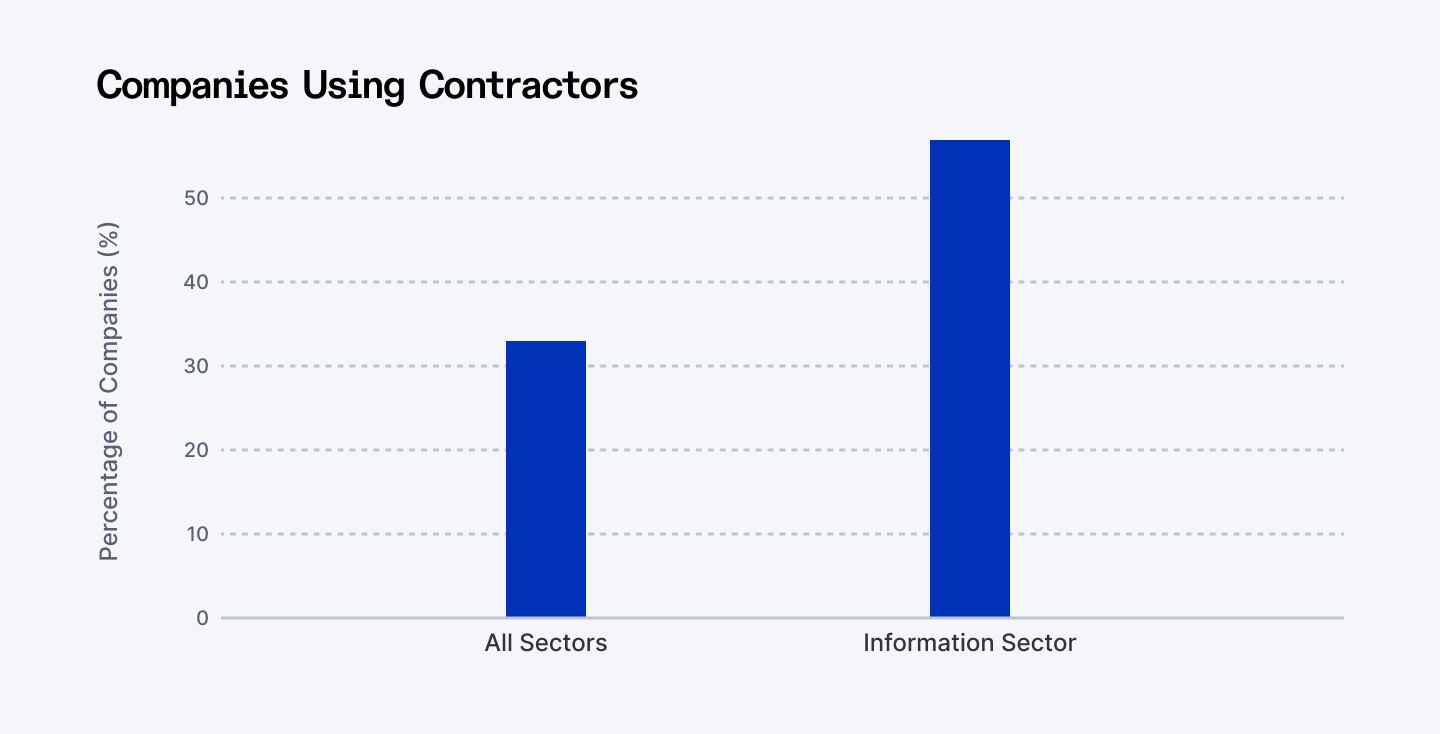
The numbers confirm this shift. Tech giants collectively employed over 1.2 million contractors in 2023, and 65% of technology leaders plan to increase contract hiring in 2025. With 87% of tech executives struggling to find qualified full-time talent, the contractor model has evolved from stopgap solution to strategic imperative.
Scale like big tech! Hire vetted developers through Index.dev in 48 hours, with no risk and full flexibility.
Strategic Advantages of Hiring Contractors in 2025
Access to Specialized, Cutting-Edge Skills
Contractors supply rare expertise in areas like generative AI, cloud-native infrastructure, and advanced cybersecurity without the lead time of permanent recruitment.
While only 16% of executives feel adequately staffed for digital transformation, contractors fill the gap swiftly. The rise of agentic AI predicts that by 2025, 70% of text and data-heavy tasks will be AI-driven, necessitating talent with both AI fluency and domain understanding. Moreover, 37% of organizations have adopted cloud services, underscoring demand for cloud architects and DevOps specialists on a contractual basis.
Agility and Scalability
Big tech often experiences project-based surges—whether launching a new platform or responding to security incidents. Contract talent enables rapid scaling: teams can expand or contract without severance liabilities or onboarding bottlenecks. Upwork’s “Freelance Forward” report shows 38% of the U.S. workforce freelances, contributing $1.27 trillion to the economy, highlighting the depth of available on-demand talent. As a result, companies can launch products 40% faster while aligning capacity with demand.
Cost Efficiency and Financial Flexibility
Contractors manage their own benefits, equipment, and taxes, reducing employer overhead. Organizations now invest over $4.5 billion annually in Vendor Management Systems to optimize contingent labor spend rather than inflating full-time salaries. Outsourcing yields operational savings—often 10–25% per engagement—that can be reinvested into core R&D and innovation programs.
Navigating Global Talent Shortages
The tech talent gap remains acute, with 78% of companies reporting difficulty filling roles (World Economic Forum, 2024). Contractors help bridge this gap, especially in regions with restrictive immigration policies. For example, Canadian tech firms hired 34% more international contractors in 2024 to offset local shortages.
Hybrid Workforce Strategy
Big tech’s most forward-thinking firms blend permanent staff with contractors to balance continuity and fresh expertise. Index.dev, for example, structures teams with full-time leads supported by contract engineers who rotate in for discrete phases:
- Forecast & Align: Use analytics from VMS and HR platforms to predict peaks and determine which roles suit contractors versus permanent hires.
- Onboard Rapidly: Implement standardized documentation, code-quality guidelines, and access protocols to minimize ramp-up time.
- Knowledge Transfer: Overlap contractor and full-time assignments, ensuring critical IP and institutional learning is captured before contractors exit.
This hybrid model drives a 12% increase in R&D output and boosts team productivity by 89% according to recent client surveys.
Compliance and Risk Management
1. Worker Classification Laws
California's AB 5 hits businesses with its notorious "ABC test" - companies have to jump through three hoops to keep contractors from becoming employees. They must show workers are actually independent from company control, doing tasks outside the company's main business, and running their own established operations.
Miss any requirement? Boom - your contractor is now an employee, complete with all the payroll headaches, benefit requirements, and tax complications that come with it.
Over in Europe, they're not messing around either. The EU’s Platform Work Directive kicked in last December, basically forcing tech platforms to treat gig workers as employees unless these workers genuinely operate like true entrepreneurs. The law slaps companies with requirements for fair pay, social protections, and making their mysterious algorithms more transparent to workers.
In New Jersey, Uber’s $100 million settlement in 2022—covering nearly 91,000 drivers—underscored the steep penalties for misclassification, as state authorities found widespread contractor-status violations under labor and unemployment laws.
2. Contract Design & EOR Services
Well-crafted independent contractor agreements should clearly define the scope of work, deliverables, payment terms, and project duration, minimizing ambiguity that can trigger misclassification challenges.
Incorporate liability caps and intellectual property assignment clauses to protect against disputes over deliverables or invention rights, and embed performance metrics to align contractor outputs with business objectives.
For multinational engagements, leveraging Employer of Record (EOR) services streamlines compliance: EORs assume legal employer responsibilities—payroll, benefits administration, and local-law adherence—without requiring the hiring company to establish foreign legal entities.
Specialist EOR providers for tech companies often handle onboarding, tax filings, and ongoing audits, ensuring contractors remain compliant with jurisdiction-specific regulations while your core team focuses on innovation.
Learn More: Software Development Contract Template | A Complete Guide
Market and Business Drivers
Economic Uncertainty & Innovation Imperatives
In today's unpredictable financial landscape with tech layoffs making headlines, companies reduce risk by bringing in contract talent for essential projects. This approach lets organizations keep core functions in-house while tapping specialized expertise—like security audits or AI development—stretching budgets further when resources are tight.
Workforce Preferences & Demographics
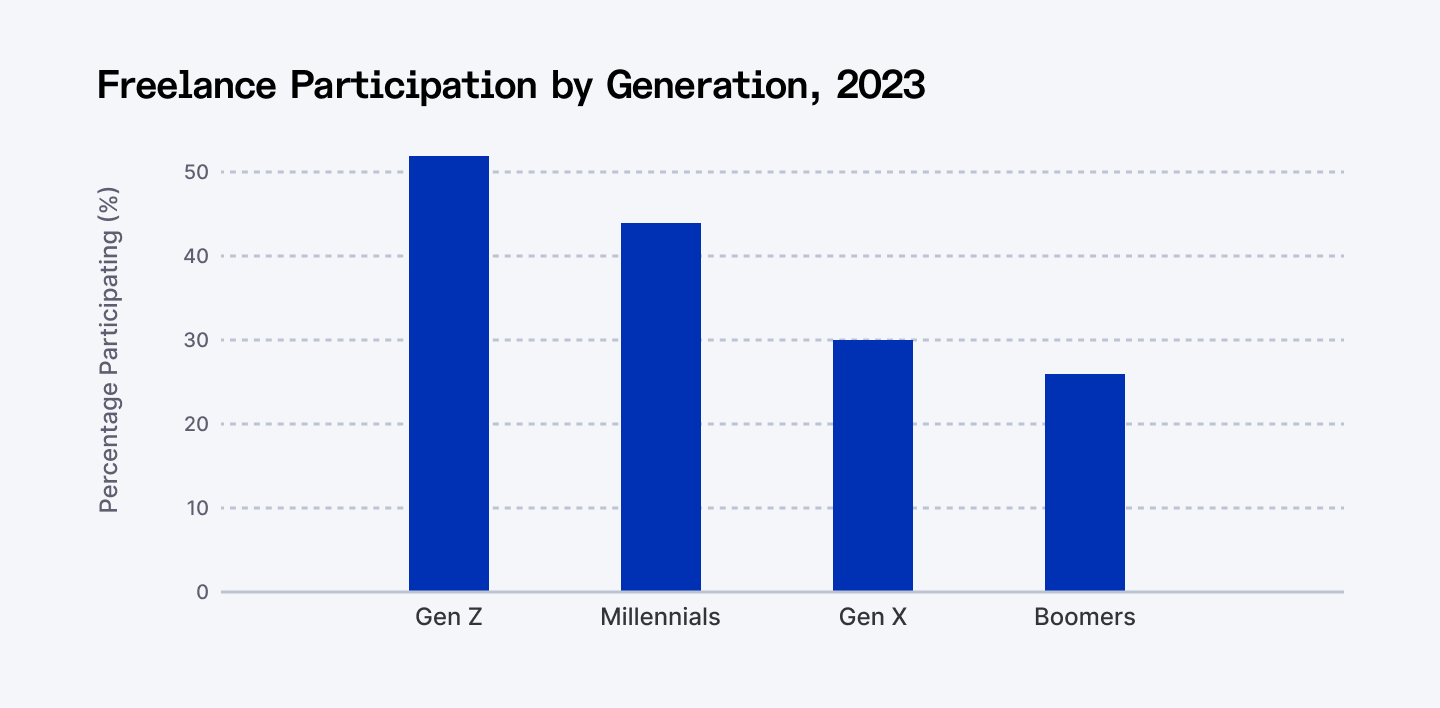
The freelance revolution keeps gaining momentum: over half of Gen Z professionals and nearly half of Millennials took on freelance work last year, compared to just a third of Gen X and a quarter of Boomers. This dramatic shift toward flexible careers creates a rich pool of high-caliber talent available for contract work.
Impact on Technical Culture and Organizational Dynamics
Accelerating Time-to-Market
Specialized contractors who've been screened through platforms like Index.dev can jump into projects within days, cutting traditional hiring timelines in half and shrinking product roadmaps. This quick-start approach fuels faster prototyping and more aggressive market strategies.
Managing Integration & Knowledge Transfer
The contractor model isn't without challenges: keeping code consistent, managing secure access, and hanging onto valuable institutional knowledge. Smart organizations address these issues through detailed onboarding guides, clear coding standards, and scheduling overlap between contractors and full-timers to ensure smooth transitions.
Integrating Contractors into Technical Culture
Success hinges on embedding contractors seamlessly:
- Unified Onboarding: Predefine security clearances and tool access to eliminate setup delays.
- Collaboration Frameworks: Schedule joint sprint reviews and pair programming sessions to foster cohesion.
- Performance Metrics: Tie contractor deliverables to clear KPIs, with regular feedback loops to maintain quality standards.
Explore More: How to Assess Candidate's Skills for Engineering Positions
Real-World Applications at Major Tech Companies
Google relies heavily on contractors for specialized AI research projects and content moderation. When developing new ML models, they bring in AI experts on 6-12 month contracts to supplement their core teams without permanent headcount increases.
Meta uses contractors extensively for platform security and content policy enforcement. Their contractor-to-employee ratio reached 54% in 2024 as they rapidly scaled teams to address emerging security challenges while maintaining financial flexibility.
Microsoft leverages contract talent for cloud migration projects and specialized cybersecurity initiatives, allowing them to quickly respond to market shifts while controlling fixed labor costs.
Case Study: Index.dev in Action
At Index.dev, project squads pair a permanent engineering lead with contract specialists to deliver fast, high-impact outcomes. For example, Entrupy, a New York-based AI-powered luxury-goods authentication provider, partnered with Index.dev in early 2022 to fill a critical Objective-C iOS role that had been open for six months.
- Rapid Time-to-Hire: Within a couple of days, Index.dev sourced, vetted, and onboarded a senior iOS contractor with seven years of Objective-C experience, slashing Entrupy’s hiring timeline by over 70%.
- Scalable Talent Bench: Over two years, Entrupy hired 12 specialized contract engineers across iOS, Python, Vue.js, and QA—nine of whom remain active contributors today—ensuring continuity and high availability for critical AI feature rollouts.
Cost-Effective Delivery: By avoiding agency markups and full-time overhead, Entrupy reduced its average cost-per-hire by an estimated 25%, allowing budget reallocation toward core R&D.
Seamless Integration: Each contractor completed a structured onboarding and knowledge-transfer plan in collaboration with Entrupy’s internal team, preserving institutional IP and accelerating project velocity without disruption.
“Index.dev’s involvement transformed our hiring from time-consuming to truly strategic.”
— Ryan Keavney, VP of Engineering at Entrupy
Conclusion
By 2025, contractor hiring has completely shifted from just plugging holes to powering innovation, resilience, and cost savings at the biggest tech firms. Tech leaders are now running with a hybrid workforce—mixing full-timers and contractors to stay ahead of AI breakthroughs, navigate regulatory headaches, and weather market storms that seem to hit every quarter.
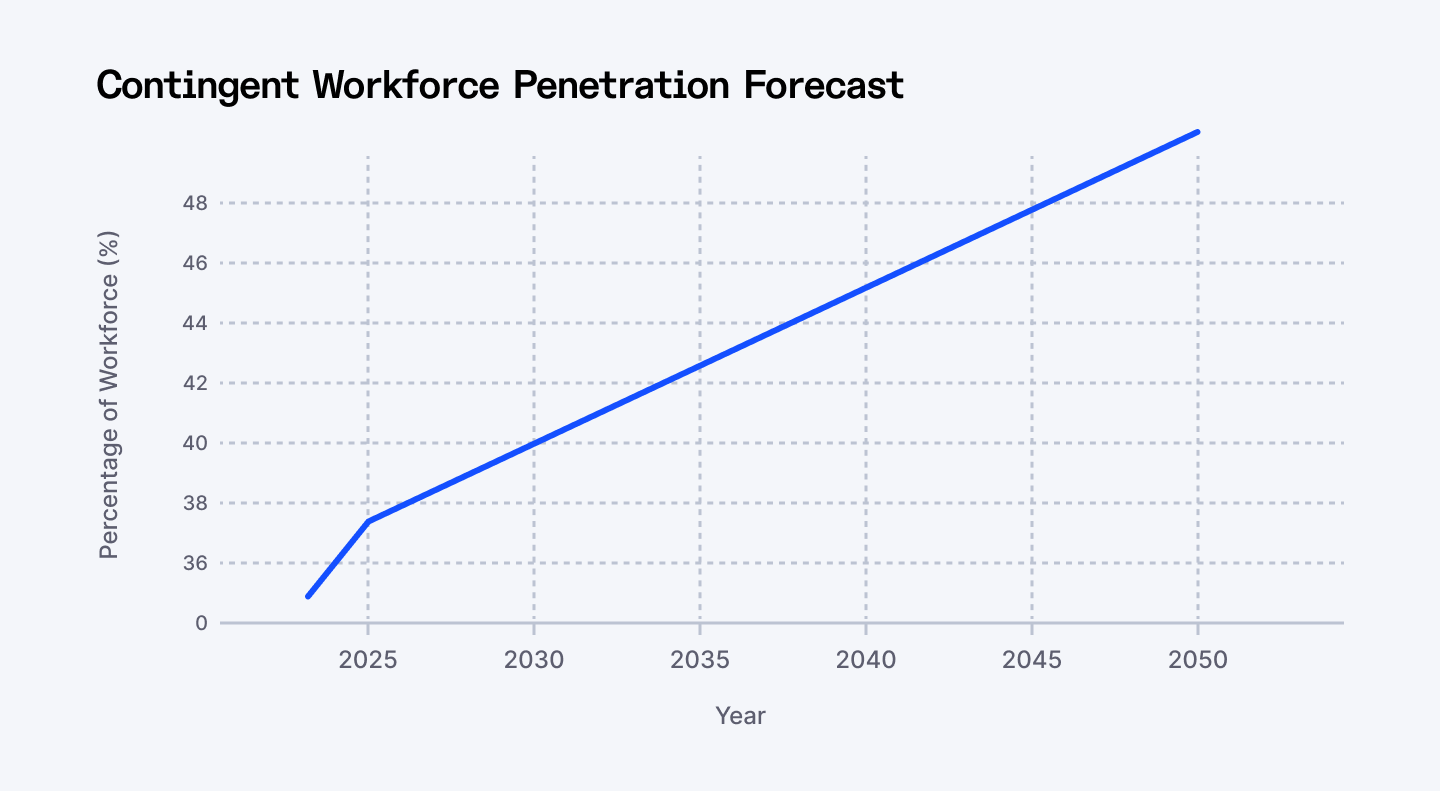
Platforms like Index.dev show how bringing specialized contractors into delivery teams speeds up transformation while maintaining organizational stability. As the proportion of contingent workers approaches that of full-time staff, companies that excel at integrating contractors will pull ahead of their competitors.
For Companies: Looking for elite tech contractors? Access Index.dev’s top 5% vetted talent, and get matched in just 48 hours.
For Developers: Join Index.dev and land high-impact remote contracts with global leaders.