According to the US Bureau of Labor Statistics, retaining software development talent is now more challenging than hiring them. With the demand for skilled engineers projected to grow 22% by 2029 and the talent shortage intensifying, competition for tech professionals is fiercer than ever. As a result, IT departments are ramping up efforts to hold onto their A-players as the talent gap widens.
A comprehensive employee retention program and an employee-centric work culture can set your company apart in those tight talent markets. Follow this article from top to bottom to learn 10 proven tactics to reduce turnover, retain top tech talent, and build an engaged, loyal workforce – so your business is always in the best hands.
Hire the top 5% tech talent through Index.dev—access vetted developers, faster hires, and better retention rates for your projects.
Why Your A-Players Leave
Imagine losing half of your best software engineers today. It’s not just a blow to your budget—it’s a massive hit to expertise and innovation. Add the high cost of recruiting and onboarding replacements, and you’re looking at months of downtime before new hires even start performing at their highest level.
Here’s the hard truth: 40% of the global workforce—roughly 1.2 billion people—are ready to leave their jobs if they see no room for career growth. Gen Z and millennials are leading this ‘big quit’, with nearly two-thirds quitting their first job within two years.
Think it won’t happen to your company? Think again. Talent turnover isn’t a “what-if” scenario; it’s happening now. When turnover is that high, leaders—CEOs, CTOs, and HR professionals alike—need to face two critical questions:
- Why are A-players leaving my company?
- How can I make them stay?
Let’s tackle the first question head-on: Why are A-players leaving your organization? Once we understand the root causes, we’ll dive into the second, a more important question.
No, it’s not just about the paycheck. Sure, salary matters, but top developers won’t stick around just because you pay them well. In the past, a fat paycheck might have masked poor culture or weak leadership. Today, that’s not enough. Developers are leaving not because someone else offered more money, but because they’re not finding what truly keeps them engaged and inspired. They also leave because:
They Feel Disconnected with the Company Culture
In a recent study, 75% of C-suite executives claim that one of number one reasons people leave is because they miss the connection with company culture and co-workers. They also report that their employees would make major sacrifices to work for another company where they’d feel more connected.
There Has Been a Poor Onboarding Process
Most software developers out there feel their organization fall short when it comes to onboarding. A Gallup study even found that only 12% of employees feel their company does a good job onboarding new team members.
There Is No Perspective in Their Career
Today’s tech talent is driven and ambitious. They are eager to learn new skills. They want to grow into new roles. They want to be challenged and become better at what they do. This is backed up by a McKinsey study which revealed that 41% of employees said they quit because of the lack of perspective for career advancement.
Explore More: Top 10 Mistakes to Avoid When Onboarding Remote Developers
…
Now that we’ve explored why they leave, let’s shift focus to the second, more crucial question: How can you keep them from going?
The Winning Game Plan to Retain Talent
Recognize that skilled tech talent always have options. If you are making so much effort to find those A-players, what can you do to retain them? To make them stay, start following these unusual 10 tactics:
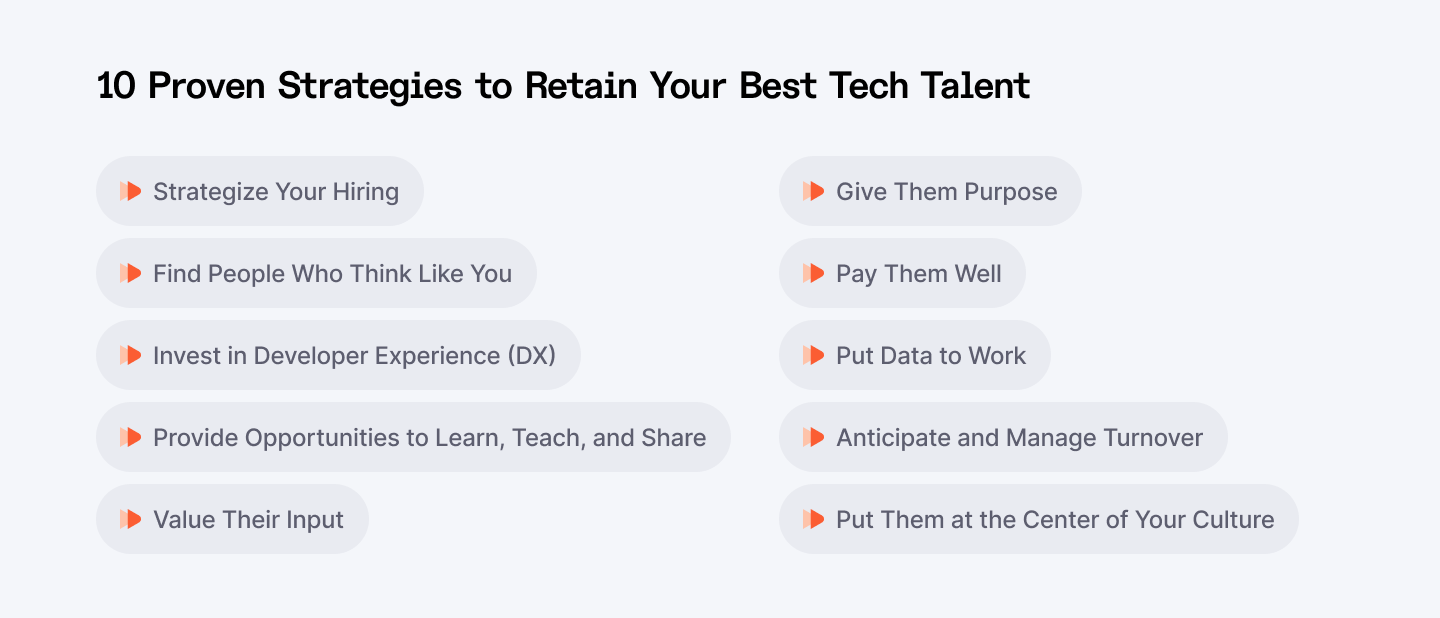
1. Strategize Your Hiring
Retaining talent starts before your new hire joins the company. It starts with your hiring strategy, from the application process and screening applicants to choosing who to interview and onboarding them.
It begins with a thorough understanding of what culture and values you want to emphasize in your organization and then build a hiring strategy and seek those aspects in your candidates.
You have to look at this as a long game: “Do your candidates find the application process quick and easy?”; “Do tech talent view your screening fair and unbiased?”; “Are you interviewing candidates holistically?”; “Do you test hard and soft skills properly?”.
You can only retain software developers by gaining the candidate’s trust from day one. And having a proven hiring strategy will show them that you truly care.
Read More: 11 Mistakes to Avoid When Hiring Remote Software Developers
2. Find People Who Think Like You
When software developers feel they have shared values, vision, and mission with the company, they tend to stay longer. But how to find those SPECIAL ones who resonate with you? Well, there are some subtle indications.
Look beyond what’s written in their resume. If they have worked at a company for many years through ups and downs, that speaks to loyalty, perseverance, and engagement, key aspects for longevity. If they play a team sport or have committed to volunteering and other extra activities outside of their work bubble, that can tell you that they are inspired by a cause, a team, a sport, and they can invest themselves and their mindset in something they really care about. Also avoid job-hoppers. Candidates who have had 15 jobs in 8 years are difficult to retain for any company.
Hire for human capabilities, train for technical skills. Focus on the ones for whom your story, project, or broader vision, resonates. This way you’ll hire devs who’ll stay the course.
3. Invest in Developer Experience (DX)
Let’s start with the basics: what exactly is developer experience (DX)? It’s about how a developer feels when using tools, systems, or processes to build software. This can stretch from technical details, like how languages handle functional programming, to broader aspects, like the ease of using different cloud platforms. But DX isn’t just about tools—it’s about the culture too. It reflects what it means to be a “developer” at your company.
So, how can you improve it? Give them the goals and hold them accountable for their performance and results. Give them the much-needed control over how they can accomplish project milestones at your organization. The thing is, people know better what is working for them and they are the only ones best able to fix what is not working in a fast, creative, and iterative way. In other words, it aligns with how much you value them as professionals and how much you trust them as people. Continuously look for ways to make that experience better.
4. Provide Opportunities to Learn, Teach, and Share
Learning, teaching, and sharing in the workplace and outside of it are major retention-boosters. The more accomplished, curious, and caring the tech talent, the more these aspects matter. The more their work feels connected to a bigger purpose.
Talented developers often approach their careers with a purpose-driven mindset. They want to grow, contribute, and make an impact. So, never block their development. Here’s how to do it:
- First, provide career development opportunities fitted to each individual. Start with assessments and coaching. Understand their strengths, risks, and intrinsic motivators.
- Recognize that people are multidimensional. You need to support the whole person — whether that’s through flexibility, meaningful benefits, financial stability, or projects that truly engage them to keep them engaged. Advocate against rigid, one-size-fits-all HR policies that stifle individual growth.
- Make learning and teaching the core of your organization. Create a space where everyone can share their achievements or thoughts and find a deeper well of inspiration.
- Implement contribution to open-source projects. This allows your tech talent to share their skills with the wider community, gain recognition, and draw attention to your organization’s innovative approaches.
Investing in your employees’ education isn’t just good for your employees – it’s crucial for your business. An employee who is given a career path that limits their development is more than just a career-limiting move, it is also a business-limiting move.
5. Value Their Input
Your tech talent has worked hard to get where they are. They’ve spent years learning from failures and building skills they could use at the highest level. This gives them unique views and approaches into improving workflows, processes, and team collaboration.
They need to feel like their voice matters. They want to share ideas on how to work smarter, use their skills more effectively, and grow even stronger in their roles. Otherwise, they may start to feel undervalued – and eventually, they’ll leave.
So, listen to them. Have open conversations about what’s working and what isn’t. Act on their suggestions whenever possible.
6. Give Them Purpose
Top tech talent wants more than just a job—they want meaningful work with a clear purpose. They want work that makes a difference. A study found that creating a vision and purpose is the second-best way to keep high performers around. One of the biggest reasons engineers are drawn to new roles is the work itself.
A job can always be better. They want to challenge and be challenged. They want to make things better. Give them that purpose. Treat them fairly. Listen to their ideas. It’s really that simple. Having a job with meaning is what could help them stick around the long-term.
7. Pay Them Well
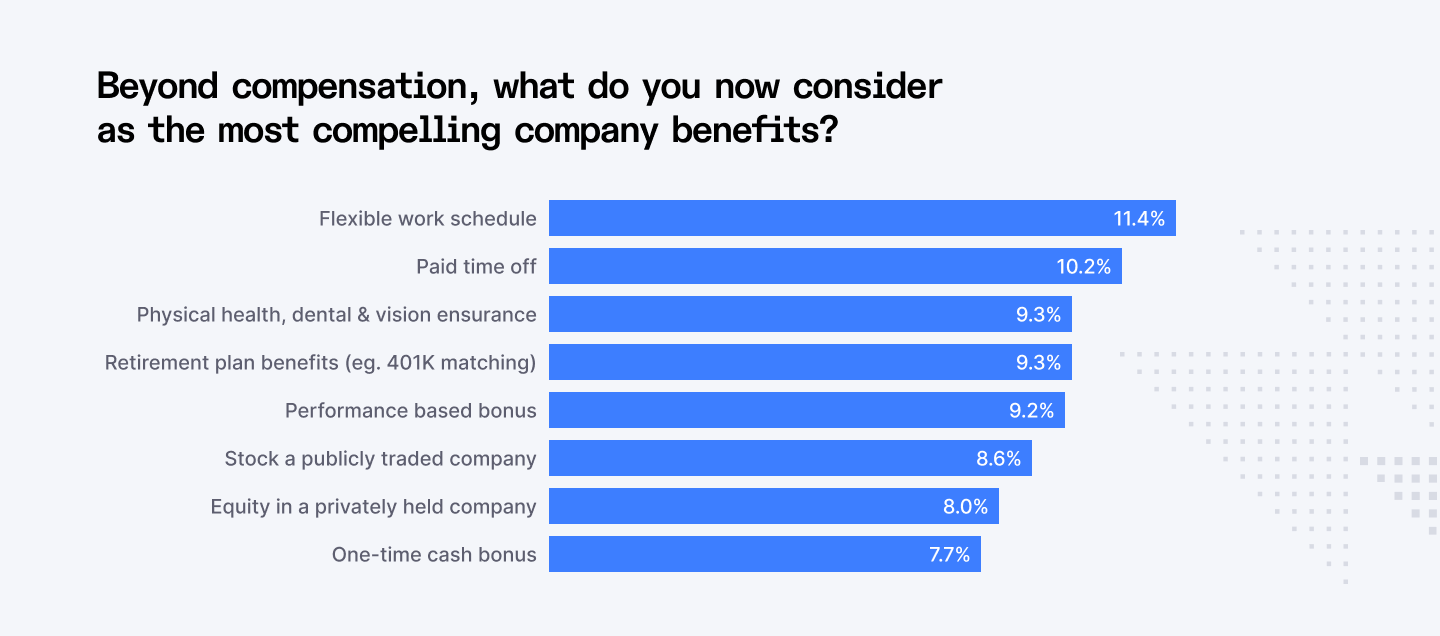
With widescale remote work, tech companies are now competing with everyone for top tech talent, including bigger players like FAANG. As a result, salaries adjust to the higher bidders. Paying your top tech talent well is one of the strongest motivators. Studies show that performance improves by 30% when money is a key motivator. Remember, you’re dealing with professionals who likely have multiple offers on the table. Losing them can be a big hit to your company in the long run. Of course, salary matters. But it’s not everything.
Developers care about more than just the paycheck. Compensation, benefits, work environment, opportunities for development, rewards all matter. To keep them around and give them a good reason to stay at your company, offer things like company shares, bonuses, paid time off, medical insurance, retirement plans, and other perks that show you value them.
8. Put Data to Work
You have a wealth of employee data you can use to spot which talent is at risk of leaving—and take concrete steps to retain them. Today’s engineering talent want to be heard. They want to discuss their concerns, share ideas, and talk about their career plans in a transparent and straightforward manner. It’s important for you to ask about their ambitions, needs, and drivers and use that ‘data’ to understand what inspires them in their current role, what keeps them motivated, and what might push them to look for another job. For example, Dropbox uses regular engagement surveys to gauge employee sentiment. They hold focus groups, executive coffee chats, and listening sessions to stay connected with their people. Other companies organize retention surveys. AI and machine learning can also help you identify potential issues early, so you can address them before they lead to talent turnover.
An in-depth analysis of your data can uncover patterns – like why your talent is unhappy or what’s going wrong in your organization. It can also help you assess the success of your current talent management strategies and guide you in building a more attractive workplace.
For example, commute time may not be the biggest issue for employees. It’s often about the time lost with family. If someone’s facing a long commute, the real problem might be missing out on family time. Offering more flexible hours or remote work options can go a long way in solving that problem.
9. Anticipate and Manage Turnover
Turnover is inevitable. Losing an A-player is tough, but it’s part of the reality in the tech industry. The competition is fierce, so it’s important to be ready for anything. Here, succession planning can be key, especially for high-end and hard-to-fill positions. Stay active in universities, tech organizations, and industry events. Build a strong, positive presence and make your company the employer of choice.
But don’t ignore your turnover rate. While you’re working on talent retention, it’s also essential to track attrition. There are three main factors that lead to high turnover:
- Poor compensation
- Weak people management
- Lack of respect
Focus on improving these areas. Prioritize employee well-being and build stronger relationships.
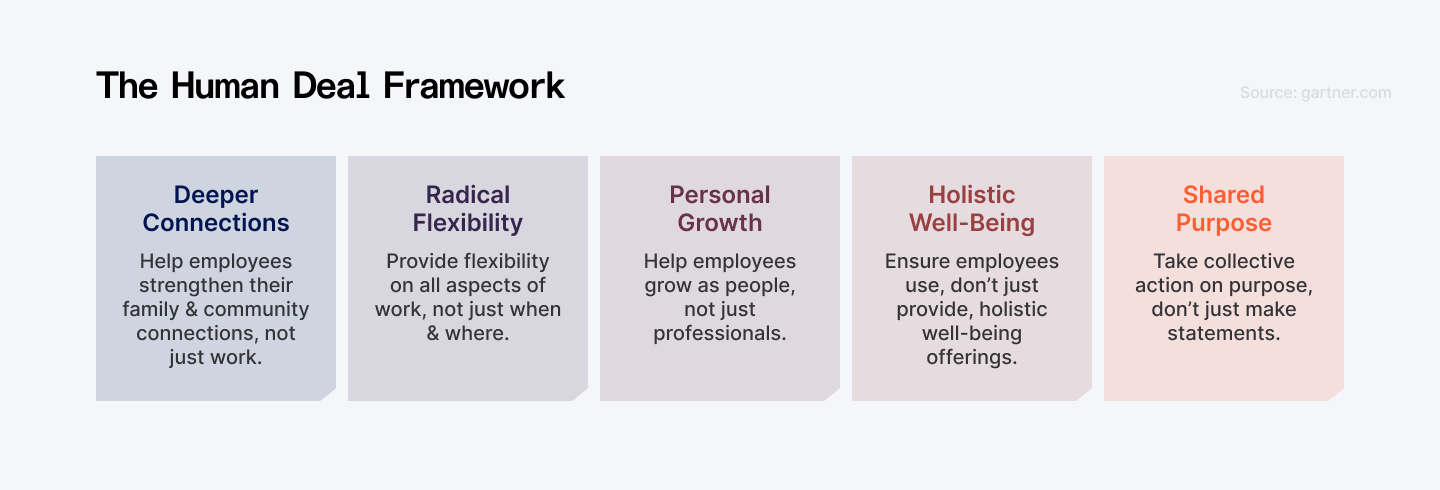
According to Gartner, an employee-centric value proposition includes:
- Deeper connections
- Radical flexibility
- Personal growth
- Holistic well-being
- Shared purpose
By focusing on these elements, you can build a healthier, more loyal team that will stay around long-term.
Explore More: Top 17 AI Recruiting Tools for Hiring Engineering Talent
10. Put Them at the Center of Your Culture
Creating a people-first workplace starts with an inclusive, supportive, and welcoming environment. Your team should feel valued every time they log in to work. Here’s how you can build that kind of employee-centric culture:
- Foster inclusivity. Respect your employees, value their perspectives, and support their mental and physical well-being wholeheartedly.
- Listen actively. Pay attention to their concerns and ideas. Show interest through open conversations and positive body language.
- Set the stage for feedback. Build a culture where feedback flows both ways. Hold regular one-on-ones, discuss their goals, and lay out structured career development paths to help them grow.
- Prioritize strong leadership. Empathy-driven leaders make a difference. Your managers should be willing to adapt and self-reflect. Remember, employees leave bad managers, not companies.
- Offer support. Provide resources like therapy sessions, leadership check-ins, or an open-door policy to ensure employees feel heard and guided.
- Promote diversity and inclusion. Create a workplace where everyone feels they belong and can thrive. People who feel valued are more likely to stay and give their best.
- Improve work-life balance. Help employees set boundaries, reduce workloads, and avoid burnout. Offer wellness programs, flexible hours, and generous time off.
- Learn from exits. Conduct exit interviews to understand why employees leave and use that feedback to improve.
Conclusion
Retaining top tech talent is not that tough—it’s about putting people first. When developers can be their authentic selves at work, they’re happier, more motivated, and less inclined to quit. For you, this means cementing a reputation as an employee-centric company—one that truly values its people and does everything to make them thrive.
So, build a workplace where employees feel valued, heard, and supported. Pay them well, give them purpose, and listen to their ideas. Create an employee-centric culture that encourages growth, respects boundaries, and recognizes hard work. When your team feels they’re part of something meaningful, they’ll stick around and give their best.
It’s not just about filling roles—it’s about building lasting relationships. Show your people they matter. Invest in their well-being, their careers, and their happiness. By centering your retention strategy around your talent, you’ll not only keep them loyal—you’ll also attract other exceptional individuals along the way.
Retain Top Tech Talent with Index.dev
Struggling to retain top tech talent? At Index.dev, we help you hire the top 5% of global tech professionals—vetted for exceptional technical expertise, proven remote performance, and a commitment to long-term success.
Why businesses like yours choose Index.dev:
✔︎Tested and proven talent for high-end and hard-to-fill jobs such as full-stack developers, AI engineers, and DevOps specialists.
✔︎19 out of 20 of index.dev talent passes the trial and stays over 13 months per client's project, a 3x retention rate compared to industry average.
✔︎You won't have to pay hidden fees, you'll get qualified talent who commits to your project and contributes right away.
As an FT1000 Fastest Growing Company, we’re trusted by leading startups and enterprises like Omio, Entrupy, and NetRefer to hire high-performing engineers for remote roles.
Signing up on Index.dev can change everything. Explore our network of world-class developers and bring your boldest ideas to life. Sign up today!