
LinkedIn’s 2024 Emerging Jobs Report ranks AI skills as the fastest-growing in demand across every industry.
AI isn’t “the future” anymore. It’s right now. And the people who know how to build it, run it, and lead it? They’re cashing in.
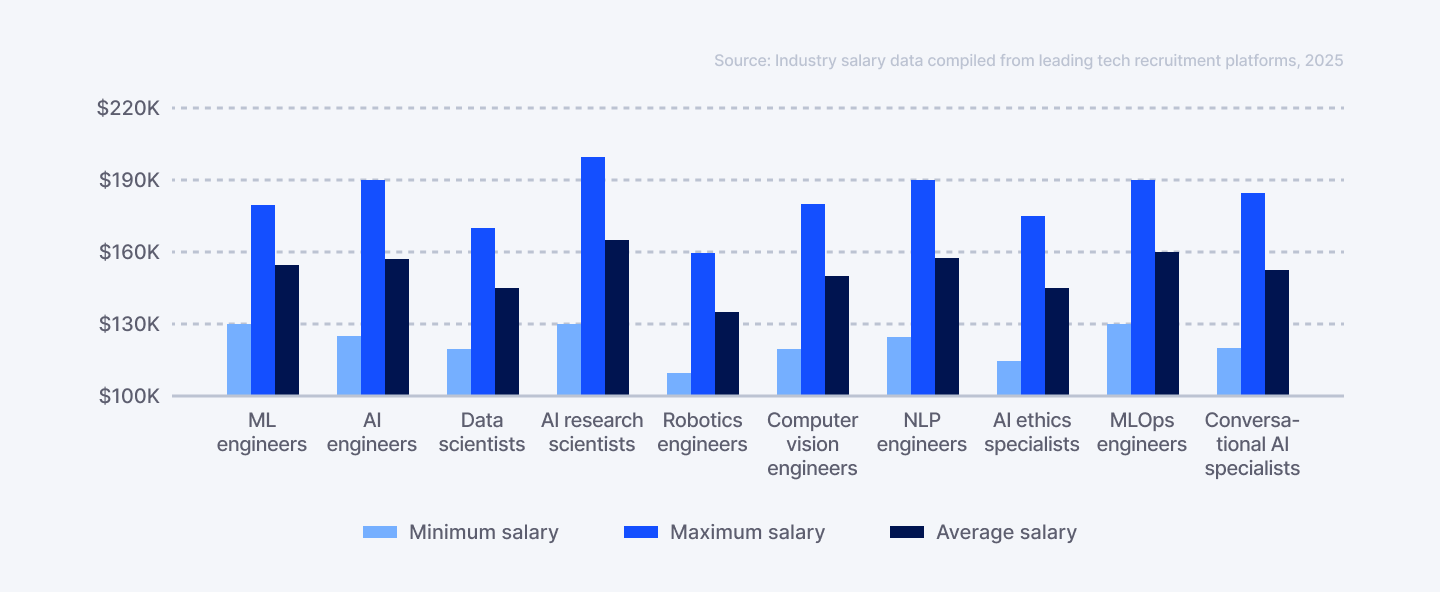
Here are some numbers that should wake you up:
- AI engineer salaries just hit $206K, a massive $50K jump from last year.
- According to the US Bureau of Labor Statistics, the average AI engineer in the U.S. earns $145K/year.
- Some roles, like AI Product Managers or Prompt Engineers, are already pushing $150K+.
If you’re a developer or tech pro without AI skills, you’re already falling behind. But you don’t have to drop everything for a PhD or waste months on courses full of theory and no action.
Instead, you need practical, portfolio-ready certifications that make hiring managers see you as the person who can bring AI to life inside their business.
The ones that transform "I'm curious about AI" into "I build AI systems that companies depend on" and not the ones that sound impressive on LinkedIn.
That’s what this list is.
Just the 8 AI certifications that can get you hired, promoted, or even poached, with a salary that makes you wonder why you didn’t start sooner.
Let’s dive in.
Build your AI career with global companies. Join Index.dev and get matched with top remote jobs that pay what you’re worth.
1. Prompt Engineering Specialization
Available on Coursera from Vanderbilt University
Prompt engineering is the skill of asking exactly the right thing so the AI gives you what you need, not a pile of nonsense.
This certification teaches you how to communicate with AI so it does what you want, every time. You’ll learn how to craft prompts that pull the right answers, generate usable code, summarize huge documents, or even help you brainstorm the next billion-dollar startup idea. Think of it as upgrading from “tourist with a phrasebook” to “native speaker” in the language of machines.
What You’ll Learn
- How to structure your prompts for accuracy and creativity.
- Tricks to make AI responses consistent instead of random.
- Ways to test, tweak, and refine prompts until they work every time.
- Using AI for real-world tasks like writing, coding, research, and content creation.
Why It Matters in the Job Market
AI isn’t going away. It’s taking over workflows in tech companies, startups, marketing teams, research labs, and even government projects.
The people who know how to “drive” AI properly are already getting hired for ridiculous salaries, because they save companies hours of work (and thousands of dollars) by making AI productive.
Job Roles You Can Target
- Prompt Engineer:
You literally get paid to ask AI good questions.
- Generative AI Specialist:
Integrating AI into business workflows.
- Conversational AI Developer:
Building chatbots that work.
- AI Integration Consultant:
Teaching teams to adopt and use AI efficiently.
- AI Product Manager:
You understand both the tech and business side.
Where You Can Work
- Top Startups: Jasper, Copy.ai, Notion (they're all prompt-powered)
- Scale-ups: Canva, Figma, Slack (integrating AI into existing products)
- Enterprise Giant: Microsoft, Google, Salesforce (building AI features customers want)
Salary Potential
- US: $100K–$200K/year (and climbing fast)
- EU: €75K–€100K/year
- Remote-first startups: expect $80K–$150K with stock options
Real-World Example
Imagine you’re a software engineer at a health tech startup. Your team needs a quick prototype for a chatbot that answers patient questions. With prompt engineering skills, you could design, test, and fine-tune the AI’s responses, without writing a full backend first.
Other scenarios include:
- You’re automating support ticket replies for your startup.
- You want AI to write bug fixes or unit tests for your code.
- You’re building AI-driven applications and need better user prompts.
If AI is the engine, prompt engineering is knowing exactly which buttons to push to make it fly.
2. AI Agent Developer Specialization
Available on Coursera from Vanderbilt University
Chatbots are cute. AI agents are a whole different league. They don’t just answer questions, they take action, make decisions, and sometimes even collaborate with other agents to get things done.
This specialization teaches you how to build AI agents from scratch – the kind that can book meetings, control smart devices, manage workflows, or even operate as a mini digital employee.
What You’ll Learn
- Designing AI systems that can plan and execute complex workflows.
- Building different types of agents, from rule-based to goal-driven.
- Connecting your agents to real-world apps, APIs, and data sources.
- Using Python to make agents work in practical, business-ready scenarios.
- Designing multi-agent systems where bots collaborate like a human team.
Why It Matters in the Job Market
We’re heading toward a future where AI agents run huge parts of businesses. Companies are already testing AI agents that can handle customer support, manage supply chains, and run marketing campaigns, without human supervision.
If you know how to design and deploy these, you’re automatically ahead of 99% of developers out there.
Job Roles You Can Target
- AI Agent Developer:
Building autonomous AI systems for various industries.
- AI Software Engineer:
Integrating AI agents into enterprise applications.
- Autonomous Systems Engineer:
Building self-directing AI applications.
- Conversational AI Lead:
Creating next-gen chatbots and virtual assistants.
- AI Automation Specialist:
Replacing human workflows with intelligent agents.
Where You Can Work
- Hot Startups: LangChain, AutoGPT, AgentGPT (building the agent infrastructure)
- Scale-ups: Zapier, Monday.com, Notion (adding autonomous features)
- Enterprise Giants: Salesforce, ServiceNow, Microsoft (enterprise AI automation)
Salary Potential
- US: $100K–$160K/year
- EU: €75K–€110K/year
- Cutting-edge AI startups: $120K–$150K/year + equity
Real-World Example
Your company's customer support is overwhelmed. Customers wait hours for simple answers, and your human team is burning out handling repetitive questions.
You build an AI agent that doesn't just answer questions, it can access customer accounts, process refunds, schedule appointments, and escalate complex issues to humans. It handles 80% of inquiries instantly, 24/7.
Or maybe you're working for a logistics company that needs to optimize delivery routes in real-time. You create an agent system where each AI manages different aspects – one handles traffic data, another manages driver schedules, and they collaborate to optimize deliveries automatically.
This technology is so new that there aren't many experts yet. Getting in now puts you at the front of a massive wave. You'll be building the systems that define how businesses operate in the next decade.
3. AI in Healthcare Specialization
Available on Coursera from Stanford University
AI isn’t just about chatbots and cool filters. It’s also about saving lives. This specialization walks you through how artificial intelligence is transforming healthcare, from detecting diseases earlier to helping doctors make faster, better decisions. You’ll see exactly how AI can spot patterns in medical data that even the sharpest doctors might miss.
What You’ll Learn
- How to work with medical data and understand healthcare workflows.
- Using machine learning to analyze patient records, scans, and test results.
- Creating prediction models for patient outcomes.
- Designing AI systems that are ethical, unbiased, and privacy-safe.
- Building AI models that work with medical images (X-rays, MRIs, CT scans).
Why It Matters in the Job Market
Healthcare is one of the fastest-growing sectors for AI adoption. Hospitals, biotech firms, and medtech startups are investing heavily in AI to improve care and cut costs. If you can speak both “data” and “healthcare,” you’re in a niche with huge demand and very few skilled people.
Job Roles You Can Target
- Clinical Data Analyst:
Extracting insights from patient and hospital data.
- AI Healthcare Engineer:
Building AI models for diagnosis and treatment.
- Medical AI Consultant:
Advising healthcare organizations on AI adoption.
- Digital Health Product Manager:
Leading AI-powered health applications.
Where You Can Work
- Hot Startups: Tempus, PathAI, Aidoc (AI-first healthcare companies)
- Scale-ups: Teladoc, 23andMe, Veracyte (established health tech with AI ambitions)
- Enterprise Giants: Google Health, Microsoft Healthcare, IBM Watson Health (tech giants disrupting healthcare)
Salary Potential
- US: $80K–$120K/year
- EU: €55K–€80K/year
- Specialized AI healthcare startups: $85K–$120K/year with benefits
Real-World Example
Imagine you’re part of a medtech startup developing an AI tool that scans X-rays for early signs of lung cancer. Instead of replacing doctors, your AI helps them make quicker, more accurate diagnoses, potentially catching diseases months earlier than traditional methods. That's a real-world impact.
The demand for people who understand both health and AI is booming. More hospitals and companies want experts who can safely bring AI into real patient care, a mix of tech skills and ethical know-how that this specialization delivers.
Discover the shortcut path no one talks about to learn AI fast.
4. TensorFlow Developer Certificate
Available on DeepLearning.AI
TensorFlow is the rockstar framework powering modern AI, from voice assistants to smart predictions. It’s what powers everything from Google Photos face recognition to Netflix recommendations. If you want to go from AI enthusiast to AI builder, this is where you start.
This certification is built by DeepLearning.AI and taught by Laurence Moroney, the guy leading TensorFlow at Google. That means you’re learning straight from the source.
What You’ll Learn
- How to build neural networks that don't fall apart in production.
- Computer vision: teaching AI to “see” and understand images.
- Natural language processing: making AI understand and generate text.
- Time-series forecasting: predicting future trends from data.
- Deploying models that can handle real-world traffic and scale.
Why It Matters in the Job Market
AI is moving from research labs into real products, and TensorFlow is the go-to framework for production-level models. If you can build and ship AI that works at scale, you’re instantly in a different salary bracket.
Job Roles You Can Target
- TensorFlow Developer:
Building and optimizing AI models for real-world use.
- AI Application Engineer:
Integrating AI into apps, platforms, and products.
- Machine Learning Engineer:
Designing, training, and deploying scalable models.
Where You Can Work
- Hot Startups: Hugging Face, Replicate, RunPod (building AI infrastructure tools)
- Scale-ups: Stripe, Shopify, Discord (adding AI features to existing platforms)
- Enterprise Giants: Tesla, Uber, Spotify (AI at massive scale)
Salary Potential
- US: $95K–$150K/year
- EU: €70K–€110K/year
- Remote-first AI startups: $80K–$120K/year + equity
Real-World Example
Say you’re working for a health tech company and they need an AI model that can detect early signs of skin cancer from images. With this certification, you could build the computer vision pipeline, train it on medical datasets, and deploy it as a tool doctors can use in clinics. That’s the kind of work that gets you noticed.
Also you’d use this when:
- Creating AI features for your startup’s app, like personalized recommendations.
- Developing voice recognition or NLP apps that understand users.
- Building predictive models to crunch massive data sets for finance.
This cert is about getting your hands dirty, building things that matter, and walking away with a portfolio that screams, “Yes, I can build that.”
5. Certified AI Transformation Leader (CAITL™)
Available on USAII
Every company right now says they “want to do AI.” Most have no idea how. That’s where AI Transformation Leaders come in. It’s less about writing code and more about guiding entire organizations through the shift to AI-driven processes, products, and decision-making.
What You’ll Learn
- How to identify high-value AI opportunities in a business.
- Building business cases that get executives to say "yes" and write checks.
- Leading AI adoption across entire organizations without causing chaos.
- Managing cross-functional teams (engineering, product, marketing, ops).
- Measuring and proving AI ROI in real business terms.
Why It Matters in the Job Market
AI is no longer a “tech team side project.” It’s becoming a boardroom priority. That means companies need leaders who can see the big picture, understand AI’s capabilities, and move fast without breaking trust, ethics, or budgets. If you can confidently guide an organization through AI adoption, you’re basically holding the steering wheel of their future.
Job Roles You Can Target
- AI Transformation Leader:
Leading organization-wide AI adoption.
- AI Program Director:
Overseeing company-wide AI initiatives.
- Head of AI Strategy:
Setting vision and execution for AI across teams.
Where You Can Work
- Management Consulting: McKinsey, BCG, Deloitte (every client needs AI strategy now)
- Traditional Industries: Ford, GE, Walmart (legacy companies desperately need AI transformation)
- Scale-ups: Any company with 100+ employees that's still doing things manually
Salary Potential
- US: $130K–$200K/year
- EU: €95K–€140K/year
- Enterprise AI consulting roles: $150K–$200K/year + bonuses
Real-World Example
A 50-year-old manufacturing company is losing market share to younger competitors who use AI for everything: predictive maintenance, demand forecasting, quality control. The CEO knows they need AI but has no clue where to start.
You come in, assess their entire operation, and create a roadmap. Maybe you start with predictive maintenance to reduce downtime. Then you add demand forecasting to optimize inventory. Within 18 months, you've transformed them from an old-school manufacturer into an AI-powered efficiency machine.
If AI developers are the builders, AI Transformation Leaders are the generals, deciding what gets built, why, and when. And companies will pay a premium for someone who can lead them into the AI era without crashing the ship.
5. Jetson AI Specialist
Available on NVIDIA Institute
Most AI runs in the cloud. But what if you need it to run in a drone, a robot, or a camera, instantly, without an internet connection?
That’s where Jetson AI comes in. NVIDIA’s Jetson platform lets you deploy AI on the “edge”, meaning directly on small, powerful devices. And hardware-meets-software certification teaches you exactly how to do it.
What You’ll Learn
- Start with Python basics and dive into deep learning fundamentals.
- Using NVIDIA’s software stack to train, deploy, and fine-tune models.
- Optimizing models for edge computing so they run fast on small devices.
- Building real-time AI for robotics, drones, IoT sensors, and smart cameras.
- Hands-on experience with CUDA, TensorRT, and NVIDIA’s toolkit for accelerating AI.
Why It Matters in the Job Market
Edge AI is exploding in industries like autonomous vehicles, smart cities, manufacturing, and defense. Companies need developers who can make AI work outside the cloud: reliably, securely, and in real time. And right now, there aren’t enough people who can do it well.
Job Roles You Can Target
- Edge AI Developer:
Bringing AI to embedded and IoT devices.
- AI Robotics Engineer:
Integrating AI into robots and autonomous systems.
- Computer Vision Engineer:
Deploying AI for real-time image/video analysis.
- Autonomous Systems Developer:
Creating self-driving cars, drones, and robots.
Where You Can Work
- Hot Startups: Aurora, Waymo, Boston Dynamics (pushing the boundaries of autonomous systems)
- Scale-ups: DJI, iRobot, Ring (consumer devices with AI capabilities)
- Enterprise Giants: Tesla, NVIDIA, Intel (building the infrastructure for edge AI)
Salary Potential
- US: $110K–$160K/year
- EU: €80K–€130K/year
- Specialized robotics/AI startups: $120K–$180K/year + equity
Real-World Example
You’re working at an agriculture tech startup. Your team wants an AI-powered drone that can fly over farms, detect plant diseases, and alert farmers instantly, no cloud connection needed. With Jetson skills, you can train a vision model, optimize it for a Jetson module, and deploy it so it works live, in the field, on battery power.
Other real-life scenarios include:
- Developing smart camera systems that recognize people or objects.
- Creating AI-powered assistants for factories or healthcare devices.
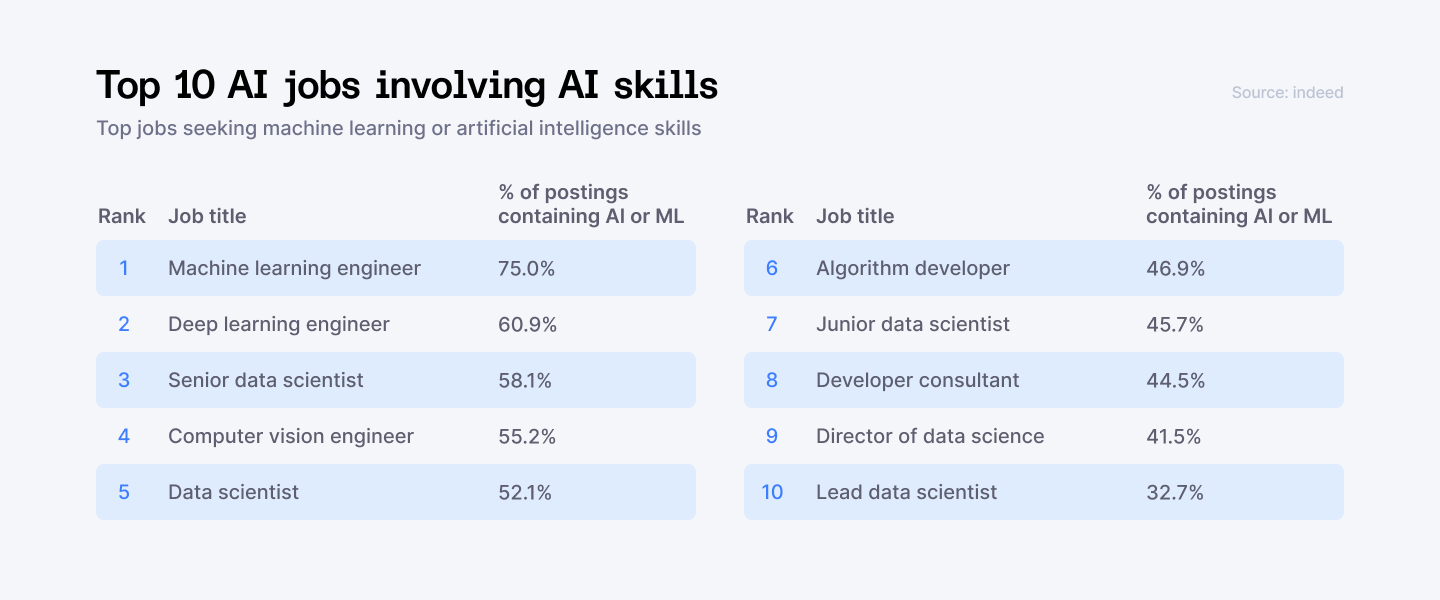
Edge AI is exploding due to the rise of IoT, 5G, and autonomous tech. But AI on these devices is tricky. Models must be optimized to run fast and efficiently in limited hardware conditions. This certification gives you a powerful resume edge in a high-paying sector.
7. Certified Artificial Intelligence Scientist (CAIS™)
Available on USAII
Certified Artificial Intelligence Scientist (CAIS™) is a globally recognized certification for professionals who want to go beyond “playing with AI” and actually design, train, and deploy advanced AI systems.
The CAIS™ dives deep into machine learning, deep learning, neural networks, NLP, computer vision, and more. You’ll learn how to design AI models from scratch, optimize them for performance, and deploy them into real-world applications. Unlike short courses, this certification is designed to give you a research-level understanding of AI.
The program also covers AI ethics, explainability, and governance, crucial if you want to work with enterprises that need AI systems to be both powerful and compliant.
What You’ll Learn
- Advanced AI/ML concepts, practical frameworks, AI algorithms, deep learning, computer vision, reinforcement learning, and NLP.
- Shaping AI roadmap and strategy that drives revenue growth and operational efficiency.
- Creating ethical AI policies to ensure responsible, bias-free AI use across your business.
Why It Matters in the Job Market
Whether you're a Manager, Director, CXO, or aspiring executive, this certification puts you in the driver’s seat to shape AI-powered business success. You’ll become the go-to AI strategist who can bridge tech, data, and business, steering teams to innovate and solve complex problems using AI.
Job Roles You Can Target
- Principal AI Scientist:
The highest technical role in AI organizations.
- AI Research Director:
Leading teams that create breakthrough AI systems.
- Chief Technology Officer (AI):
Technical leadership at AI-first companies.
- Independent AI Consultant:
Solving problems nobody else can solve.
Where You Can Work
- AI Labs: OpenAI, Anthropic, DeepMind (companies pushing AI boundaries).
- Big Tech Research: Google Brain, Microsoft Research, Meta AI (billion-dollar research budgets).
- Cutting-edge Startups: Any company trying to solve problems current AI can't handle.
Salary Potential
- Entry Level: $150K–$200K/year
- Mid-Level: $200K–$250K/year
- Senior/Lead: $250K–$500K+ (top AI scientists at major companies earn $1M+)
Real-World Example
A biotech company is trying to accelerate drug discovery, but existing AI models can't handle the complexity of molecular interactions. Current solutions take years and cost millions.
You design a completely new AI architecture. Your system can predict molecular behavior, simulate drug interactions, and identify promising compounds in weeks instead of years. This way you're creating AI that's never existed before.
AI is the future and leaders who truly understand its potential will be the ones driving it forward. This certification equips you to be that leader, ready to push AI innovations into real-world business transformation.
8. IBM AI Product Manager Certificate
Available on Coursera from IBM
Not everyone in AI needs to be a hardcore coder. Some of the highest-paid roles are for the people who connect the dots, turning an idea into a product that customers love.
That’s exactly where this certification comes in. It’s your crash course in becoming the person who can take an AI concept from “what if…” to “live and making money.”
What You’ll Learn
- How to design, plan, and launch AI-powered products.
- Building product roadmaps and leading sprints.
- Translating AI tech into features customers understand and want.
- Using generative AI to brainstorm, validate ideas, and make product decisions faster.
Why It Matters in the Job Market
Companies are drowning in AI possibilities but starving for people who can turn possibilities into profitable products. They need someone who understands both the technology and the business side. Someone who can talk to engineers in the morning, sell the vision to stakeholders at lunch, and tweak the feature roadmap in the afternoon. That mix of tech fluency and business sense is rare, which is why AI product managers are making six figures and getting poached left and right.
Job Roles You Can Target
- AI Product Manager:
Running the entire AI product lifecycle.
- Technical Product Owner:
Owning the vision and backlog for AI-driven products.
- AI Solutions Strategist:
Advising companies on AI integration and product direction.
- AI Product Marketing Manager:
Positioning AI products in the market.
Where You Can Work
- Hot Startups: OpenAI, Anthropic, Midjourney (building the AI tools everyone uses).
- Scale-ups: Notion, Linear, Superhuman (adding AI superpowers to existing products).
- Enterprise Giants: Apple, Amazon, Netflix (AI features that serve millions).
Salary Potential
- US: $120K–$185K/year
- EU: €90K–€150K/year
- Remote-first companies: $100K–$140K/year with stock options
Real-World Example
Your company's CTO just got back from a conference and wants to "add AI to everything." That's where you come in. You sit down with the engineering team to understand what's actually possible. Then you talk to customers to figure out what they actually need. Finally, you create a plan that turns AI hype into real products that make money.
Or maybe you’re working at a fintech scaleup. Your team wants to roll out a fraud-detection feature using machine learning. As the AI product manager, you’d work with engineers to define how it should function, collaborate with designers on the UI, and set the launch plan. You’re the one making sure it not only works but also fits into the bigger business strategy.
If prompt engineers are the “AI whisperers,” AI product managers are the “AI architects”, turning raw ideas into polished, market-ready products. And companies will happily pay top dollar for someone who can do that well.
Explore the top 10 AI skills that can significantly increase your earning potential.
Wrap It Up
There’s never been a better time to break into artificial intelligence. Demand is soaring, tools are more accessible than ever, and you don’t need a PhD or a Silicon Valley badge to land a high-paying role.
The 7 certifications we’ve covered are your launchpads into real-world AI careers. Whether you want to design AI agents, build deep learning models, lead product strategy, or create healthcare breakthroughs, there’s a clear path here for you. And with training from IBM, DeepLearning.AI, and other industry leaders, you’ll be learning exactly what employers want.
Thousands have already made the leap and you can too. All it takes is choosing one course, showing up, and following it through.
Don’t watch from the sidelines.
For Developers:
Join Index.dev's elite talent network and get matched with global companies actively hiring AI developers. Fast-track your remote career with top tech roles that pay!
For Clients:
Hire elite AI developers in 48 hours. Access the top 5% of vetted talent who've earned these exact certifications with a 30-day free trial, only on Index.dev.


