In 2025, retaining top AI engineers is mission-critical for innovation. Losing a senior AI engineer delays product delivery by ~8 months and costs roughly $150k-$225k to replace (ramp + recruitment + lost productivity) — based on replacement-time benchmarks and a median AI total compensation of ~$300k.
The tech industry experiences average turnover of 13-21% per year and demand is exploding: top AI positions now pay median salaries well in excess of $250K and frequently over $300K. In fact, a 2024 prediction puts a 50% global AI talent shortage at a high estimate, with fierce competition for every engineer.
Yet high salaries alone aren’t enough. 78% of technological experts cite lack of career advancement as a reason to leave, and over half of developers cite burnout as persuading others to depart. Those figures suggest that companies must act fast or risk losing their best AI talent.
The issue is pressing; the solution is pragmatic. What we offer in this guide is a tight playbook designed to be executed.
Hire elite AI developers that stay long term. Index.dev matches you with the top 5% of vetted engineers in 48 hours with a 30-day trial, compliance, and full support.
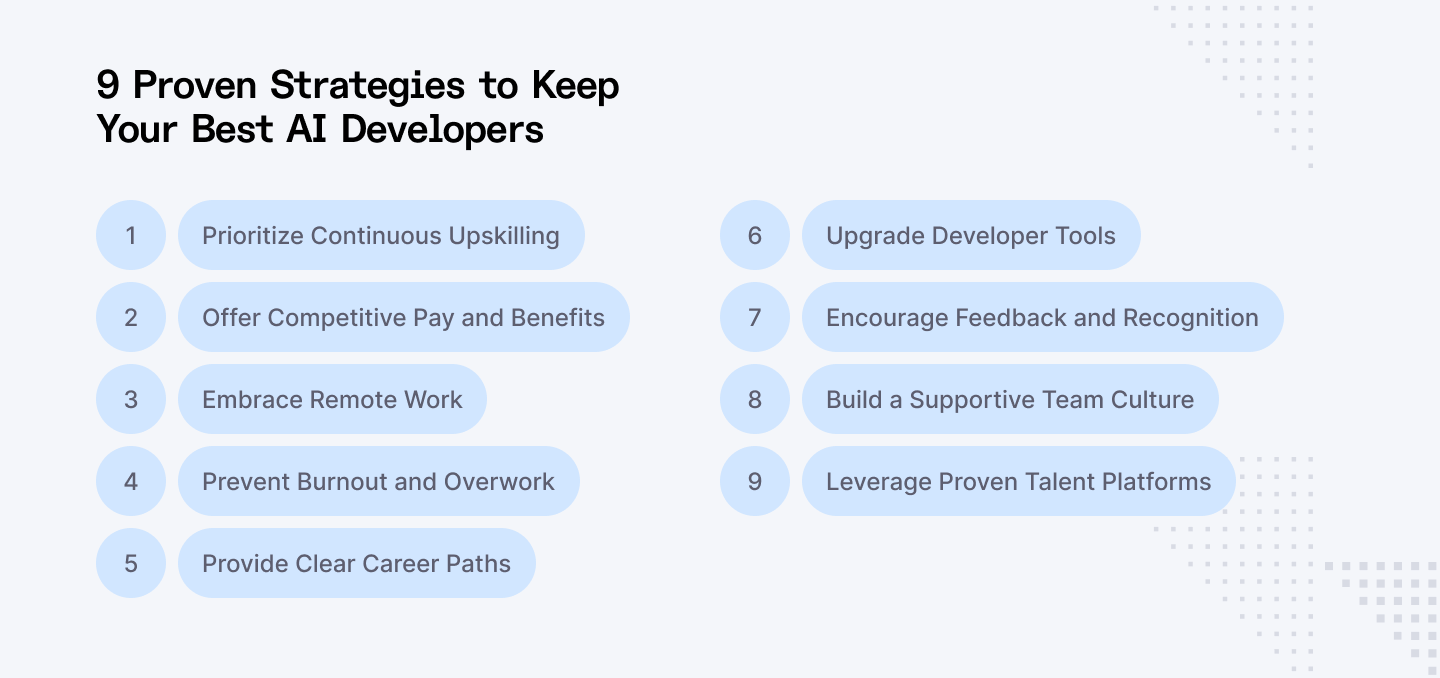
1. Prioritize Continuous Upskilling or Watch Talent Leave
Continuous learning keeps AI engineers engaged. AI developers thrive on solving complex problems; providing advanced training channels that drive and help retain them. Training is worth it: those companies with a strong culture of learning have 30-50% higher retention. Create a learning culture:
- Provide training budgets, workshops, and online courses in ML/AI tools (TensorFlow, PyTorch, AWS SageMaker, etc.). Employees with clear growth paths stay longer – those with development plans have ~34% higher retention.
- Sponsor certifications or conferences (e.g. CVPR, NeurIPS) to allow engineers to develop skills and network. Offer "innovation days" where devs learn about new AI libraries or side projects.
- Establish mentorship and knowledge-sharing: Pair juniors with seniors, hold lunch-and-learns, and encourage open-source contributions. This builds loyalty and expertise.
Do this: Tie new skills directly to promotion criteria or bonuses.
Avoid this: Don’t let engineers stagnate on maintenance work – boredom is a silent turnover killer.
Discover which human skills are most valuable in an AI-driven workplace and learn how to focus on hiring them.
2. Offer Competitive Pay and Benefits or Lose Engineers to Competitors
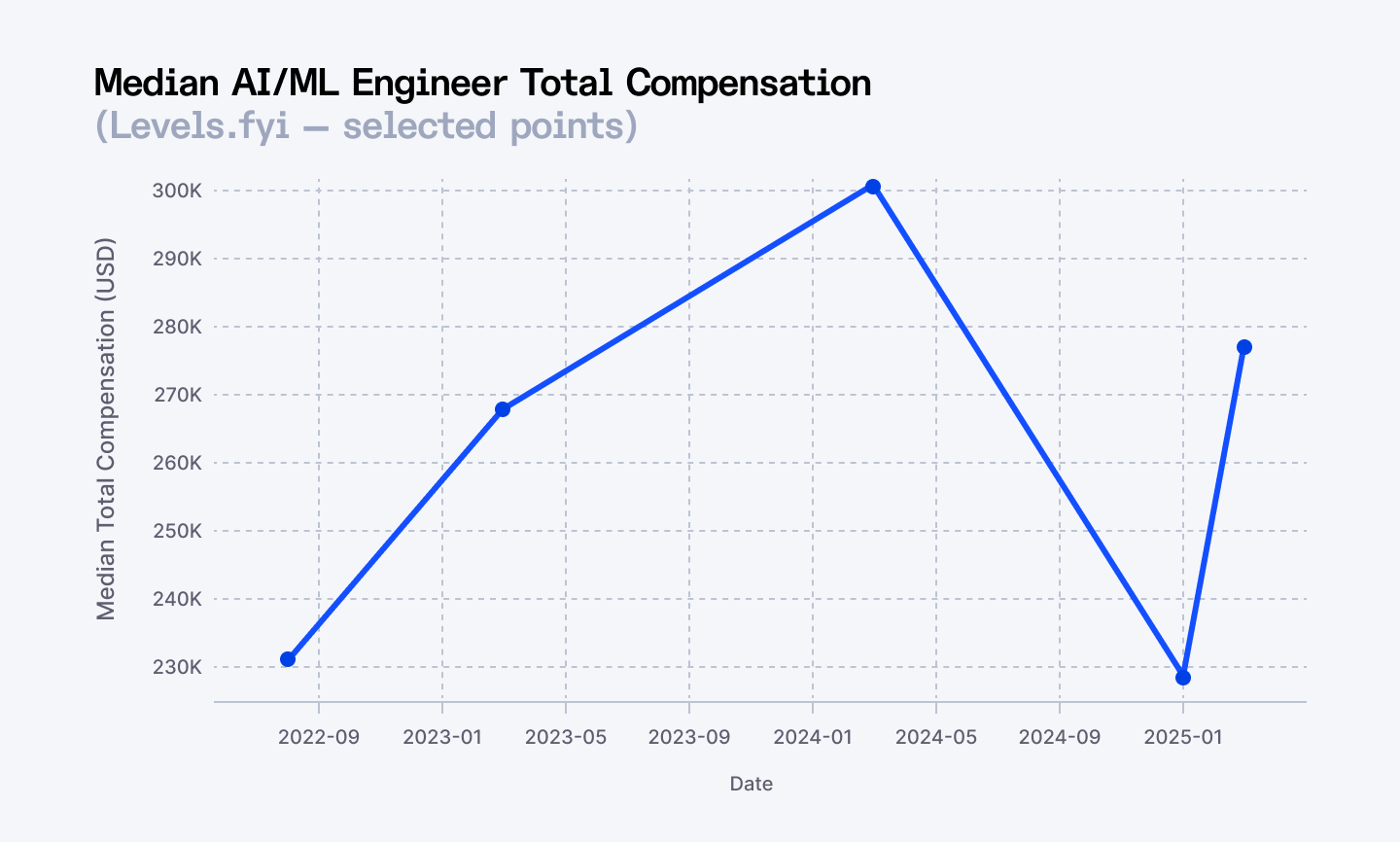
Figure: Median AI-engineer compensation in the US has jumped dramatically (Levels.fyi).
Compensation must match market demand. Even entry-level AI engineers earn a premium – for example, at LinkedIn an entry AI role pays $239K vs $222K for a non-AI peer.
U.S. AI/ML engineers average six-figure salaries at all levels. Offer bonuses, stock, and raises to stay competitive. For instance, median AI total comp rose from ~$231K in 2022 to ~$300K as of early 2024.
- Perform annual benchmarking (use Levels.fyi, Dice, industry surveys) against FAANG and startups to avoid falling behind.
- Embrace transparency: Publish salary bands so high performers know exactly what’s needed to level up.
- Offer rich benefits (healthcare, parental leave, wellness budgets). Perks like training stipends or conference travel reimbursements can sway candidates.
Do this: Show clear paths to the next compensation level. Include vesting equity (stock or profit-sharing) that rewards long-term contribution.
Avoid this: Refrain from maintaining pay gaps between AI and traditional dev teams. This breeds resentment.
3. Embrace Remote Work or Face 87% Developer Dissatisfaction
Modern AI talent values autonomy and balance. A U.S. labor report finds remote work lowered turnover by boosting satisfaction. In one 2025 survey, 87% of software developers reported better mental health after going remote.
Remote/hybrid policies now rank among the top ways to retain AI developers. Even in remote setups, organized HR processes matter, using a pay stub template helps maintain clean payroll communication for distributed teams.
Make flexibility a standard perk: trust engineers to manage their own schedules. (94% of remote developers say their productivity depends on trust, not on-site presence.)
- Allow AI teams to work fully remote or choose hybrid models. Have stipends for home-office equipment and high-speed internet.
- Set core hours (e.g. 11am–3pm) rather than rigid 9–5; encourage regular breaks and “no-meeting” blocks to reduce fatigue.
- Use tools (Slack, GitHub, Zoom) to keep dispersed teams aligned and connected. Have some overlap time for globally distributed teams to prevent gaps in communication. Use tools like CoAdvantage to manage payroll, benefits administration, and compliance for your remote employees.
Do this: Trust engineers to self-manage their schedules and provide flexible schedules (e.g. 4-day workweeks, flex start times).
Avoid this: Do not force strict in-office mandates or unpaid overtime – that will drive talent away.
4. Prevent Burnout and Overwork Before It Kills Retention
AI projects often involve intense sprints. But burnout is a top cause of attrition: 52% of engineers attribute their colleagues' resignations to burnout. Maintain realistic and controlled workloads. For instance, 23% of developers report working 10+ overtime days a month; reducing this enhances retention.
- Watch for warning signs: Missed deadlines, declining code quality, or disengagement. Encourage open discussions about stress and workload.
- Provide wellness perks: Providing access to a burnout prevention and resilience tool like Anticipate App can help employees identify work stress patterns and triggers, recognize the early signs of burnout, and take proactive steps before it escalates." Encourage using vacation days without guilt.
- Alternating on-call or crisis-response responsibilities so no single engineer is perpetually "on.”
Do this: Celebrate small wins and project milestones. Institutionalize breaks (e.g. no-meeting days or mandatory vacation weeks) to let teams recharge. Consider offering sabbaticals or extended leave after multi-year tenures; a refreshed engineer is more likely to stay longer.
Avoid this: Stop assuming top talent won’t burn out; proactive balance is key. Don't let scope creep go unchecked – unchecked project bloat and technical debt compound stress.
5. Provide Clear Career Paths or Engineers Will Find Them Elsewhere
Career stagnation drives departures. Define transparent promotion criteria for each AI role (e.g. the skills and achievements needed to move from ML Engineer to Senior Engineer to AI Architect). Review these paths regularly – in 2023, 18.8% of employees cited limited promotion opportunities as a reason to leave.
- Conduct career development meetings semi-annually. Document an “AI engineering roadmap” showing both technical and leadership tracks.
- Encourage lateral moves: Allow AI devs to rotate into data science or product roles for new challenges.
- Support side projects: Permit 10-20% “innovation time” for R&D or prototyping. Autonomy on pet projects fuels engagement.
Do this: Create individual career roadmaps with timelines. Recognize achievements (promotions, patents, publications).
Avoid this: Keeping roles static without growth opportunities.
6. Upgrade Developer Tools or Talented Engineers Downgrade You
Everyday tools and processes impact retention. Frustration with outdated tech can make top talent jump ship. For example, as per the PR Newswire we quoted earlier, 58% of senior developers say they’d consider quitting because of outdated, “inadequate” tech stacks.
Ensure AI teams have the latest hardware (GPUs, multi-monitor setups) and up-to-date libraries (Python, ML frameworks). Invest in DevOps—automate builds, tests, and model deployments so engineers iterate faster. Minimize manual “toil” – repetitive tasks that data shows crush morale.
- Allocate regular sprints for refactoring and technical debt cleanup. A clean codebase makes devs proud and productive.
- Standardize environments: Use Docker and CI/CD pipelines so “it works on my machine” is a thing of the past.
- Use monitoring and observability tools (Prometheus, MLflow) to catch issues early, reducing firefighting.
- Run manageable sprint iterations: Avoid overcommitting work and ensure regular retrospectives so engineers can voice concerns and improve the process.
Do this: Give quick feedback on code and model performance. Pair new hires with experienced mentors or “buddies” for smoother onboarding and knowledge transfer.
Avoid this: Don’t force developers to fight broken systems daily – spending time on persistent pipeline or infrastructure issues wastes top talent. Make sure not to leave newcomers to fend for themselves; a strong start drives long-term loyalty.
7. Encourage Feedback and Recognition
AI developers thrive on meaningful work and appreciation. Surveys find up to 59% of developers rarely get constructive feedback. Gather feedback through frequent 1:1s and surveys, and move quickly. To make feedback collection more consistent, online form templates can standardize surveys and responses, helping teams gather clear, actionable insights and improve developer satisfaction.
Publicly recognize successes: showcase accuracy improvements, performance gains, or published research. Peer recognition (shout-outs, awards, kudos channels) builds a culture of appreciation.
- Hold demo days or “show-and-tell” sessions so engineers can share accomplishments. Applause motivates continued effort.
- Reward innovation: Offer spot bonuses, extra time off, or equity grants for creative solutions (e.g. a breakthrough model).
- Celebrate milestones (project launches, work anniversaries) publicly. Even small gestures (team lunch, thank-you notes) go a long way.
Do this: Maintain recognition as authentic and timely. Foster skip-level meetings so developers can voice ideas and concerns to senior management.
Avoid this: Don't make devs feel like they're not being heard; making them part of decisions communicates their value and retains them. Make sure that praise is not routine – regular, genuine recognition is very stimulating.
8. Build a Supportive Team Culture
Leadership and teamwork greatly affect retention. Poor management or unclear goals push developers away.
Cultivate open communication and collaboration. Involve AI engineers in planning so they understand the “why” behind projects, and give them ownership of meaningful components.
- Train tech leads and managers to listen and provide context. Ensure they set realistic goals and share business objectives.
- Foster cross-team bonding: Rotate pair-programming partners, organize hackathons, and schedule team socials (virtual or in-person). Consider annual off-site retreats to strengthen relationships.
- Reaffirm your values and mission: Consistently emphasize how AI initiatives contribute to company objectives and customer value. Purposeful engineers drive engagement.
- Champion diversity and inclusion: A respectful, inclusive workplace helps retain talent from all backgrounds.
Do this: Celebrate team wins and learning moments. Align projects with developers’ interests when possible (e.g. let a computer-vision expert focus on vision projects). Give engineers ownership of meaningful project components.
Avoid this: Don’t ignore personal passions – meaningful work equals longer tenure. Avoid creating siloed teams without collaboration.
9. Leverage Proven Talent Platforms for Long-term Stability
Sometimes retention starts at hiring. Platforms like Index.dev match companies with vetted AI experts on long-term engagements. Clients report ~95% developer retention – about 3× the industry average – because these engineers are carefully vetted for skill and fit.
Index.dev provides rapid matching (in ~48 hours) and a 30-day trial to ensure alignment. We also manage compliance and payroll, and even provide 24/7 support to your staff, so you can focus on the work.
- Utilize outstaffing or our dedicated-team models for specialized AI talent, providing continuity beyond gig-based work.
- Fully integrate platform hires: Include them in all meetings and communication channels so they have a sense of belonging to the team.
- Provide stable project roadmaps so external engineers see a future with your company. Favor longer-term contracts over one-off gigs – guaranteed projects signal stability.
Do this: Offer the same career development and perks to external developers.
Avoid this: Avoid creating second-class status for platform developers because respect and stability earn loyalty.
Avoid 10 common remote onboarding mistakes and get hires productive faster.
Quick Do’s and Don’ts
Do | Don’t |
| Invest in continuous training and clear career paths | Let engineers stagnate without growth |
| Offer competitive, transparent compensation packages | Maintain wide pay gaps or unclear pay |
| Embrace flexible policies (remote work, generous PTO) | Force strict hours, mandatory overtime, or office mandates |
| Provide modern tools, fast feedback loops, and automated workflows | Make devs spend time fixing legacy systems or manual tasks |
| Give regular recognition and leadership support | Ignore achievements or avoid feedback |
| Partner with stable hiring platforms (like Index.dev) | Rush hires with poor vetting or no onboarding |
Pro Tip: Conduct “stay interviews” with your best AI engineers. Ask what it would take for them to stay, and take feasible steps. Often, subtle changes (role, project, perk) make a big difference. Remember, to retain AI developers you must invest in both people and products.
Conclusion
The faster the first fixes land, the sooner attrition stops being an emergency and becomes a managed metric.
Retention is not a single policy. It is a stack of predictable moves that together make AI engineers want to stay.
- First, pay fairly and transparently. Market-competitive compensation removes the simplest excuse to leave.
- Second, map growth clearly. Engineers stay when career lanes are visible and reachable.
- Third, remove daily friction. Modern tooling, stabilized infrastructure, and protected innovation time keep work interesting.
- Fourth, respect balance. Burnout costs more than raises ever will; prevent it with real workload limits and time off.
Start with three quick actions this week: publish salary bands, approve one conference or certification request per engineer, and schedule a mandatory “no-meeting” day. Measure engagement and adjust.
For stable teams, combine these changes with long-term hiring partners that prioritize fit and continuity. Platforms like Index.dev help secure vetted AI talent on longer engagements, reducing disruptive churn while the company implements internal retention fixes.
Retention scales when small, consistent improvements replace one-off fixes. Make any of the three moves listed above, then iterate. The result: fewer exits, faster delivery, and a stronger foundation for AI to drive real business value.
Tired of losing top AI talent? Index.dev connects you with vetted AI engineers who stick around—averaging 14+ months per project, 3× the industry norm. Get matched in 48 hours and build stable, high-performing AI teams.