
Blockchain development is complex, involving smart contracts, infrastructure, data security, and scalability challenges. Artificial intelligence is transforming this landscape by giving developers tools that simplify coding, auditing, and deployment.
These platforms act as intelligent assistants, helping teams reduce errors, save time, and focus on building innovative applications. AI tools can write and debug contracts, detect vulnerabilities, automate compliance, and even manage decentralised data workflows. Instead of spending weeks on manual work, developers can now launch faster and with greater confidence.
This listicle roundup highlights seven of the best AI tools accelerating blockchain development today.
Join Index.dev and get full-stack remote blockchain projects.
1. Workik
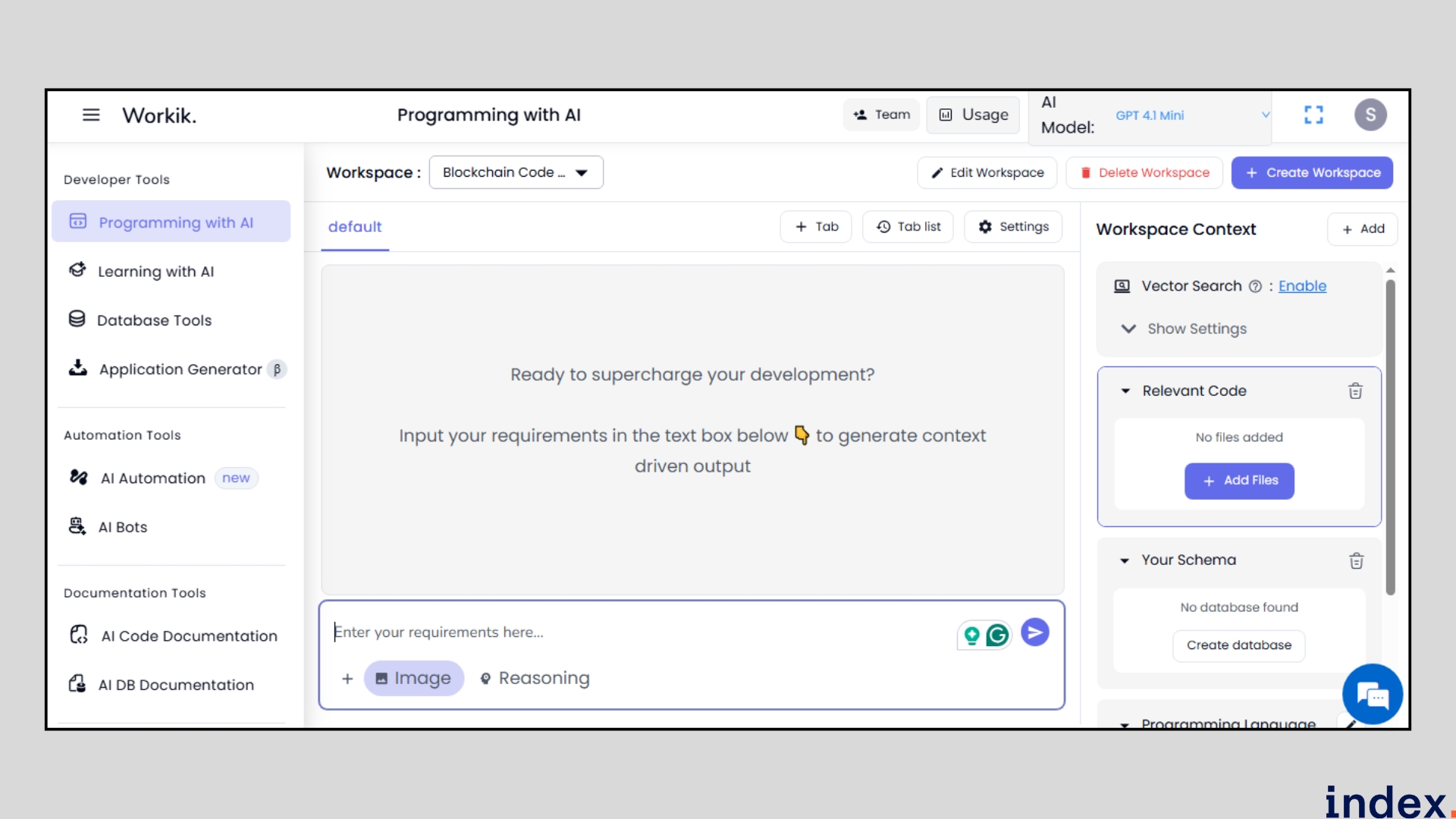
Workik is an AI-powered coding environment purpose-built for blockchain developers who want more than just “generate a smart contract” functionality. It doesn’t stop at Solidity or Rust snippets. Workik can scaffold complete Cosmos SDK modules in Go, integrate dApps with Web3.js or Truffle, and even set up Chainlink oracle interactions automatically.
What sets Workik apart is its workspace-first approach, developers can invite teammates, store context, and manage multiple blockchain projects collaboratively inside the platform. The AI engine is optimised for blockchain-specific pain points such as gas fee reduction, automated vulnerability detection, and environment setup.
Workik also provides sandboxed testing before mainnet deployment, ensuring developers catch issues early. Whether you’re deploying an ERC-721 NFT collection, building a cross-chain DAO, or experimenting with Cosmos-based blockchains, Workik streamlines the entire workflow from boilerplate code to deployment-ready applications, inside a single, AI-augmented dashboard.
How it works
- Easy Sign-Up. Create an account with Google or register manually to open your first AI-powered blockchain workspace. Workik instantly provides an environment where you can start coding or importing existing contracts.
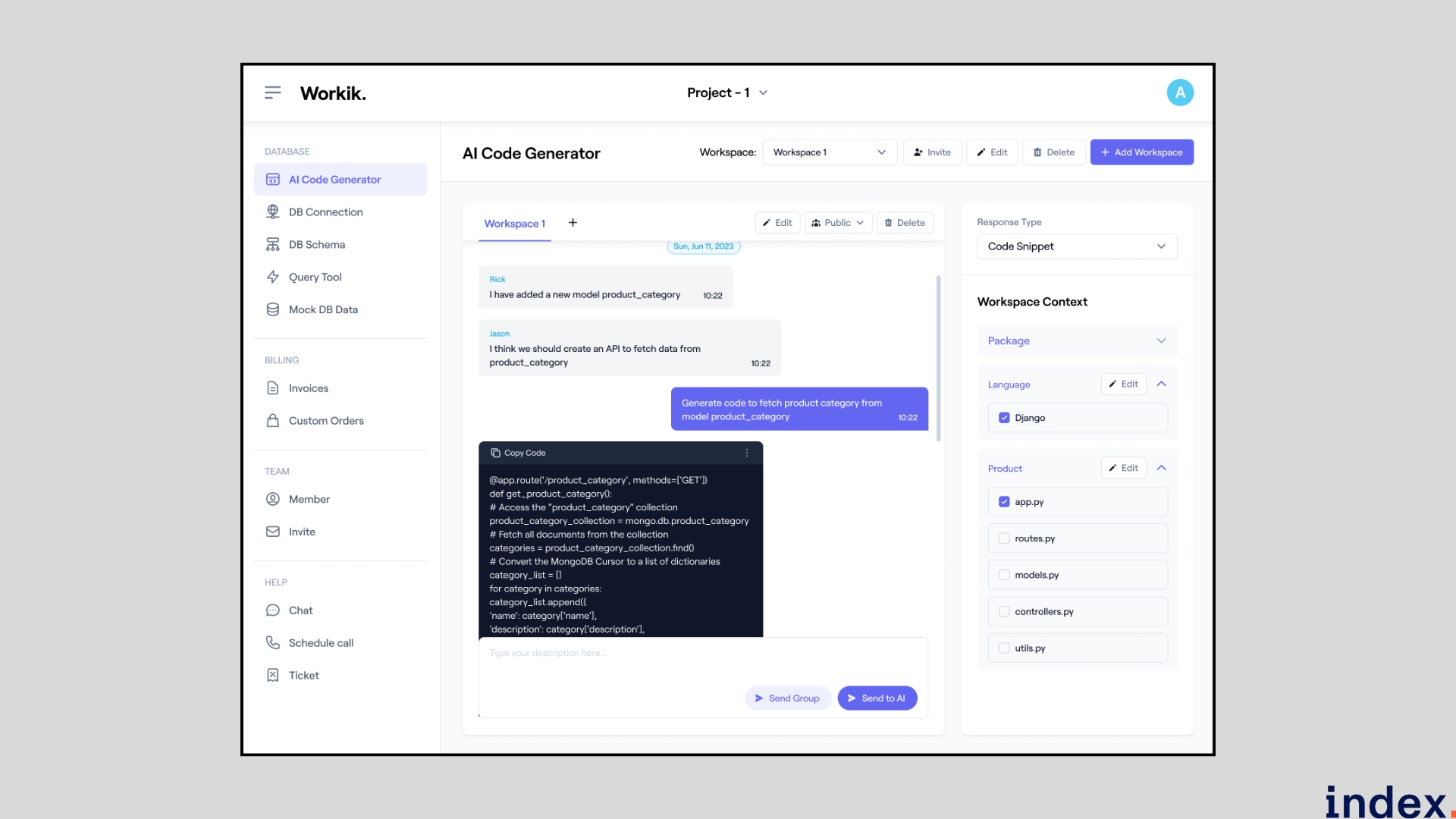
- Add Context & Requirements. Tell the AI what you’re building, e.g., “ERC-20 token with mint/burn,” “NFT marketplace with royalties,” or “Cosmos SDK module for governance.” You can also paste existing code for optimisation or auditing.
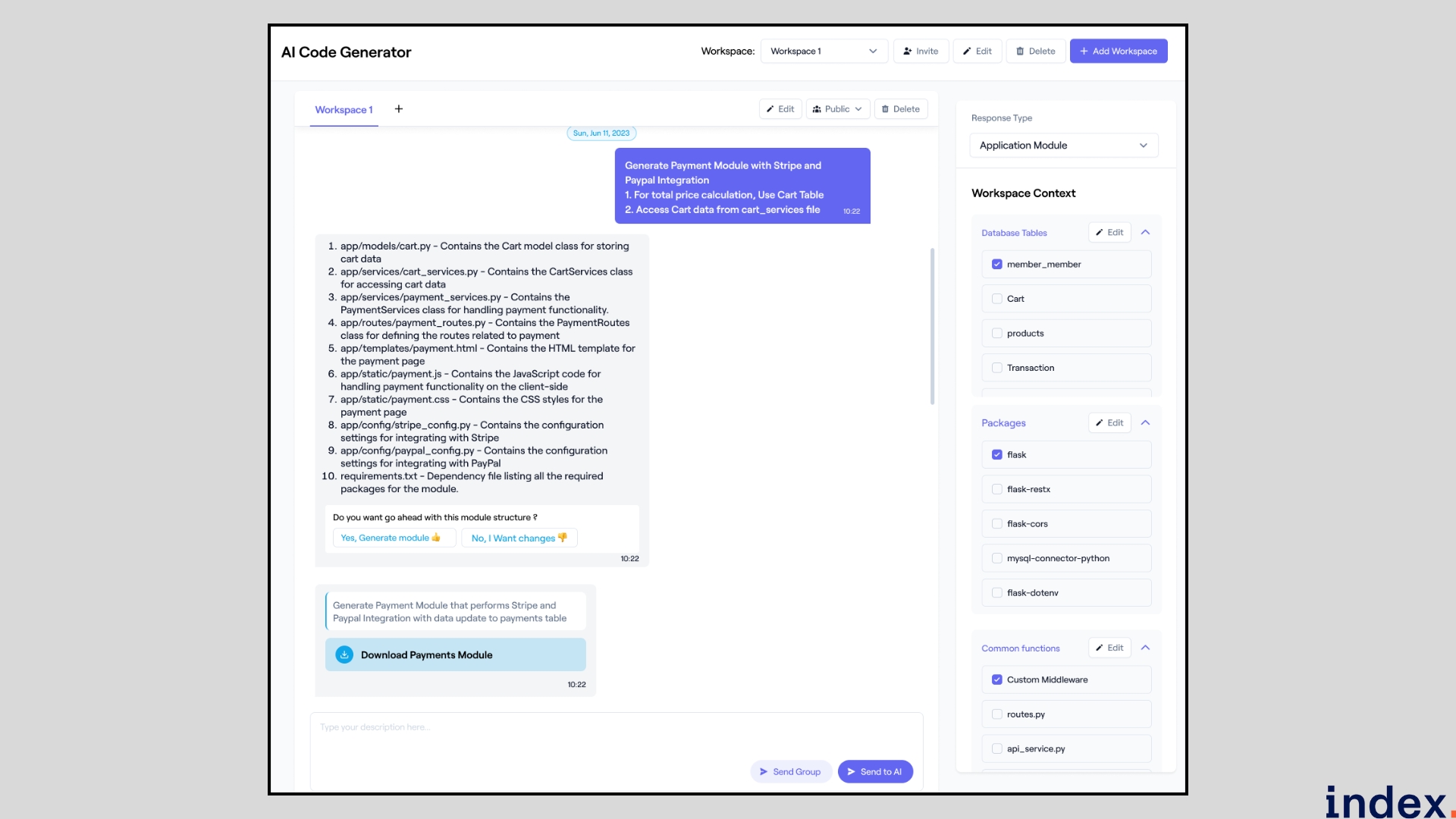
- Use AI Assistance. Generate, debug, and optimize smart contracts in seconds. The AI engine ensures your Solidity, Rust, or Go code is secure and efficient. For example, it can detect reentrancy issues, auto-integrate Chainlink oracles, or refactor logic to reduce Ethereum gas fees.
- Refine and Deploy. Collaborate with your team inside shared workspaces to review AI-generated code. Once approved, deploy seamlessly to testnets like Ropsten or Kovan, or push to mainnet when production-ready.
Pros
- Users highlight that Workik generates code very quickly, making it a strong tool for rapid prototyping and productivity.
- Several reviewers mention that the AI produces boilerplate or standard patterns “exactly as expected,” which reduces repetitive coding tasks.
- Developers find it useful for getting initial structures in place, especially for smart contracts or web app components.
- Some appreciate the context-driven workspaces, which help organise multiple coding projects in one place.
Cons
- A few users reported layout and UI quirks, such as unintended centering of content or inconsistent page widths, which can affect usability.
- On AI tools review sites, Workik has been criticised for payment-related issues and a lack of transparency in business operations.
- The platform has limited community support compared to established tools, making it harder to find peer-driven tutorials or solutions to problems.
- Being relatively new, it does not yet have a strong track record or widespread developer adoption, which may limit trust for mission-critical projects.
2. ChainGPT
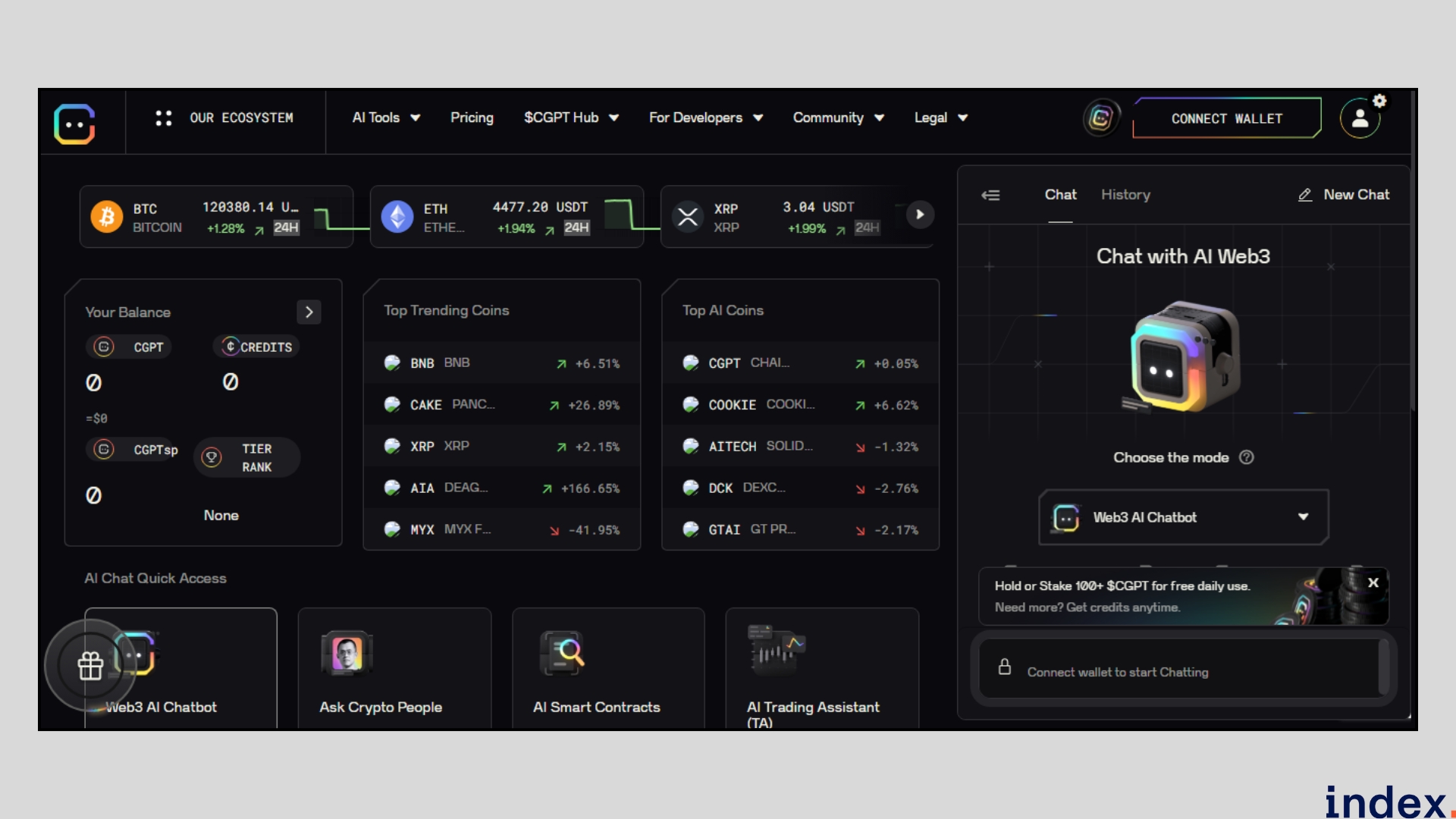
ChainGPT is a comprehensive AI tool designed specifically for blockchain development, making it a standout choice among Web3-native platforms. Unlike general-purpose AI assistants, ChainGPT focuses on solving developer-centric challenges in smart contract creation, auditing, and deployment.
Its AI Smart Contract Generator and Auditor lets developers describe contracts in plain language or paste existing code to detect vulnerabilities such as reentrancy or gas inefficiencies. Beyond contracts, ChainGPT also offers an AI Trading Assistant for market analytics, an AI NFT Generator with seamless on-chain minting, and a Web3 AI Chatbot capable of live on-chain data analysis.
A unique differentiator is the AIVM (AI Virtual Machine), which allows decentralised AI model execution and GPU marketplace integration, enabling developers to run or deploy models directly on blockchain infrastructure.
How it works
- Sign up and connect your wallet. To start using the AI NFT Generator, you first need to create an account and connect a Web3 wallet. This allows you to access the tool, save your creations, and mint NFTs directly on-chain.
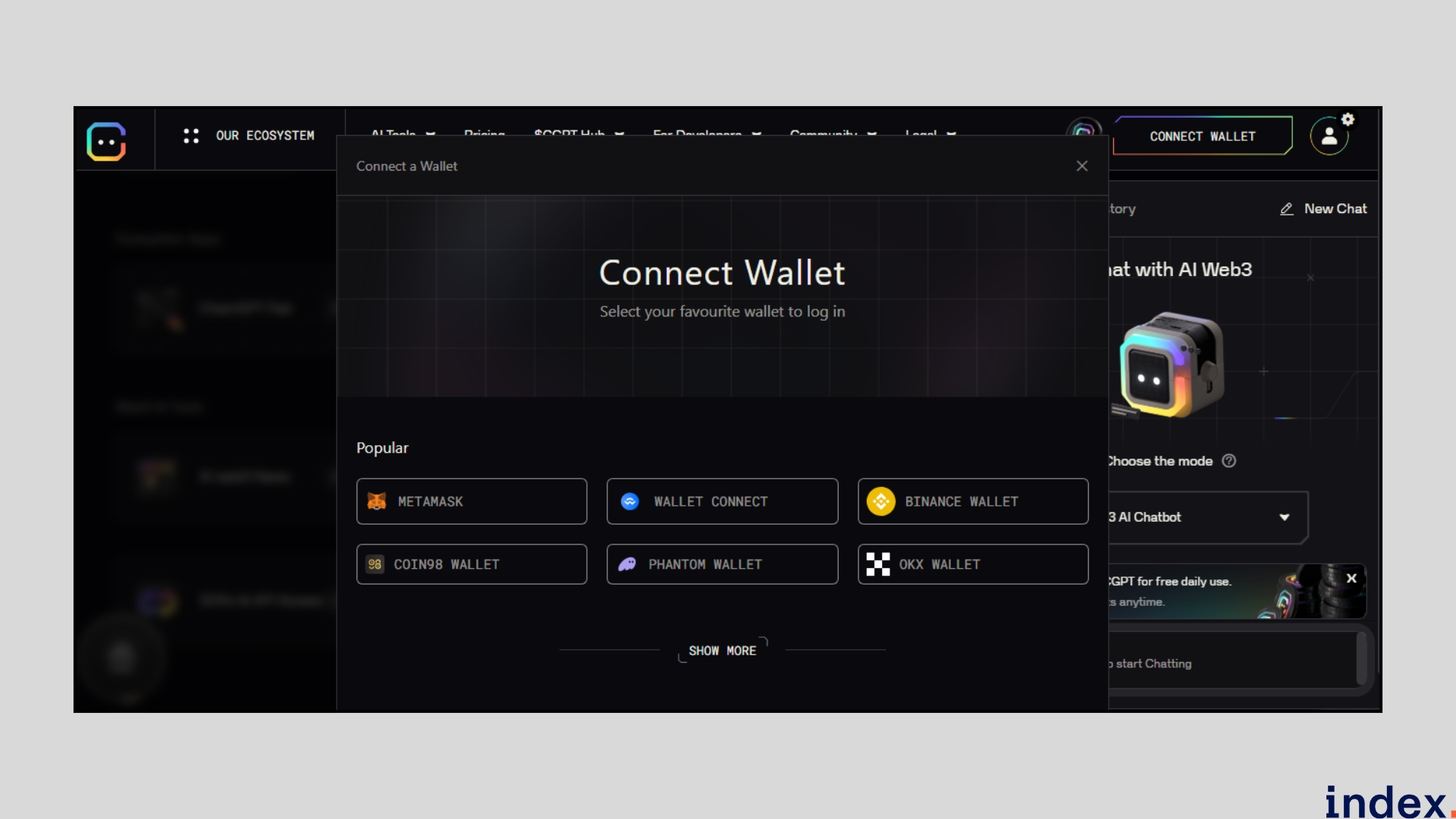
- Enter your prompt and choose settings. Type in a descriptive text prompt that explains the NFT you want to generate, such as its style, theme, or details. You can also select network preferences and adjust generation parameters to match your vision.
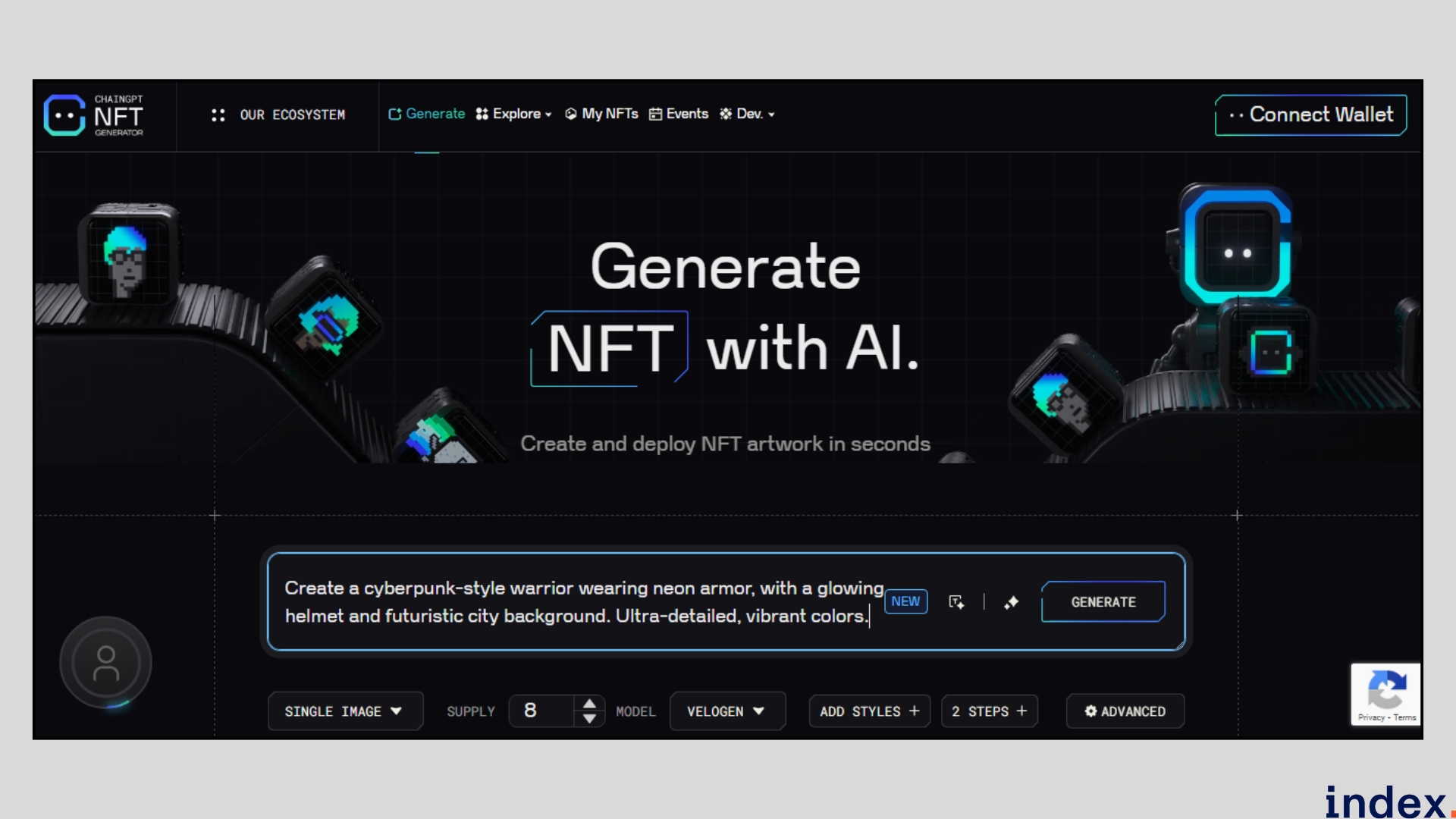
- Generate and refine your NFT. ChainGPT’s AI engine creates high-fidelity images based on your prompt within 30–60 seconds. You can review the results, make adjustments, and regenerate if needed until you are satisfied with the artwork.
- Mint and deploy on-chain. Once you approve the design, you can mint your NFT directly on supported blockchains. The system automatically handles metadata, royalties, and storage, making the minting process seamless.
Pros
- Developers can experiment quickly with new contract logic because ChainGPT shortens the time from idea to working prototype.
- The platform’s automated checks reduce the risk of missing common issues during the early development phase, which saves time before formal audits.
- Having multiple modules (auditor, NFT generator, AI trading assistant) in one place lets teams explore different aspects of blockchain development without switching tools.
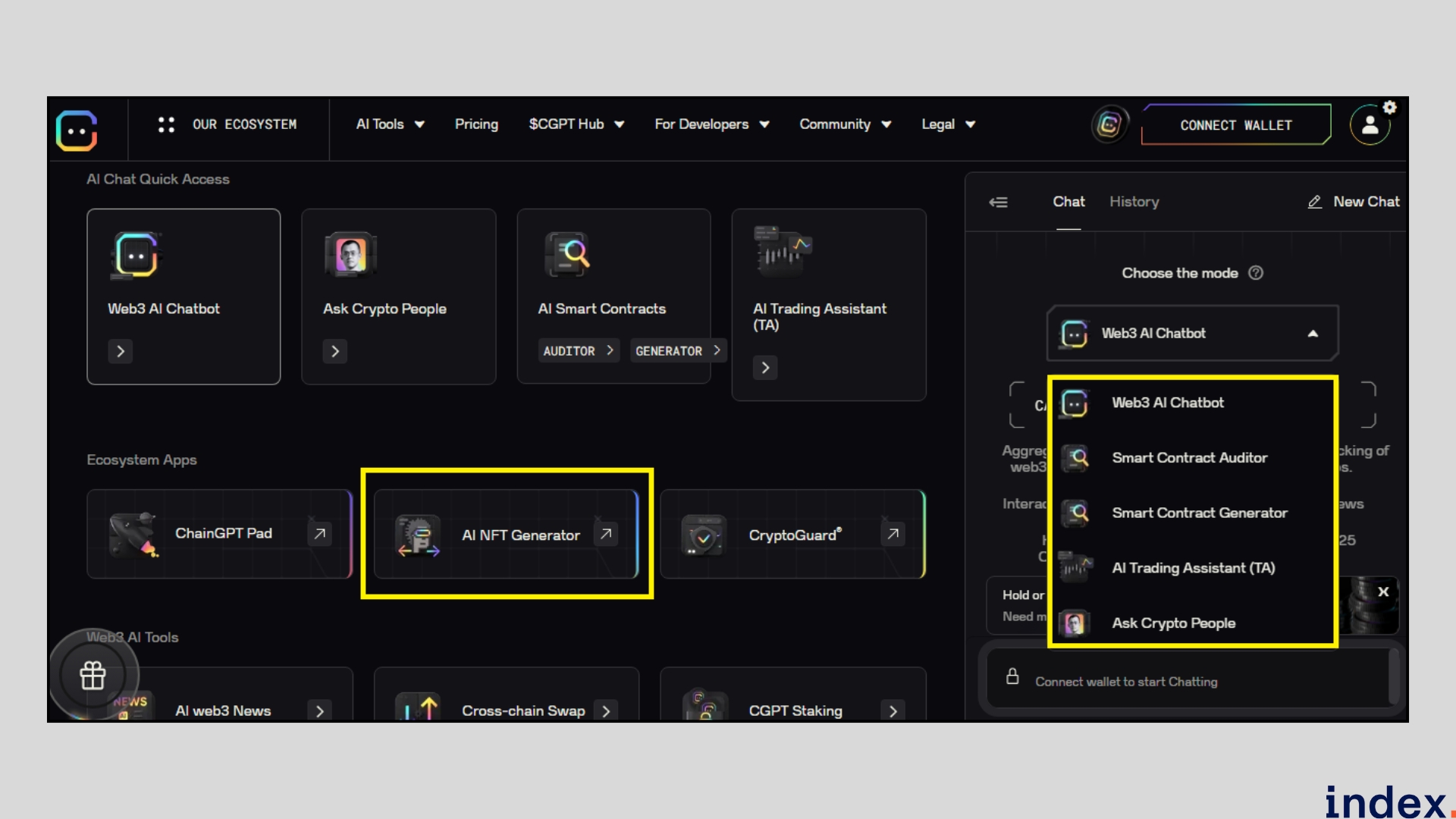
- ChainGPT’s SDK and API access give enterprises flexibility to integrate AI-driven auditing or analytics into their existing developer pipelines.
- The ecosystem is actively expanding through grants, partnerships, and hackathons, meaning developers gain access to a growing set of AI-enhanced blockchain resources.
Cons
- Automated audits are helpful for early checks, but comprehensive security reviews are still essential for production-level smart contracts.
- The platform covers a wide range of features (contracts, trading, NFTs, agents), which can be overwhelming for developers who only need one specific function.
- Access to advanced modules depends on credits and $CGPT staking, so developers need to understand the tokenised pricing model.
- Since the AIVM decentralised AI infrastructure is still in early stages, performance and adoption may vary until it matures.
- Developers working on highly customised blockchain applications may still need to extend or modify AI-generated outputs to meet unique requirements.
Don’t stop here: Explore the tech jobs that are toughest to hire and why they matter.
3. Alchemy
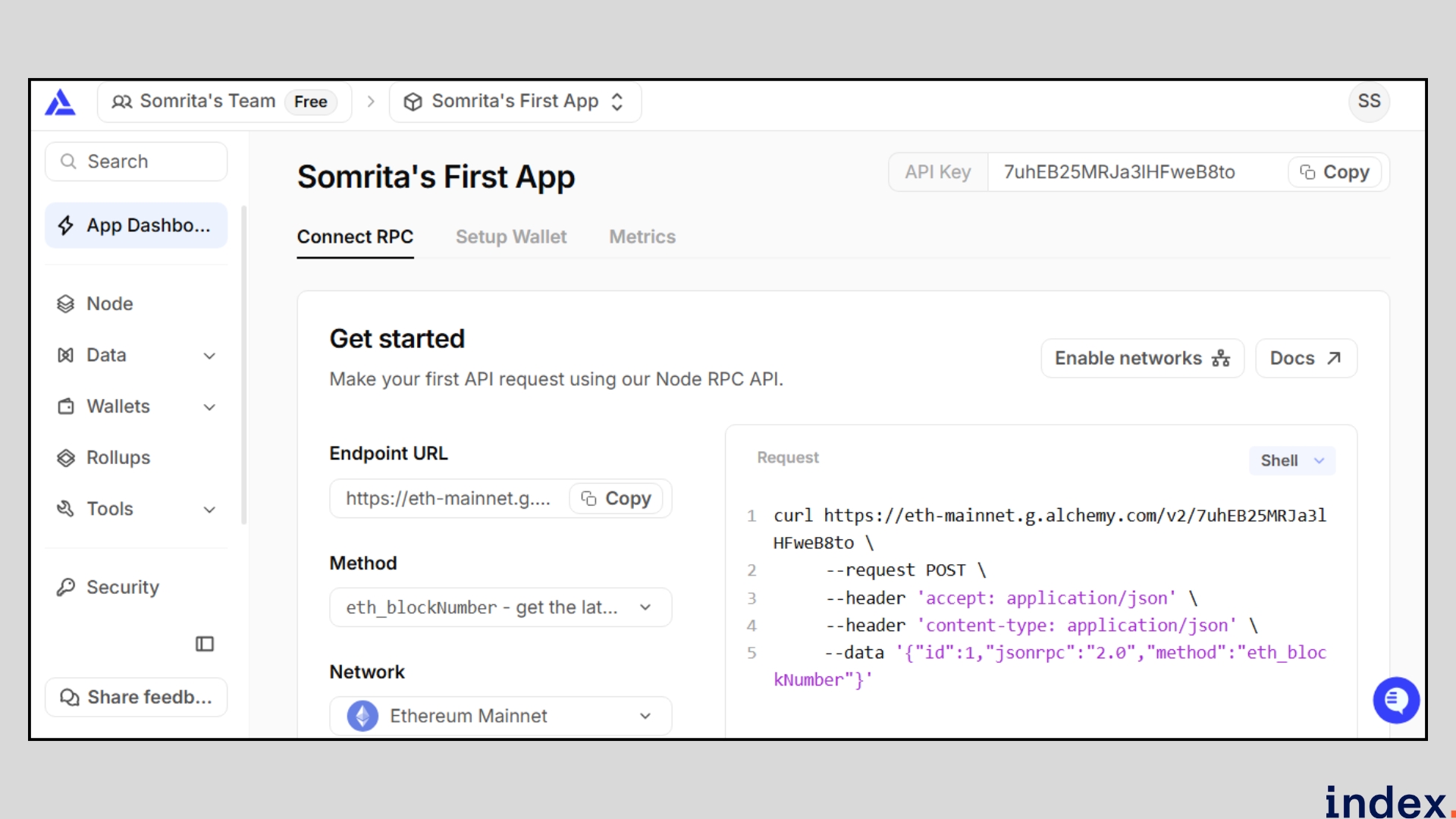
Alchemy is a blockchain development platform that gives developers the infrastructure, APIs, and monitoring tools they need to build scalable Web3 applications. It powers more than 70% of leading crypto apps and processes over $150B in transactions every year.
With features like NFT and token APIs, gas optimisation, smart wallets, and transaction simulation, Alchemy simplifies complex blockchain tasks. Its intelligent engine, Cortex, delivers faster performance, higher reliability, and elastic scaling for apps of any size. By managing node infrastructure, Alchemy lets developers focus entirely on creating dApps, DeFi protocols, and NFT platforms without worrying about stability or downtime.
How it works
- Sign up and create an app. Start by making a free Alchemy account. From the dashboard, create a new app, and you’ll instantly get an API key that connects your project to the blockchain without running your own node.
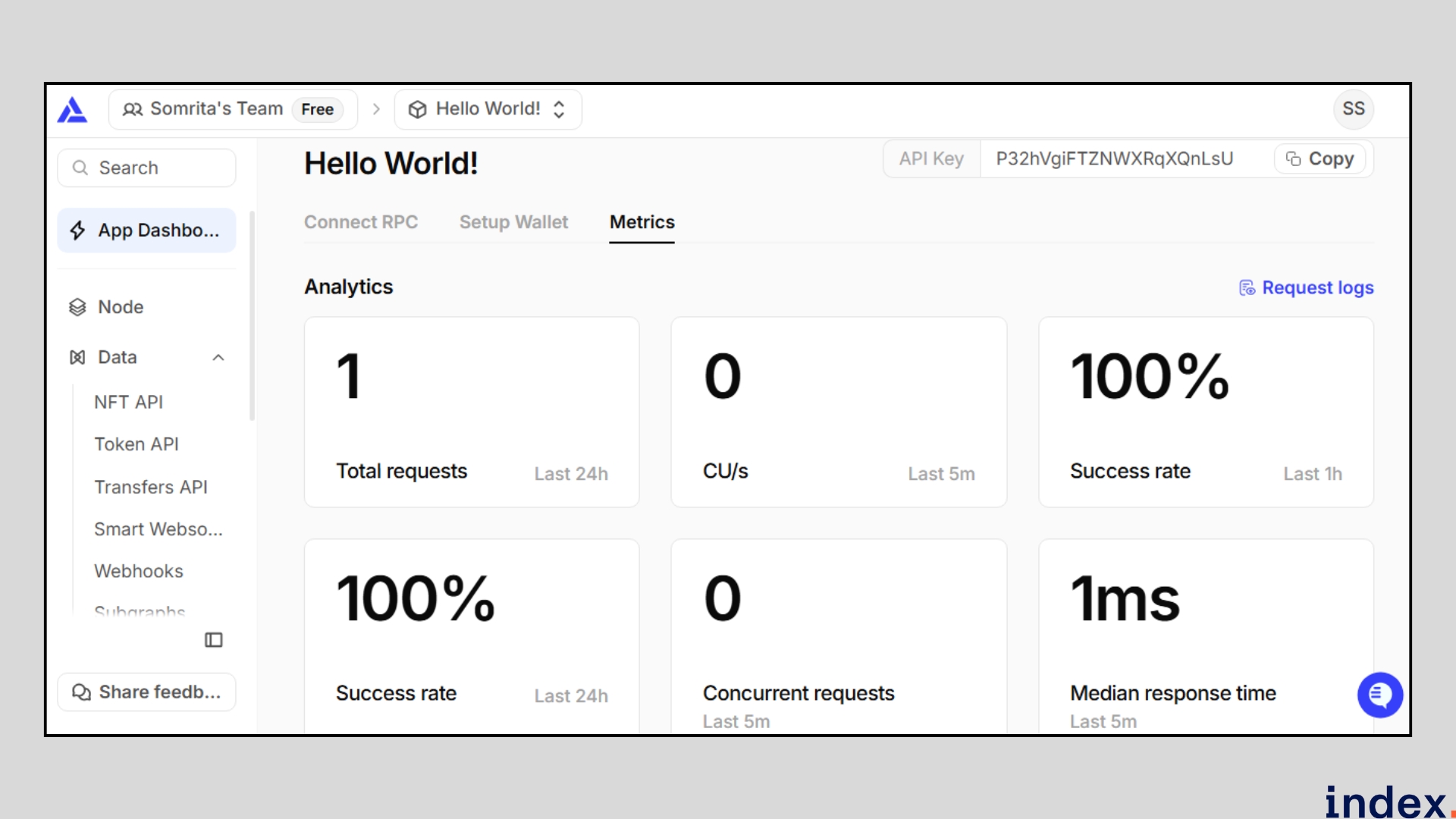
- Set up your wallet and test network. Install a wallet like MetaMask and switch it to a test network such as Sepolia. Use Alchemy’s faucet to add free test ETH so you can try deploying contracts without spending real money.
- Write and test your smart contract. Use simple developer tools like Hardhat along with Alchemy’s APIs to write a Solidity smart contract, test how it will behave on-chain, and simulate transactions safely before deploying.
- Deploy and monitor your project. Once your contract is ready, deploy it directly to the blockchain through Alchemy. You can then use the Alchemy dashboard to monitor activity, track transactions, and troubleshoot issues in real time.
- Scale with advanced features. As your project grows, Alchemy provides extras like smart wallets (no seed phrase, no gas fees), NFT and token APIs, and gas optimization tools to make your app faster, cheaper, and easier for end users.
Pros
- Alchemy provides developers with a single platform that combines infrastructure, APIs, and monitoring, reducing the need for multiple tools.
- The Cortex engine improves transaction speed and reliability, which directly benefits user experience in dApps.
- Its Smart Wallets and Account Abstraction APIs make onboarding easier by removing seed phrases and gas fees, which helps developers reach non-crypto-native users.
- The simulation and transaction preview tools give developers confidence by showing how contracts behave on-chain before execution.
- Enterprise-grade reliability and partnerships with apps like Robinhood, OpenSea, and World App validate its scalability and trustworthiness.
- Alchemy University and extensive documentation support a strong developer learning community.
Cons
- While Alchemy abstracts away much of the complexity, developers who prefer full control over infrastructure may find it less customizable compared to running their own nodes.
- The platform’s pricing model is usage-based, so that costs can rise quickly for apps with heavy transaction volume.
- Its APIs are optimised for EVM-compatible chains, which means developers building on non-EVM ecosystems may face limited support.
- For very small projects or hobbyists, the enterprise-grade focus may feel more advanced than necessary.
- Some features like Smart Wallets and Gas Manager rely on Alchemy’s ecosystem lock-in, meaning developers should weigh convenience against portability.
4. Ocean Protocol
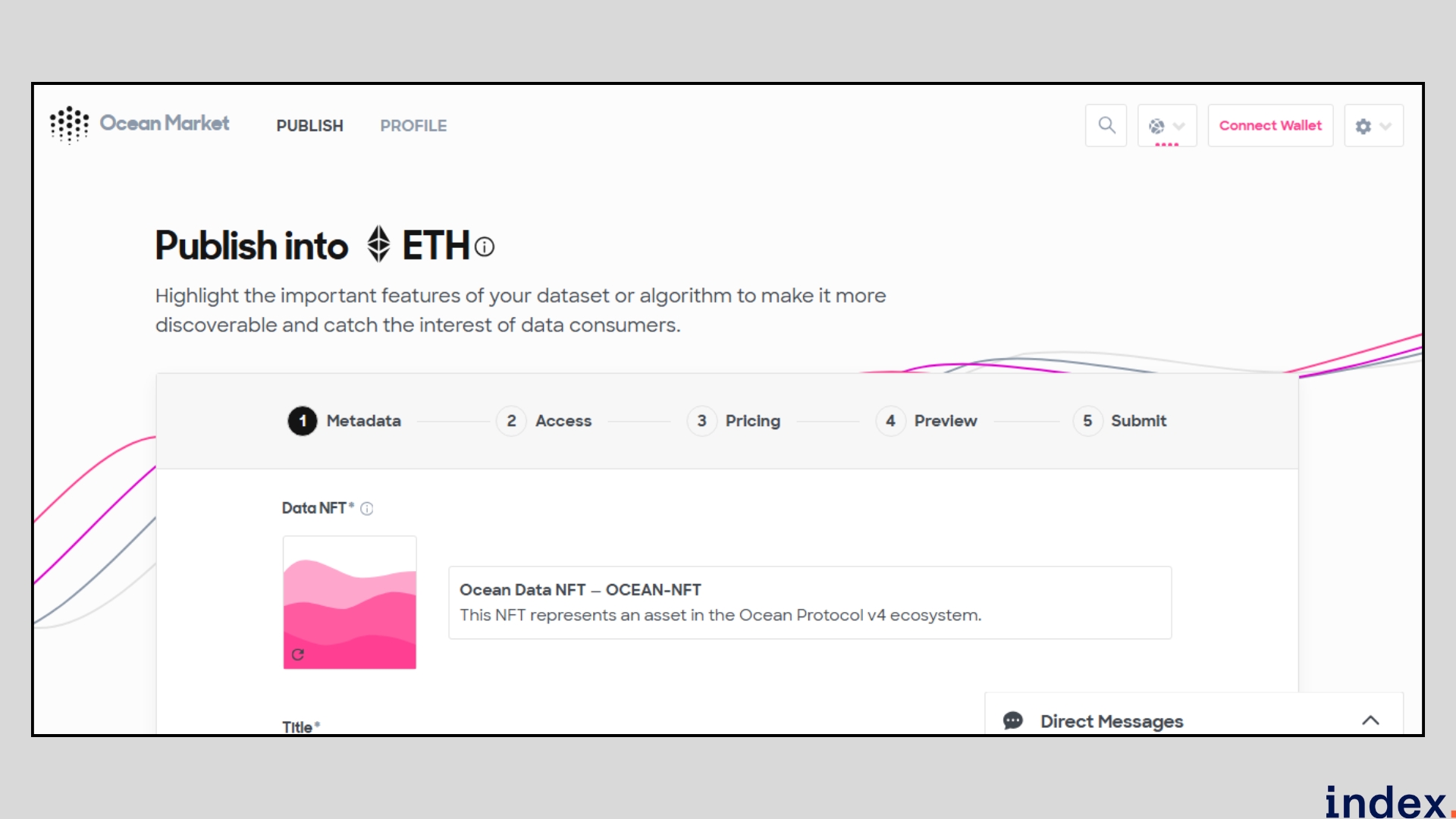
Ocean Protocol is a decentralised data and compute marketplace designed to let data owners, model builders, and application developers exchange value while keeping raw data private. It introduces Data NFTs (on-chain representations of datasets), datatokens (ERC-20 tokens that gate access), and compute-to-data (execute algorithms where the data lives).
For AI and blockchain developers, Ocean solves a common problem: how to train, evaluate, or monetise models on valuable datasets without copying or exposing sensitive records. The stack also includes Ocean Nodes (for running compute and monetising GPU/CPU resources), open-source libraries (ocean.js, ocean.py), templates for token-gated dApps, and tooling to automate payments, royalties, and access controls.
By combining tokenised permissions with on-chain provenance and off-chain secure compute, Ocean enables new business models, like pay-per-inference APIs, model marketplaces, and private data rentals, that integrate naturally into Web3 developer workflows.
How it works
- Publish data as a Data NFT. The data provider registers a dataset on Ocean Protocol by minting a Data NFT. This defines ownership, usage rights, and access conditions.
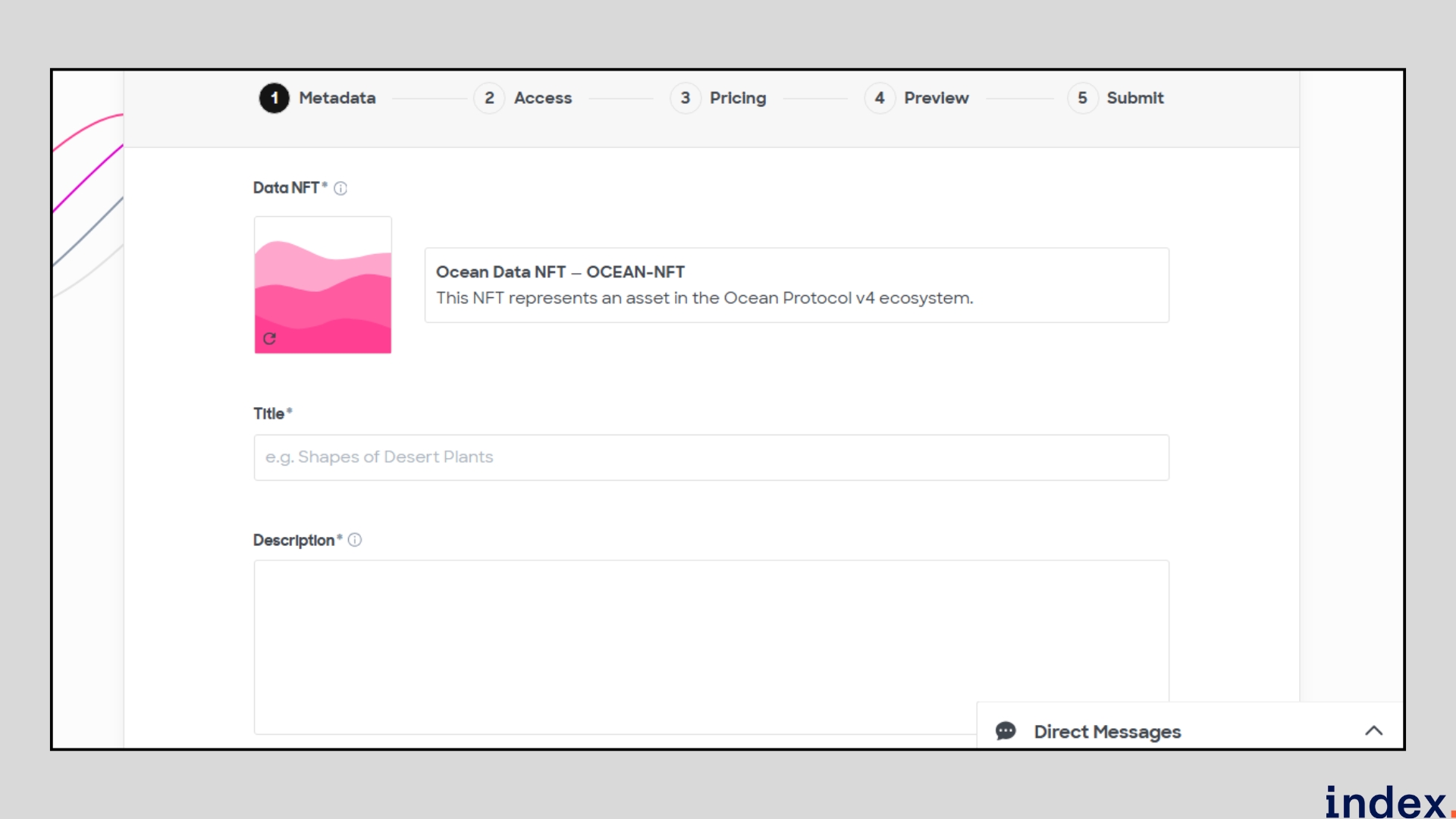
- Generate datatokens for access. Datatokens (ERC-20) are created from the Data NFT. These tokens act as access passes that developers or organisations can purchase to request computation jobs.
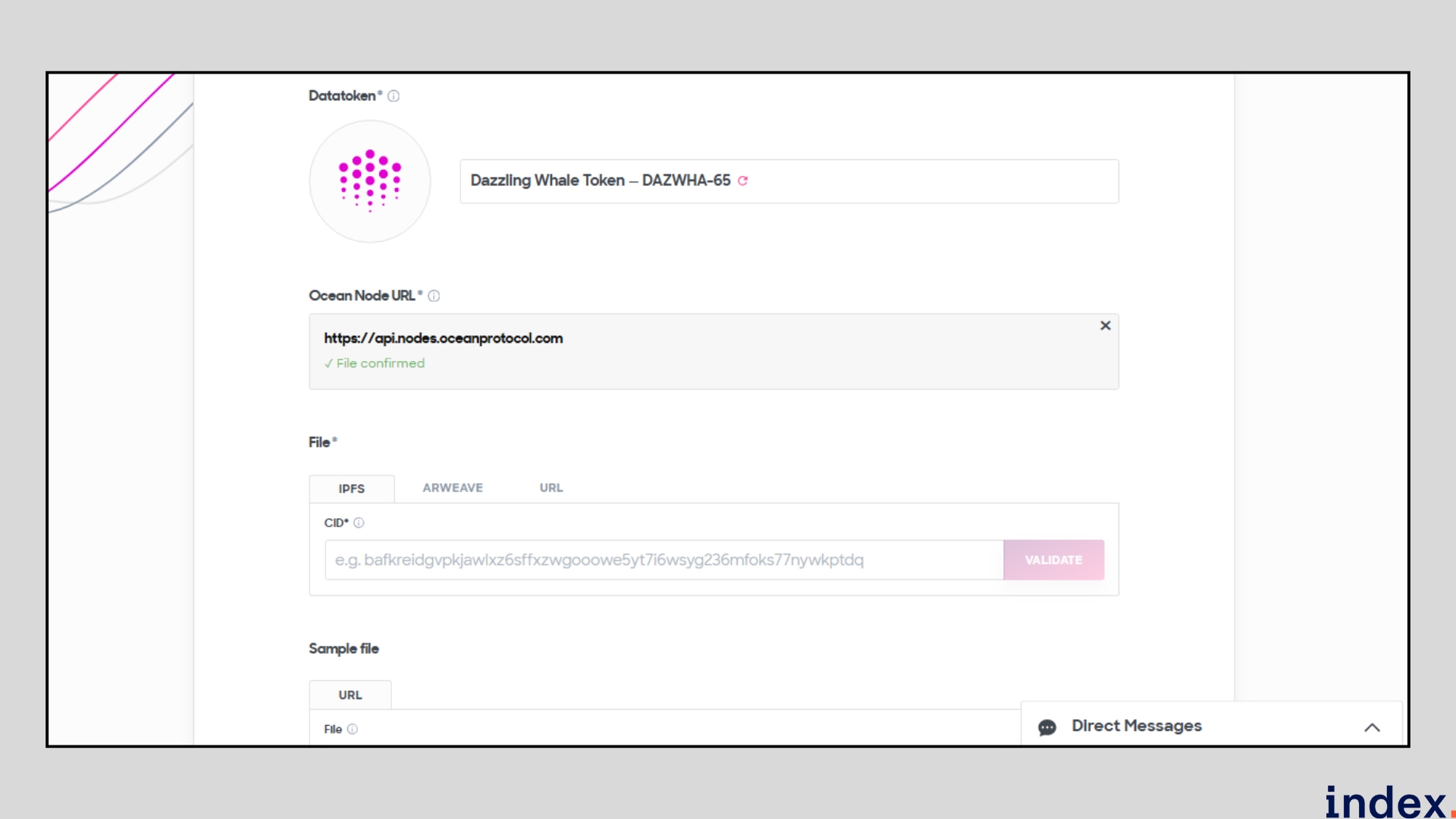
- Compute jobs with Compute-to-Data. Instead of moving data to the developer, Ocean sends the algorithm to the data. The training or analysis happens inside a secure Ocean Node, ensuring privacy and compliance.
- Retrieve results securely. Once the job finishes, only the results (e.g., trained AI model, predictions, or insights) are returned. The raw dataset never leaves the provider’s environment.
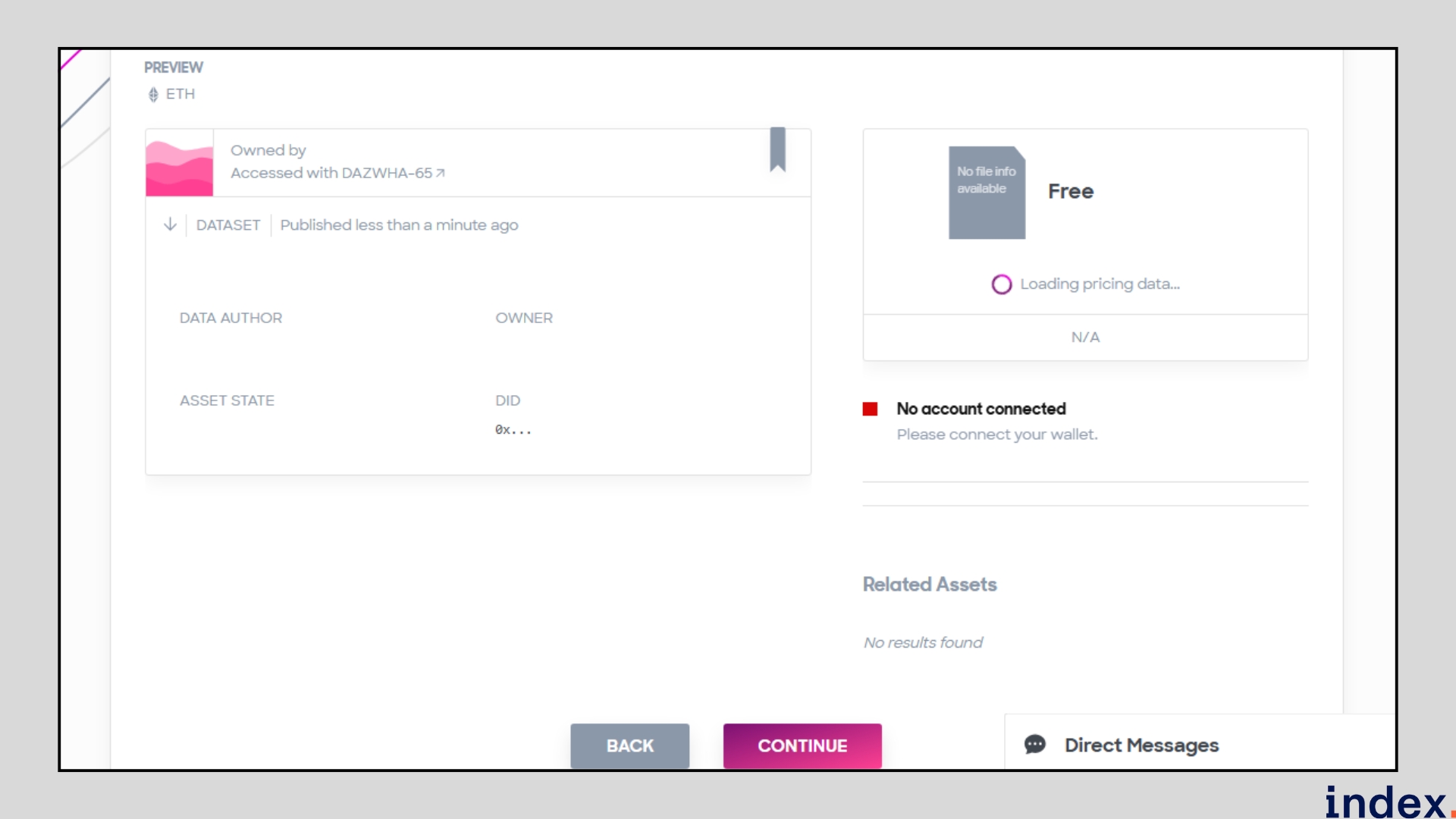
- Automated settlement with smart contracts. Payments and royalties are distributed automatically via Ocean’s smart contracts, rewarding data owners, curators, and other stakeholders.
Pros
- Ocean lets developers train and evaluate AI models on high-value data without exposing raw records, enabling privacy-aware ML workflows.
- The datatoken/Data NFT pattern provides an on-chain, auditable mechanism for access control, payments, and royalty distribution.
- Ocean’s compute-to-data approach reduces legal and compliance friction when working with regulated or sensitive datasets.
- Developers can monetise datasets, models, and inference endpoints directly, creating clear revenue mechanics for data providers and contributors.
- Ocean’s open SDKs and templates (ocean.js, ocean.py, CLI, Barge) make it faster to build token-gated dApps and integrate on-chain access into existing apps.
- Running compute jobs on Ocean Nodes lets teams tap into decentralised GPU/CPU capacity, which can complement centralised cloud resources.
Cons
- Implementing compute-to-data workflows requires additional engineering compared with standard APIs, so teams should budget time for integration and testing.
- Because datatokens represent marketable access, dataset owners and developers need to consider liquidity and user acquisition to make markets work.
- Privacy guarantees depend on correctly configuring allowlists, encryption, and provider environments, so careful operational setup is required.
- Large-scale ML workloads may face performance or orchestration trade-offs on decentralised node networks versus optimised cloud providers.
- Teams working in non-EVM ecosystems or with bespoke compliance requirements may need extra customisation to fit Ocean’s current toolset.
5. Octane Security
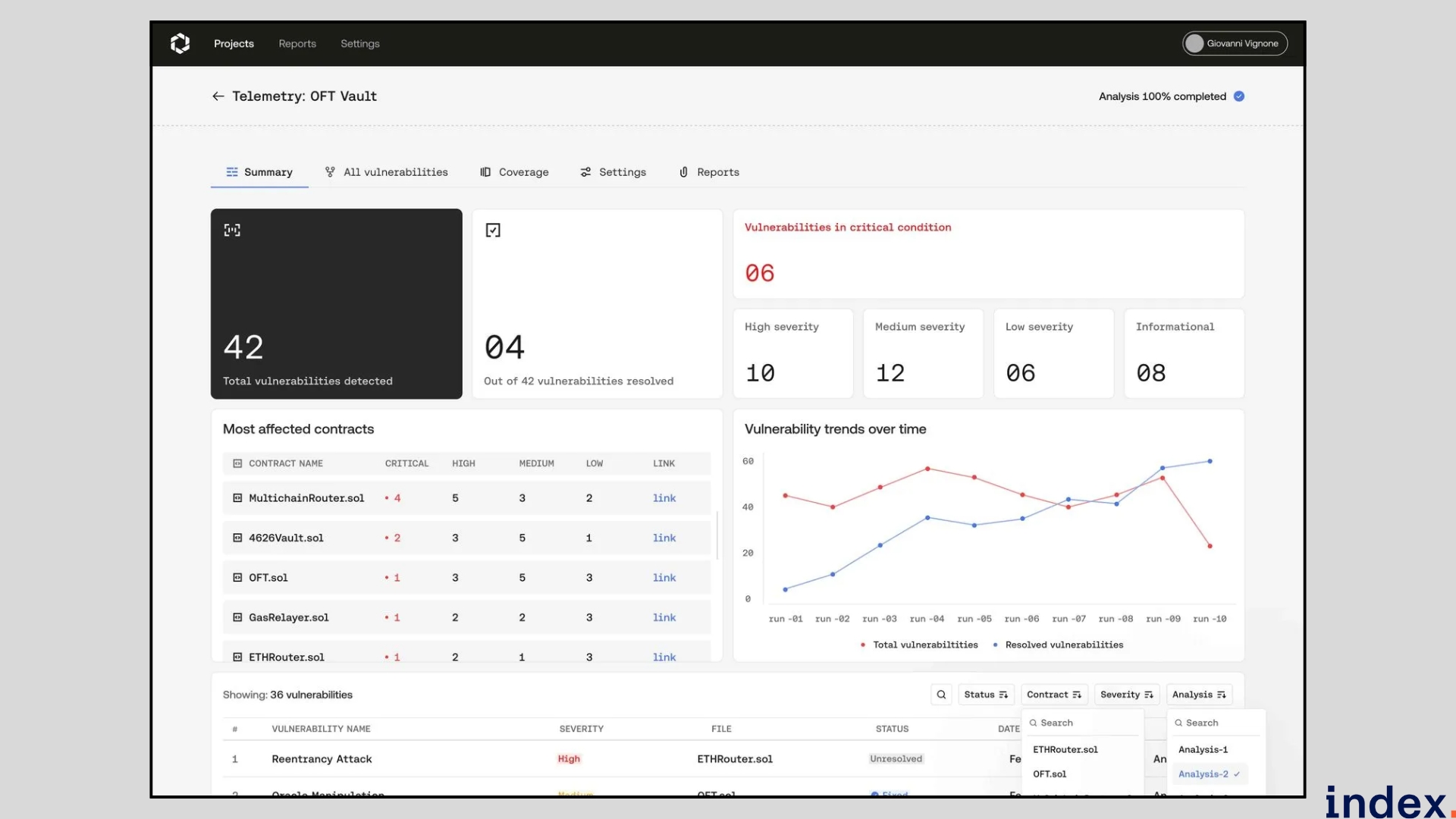
Octane Security is an AI-powered platform designed to secure blockchain projects by identifying and fixing vulnerabilities in smart contracts. Unlike traditional manual audits that take weeks and often miss critical bugs, Octane integrates directly into a developer’s workflow and continuously analyses Solidity code during development.
Its machine learning models are trained on real-world exploits, allowing it to detect protocol-specific flaws like reentrancy, access control issues, oracle manipulation, and signature validation errors.
Beyond detection, Octane’s unique Code Fix Engine drafts immediate patches, helping teams resolve vulnerabilities in minutes rather than days.
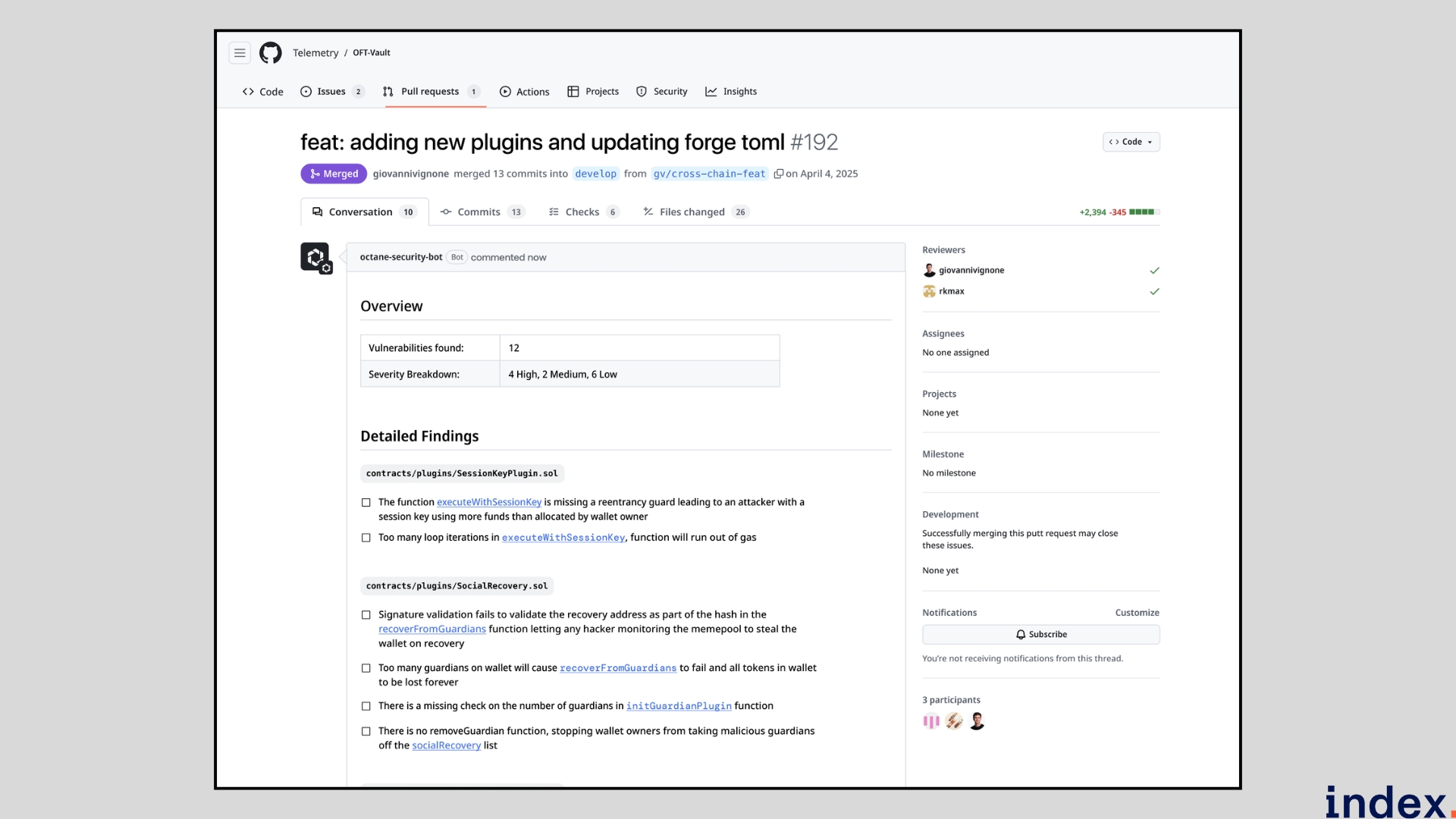
With native CI/CD integration, Octane acts like a 24/7 AI security engineer that reviews every pull request, generates tests, and produces detailed vulnerability reports. This combination of automated auditing, instant remediation, and developer-first tooling makes Octane a critical tool for blockchain teams aiming to reduce audit costs, improve launch confidence, and prevent multi-million-dollar exploits.
How it works
- Connect your GitHub repository. Developers begin by signing in with GitHub and linking the repository that contains their smart contract code. Octane immediately prepares the project for analysis without requiring a complex setup.
- Run AI vulnerability detectors. Once connected, Octane automatically scans the codebase using multiple classes of detectors: standard, advanced, and experimental. These engines are designed to identify both common smart contract bugs and highly specific, protocol-level vulnerabilities.
- Review vulnerability reports. After the scan, developers can view a detailed report in the Octane dashboard. Each finding includes the vulnerability type, severity rating, source code reference, and a plain-language explanation of why the issue exists.
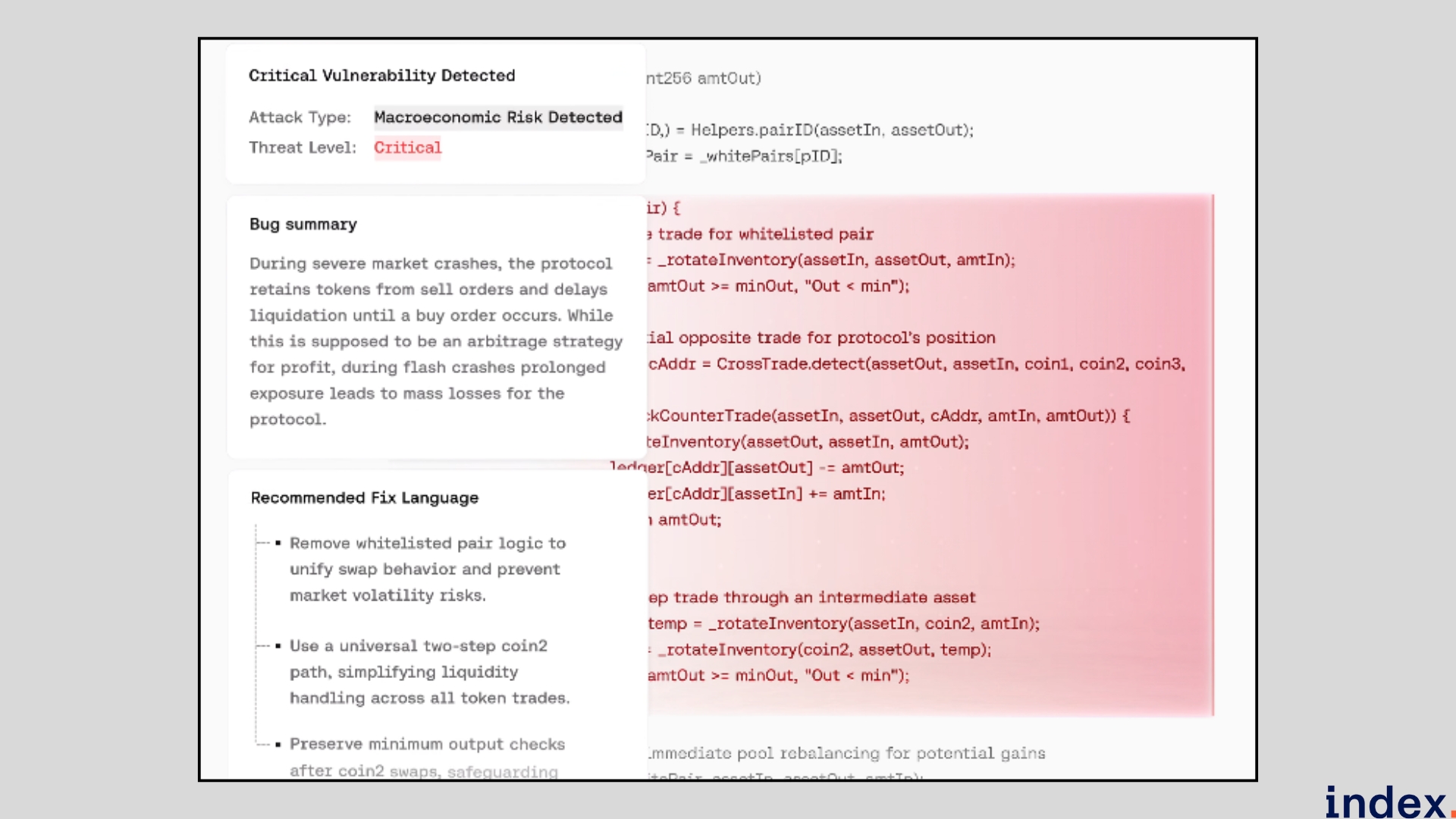
- Apply AI-generated fixes. For every issue detected, Octane’s Code Fix Engine automatically drafts a suggested patch. These draft fixes help teams resolve problems faster while still allowing developers to verify and customize the final implementation.
- Integrate into the CI/CD pipeline. Teams can embed Octane directly into their continuous integration pipeline. This ensures that every pull request is scanned for vulnerabilities before being merged, allowing developers to catch and fix security issues continuously during development.
Pros
- Provides real-time vulnerability detection during development, reducing reliance on slow, manual audits.
- The Code Fix Engine accelerates remediation by drafting patches aligned with auditor-approved fixes.
- Supports CI/CD integration, ensuring every code change is continuously checked for security risks.
- Detects critical smart contract issues such as reentrancy, access control flaws, and oracle manipulation.
- Proven to reduce audit costs and catch vulnerabilities that even expert reviews may miss.
- Generates developer-friendly reports with explanations and code references, improving learning and adoption.
Cons
- Works best with Solidity-based projects, so support for non-EVM chains is limited.
- AI-generated fixes may require manual verification before production deployment.
- Requires GitHub repository access, which might need additional setup for private codebases.
- While it lowers audit costs, full external audits are still recommended for mission-critical launches.
6. Third Web
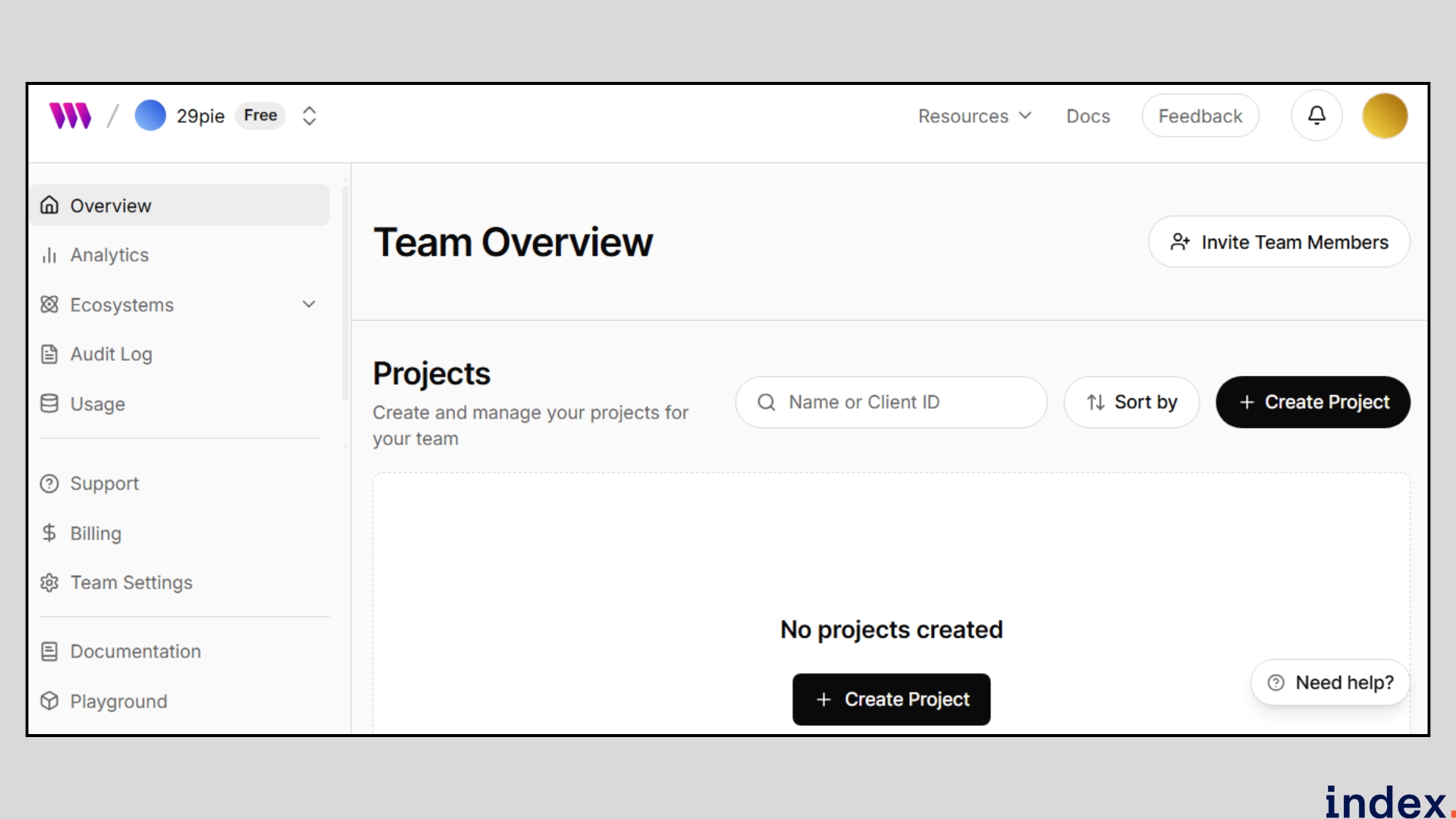
Thirdweb is an end-to-end development framework that gives blockchain teams the infrastructure, APIs, and tools needed to build, monetise, and scale Web3 applications. It provides audited, modular smart contracts that can be deployed securely on any EVM-compatible chain, removing the complexity of manual contract management. The platform bundles wallet infrastructure, token creation tools, payments, analytics, and RPC access into one unified SDK, making it easy to launch dApps, games, marketplaces, or consumer apps.
With over 2 million contracts deployed and 1 million+ monthly transactions processed, Thirdweb has become a leading choice for developers who want to move quickly from idea to production without worrying about low-level blockchain operations.
Features like account abstraction, gasless transactions, and token-gated payments further enhance user experience, while APIs and SDKs in multiple languages allow seamless integration into any app or game engine.
How It Works
- Connect your environment. Start by signing into the Thirdweb Playground. You can connect your wallet or project, and instantly access blockchain networks without running your own node.
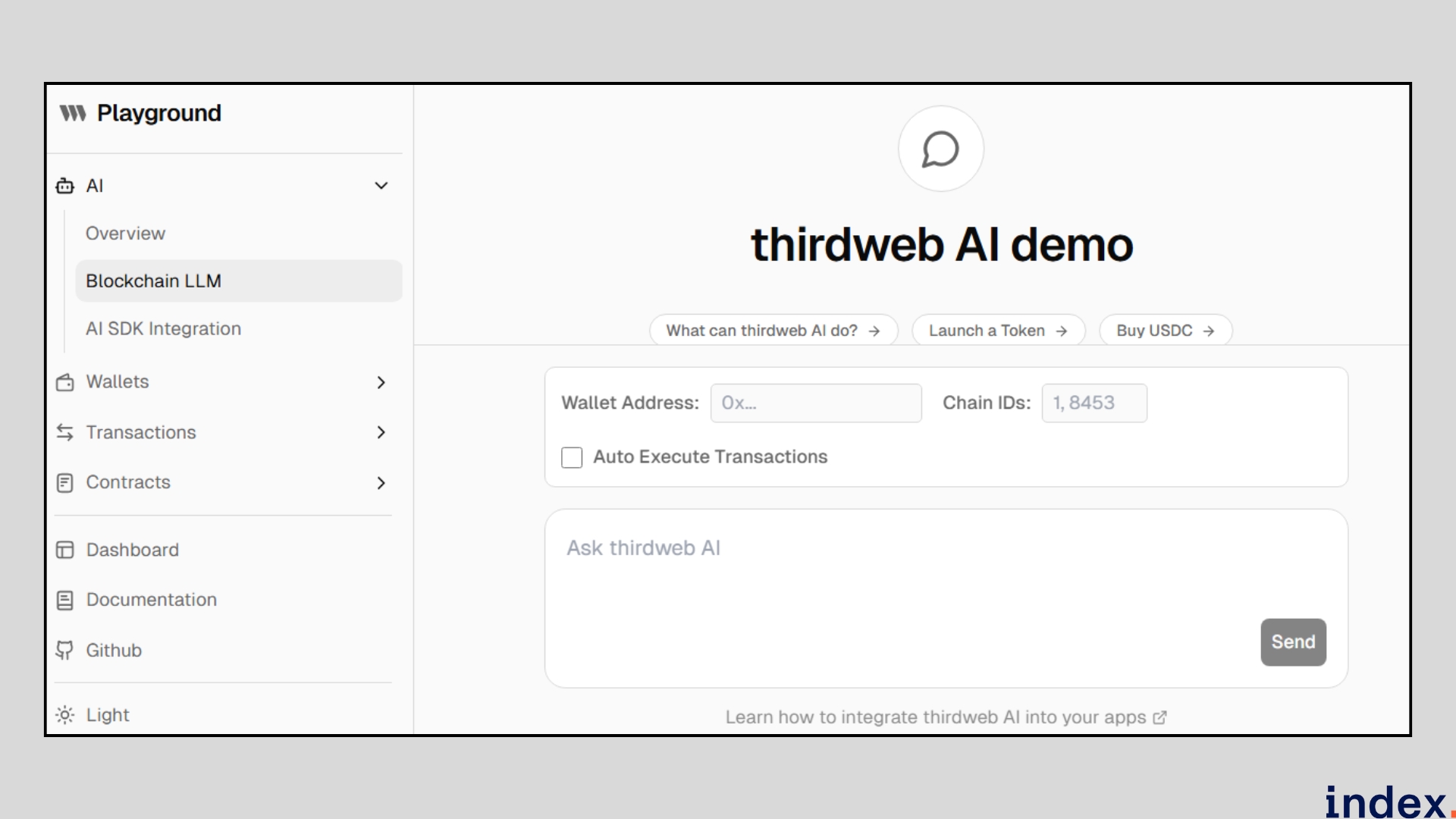
- Choose a smart contract to analyse or deploy. Use the Blockchain LLM to query existing contracts (like Uniswap v3) or deploy your own. Thirdweb’s AI automatically retrieves key details such as contract addresses, roles, and supported functions.
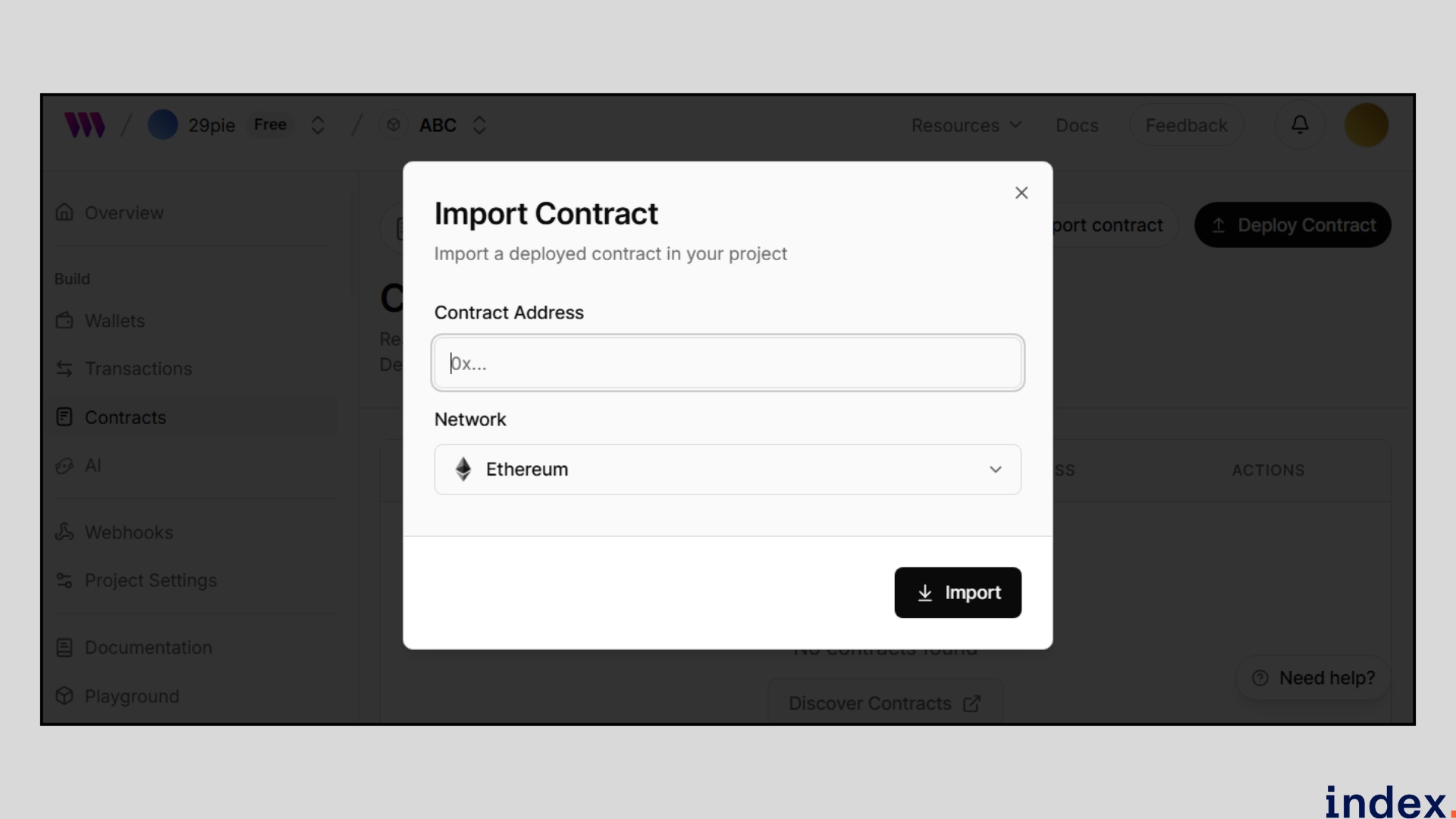
- Run AI-powered analysis. The AI scans contract code and outputs structured insights, for example, identifying routers, liquidity managers, token interactions, and utilities. This saves hours of manual contract review and makes audits easier to understand.
- Integrate or execute securely. Once the contract is analysed, you can auto-execute transactions, integrate APIs into your app, or interact with the contract directly from the dashboard. Developers can also use the SDK to embed these insights into their own dApps.
Pros
- Offers a full-stack developer toolkit, from contracts to wallets, payments, and analytics.
- Provides audited modular smart contracts, reducing the risks of deploying insecure code.
- Supports multi-language SDKs for web, mobile, and gaming platforms, increasing flexibility.
- Built-in monetisation tools like token creation, marketplaces, and x402 payments streamline revenue generation.
- Includes account abstraction and gasless transactions, improving onboarding and user experience.
Cons
- Primarily optimised for EVM-compatible chains, so non-EVM ecosystems have limited support.
- Some advanced features (like x402 payments) may require paid plans or higher tiers.
- AI functionality is emerging and is more focused on blockchain integrations than general-purpose AI.
- Developers may still need external audits for mission-critical contracts, despite built-in security measures.
7. Tatum
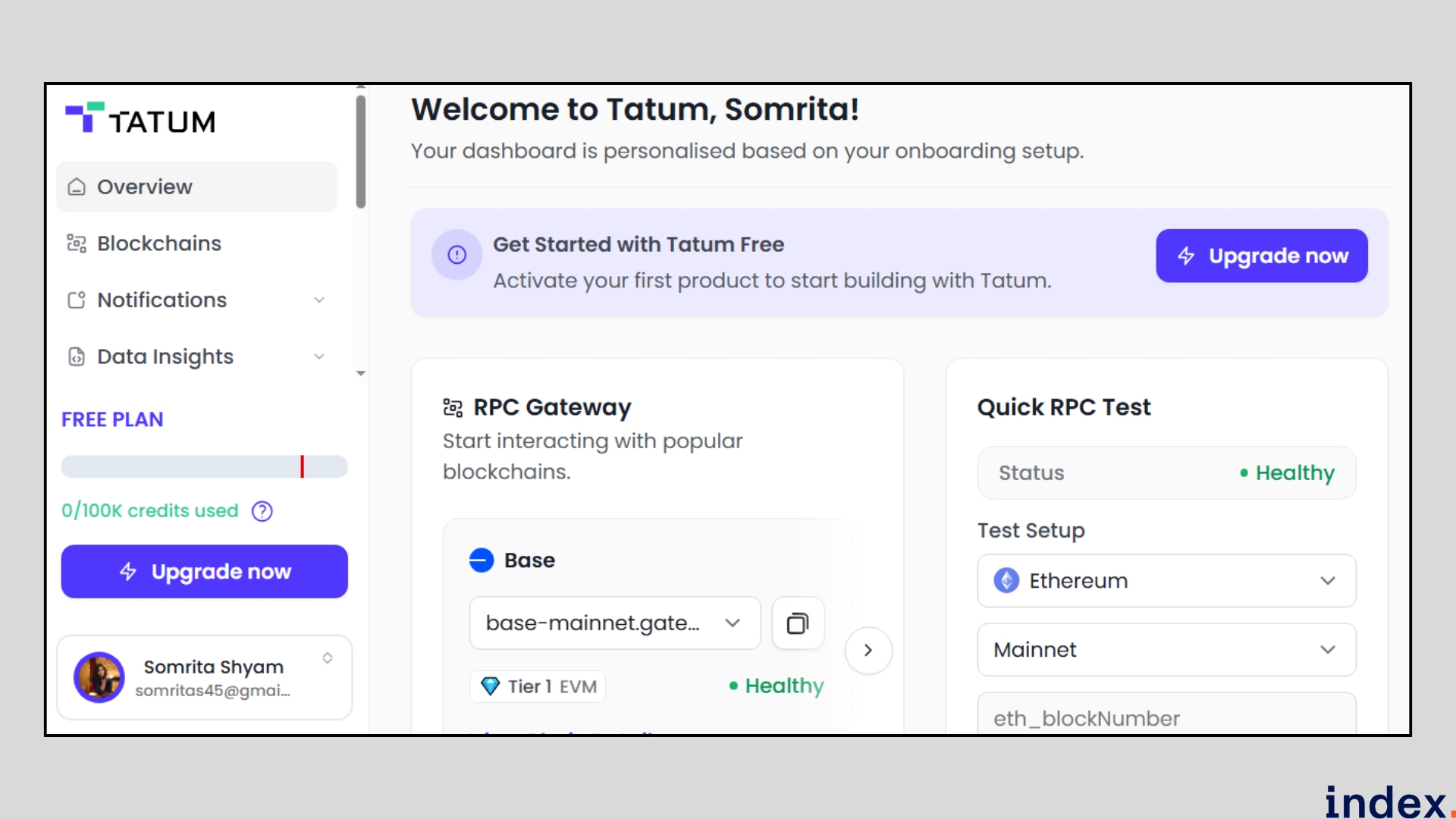
Tatum is a blockchain development platform designed to simplify Web3 app creation by providing a unified framework for over 130+ blockchains. It gives developers access to APIs, SDKs, and tools for everything from NFTs and wallets to exchange rates, notifications, and fee estimations.
By abstracting away the complexity of blockchain protocols, Tatum enables developers to quickly build, test, and scale blockchain applications without managing nodes or dealing with protocol-specific issues. With enterprise-grade security certifications like SOC 2 and ISO 27001, Tatum is trusted by companies like Binance, LimeWire, and Zengo to ship production-grade applications across multiple chains.
How It Works
- Sign Up and Get an API Key. Developers begin by creating a free account on the Tatum dashboard. Once signed in, they generate an API key, which serves as the entry point to all Tatum blockchain services.
- Choose a Blockchain. Instead of setting up and maintaining blockchain nodes, developers can connect instantly to over 130 supported blockchains. Tatum’s unified API layer handles the connection so you can focus on building features.
- Use APIs and SDKs to Build Features. With the API key, developers can call ready-made APIs for essential blockchain functions such as minting NFTs, creating wallets, transferring tokens, estimating fees, or setting up smart contract events. Tatum’s JavaScript SDK makes this process faster by reducing the amount of code needed.
- Test and Monitor Your Application. Developers can use Tatum’s testnet faucets to simulate transactions, set up webhooks for real-time notifications, and monitor performance through the analytics dashboard. This allows them to debug and refine apps without deploying to the mainnet immediately.
- Scale to Production. Once the app is ready, developers can scale it to production-grade performance using Tatum’s infrastructure. The platform ensures 99.9% uptime and high throughput, making it reliable for apps that serve millions of users.
Pros
- Developers can build on 130+ blockchains without rewriting code for each chain.
- Pre-built APIs for NFTs, wallets, and payments allow developers to launch MVPs in days instead of weeks.
- Two hundred requests per second and 99.9% uptime make it suitable for apps with high traffic.
- A free API key and tiered pricing allow small teams to experiment before scaling.
- SOC 2 and ISO 27001 certifications reassure businesses that security and privacy standards are met.
Cons
- The free tier has strict limits. It is useful for testing, but production apps will need to upgrade quickly.
- Developers who want fine-grained control over nodes may find the abstraction layer limiting.
- High-volume applications may see costs rise significantly as API calls increase.
- Unlike running your own nodes, you rely on Tatum’s proprietary infrastructure, which may not suit every project’s philosophy.
Next up: 10 high-income tech skills that pay six-figure salaries.
Final words
Artificial intelligence is becoming a vital partner for blockchain developers. Each tool covered in this guide demonstrates how AI can cut complexity, strengthen security, and improve productivity. Developers gain the ability to move quickly from idea to deployment while reducing risks and costs.
The combination of blockchain and AI unlocks new opportunities for building smarter applications that are ready for scale. Teams that embrace these tools early will be better positioned to create secure, reliable, and future-proof blockchain solutions.
Interested in blockchain and AI development?
Join Index.dev’s global network to work on real-world blockchain and Web3 projects that use AI for contract automation, auditing, and analytics. Collaborate with leading startups building the decentralized future.
Want to learn more about AI’s role in blockchain innovation?
Explore our in-depth guides on the best programming languages for blockchain development, AI-driven business automation, and decentralized AI infrastructure. Discover the emerging skills developers need as AI and blockchain converge to build smarter, more scalable systems.


