You can easily spot a popular brand in under 5 seconds just by looking at the logo. This is the power of design strategy and if done right, your brand can be in the limelight in no time. The design strategy must resonate with the target audience, keeping your vision and mission in mind.
If you are not familiar with design strategy and how you can create one, this guide is going to be the ultimate resource for you. We will be covering the basics of design strategy, key elements, a step-by-step guide, some common challenges that you might face, and metrics.
Join Index.dev and work remotely on high-paying design projects in the UK and US!
What Is Design Strategy?
Design strategy is a methodical and established method for developing solutions that accomplish specific targets. It entails analyzing a project's or organization's goals, understanding stakeholders' demands, and establishing a strategy to generate effective, efficient, and sustainable solutions.
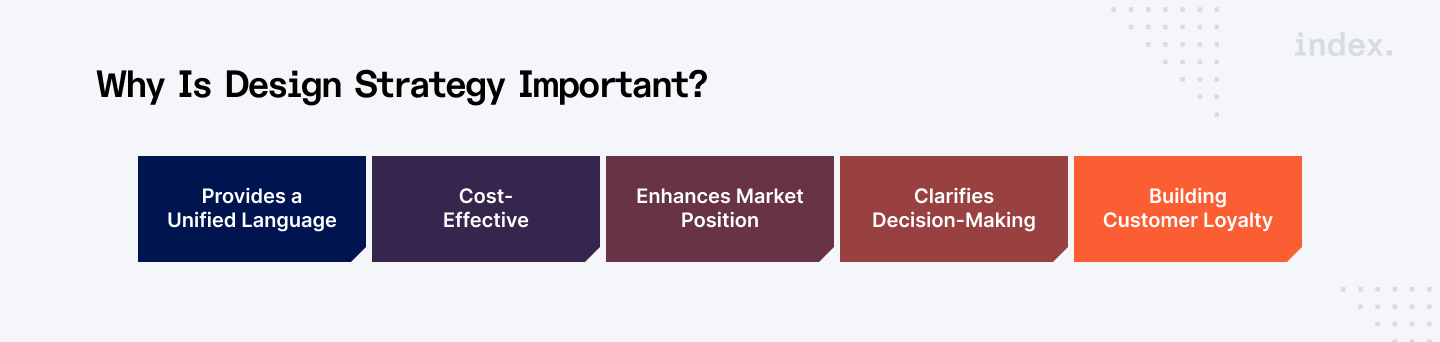
A purposeful design approach can strengthen your brand's identity, as well as create a lasting impression on your target audience through logo designs, websites, marketing materials, and custom apparel. Applying a design strategy entails first determining your overall objective and then mapping out how to get there. Here are some of the most significant advantages of design strategy:
Provides a Unified Language
The most substantial advantage that a strategy-driven design can offer is the establishment of a universal language that allows your whole team or corporation to communicate and work more effectively on projects. Other individuals who are invoiced throughout the design process, such as customers or stakeholders, can comprehend it without further clarification.
Enhances Market Position
Branding design can support the firm's appeal to its present client base while also connecting with new markets. The strategically executed design may motivate businesses to analyze consumer behavior trends and anticipate client needs. Designing items based on potential consumers' needs may also boost the company's market position.
Clarifies Decision-Making
Once the strategic goals are established, each team member may strive to achieve them both collaboratively and individually. A smart strategy may assist in removing the project's most minor decisions and guarantee that each team member is focusing on topics relevant to their area of expertise. This can also provide project managers enough time to focus on high-priority choices.
Building Customer Loyalty
Customer loyalty is crucial to any organization, and design strategy plays an important part in fostering it. When customers have pleasant and regular interactions with a brand, they are more likely to become devoted supporters. Customers who are satisfied are more inclined to not only repeat their purchases, but also to suggest the company to friends, family, and coworkers, making them great word-of-mouth marketers. As client acquisition expenses climb, retaining loyal customers becomes a more cost-effective growth approach.
Design Strategy: Comprehensive List of Elements
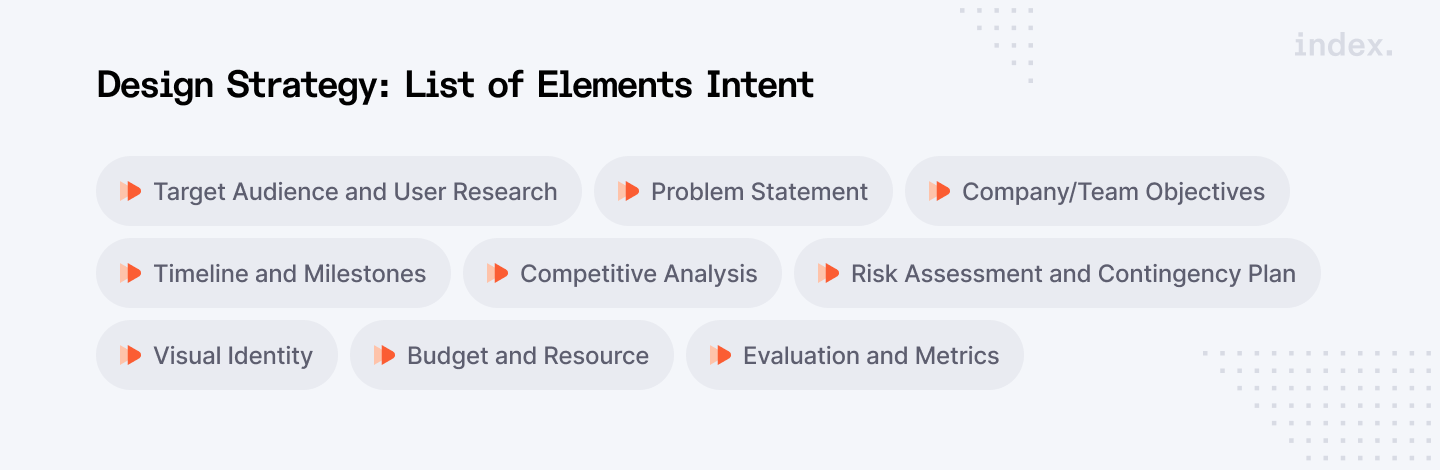
The elements are the main ingredients of an impeccable design strategy. Even if one aspect is missing, it won’t go unnoticed. Therefore, it’s always a better idea to document the design strategy so you don’t miss a thing. We have compiled an ultimate list for you to include in the document before you start working.
- Intent: A summary of the design approach, including its purpose, important objectives, and anticipated outcomes. This section offers a high-level overview of the document's content.
- Target Audience and User Research: A comprehensive investigation of the intended audience and users. This comprises demographic information, user demands, pain spots, and insights obtained from user research and interviews.
- Problem Statement: A detailed introduction to the problem statement provides an overview of the organization, enterprise, or brand on which the design approach is based. This section describes the concern and discusses the need to have a clear design strategy.
- Company/Team Objectives: A clear statement of the firm's broad goals and how the design approach fits into them. This section explores how design can help certain goals.
- Timeline and Milestones: A timeline outlining the design process's significant milestones, such as design iterations, testing phases, and release dates.
- Competitive Analysis: It is a review of competitor's design techniques and market positioning. This aids in the identification of differentiation possibilities and serves as a baseline for the design approach.
- Visual Identity: Information regarding the visual aspects to be utilized, such as color palettes, typography, photography, and graphic style. This part maintains visual uniformity across all touchpoints.
- Design Implementation: Provides an overview of how the design strategy will be carried out and implemented, including the design tools and software that will be utilised.
- Legal and Technical Constraints: Limitations include intellectual property rights, privacy and data protection, interaction with existing systems, and load times and performance.
- Risk Assessment and Contingency Plan: It involves identifying possible risks and obstacles that may develop throughout the design process and devising measures for mitigating them.
- Budget and Resources: Details on the budget and resources allotted for design work. This part guarantees that the design strategy is practical and realistic.
- Evaluation and Metrics: Criteria for determining the effectiveness of the design plan, such as key performance indicators (KPIs) and metrics to quantify the impact of design decisions.
Businesses implementing digital design strategies can also improve offline-to-online engagement using tools like Uniqode's dynamic QR codes, which allow brands to update destinations after printing and track scan performance in real time.
Discover essential SaaS design principles to create intuitive and engaging user interfaces and experiences.
The Ultimate Guide to Creating Design Strategy
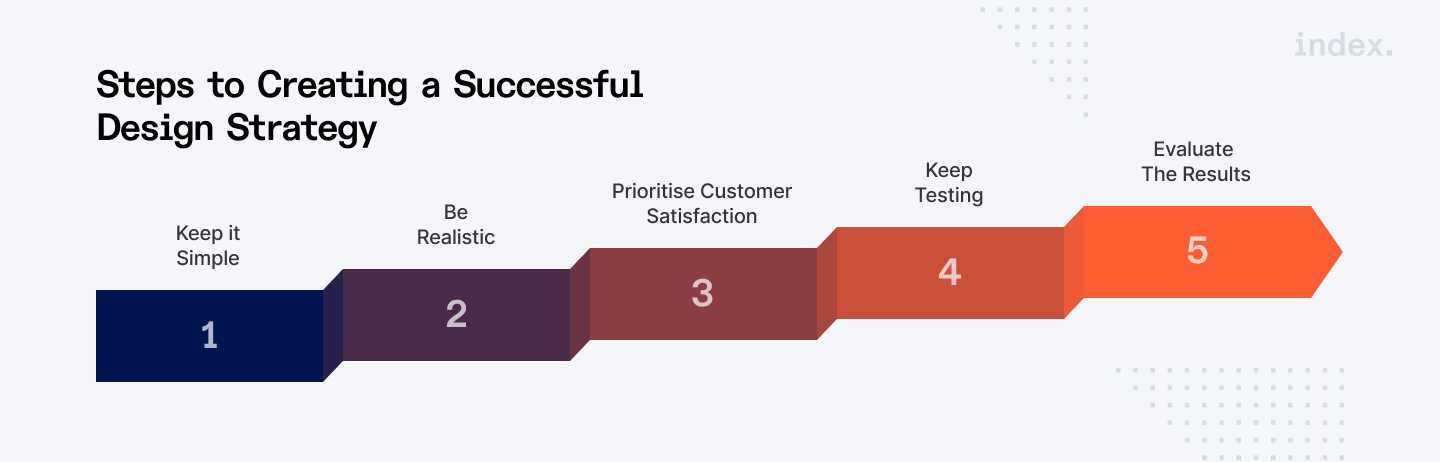
Now that we have all our elements in place, it’s time to create a design strategy. We will be going through different steps involved in a successful design strategy creation.
Keep it Simple
A strategy can only be effective if everyone who is supposed to be engaged (staff members, management, etc.) understands it and is ready to implement it in their job. While a clear direction, competitive advantages, and other strategic elements are undoubtedly crucial, anything that elevates a plan beyond the ordinary is cause to trust in it. Always consider what makes your plan genuinely resonate and relevant to people who are going to execute it.
Be Realistic
The finest plans are based on current realities. They don't depict a perfect future in which your whole market quickly embraces your answer. They understand that there will be device fragmentation, that not all developers will use these amazing new APIs, that platforms will have competing standards, and so on.
An effective strategy includes these realities into its product visions and decision-making processes. It also takes into consideration our fast-paced environment, in which change is the only constant. There's nothing wrong with suddenly having to change our plan. On the contrary, adjusting while in flight indicates that you are nimble and, in many cases, proactive, which is required for success.
Prioritize Customer Satisfaction
It is indispensable that your organization's design approach prioritizes client satisfaction. If your approach is truly focused on boosting customer effectiveness and solving customer problems, it will undoubtedly have an influence on them and improve your product/market fit.
The objective of enhancing customer satisfaction serves as a motivator for the entire firm, urging it to invest in discovering what truly matters to its consumers. If you have a design mentality at the executive level, which includes curiosity, empathy, and focus on people, your firm will succeed. Create a design that keeps the following things in mind:
- An overview of the problems faced by your clients
- Innovative and practical ideas, not just the ones that look good on paper
- Test the designs and see which ones woo your customers the most
- Ensure that the design is aesthetic and usable
Keep Testing
Every moment brings new developments. Throughout the product lifespan, the general environment, design circumstances, audience demands, market, and other elements might vary over time.
Always keep various options because you never know what is going to work in your favor. To avoid problems, you and your team should continuously test, update, and improve the design approach in response to new demands and changes.
Evaluate The Results
Constantly explore the design approach to ensure it is still relevant and effective as the project advances. As the business environment changes and new obstacles or opportunities emerge, the strategy may need to be adjusted to remain in line with the project's long-term goals and objectives.
This iterative technique enables continual improvement, guaranteeing that the design strategy not only responds to present situations but also predicts future demands. By being adaptable and responsive, the strategy better supports the dynamic character of both the company and its market.
Common Challenges While Working on Design Strategy
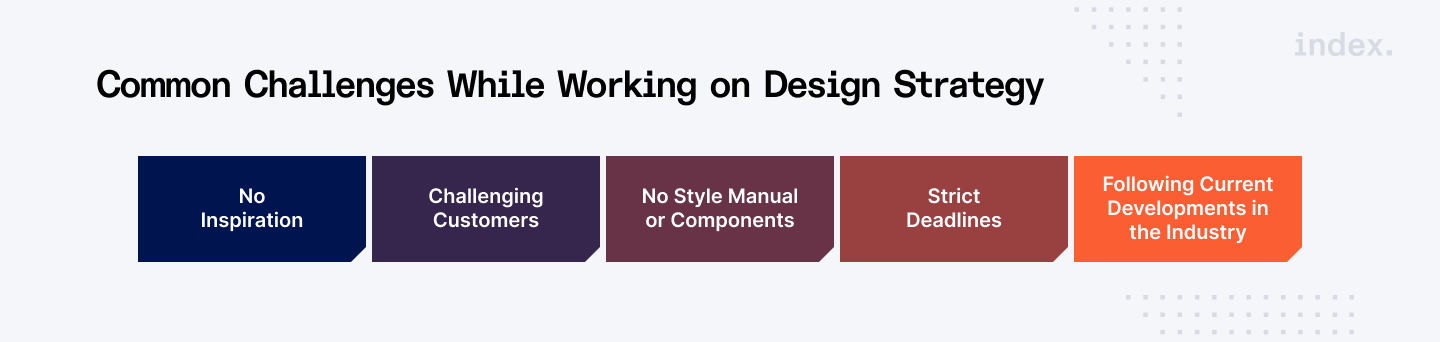
It’s a rocky road to the destination of design strategy, and you are bound to face some challenges. However, there’s a solution to every concern; all you need to do is identify the issue and work on it accordingly. Let’s cover the most common challenges that might occur while working on the design strategy.
No Inspiration
One of the most prevalent problems that designers have is a lack of inspiration. When you're not feeling inspired, it might be difficult to come up with inventive ideas and produce your best work. To address this difficulty, consider taking a vacation from work, experimenting with alternative design approaches, or discovering fresh sources of inspiration. You may also try brainstorming with coworkers or participating in creative exercises to get your ideas flowing.
Challenging Customers
Working with tough customers can be one of the most unpleasant difficulties for designers. To overcome this concern, you must speak effectively and professionally, listen to your client's concerns, and be willing to accept feedback. Try to find a solution that benefits both you and the client, and don't be hesitant to seek extra assistance if necessary.
No Style Manual or Components
A style guide is a thorough document that outlines the project's visual and design criteria. It offers guidelines for font, color palettes, space, padding, and other design components. Without a style guide, discrepancies in the design may occur, resulting in a lack of cohesiveness and brand identity throughout the product. Furthermore, the lack of a style guide might cause uncertainty among team members and impede effective collaboration.
When components are missing, most designers and developers have to recreate identical aspects from scratch, resulting in duplication of work and inconsistencies in the user experience. Having a library of preset components boosts efficiency and contributes to a more cohesive design system.
Strict Deadlines
Managing timelines in design may be challenging due to competing demands on time. To prevent missing deadlines, set realistic goals, divide huge projects into smaller tasks, and utilize project management tools to keep organized. Anticipating potential barriers and planning ahead of time can also assist prevent delays.
Following Current Developments in the Industry
In the fast-paced world of design, being current is critical, yet keeping up with the newest trends and approaches may be difficult. To keep educating, schedule time to read design blogs and periodicals, attend industry events, and network with other designers. You may also follow design leaders and influencers on social media to keep up with the newest trends and advancements in your industry.
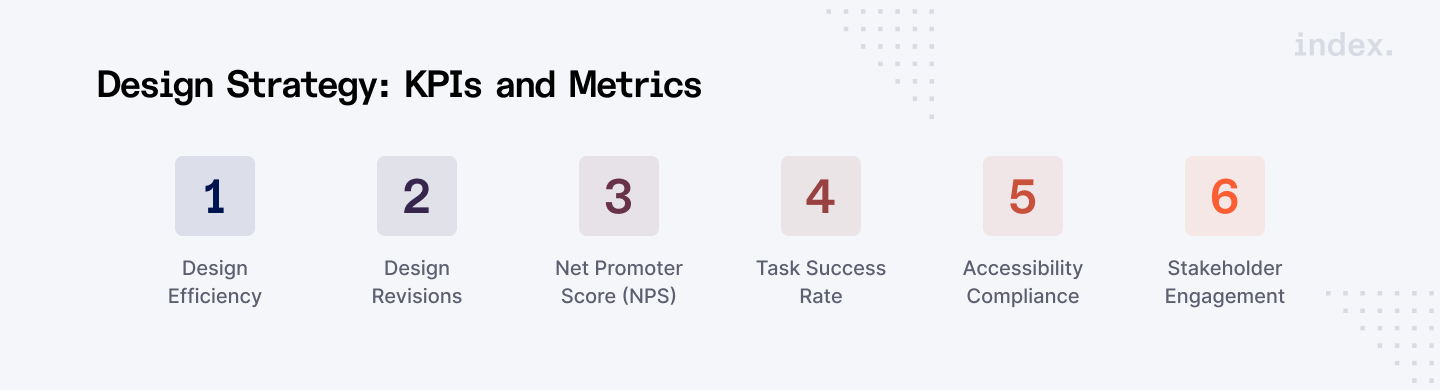
Design Strategy: KPIs and Metrics
You might have the best strategy according to you that follows the set protocols. It might be in line with the industry standards and have all the standard components. However, you need to track if it works or not. If it is not a hit amongst the audience, you will have to re-work it. We have compiled a list of KPIs and metrics that you can use to measure the success of your design strategy.
Design Efficiency
Design Efficiency assesses the speed and efficacy of design processes in producing high-quality designs. It assesses the time necessary to perform design jobs, the amount of rework needed, and the overall efficiency of the design workflow. Improving design efficiency shortens time-to-market, increases productivity, and allows designers to concentrate on creativity and innovation.
Design Revisions
Design Iterations counts the number of iterations or revisions needed to refine and finalize designs. It aids in determining the success of the design process, the ability to absorb input, and the amount of collaboration within the design team. Reducing design iterations results in speedier design cycles, more productivity, and more simplified processes.
Net Promoter Score (NPS)
Net Promoter Score (NPS) is an effective indicator of user happiness and loyalty. Designers may assess user contentment and loyalty, which are critical markers of design success, by subtracting the number of critics (those who are unlikely to refer) from the percentage of promoters. NPS provides further insight into the design's ability to meet user wants and expectations, making it an important indicator for evaluating design success.
Task Success Rate
The task success rate is a good measure of how well a design can help people achieve their goals. Designers may evaluate the efficacy of their designs in assisting users in achieving their objectives by calculating the proportion of tasks completed. Ensuring a high task success rate improves the overall user experience and contributes to holistic design success.
Accessibility Compliance
Accessibility Compliance assesses designs' conformance to accessibility standards and rules, providing inclusion for people with impairments. It entails assessing design aspects for compatibility with assistive technology, readability, color contrast, and navigability. Designing with accessibility in mind improves usability, broadens the reach of products, and shows social responsibility.
Stakeholder Engagement
Stakeholder Satisfaction assesses how satisfied project stakeholders, such as clients, executives, and internal teams, are with the design outcomes and deliveries. Gathering input and performing frequent stakeholder reviews are required to guarantee alignment with expectations and project objectives. High stakeholder satisfaction promotes cooperation, trust, and effective design project outcomes.
Discover key product design interview questions and answers to ace your next interview.
Conclusion
To sum it up, a design strategy requires a lot of people from different departments to work together. It will translate to a number of challenges, but it doesn't mean that you can’t overcome them. If you include all the relevant elements in the design strategy and use the metrics to determine the success, there’s no doubt about the fact that victory is yours.
For Developers:
Join Index.dev >> the remote work platform, connecting designers with remote tech companies. Begin working remotely on innovative projects across the US, UK, and EU!
For Employers:
Looking for remote developers? Index.dev connects you with 15,000+ vetted engineering talent ready to work on your most challenging projects. Hire in under 48 hours!