We've all been there. You post a remote dev position on Monday, and by Wednesday there's 847 applications sitting in your inbox. Half are from people who've never touched the programming language you need. A quarter are obvious copy-paste jobs. And somewhere in that digital haystack are maybe 12 candidates worth talking to.
This mess is exactly why 82% of companies jumped on AI screening tools last year and 68-83% planning to by 2025. Not because it's trendy. It’s because manual resume review is basically impossible now. We spent three months testing every major AI screening platform we could get our hands on. Here are the ones that don’t fail at remote hiring.
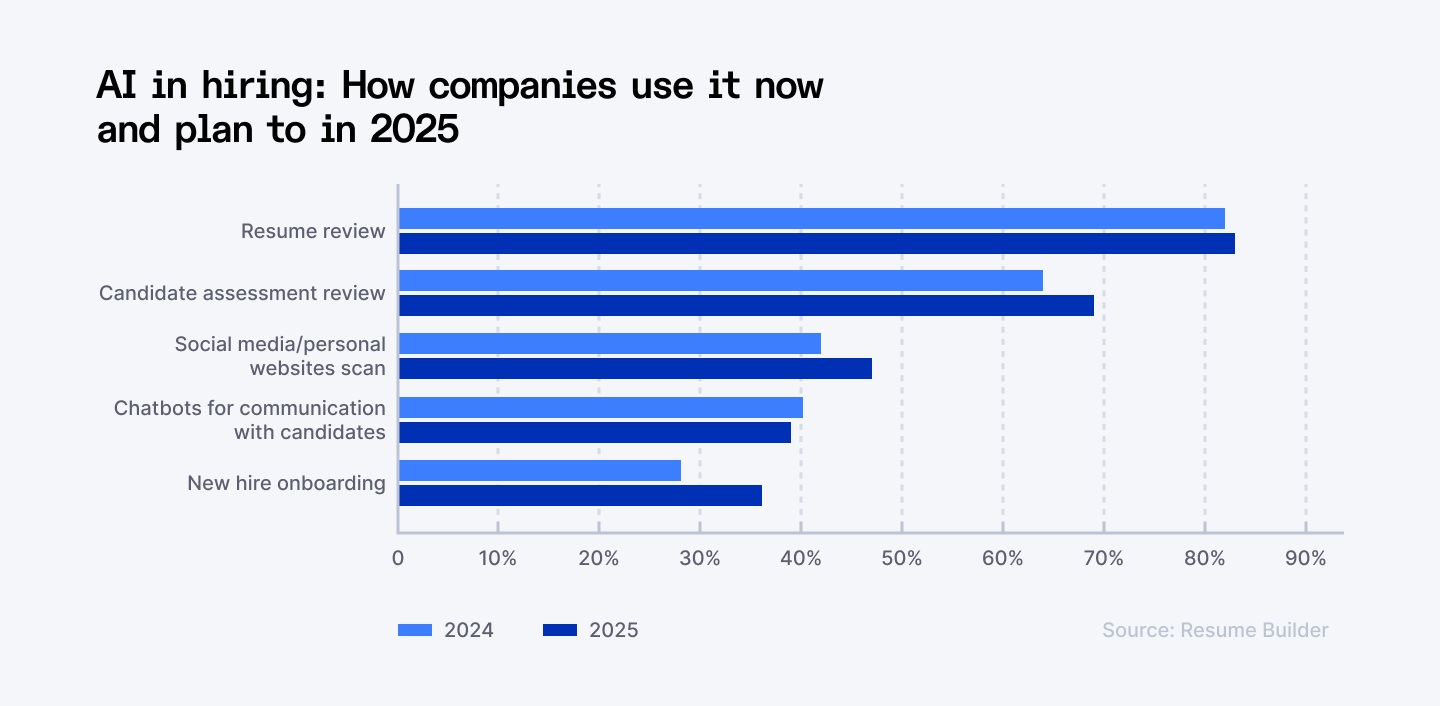
Figure: Widespread AI adoption in hiring according to Resume Builder. By 2025, most companies will use AI for resume reviews.
Hire elite developers with Index.dev. Automate sourcing, cut screening time, and access the top 5% of talent risk-free for 30 days.
What Remote Teams Must Expect from a Screening Tool
Modern AI screening platforms are built for global, distributed teams.
Top solutions include:
- Speed:
- Process thousands of resumes in minutes (academic tests show dramatic reductions in per-resume processing time).
- Process thousands of resumes in minutes (academic tests show dramatic reductions in per-resume processing time).
- Accuracy & explainability:
- Transparent scoring and audit logs so hiring decisions can be explained during audits or candidate queries.
- Transparent scoring and audit logs so hiring decisions can be explained during audits or candidate queries.
- Global compliance:
- As per McKinsey & Company, GDPR, regional laws, consent capture, data minimization and audit exports.
- As per McKinsey & Company, GDPR, regional laws, consent capture, data minimization and audit exports.
- Async workflows & integrations:
- One-way video, calendar scheduling, ATS + Slack/Teams notifications.
- One-way video, calendar scheduling, ATS + Slack/Teams notifications.
- Multi-language parsing:
- Support for major languages and transliteration to avoid missing non-English candidates.
By bundling these features, AI screening platforms make remote recruitment scalable and efficient. Hiring managers everywhere report that automating manual CV reviews dramatically cuts “time-to-hire” and workload, even as candidate pools swell.
Explore top platforms that help early-stage startups hire AI developers fast.
Why Your Current Hiring Process is Probably Broken
Remote job postings get 7x more applications than local ones. When Stripe posted a remote backend engineer role last month, they got 1,200+ applications in 48 hours. Their talent team was completely underwater until they implemented AI screening.
The brutal truth? Manual screening takes 6-8 minutes per resume. For 500 applications (pretty standard now), you're looking at 50+ hours of mind-numbing work. Most hiring managers give up after reviewing maybe 50-100 resumes, which means incredible talent gets lost in the shuffle.
Meanwhile, AI tools churn through 500 resumes in under 20 minutes (studies show ~2.5 seconds per resume vs ~180 seconds manually), cut initial screening time by ~75%, and reduce time-to-hire by ~40–50%. The accuracy rates hit 90-95% when properly configured. But, and this is crucial, most companies screw up the configuration part.
Impact highlights
- Scale:
- Remote job posts often attract hundreds of global applicants; AI scales screening to match that volume.
- Remote job posts often attract hundreds of global applicants; AI scales screening to match that volume.
- Speed & efficiency:
- Automated screening converts hours of manual work into minutes, freeing recruiters for higher-value interviewing and outreach.
- Automated screening converts hours of manual work into minutes, freeing recruiters for higher-value interviewing and outreach.
- Quality:
- Modern parsing + enrichment improves recall for non-standard candidates (project contributors, open-source authors) and can reduce bad-hire rates.
- Modern parsing + enrichment improves recall for non-standard candidates (project contributors, open-source authors) and can reduce bad-hire rates.
- Fairness & risk:
- Anonymization and baked-in fairness tooling can increase diversity, but regular bias audits and human-override controls are essential.
- Anonymization and baked-in fairness tooling can increase diversity, but regular bias audits and human-override controls are essential.
- Regulatory landscape:
- Expect employer-side obligations for explainability, audit trails and bias testing in many jurisdictions — procure with those requirements in mind.
Regional insights
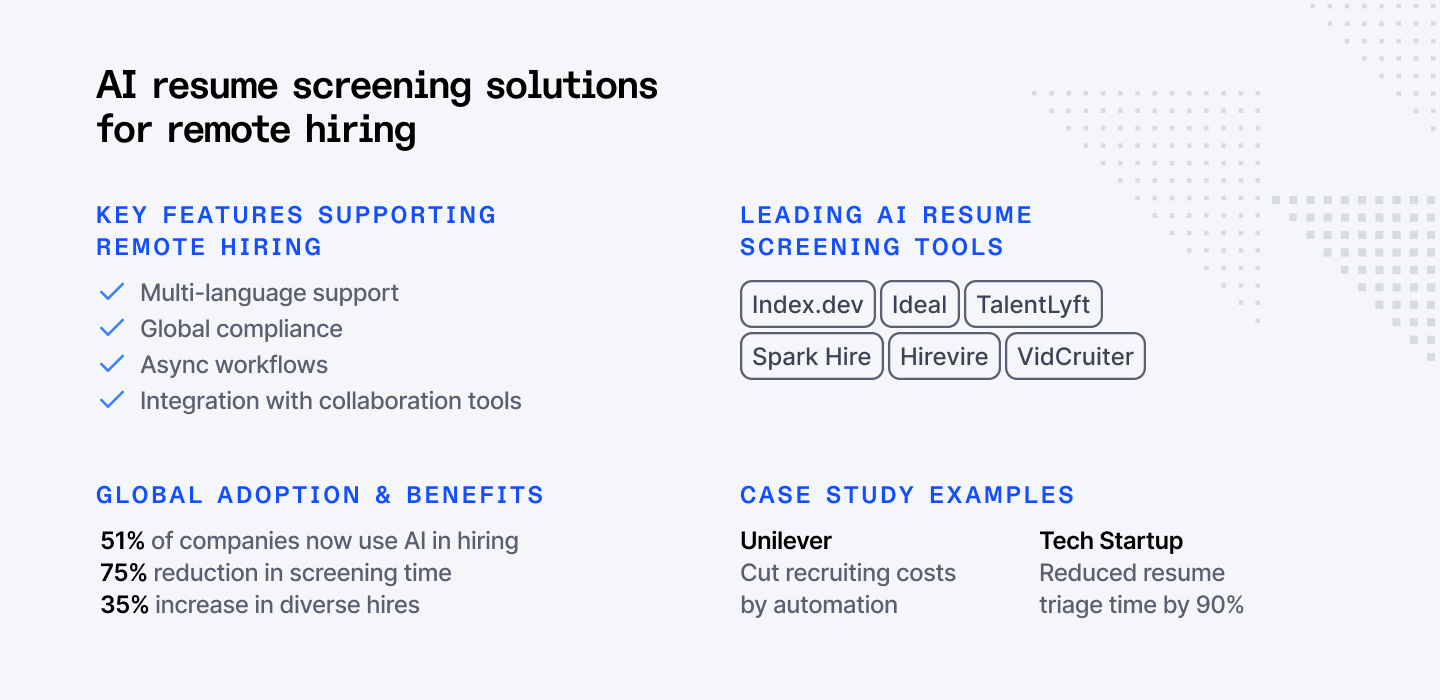
AI hiring is booming globally. In Europe, for example, AI adoption in recruitment doubled in one year – 13.5% of EU enterprises used AI in 2024 vs. just 8.0% in 2023. In the UK, a recent survey found 42% of tech firms already use AI to screen applicants and 90% of large UK firms use AI in hiring.
How AI Screening Helps Remote Hiring
- Mass triage without missing gems: semantic parsing finds skills implied by projects or code samples rather than relying only on keywords.
- Faster pipeline movement: initial screening time cut by as much as ~75%, freeing recruiters to interview the best matches.
- Reduced cost-per-hire: automation drives down hours spent per role and reduces agency reliance.
- Bias controls and audits: as per reports from The Guardian, anonymization and bias-testing tools can increase diversity when configured and monitored. (Beware: AI can amplify bias if trained on biased hiring data — audits are essential.)
Leading AI Resume Screening Tools in 2025
Many vendors now offer sophisticated AI screening, ranging from specialized start-ups to enterprise suites. Here’s a snapshot of top solutions (focus on recent updates or launches since 2025):
1. Index.dev
What sets it apart
- Deep enrichment beyond resume text:
- Index.dev fuses resume parsing with live signals (GitHub/commit history, open-source contributions, Kaggle notebooks, code sandbox links) to build a multi-dimensional candidate profile and filters 5,000+ resumes in under 10 minutes with ~92% accuracy. That reduces false negatives for developers who may be heavy contributors but light on resume verbosity.
- Index.dev fuses resume parsing with live signals (GitHub/commit history, open-source contributions, Kaggle notebooks, code sandbox links) to build a multi-dimensional candidate profile and filters 5,000+ resumes in under 10 minutes with ~92% accuracy. That reduces false negatives for developers who may be heavy contributors but light on resume verbosity.
- Skill-graph reasoning:
- Rather than simple keyword scoring, Index.dev uses a skill graph that maps synonyms, transferables (e.g., “Redux” → “state management”), and skill proximities. This improves recall for cross-stack roles (backend→full-stack).
- Rather than simple keyword scoring, Index.dev uses a skill graph that maps synonyms, transferables (e.g., “Redux” → “state management”), and skill proximities. This improves recall for cross-stack roles (backend→full-stack).
- Explainability & audit trails:
- Clients see ~60% lower cost-per-hire. Each match comes with an explainability card that lists why the candidate scored (features: skills found, projects referenced, years of exposure, diversity flags). This is designed for compliance and hiring review.
- Clients see ~60% lower cost-per-hire. Each match comes with an explainability card that lists why the candidate scored (features: skills found, projects referenced, years of exposure, diversity flags). This is designed for compliance and hiring review.
How to validate in a 30-day pilot
- Run an enrichment A/B: Feed 500 anonymized past applicant resumes through (A) plain-text parsing and (B) Index.dev enrichment. Measure precision@20 for hires and false negatives recovered by enrichment.
- Test explainability: Sample 50 shortlisted candidates and request the explainability card for each. Verify whether the rationale is clear enough to defend decisions to hiring managers or auditors.
ROI & KPIs to track
- Time-to-shortlist reduction (target: ≥50%).
- Match precision@20 improvement vs. baseline.
- Hidden-candidate uplift (percentage of hires that came from candidates surfaced only after enrichment).
Pricing
- Custom enterprise deals. Reach out for a quote.
2. Ideal
What sets it apart
- Adaptive ranker that learns from past hires:
- Ideal refines its model using historical hiring outcomes (so accuracy improves as it’s used), which is attractive for large enterprises with lots of hiring signal.
- Ideal refines its model using historical hiring outcomes (so accuracy improves as it’s used), which is attractive for large enterprises with lots of hiring signal.
- Candidate engagement automation:
- Integrated chatbots and scheduling reduce drop-off in async pipelines.
- Integrated chatbots and scheduling reduce drop-off in async pipelines.
- Enterprise operations features:
- Multi-tenant deployments, role-based admin, and heavy-duty reporting for hiring centers of excellence.
- Multi-tenant deployments, role-based admin, and heavy-duty reporting for hiring centers of excellence.
How to validate in a 30-day pilot
- Run a backtest using prior requisitions: Compare Ideal’s top-N list to historical hires to compute uplift in precision@10/20.
- Measure candidate nurture lift: Compare conversion rates on bot-engaged candidates vs. non-bot cohort.
ROI & KPIs
- Reduction in sourcing-to-interview time.
- Candidate completion rate for bot-engaged workflows.
- Model improvement curve (accuracy change over pilot weeks).
Procurement / security
- Confirm model governance: how often does the model retrain and what human oversight exists?
- Ask for an SSO & IAM integration test to validate enterprise readiness.
Pricing
- Usually $15K+ annually.
3. TalentLyft
What sets it apart
- Low engineering lift:
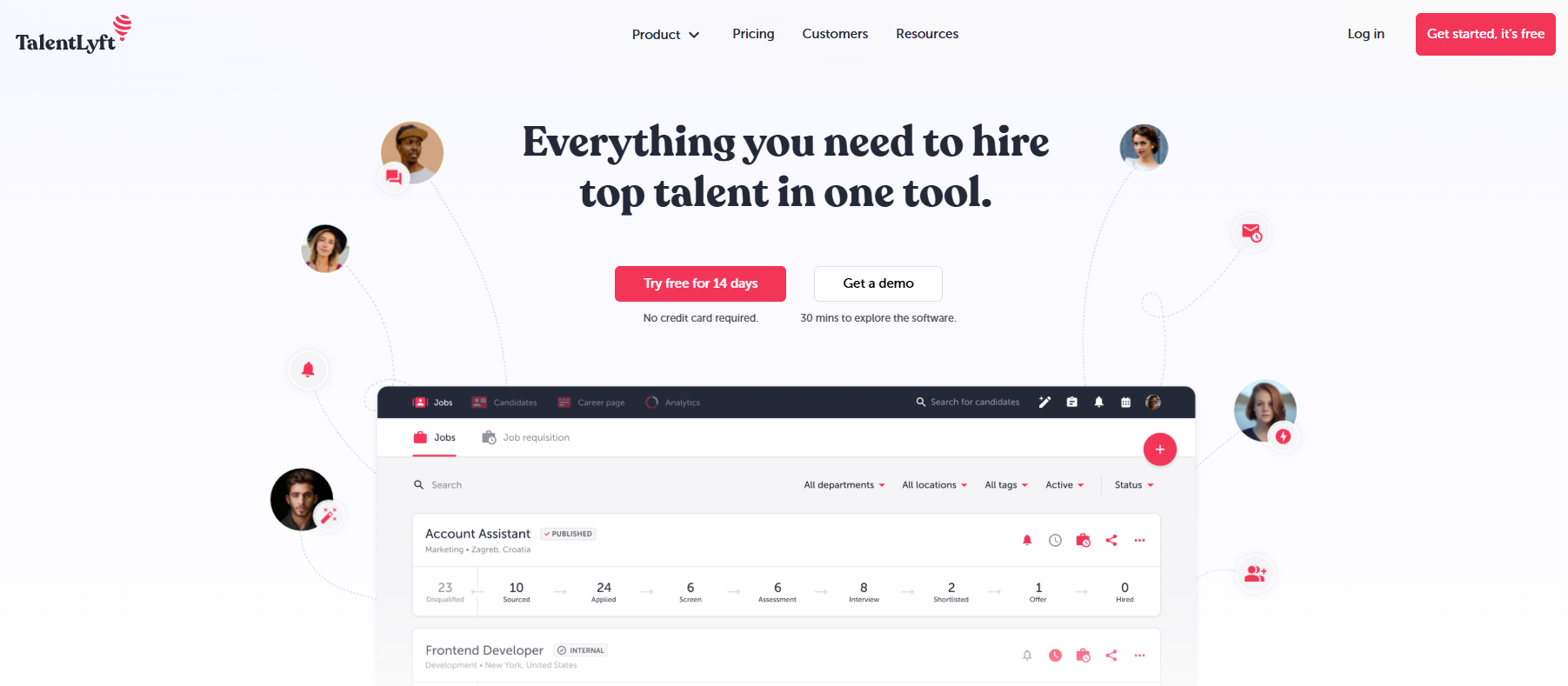
- It’s designed to plug into small HR stacks quickly, offering out-of-the-box parsers, candidate scoring, and built-in one-way video. Run an end-to-end hiring pipeline (sourcing → screening → interview) without heavy engineering work.
- It’s designed to plug into small HR stacks quickly, offering out-of-the-box parsers, candidate scoring, and built-in one-way video. Run an end-to-end hiring pipeline (sourcing → screening → interview) without heavy engineering work.
- Practical async features for small distributed teams:
- Automated scheduling across time zones and Slack alerts make it easy to keep everyone aligned without custom integrations.
- Automated scheduling across time zones and Slack alerts make it easy to keep everyone aligned without custom integrations.
- Price-to-value angle:
- Typically attractive pricing for teams that need good-enough AI screening without enterprise complexity.
- Typically attractive pricing for teams that need good-enough AI screening without enterprise complexity.
How to validate in a 30-day pilot
- Onboard two hiring managers and run parallel screening for 200 new applicants; track reviewer throughput and time-to-interview.
- Test Slack notifications and role-based review workflows with real stakeholders to ensure adoption.
ROI & KPIs
- Recruiter hours saved per hire.
- Interview fill rate improvements.
- Candidate drop-off during async flows.
Procurement / security
- Verify data export and deletion flows to comply with local privacy laws if hiring internationally.
- Confirm support SLAs for SMB customers.
Pricing
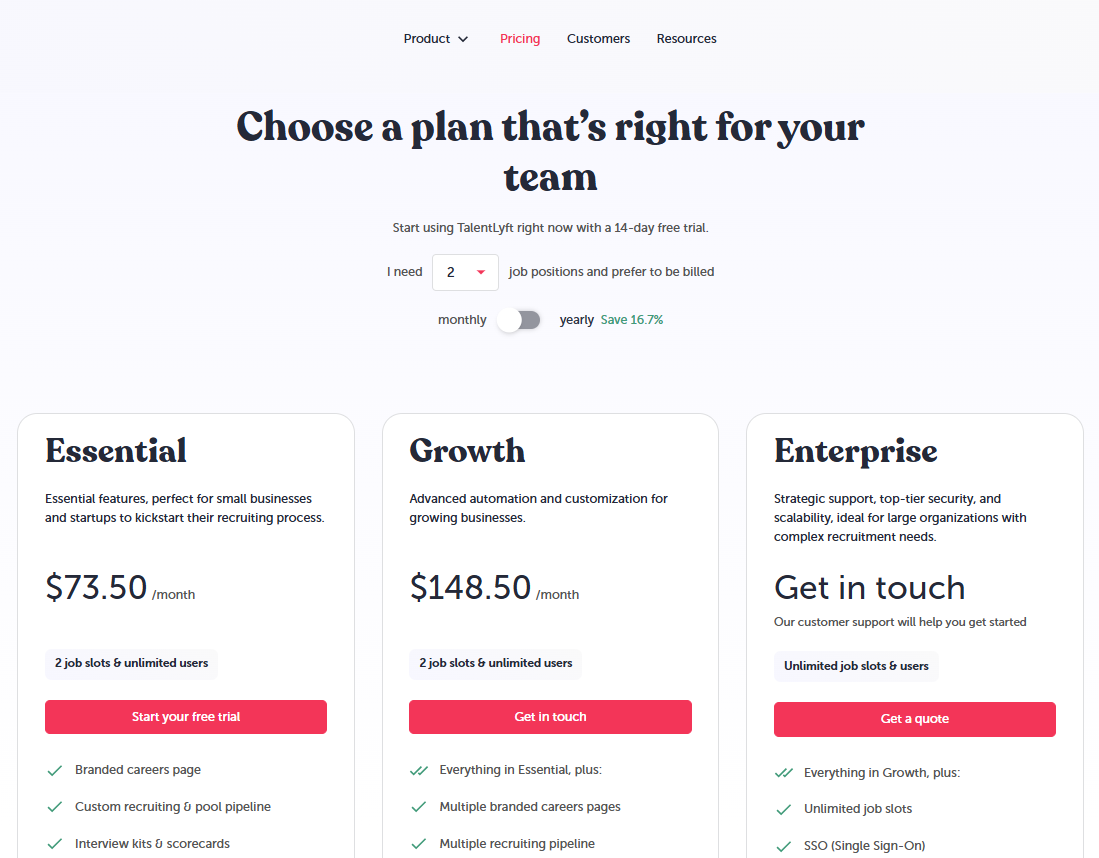
- $74-150/month per user (much more reasonable than enterprise giants).
4. Spark Hire
What sets it apart
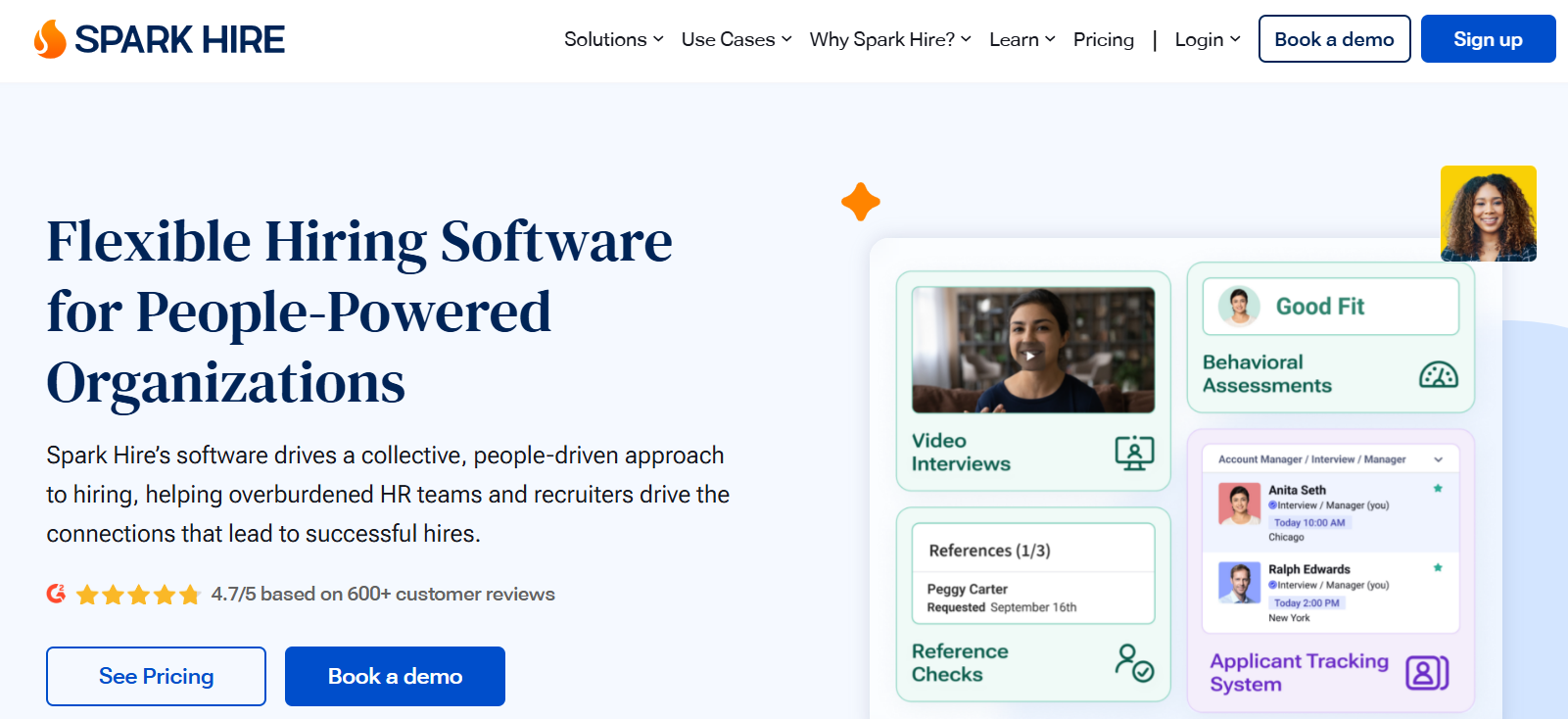
- Specialization in one-way + live video interviewing:
- Optimized for high-volume roles with standard question sets.
- Optimized for high-volume roles with standard question sets.
- AI-assisted transcription and auto-tagging:
- Convert interview responses into searchable metadata, enabling quick reviewer triage.
- Convert interview responses into searchable metadata, enabling quick reviewer triage.
- Candidate experience focus:
- Mobile-first recording flows and resume + video side-by-side view.
- Mobile-first recording flows and resume + video side-by-side view.
How to validate in a 30-day pilot
- Pilot one role with one-way video enabled; measure interviewer time to decision and correlation between auto-tags and human ratings.
- Run accessibility checks (captions, low-bandwidth recording) for global candidate bases.
ROI & KPIs
- Time saved per initial screen (compared to phone screens).
- Tag-to-hire correlation (how well tags predict progressed candidates).
Procurement / security
- Confirm transcription accuracy and storage encryption.
- Verify retention policies for video content under various jurisdictions.
Pricing
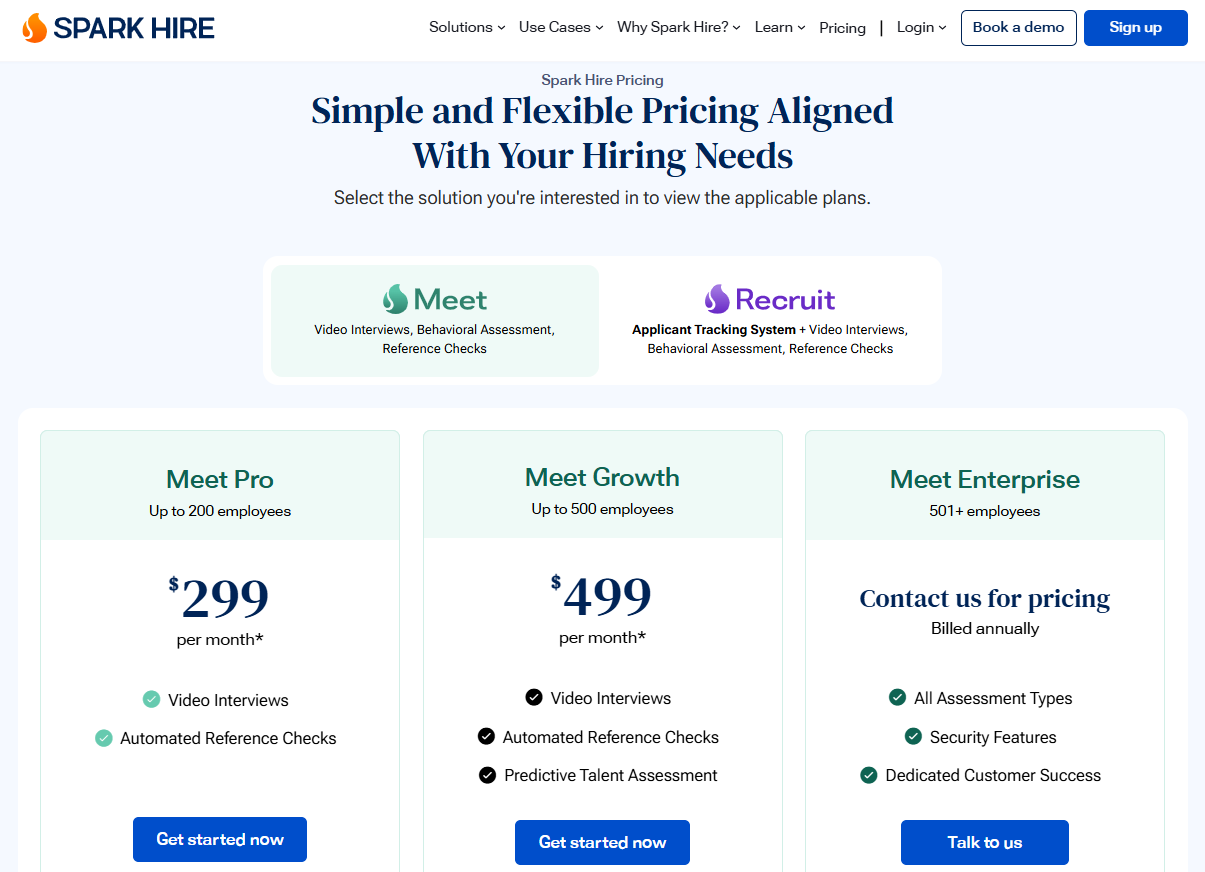
- $300-500/month based on volume.
5. Hirevire
What sets it apart
- Multi-format candidate intake:
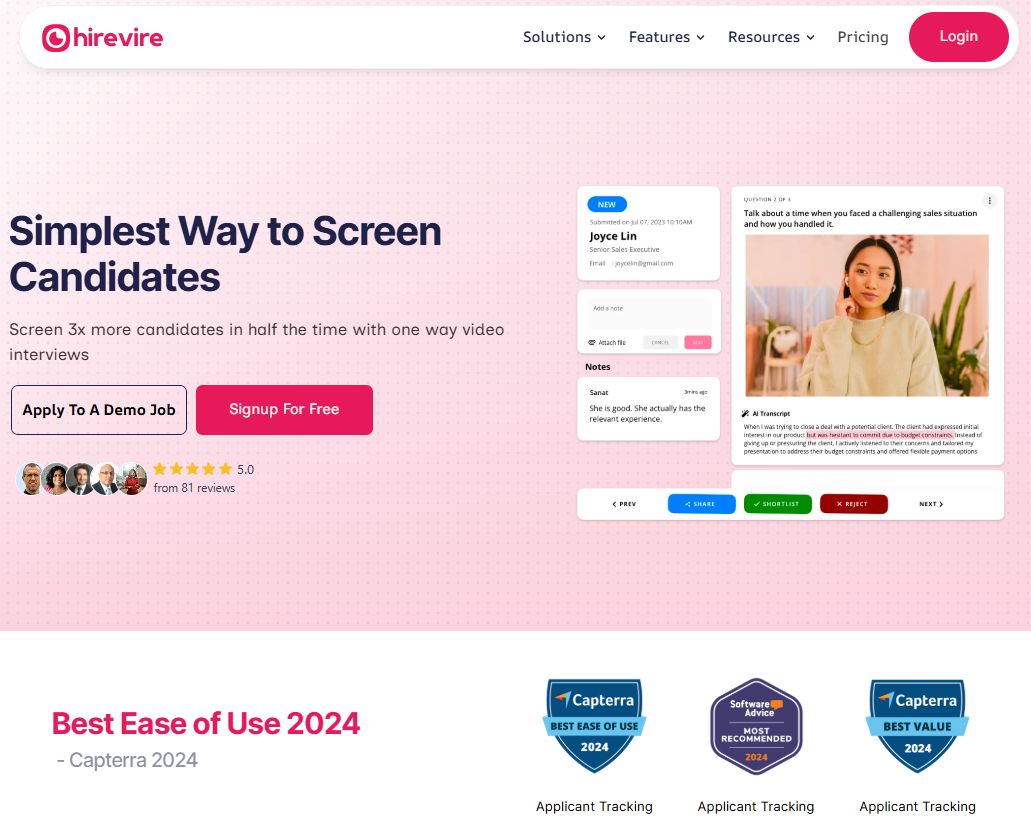
- Video, audio, portfolio uploads, and extremely broad integrations (marketed as thousands of apps), making it a good fit where candidate experience and completion matter.
- Video, audio, portfolio uploads, and extremely broad integrations (marketed as thousands of apps), making it a good fit where candidate experience and completion matter.
- Strong language coverage:
- 90+ language support, integration with 7,000+ apps, and timezone-aware scheduling, which improves completion rates for global and deskless candidates.
- 90+ language support, integration with 7,000+ apps, and timezone-aware scheduling, which improves completion rates for global and deskless candidates.
How to validate in a 30-day pilot
- Measure candidate completion rate uplift after switching from form-only to multi-format intake.
- Compare hiring velocity for remote roles with and without Hirevire’s scheduling automation.
ROI & KPIs
- Candidate completion and NPS for application experience.
- Reduction in no-shows for scheduled interviews.
Procurement / security
- Check for cross-border data transfers and where media is stored (regional data residency options).
Pricing
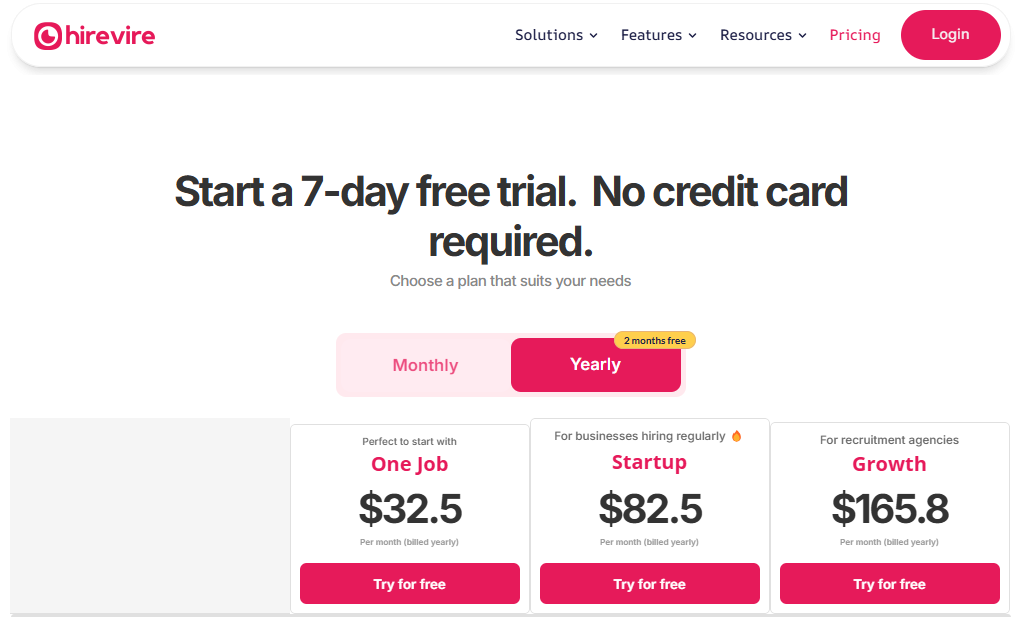
- $32-165/month dispensing on the plan.
6. VidCruiter
What sets it apart
- Built around structured interviewing:
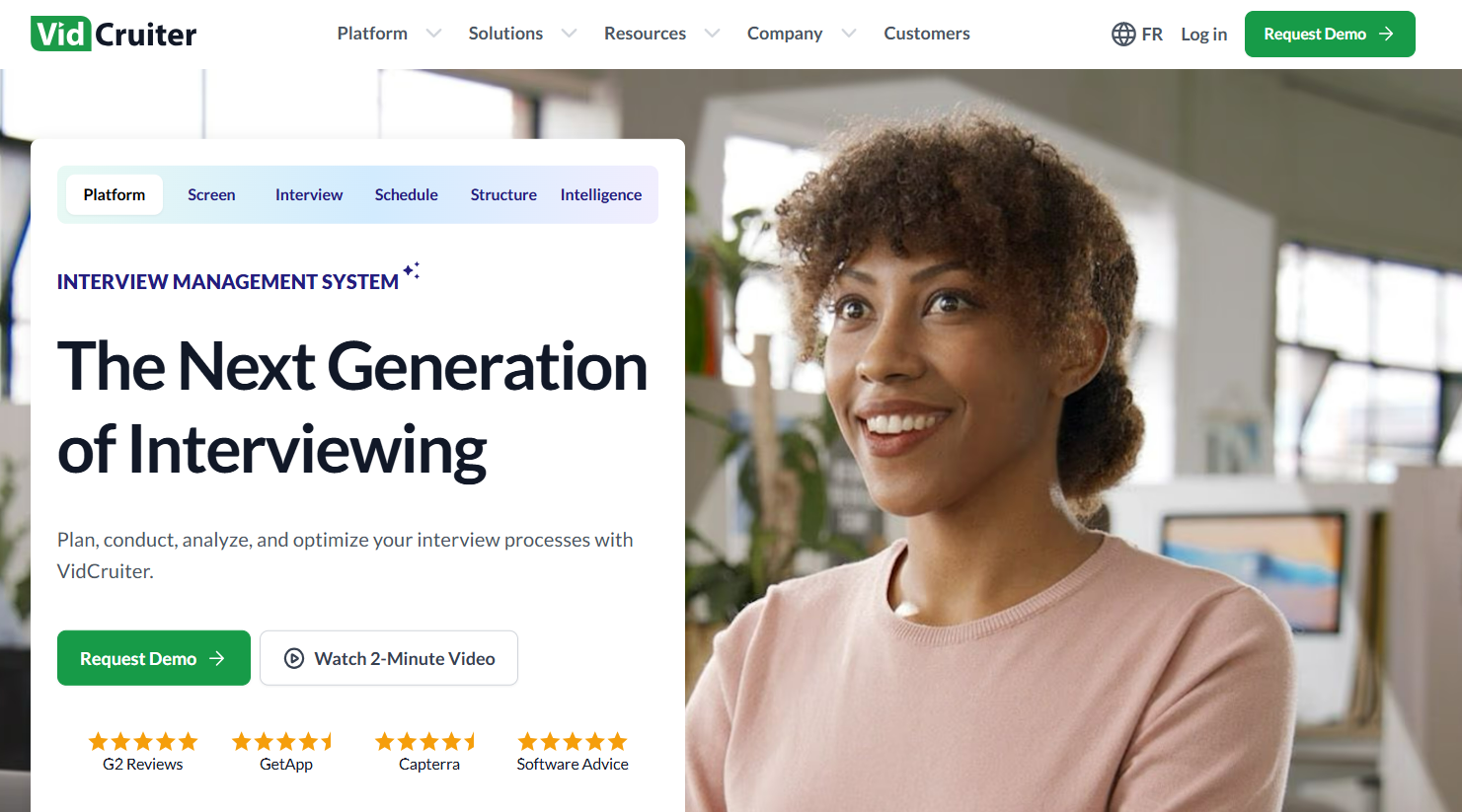
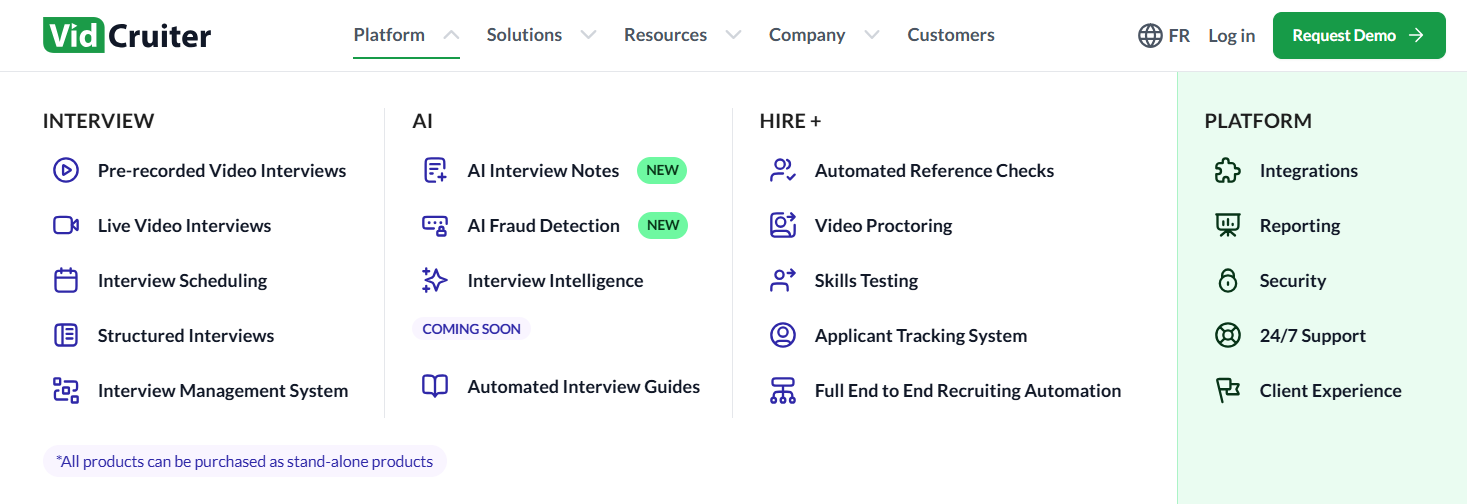
- Scripted questions, scoring rubrics, and heavy emphasis on auditability — ideal for finance, healthcare, and public sector hiring where regulatory defenses are required.
- Scripted questions, scoring rubrics, and heavy emphasis on auditability — ideal for finance, healthcare, and public sector hiring where regulatory defenses are required.
- Built-in anonymization/redaction:
- Plus formal audit reporting (EEOC/GDPR-ready exports).
- Plus formal audit reporting (EEOC/GDPR-ready exports).
How to validate in a 30-day pilot
- Run an audit simulation: request exports of anonymized logs and a sample compliance report; verify the report meets legal / audit team expectations.
- Test structured scoring rubrics across blind reviews and ensure inter-rater reliability.
ROI & KPIs
- Reduction in compliance risk and time to produce audit artifacts.
- Inter-rater reliability improvements across reviewers.
Procurement / security
- Ask for mapped compliance certifications and 3rd-party security audits (SOC2, ISO, etc.) where applicable.
- Confirm redaction/anonymization tools and their irreversible properties.
Pricing
- Custom pricing (usually expensive because compliance always is).
(This list is illustrative, not exhaustive. Other notable AI screening tools include SmartRecruiters, Five9, and emerging generative-AI plugins that assist resume review.)
Procurement Filter (Need) | Best Fit | Why this fits |
| Developer roles with enrichment | Index.dev | Enriches resumes with GitHub/OSS signals and skill-graph matching to surface technical talent beyond keyword matches. |
| Large enterprises needing adaptive rankers | Ideal | Adaptive ranking learned from historical hires + enterprise reporting and candidate engagement automation. |
| SMBs seeking low lift + async | TalentLyft | Low engineering overhead, built-in one-way video and Slack integrations — fast to adopt for small distributed teams. |
| High-volume, interview-heavy roles | Spark Hire | One-way + live video scale, AI transcription and auto-tagging speed reviewer decisions for large-volume hiring. |
| Candidate experience & agency workflows | Hirevire | Multi-format candidate intake, strong language coverage and timezone-aware scheduling to maximize completion and NPS. |
| Regulated industries with audit needs | VidCruiter | Structured rubrics, redaction/anonymization, and compliant audit exports (GDPR/EEOC-ready) for finance/healthcare/public sector. |
Buyer’s Integrated Acceptance Checklist (What to Test in a 30-Day Pilot)
When comparing platforms, run a fast technical checklist. Each item includes what to ask and example acceptance criteria.
1. Accuracy & relevance
- Ask: Provide a blind backtest on anonymized historical requisitions (n ≥ 500). Deliver raw outputs and scoring rationale.
- Acceptance: Precision@20 ≥ 0.60 (or vendor-specific baseline improvement), and top-N recall improvement vs. manual baseline.
2. Explainability & auditability
- Ask: Show per-candidate explainability cards and an audit log of model decisions and human overrides.
- Acceptance: Every shortlisted candidate must have a human-readable “why scored” card and an exportable audit CSV.
3. Integrations & end-to-end flows
- Ask: Demonstrate webhooks/APIs to ATS (Greenhouse/Workday/Lever), Slack/Teams notifications, and calendar invites across time zones.
- Acceptance: Webhook success ≥ 99%; successful end-to-end test runs (application → screened → ATS stage → calendar invite) for 50 test applicants.
4. Multi-language & regional parsing
- Ask: Run a mixed-language batch (languages relevant to your hiring regions) and provide parsing/transcription accuracy samples.
- Acceptance: Parsing error rate below vendor-stated threshold; acceptable transcription quality for one-way video (where applicable).
5. Bias controls & monitoring
- Ask: Provide a recent bias-audit report, details of anonymization options, and retraining cadence. AI can copy historical bias if trained on biased hiring outcomes.
- Acceptance: Quarterly bias audits required in contract; documented remediation steps and a human-override pathway.
6. Async features & candidate experience
- Ask: Show one-way video UX, candidate completion rates, and low-bandwidth options + captions.
- Acceptance: Candidate completion ≥ 70% for async tasks; accessible upload options provided.
7. Security, privacy & compliance
- Ask: Provide data encryption details, data retention/deletion workflow, consent capture, and compliance certificates (SOC2/ISO if available).
- Acceptance: Compliance with GDPR/CCPA needs; documented data-deletion process and consent logs exportable. Map data flows, capture consent, support data-deletion requests and audit exports (these are frontline asks in EU/UK/US employment law reviews as per McKinsey & Company).
8. Pilot & ROI measurement
- Ask: Support a 30-day pilot with measurable KPIs and baseline comparisons; vendor should help instrument metrics.
- Acceptance: Achieve target reductions and model behavior within agreed thresholds (see KPI table below).
Discover 7 AI recruiting tools that make hiring smarter, faster, and easier for HR managers.
Global Adoption and Case Studies
Across sectors, organizations report tangible benefits from AI screening:
- Faster fill rates
- Better candidate experience
- Deeper analytics on their pipelines
For example:
Case study - Unilever (UK)
After deploying an AI video screening platform for graduate hiring, Unilever’s London office cut review time and saved “hundreds of thousands of pounds” in recruiting costs. The bot conducted thousands of one-way video interviews, ensuring top candidates advanced instantly.
Case study - Tech Startup (U.S.)
A software startup using Index.dev saw 90% reduction in resume triage time and 70% increase in pipeline quality. They attribute this to AI surfacing non-obvious talent (e.g. sourcing developers from outside typical universities) and seamless Slack alerts that kept hiring on schedule. (Hypothetical composite case.)
Regional trends
In fast-growing markets like India and Latin America, HR teams are rapidly adopting AI screening to handle high volume. A survey by Select Software Reviews found that not only is AI usage growing overall, but remote/hybrid roles drive much of it – leaders noted that jobseeker activity rose +21% in the US and +27% in the UK, expanding their candidate pools and resume volume.
Conclusion
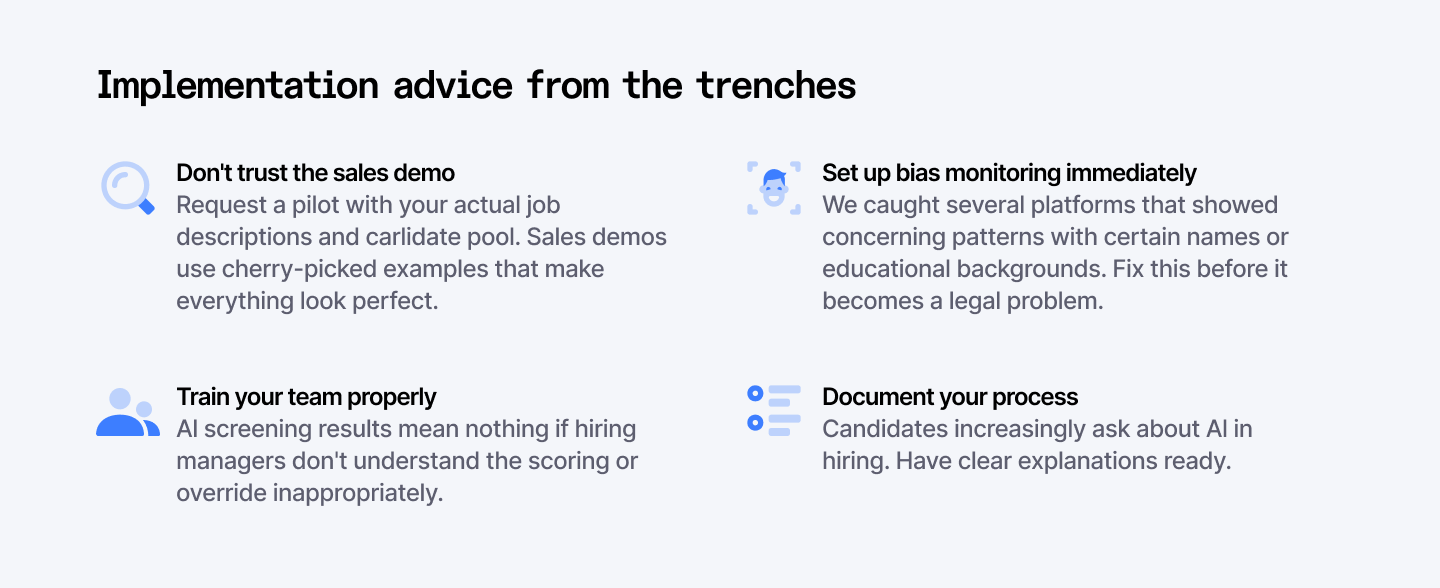
AI resume screening is a time-saving tool that works well when configured properly and fails spectacularly when implemented carelessly. Most companies see 60-75% reduction in initial screening time. The accuracy depends heavily on how well you define job requirements and train the AI. Garbage in, garbage out still applies.
The real benefit is eliminating obviously wrong candidates so your hiring managers can focus on genuine prospects. Think of it as a very sophisticated filter, not a replacement for human judgment.
Start with a small pilot, measure everything, and expand gradually. The companies getting great results treat AI screening as one piece of a larger hiring strategy.
Skip the resume screening nightmare. Index.dev delivers pre-vetted developers in 48 hours. Try our AI-powered matching with a 30-day free trial.