Running a tech business means constantly hunting for top talent. For many, Eastern Europe has become more than just another outsourcing destination—it's a strategic goldmine of programming expertise.
Ukraine, Poland, and Romania aren't just countries on a map anymore. They're tech powerhouses brewing with highly-qualified developers who bring something different to the table. Wages might be competitive, but it's the raw talent that's truly magnetic.
Our recent work with Eastern European tech teams has shown us something crucial: understanding the tax landscape isn't just bureaucratic homework. It's about crafting a smart, compliant strategy that lets you focus on what really matters—building incredible software.
Hire top Eastern European developers with Index.dev – fast matching, elite talent, and risk-free trials.
Overview of the Eastern European IT Landscape in 2025
Gone are the days when companies needed to rely on overpriced, over-hyped, and under-performing Silicon Valley developers. Today, with the advent of remote and hybrid work, talented developers from all across the globe have an equal seat on the table. Eastern Europe, in particular, is rapidly cementing its reputation as a vibrant tech hotspot.
Countries like Ukraine, Poland, and Romania are quickly establishing themselves as booming hubs of innovation. We've seen firsthand how these places offer a blend of affordability and high-quality talent that you just don’t get everywhere.
But it’s not only about lower wages compared to Western Europe or North America; it’s about the sheer quality and creativity of the people driving this growth. More and more companies are choosing to set up shop here, drawn by the promise of cutting-edge expertise and a dynamic, forward-thinking environment.

A visual representation of the growth metrics in Eastern Europe's IT sector.
This expansion reinforces the importance of understanding tax implications hiring developers Eastern Europe as you align your outsourcing strategy with evolving market trends and local regulations. Staying informed is key to navigating international hiring tax regulations effectively, ensuring that you remain compliant while capitalizing on the region's economic advantages.
Explore More: Top 5 Countries In Eastern Europe To Outsource Software Development
Tax Benefits for Hiring Eastern European Developers
Eastern European governments have strategically designed fiscal frameworks to attract international tech investments. These meticulously crafted tax policies represent sophisticated economic instruments aimed at positioning the region as a global technology talent hub.
1. Corporate Income Tax Rates
Many countries in the region offer attractive corporate tax rates:
- Hungary: Offers one of the lowest rates at 9%.
- Bulgaria: Maintains a flat rate of 10%.
- Romania: Provides a moderate rate of 16%.
- Ukraine: Cites a marked up rate of 18%.
- Poland: Offers a comparatively higher rate of 19%.
These favorable rates can greatly reduce the overall tax burden when you engage tax implications hiring developers Eastern Europe. Lower corporate tax rates not only benefit your bottom line but also support a competitive environment for tax laws for remote developers in Europe.
2. Specific Tax Incentives
We all know that tax issues can be a real headache—especially when you're crossing borders. The good news? Many Eastern European countries are stepping up with tax perks designed specifically for the IT sector. For instance, Romania offers a full income tax break for software developers working in IT-focused companies. There are also R&D incentives like investment deductions that help you trim your tax bill while fueling innovation. In a nutshell, these incentives can really ease the pain of offshore developer tax compliance and help you keep more of your savings, both locally and internationally.
3. Special Economic Zones
Now, let’s dive into Special Economic Zones (SEZs). Think of these zones as specially designated areas where the rules are a bit friendlier to businesses. In an SEZ, you can often enjoy lower tax rates and a more straightforward regulatory process. For anyone managing employer taxes in Eastern Europe, operating within one of these zones can make a real difference. It often means more cost savings and fewer headaches, which is exactly what you need to keep your international expansion on track without any unexpected detours.
Compliance and Legal Framework
Understanding and navigating the local compliance and legal frameworks is essential when hiring remotely. This involves several aspects:
1. Navigating Tax Regulations
Foreign employers must develop a sophisticated understanding of local tax rules. Residence criteria and permanent establishment guidelines create a complex framework that can trigger unexpected liabilities if mismanaged. Therefore, aligning your hiring strategy with international hiring tax regulations is crucial to avoid unexpected obligations.
2. Employment Taxes and Social Contributions
The reality of global hiring is far from straightforward. Social insurance contributions and healthcare levies vary dramatically across Eastern European countries. These variations in tax regulations demand comprehensive systems capable of handling intricate cross-border compensation structures. Remote developer payroll management extends far beyond simple calculation mechanisms, necessitating dynamic platforms that can seamlessly integrate diverse jurisdictional tax requirements.
Effective payroll management in the Eastern European technology sector demands more than standardized approaches. Organizations must develop adaptive systems that can rapidly process nuanced tax calculations across different national boundaries. This requires not just technological capability, but a deep understanding of each jurisdiction's specific regulatory frameworks, social contribution rates, and potential compliance risks.
3. Contractual Considerations
Contract development in international tech hiring represents a critical strategic function that goes well beyond standard template utilization. Properly structured contracts, with no room for loopholes, serve as fundamental risk mitigation instruments, designed to provide comprehensive protection against potential tax and legal complications.
This attention to detail is essential for both offshore developer tax compliance and ensuring that you meet all tax laws for remote developers in Europe. A well thought-out and robust contract empowers organizations to create powerful shields against potential financial and legal risks associated with international developer recruitment.
The most effective contracts:
- Clearly define work scope
- Specify jurisdictional tax obligations
- Include comprehensive compliance language
- Provide flexibility for evolving regulatory landscapes
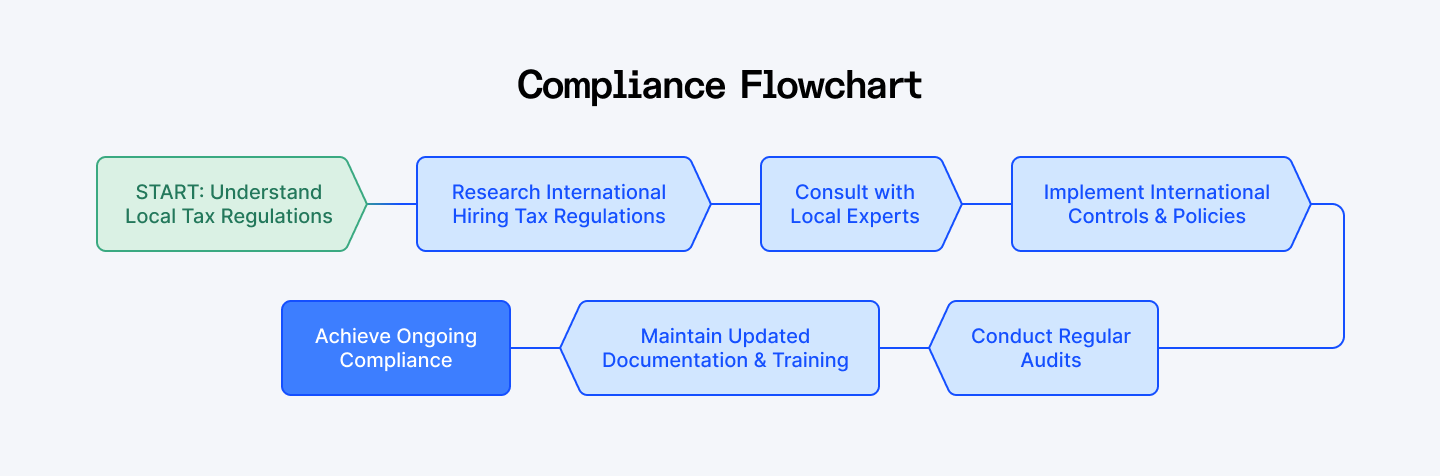
Each step in the compliance flowchart we've developed represents a potential pitfall we've helped clients avoid.
Our approach has always been straightforward: view compliance as a competitive advantage, not an administrative burden. When done right, it's not about avoiding penalties—it's about creating a framework that allows your business to move quickly and confidently across borders while adhering to international hiring tax regulations.
Cross-Border Tax Treaties and Double Taxation
When we first started working with international tech teams, double taxation seemed like a bureaucratic nightmare waiting to happen. The reality of cross-border tax treaties is far more nuanced than most companies realize. Eastern European countries haven't just created treaties—they've designed sophisticated financial bridges that can dramatically reshape your international hiring strategy.
Take the intricate network of agreements between Eastern European nations and major economies like the United States and European Union members. These aren't simple document exchanges. They're carefully negotiated frameworks that can potentially save companies hundreds of thousands in unnecessary tax liabilities.
The Internal Revenue Service (IRS) offers a roadmap for strategic financial planning that can help companies dramatically reduce their tax burden by understanding the subtle differences in these treaties. A well-structured approach to international hiring tax regulations isn't about finding loopholes. It's about comprehending the underlying principles that govern cross-border financial interactions in order to manage payroll taxes for remote developers more efficiently.
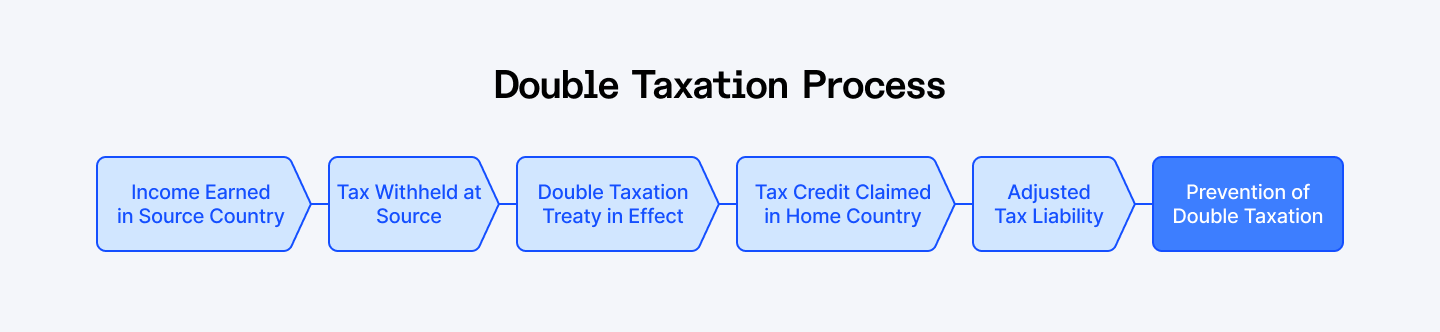
The diagram illustrates how double taxation treaties work to prevent tax overlap. The process starts with income earned in a source country, where tax is initially withheld. When a double taxation treaty is in effect, a tax credit can be claimed in the taxpayer's home country, leading to an adjusted tax liability and ultimately preventing the same income from being taxed twice.
For more detailed information, you might refer to the IRS Tax Treaties page and the Your Europe website which provide extensive resources on this topic.
Strategic Tax Planning for Outsourcing
As you consider expanding your operations into Eastern Europe, a well-planned tax strategy is indispensable. Most companies get nervous about cross-border tax compliance. And they should be. One wrong move with VAT or employment regulations can turn your exciting international expansion into a compliance nightmare.
We've seen it happen: a promising project derailed by unexpected tax complications. Suddenly, those cost savings evaporate, replaced by fines, audits, and endless paperwork. The real game? Stay flexible. Keep learning. Build relationships with local experts who understand both the letter of the law and its spirit.
Tax Planning Strategies
Implementing robust tax planning strategies can help you leverage local incentives and optimize your overall tax position. This involves:
- Utilizing transfer pricing regulations effectively.
- Taking full advantage of tax exemptions and incentives.
- Understanding VAT implications on cross-border services.
Understand these practices and engrave them in your hearts, if you must. You must realize how vital it is to ensure tax implications hiring developers Eastern Europe remain favorable, and for mitigating risks associated with offshore developer tax compliance.
Consideration of Employee Benefits
Running a tech business means staying sharp on both rewarding top talent and managing the numbers. You need to factor in the tax implications of providing employee benefits such as health insurance and stock options.
These considerations affect employer taxes in Eastern Europe and payroll taxes for remote developers and are critical for maintaining compliance while keeping your talent satisfied.
Working closely with trusted advisors, or even partnering with platforms like Index.dev, can make a huge difference. Our expertise helps you navigate the ins and outs of tax implications hiring developers Eastern Europe, ensuring that you strike the perfect balance between keeping your team satisfied and staying on top of tax rules.
Risks Associated with Non-Compliance
When you're scaling your tech business and pulling in top talent from Eastern Europe, tax compliance isn’t just a bureaucratic check list that you need to tick off—it’s the lifeline that keeps everything running smoothly. One slip-up in understanding local tax rules can quickly spiral into a major headache.
Every country in the region has its own playbook, and what works in one market might not fly in another. That means a single overlooked factor—such as improperly managing payroll taxes for remote developers or mishandling international hiring tax regulations—and you could suddenly face hefty back taxes, disruptive audits, and a dent in your reputation that’s hard to fix. A single unaddressed tax compliance issue can potentially unravel years of carefully constructed business reputation and operational momentum.
By prioritizing compliance, you not only mitigate these risks but also build a strong foundation for sustainable growth. The key here is to stay sharp. Build relationships with local experts who get the nuances of the local tax landscape. Do your homework, implement solid internal checks, and craft a compliance strategy that lets you focus on what really matters—developing incredible software and driving your business forward. With the right approach, you can dodge those nasty pitfalls and keep your expansion story on track.
For further reading on the risks of non-compliance, check out insights from the Tax Foundation and OECD’s tax administration guidelines.
Also Check Out: Best Countries for Software Development Outsourcing in 2025
Conclusion
Outsourcing to Eastern Europe in 2025 presents exciting opportunities for innovation and cost efficiency. Yet, the real win comes from understanding the tax implications of hiring developers in Eastern Europe. By staying ahead of offshore developer tax compliance requirements, leveraging smart incentives, and planning your strategy around international hiring tax regulations, you can keep your focus where it truly matters—on building great software.
The bottom line is this: be proactive, work with experts, and keep your compliance strategy nimble. That way, you maximize your returns without getting tangled up in tax headaches.
Hiring top tech talent shouldn’t be a tax and compliance headache. When expanding your team with Eastern European developers, navigating complex tax regulations, payroll structures, and compliance laws can be overwhelming. Index.dev simplifies the entire process—giving you access to the top 5% of vetted developers while ensuring smooth hiring, legal compliance, and effortless payroll management.
With 48-hour matching, a 30-day free trial, and a fully managed hiring experience, we help you hire top-tier Eastern European developers without the administrative burden. Focus on building world-class software while we handle the legal and financial intricacies for you.
👉 Hire top Eastern European developers with Index.dev today!