
Maintaining company software, building robust applications, securing data, or troubleshooting technical issues, that’s just some of the reasons why developers need problem-solving skills at an expert level.
In this blog we’ll guide you through key strategies and evaluation methods you can use to assess developer’s problem-solving skills effectively, so you can pick out outstanding problem-solvers for your software team.
Read further to explore more about assigning problem-solving skills in tech hiring.
Looking for developers who excel at tackling complex challenges? Discover the best talent on Index.dev now!
What Are Problem-Solving Skills?
Problem solving is the process of identifying a problem, analyzing it, and finding the most effective solution to overcome it. Effective problem solvers are equipped to handle any issue their job throws at them and act quickly when difficulties arise.
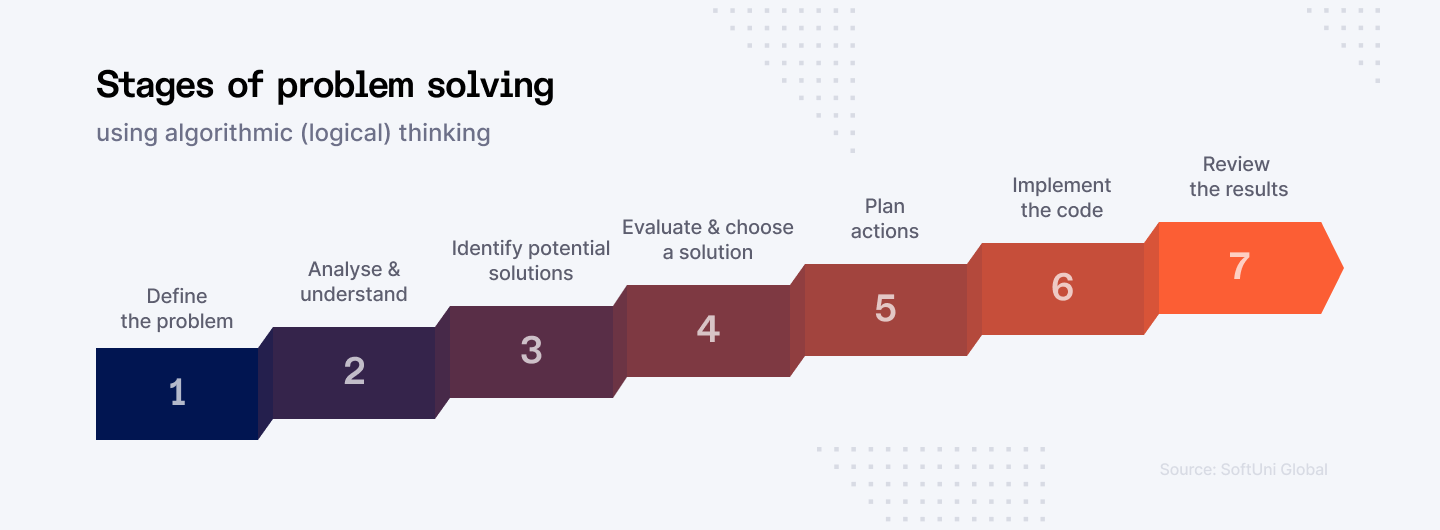
For software engineers, this process is deeply embedded in their daily workflow. Developers have different tasks to work on, including designing, coding, and troubleshooting. Much of their time is spent on spotting problems, correcting bugs, and building resilient infrastructures. That’s why being genuine at problem solving is crucial for any software engineering professional.
Problem solving in software development involves applying theories and research to identify the best solutions, often by testing different approaches to achieve the desired result. It could range from a simple task, like troubleshooting faulty code, to a complex challenge, such as designing the architecture for a new software application. It also encompasses using creativity and logical thinking to tackle issues, like learning and implementing a new algorithm to solve a problem.
Read more: 13 Python Algorithms Every Developer Should Know
Problem-Solving Techniques in Software Engineering
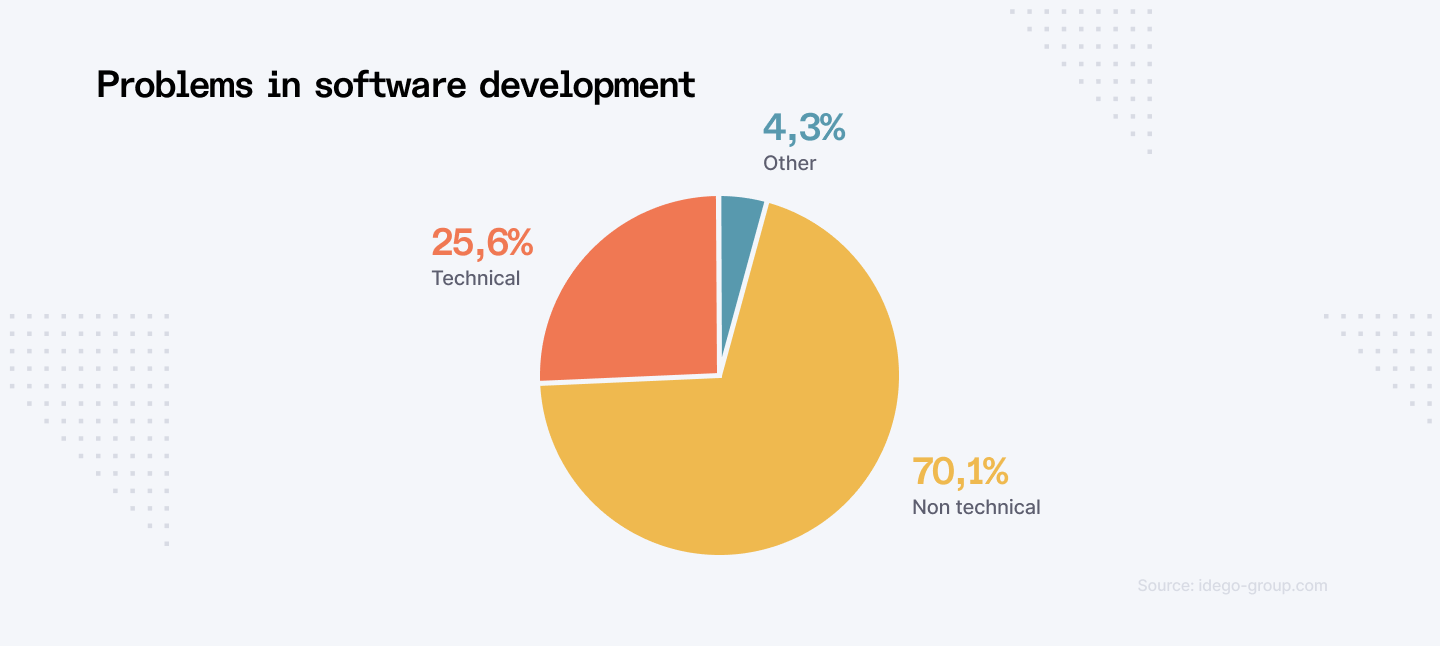
Great problem-solving skills are developed through various experiences, personality traits, and interests and don’t require formal education. So how do software engineers approach these complex challenges? Let’s dive into some of the essential problem-solving techniques, theories, and processes they rely on.
Decomposition
Breaking down large and complex tasks into smaller, manageable assignments is one of the first steps in the software engineering problem-solving process. It’s similar to a complicated puzzle. Instead of trying to solve it all at once, developers must separate into smaller pieces, group them by similarities, and work on each set individually. This method allows software developers to pinpoint where things might go wrong and handle complex challenges with ease.
Abstraction
In software engineering, abstraction is focusing on essential information and getting rid of irrelevant details. This method simplifies complex systems, making them more manageable. For example, a developer with good problem-solving skills might overlook the internal workings of a database and instead focus on the data it stores and ways it can be retrieved or modified.
Algorithmic Thinking
Software engineering is all about creating algorithms – a set of procedures designed to solve problems or accomplish specific goals. Algorithmic thinking involves developing and articulating these procedures clearly while approaching every issue through an algorithmic mindset.
Debugging
Debugging is the process of identifying and fixing errors in code. It involves several steps including reviewing the code, reproducing the error, analyzing its cause, and making the necessary corrections to fix the issue. It plays a key role in maintaining and improving the software quality.
Parallel Thinking
Parallel thinking is a structured method where team members focus on the same issue simultaneously, leading to more organized collaboration and optimal performance. For example, when dealing with a complex issue, the team might first concentrate on the data and facts, then switch to the solution's potential risk evaluation. This process involves diverse perspectives from all team members and ensures thorough analysis and more effective solutions.
Testing and Validation
Testing is an important aspect of problem solving. Developers use various tests to validate that their code functions correctly and identify potential issues. These tests include unit tests, which check individual components of the code, and integration tests, which ensure that different components work well together. Validation goes beyond functional testing. It ensures that the solution meets the intended objectives and purpose effectively.
Read more: Hiring a Developer: The Know-All Guide
Complementary Skills for a Good Problem Solver
Developing software is mostly about problem-solving at the very core. While going through this process developers face additional issues, such as meeting deadlines, identifying and fixing bugs, and collaborating across teams. Therefore, complementary skills should not be overlooked.
Before assessing the problem-solving skills of your prospective candidates, it’s important to determine which complementary skills match your requirements. Here are some of the key problem-solving skills to look for in candidates.
Analytical Skills
Developers must be able to orchestrate a strategy to solve a problem. They have to analyze a situation, understand the issues, and prioritize areas of improvement. This is possible through a thorough data and cause-and-effect analysis.
Research and Decision-Making
Great developers need strong research skills. This may involve gathering data reports, analyzing performance, or staying updated on industry trends. Meticulous research equips software engineers with the information needed to brainstorm effective solutions. After developing potential solutions, developers must possess solid decision-making skills to select the most appropriate strategy with minimal supervision.
Creativity and Critical Thinking
The difference between high-performing software developers and average ones is the ability to use creativity, logical and critical thinking to solve problems effectively. This is extremely helpful in day-to-day work as long as developers spend most of their time finding and fixing bugs rather than writing code.
Teamwork
Skilled software developers need interpersonal skills and collaboration skills. Being able to accept feedback, handle criticism, listen actively, and show respect are all essential traits necessary for effective teamwork and problem-solving.
Communication
Building resilient software requires constant communication with clients, teammates, and other departments. Thus, the last problem-solving skill to look for in potential candidates is ability to communicate well. Consider how well they interact with clients and stakeholders. Do they clearly explain how they resolved issues? Are they proficient in both verbal and written communication? Additionally, with the rise of global enterprises and remote work, strong intercultural communication skills are increasingly important.
Hire developers who can tackle challenges head-on. Connect with top problem-solvers on Index.dev today!
5 Ways to Assess Developer Problem-Solving Skills
We’ve explored key methods software developers use to approach complex work-related problems and examined the essential complementary skills for a good problem-solver. Now, let’s dive into how hiring teams can identify and assess problem-solving skills during the hiring process.
1. Review of Previous Work and Projects
Assessing developer problem-solving skills starts with a thorough review of their previous work and projects. Checking out their portfolios, including GitHub repositories, Stack Overflow participation, or open-source projects contributions is a great way to delve deeper into their coding style, the complexity of the projects they can handle, and their problem-solving mindset.
This may include GitHub links to the source code of smaller projects, apps, or libraries written by the developer and how they approach code organization, documentation, and consistency in coding practices. Their StackOverflow profile can help you see the answers they offered to other community members, which can give you an in-depth look into their technical knowledge and some of their soft skills. The developer’s involvement in open-source projects, for example, can offer valuable insights into how they engage with community-driven development and their ability to tackle diverse coding challenges.
Every developer can claim they’re a skilled engineering professional, but portfolios give you direct grounds to evaluate both their coding expertise and problem-solving skills. Plus, a thorough portfolio review can help you spot the talent that hasn’t been discovered yet, as some candidates may lack formal experience and are often overlooked by employers.
Read more: Evaluating Remote Developer Portfolios: What to Look For
2. Behavioural Interview Questions and Hypothetical Scenarios
Interviews help evaluate personality and determine problem-solving skills. During the interview process ask behavioural questions and pose real-world problems and hypothetical scenarios to successfully gauge how candidates would tackle and solve these challenges.
Behavioural interview questions can help you reveal how the candidate previously handled work-related scenarios involving teamwork and conflict and provide insight into their problem-solving skills.
Questions like these are key in revealing a potential team member’s ability to problem solve effectively:
- Describe a time when you had to overcome a challenge with team dynamics.
- How did you manage a high-pressure task in your previous role?
- Tell us about a time you had to troubleshoot a software error independently. What was your process?
- How do you communicate issues with managers, clients, or stakeholders to prevent them from escalating?
- What analysis tools have you used to identify problems in your company’s servers, software, or infrastructure?
- What solution would you propose if the company experienced a data or security breach?
- How do you use your previous experiences to anticipate or resolve technical problems?
- How would you upgrade your company’s storage structure to securely and efficiently handle more data?
Scenario-based exercises, such as role-playing, is particularly useful for making informed decisions, as it reveals how the candidate applies their problem-solving skills in practical situations and might contribute in a real-world team environment. These scenarios can involve troubleshooting an issue in a live application, optimizing performance, or addressing scalability concerns.
Additionally, hiring managers may conduct interviews involving experienced software engineers or tech leads from their software development team. This is a great way to double check the developer’s expertise, particularly in areas like data structures, algorithms, and system design. By discussing real-life work scenarios or potential problems the developer might face on the job, these interviews ensure that the candidate’s skills match the role’s technical and problem-solving requirements and fit into the team’s collaborative environment.
3. Coding Challenges, Live Coding Sessions, or Pair Programming
Coding challenges are another practical way to evaluate a developer’s ability to find the best possible solution for a given problem, ensuring their skills are applicable in real-world situations. Tools like HackerRank, Codility or LeetCode can help you create custom coding assignments specifically tailored to your job’s tech stack. Coding challenges and assignments that evaluate candidate’s problem-solving include:
- Algorithm optimization focusing on refining and optimizing existing algorithms for better performance.
- Feature development involving tasks like adding new features to an existing codebase.
- Debugging exercises aimed at identifying and fixing bugs in given code, testing a developer’s attention to detail.
- System design where developers have to demonstrate their understanding of complex software systems by designing an architecture.
Unlike coding assignments, where developers can spend more time perfecting their code, live coding sessions offer a window into the candidate’s thinking process in real time. These sessions also provide valuable insight into how they tackle problems, make decisions, and adapt under pressure. But if you decide to use this approach, be mindful not to turn the session into a dreaded whiteboard interview. Developers usually rely on tools when coding and you should take that into account when designing a live coding session. Keep the focus on practical problem-solving rather on abstract theory. Allow them to use the tools and resources they would typically work with. This approach will offer you insights into how they think and solve problems on the spot,
Another approach to assess a candidate's problem solving is pair programming. Developers usually work in teams and there’s no better way to determine if a candidate is a team player than pairing them with another software engineer at one workstation. The ‘driver’ will write code while the other – the ‘observer’ will promptly review each line of the written code. The two programmers will switch roles frequently, while you will be able to evaluate how they think, write, read, test, and debug code in real time and see what questions they ask about your software. But be aware, you shouldn’t pair two candidates together. Instead, pair a candidate with a programmer from your company.
4. Thorough Soft Skills and Cultural Fit Assessments
Typically conducted at the end of the interviewing process, the soft skills assessment is vital for the overall evaluation of a developer. This will help you determine whether the candidate you screen is a team player and will fit your team or company culture. Asking them directly if they are a team player or a problem solver, won’t get you far. Instead, it will be better to opt for problem-solving questions to get a bigger picture of their soft skills or use hiring and screening software to assess the candidates' skills. Below are a few questions that can help you evaluate the most essential developer’s soft skills:
- Effective Communication: Can you describe a situation where the product you delivered did not meet the client’s expectations? What caused the misunderstanding?
- Teamwork: How do you handle a situation where a colleague documents code in a way you believe could be improved?
- Willingness to Learn: How do you stay updated with technological advancements outside of work? Do you listen to tech podcasts or work on side projects?
- Deadline Estimating: Have you ever underestimated the time required for a project? How did you address and resolve the issue?
Another approach is to assess a developer’s alignment with your company culture, vision, and work environment. Hiring tech professionals who are well-suited to your company culture can lead to an increased workplace harmony, team dynamics, collaboration and problem-solving. The following interview questions may be useful for this assessment:
- Describe a work culture in which you can thrive.
- How do you handle conflicts or differences within a team?
- What motivates you at work, and how does that connect with our company values?
These straightforward questions help evaluate whether a developer is a good fit both technically and culturally for your company.
Read more: 5 Reasons Why Developers Fail Job Vetting
5. Continuous Evaluation
Ongoing evaluation of a developer’s problem-solving, critical thinking, and soft skills can help you ensure their constant growth and development within your company. This approach can help you identify areas for improvement and provide targeted support to help your engineering talent reach their full potential. Incorporate the following tactics into your ongoing assessment process:
- On-the-job Assessment: Evaluate developers’ performance during real projects to gain insights into their problem-solving and creative thinking in practical settings. This may include tracking their progress, reviewing their code, and gathering feedback for other teammates.
- Performance Reviews: Hold periodic performance reviews to discuss a developer’s strengths and areas for improvement and set clear objectives for their growth and development within the company.
- Upskilling Opportunities: Offer skill development opportunities for your developers to expand their knowledge through training, workshops, webinars, and mentorship programs. Support them to learn new technologies, programming languages, or methodologies to stay up-to-date with industry best practices.
Read more: How to Lead a Team of Senior Developers Effectively
Need high-performing developers with strong problem-solving skills? Explore Index.dev’s talent network today!
Examples of Workplace Problems and Problem-Solving Solutions
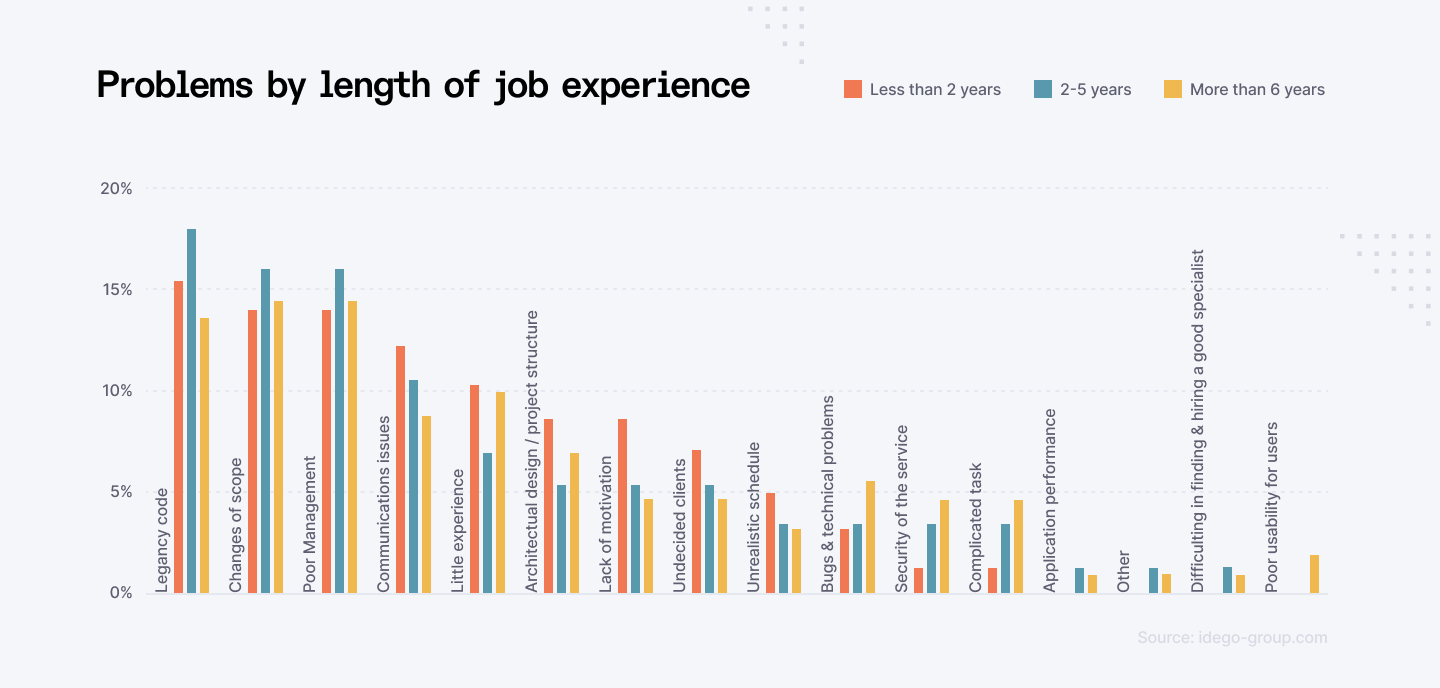
Let’s now delve into specific examples of workplace problems that could arise in software development and how developers’ problem-solving skills can help address them. Here are five scenarios where developers’ problem-solving is key:
1. Bad Team Dynamics
Poor team dynamics may result in frequent workplace conflicts. For instance, members of cross-functional teams might disagree on how to approach a particular problem or even on the priority it should be given.
- How developers’ problem-solving abilities can help: Developers need to have a solid understanding of the team’s objectives and work towards achieving them, even if they disagree on the methods used to solve those issues. The ability to value others’ perspectives, analyze information critically, and offer multiple solutions is essential for finding common ground.
2. Poor Communication
Poor communication in the workplace can lead to misunderstandings, confusion, and lack of clear direction, all of which can hurt team performance.
- How developers’ problem-solving skills can help: Listening skills are key to solving communication problems and good listeners are often excellent problem-solvers as they always deal with acknowledging other team members’ points of view. Opt for 1:1s as they can facilitate open and effective communication and encourage team members to jump on a call when facing difficulties.
3. Inefficient Development Processes
Outdated processes can lead to reduced productivity and developers' frustration. Having multiple layers of approval for routine decisions is a typical example of an inefficient process. This can significantly slow down development progress and can result in missed opportunities.
- How problem-solving can help: Creative and analytical thinking are essential in spotting workflow inefficiencies and building better procedures. Developers and team leads can use flowcharts to improve decision-making and reduce the need for supervisor's approval at each step.
Read more: How to Hire Skilled Developers for Startups
Conclusion
Software development is fundamentally about solving problems that matter to the business, to users, and to the broader community. By implementing a comprehensive developer’s problem-solving assessment process that includes behavioural interviews, coding challenges, real-world scenarios, open-ended questions, you can effectively hire outstanding tech professionals who have the required technical skills, cognitive abilities and confidence to thrive in your organization.
Beside problem-solving skills, it’s essential to comprehensively evaluate complementary soft skills like communication, creative thinking, teamwork, and decision-making. This will not only result in building a high-performing team but also contribute to the long-term success of your project.
Read more: 33 Best Places for Hiring Software Engineers
Find Qualified Developers on Index.dev
Finding the right developer with expertise in specific programming languages and innovative problem-solving abilities is fast and easy on Index.dev. As an end-to-end remote work platform, Index.dev is your place to connect with vetted tech talent offering hundreds of skills, including software professionals who meet your specific project requirements.
Sign up to begin your search for high-performing developers on Index.dev and take the first step forward building a cohesive team that can drive your project to completion. Let us know your hiring needs!
Ready to put your problem-solving skills to work? Join Index.dev community of high-performing developers and work remotely on high-paying projects in the UK and US!


