Leadership isn't handed to you at birth. It's built, brick by brick, through every hard choice you make.
We love the myth of the "natural-born leader." We point at charismatic speakers, bold decision-makers, or executives in corner offices and assume they were simply gifted with magic dust the rest of us missed out on. I've never bought that story, and honestly, the research backs me up.
Research from the University of Illinois found that leadership development depends on three things: readiness, willingness, and ability. In other words, having the skills is only part of the equation. You have to be ready to grow, willing to put in the reps, and willing to build the skills. Notice what is missing from that formula? Talent. DNA. Charisma.
Even the leaders who seem to have been born for the spotlight, the ones with natural charisma and that magnetic, can't look away presence, didn't wake up that way.
Look at Satya Nadella when he took over Microsoft. He didn't transform the company's culture overnight. He actively unlearned rigid corporate habits, shifted the entire organization from a "know-it-all" to a "learn-it-all" mindset, and practiced empathy as a core business strategy. Or look at how differently Barack Obama spoke in his first campaign compared to his last. That ease you see? It's earned. Talent might open the door, but discipline is what walks through it and stays.
So no, leadership isn't a trait you either have or don't, it's a muscle. And muscles only grow when you use them. The best leaders I've studied, worked with, or read about all share one thing in common: they never stopped sharpening themselves.
The Marks of a True Leader
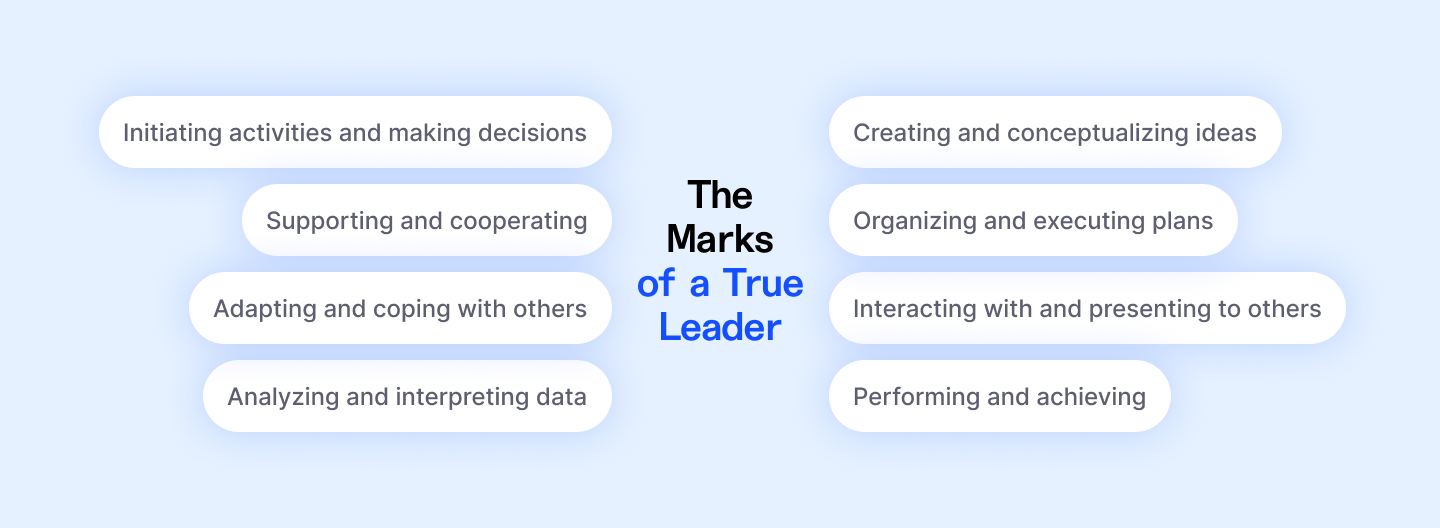
Forget the idea that leadership is one skill. It's a bundle of habits and abilities that work together, and most people are naturally strong in a couple of them while weak in the rest. That's normal. That's human. The goal is to know where you stand.
Initiating activities and making decisions. This is your ability to move first. Not recklessly, but without waiting for permission or perfect certainty. Leaders who struggle here tend to overanalyze until the moment passes.
Supporting and cooperating. Can you put someone else's win ahead of your own ego for a minute? This is teamwork, sure, but it's really about trust. People follow leaders who make them feel backed, not managed.
Interacting with and presenting to others. It's not about being the loudest voice in the room. It's about being the clearest one.
Analyzing and interpreting data. You use facts to ground your instincts, making sure your bold moves are backed by real evidence.
Creating and conceptualizing ideas. This is the vision. The ability to imagine something that doesn't exist yet and describe it well enough that other people can see it too.
Organizing and executing plans. Ideas are cheap without execution. This skill is the difference between a leader who dreams and a leader who delivers.
Adapting and coping with others. Life throws curveballs. People change, plans fall apart, and priorities shift overnight. This measures how well you bend without breaking.
Performing and achieving. At the end of the day, results matter. Not as the only thing, but as proof that everything else you're doing is working.
7 Strategies to Build Leadership at Any Level
If you’re looking to strengthen your leadership abilities, consider these seven strategies to help become the leader you know you can be.
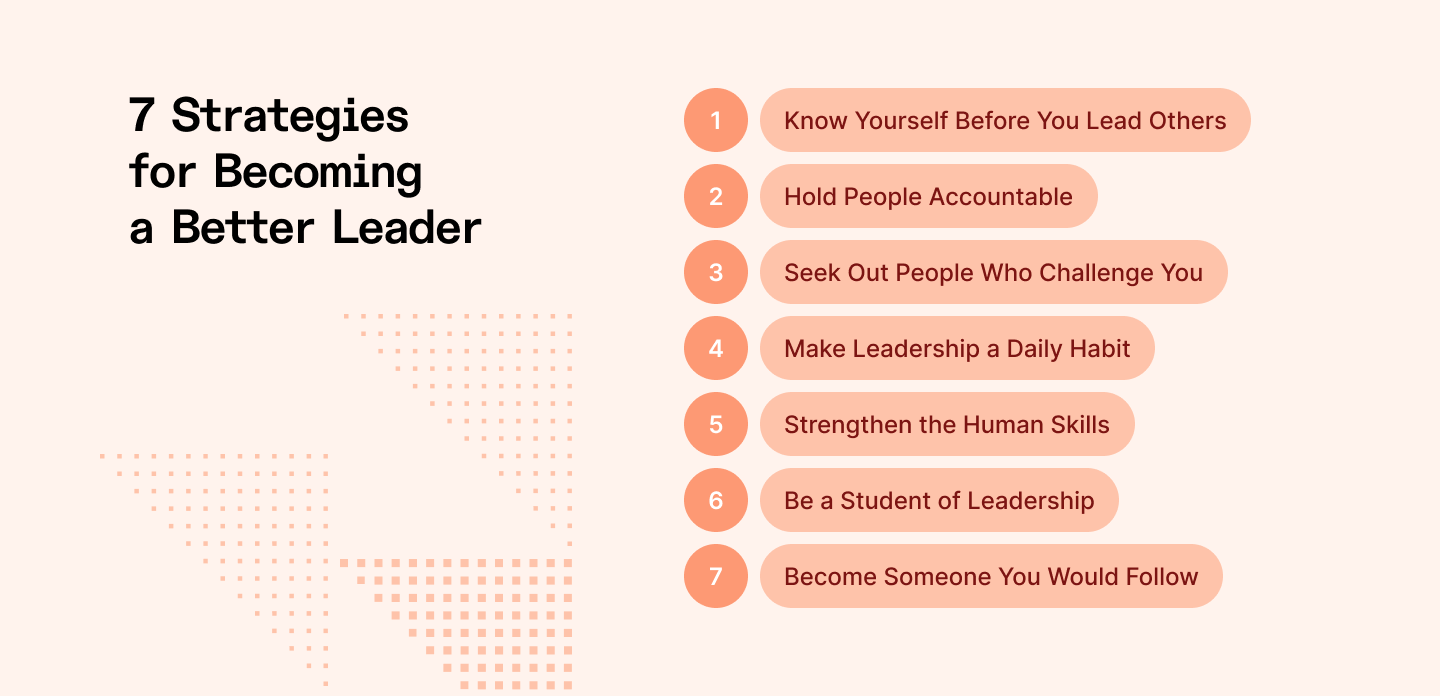
1. Know Yourself Before You Lead Others
Most people think leadership starts with managing others. They are wrong. It starts with managing yourself.
Self-awareness isn't one thing. It's two. There's the version of you that lives inside your head, your intentions, your motives, the story you tell yourself about who you are. And then there's the version of you that other people experience. Those two things don't always match, and that gap is where real leadership begins. You might believe you're being direct when others experience you as cold. You might think you're being supportive when it actually reads as micromanaging. You don't get to decide how you land. Only the people on the receiving end do.
So start by asking for feedback you didn't ask for before. A 360-degree review is a good structured way to do this, pulling input from your team, your peers, even people above you. But honestly, you don't need a formal process to begin. Ask one trusted colleague a simple question after your next meeting. What did you notice about how I showed up today? Then stay quiet and listen. Don't explain. Don't defend. Just take it in.
Journaling helps too, more than people give it credit for. Five minutes at the end of the day, writing down what triggered you, what you avoided, where you overreacted. Patterns show up fast when you write them down instead of just replaying them in your head.
2. Hold People Accountable
If you think accountability is about micro-managing tasks or calling people out when they fail, you have completely missed the point. True accountability is about giving your team something worth caring about, then trusting them to step up and deliver.
Your highest performers do not want soft goals or vague expectations. They crave big challenges. They want to know that their daily grind connects to something bigger than a quarterly revenue target.
But here's the catch. Big goals without clarity are just noise. Accountability starts with you painting the big picture first, where the team is headed and why it matters. Then breaking that vision down into specific, unmistakable goals. No vague language like "improve performance" or "do better." People can't hit a target they can't see.
Clarity alone isn't enough either. Give people the context behind the goal and the resources to reach it. Accountability without support is just pressure with extra steps.
Here's what I've noticed in the strongest teams I've seen. Accountability eventually stops being something that flows top down. It becomes something people hold each other to. Nobody wants to be the one who lets the group down. That shift, from you enforcing standards to the team owning them, is the real sign a culture of accountability has taken hold.
3. Seek Out People Who Challenge You
Hard problems don't get solved by people who all see the world the same way. They get solved when you put different minds in the room and let them clash a little.
Seek out people who think differently than you, and differently from each other too. The engineer and the storyteller. The optimist and the skeptic. The person who asks "why" and the person who asks "why not." Diversity of thought is how you avoid the blind spots you don't even know you have. But finding different thinkers is only half the job. The harder part is making sure they speak up. And that's on you. Leaders set the tone, whether they mean to or not. If people sense their ideas will get shut down or mocked, they'll stop offering them. Slowly, quietly, and you probably won't even notice it happening until the room goes silent in meetings.
Great decisions aren't born out of polite consensus. They are forged in healthy, rigorous debate where the best idea wins, no matter who brought it to the table.
4. Make Leadership a Daily Habit
Big leadership moments, the retreats, the all hands speeches, the quarterly resets, feel important. And they are. But they're not what builds trust. Think of it like dental care. Going to the dentist twice a year matters, sure. But it's brushing your teeth every single day that keeps things from falling apart in between.
Leadership works the same way. It's not the big gesture people remember most. It's whether you showed up consistently, day after day, in the small moments nobody was watching closely. Did you follow through on what you said yesterday? Did you check in on someone struggling, without being asked? Those tiny, repeated actions build trust in a way one great speech never will.
This daily mindset matters even more when it comes to decisions. Don't treat your judgment as something to trust blindly just because you're the one in charge. Question it. Test it. Push back on your own thinking before someone else has to. Consult early and consult often. I mean that literally.
Daily habits build trust. Daily choices build credibility. Daily actions build your reputation as a leader people want to follow.
5. Strengthen the Human Skills
Soft skills aren't soft. They're the hardest skills to master. Leadership is a people business before it's anything else. You can master every technical part of your role and still fail as a leader if you can't connect with the humans you're supposed to be guiding.
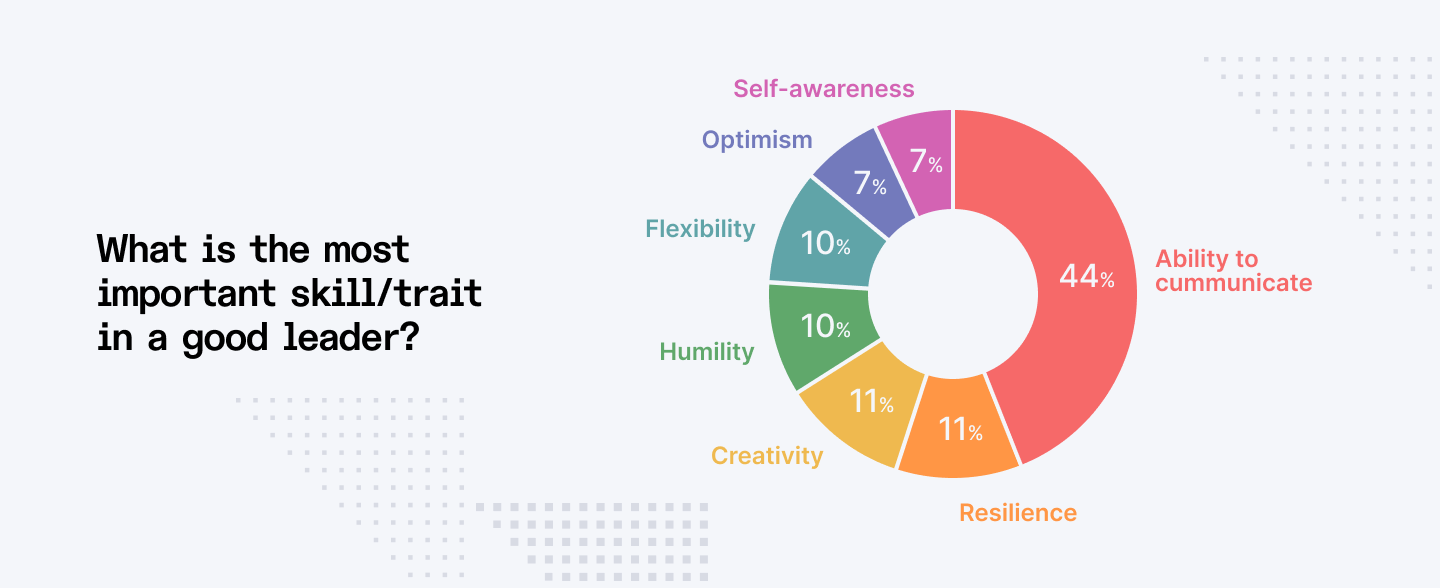
Source: Hubspot
Empathy, adaptability, communication, the ability to stay steady in a crisis, the ability to inspire people to want to follow you. They're not the soft, optional add ons people sometimes treat them as. They're often the exact thing separating a leader who leaves a real mark from one who just occupies a title.
I get the skepticism, though. Soft skills can feel fuzzy compared to hitting a revenue target or shipping a product. Hard to measure, easy to dismiss. But think about the last leader who truly impacted you. Chances are it wasn't their technical skill you remember most. It was how they made you feel heard, how they handled a crisis without falling apart, and how they somehow knew what to say when things got hard.
6. Be a Student of Leadership
Here's a claim I'll stand behind fully. Learning beats natural talent every time when it comes to leadership. Every time. I've seen naturally charismatic leaders plateau because they stopped growing. I've seen awkward, introverted people become extraordinary leaders because they studied the craft and put in the reps.
Read the books. Watch the talks. But don't stop there, because reading about leadership and absorbing it are two different things. Watch the people around you closely. Notice what makes someone want to follow a person versus quietly dread working with them. That difference is rarely about talent. It's usually about small, repeated choices in how someone treats others.
You have to stay a student, in leadership and honestly in life. The moment you decide you've learned enough is usually the moment you start falling behind. And here's something specific I'd suggest. Find one or two leaders, past or present, whose behavior genuinely moves people, and study them the way an athlete studies game film. Not to copy them exactly. To understand what's working underneath the surface.
If you're the one responsible for growing leaders inside your organization, don't leave this to chance. Build a leadership development playlist, books, talks, case studies, whatever fits your team, and make continuous learning a real expectation. Especially for anyone stepping into leadership for the first time.
7. Become Someone You Would Follow
Lead with integrity, even when it costs you something. Especially when it costs you something, actually, because integrity that only shows up when it's convenient isn't integrity. It's just good timing. Lead with empathy, not as a performance, but because you genuinely care what the people around you are carrying. Lead with dedication people can see and feel, not just hear about in a mission statement.
The best leaders I've studied share one quiet trait. They don't demand trust or loyalty. They earn it, through what they consistently do, especially when nobody's watching closely and nothing forces their hand.
Think about someone who's ever truly inspired you at work. I'd bet it wasn't their title that did it. It was how they made you feel capable. How they stayed calm in a storm. How they gave you credit instead of quietly taking it for themselves.
That's the standard. Not perfection, nobody's asking for that. Just someone worth following. Because the leader you'd follow isn't someone you become someday. It's someone you choose to be right now.
Leadership Starts Before the Title
Leadership was never about some rare gift a handful of people were born with while the rest of us watched from the back row. It's a skill. Built through self-awareness, sharpened through accountability, tested by the people you choose to surround yourself with, and reinforced daily.
That is why I do not believe much in the idea of “natural born leaders.” Some people may have qualities that make leadership come more easily to them. But effective leadership is built through practice. You learn to understand yourself. You learn to listen, decide, communicate, challenge ideas, handle pressure, and take responsibility. Then you keep learning because the job never really stops.
The best leaders also know that there is no single formula. Sometimes people need support. Sometimes they need a clear decision. Sometimes the smartest thing you can do is step back and let someone else lead.
➡︎ Build stronger engineering teams with Index.dev’s verified global talent network, software delivery capabilities, and AI and STEM expertise. Get the engineering capacity to move important work forward.