Companies face soaring budgets (global software spending is set to exceed €700 billion next year), so slashing expenses without sacrificing quality is critical.
The good news is that smart processes and tools can slash software and product development budgets using five core strategies:
.png)
- Optimize Procurement: Use AI-driven sourcing, “should-cost” analyses, and longer-term contracts to secure bulk and fixed-price discounts without sacrificing service levels
- Design for Cost: Employ modular architectures and design-to-cost engineering to limit rework, reuse components, and hit target budgets from day one
- Leverage Low-Code/No-Code: Empower citizen developers and automate routine builds with platforms like Mendix or Appian to cut TCO and free expert engineers for core innovation
- Streamline Agile Collaboration: Break silos with cross-functional teams, CI/CD pipelines, and FinOps frameworks to shift testing left, optimize cloud spend, and accelerate time-to-market
- Rationalize Portfolio: Apply rigorous criteria (ROI, strategic fit) to retire underperforming products, unlocking 15-20% of capacity for prioritized projects
Put these strategies into practice! Index.dev matches you with top 5% talent in 48 hours, plus a 30-day risk-free trial.
For example, experts note that front‑loading design work and cost targets “reduces development costs and minimizes surprises”.
Deloitte finds lean software teams save 15-25% per project, while Bain reports that digital R&D tools can cut rework by 50% and trim engineering hours by 20%, yielding up to 30% cost savings.
The five strategies explained below work together to hold down expenses while delivering top‑notch products.

1. Optimize Procurement: Smarter Vendor Deals and Strategic Sourcing
Rather than blanket budget slashes, companies can negotiate smarter with vendors. IBM notes that reviewing contracts to eliminate outdated terms and demanding bulk discounts or extended payment terms can yield immediate savings.
Likewise, a strategic sourcing program (competitive bidding, supplier consolidation or alternative sourcing) can lock in lower prices and higher quality through longer-term agreements.
For example, aligning purchase orders can win volume discounts, while “should-cost” analyses (informed by a design-to-cost mindset) give buyers leverage in talks.
In practice, this means pushing for fixed-price or TCO-based deals, bundling cloud or licensing purchases, and rebalancing high-spend contracts to match current needs.
As IBM cautions, knee-jerk cuts “switching to cheaper suppliers” or cutting essential services can undermine quality. Instead, an ongoing procurement strategy that focuses on cost avoidance (like preventing inflationary spend) helps preserve service levels.
In this process, ai ddq helps streamline vendor due diligence and questionnaire analysis, enabling faster evaluations and more informed negotiation decisions. When the same vendor list is reviewed every quarter across multiple business units, procurement management software gives teams a single source of truth on contract terms, renewal dates, and committed spend.
In short, renegotiate and re-source before resorting to layoffs or tool embargoes.
2. Design for Cost: Modular Architecture and “Should-Cost” Engineering
Product and software designs built with cost in mind can dramatically cut investment without eroding function. Two proven methods are modular architectures and design-to-cost engineering. By decomposing a system into reusable modules (microservices, components or libraries), teams can work in parallel and reuse shared pieces rather than rewrite from scratch.
One retailer’s move to a modular, domain-driven design slashed its feature cycle time by 60% and achieved an 18-fold improvement in development cost efficiency. This included an 80% cut in “start-up” costs for new teams, which meant that new features could launch faster with less effort.
In practice, modular design limits the “blast radius” of changes and reduces rework, so fixes and new features cost far less.
Coupled with this, a design-to-cost mindset ensures projects stay on budget from the start. Borrowed from manufacturing, design-to-cost means breaking down every feature into its cost drivers (labor, tools, complexity) and aiming at a target “should-cost.” As AlixPartners notes, this approach (used in auto and industrial firms) can yield double-digit percentage savings.
Software buyers can demand detailed quotes and use that analysis to negotiate scope or take on simpler solutions. For example, an automotive company might redesign a part using cheaper materials without compromising safety; similarly, a SaaS vendor might choose a simpler UI framework to meet cost goals. By baking cost targets into architecture reviews and feature planning, teams avoid over-engineering.
This way they can scope out or re-engineer expensive features while still hitting quality standards.
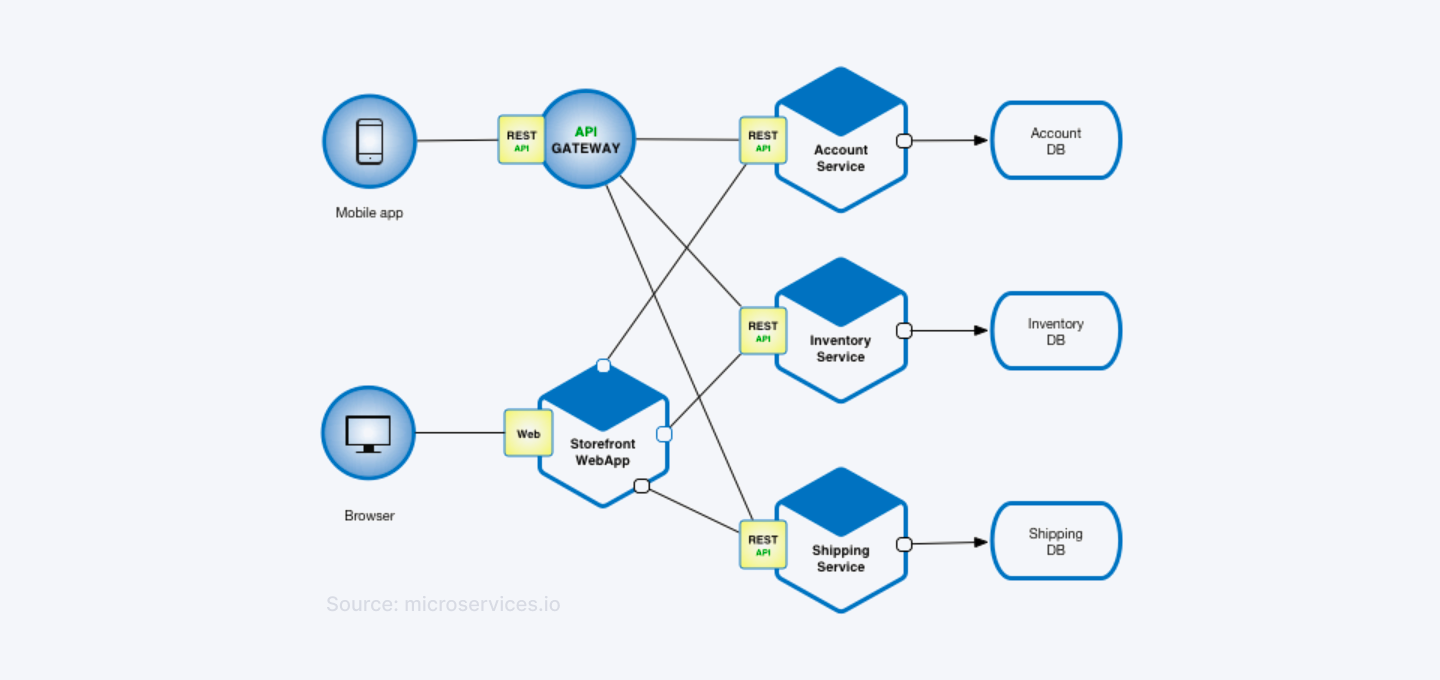
A modular (microservices) architecture lets teams develop features (e.g. user accounts, inventory, shipping) independently behind a shared API gateway. This isolation speeds delivery and reuse, cutting dev costs and cycle time.
3. Adopt Low-Code/No-Code and Automation to Speed Delivery
Modern development platforms and automation can compress costs without sacrificing capability. Low-code/no-code platforms (e.g. OutSystems, Mendix, Power Apps) allow business users and “citizen developers” to build apps with drag-and-drop interfaces and prebuilt components. These tools simplify creation and maintenance, which lowers total cost of ownership.
They also empower project owners outside IT: once set up, managers or analysts can tweak workflows or dashboards themselves, cutting queues for scarce developer time.
For example, Bendigo Bank (a major Australian bank) used the Appian low-code platform to build 25 customer-facing applications in about 18 months – “in considerably less time and much cheaper than… hand-coding” equivalent apps. In effect, routine or departmental apps that might have taken weeks of coding can be delivered in hours, freeing developers to focus on core product innovation.
Alongside low-code, automation and DevOps practices drive efficiency. Continuous integration/continuous delivery (CI/CD) pipelines, automated testing, and robust version control reduce manual toil and defect rates. These practices mean each feature is built, tested and deployed by scripts, catching bugs earlier and avoiding costly late fixes.
Adopting such DevOps toolchains (often open-source) cuts release cycles and rework. In cloud environments, applying a FinOps (financial ops) discipline also yields big savings: McKinsey reports companies using FinOps can cut their cloud spend by 20-30% while maintaining performance. In sum, modern tools let teams do “more with less” - crank out features faster and with fewer hand-offs - so every dev dollar goes farther.
Also Read: Top 21 DevOps Tools for 2025
4. Streamline Process with Agile Collaboration
Process and culture changes can unlock hidden savings. Breaking silos between product, dev, QA and operations (an agile/DevOps culture) means faster feedback and fewer wasted hours. Cross-functional squads work on prioritized backlogs, so only high-value features get built, minimizing scrap.
Investing in collaboration tools like Jira/Confluence for workflow, Slack/Teams for communication, repository traceability, etc. avoids wasted time “reinventing the wheel.” For instance, teams that use shared dashboards and chat can solve blockers in minutes rather than emails or meetings.
This lean, integrated approach also improves quality: automated tests and continuous feedback catch defects early, reducing expensive late-stage bug fixes. Moreover, advanced planning tools and pipeline dashboards give leaders clear visibility into spend vs progress.
Such transparency is a form of “cost avoidance”: stakeholders see overruns coming and can rebalance scope before budgets blow out. As IBM notes, harnessing data for spend analysis and controls keeps costs stable without slashing essentials.
This data-first approach to financial oversight echoes what firms like Abacus Global practice in asset management, where proprietary actuarial data and technology drive smarter capital allocation across portfolios.
Together, these practices mean development flows smoothly with less rework and idle time which is another form of cost reduction.
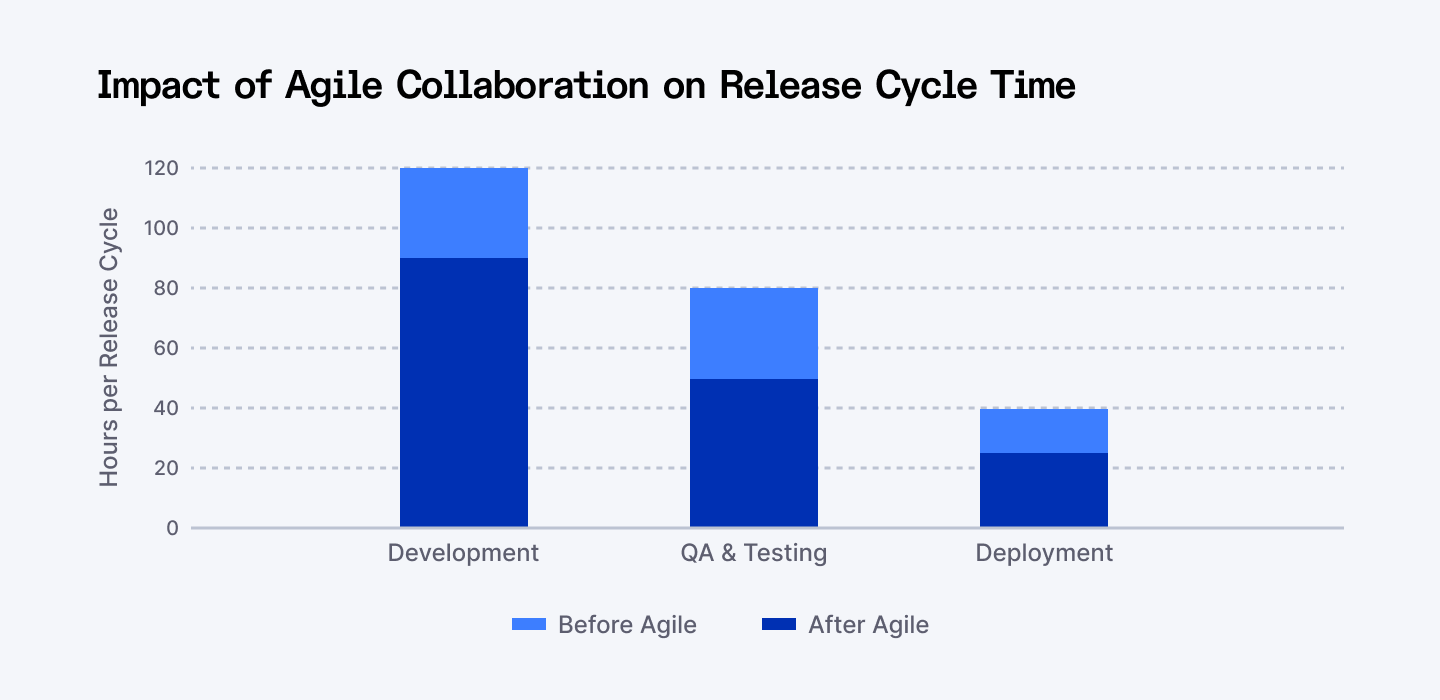
At the enterprise level, coordinated DevOps/Lean adoption can be transformational. For example, one large insurer found that strict modularization and DevOps automation delivered far faster launches and far lower support costs.
In addition, properly managed Agile budgets and a culture of continuous improvement help catch waste: teams routinely identify “maverick spending” (unneeded licenses or inefficient cloud usage) and cut it.
By embedding finance and operations in the loop (for instance via routine spend reviews), organizations steer work to maximize business value, not just activity.
Read More: 18 Indispensable Productivity Tools for Remote Development Teams
5. Leadership Focus: Rationalize Products and Features
Finally, leadership-driven portfolio management pays dividends. Enterprises should regularly rationalize their product and project portfolio, shedding low-performing or redundant items. This is often a hard but high-value step: by trimming offerings to focus on core strengths, companies free up substantial resources.
AlixPartners emphasizes that portfolio rationalization “reduces complexity and improves efficiency, enabling companies to allocate resources effectively”.
In practice, this means killing off stale legacy projects, decommissioning rarely-used features, or merging overlapping solutions. Those saved developer-days can be reallocated to higher-impact initiatives.
For example, a tech firm might retire an old mobile app and merge its key functions into a single new app; a manufacturing company might stop producing a low-margin SKU. The result is leaner maintenance overhead and clearer priorities for R&D. This does not harm quality – rather, it concentrates it on what customers actually use.
Leaders should set clear criteria (ROI thresholds, strategic fit, customer demand) and empower product teams to sunset extras.
Done right, this “less is more” approach boosts product quality and innovation while cutting costs on the back end (again, AlixPartners notes that focusing on fewer, core products keeps companies agile and profitable).
Conclusion
In summary, cutting development costs doesn’t require gutting quality, but rather it demands smart strategy. By combining these strategies, organizations can truly do more with less – cutting costs without cutting corners.
We’ve highlighted five areas where you can save:
- Renegotiate and source better
- Design modular and cost-aware systems
- Leverage low-code and automation
- Streamline agile processes
- Focus the portfolio on value
These moves create lasting savings and often improve outcomes. For instance, a modular shift not only lowers dev hours but also speeds time-to-market (as seen with the 18× cost improvement case).
A strong procurement team with “should-cost” data secures high-quality tools at lower prices. And a pared-down product lineup means every engineer’s day is spent on what really matters. By applying these insights, companies can reduce development costs and increase quality, thereby freeing up funds for innovation or competitive pricing.
As CIOs, product leaders, and HR executives understand, it is not a matter of cutting corners, but of cutting unnecessary costs and aligning resources towards strategic objectives.
Adopting these best practices can make your development machine leaner, more efficient, and ultimately more valuable.
For Developers:
Build better, ship faster. Join Index.dev to work on high-impact, low-friction projects with global teams.
For Companies:
Slash development costs, not standards. Book a free consultation and discover how Index.dev delivers 30% savings with world-class talent.