How common is remote work in 2025? As of late 2025, 22% of the US workforce (32.6 million people) work remotely, with 52% following hybrid schedules. Remote job postings increased 3% in Q4 2025, and 85% of workers say remote work is the #1 factor when applying for jobs.
This comprehensive collection of 50+ remote work statistics covers the latest data on workforce trends, remote hiring, productivity, employee preferences, and business impact. Whether you're an HR leader evaluating work policies or a job seeker navigating the market, these stats provide a clear picture of where remote work stands today.
Hire elite remote developers in 48 hours with Index.dev! Access the top 5%, fully vetted, and start risk-free with a 30-day trial.
Key Remote Work Statistics 2026: Quick Summary
Metric |
2026 Statistic |
|---|---|
US Remote Workers |
32.6 million (22% of workforce) |
Global Remote Adoption |
48% of global workforce |
Hybrid Workers |
52% of remote-capable employees |
Fully Remote Workers |
26% of remote-capable employees |
Employee Preference |
83% prefer hybrid or remote |
Would Quit Over RTO |
57% would consider quitting |
Would Take Pay Cut |
69% would accept lower pay for remote |
Productivity Increase |
13% higher for remote workers |
Revenue Growth |
4x faster for flexible companies |
Time-to-Hire Impact |
23% longer for RTO-mandating companies |
Remote Work Trends 2026
The remote work landscape continues to evolve. Here are the key trends shaping workplace flexibility in 2025:
Trend 1: Hybrid Becomes the Dominant Model
- 52% of US employees with remote-capable jobs work hybrid
- 44% of global workers follow hybrid schedules
- 65% of companies offer some form of work flexibility (up 14% from 2023)
Trend 2: Return-to-Office Pushback Continues
- 73% of Amazon employees considered quitting over strict RTO mandates
- 57% of all workers would consider leaving if remote work is removed
- Companies enforcing RTO see 23% longer time-to-fill vacancies
Trend 3: Remote Job Market Stabilizing
- Remote job postings increased 3% in Q4 2025
- Engineering, product, and business development led remote hiring growth
- 97 of Fortune 100 "Best Companies to Work For" offer remote/hybrid options
Trend 4: The Flexibility Premium
- 69% of workers would accept a pay cut for remote work (up 11% from 2024)
- 85% say remote work is the #1 factor when applying to jobs
- Remote workers earn 4-7% more than office counterparts on average
Trend 5: AI and Remote Work Converge
- AI/ML specialists, big data engineers, and fintech roles drive remote hiring
- Remote collaboration tools increasingly integrate AI features
- Asynchronous work models gaining adoption with AI-powered automation
Looking to build a remote team? Explore our guide to hiring remote software developers.
Remote Hiring Statistics 2026
For HR leaders and recruiters, these remote hiring statistics reveal how flexibility impacts talent acquisition:
Talent Pool & Reach:
- Remote hiring delivers 340% larger candidate pools
- 82% of companies now offer remote work options
- 72% have adopted permanent remote work policies
Hiring Speed & Cost:
- Remote hiring is 16% faster (32 days vs. 38 days average)
- 13% higher offer acceptance rates for remote positions
- Companies with RTO mandates see 17% drop in hiring rates
Candidate Preferences:
- 36% of US employees prefer fully remote work
- 83% prefer hybrid arrangements
- 50% would take a pay cut to stay remote
Industry Variations:
- Tech leads remote adoption (67% work primarily from home)
- Knowledge workers with advanced degrees: 41.2% remote rate
- Lowest remote rates: Farming, construction, real estate (<5%)
Cost of Inflexibility:
- Average turnover cost: $36,723 per employee
- 21% of managers cite "lack of flexible schedules" as resignation driver
- 35% of workers know someone who quit over RTO policies
Remote Work Productivity Statistics
Does remote work actually boost productivity? The data says yes:
Productivity Metrics:
- 13% productivity increase for remote workers (Stanford study)
- 77% of remote workers report equal or higher productivity
- 84% feel more productive in remote/hybrid settings (Zoom 2024)
- 78% of managers say remote teams outperform expectations
Time Savings:
- Remote workers save 54 minutes daily on commuting
- 73% reinvest commute time into work activities
- 62 additional productive hours gained annually
Engagement & Satisfaction:
- Remote workers are 24% more satisfied with their jobs
- 2x higher engagement compared to in-office peers
- 90% of workers report maintained or improved productivity remotely
Challenges to Address:
- 86% of full-time remote workers report burnout
- 71% cite team cohesion as a challenge
- 78% of managers identify communication gaps as an issue
Remote Work Statistics by Industry
Remote work adoption varies significantly by sector:
Highest Remote Adoption:
Industry |
Remote Rate |
|---|---|
Technology |
67% |
Finance & Insurance |
45% |
Professional Services |
42% |
Information Services |
40% |
Education |
35% |
Lowest Remote Adoption:
Industry |
Remote Rate |
|---|---|
Real Estate & Construction |
<5% |
Manufacturing |
8% |
Retail |
12% |
Healthcare (clinical) |
15% |
Hospitality |
10% |
Remote Work by Role Type:
- Knowledge workers: 41%+ remote rate
- Customer-facing roles: 15-20% remote rate
- Manual/physical labor: <5% remote rate
Global Remote Work Statistics
Remote work adoption differs across regions:
Regional Adoption Rates:
- North America: Highest adoption (22% fully remote)
- United Kingdom: Strong hybrid culture
- Australia: High remote adoption
- Asia: Fastest growing (especially India, China, Japan)
- Europe: 36% of job postings offer remote/hybrid
Best Countries for Remote Work (2025 Rankings):
- Denmark — Top overall score
- Netherlands
- Germany
- Sweden
- United States (16th globally)
Country-Specific Stats:
- Singapore: 76% of employers have formalized remote policies
- UK: Among highest minimum wages + remote adoption
- Germany: 34.1 average work hours/week, strong remote culture
For salary benchmarks, see our freelance developer rates by country guide covering 75+ markets.
Remote work adoption is steadily increasing across all job types
How many employees in the US work remotely at least some of the time?
Around 1 in 4 employees in the US work remotely for at least a portion of their weekly hours.
What it means: Remote work is no longer a niche setup. A quarter of the workforce now operates in flexible environments, highlighting the need for HR policies, IT infrastructure, and team structures that support hybrid and remote work models.
Which age group makes up the largest share of remote employees?
The largest group of remote employees falls in the 35 to 44 age range.
What it means: Mid-career professionals are leading the remote work trend. HR teams should tailor remote job designs, wellness programs, and career development paths to meet the expectations of this age group, who often balance work with family responsibilities.
What portion of employees currently work remotely or in hybrid setups?
28.7% of employees currently work either fully remote or in hybrid arrangements.
What it means: Nearly one-third of the workforce does not work from a fixed office. This shift requires companies to rethink how they manage collaboration, performance, and communication across dispersed teams.
Would employees take a pay cut to stay remote?
Yes. A study by The Ladders found that 50% of employees surveyed would willingly take a pay cut to keep working remotely.
What it means: Employees place high value on flexibility and control over their time, even above salary in some cases. This presents an opportunity for employers to offer remote work as a key benefit to attract and retain talent without necessarily increasing compensation.
Are remote workers experiencing burnout?
Yes, 69% of remote employees report feeling burned out.
What it means: While remote work offers flexibility, it also blurs boundaries between work and personal life. HR must address burnout with policies that support work-life separation, encourage time off, and promote mental health resources.
Why do most people prefer remote work?
90% of people say they favor remote work for its flexibility and better work-life balance.
What it means: Flexibility is now a top priority for the workforce. Employers who embrace flexible work models can improve job satisfaction, reduce turnover, and build a more resilient, adaptable organization. For employees who want the flexibility of remote work with access to a professional environment, a coworking space can provide a useful middle ground between working from home and a traditional office.
How much money do remote workers save annually?
Remote workers save around $7,000 per year on commuting, meals, and other work-related expenses.
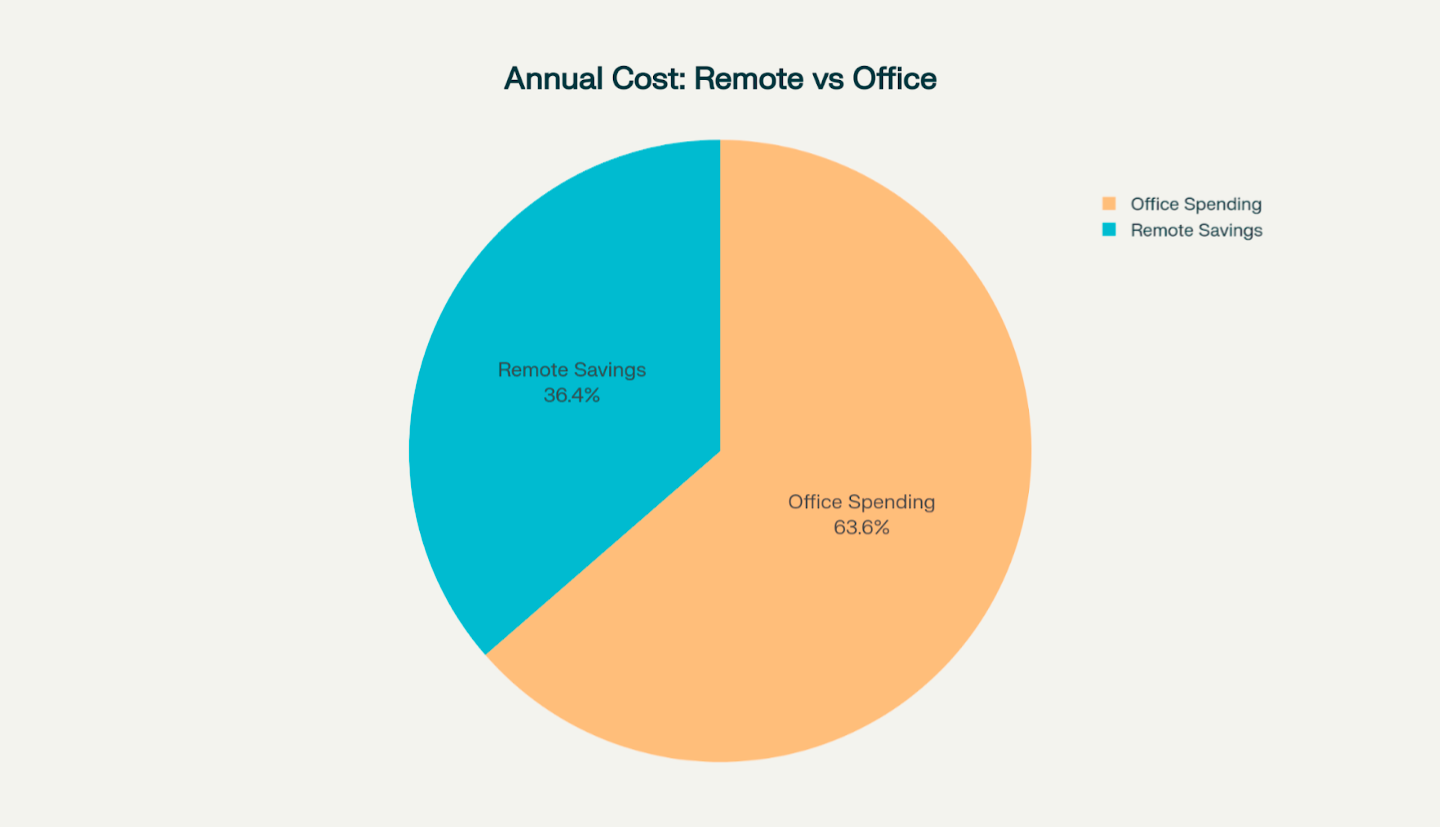
What it means: Remote work delivers meaningful cost savings for employees. These financial benefits can contribute to higher satisfaction, lower attrition, and a stronger employee value proposition for companies offering remote roles.
Are Amazon employees reacting to return-to-office mandates?
Yes. 73% of Amazon employees surveyed say they are considering quitting because of strict return-to-office (RTO) policies.
What it means: Rigid RTO mandates can hurt morale and lead to attrition, even at top companies. HR leaders should balance business needs with employee preferences to avoid large-scale dissatisfaction and turnover.
Does remote work increase productivity?
18% of remote workers say they are 20% more productive than they expected before they started working remotely.
What it means: Remote setups can exceed productivity expectations. With the right tools and autonomy, many employees thrive outside the traditional office, debunking the myth that presence equals performance.
Do employees think their remote tech tools need improvement?
Yes. 75% of employees believe their organization’s current remote work tools need upgrades.
What it means: Outdated or inefficient tools can harm productivity and engagement. Companies should invest in better technology to support distributed teams and ensure smooth workflows across departments.
Do employees value good technology in their remote work?
Yes. 83% of employees say that having good technology is essential to doing their job well.
What it means: Technology is no longer optional, it’s foundational to productivity. HR and IT must collaborate to equip remote workers with seamless, secure, and user-friendly digital tools including eSIM technology for reliable global connectivity to support daily tasks and long-term success.
Does remote work improve stress and mental health?
Yes. In 2025, 79% of remote professionals report lower stress, and 82% say their mental health is better with flexible work.
What it means: Remote work doesn’t just boost productivity, it supports mental well-being. HR teams should view flexible work as a mental health initiative and back it with tools, boundaries, and support programs for sustained success.
Learn about the remote developer hiring trends in 2025, including the rise of AI skills, flexible work options, and global talent pools.
Higher education levels lead to more remote job access
Are highly educated employees more likely to work remotely?
Yes, in March 2025, 42.8% of American employees with an advanced degree engaged in telework.
What it means: Education level plays a strong role in remote work access. Professionals with advanced degrees often work in knowledge-based roles that are more adaptable to remote settings. HR leaders must consider this when designing flexible policies to ensure inclusion across educational backgrounds.
Age and gender are influencing who gets to work remotely
Are hybrid employees more engaged than on-site employees?
Yes. A recent Gallup study shows that 36% of hybrid employees feel engaged at work, compared to 33% of on-site employees.
What it means: Hybrid work environments may offer better engagement than traditional office setups. HR teams should take note, as flexible work models can support employee motivation, reduce burnout, and improve retention without sacrificing performance.
How many remote workers report being highly engaged in their jobs?
35% of remote workers say they are “very engaged” in their roles.
What it means: Remote work increases engagement for many employees. Organizations should focus on strengthening virtual communication, trust, and goal-setting to maintain this level of motivation among distributed teams.
What share of remote workers are millennials?
68% of remote workers belong to the millennial generation.
What it means: Millennials are driving the remote work trend. HR leaders need to tailor policies, tools, and communication strategies for this digital-first generation, focusing on flexibility, autonomy, and purpose-driven work.
Are hiring managers planning to use more AI in recruitment?
Yes. 67% of hiring managers expect AI adoption in recruitment to increase.
What it means: As remote hiring becomes more complex and competitive, AI tools are gaining importance in streamlining candidate screening and improving hiring speed. HR teams should prepare by adopting responsible AI tools and training staff to use them effectively.
Do millennials save money by working remotely?
Yes. 27% of millennials say remote work helps them save money.
What it means: Cost savings from reduced commuting, food, and housing make remote work more attractive to younger employees. This adds a financial incentive for millennials to prefer flexible work arrangements, which employers can use to improve retention.
What are the biggest challenges remote teams face?
29% of remote workers struggle with communication, 22% report loneliness, and 38% of managers say collaboration is harder in remote settings.
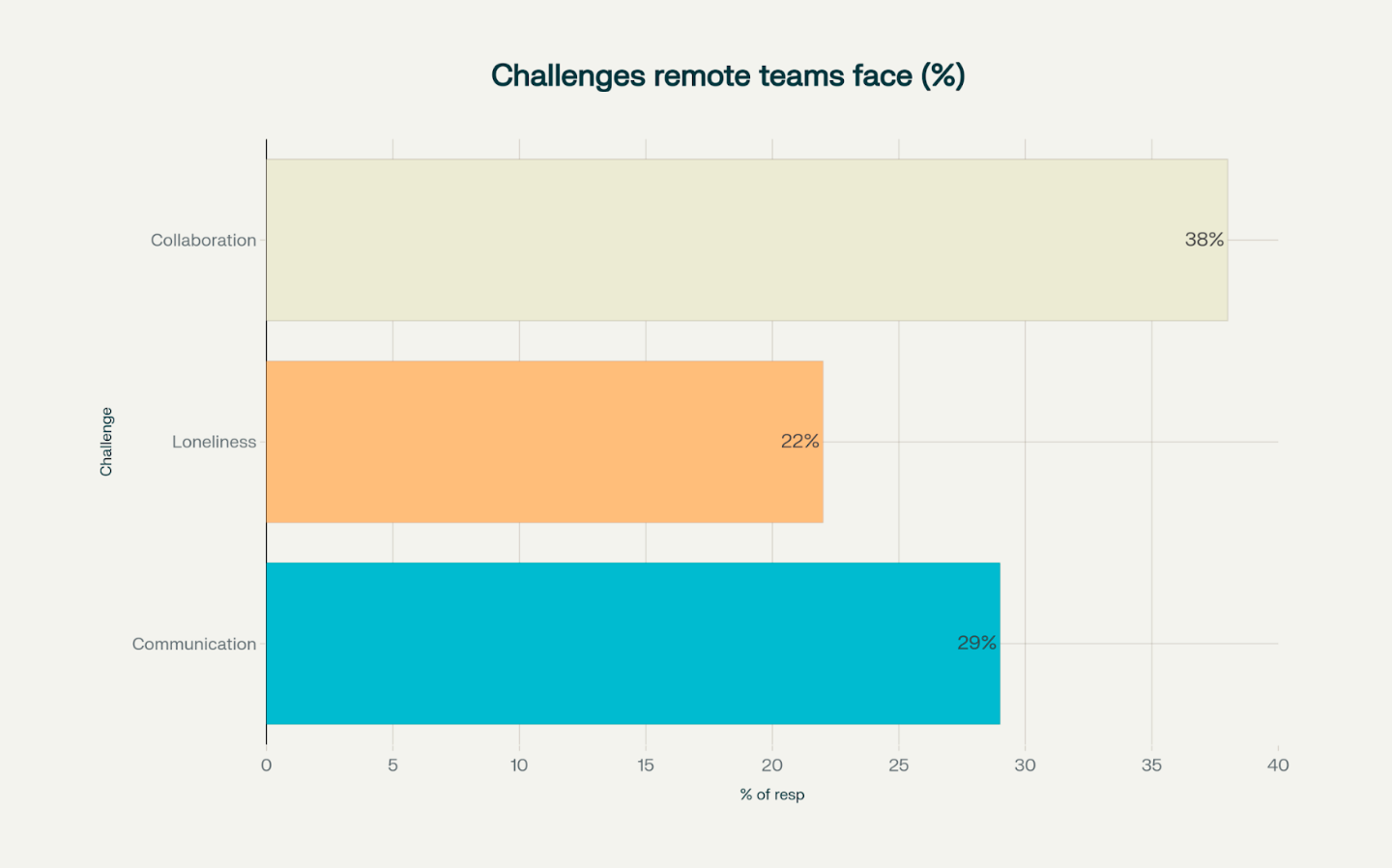
What it means: Despite the popularity of remote work, it comes with serious challenges. HR leaders need to prioritize team cohesion, employee well-being, and better communication tools to make remote setups more effective and inclusive.
Employees say they are more productive and prefer working remotely
What are the top life priorities of remote workers in 2025?
In 2025, remote workers rank their top priorities as follows:
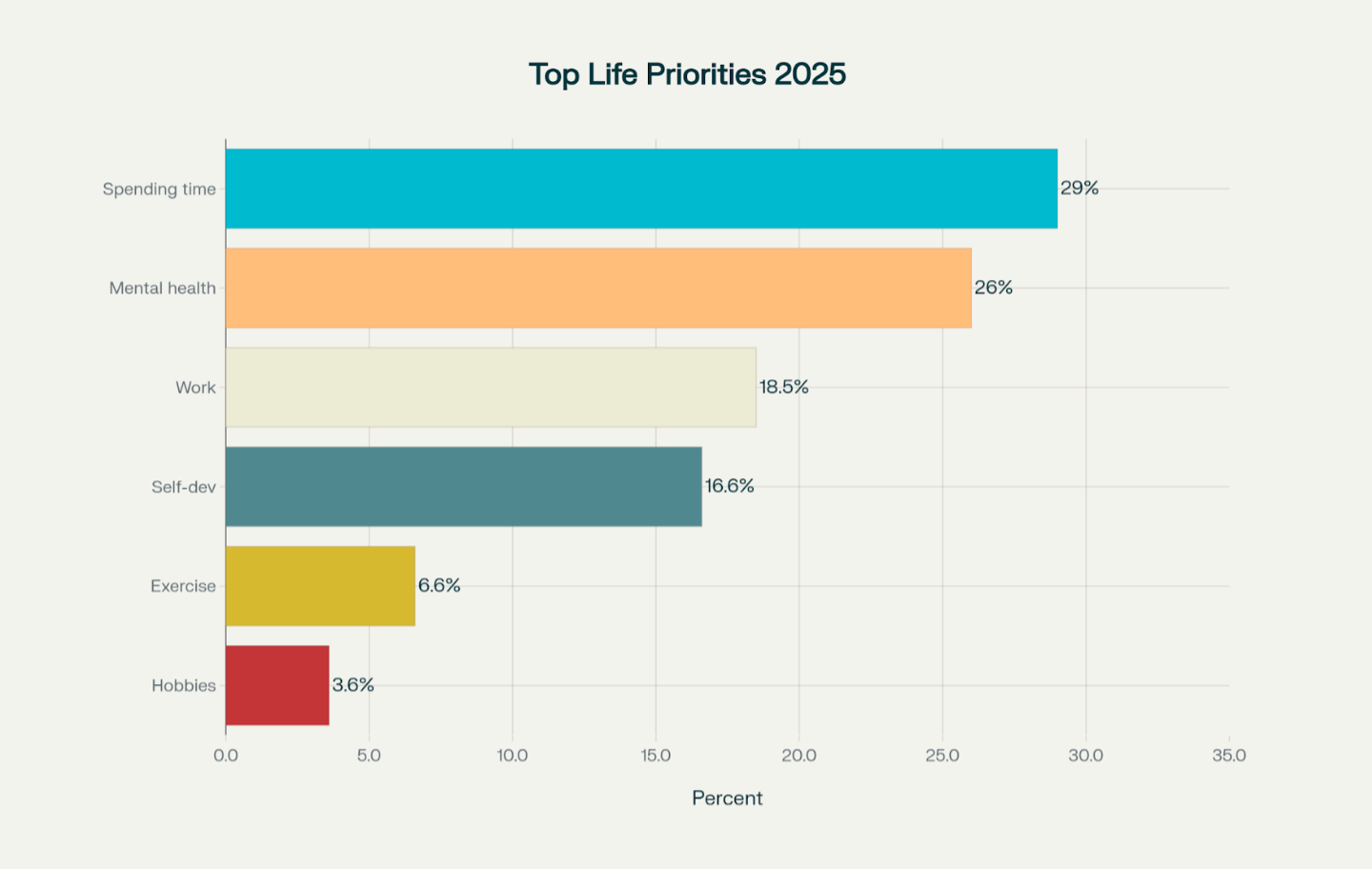
- Spending time with loved ones (29%)
- Mental health (26%, up 9.3% from 2023)
- Work (18.5%, down from 2023)
- Self-development (16.6%)
- Exercise (6.6%)
- Hobbies (3.6%, down 8.4% from 2023)
What it means: Remote workers are placing more value on relationships and mental health over traditional work priorities. For HR teams, this shift signals the need to support well-being, flexible schedules, and personal growth initiatives to align with what matters most to the workforce.
Do most US employees prefer fully remote work?
Yes. 36% of US employees say they would choose to work fully remotely if given the option, more than any other work model.
What it means: Fully remote work remains the most preferred setup for a large share of the workforce. HR leaders should consider offering remote-first roles or hybrid flexibility to attract and retain top talent in a changing job market.
Employers and employees are still divided on the future of remote work
Will remote workers change jobs if flexibility is taken away?
Yes. About 64% of remote workers say they are very likely to search for a new job if their employer removes remote flexibility.
Why it matters: This signals that remote flexibility is now a core expectation, not an optional benefit. When companies restrict remote work, they risk losing skilled employees who value control over how and where they work.
What do remote workers value most about working remotely?
For 22% of remote workers, the biggest advantage is the flexibility to manage their time. 19% value the freedom to choose where they live, and 13% appreciate selecting their work location.
Why it matters: Remote work is about personal freedom and lifestyle choices. Employers who understand and support these priorities are more likely to build engaged and loyal teams.
Remote work is reducing costs and changing salary structures
Do employees expect better pay if asked to return to the office?
Yes. 79% of employees believe they should receive higher compensation if they are required to work from the office.
Why it matters: Returning to the office often means additional commuting time, higher expenses, and less flexibility. Workers see these as trade-offs that should be compensated for, and employers must account for this in their talent strategy.
The push to return to the office is losing momentum
How many job postings in the US offer remote or hybrid work?
Around 10% of job listings in the US now include remote or hybrid work options.
What it means: Flexible work is still not the norm in job postings, but it represents a growing share of the market. HR and talent teams that include remote or hybrid options in job ads can attract a broader, more diverse candidate pool and stay competitive in tight labor markets.
How much do office workers spend on work-related expenses?
Office workers spend around $1,020 each month or about $12,240 each year on travel, food, and other work-related expenses.
What it means: In-office work comes with a high financial burden for employees. Companies offering remote options help reduce this strain, improving overall job satisfaction without having to increase compensation.
Does remote flexibility impact company revenue growth?
Yes. Between 2020 and 2022, companies with fully flexible remote work policies saw a 21% adjusted growth in revenue, while those requiring in-office presence only grew by 5%.
What it means: Remote flexibility helps both employees and businesses. Companies that support flexible work often see better revenue growth, more innovation, and stronger employee retention.
What impact does return-to-office enforcement have on hiring?
Companies that enforce return-to-office rules experience a 23% longer time to fill vacancies, a 17% drop in hiring rates, and increased recruitment costs.
Why it matters: Strict in-office policies are making it harder and more expensive for companies to attract talent. Flexible work is not just a preference for workers. It is now a key factor in attracting top talent in 2025.
Learn how to succeed in remote work with global tech teams.
Conclusion
The remote work statistics for 2025 tell a clear story: flexibility is no longer optional — it's a competitive advantage. With 83% of workers preferring hybrid or remote arrangements, companies that embrace flexibility see 4x faster revenue growth, 340% larger talent pools, and significantly higher retention. See our detailed breakdown of remote developer hiring trends in 2025 for tech-specific insights.
Key takeaways for employers:
- Hybrid work is the dominant model (52% of remote-capable workers)
- RTO mandates hurt hiring (23% longer time-to-fill, 17% lower hiring rates)
- Remote workers are 13% more productive on average
- 97 of Fortune 100 "Best Companies" offer remote/hybrid options
Key takeaways for job seekers:
- 22% of US jobs are now remote, with hybrid growing fastest
- Remote roles pay 4-7% more on average
- Tech, finance, and professional services lead remote adoption
- 69% of workers would take a pay cut for remote flexibility
As the workplace continues to evolve, organizations that invest in remote-first tools, clear policies, and employee well-being will attract top talent and outperform competitors.
Building a remote team? Hire pre-vetted remote developers through Index.dev — access global talent with US-level expertise, ready to start immediately.