A recent Pew Research Center study found that 35% of employees who can work from home do so all the time, while another 41% follow a hybrid schedule. If your company isn’t already managing a globally distributed development team, chances are it will soon.
However, according to a TechSmith survey, nearly 75% of companies admitted they haven’t trained their managers to lead remote teams. This often results in mistakes that negatively impact both employee engagement and overall company performance.
This might leave you wondering:
- What are the biggest challenges of managing remote developers?
- What common mistakes do managers make?
- How can you make the best out of remote work and start managing your remote development team effectively?
In this article, you will find an extensive overview of managing remote software developers. You’ll get top hacks on how to collaborate with remote software developers, achieve higher productivity, and meet your project goals effectively, drawing on Index.dev’s six years of experience in remote development – assigning dozens of developers to tech projects and assisting clients in this remote work switch. Let’s dive in!
Hire top remote developers with Index.dev! Access vetted talent and build your team faster with our expert support.
.png)
Top Concerns in Working with Remote Developers
Remote work is growing at a startup speed. Industries with the highest number of remote workers are healthcare (15%), technology (10%), and financial services (9%). But even as it becomes more common, many business owners are still unsure about hiring remote teams, especially for software development. In fact, just like simple remote utilities such as “show my ip” help you quickly identify your online presence, having the right visibility and management practices is crucial when working with distributed developers.
Here are some of the most common concerns:
- Will they stay productive?
Employers fear that remote developers might get distracted, leading to poor performance and missed deadlines on their part.
- Is communication enough?
Some think emails, communication platforms, project management tools, and video conferencing are not enough to keep everyone on the same page.
- What about time zones?
While a one- or two-hour difference might go unnoticed, managing a team spread across multiple time zones can make scheduling meetings and teamwork harder.
- How will they work together?
Teaching developers to use tools like Jira, ClickUp, or Trello takes time, adding to the onboarding challenges.
- Can we trust each other?
Without body language or tone of voice, written communication can sometimes lead to misunderstandings, mistrust, or even friction among team members.
- How do we build a team?
Creating personal connections is harder when everyone is remote. People often focus more on their own lives at home and less on bonding with the team.
While these concerns are common, they’re not unconquerable. They don’t have to stop you from hiring developers globally. With the right strategies and tools, remote teams can be just as effective – and sometimes even better – than in-office teams.
Explore More: How to Vet Software Developers
Top Mistakes in Remote Developer Management
If you think that managing an in-house remote development team is tough, managing a remote development team is a whole different game. It’s like trying to bake a cake without a recipe, over a video call, while everyone’s using a different measuring system.
Okay, maybe it’s not that hard, but it’s definitely not easy. There are plenty of potential pitfalls—mistakes to avoid, things to remember, priorities to juggle, and communication rules to follow.
Don’t worry, though. We’ve all been there. You’ve made them. We’ve made them. Everyone has made them. The best thing is that you can learn from them.
Here are 10 of those mistakes in managing remote developers and how to avoid them:
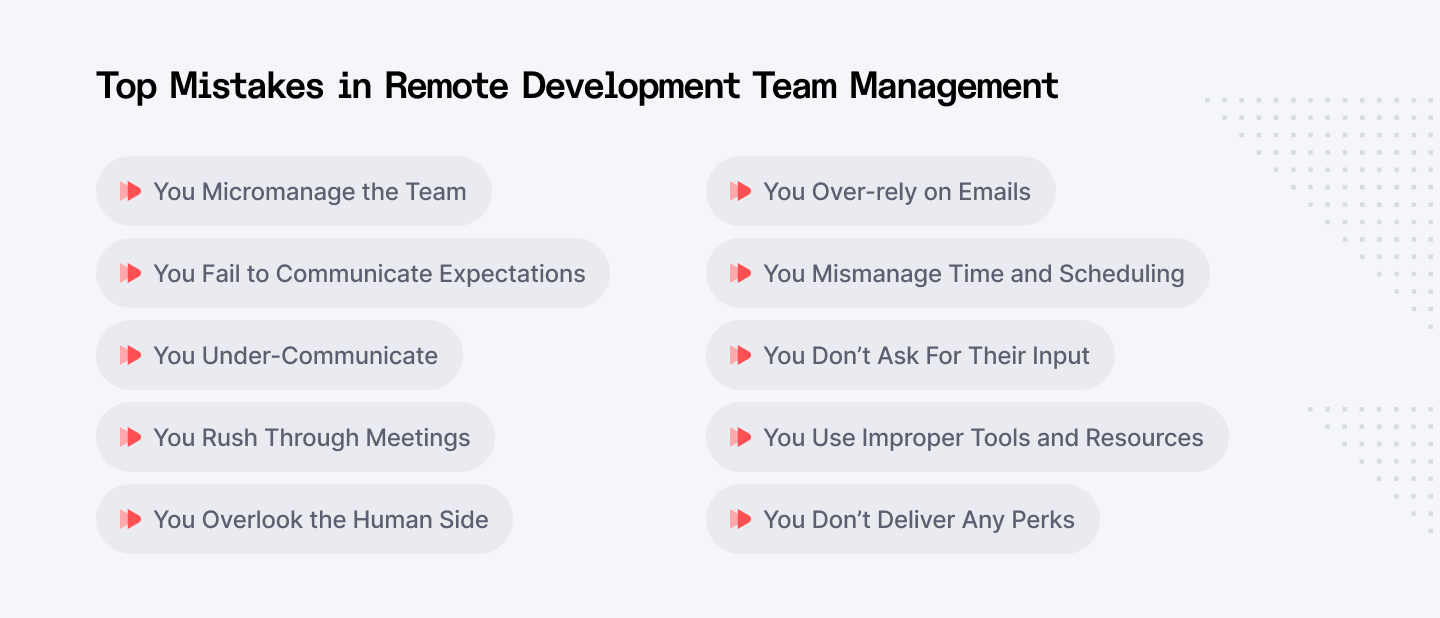
Mistake 1: You Micromanage the Team
There are two types of managers: those who micromanage and those who follow-up or delegate. If you hired them, you should trust their ability to deliver. Just because you can’t see your remote developers doesn’t mean you can contact them every other minute or send follow-up messages via Slack every hour. this often happens when managers lack the kind of visibility that workforce intelligence software offers.
Over-messaging, over-calling, and overcontrolling your team members can put them under unnecessary pressure, slow down their productivity, and lead to a toxic work environment.
Delegation and trust in your workforce is crucial when managing developers remotely. Your job is to offer feedback and coaching at opportune times, cultivate a great environment and bring the right people together. Your job is to fill the gaps, not drive your team crazy by checking every smallest detail, multiple times a day.
So, how do you avoid micromanaging? Here’s the plan:
- Elaborate a remote work policy. Set clear rules and expectations upfront. Make sure everyone agrees to them during onboarding.
- Give them some space. Let your team have a say in their schedules and deadlines. As long as the work gets done, there’s no need to micromanage them.
- Help your team take ownership of their work. Give them the tools and training they need to collaborate effectively and stay on track.
- Adjust your management style to fit remote work. Set clear goals and track performance based on outcomes, not how many hours someone is online.
Mistake 2: You Fail to Communicate Expectations
You might know exactly what you want from a task, but if you don’t communicate it clearly, your team could be left guessing. Clear expectations are the foundation of a productive remote development team. Without them, remote work can lead to delays, frustration, and missing deadlines. So, what should you do?
- Make sure every team member understands their role and what they’re accountable for.
- When assigning tasks, be specific. Don’t just say, “Make this better.” Explain what you need, how tasks should be completed, and where they should be submitted.
- Set realistic expectations. During onboarding, explain what’s expected of your development team—short-term, mid-term, and long-term.
Mistake 3: You Under-Communicate
In remote work, communication isn’t just important—it’s everything. Without it, teams can fall apart faster than your Wi-Fi during a crucial video call. Effective communication minimizes friction, helps you spot frustrations early, and keeps everyone on the same page.
So, how often should you communicate with your remote team? More than you probably think. Remote workers can feel isolated, and that silence can be extremely noisy. The trick is to fill the gaps with regular check-ins and updates. Here’s how:
- Schedule weekly calls. A virtual face-to-face goes a long way. Use tools like Zoom or Google Meet to connect with your team.
- Plan for regular team meetings, one-on-one check-ins, and clear documentation to keep everyone in sync.
- Encourage an open-door policy. Make sure your team feels comfortable reaching out with concerns and ideas.
- Use the right tools. Platforms like Slack are great for daily chats, while project management tools like Trello or Asana help keep everyone aligned.
- Ask for weekly updates. Have team members share what they worked on and their plans for the upcoming week.
Mistake 4: You Rush Through Meetings
Compared to in-person meetings where people interact in real-time and contribute easily, virtual meetings can make team members feel like passive spectators. They might not feel comfortable interrupting you to raise their concerns about a project or contribute with a solution to a problem, making the meeting one-sided.
If you’re breezing through the agenda and asking, “Any thoughts?” without giving enough pause before moving on, you might unintentionally shut down someone on your team. Your team could have great ideas or concerns, but they won’t speak up if they don’t feel they have the time or space to do so.
One way to encourage better communication is to schedule regular team meetings so everyone has a consistent opportunity to share updates, raise concerns, and collaborate. Having recurring meetings also helps build trust and makes participation feel like a normal part of the team's workflow.
Here's how to make your meetings more effective and never miss out on their input:
- Leave room for silence. Pause long enough after asking a question so people can think and respond.
- Check-in regularly. During the meeting, stop at key points and invite the team to share their ideas.
- Encourage participation. Address team members directly: “Alex, what do you think about this approach?” This helps avoid assumptions that silence means agreement.
Mistake 5: You Overlook the Human Side
Remote work often erases the subtle cues we rely on in face-to-face communication, like body language and tone. Without these, messages can feel cold or get misinterpreted, creating unnecessary anxiety and disengagement. And when people feel disconnected, they’re less likely to share ideas, take initiative, or feel like part of the team—and burnout becomes a real risk.
Developers are not always introverts, even those who are, enjoy human interaction. They need interruptions and conversations as much as anyone else. It’s up to you, as their manager, to create space for those conversations to happen. Work isn’t just about tasks and deadlines; it’s also about relationships.Here’s how to bring a little humanity back into remote work:
- Talk to your team members individually—not just about work. Ask how they’re doing, how their weekend was, or what’s going on in their world. Praise their work, note their contributions, and transition into personal talk, when appropriate. These casual talks are part of what brings your development team together. And it’s also a great place to offer feedback – and get feedback too, for what matters.
- Host a weekly Virtual Happy Hour. Set aside time for a casual video chat with no agenda. Just catch up, share a laugh, and give your team a chance to unwind together.
- Encourage informal stuff. Create a dedicated Slack channel for non-work topics like sharing memes, discussing hobbies, or celebrating personal milestones.
Mistake 6: You Over-rely on Emails
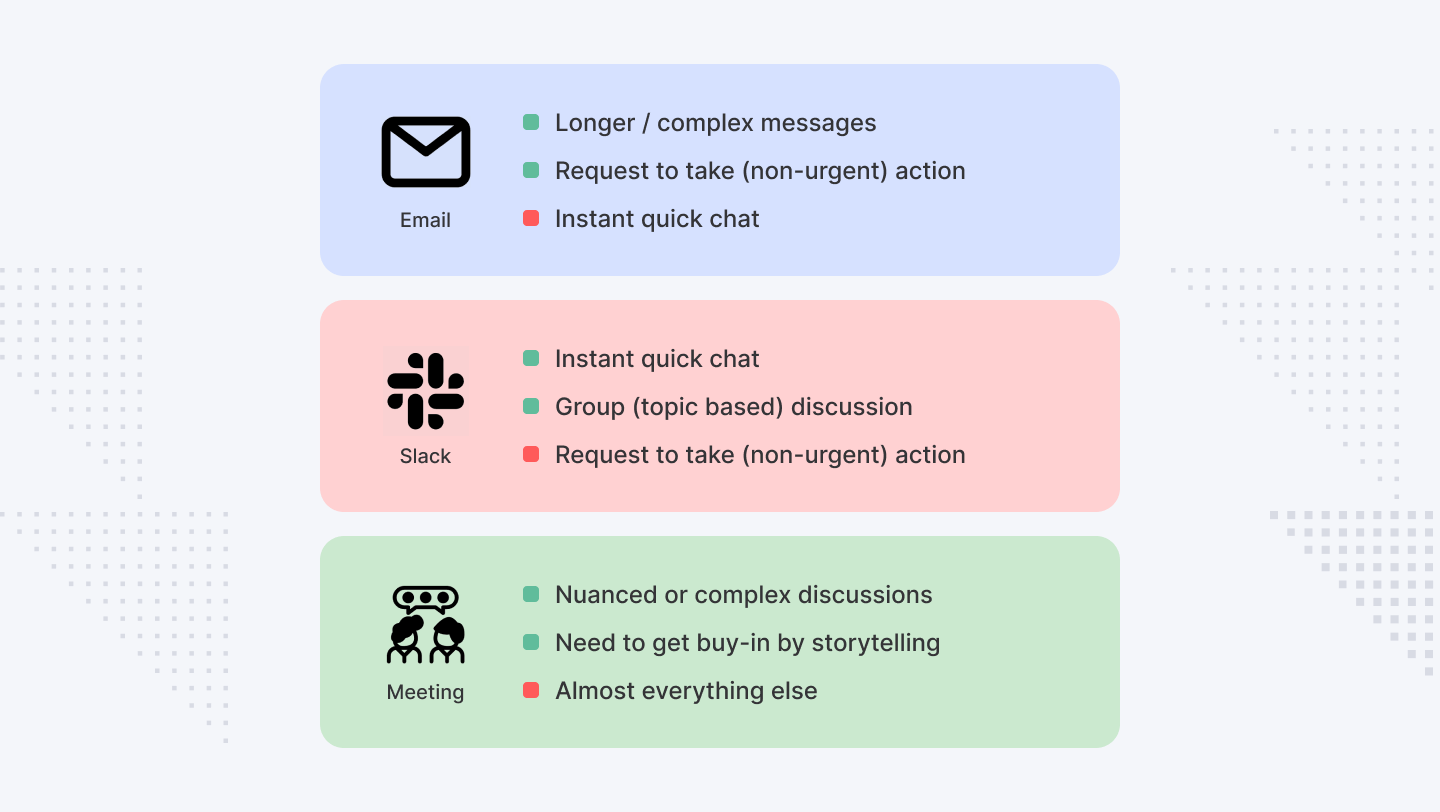
Yes, emails are convenient, but when managing remote teams, relying too much on them can backfire. With 205 billion emails sent daily, it's no wonder inboxes feel overwhelming. Emails are great for sharing updates or summaries, but they’re not ideal for effective remote collaboration and building rapport. Also, over-relying on emails can make your team feel isolated and disconnected. Here’s how to break the email habit:
- Use real-time communication for discussions. A quick huddle often resolves things faster and with more clarity, adds emotional context, and helps spot unspoken concerns.
- Use tools like Slack or Microsoft Teams for casual and quick conversations. Set up dedicated channels for different projects.
- Have quick daily standups or asynchronous check-ins through tools like Loom or Slack.
- Save emails for formal communication, documentation, or updates that don’t require immediate responses.
- Mix emails, calls, chats, and video meetings depending on the context and needs of the team. Use the right tool for the right purpose.
- Email checker helps verify addresses and reduce bounce rates, ensuring messages reach the intended recipients and maintain smooth collaboration.
Mistakes 7: You Mismanage Time and Scheduling
Remote developers value flexibility. They value managers who respect their time, trust their abilities, and align with their values. After all, your 9-to-5 might clash with someone else’s midnight. Scheduling meetings or coordinating tasks can get messy fast, which is where team planning tools can help coordinate workloads, schedules, and priorities.
Here’s how to keep everyone on the same page (and happy):
- Respect time zones. Before scheduling a meeting or sending a Slack ping, double-check everyone’s time zones. Tools like World Time Buddy or Google Calendar may help.
- Let go of the “instant reply” culture. Hold asynchronous meetings and hold everyone accountable. Your new schedule should consider the time that works best for everyone.
- Categorize by time zones. Whenever possible, form sub-teams with overlapping working hours. When2meet and Doodle make it easy to find overlapping free time.
- Use methods like Agile or Scrum to break down projects into manageable sprints, allowing for quick adjustments. Also use tools like Jira or Trello to track progress.
- Track time wisely. Tools like Toggl or Clockify can provide insights into how time is spent, helping you optimize workloads and adjust schedules.
Mistake 8: You Don’t Ask For Their Input
Imagine this: you’re in an in-person meeting. John is sitting across from you. You ask him, “What do you think, John? Any suggestions?” John shares his ideas, feels valued, and knows he’s part of the team. Now picture a virtual meeting. Teammates all over the world sit in front of the camera. John’s camera is off. You don’t ask for his thoughts. Nothing. It’s awkward, and worse, you lose out on John’s valuable input.
In remote meetings there’s less interaction, fewer nonverbals, and often, less input from quieter team members. This means you might miss useful input, feedback or fresh perspectives. Because of their distance, remote developers are outside the office bubble and often see things differently – and that’s an awesome thing. While in-office teams may fall into groupthink, they are able to think independently and contribute in a whole new way.
Here’s how to make sure their voices are heard:
- Call on team members during meetings to share their thoughts.
- Use anonymous surveys for easy input.
- Highlight their unique perspective as an advantage, not an afterthought.
- Acknowledge and act on their suggestions to show they matter.
Mistake 9: You Use Improper Tools and Resources
Imagine trying to sail a ship without proper navigation tools—it’s bound to go off course. The same goes for managing a remote development team. Without the right tools, productivity sinks, and collaboration suffers.
The right tools are the backbone of successful remote teams. They improve workflows, track progress, and ensure tasks are completed efficiently. Here’s a quick rundown of must-have tools:
- Version Control Systems: Git and GitHub for code collaboration and tracking.
- Project Management Software: Jira, Trello, or Asana to organize tasks, set deadlines, and monitor progress.
- Communication Tools: Slack, Microsoft Teams, and Zoom to stay connected and hold productive meetings.
- Development Environments: IDEs like Visual Studio Code or IntelliJ IDEA for coding and debugging.
- Documentation Tools: Confluence and Notion to create and share project knowledge.
- Time Management Tools: Toggl for time tracking and planning, or Time Doctor for better work-hour management.
Explore More: Top 17 AI Recruiting Tools for Hiring Engineering Talent
Mistake 10: You Don’t Deliver Any Perks
So, you threw a pizza party at the office last week or are planning a big Christmas celebration for everyone at headquarters. But your remote developers, spread across the globe, miss out on all the fun. While they can’t attend these in-person events, they still want to feel connected just like anyone else and be part of the company culture, even from a distance. It’s important to show that you’re thinking of them and you really appreciate them. And a little gesture can go a long way. Here are some ideas:
- If they missed the pizza party, send a gift card for a meal with a note saying, “We missed you at the party, hope you can enjoy this meal!”.
- Give them an unlimited Kindle or Audible credit. It’s a great way to unwind after work.
- Help them stay healthy with a gym membership near their place.
- Invest in their workspace – a new chair or a tech upgrade can make a huge difference.
- Send them some fun company swag – personalized clothing like t-shirts and hoodies, mugs, whatever you’ve got.
- Send a cake for their birthday or any special family event.
- Even if they’re a contract worker, give them a little something to help them take time off and recharge each year.
Explore More: 11 Mistakes to Avoid When Hiring Remote Software Developers
Conclusion
Managing remote teams can feel tricky, but it’s also the way the world is moving. Whether you’ve been doing this for years or just getting started, there’s always room to improve. Leading remote and distributed teams isn’t about being perfect—it’s about being a great communicator, problem-solver, and someone who leads with empathy. Keep these pointers in mind to avoid common pitfalls:
- Trust your team. Stop micromanaging. No one likes it, and it’s not helping.
- Get clear on roles. Everyone should know what they’re responsible for—no more guessing.
- Communicate a lot. Keep the lines open.
- Make it easy (and normal) for your team to share their thoughts.
- Keep the human side alive.
- Save emails for updates, not conversations. Use tools or calls for real-time connection.
- Respect their time. Know their schedules, trust their skills, and don’t be “that manager.”
- Ask for feedback. Their perspective is extremely valuable.
- Use the right tools. Better tools mean improved workflows and happier people.
- Show appreciation. Swag, gift cards, remote pizza parties—small gestures go a long way.
It’s all about showing your development team that they matter. Because they do.
Don’t worry. You’ve got this.
Hire Top Remote Talent, Let Index.dev Handle the Rest
Need skilled tech talent fast? Index.dev makes it easy to:
- Hire top 5% experts: Developers, designers, AI/ML specialists, PMs, and more.
- Work with the best: Fully vetted for both technical and soft skills.
- Save big: Up to 60% on hiring and development costs.
- Get support: 24/7 help with onboarding and team integration.
🚀 Start your 30-day risk-free trial today → Hire in just 48 hours!