Software development teams frequently struggle with effective code management as projects grow in complexity. A proper version control workflow isn't just nice to have—it's the difference between shipping on schedule and explaining to stakeholders why you're three sprints behind.
Ergo version control workflow systems have become indispensable pillars for managing changes and enabling seamless collaboration. But there's a significant gap between teams that merely use version control and those that strategically optimize their workflows. This gap directly impacts delivery speed, code quality, and ultimately, market advantage. So let’s take a deeper dive to understand the tangible effect an agile version control can have on your team’s performance.
Hire top Git experts. 5x your team's output. Start your free 30-day trial with Index.dev.
Understanding the Impact of a Robust Version Control Workflow
Most teams use Git, but far fewer have mastered what makes a Git version control workflow truly effective. The teams that crack this code consistently outperform their peers—not by small margins, but by factors of 3-5x in deployment frequency and lead time for changes.
When we analyzed high-performing engineering organizations, we found they weren't just using version control—they were treating it as a cornerstone of their entire development process. Research from the 2023 State of DevOps Report confirms this: teams with mature version control workflow practices recover from incidents 24x faster than their low-performing counterparts. By integrating automation servers with CI/CD processes and meticulous data versioning, you can amplify team collaboration, maintain data integrity, and ensure a transparent audit trail throughout your project lifecycle.
The effectiveness of your version control workflow extends beyond the technical implementation to shape team dynamics and delivery capabilities. Development teams with clearly defined branching strategies typically resolve merge conflicts much faster than those with ad-hoc approaches. This efficiency translates directly to market responsiveness and competitive advantage.
A comprehensive version control workflow serves as both technical scaffolding and team communication infrastructure. Recent studies reveal that an impressive 75% of businesses have experienced substantial productivity improvements with version control, while 72% of developers report a reduction in development timelines by up to 30%.
This impact becomes even more pronounced for distributed teams. When developers work across different time zones—without face-to-face communication—your code management approach becomes your primary collaboration framework and a robust workflow becomes essential.
For further insights, you can explore the Git Documentation and the Agile Alliance.
Key Components of an Effective Version Control Workflow
Branching Strategies
Your branching strategy isn't just technical housekeeping—it's how your team thinks about code organization. Three approaches dominate the landscape:
GitFlow
Perfect for teams with scheduled releases and complex dependencies. Uses main, develop, feature, release, and hotfix branches to create clear boundaries between production and development code.
GitHub Flow
Strips away complexity for teams focused on continuous delivery. Uses a single main branch with short-lived feature branches—ideal when you're pushing updates multiple times a day.
Trunk-Based Development
Favors incredibly short-lived branches (sometimes measured in hours) and frequent integrations to the main branch. Perfect for teams with strong testing automation.
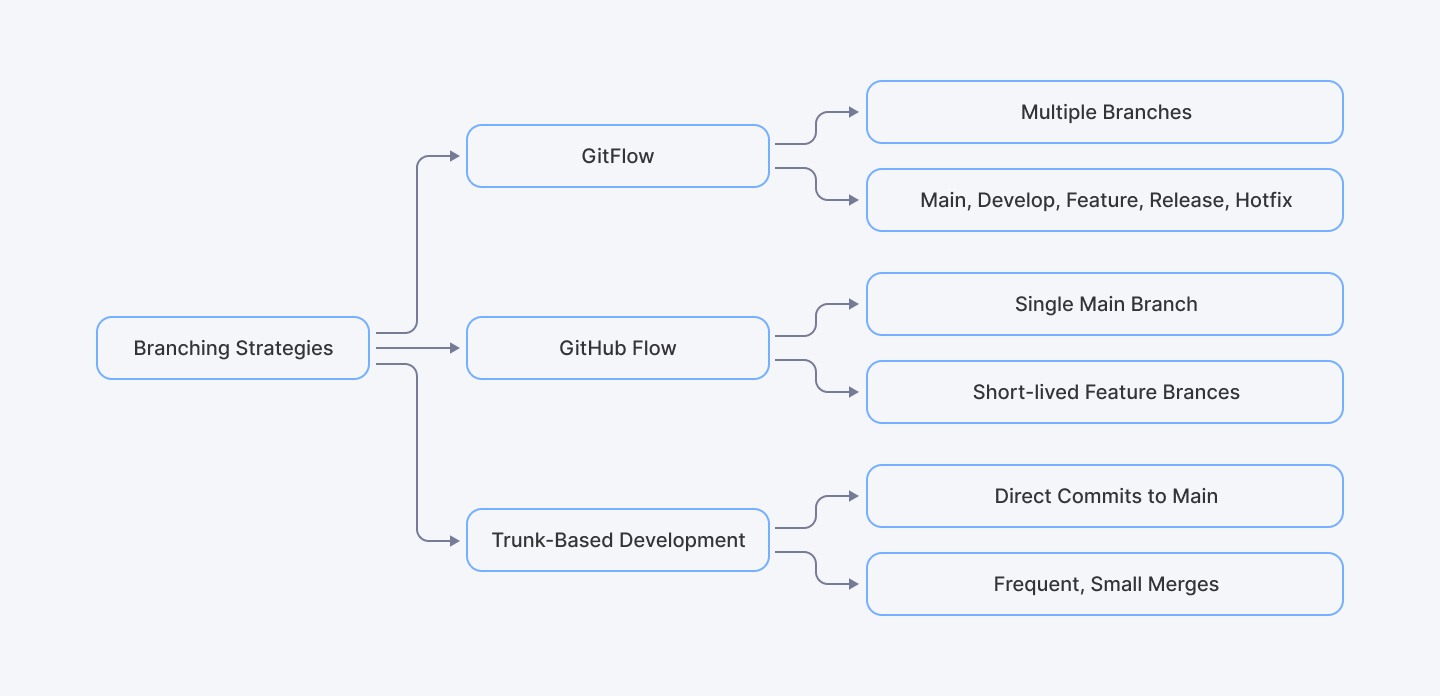
None of these is universally "best"—each serves different team needs. But whichever you choose, document it clearly. A version control workflow diagram posted where everyone can see it saves endless confusion.
Also Check Out: Cloud Engineer vs DevOps Engineer | What’s the Difference?
Visualizing Your Version Control Workflow Diagram
Visual aids such as flowcharts can help illustrate your process clearly to both technical and non-technical stakeholders. Below is an example of a basic version control workflow diagram that integrates agile practices:
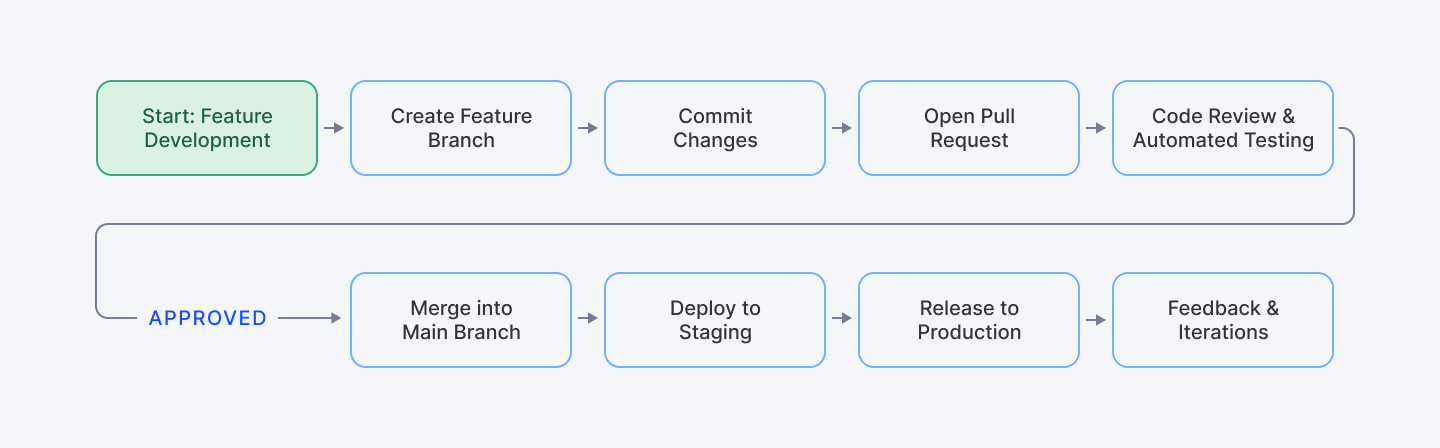
This simplified version control workflow diagram outlines key steps in a Git version control workflow aligned with Agile version control principles.
For more detailed diagrams, consult resources like Atlassian’s Git Workflows.
Automating Code Quality Checks
Manual code reviews catch problems, but they're inconsistent and time-consuming. Teams that automate quality checks within their version control workflow prevent bugs from even reaching human reviewers.
Tools to consider:
- Pre-commit hooks for catching formatting issues
- Automated testing in CI pipelines
- Static analysis tools that flag potential bugs
- Security scanning for vulnerability detection
Each of these creates guardrails that prevent those nightmare 3 AM production incidents. The best teams integrate these checks so seamlessly that developers get feedback within minutes of pushing code.
Strengthening Collaboration and Communication
Your version control workflow is ultimately about human communication, where effective collaboration and transparent communication make all the real difference. The most successful teams treat commit messages, PR descriptions, and branch names as first-class documentation.
Consider these real-world examples:
- Descriptive branch names: feature/user-auth-google-sso instead of john-branch
- Structured commit messages: fix(payment): Prevent double-charging when network times out
- Detailed PR templates that prompt for context, testing notes, and migration plans
These seemingly small details compound into massive productivity gains over time.This level of detail makes a remarkable difference. New team members can become productive within days rather than spending weeks figuring out the codebase and its history.
Communication tools complement your version control workflow in essential ways. Platforms like Slack, Microsoft Teams, Jira, and Trello create spaces where developers share context beyond what's captured in commit messages while ensuring that decisions get documented, and team members stay connected. When teams struggle with version control, it's rarely just about the code—it's about the human communication surrounding it.
By fostering a culture where feedback flows openly and documentation is valued, teams see improvements far beyond just code quality. Well-connected teams write better code and ship it faster, with fewer misunderstandings along the way.
Integrating Infrastructure as Code (IaC)
Most teams focus their version control workflow solely on application code, overlooking infrastructure changes. This creates a dangerous disconnect—your application version might be tracked perfectly while the environment it runs in remains a mystery.
By bringing infrastructure configuration into your version control:
- Environment changes become trackable and reviewable
- Rollbacks can include both code AND infrastructure
- Knowledge about your systems isn't trapped in one person's head
This approach to Agile version control extends the benefits beyond just your application code to your entire technical ecosystem.
Tools like Terraform, Ansible, and Kubernetes aren't just infrastructure management platforms—they're gateways to bringing your entire technical ecosystem under version control workflow practices. When you version and manage infrastructure alongside application code, you ensure consistency, repeatability, and complete traceability across your entire stack.
This approach doesn't just improve technical operations. It can transform how development and operations teams collaborate, breaking down the traditional silos that slow organizations down. It establishes a unified approach to managing all aspects of your environment, creating a shared language between previously disconnected teams.
Implementing a Robust Git Version Control Workflow
Ready to transform your team's approach? Here's a practical implementation plan:
- Repository Structure: Set up clear organization with sensible access controls using platforms like GitHub, GitLab, or Bitbucket. Not everyone needs write access to everything.
- Branch Protection: Configure branch protection rules that prevent force-pushes to main branches and require approvals before merging. Implement your chosen branching strategy—whether GitFlow, GitHub Flow, or Trunk-Based Development—to segregate feature development, releases, and hotfixes.
- Standardize Commits: Adopt conventional commit standards with semantic versioning to make your history scannable and meaningful.
- Pull Requests & Reviews: Enforce mandatory code reviews via pull requests to ensure high-quality code integration.
- Automate Everything Possible: From linting to testing to deployment, if it can be automated, it should be.
- Document Your Standards: Create a living handbook of your team's version control workflow practices that evolves as your team learns.
When Index.dev’s clients adopted these practices across their distributed engineering teams, deployment frequency surged by 400%, while failures dropped by 72%. Their tech teams didn’t work longer hours—they simply spent less time on version control hassles and more time building valuable features.
Discover how Glopal successfully hired senior Python and DevOps engineers through Index.dev, achieving maximum accuracy and efficiency in their hiring process.
The Business Impact: Boosting Performance by 5x
The business case for optimizing your version control workflow goes beyond technical elegance. It directly impacts:
- Speed to Market: Features reach customers days or weeks faster thanks to streamlined process and automated tests that reduce bottlenecks.
- Code Quality: With regular code reviews and automated checks in place, fewer bugs make it to production and ensure robust performance.
- Team Morale: Clear process means that developers spend less time on frustrating merge conflicts, impacting the overall motivation and morale of the team.
- Onboarding: New team members become productive faster with clear patterns to follow.
- Knowledge Preservation: Critical information doesn't walk out the door when someone leaves.
- Cost Efficiency: Optimized workflows cut down on wasted time and reduce overall project costs.
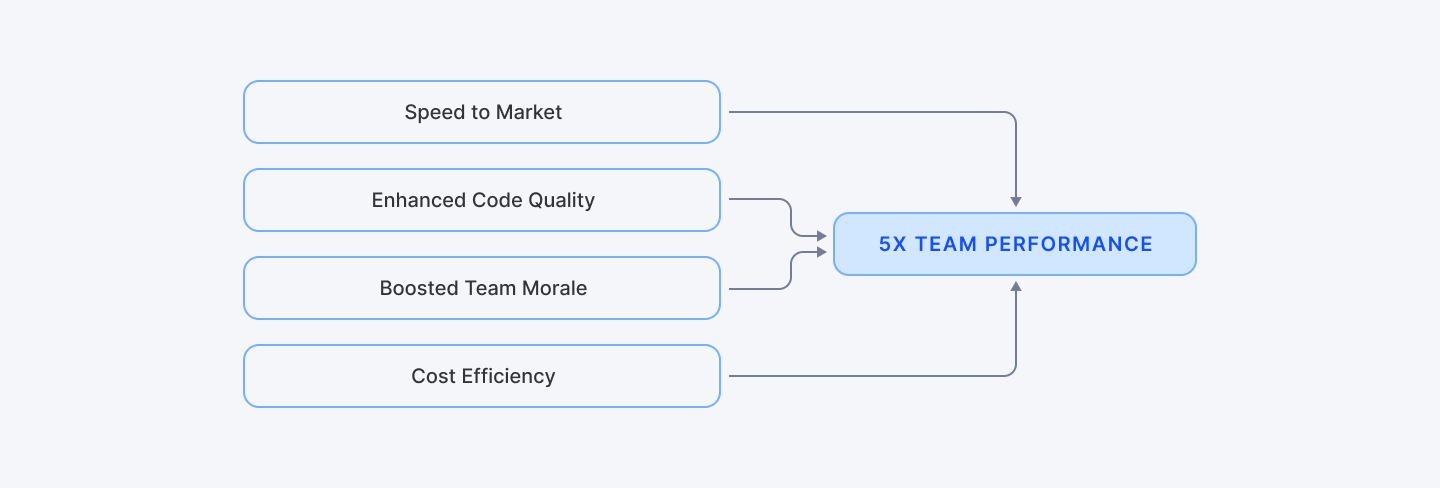
This version control workflow diagram highlights the impact of well-oiled workflows on a team’s performance.
Companies that have embraced these methodologies and integrated agile principles with robust version control workflow strategies have successfully driven efficiency across distributed teams.
Conclusion
If your team is struggling with deployment bottlenecks or general development friction, your version control workflow might be the culprit.
Start by mapping your current process. Create a visual version control workflow diagram that shows how code moves from a developer's machine to production. Identify the friction points. Then tackle them one by one, measuring the impact of each change.
Bottom line—don’t just use version control, rather continuously refine how you use it. Your workflow should evolve as your team and products grow.
At Index.dev, our DevOps engineers have helped companies across industries scale their version control workflows—and we can do the same for you.
Hire senior DevOps engineers from Index.dev’s vetted talent network. Get the right match in 48 hours—30-day free trial included!