We’re doomed. AI agents are taking over software development! Nah, not really. But let’s be real – AI isn’t just helping developers anymore. It’s writing, debugging, and even deploying code.
You're probably wondering:
Which of these agents can actually build and maintain entire applications?
How do they compare to human developers?
And which ones are worth trying, whether you're a startup, a solo dev, or working at an enterprise level?
To get answers, I tapped into our software engineering community – developers who have tested these AI tools firsthand over the past few weeks.
Some tools were just hype. Others? Surprisingly good. Here are the five best AI software development agents available right now. No more rambling, let’s dive straight into what these tools can do for you.
Build your remote career with top global companies! Join Index.dev to get matched with high-paying, long-term software development projects.
What Is an AI Agent?
In my previous article, I’ve already explained what an AI agent is. Think of it as your ultra-efficient, never-sleeps, always-learning assistant. But instead of just suggesting code snippets like GitHub Copilot, these AI systems can plan, write, debug, and even deploy software, all with minimal human intervention.
In a way, they’re like interns. If you can break a task into clear, step-by-step instructions (something you’d hand off to a junior or a virtual assistant) chances are, an AI agent can handle it too. No need for training, onboarding, or coffee breaks.
Right now, most developers use AI agents to automate repetitive tasks like refactoring code, testing, and basic troubleshooting.
But the real potential? Scaling your work without scaling your team. This means you can get a lot more done with fewer hands on deck.
Also Check Out: AI Agents in Software Engineering | The Next Frontier of Development
Top 5 AI Agents Transforming Software Development in 2025
Ever wondered what it would be like to have a coding buddy who never sleeps, never complains about debugging, and can tackle those repetitive tasks while you focus on the creative parts? That's exactly what AI software development agents are bringing to the table today. Let's dive into the top 5 highlighting their overall strengths, use cases, and pricing.
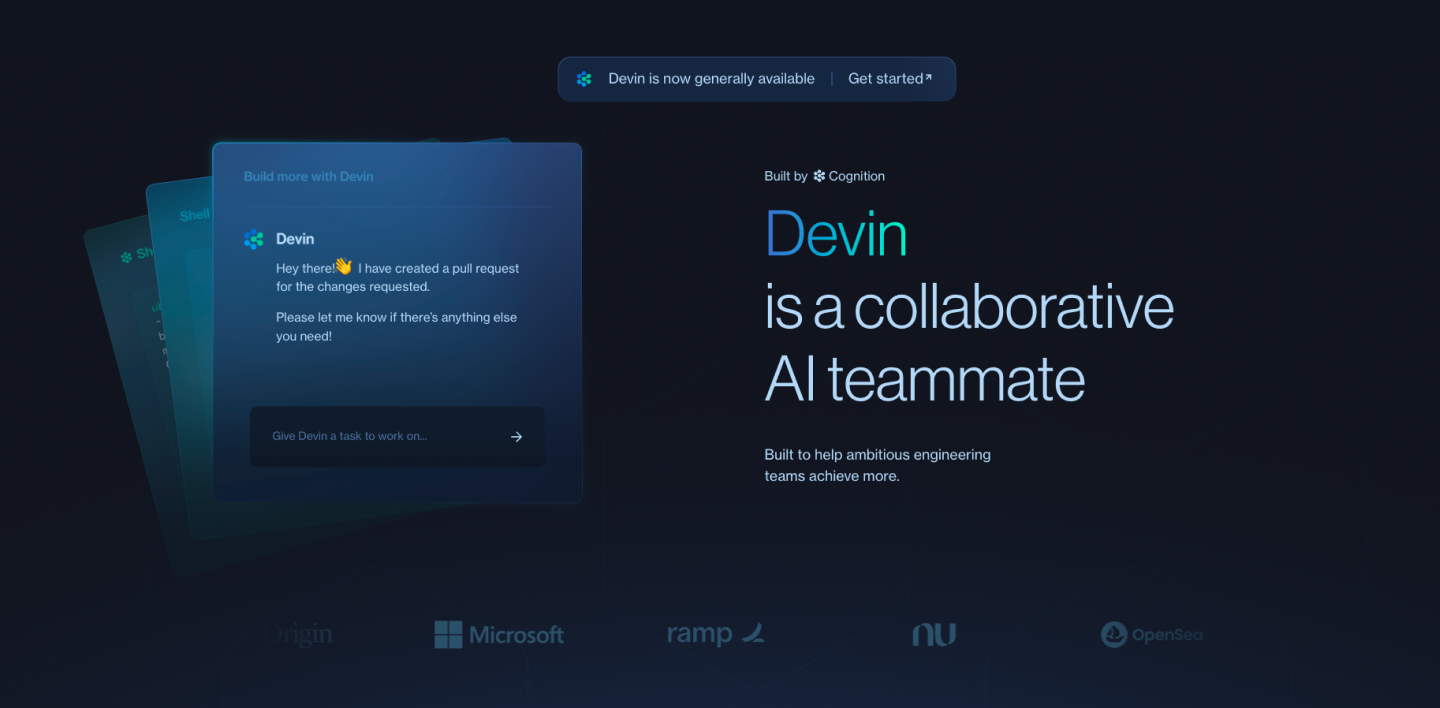
1. Devin (Cognition AI)
Devin made quite a splash when it first appeared on X (formerly Twitter). Unlike your typical coding assistants that just suggest lines of code, Devin thinks about your entire project. It can reason through complex problems, handle multi-step coding tasks, and even work independently. It’s pretty much a junior developer who is your AI teammate.
What makes Devin stand out is its complete toolkit. It has its own shell, code editor, and browser.
Need to hunt down and squash bugs? Devin's got you covered. Want to refactor that messy codebase you inherited? Devin can tackle that too.
Is it perfect? Not quite. It's still in early deployment with limited availability, and reviews have been mixed. But let's be honest – developers are naturally skeptical of anything claiming to do their jobs (and for good reason). Still, Devin shows tremendous promise and will likely only improve with time.
Perfect for
- Automating those repetitive coding workflows that eat up your day
- Catching bugs and optimizing performance while you focus on architecture
- Helping you manage larger projects where an extra pair of hands would be welcome
Pricing
Devin offers a Team plan priced at $500 per month, which includes access to Devin's core capabilities and 250 Agent Compute Units (ACUs) per month. You can purchase additional ACUs on a pay-as-you-go basis at $2 per ACU.
For larger organizations, Devin provides a customizable Enterprise plan, which requires contacting their support for specific details. You can check out their pricing page for more details on how to get started with this tool.
2. ChatDev
Ever thought about having an entire development team at your fingertips? That's essentially what ChatDev offers. This open-source framework brings together a virtual software company of specialized AI agents, each playing a specific role in building your application from scratch.
What makes ChatDev fascinating is how it mirrors a real software company's structure. Instead of one do-it-all AI, you get a team of specialized agents collaborating through what they call "functional seminars" – basically AI team meetings to coordinate their work.
ChatDev cleverly applies AI to the traditional ‘waterfall’ development model, breaking down software creation into familiar phases: design, coding, testing, and documentation. For each stage, different specialized agents step up to handle their part of the process.
Beyond just building software, ChatDev serves as a playground for studying how AIs can work together – what researchers call "collective intelligence."
Perfect for
- Building prototypes and proof-of-concepts without assembling a human team
- Teaching software development processes to students with a practical example
- Experimenting with AI collaboration in structured development workflows
Pricing
ChatDev itself is free to use. The catch? You'll need to connect it to the OpenAI API using your own API key, so there are associated costs. With nearly 25,000 stars on GitHub, it's clearly caught the attention of the developer community.
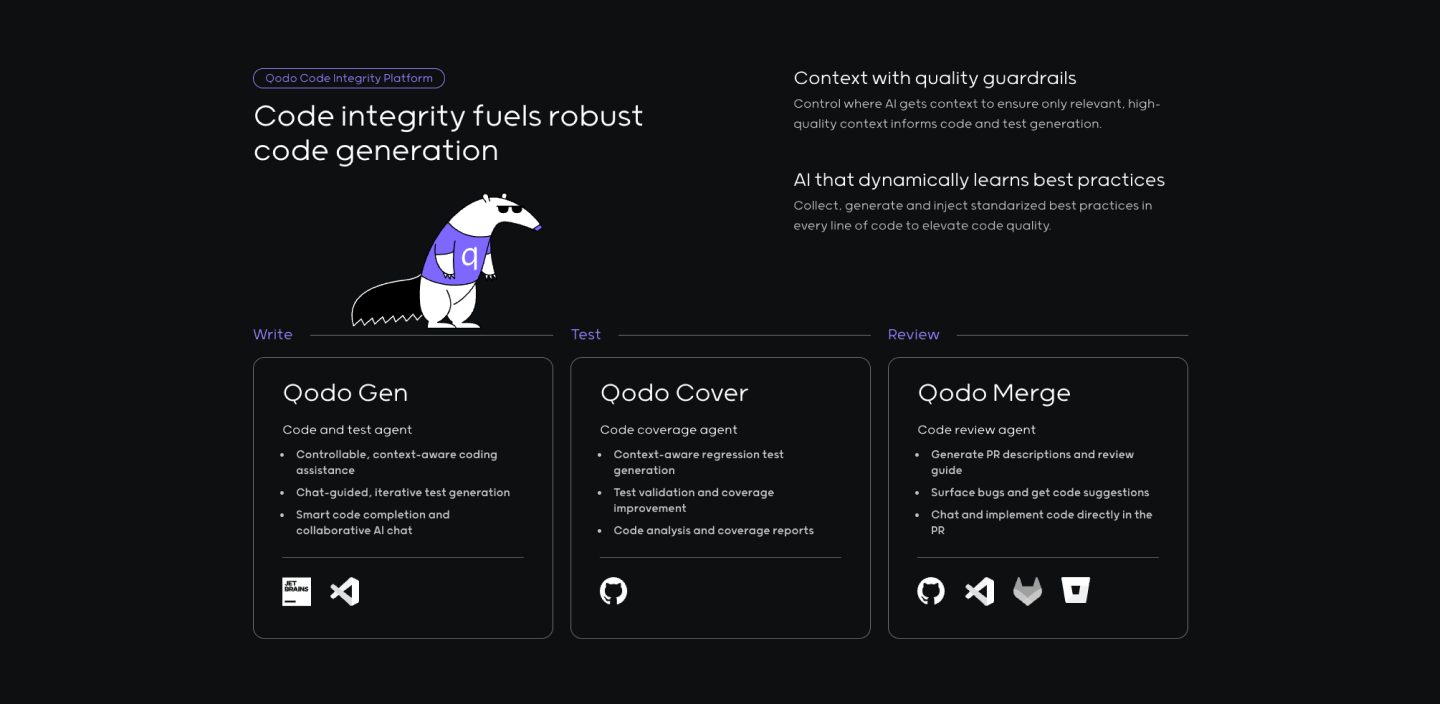
3. Qodo
Have you ever wished you had a senior engineer looking over your shoulder – but without the judgmental sighs? That's Qodo. This AI engineer doesn't just spot bugs; it understands the logic and thinking behind your code.
Qodo stands out because it doesn't just fix what's broken – it helps make good code better. While most AI assistants can suggest fixes for errors, Qodo takes it further by recommending smart refactoring strategies that improve your entire codebase.
What I find particularly impressive about Qodo is its ability to think about system architecture. It understands how all the pieces fit together. This makes it incredibly valuable for spotting performance bottlenecks before they become problems.
For larger teams working on complex projects, Qodo offers a way to maintain high code standards without endless code reviews. It can analyze massive codebases and highlight architectural inefficiencies that might otherwise go unnoticed until they cause real headaches.
Perfect for
- Strengthening your code quality through AI-suggested refactoring
- Tackling large-scale debugging that would normally take days
- Finding those hidden performance bottlenecks before they affect users
Pricing
Qodo offers a tiered subscription model with options for individual developers, teams, and enterprises. The Developer plan is free, providing access to core code quality tools like Qodo Merge and Qodo Gen, along with community support.
The Teams plan, at $15 per user per month, builds upon the Developer plan by adding features such as automated PR descriptions, ticket compliance analysis, and standard private support.
For larger organizations, Qodo provides a customizable Enterprise plan, starting at $45 per user per month, including the entire Qodo platform, enterprise-level support, analytics, and flexible deployment options. Qodo also offers flexible AI model selection across all plans, with options like GPT-4o, Claude 3.5 Sonnet, and Deepseek-R1. You can check out their pricing page for more details.
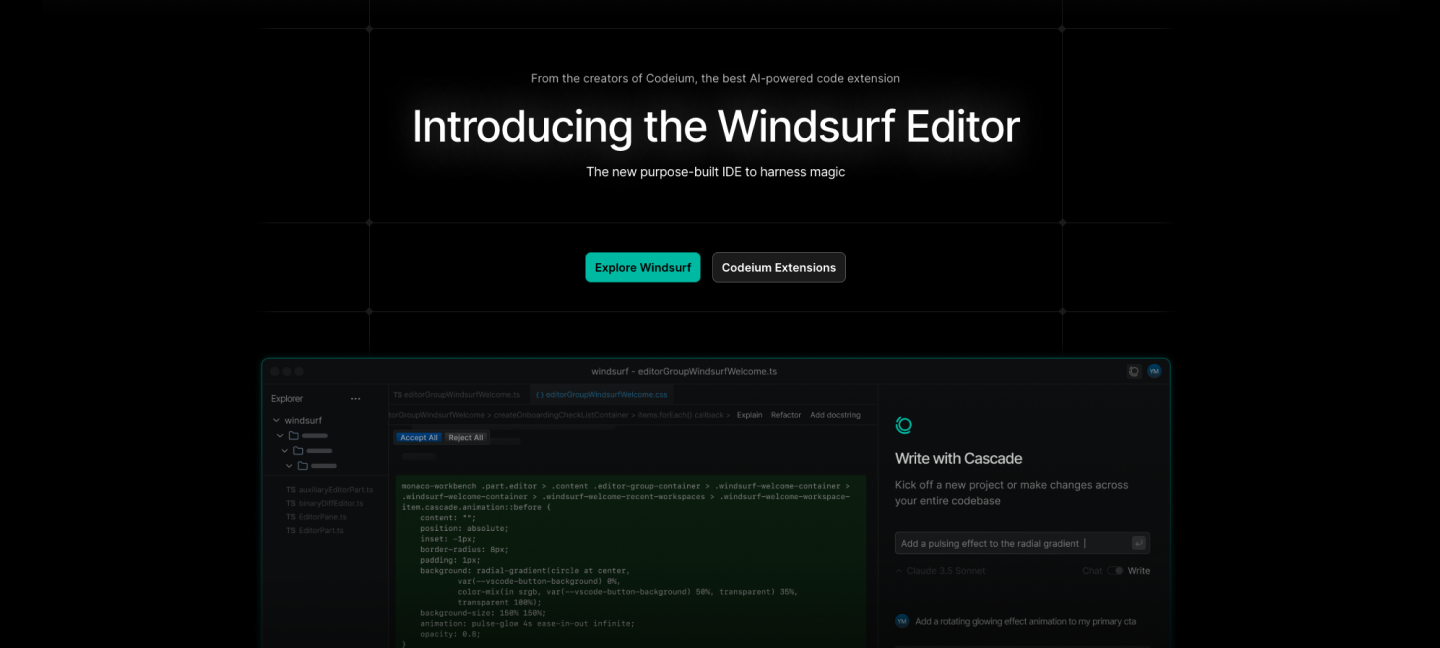
4. Codeium AI
Ever found yourself typing the same function for the hundredth time and thinking "shouldn't computers be smart enough to do this by now?" That's exactly the problem Codeium AI solves. What sets Codeium apart from other coding assistants is its lightweight, speedy approach. While some AI tools can slow your system to a crawl, Codeium stays nimble while still being incredibly smart about what you're trying to code.
The context-awareness is where Codeium really shines. It doesn't just suggest generic snippets – it understands your project's structure and offers completions that actually make sense for what you're building.
For developers who jump between languages, Codeium adapts to whatever programming language you're working in without missing a beat.
Security-conscious teams will appreciate that Codeium offers on-premises deployment options. Your code stays on your servers, addressing those privacy concerns that make many enterprises hesitant about AI agents.
Perfect for
- Speeding up your daily coding without slowing down your machine
- Switching between multiple programming languages throughout your day
- Teams who need AI assistance but can't compromise on security
Pricing
Codeium offers a range of plans to suit different needs. They have a Free plan for individual developers, which includes unlimited autocomplete, supercomplete, and in-editor AI chats.
For more advanced features, they offer a Pro plan at $15/month and a Pro Ultimate plan at $60/month, which include priority access to larger models, faster speeds, and increased context awareness. For teams, Codeium offers a Teams plan at $35 per user/month and a Teams Ultimate plan at $90 per user/month, which includes organizational analytics, seat management, and automated zero data retention.
Finally, they offer an Enterprise SaaS plan with unlimited users with SaaS, Hybrid, Airgapped (VPC or On-prem) deployment options. For larger organizations with specific requirements, they also offer an Enterprise plan with custom pricing. For more information, visit their pricing page.
5. Postman
Remember when testing APIs meant endless hours of writing custom scripts? Postman has come a long way from those days, evolving from a simple API testing tool to a comprehensive platform that now includes AI agent building capabilities.
What's really interesting about Postman's approach is how they've taken their deep understanding of APIs and applied it to the world of AI agents. Their AI agent builder is particularly valuable for engineers who need to test LLM integrations and verify that APIs are working correctly with these new AI components. While Postman has traditionally been a tool for the technically-inclined, they've made strides toward accessibility with their no-code visual builder. This opens the door for team members with less coding experience to contribute to AI agent development.
Perfect for
- Testing your LLM integrations thoroughly before pushing to production
- Building custom AI agents that connect with your existing API infrastructure
- Creating automated test suites for AI-powered features to ensure reliability
Pricing
Postman’s pricing scales with team size and needs. The free plan ($0/month) covers basic API testing for individuals or tiny teams (three users max), including 25 collection runs and limited collaboration.
The basic plan ($14 per user/month annually) supports small teams with 10,000 monitor requests and shared collections. Professional ($29 per user/month annually) adds cross-org workflows, 25 packages, and advanced analytics.
Enterprise ($49 per user/month annually) offers org-wide security, audit logs, and priority support. Annual billing saves ~25% compared to monthly. For enterprise customization, contact Postman directly. Check their pricing page for full details.
What to Look for in an AI Agent
Before jumping into any AI development agent, there are some critical factors you should consider. Think of this as your pre-purchase checklist to avoid buyer's remorse down the road.
1. Integrations with LLMs and APIs
Your AI agent should play nicely with others. Look for platforms that connect with a variety of large language models (LLMs) like ChatGPT, Claude, and Gemini. But that's just half the equation—it also needs to integrate with your existing tech stack. The most powerful AI agent in the world isn't helpful if it can't connect to your version control, CI/CD pipeline, or project management tools.
2. Autonomous Task Execution
The whole point of these agents is automation. Look for platforms that can handle complex tasks without constant handholding. The best tools let you set up recurring tasks and execute multi-step workflows independently. This is particularly valuable for routine tasks like testing, report generation, or codebase maintenance.
3. Speed
These AI agents can sometimes feel like they're juggling chainsaws behind the scenes – making API calls, processing results, generating new requests. All this coordination takes time. Before committing, run some real-world tests with complex workflows. You might find surprising performance differences between platforms that look similar on paper. Speed matters not just for immediate productivity but for team adoption. Developers won't use tools that feel sluggish.
4. Security
LLMs work by learning from vast datasets, which raises important questions about how your code and data are handled. Look for platforms with clear data policies that promise not to use your proprietary code or data for training purposes. Some offer private cloud or on-premises deployment options that provide additional security for regulated industries.
…
Remember that the right AI agent for your team depends heavily on your specific needs, existing workflows, and security requirements. What works brilliantly for a startup might be completely wrong for an enterprise team with strict compliance requirements.
Learn More: 25 Must-Have Tools to Supercharge Your Coding in 2025
Final Thoughts
This is it. We all know that artificial intelligence is here to stay and grow. Innovation is inevitable. Today, many tools that advertise themselves as "AI agents" aren't really all that promising, or anything new. But, these tools are getting more powerful. And I think you should actually be excited about that. This means that the side project you had can now be achievable with less work. It also means your job can become more creative and fun by automating the repetitive tasks you used to do.
So are AI agents hype or the future? I believe they are the future. However, I do think there is a bit of hype around them currently.
What's particularly exciting is watching the rapid evolution of these tools. Just a year ago, most AI coding assistants were glorified autocomplete tools. Now we're seeing agents that can reason about entire projects, debug complex issues, and even collaborate with each other. The real breakthrough will come as they become more ‘trained’, more autonomous, and better integrated with existing workflows.
As you explore these AI agents, remember that they're just that – tools. They're meant to serve your creativity and vision, not replace it. Happy coding!
For Tech Talent:
Ready to build a global remote career? Join the Index.dev talent network today and get matched with top companies looking for developers who stay ahead of the curve with AI-powered tools.
For Tech Companies:
Need AI agent developers who know how to leverage cutting-edge AI tools? Access the top 5% of vetted developers through Index.dev – with 48-hour matching and a 30-day free trial to find your perfect tech talent.