Remote work has solidified its position as a cornerstone of the modern business landscape. Post-pandemic, organizations worldwide have recognized that distributed teams aren't merely a contingency plan—they represent a strategic advantage in the global talent marketplace. Eastern Europe, in particular, has emerged as a powerhouse region for technical talent acquisition.
Backed by research from sources like the Backlinko Team, which shows that by August 2024, 22.8% of US employees were working remotely at least part-time, and insights from the Harvard Business Review that highlight the surge in remote job offerings, it is evident that adopting remote work best practices Europe is crucial. Our experience working with contractors and distributed teams across Poland, Romania, Ukraine, and neighboring countries has revealed both challenges and opportunities. Cultural integration, time zone management, and communication protocols require thoughtful implementation, but when executed properly, Eastern European talent integration delivers exceptional ROI.
Hire elite Eastern European developers on Index.dev. Access the top 5%, get matched in 48 hours, and start your 30-day free trial.
The Eastern European Technology Landscape
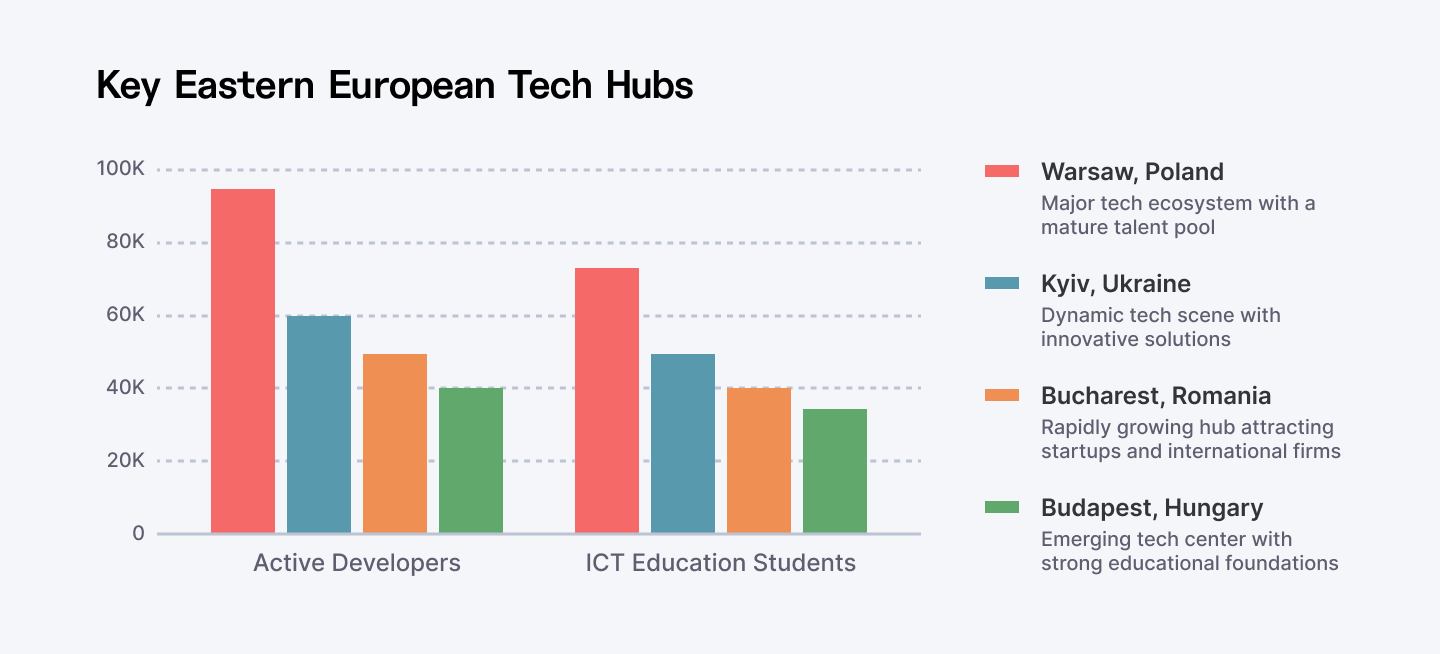
The robust STEM education infrastructure throughout Eastern Europe continues to produce technical talent at impressive rates. Consider this data point: Poland alone saw 74,000 students pursuing ICT-related studies during the 2023/2024 academic year. Warsaw has developed into a significant tech ecosystem with approximately 95,300 active developers.
Cost arbitrage represents another compelling factor. Developer compensation in Eastern Europe typically ranges between $25,958-$41,170 annually—substantially below Western European and North American markets without compromising quality. This economic efficiency allows organizations to build larger, more specialized teams while maintaining budget discipline.
Tech centers like Kyiv, Warsaw, and Bucharest have evolved beyond individual talent pools into mature innovation ecosystems. These hubs foster collaborative environments where cutting-edge approaches and methodologies naturally develop. Organizations that successfully establish remote team culture in Eastern Europe gain access not just to individual contributors, but to these broader innovation networks.
The Role of Company Culture in Distributed Teams
Defining and Shaping Company Culture
A robust company culture with distributed teams is essential in today’s remote work environment. It is built on shared values, clear communication, trust, and a commitment to inclusion. These elements are particularly important when nurturing a strong remote team culture in Eastern Europe, where understanding local work practices and values is key to unlocking team potential.
Impact on Team Engagement and Performance
Remote work offers unparalleled flexibility—with studies showing that 74% of employees feel happier working remotely—but without deliberate efforts to build connections, isolation can undermine team collaboration across time zones. Industry reports suggest that companies with a clear, shared purpose see a 13% increase in productivity among remote teams.
Best Ways to Build a Strong Company Culture
Crafting a resilient company culture with distributed teams with distributed teams isn't a "set it and forget it" process. It takes work! Teams spread across Eastern Europe bring fantastic diversity to the table, but we've seen firsthand how cultural misalignments can derail progress when ignored.
So how do successful companies handle this? After speaking with dozens of team leaders who've mastered remote management, we've distilled their approaches into actionable strategies:
1. Communication Needs Structure and Flexibility
Most developers we've worked with swear by having designated channels for different purposes. One tech lead from Krakow told us, "We tried the 'just use whatever works' approach initially—total chaos ensued!" Now they use Slack for quick conversations, dedicated MS Teams channels for project-specific discussions, and Zoom for anything requiring nuanced conversation.
Mudgadkar's 2024 study confirms what we've observed: teams with established communication rhythms report 37% fewer misunderstandings and 28% higher trust scores.
2. Virtual Bonds Need Intentional Nurturing
"Our weekly 'Coffee & Code' sessions started as an experiment, but they've become our secret weapon," shared a project manager from Bucharest. These 30-minute informal chats—with a strict "no work talk" policy—have sparked collaborations that formal meetings never would have.
Other teams organize interest-based channels, virtual game nights, or even cross-border skill exchanges. One distributed team we advise started a "local delicacies" club where members take turns sharing culinary specialties from their regions—surprisingly effective at building cross-cultural appreciation!
3. Embracing Differences Strengthens Teams
Cultural sensitivity is a business advantage. When Warsaw-based developers approach problems differently than their Kyiv counterparts, that diversity of thinking leads to more robust solutions.
Smart teams leverage these differences through:
- Regular knowledge-sharing sessions where approaches are compared
- Rotating meeting facilitation responsibilities across different regional team members
- Creating space for various working styles within project plans
When teams bridge time zones effectively, they transform what could be a logistics headache into a productivity advantage. We've seen teams use "follow-the-sun" development approaches, where projects advance around the clock as different regions contribute during their working hours.
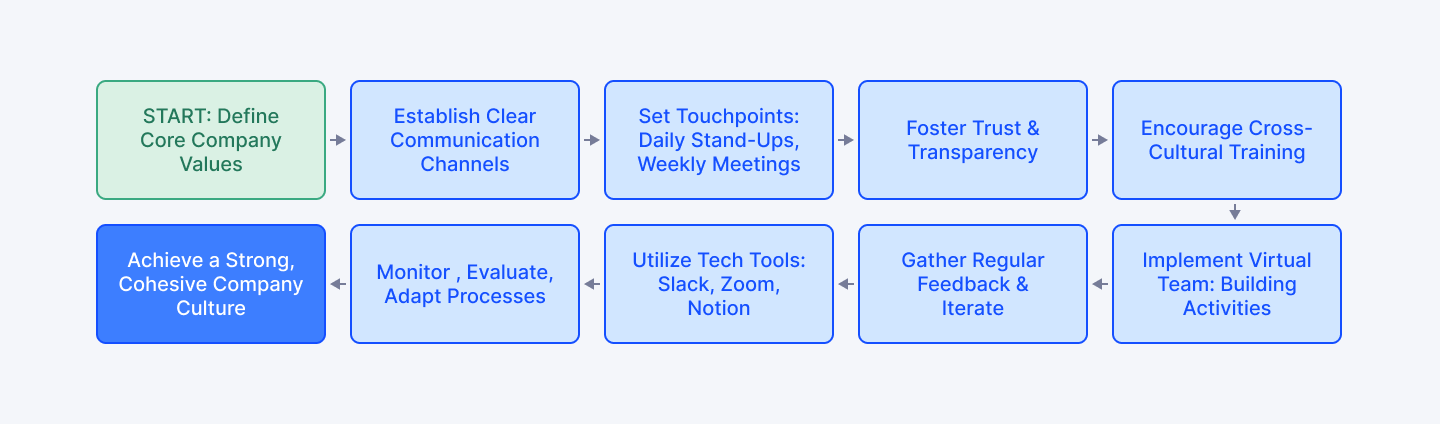
This flowchart summarises best practices for establishing a strong company culture in distributed teams.
By integrating these practices, you can effectively overcome challenges such as cultural differences in remote teams and issues with team collaboration across time zones, ensuring that your approach aligns with remote work best practices in Europe. This, in turn, supports the successful management of remote developers in Eastern Europe and fosters an environment of innovation and sustained productivity.
Overcoming Challenges in Distributed Team Dynamics
Managing Time Zone Differences
Time zones can be a significant barrier to team collaboration across time zones. To address this, many companies adopt the “early afternoon rule”—scheduling meetings during overlapping working hours. Tools like World Time Buddy are invaluable for planning these interactions, ensuring that no team member is left out due to scheduling conflicts.
Navigating Cultural Differences
Working with Eastern European developers means getting to know how culture shapes work habits. You'll notice different communication styles right away: Polish developers might prefer detailed written specs, while Romanian teams often favor quick video calls to hash out problems.
We discovered this firsthand last quarter when one of our client’s Warsaw-based contractors felt our feedback was too vague. They were used to more structured critique than their US-based team typically provided. Once they adjusted our approach - giving specific, actionable comments rather than general impressions - productivity jumped almost immediately.
Cultural differences in remote teams become your secret weapon when you handle them well. Many Eastern European tech professionals bring a refreshing directness to conversations, cutting through confusion that can plague remote work.
They tend to value:
- Well-defined processes (not rigid ones)
- Clear hierarchies with appropriate decision authority
- Explicit expectations rather than implicit ones
- Strong technical documentation
- Professional boundaries between work and personal life
Don't just hope team members will figure each other out. Invest in proper training. We recommend monthly cross-cultural workshops where teammates share their local business customs. When our Budapest developer explained why he preferred structured meeting agendas, it helped everyone understand his working style wasn't "inflexible" - just differently optimized.
Building Better Communication Frameworks
Managing remote developers in Eastern Europe works best with regular touchpoints that respect everyone's time. Our most successful clients use a mix of:
- Daily 15-minute stand-ups for urgent blockers
- Weekly deeper dives into project progress
- Monthly retrospectives to refine processes
Beware the trap of thinking more meetings equals better communication! We've seen teams drown in excessive check-ins. The key is quality interaction, not quantity.
Some practical approaches that actually work:
1. Overlap Windows:
Identify 3-4 hours when everyone's workday intersects and schedule synchronous meetings only during this time. For one of our client’s Berlin-Kyiv teams, 11am-2pm Central European Time works well. Team members appreciate knowing they can focus deeply during other hours.
2. Async-First Communication:
Encourage documentation in shared spaces. When our client switched from scattered Slack messages to structured Notion pages, their Eastern European developers reported feeling more included in decision-making processes. They could contribute thoughtfully without staying up late for meetings.
3. Culture-Building Activities:
Technical teams often resist "mandatory fun," but connection matters. Try optional virtual coffees or special interest channels. One globally distributed client we recently partnered with started a cooking channel where they share regional recipes - it's become a natural conversation starter across offices.
Remember that team structures evolve. What works for your team in January might need adjustments by June as relationships develop and projects change. Check in regularly about communication preferences - they're not static.
Also Read: Top 10 Mistakes to Avoid When Onboarding Remote Developers
Effectively Managing Remote Developers Eastern Europe
Successful managing remote developers in Eastern Europe involves adapting leadership styles to suit distributed environments. You need to balance autonomy with accountability while fostering trust and collaboration.
Key Recommendations:
- Clear Objectives & KPIs: Define success metrics for your developers. Use project management tools like Jira or Trello to track progress.
- Regular One-on-One Meetings: These sessions are critical for understanding individual challenges and ensuring alignment with overall company goals.
- Encourage Peer Mentorship: Build a system where experienced developers can support newer team members, boosting overall team capability.
By employing these strategies, you can ensure that your remote developers are motivated, engaged, and aligned with your business objectives.
Explore More: Top 10 Mistakes in Managing Remote Developers and How to Fix Them
Leveraging Technology to Support Culture
Technology is the backbone of any remote setup. Using the right tools can significantly enhance remote work best practices in Europe by keeping everyone on the same page.
Project Management and Collaboration Tools
Platforms such as Jira, Asana, and Trello not only improve task management but also provide transparency into team contributions. These tools ensure that every member is aware of project milestones and deadlines, which is especially critical when managing remote developers in Eastern Europe.
Engagement Through Communication Platforms
Remote work thrives on effective engagement. Tools like Slack and Zoom allow for seamless virtual meetings, instant messaging, and collaborative work sessions. A survey by Maven Team (2024) found that 87% of remote workers feel more connected when using these technologies. This connectivity is essential for fostering a robust remote team culture in Eastern Europe.
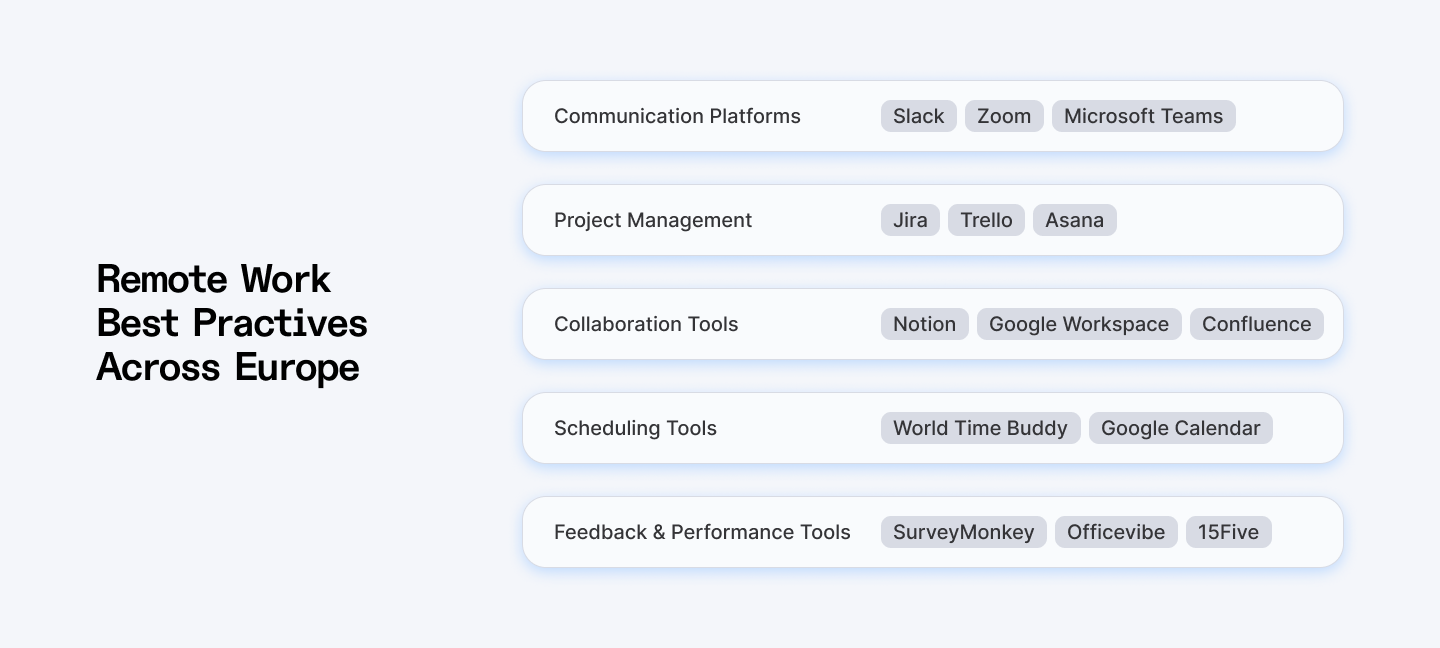
The flowchart shows how various technology tools support remote work best practices across Europe.
Sustaining a Thriving Company Culture with Distributed Teams
To sum up, building and sustaining a vibrant company culture with distributed teams requires a strategic blend of clear communication, cultural sensitivity, and robust management practices.
Key Takeaways:
- Embrace the unique strengths of Eastern European teams by nurturing a remote team culture in Eastern Europe that values transparency and collaboration.
- Tackle cultural differences in remote teams through ongoing training and open communication.
- Optimize the processes for managing remote developers Eastern Europe with defined KPIs and supportive leadership.
- Strengthen team collaboration across time zones by leveraging flexible scheduling and asynchronous tools.
- Adopt remote work best practices in Europe to ensure sustainable productivity and employee well-being.
Also Check Out: 11 Mistakes to Avoid When Hiring Remote Software Developers
Conclusion
Building robust company culture with distributed teams represents both significant challenge and tremendous opportunity. Eastern European technical talent offers exceptional skill sets, innovative perspectives, and economic efficiency.
By implementing structured approaches to communication, cultural integration, and workflow management, organizations can leverage these advantages while minimizing potential complications. The result? Distributed teams that don't merely function despite distance—they thrive because of the diversity and specialized expertise that geographic distribution enables.
As distributed work continues reshaping organizational models, mastering these cultural integration techniques positions companies for sustained competitive advantage in the global talent marketplace. We invite you to explore these strategies further and join industry leaders such as Index.dev who will guide you in adopting these innovative approaches.
For Clients:
Hire elite Eastern European developers with Index.dev—get matched in 48 hours, access the top 5% of talent, and benefit from a 30-day free trial!
For Developers:
Join Index.dev and get matched with top global companies for high-paying remote jobs. Build your career with the best teams worldwide!