Hiring remote developers can be a problem but due to the presence of technology, there’s no challenge that can’t be solved. To hire remotely, recruiters need to ensure that the candidates have a certain skill set and judge their ability to work in a remote set up.
In this article, we will be talking about different challenges of hiring remote developers, how to overcome them, and how Index.dev can help you build a remote team of efficient developers.
Every problem has a solution, so does hiring remote developers. There are numerous challenges like working around the time zone, assessing skills, addressing legal issues, and xyz, to name a few. Let’s have a look at these challenges and their solutions.
Also Read: How to Hire Skilled Developers for Startups
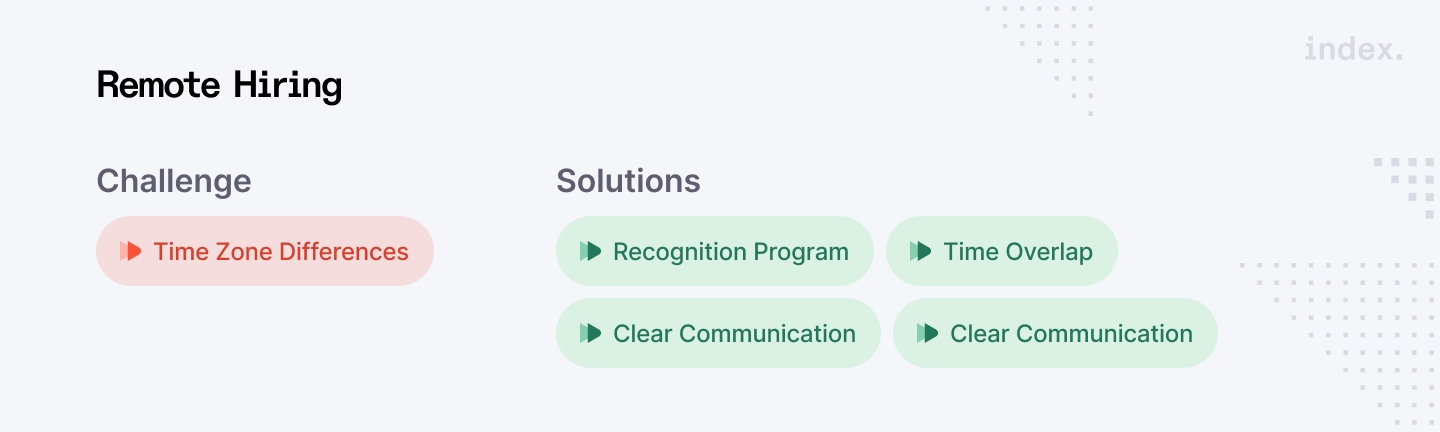
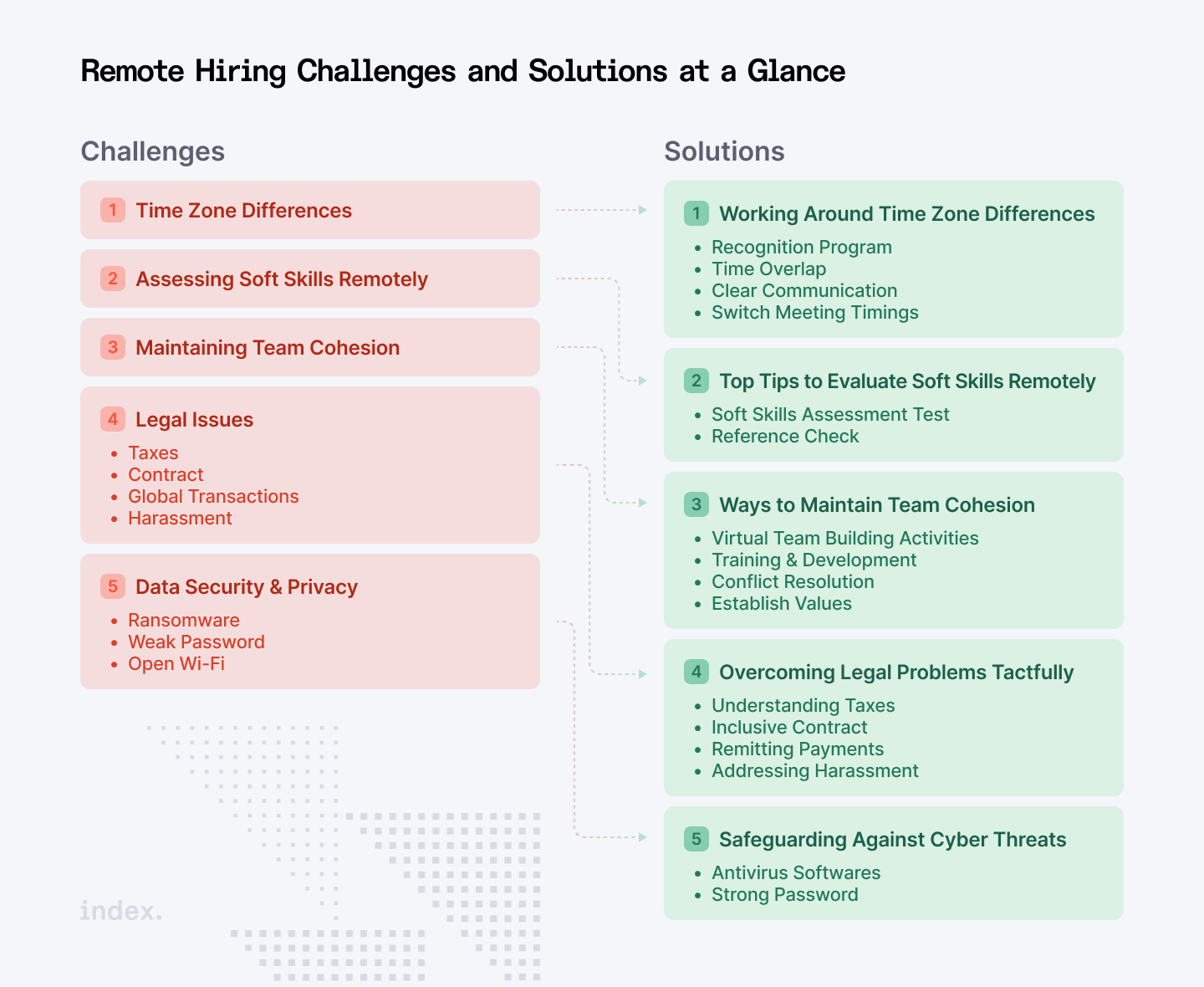
Remote Hiring Challenge 1: Time Zone Differences
Hiring remotely provides the luxury of overlooking geographical boundaries and hiring based on talent, not their location. However, if everyone is from a different location, it might cause communication problems. It is impossible to monitor everyone's local time zone constantly. Your team will likely have a combination of remote team members working from home and digital nomads who go to a new location every three months.
Some employees ' efforts may go unappreciated when teams are split across time zones. Employees in entirely remote teams who can work in the same time zone as their superiors are more likely to be acknowledged.
Remote Hiring Solution 1: Working Around Time Zone Differences
Recognition Program
Leaders should adopt data-driven identification and recognition of whose efforts and activities resulted in positive outcomes. Using such techniques to visualise and get insight into your team's contributions, accomplishments, and bottlenecks.
Time Overlap
Although understanding and appreciating time zone variations is essential, there are times when all team members must be present for communication, planning, and collaboration. To guarantee maximum involvement, plan and find overlapping hours that are convenient for the majority of team members and arrange essential meetings around these times.
Clear Communication
Ensure that everyone understands exactly what is expected and when items are due, taking into consideration the various time zones so that each team member is in sync. Use tools to assist your teams stay on track with what has to be done and when. This way, you can eliminate confusion and ensure everyone is on the same page.
Switch Meeting Timings
Shift meeting hours on a regular basis to distribute the workload of early or late meetings evenly across team members. By changing meeting hours, you can ensure that everyone on the team has the opportunity to engage in discussions and decision-making without continuously sacrificing their work-life balance due to time zone variations.
Remote Hiring Challenge 2: Assessing Soft Skills Remotely
The accomplishment of the projects and the growth of the business are strongly dependent on having a qualified team of developers who can fulfil the demands of the required tech stack. As a result, every organisation must prioritise recruiting developers with the necessary technical and soft abilities.
Technical skills can be assessed via various online tests but it can be quite challenging to comprehend the soft skills remotely. If a candidate lacks soft skills, they might get hired based on their technical skills but they might not be able to gel well with the remote team.
Not only this, they might not be able to communicate well with their team which will result in the discrepancy in assigned tasks, contributing to a much bigger problem. Without the framework of a physical office, self-motivation and discipline are necessary.
Remote workers must successfully manage their time and maintain motivation in the absence of direct supervision. Employers looking for remote workers value employees who are well-organised and have a track record of achieving deadlines on their own.
Remote Hiring Solution 2: Top Tips to Evaluate Soft Skills Remotely
Soft Skills Assessment Test
Skills assessments are a fantastic approach for assigning a qualitative or quantitative value to how well someone performs at work. Hiring managers can use soft skills exams to swiftly assess and evaluate the soft talents of candidates.
Skills exams are enjoyable and interesting for candidates, and they can be done at their convenience. For recruiters, they provide significant insight into how an individual works while also allowing you to evaluate numerous prospects at once, saving time.
Reference Check
Those with whom a candidate has previously worked might sometimes provide the finest information about their soft abilities. If reference checks are part of your hiring process, take advantage of this.
Question their colleagues about the soft skills they demonstrated at work. The response you receive during these calls will frequently provide you with all of the information you need to go deeper and make an informed hiring choice.
Also Read: Hiring a Developer: The Know-All Guide

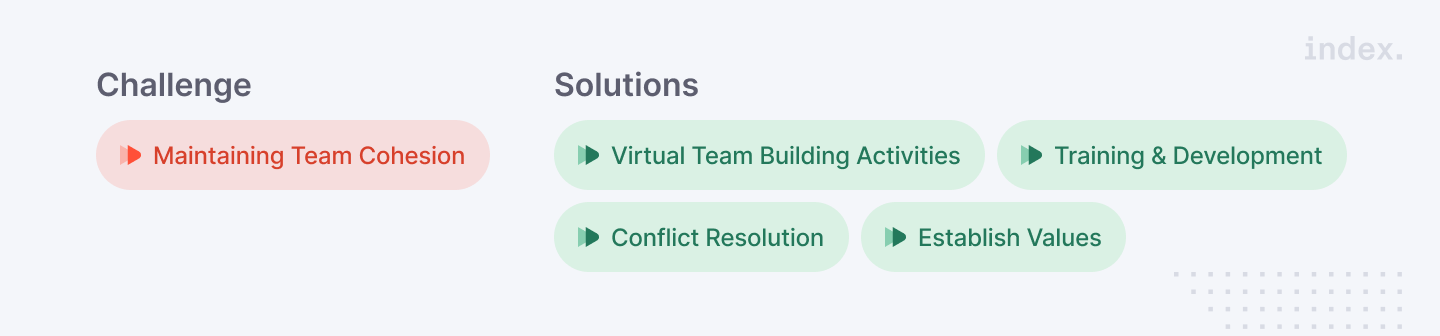
Remote Hiring Challenge 3: Maintaining Team Cohesion
Creating a cohesive remote team necessitates proactive behaviour. Regardless of their geographical location, team members should feel linked and part of a wider community. The absence of casual meets and social bonding activities might create a sense of detachment among team members.
The advantages of team cohesion become increasingly obvious as a team's cohesiveness increases. Working toward team cohesiveness also enables managers and team leaders to strengthen their leadership and management skills by stimulating innovative thinking and offering opportunities to broaden their understanding of how teams collaborate effectively.
Remote Hiring Solution 3: Ways to Maintain Team Cohesion
Virtual Team Building Activities
It is imperative to focus not just on the team's goals but also on the connections between team members that help them achieve those goals. Team-building exercises increase members' self-esteem and general morale while also encouraging team members to form relationships with one another to support the team's success.
Training & Development
Team members who are confident in their talents are more likely to communicate with their colleagues and execute their responsibilities more effectively. Providing training and development opportunities is an excellent method of inspiring team members to take ownership of their talents and abilities while also instilling confidence in them when executing jobs. This will eventually benefit their jobs and overall contribution to the team.
Conflict Resolution
Constructive disputes amongst team members are a sign of a healthy group. It would be uncommon if the group did not face a few hurdles along their path. Ideally, no team member should be forced to agree to a given concept just to maintain team cohesion.
Nonetheless, insignificant and minor disagreements should be settled swiftly. If the group members are unable to reach an agreement, they can seek external help and come to a mutual conclusion.
Establish Values
Team members who adequately comprehend the values of the company for which they work and the team in which they participate are more likely to desire to contribute to the team's success. When your team is initially formed, make sure all members understand the organisation's aims and values. Define the team's values and goals, as well as its purpose and objectives.
Index.dev can give you access to 15,000+ vetted software engineers ready to work on your most challenging projects. Hire in under 48 hours!
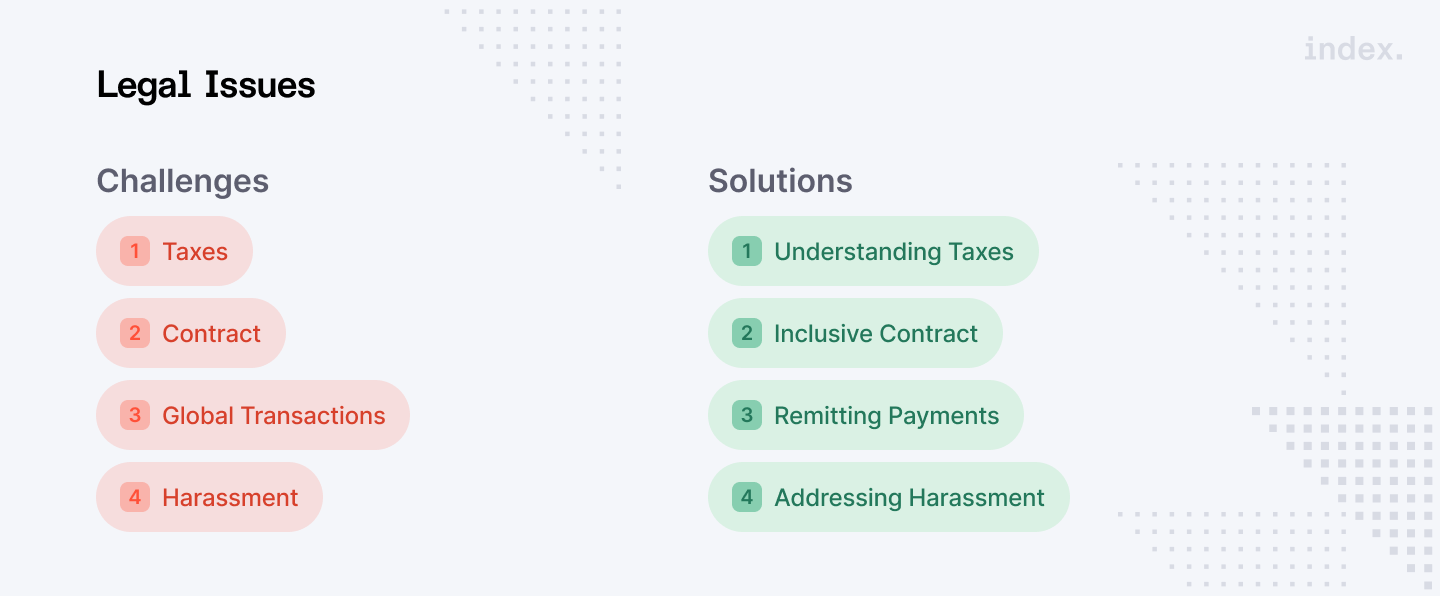
Remote Hiring Challenge 4: Legal Issues
Legal issues are a wider umbrella that houses various other problems. Some of them have been listed below:
Taxes
One of the primary legal issues in remote work is taxes, as the workforce's location in several nations and continents might result in complex tax ramifications. Remote workers and their employers may face considerable issues in finding the right tax jurisdiction, complying with local tax regulations, and handling payroll taxes.
Contract
Setting up clear and thorough employment contracts is critical for remote work agreements. Remote employment has particular challenges, such as setting work hours, managing expectations, clarifying job tasks, and describing termination processes while conforming to local laws and regulations.
Global Transactions
Recruiting employees from different nations necessitates negotiating diverse employment laws and unfamiliar payroll processes. Failure to adhere to local country labour standards and execute compliant payroll can result in penalties, fines, and future difficulties in recruiting overseas personnel. Understanding and complying with multiple nations' labour standards is crucial for hiring, paying, and sustaining a worldwide staff.
Harassment
Employers have to deal with discrimination and harassment problems even while working remotely. Employers must avoid and handle discrimination or harassment claims in remote settings to ensure a safe and inclusive workplace.
Remote Hiring Solution 4: Overcoming Legal Problems Tactfully
Understanding Taxes
Employers must be mindful of employee residency challenges, distinct state tax legislation, and other factors that may influence how their employees pay taxes. To properly negotiate these challenges, employers need to speak with tax advisors who specialise in remote work settings.
Understanding withholding rules, remaining current on tax benefits for remote employment, and applying this information to financial planning are critical for legal compliance and successful tax management.
Inclusive Contract
The contract is the first form of communication between the employer and the employee. Keep it as elaborated as possible and try to add relevant information so that there’s no confusion.
Here's what you should mention in the contract:
- Clearly define job tasks and performance objectives
- Establish communication methods designed for remote work
- Include protocols regulating confidentiality, data protection, and dispute resolution
- List of competitors they can’t work with after a certain time of resigning
- Salary breakup, notice period, termination process, and any other relevant policies
Remote employment contracts should be reviewed and updated on a regular basis to ensure they stay relevant to the ever-changing nature of working remotely. Employers may provide transparent working conditions, safeguard both parties' rights, boost productivity, and minimise any legal problems by carefully reviewing the remote worker's home country's employment contract legislation.
Remitting Payments
If a company wants to hire and pay people in a particular country, it must first form an organisation there. A corporation that has established a presence in one or more other countries might hire a multi-country payroll provider to pay its international workforce.
If a corporation does not have companies in the countries where its remote workers live, it might bypass the entity creation procedure by collaborating with a global employer of record (EOR). A global EOR has worldwide payroll capabilities.
It is responsible for risk mitigation, local labour needs, and compliance with various wage and payroll legislation in international markets. A worldwide EOR is set up to hire, pay, and manage worldwide, remote employees for an organisation.
Addressing Harassment
It is essential to have thorough anti-discrimination and anti-harassment rules that identify forbidden behaviours. This encompasses discrimination based on race, gender, age, sexual orientation, or disability, as well as numerous types of harassment, such as verbal, physical, and internet harassment.
To achieve compliance, employers should:
- Provide remote personnel with frequent training on discrimination and harassment prevention procedures.
- Establish clear reporting processes for workers to report cases of discrimination or harassment.
- Investigate any accusations of discrimination or harassment immediately and take necessary corrective action.
- Employees should understand their rights and feel empowered to report any discrimination or harassment they encounter or witness.
Remote Hiring Challenge 5: Data Security & Privacy
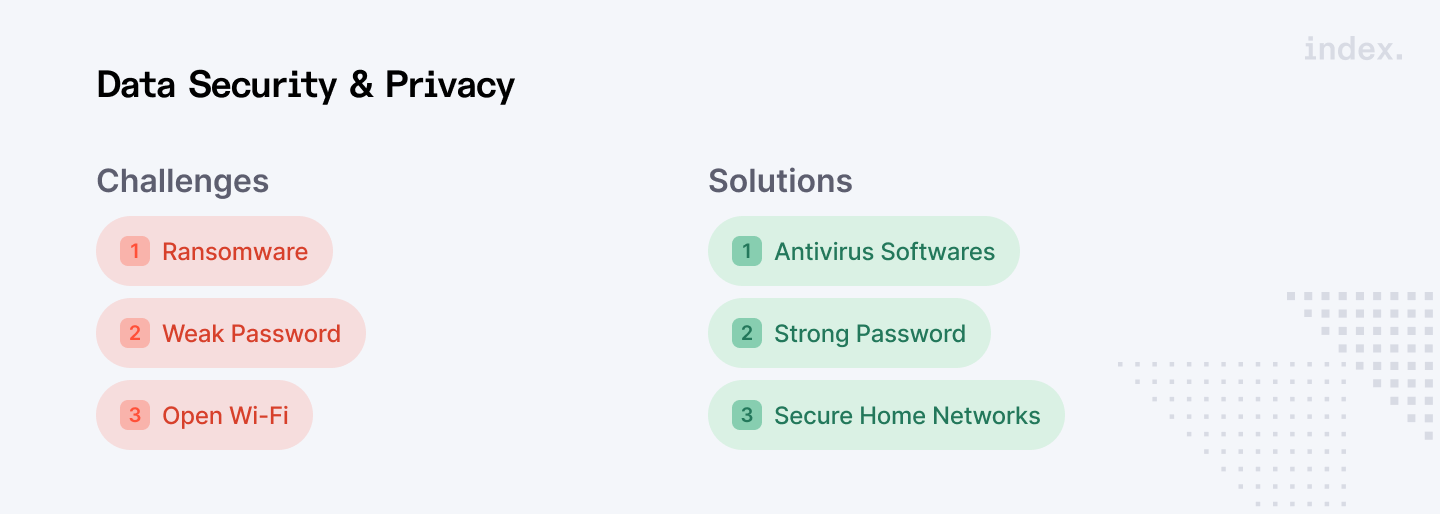
Ransomware
The main goal of ransomware is to extort or scam people. They are frequently distributed by phishing emails with malicious attachments that infect a device and subsequently encrypt files or even whole devices. Other ransomware attacks include social engineering or drive-by downloading, which directs victims to fake websites that install malicious software on their computers.
Weak Password
One of the most serious risks to firms' remote workforces is the continued use of weak, insecure, or recycled passwords and login credentials. Failure to utilise safe passwords invalidates cybersecurity software and technologies such as firewalls and virtual private networks (VPNs). Hackers may now use software to break account passwords and obtain crucial company information.
Open Wi-Fi
Employees working in public places may connect to unsecured wi-fi networks, increasing the danger of data interception by unauthorised users. Data collected between your employee's smartphone and the corporate network might be extremely valuable to a hacker. Remote working, for example, may enable man-in-the-middle attacks, particularly if your staff rely on insecure connections to do their job.
Remote Hiring Solution 5: Safeguarding Against Cyber Threats
Antivirus Softwares
Antivirus software improves remote worker security. Home networks are targeted by cybercriminals employing advanced attack vectors such as distributed denial-of-service (DDoS), malware, ransomware, and spyware. Antivirus software helps to combat these threats by automatically detecting, identifying, and stopping viruses, phishing schemes, and zero-day assaults from entering the network.
Strong Password
Make sure your passwords include numbers, characters, and special characters such as @,#,*, etc. Passwords should be at least eight characters long and updated on a regular basis, preferably once or twice a month. It is also critical to have unique passwords for each account and equipment that an employee has.
Secure Home Networks
Network encryption should be used to improve home networking, and it may be modified on the router's wireless setup page's security settings. Wi-Fi Protected Access 2 (WPA2) is the highest secure encryption level available on most routers. Additional Wi-Fi security measures include blocking access to specified media access control (MAC) addresses. The router should always run the most recent firmware version available.
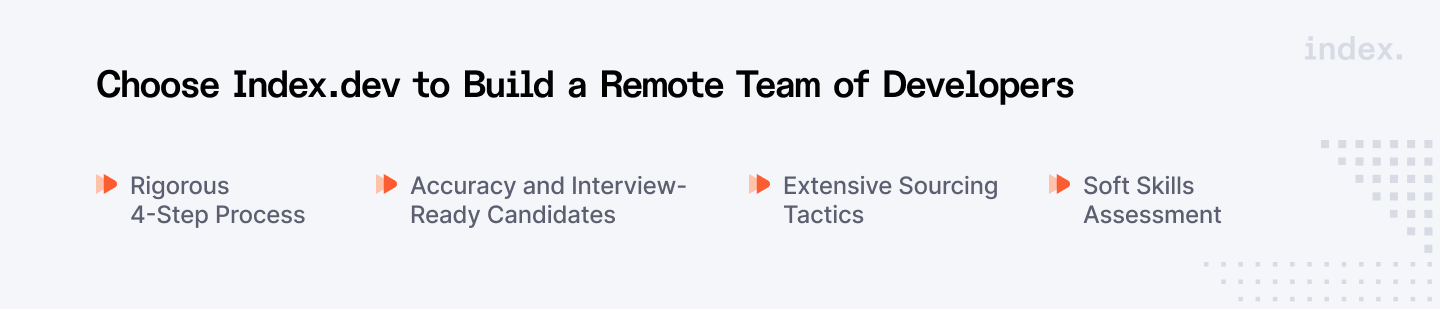
Choose Index.dev to Build a Remote Team of Developers
Index.dev prioritises assessing tech talent to guarantee that organisations receive the top candidates for their projects. Index.dev picks applicants who not only have the necessary technical abilities but also possess the correct work ethic and can flourish in a remote work environment. Here are the main aspects of the vetting process:
Also Read: Why Hire Remote Developers in 2024: What Index.dev Can Do for You?
1. Rigorous 4-Step Vetting Process
Index.dev's vetting procedure includes comprehensive sourcing, rigorous review, meticulous technical assessment, and soft skill verification. This method allows the platform to find qualified applicants who are performance-driven, succeed at remote work, and adhere to industry norms.
2. Accuracy and Interview-Ready Candidates
The emphasis is on precision in matching and providing prospects ready for interviews within 48 hours. Index.dev matches applicants with 99% accuracy based on industry and job requirements.
3. Extensive Sourcing Tactics
Index.dev monitors over 500 channels for top talent, including engineering groups, prominent sites such as Quora and Reddit, GitHub, and specialised local employment boards. The platform provides a varied and high-quality pool of candidates by drawing from many sources.
4. Soft Skills Assessment
Soft skills are viewed as equally important as technical abilities in the screening process. Index.dev assesses candidates' problem-solving abilities, communication skills, creative thinking, time management, emotional intelligence, self-learning, attention to detail, cross-disciplinary understanding, and business acumen to ensure they have the qualities required to succeed in a remote work environment.
Also read: Vetting High-Performing Tech Talent: Index.dev’s Rigorous 4-Step Process
Conclusion
If you can identify the challenges related to remote hiring in the earlier phase, you will be able to solve them promptly. Be it working around the time zones, assessing soft skills, maintaining team cohesion, overcoming legal issues, or safeguarding against cyber threats; everything can be handled.
Join unicorns, startups & scaleups, like Omio, Glopal, and Perforce who hired Index.dev contractors, tapping the elite 5% of vetted tech talent and saving up 40% on web development!
FAQs
1. How can the challenge of different time zones be solved?
Even though understanding and appreciating time zone variations is essential, there are times when all team members must be present for communication, planning, and collaboration. To guarantee maximum involvement, plan and find overlapping hours that are convenient for the majority of team members and arrange essential meetings around these times.
You should also ensure that everyone understands exactly what is expected and when items are due, taking into consideration the various time zones so that each team member is in sync. Use tools to assist your teams stay on track with what has to be done and when. This way, you can eliminate confusion and ensure everyone is on the same page.
2. What are the ways to assess soft skills?
Skills assessments are a fantastic approach for assigning a qualitative or quantitative value to how well someone performs at work. Hiring managers can use soft skills exams to swiftly assess and evaluate the soft talents of candidates.
Skills exams are enjoyable and interesting for candidates, and they can be done at their convenience. For recruiters, they provide significant insight into how an individual works while also allowing you to evaluate numerous prospects at once, saving time.
Those with whom a candidate has previously worked might sometimes provide the finest information about their soft abilities. If reference checks are part of your hiring process, take advantage of this.
Question their colleagues about the soft skills they demonstrated at work. The response you receive during these calls will frequently provide you with all of the information you need to go deeper and make an informed hiring choice.
3. How can team cohesion be maintained?
It is imperative to focus not just on the team's goals but also on the connections between team members that help them achieve those goals. Team-building exercises increase members' self-esteem and general morale while also encouraging team members to form relationships with one another to support the team's success.
Team members who are confident in their talents are more likely to communicate with their colleagues and execute their responsibilities more effectively. Providing training and development opportunities is an excellent method to inspire team members to take ownership of their talents and abilities while also instilling confidence in them when executing jobs. This will eventually benefit their job and overall contribution to the team.
Constructive disputes amongst team members are a sign of a healthy group. It would be uncommon if the group did not face a few hurdles along their path. Ideally, no team member should be forced to agree to a given concept just to maintain team cohesion.
4. What are the common legal issues that can arise?
One of the primary legal issues in remote work is taxes, as the workforce's location in several nations and continents might result in complex tax ramifications. Remote workers and their employers may face considerable issues in finding the right tax jurisdiction, complying with local tax regulations, and handling payroll taxes.
Not only this, recruiting employees from different nations necessitates negotiating diverse employment laws and unfamiliar payroll processes. Failure to adhere to local country labour standards and execute compliant payroll can result in penalties, fines, and future difficulties in recruiting overseas personnel. Understanding and complying with multiple nations' labour standards is crucial for hiring, paying, and sustaining a worldwide staff.
5. How can remote employers ensure an inclusive contract?
The contract is the first form of communication between the employer and the employee. Keep it as elaborated as possible and try to add relevant information so that there’s no confusion.
Here's what you should mention in the contract:
- Clearly define job tasks and performance objectives
- Establish communication methods designed for remote work
- Include protocols regulating confidentiality, data protection, and dispute resolution
- List of competitors they can’t work with after a certain time of resigning
- Salary breakup, notice period, termination process, and any other relevant policies
Remote employment contracts should be reviewed and updated on a regular basis to ensure they stay relevant to the ever-changing nature of working remotely. Employers may provide transparent working conditions, safeguard both parties' rights, boost productivity, and minimise any legal problems by carefully reviewing the remote worker's home country's employment contract legislation.