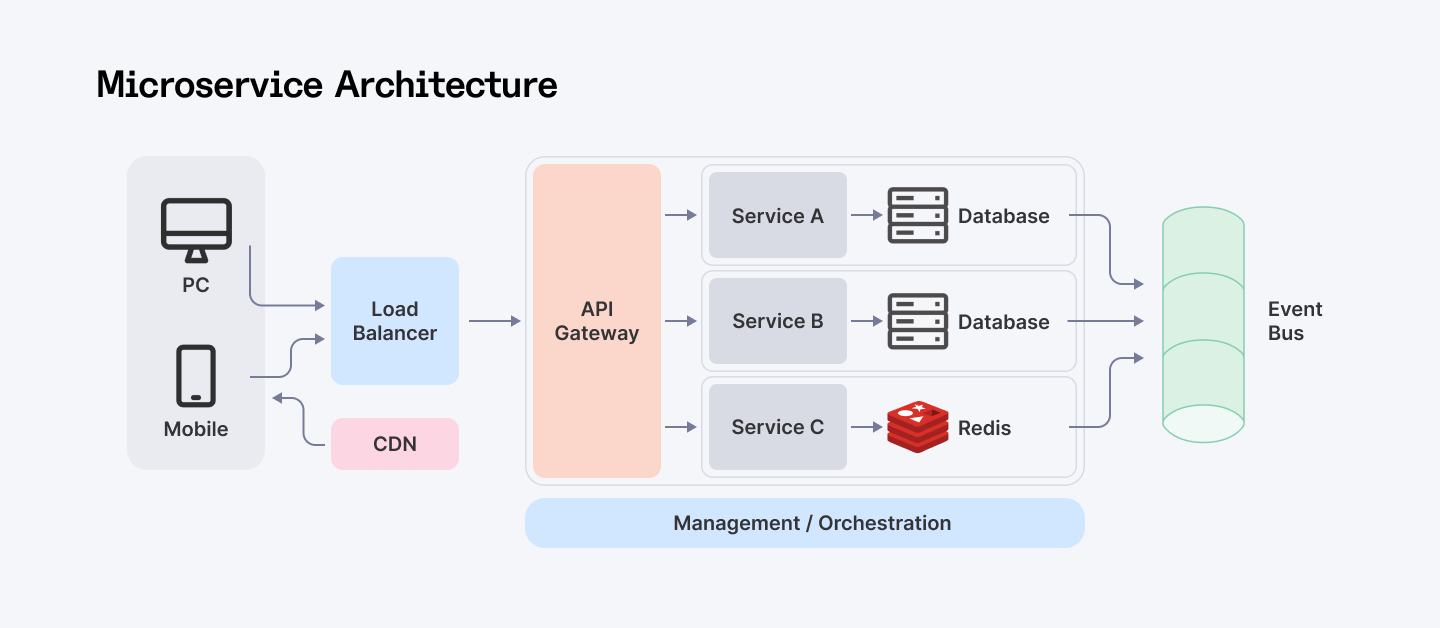
Microservices architecture is a way of developing software applications as a set of components, which are small, autonomous, and dependent only on external interfaces that are well-identified. Despite the advantages like scalability, flexibility, and faster time to market, the main issues of this architecture are the complexity of design, data consistency, security, and operational issues.
Component contract testing or consumer-driven contract testing is key to enabling verification of compatibility between service providers and consumers to overcome these challenges. This testing method entails formulating a contractual specification, which describes expected service behaviour then testing the provider and the consumer selectively. Component contract testing therefore becomes crucial in microservices as this makes it easier for teams to catch integration problems at their early stage and resolve them to avoid antagonizing.
Also, it improves the efficiency of the developers since the same services can be worked on independently without affecting other components which results in shorter cycles of development. In addition, component contract testing helps to maintain systems in compliance with service contracts and to improve their reliability and stability resulting in lower cost of maintenance and upgrading.
This blog outlines the best practices of microservices architecture, how component contract testing is relevant in it and the importance and advantage that it brings along problems such as architecting microservices, component contract testing why it matters, developer efficiency and stability of the system among others.
Looking for senior remote developers? Index.dev connects you with vetted professionals ready to work on your most challenging projects. Hire in under 48 hours!
Understanding Component Contracts
Component contracts play an important role in microservice architecture as they determine how services should be able to communicate and behave. A component contract is the legal documentation that defines working protocols and expected formats where data have to be exchanged, and how the microservices should behave. In this regard, several types of contracts are of utmost importance.
Service contracts include the service implementation logic, while input/output contracts describe the expected format of the data inputs and outputs of the service. These contracts guarantee that the data passed between services being integrated is formatted in a given way, hence avoiding common mishaps during integration. For instance, if a service expects a JSON object with specific fields, this act will be clearly stated in the input contract, making it easier for the consumer to check their request before sending it.
Behaviour contracts define how a component should behave in a given situation, and how the service is supposed to operate in response to certain inputs. This can include specifying what is considered a success or error response for a particular request and making sure every participant knows how the service is expected to behave under various circumstances. It is imperative to have such clarity to ensure real-time continuous interactions and well-defined expectations among all the microservices.
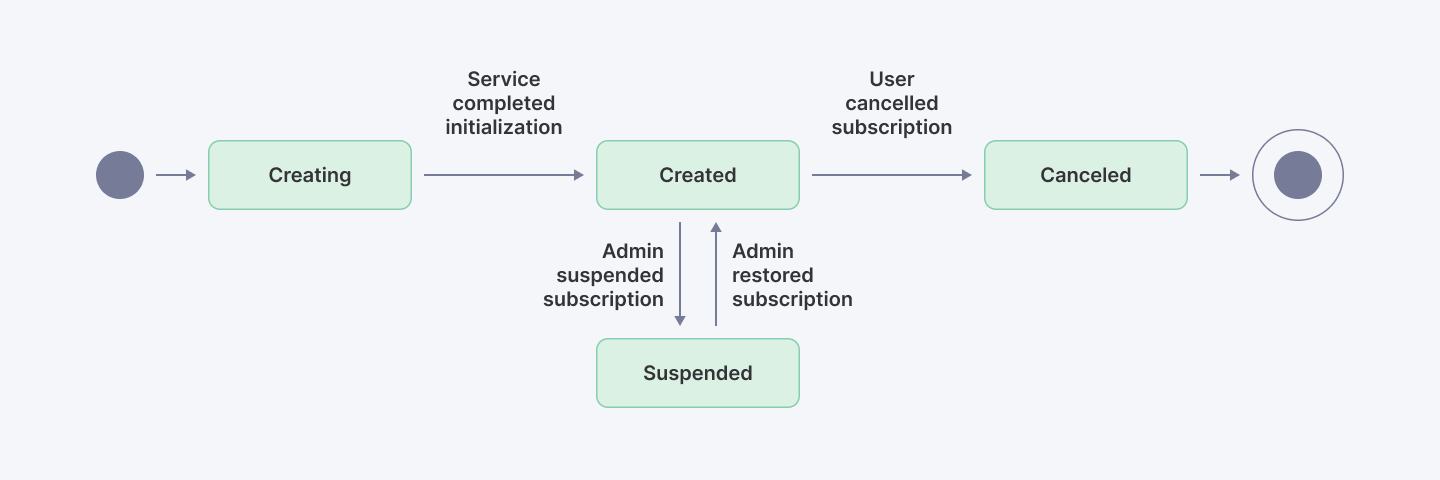
State transition descriptions that one can get from state contracts denote the way a service should transform from one state to another depending on specific actions or events that should occur. This is especially the case in systems where the state is either partially or fully shared or where it impacts other services, thus allowing for proper architecture homogeneity.
As they promote flexibility, it is evident that microservice contracts should be clear and well-defined in the integration process. It helps improve the quality of the communication between teams, minimizes the possible integration problem, and stability of the system is achieved. A clear example is accurate contracts in software development where different teams can develop each of their services knowing that if the team operates under the contracts their services will interface freely. Apart from the optimization of the development process for microservices, it also helps to encourage the adoption of interdisciplinary collaboration and, as a result, create a more robust microservices architecture.
Tools and Technologies
When it comes to microservices, component contract testing is crucial for guaranteeing that services are going to be able to interact with one another. Several tools can help in this process like Pact, Spring Cloud Contract, and WireMock; all of them have different features that are good for different jobs.
Pact
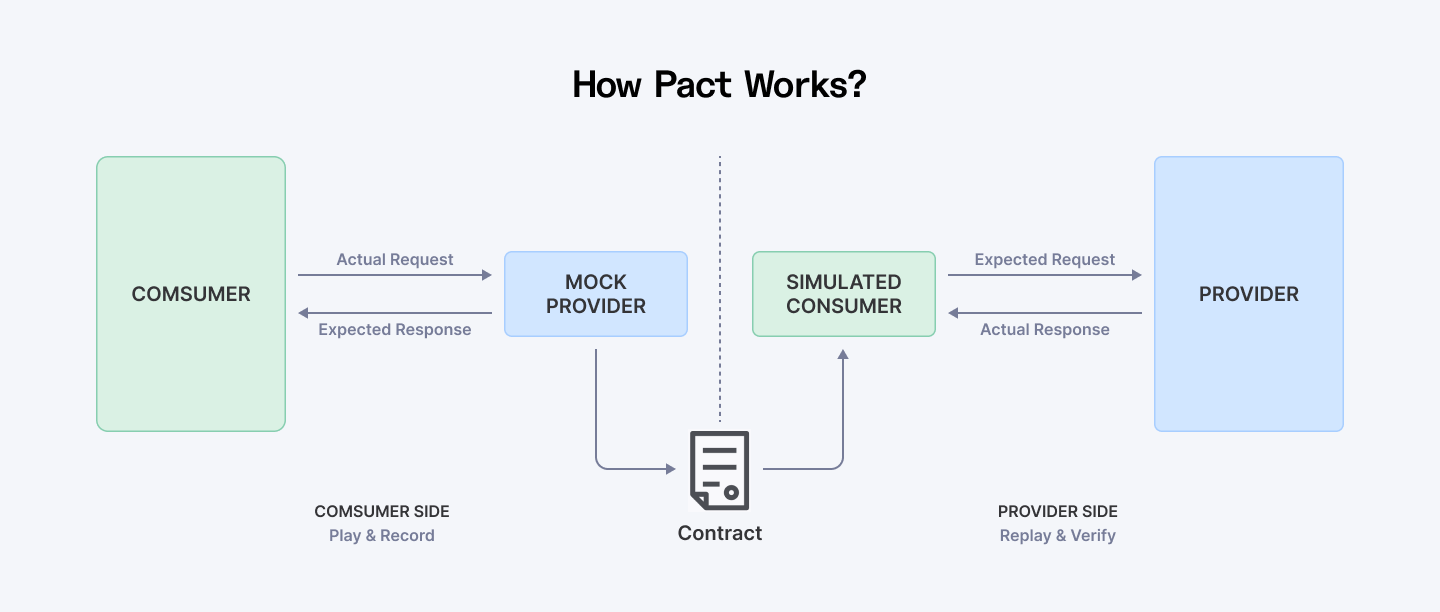
Pact is an open-source tool that is rather popular and follows consumer-driven contract testing. It enables consumers to dictate control points for service encounters, creating contracts that can be checked against the actual work done by the provider. One of the highlighted benefits of Pact is its ability to work with various languages, including Ruby, JavaScript, and Java, which helps adapt to different development contexts. The strength of its capacity to offer immediate feedback eliminates the command-line form of operation to increase the efficiency of developers and improve their teamwork. Pact is especially useful for the projects where the services are introduced in the different languages, or where the fast iterations are required.
Spring Cloud Contract
Spring Cloud Contract is another influential tool out there developed to work predominantly with Java applications, mostly the ones developed using the Spring framework. It uses the service provider model, which lets service providers describe and validate contracts with Groovy or YAML. One of the nice things about Spring Cloud Contract is the ability to generate tests based on the contracts defined above and that they are then included in at build time.
This means that any variations in the service contract will be subjected to testing at that point ensuring stability and reliability in the service interactions. It will be best suited for the teams who have already adopted the Spring ecosystem and need better and more reliable automation in terms of testing.
WireMock
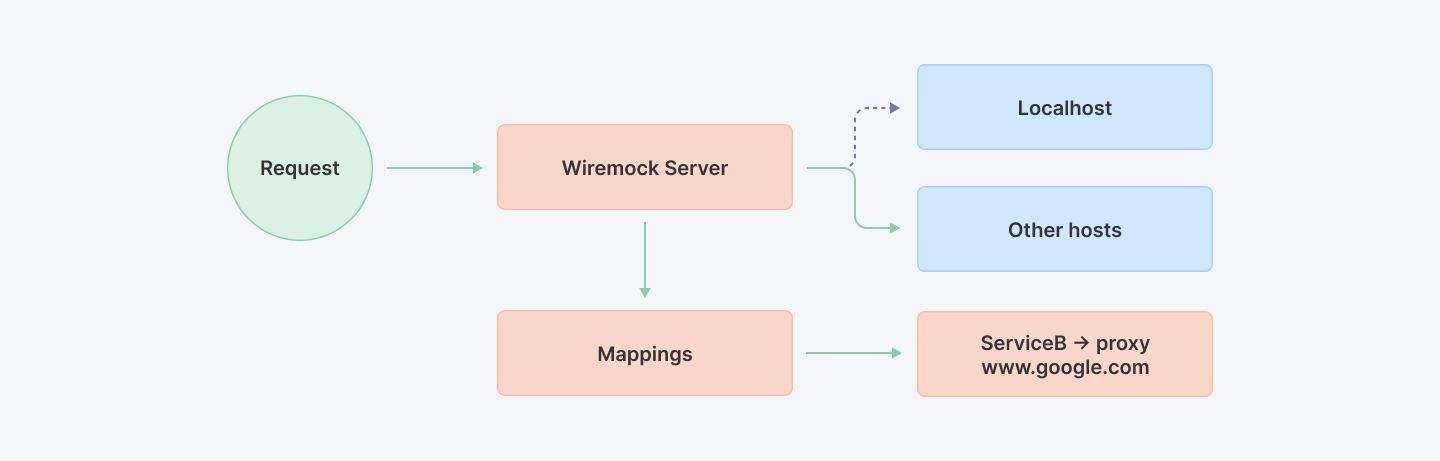
WireMock is a versatile tool that allows HTTP mocking and enables developers to control the interactions with other services. It is especially helpful for testing microservices that require integration with third-party APIs because mock responses can be created based on scenarios. WireMock provides both static and dynamic responses, so it can be used in many testing scenarios. This is often used for scenarios that involve a large number of API clones and emulation of the behaviour of a service without actually relying on it.
When deciding on the most appropriate tool to use in component contract testing a few factors must be considered some of which include the following; For instance, if the project is multilingual and centres around consumer contracts, Pact may be optimal. On the other hand, if the team is developing in Java and adopts the Spring framework, a Spring Cloud Contract would be more suitable.
Explore More: How to Implement Microservices Architectures for Better Scalability & Maintainability
Implementation Steps for Component Contract Testing in Microservices
Implementing component contract testing in a microservices architecture involves several key steps. Let's outline the process using Pact, a popular consumer-driven contract testing tool:
1. Define the Contract
- Identify the consumer and provider services that need to be tested.
- Decide on the contract format (e.g., JSON, YAML) and the contract definition language (e.g., Ruby, JavaScript, JVM).
- Specify the expected interactions between the consumer and provider, including request and response details, headers, and status codes.
Example using Pact in JavaScript:
const { Pact } = require('@pact-foundation/pact');
const provider = new Pact({
  consumer: 'OrderService',
  provider: 'UserService',
  port: 1234,
});
provider.addInteraction({
  state: 'user with id 123 exists',
  uponReceiving: 'a request for a user',
  withRequest: {
    method: 'GET',
    path: '/users/123',
  },
  willRespondWith: {
    status: 200,
    headers: { 'Content-Type': 'application/json' },
    body: {
      id: 123,
      name: 'John Doe',
      email: 'john@example.com',
    },
  },
});
2. Generate Mock Servers
- Use the contract definition to create mock servers for the provider service.
- The mock server should simulate the expected behavior of the provider based on the contract.
Example using Pact in JavaScript:
const server = provider.mockService();
server.addInteraction({
  state: 'user with id 123 exists',
  uponReceiving: 'a request for a user',
  withRequest: {
    method: 'GET',
    path: '/users/123',
  },
  willRespondWith: {
    status: 200,
    headers: { 'Content-Type': 'application/json' },
    body: {
      id: 123,
      name: 'John Doe',
      email: 'john@example.com',
    },
  },
});
3. Write Consumer Tests
- Create integration tests for the consumer service that interact with the mock provider server.
- Verify that the consumer behaves as expected when interacting with the provider based on the contract.
Example using Pact in JavaScript:
const { Pact, Matchers } = require('@pact-foundation/pact');
const { eachLike, like } = Matchers;
describe('OrderService', () => {
  describe('when requesting a user', () => {
    before(() => {
      return provider.addInteraction({
        state: 'user with id 123 exists',
        uponReceiving: 'a request for a user',
        withRequest: {
          method: 'GET',
          path: '/users/123',
        },
        willRespondWith: {
          status: 200,
          headers: { 'Content-Type': 'application/json' },
          body: {
            id: like(123),
            name: 'John Doe',
            email: 'john@example.com',
          },
        },
      });
    });
    it('returns the user details', async () => {
      const user = await orderService.getUser(123);
      expect(user).toEqual({
        id: 123,
        name: 'John Doe',
        email: 'john@example.com',
      });
    });
  });
});
4. Verify Contract Compliance
- Run the consumer tests against the mock provider server to verify contract compliance.
- If the tests pass, publish the contract to a shared location (e.g., a Pact Broker).
- The provider service can then verify its implementation against the published contract.
Example using Pact in JavaScript:
const { Pact, Matchers } = require('@pact-foundation/pact');
describe('UserService', () => {
  describe('when a request is made for a user', () => {
    before(() => {
      return provider.addInteraction({
        state: 'user with id 123 exists',
        uponReceiving: 'a request for a user',
        withRequest: {
          method: 'GET',
          path: '/users/123',
        },
        willRespondWith: {
          status: 200,
          headers: { 'Content-Type': 'application/json' },
          body: {
            id: like(123),
            name: 'John Doe',
            email: 'john@example.com',
          },
        },
      });
    });
    it('returns the user details', async () => {
      const user = await userService.getUser(123);
      expect(user).toEqual({
        id: 123,
        name: 'John Doe',
        email: 'john@example.com',
      });
    });
  });
});
By following these steps and using a contract testing tool like Pact, you can effectively implement component contract testing in your microservices architecture. This approach helps ensure compatibility between services, detect integration issues early, and promote independent development and deployment of microservices.
Explore More: Choreography vs. Orchestration: Understanding the Key Differences in Microservices
Best Practices
Testing of component contracts is critical when it comes to microservices and API interactions; this makes best practices for effective component contract testing critical. Here are key strategies and considerations for implementing contract testing effectively:
Clear and Concise Contracts
Write Understandable Contracts:
There should be a written form of the contracts with the interaction patterns of services outlined clearly and in simple language. This includes defining how the request and response data should look like, the error codes to use and any other necessary information. A clear contract helps to minimize integration risks because it sets clear expectations for the consumer-provider relationship and minimizes confusion.
Reflect Actual Integrations:
The contracts should be realistic in terms of which integrations actual API calls will involve. One should make a call to the actual endpoint to analyze the request and response and make sure that the contracts match the real-world occurrence of the calls between the services.
Keeping Contracts Up-to-Date
Regular Updates:
As microservices evolve, contracts must be updated to reflect any changes in functionality or data structure. This practice helps maintain compatibility and avoids breaking changes that could disrupt service interactions.
Version Control:
Implement versioning for contracts to manage changes over time. This allows consumers to adapt to new versions without immediate disruption, ensuring backward compatibility where necessary.
Automation in CI/CD Pipeline
Automate Contract Verification:
Integrate contract verification into the Continuous Integration/Continuous Deployment (CI/CD) pipeline. This ensures that any changes to the provider or consumer services are automatically validated against the contract, catching integration issues early in the development process.
Use Consumer-Driven Contracts:
In a consumer-driven contract testing approach, consumers define the expectations for the provider. This method encourages collaboration between teams and ensures that the provider develops APIs that meet the actual needs of consumers.
Contract-First Approach
Initiate Development with Contracts:
Adopting a contract-first approach can guide both development and testing processes. By defining contracts before implementation, teams can ensure that all development efforts align with the agreed-upon specifications, leading to fewer misunderstandings and integration issues down the line.
Addressing Common Challenges
Managing Complexity:
As the number of microservices grows, managing contracts can become complex. To mitigate this, maintain a centralized repository for contracts that is easily accessible to all teams involved. This repository serves as a living document of interactions and helps streamline communication.
Debugging Integration Issues:
Contract testing simplifies debugging by isolating failures to specific components. When a test fails, it is easier to identify whether the issue lies with the consumer's expectations or the provider's implementation, allowing for quicker resolution.
Educating Teams:
Ensure that all team members understand the principles of contract testing and how to implement them effectively. Providing training and resources can help teams adopt best practices and leverage the full benefits of contract testing methodologies.
By following these best practices, organizations can enhance the reliability and maintainability of their microservices architecture, ultimately leading to smoother integrations and a more robust software ecosystem.
Case Study
Here is a case study demonstrating the benefits of component contract testing in a microservices architecture:
Improving Quality and Reliability at Acme Corp
The Challenge
Acme Corp is an e-commerce giant that has recently migrated their big, complex monolithic application to microservices architecture. While this provided greater flexibility and transversality, it also introduced new challenges concerning the reliable exchange of messages between a constantly rising number of discrete services.
With the growth of the system, the tests have become slow, unreliable and management of tests became a problem because they were end-to-end integration tests. In many of the cases, the bugs were detected when it was at the last stages of the release cycle, and this served as replacement time. Acme needed a more efficient union in order to experiment the interaction with the other services and the compatibility that can be achieved without much deviation from the fast test.
The Solution: Contract Testing
Acme adopted an approach of contract testing and used the pact tool which is an open-source tool. The key steps:
- Define contracts: Developers created simple service-level agreements, which signed contracts between services to receive and return the results and define how to handle errors. Policies for contracts were maintained in the said cabinets.
- Write contract tests: As described by the developers, contract tests for each service were then written to ensure compliance with the specified contracts. Some of these tests could well be conducted independently of the rest without the implementation of the entire system.
- Automate in CI/CD: Verification of the contract was done and incorporated into Acme CI/CD pipeline. In case of violation of any contract, it was captured and hence could not release any bugs.
- Evolve contracts: When services were extended, the contracts were amended with the new changes. The way that Pact versioning is built meant that backwards compatibility was maintained and existing consumers could not be broken.
The Results
Adopting contract testing had a significant positive impact on Acme's microservices architecture:
- Improved reliability: Through checking most integration problems at their source, contract testing minimized the chances of bugs reaching production. Acme learned to reduce its occurrences of accidents and other production-related incidences by 50%.
- Faster releases: Contract tests take less than two minutes while the end-to-end tests take half an hour or more. This was possible because it enabled Acme to release new features more often of the product without necessarily having to release new versions that had a lot of instability.
- Easier maintenance: Through having clear contracts and independent testing Acme’s microservices became much easier to comprehend, amend and develop. Ideally, early implementation of the developer onboarding, meant a drastic reduction of the onboarding time by 30%.
- Increased collaboration: Contract testing helped improve the relationships between different teams by fostering associated requirements. It was up to developers to come up with standards on interfaces for services and to inform the consumers hence being compelled to make changes.
Discover how Index.dev helped Poq, an Ecommerce SaaS platform hire super-qualified Frontend & QA talent.
The Bottom Line
Contract testing was equally beneficial for Acme’s microservices architecture as it facilitated the validation of contracts across services. By providing clear contracts and confirming that all service interactions occur in isolation the company was able to construct a more robust, sustainable and adaptable system. This real-life example supported the benefits of contract testing – better quality of software products, faster time-to-market and enhanced communication between the outsourcing partner and the in-house team.
For Companies:
Find senior software developers quickly and efficiently. Register with Index.dev and receive 2-5 pre-vetted candidates for any open position within just 48 hours. Spend less time searching and more time interviewing the best talent. Index.dev takes care of the initial screening process, saving you valuable time and resources.
For Developers:
Join a network of leading companies in the UK, EU, and US. Sign up with Index.dev and let the platform connect you with the best remote opportunities. No more endless applications just focused matches with companies looking for your skills.