Java remains one of the most widely used and in-demand programming languages for building robust, scalable applications across industries. As digital transformation initiatives continue to accelerate in 2025, demand for skilled Java developers is at an all-time high. Organizations are increasingly outsourcing Java development to take advantage of regional expertise, cost efficiencies, and time-zone advantages.
In this guide, we provide an in-depth look at Java developer hourly rates across three key regions: Central and Eastern Europe (CEE), Latin America (LATAM), and Asia. We also explore factors influencing these rates and trends shaping the global Java development market.
Index.dev connects you with senior Java developers from leading talent hubs in CEE, LATAM, and Asia. Our remote professionals bring exceptional technical skills, strong work ethics, and global experience to your team.
Here’s what we offer:
⚡ Access to the top 5% of developers, AI/ML specialists, designers, and project managers
⚡ Hard-to-find experts for your most challenging roles
⚡ Transparent pricing with no hidden fees, plus a 30-day risk-free trial
Find the skilled talent you need with Index.dev's global network of top developers, perfectly matched to your project requirements.
Market Overview and Emerging Trends in Java Development (2025)
Java development in 2025 is shaped by several key factors:
1. High Enterprise Demand
Java remains a dominant choice for enterprise applications. Industries such as finance, healthcare, telecommunications, and e-commerce continue to rely heavily on Java for backend systems, integration solutions, and scalable services. The demand for developers with deep knowledge of enterprise-level Java frameworks (e.g., Spring, Hibernate, Jakarta EE) continues to rise.
2. Cloud-Native Focus
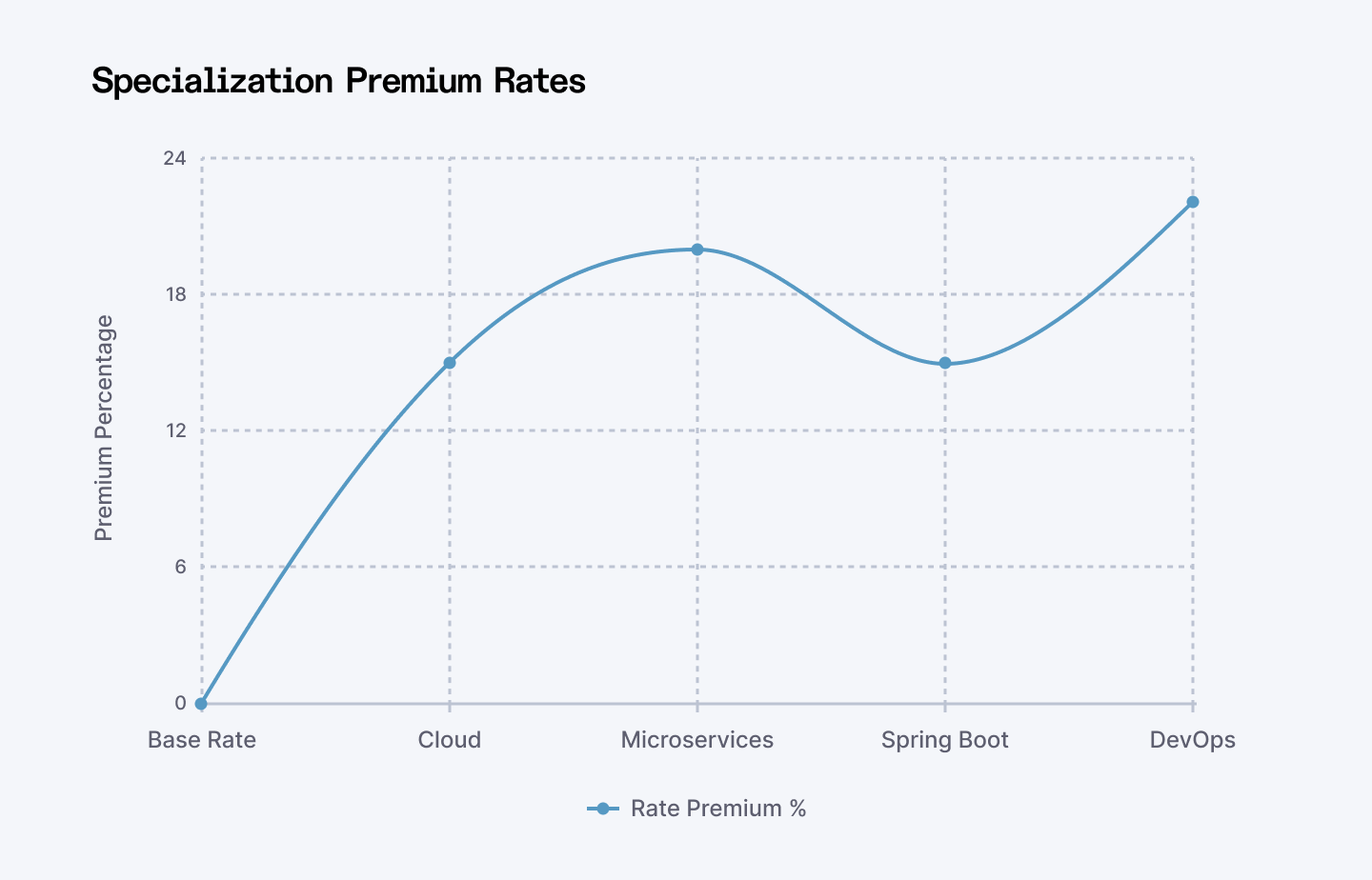
Cloud computing and microservices architectures are becoming increasingly central to application development. Java developers with experience in cloud-native technologies (such as AWS, Azure, and Google Cloud Platform) and microservices frameworks (e.g., Spring Boot, Kubernetes) are in high demand and command premium rates.
3. Increased Regional Competition
As global competition for senior Java talent heats up, hourly rates are rising in some established outsourcing markets. For example, Central and Eastern Europe has seen notable rate increases due to the growing demand for highly specialized Java expertise.
4. Remote Work and Global Talent Pools
Remote work has become a norm for many developers, allowing businesses to tap into talent from around the world, irrespective of geographic location. This dynamic has contributed to rate fluctuations and has further diversified the global talent pool.
Java Developer Hourly Rates in Central and Eastern Europe (CEE)
The CEE region has established itself as a prominent hub for Java development, with a robust ecosystem of enterprise-level development expertise. The region's strong technical education system and extensive experience with large-scale projects make it particularly attractive for companies seeking Java expertise.
Technical Background:
- Approximately 75% of Java developers in CEE have formal Computer Science degrees
- Strong focus on enterprise-level development and microservices architecture
- High certification rates for Oracle and Spring technologies
- Excellent English communication skills (predominantly B2-C1 levels)
Average Hourly Rate:
Java developer rates in CEE typically range from $30 to $160 per hour, varying by country and expertise level.
Country-Specific Rates:
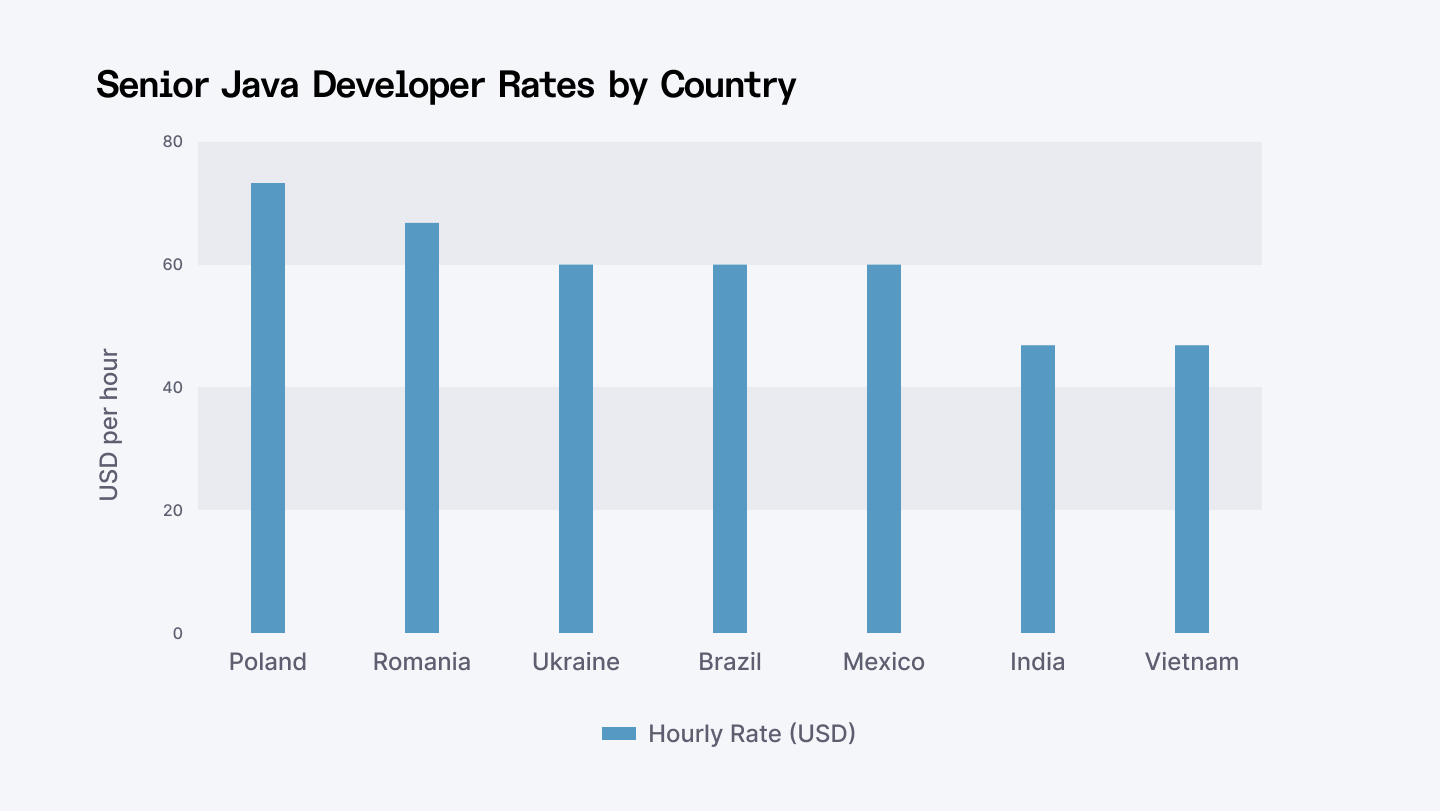
- Poland: Leading the market with rates between $45-90/hour
- Romania: Competitive rates ranging from $35-80/hour
- Ukraine: Cost-effective rates at $30-70/hour
- Czech Republic: Premium market with rates of $40-85/hour
- Bulgaria: Emerging market offering rates between $35-75/hour
Talent Pool Distribution:
- Poland: Approximately 120,000 Java developers
- Romania: Around 80,000 Java developers
- Ukraine: Roughly 70,000 Java developers
- Czech Republic: About 40,000 Java developers
- Bulgaria: Approximately 25,000 Java developers
Experience-Based Rate Structure:
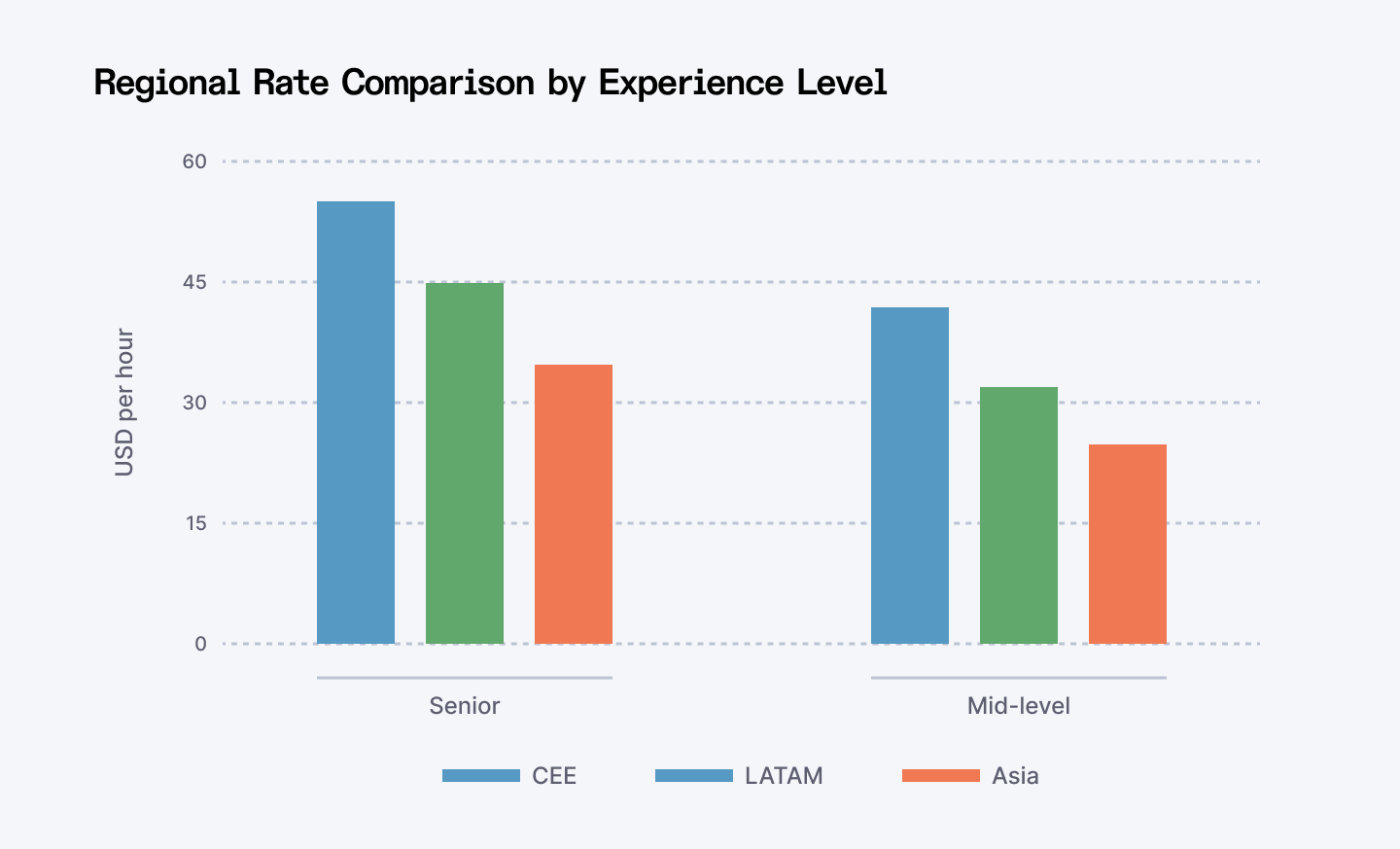
- Junior (1-2 years): $30-45/hour
- Mid-level (3-4 years): $45-75/hour
- Senior (5+ years): $75-120/hour
- Technical Lead/Architect: $120-160/hour
Domain Expertise Premium Rates:
- Banking/Financial Services: +30-35% above base rates
- Enterprise Software: +25-30% above base rates
- Telecommunications: +20-25% above base rates
- E-commerce: +15-20% above base rates
- Insurance: +20-25% above base rates
Common Technology Stack Expertise:
- Java + Spring Framework: Widespread across all CEE countries
- Java + Microservices: Strong expertise in Poland and Romania
- Java + Cloud (AWS/Azure): High demand in Czech Republic and Poland
- Java + Angular/React: Growing full-stack capabilities
- Java + Kubernetes: Increasing DevOps integration
Engagement Models:
- Direct Employment: Most economical for long-term projects
- Staff Augmentation: 25-35% agency premium
- Project-Based: Fixed price with 30-40% premium
- Dedicated Teams: Preferred for large-scale projects
Technical Specializations:
- Spring Framework: Most widely used, available across all experience levels
- Jakarta EE: Strong enterprise-level expertise
- Microservices Architecture: Growing demand and expertise
- Cloud-Native Development: Increasing focus on AWS and Azure
- DevOps Integration: Strong CI/CD implementation experience
Market Advantages:
- Strong enterprise development culture
- Extensive experience with large-scale systems
- High standard of software architecture practices
- Robust quality assurance processes
- Significant legacy system modernization experience
Regional Considerations:
- Strong intellectual property protection (especially in EU members)
- Well-developed IT infrastructure
- Established Agile development practices
- Compatible business hours with Western Europe
- Strong focus on code quality and documentation
Why Choose CEE for Java Development?
The region offers an ideal combination of enterprise-level expertise, cost-effectiveness, and cultural alignment with Western business practices. The mature Java ecosystem, combined with strong technical education and extensive experience with complex systems, makes CEE particularly suitable for enterprise-level Java development projects.
Read More: Software Development Outsourcing in Eastern Europe: A Comprehensive Analysis
Java Developer Hourly Rates in Latin America (LATAM)
Latin America has emerged as a strategic hub for Java development, particularly attractive to North American companies due to time zone alignment and growing enterprise-level expertise. The region offers a strong combination of technical proficiency and cultural affinity with Western business practices.
Technical Education:
- Around 70% of Java developers hold computer science or engineering degrees
- Strong emphasis on enterprise software development
- Growing number of Oracle and Spring certifications
- Improving English proficiency (predominantly B1-B2 levels)
Average Hourly Rate:
Java developer rates in LATAM typically range from $30 to $155 per hour, depending on location and expertise level.
Country-Specific Rates:
- Brazil: Largest market with rates between $35-85/hour
- Argentina: Competitive rates ranging from $30-75/hour
- Mexico: Growing market with rates of $35-80/hour
- Colombia: Emerging hub charging $30-70/hour
- Chile: Premium market with rates between $40-85/hour
Talent Pool Distribution:
- Brazil: Approximately 100,000 Java developers
- Argentina: Around 50,000 Java developers
- Mexico: Growing pool of ~45,000 developers
- Colombia: About 30,000 developers
- Chile: Roughly 20,000 developers
Experience-Based Rate Structure:
- Junior (1-2 years): $30-40/hour
- Mid-level (3-4 years): $40-65/hour
- Senior (5+ years): $65-100/hour
- Technical Lead/Architect: $100-155/hour
Domain Expertise Premium Rates:
- Banking/FinTech: +25-30% above base rates
- E-commerce: +20-25% above base rates
- Telecommunications: +15-20% above base rates
- Government/Public Sector: +15-20% above base rates
- Insurance: +20-25% above base rates
Common Technology Stack Expertise:
- Java + Spring Boot: Widespread across the region
- Java + Angular: Strong presence in Brazil and Argentina
- Java + Microservices: Growing expertise in Mexico and Colombia
- Java + AWS: Increasing cloud adoption across major hubs
- Java + Oracle: Strong enterprise database expertise
Engagement Models:
- Direct Employment: Growing trend with established tech hubs
- Staff Augmentation: 30-40% agency premium
- Project-Based: Variable pricing based on scope
- Dedicated Teams: Popular for long-term enterprise projects
Technical Specializations:
- Spring Framework: Dominant in enterprise development
- Microservices: Growing adoption and expertise
- Cloud Infrastructure: Strong AWS and Azure capabilities
- Legacy System Modernization: Significant experience
- API Development: Robust REST/SOAP expertise
Market Advantages:
- Time zone alignment with US clients
- Cultural affinity with North American business practices
- Strong enterprise development background
- Growing startup ecosystem
- Competitive pricing for enterprise-grade expertise
Regional Considerations:
- Intellectual Property: Improving protection frameworks
- Infrastructure: Reliable in major tech hubs
- Agile Practices: Widespread adoption
- Communication: Strong English in tech centers
- Banking: Modern international payment infrastructure
Why Choose LATAM for Java Development?
The region offers an excellent combination of enterprise Java expertise and cost-effectiveness, particularly for North American companies. The similar time zones, cultural alignment, and growing technical capabilities make LATAM an increasingly attractive destination for Java development projects.
Explore More: 5 Best Countries in Latin America to Hire Software Developers
Java Developer Hourly Rates in Asia
Asia remains a dominant force in global Java development, particularly for enterprise-level applications. The region's massive talent pool, competitive rates, and extensive experience with large-scale systems make it particularly attractive for companies seeking Java expertise.
Technical Education:
- Over 85% of Java developers hold engineering degrees
- Strong focus on enterprise systems and architecture
- High rates of Oracle and Spring certification
- Robust training programs in major outsourcing companies
Average Hourly Rate:
Java developer rates in Asia range from $20 to $160 per hour, varying significantly by country and expertise.
Country-Specific Rates:
- India: Most cost-effective with rates between $25-65/hour
- Philippines: Competitive rates ranging from $30-75/hour
- Vietnam: Emerging market with rates of $30-70/hour
- Singapore: Premium market charging $80-160/hour
- Malaysia: Mid-range market at $40-90/hour
Talent Pool Distribution:
- India: Approximately 800,000 Java developers
- China: Around 600,000 developers (primarily domestic)
- Philippines: Roughly 70,000 developers
- Vietnam: About 60,000 developers
- Singapore: Premium pool of 35,000 developers
Experience-Based Rate Structure:
- Junior (1-2 years): $20-35/hour
- Mid-level (3-4 years): $35-60/hour
- Senior (5+ years): $60-90/hour
- Technical Lead/Architect: $90-160/hour
Domain Expertise Premium Rates:
- Banking/Financial Services: +30-40% above base rates
- Enterprise Software: +25-35% above base rates
- Telecommunications: +20-30% above base rates
- Insurance: +25-30% above base rates
- Government Systems: +20-25% above base rates
Common Technology Stack Expertise:
- Java + Spring Boot: Widespread across all regions
- Java + Microservices: Strong in India and Singapore
- Java + Angular/React: Growing full-stack capabilities
- Java + Cloud (AWS/Azure): Increasing adoption
- Java + Oracle: Extensive enterprise database experience
Engagement Models:
- Direct Hiring: Complex but cost-effective for large teams
- Staff Augmentation: 35-45% agency premium
- Project-Based: Variable pricing with strong PM oversight
- Dedicated Teams: Popular for enterprise projects
Technical Specializations:
- Enterprise Java: Extensive experience across region
- Spring Framework: Dominant in business applications
- Microservices: Growing expertise, particularly in India
- Legacy Modernization: Strong experience base
- Cloud Migration: Increasing capabilities
Market Advantages:
- Large talent pool availability
- Cost-effective enterprise development
- 24/7 development capabilities
- Strong process maturity
- Extensive enterprise project experience
Regional Considerations:
- IP Protection: Varying levels by country
- Infrastructure: Reliable in major tech hubs
- Work Culture: Hierarchical structure
- Communication: Time zone management crucial
- Quality Standards: ISO/CMM certifications common
Why Choose Asia for Java Development?
Asia offers an unmatched combination of scale, cost-effectiveness, and enterprise Java expertise. The region's extensive experience with large-scale systems and mature development processes makes it particularly suitable for enterprise Java projects.
Also Read: India vs Latin America vs Eastern Europe for IT Outsourcing
Key Factors Influencing Java Developer Hourly Rates
Several factors influence Java developer rates across regions:
Enterprise Experience
Developers with experience in large-scale enterprise systems and integration often command higher rates, especially in industries with complex requirements.
Framework and Tooling Expertise
Familiarity with Java frameworks such as Spring, Hibernate, Jakarta EE, and microservices frameworks (e.g., Spring Boot, Kafka) can drive premium rates.
Cloud Expertise
Developers skilled in cloud platforms (AWS, GCP, Azure) and containerization technologies (Docker, Kubernetes) are highly sought after, particularly for cloud-native Java development projects.
Microservices and Architecture Design
Java developers with experience in microservices architecture and distributed systems design often earn higher rates due to the complexity of these systems.
Industry Domain Knowledge
Developers with specialized knowledge of specific industries (e.g., FinTech, healthcare, banking) are typically compensated at a premium due to the regulatory and technical challenges these sectors face.
Conclusion
The Java development trends in 2025 offer a diverse range of outsourcing options across regions. Each region—Central and Eastern Europe (CEE), Latin America (LATAM), and Asia—offers its own unique benefits in terms of cost, talent availability, and expertise.
- CEE remains a go-to destination for businesses seeking high-quality enterprise Java expertise with a strong focus on system architecture and integration.
- LATAM offers competitive rates, excellent proximity to North America, and a growing base of Java developers skilled in enterprise-level technologies.
- Asia offers the most cost-effective options, particularly for large-scale projects or those requiring a significant number of developers.
When choosing a region for Java development, companies should carefully consider factors like project complexity, technical requirements, time zone alignment, and long-term support needs.
For Clients: Hire skilled Java developers through Index.dev and enjoy fast hiring, vetted talent, and seamless support for your business needs.
For Developers: Join Index.dev to build a strong remote career with global companies and secure high-paying Java developer opportunities.