
LinkedIn InMail messages have an average response rate between 10-25%, barely better than cold email's 1-5%. When you factor in that recruiters get 200+ messages daily, most recruiting outreach disappears into the void.
Most recruiting teams still rely on cold outreach. They post job ads and wait. They send mass messages and hope. But the best candidates aren't sitting in their inbox, they're searching.
Gartner predicts traditional search engine volume will drop 25% by 2026 as candidates turn to AI tools. Meanwhile, 70-85% of jobs are never posted online at all, they're filled through networking and search-based discovery.
This creates a clear opportunity. Recruitment teams that build content around real search behavior reach candidates before anyone else does. These are high-intent candidates. They're already evaluating their next move. They're reading, comparing, and deciding.
Quick Answer:
Recruitment teams reach high-intent candidates by aligning content with real career-stage search behavior instead of relying on cold outreach. Search- and AI-optimized content attracts candidates earlier in their decision process, builds trust before first contact, and reduces dependence on outbound recruiting.
Key Takeaways:
- High-intent candidates research career moves through search engines and AI tools long before applying
- Problem-solution and comparison content outperform job ads in organic discovery
- SEO functions as long-term recruiting infrastructure, not a short-term campaign
- Chunked content and FAQs increase visibility in AI-generated answers and summaries
Below are the twelve strategies recruitment teams use to turn search and AI visibility into a predictable source of high-intent candidates.
| # | Strategy | What It Does | Who It Reaches |
| 1 | Career-stage search intent | Matches content to candidate seniority and urgency | Mid-career and senior candidates |
| 2 | Problem-solution content | Addresses workplace pain points, not job listings | Passive but curious candidates |
| 3 | SEO as infrastructure | Builds long-term organic discovery | All search-active candidates |
| 4 | Educational content | Builds trust before first contact | Candidates evaluating employers |
| 5 | Industry-specific queries | Targets niche technical searches | Specialists and domain experts |
| 6 | Comparison content | Helps candidates decide between options | Decision-stage candidates |
| 7 | Pre-qualifying content | Filters out poor fits early | Only aligned candidates |
| 8 | Search visibility as risk management | Prepares for sudden hiring needs | Future candidate pipeline |
| 9 | AI-optimized content | Surfaces in LLM and AI summaries | AI-first searchers |
| 10 | FAQ and voice search | Captures conversational queries | Voice and chat searchers |
| 11 | Content refreshes | Keeps information current and trustworthy | Returning visitors |
| 12 | Intent signal measurement | Tracks real engagement, not vanity metrics | Internal recruiting teams |
These strategies map directly to candidate intent stages, from early career exploration to final decision-making, and show how search-led content replaces outbound-heavy recruiting.
Looking to hire pre-vetted remote developers? Hire with index.dev to reduce time-to-hire and reach top engineering talent worldwide.
1. Career-Stage Search Intent in Recruitment Content
Summary: Career-stage search intent aligns recruitment content with a candidate’s seniority, urgency, and decision readiness, allowing teams to engage prospects earlier in their career research.
Different candidates search in different ways. A junior developer looking for their first remote role types different queries than a senior engineer exploring a leadership path.
Early-career candidates search for things like "how to get a remote developer job." Senior candidates search for "engineering manager career path" or "startup CTO vs VP Engineering."
The intent behind each query is different. The content that answers them should be different too.
A 2025 report from McKinsey found that 67% of mid-career professionals research new roles for 3 to 6 months before applying. They are not job-hunting yet. They are reading articles about career growth, salary benchmarks, and industry shifts.
Many developers are not actively applying. But they search for content like "how to transition from outsourcing to product teams" or "remote work salary expectations." These are high-intent signals. They tell you someone is thinking about change.
Recruitment teams that map content to these stages catch candidates early. Before competitors even know they exist.
2. Problem-Solution Content for Candidate Engagement
Summary: Problem-solution content attracts candidates by addressing real workplace frustrations and career challenges rather than promoting specific job openings.
Job descriptions rank poorly in search. Nobody types "Senior React Developer, Series A Startup, Competitive Salary" into Google. But people do search for real problems.
They search for things like "how to move from agency to in-house," "signs it's time to leave a startup," or "leadership burnout in engineering teams." These are real queries. They reflect real friction in a person's career.
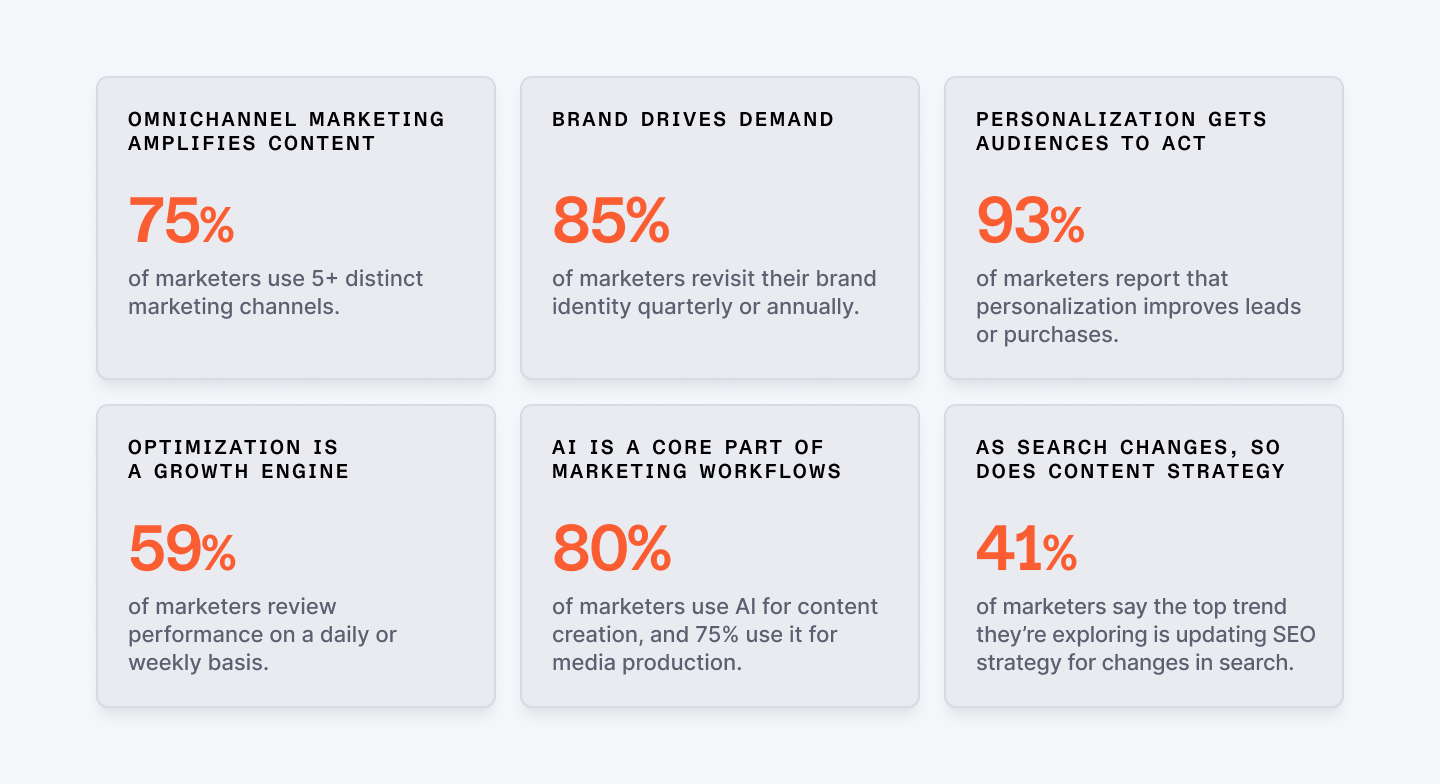
HubSpot’s 2024 content marketing report showed that problem-focused articles get 3.2x more organic traffic than promotional content. The same principle applies to recruitment content. Candidates trust content that helps them solve a problem. They ignore content that only sells a role.
Source: HubSpot
Problem framing also maps directly to how people ask questions in AI tools like ChatGPT and Perplexity. When someone asks an LLM "should I leave my agency job for a startup," the AI pulls from content that addresses that exact problem.
⭢ See how AI reduces time-to-hire while maintaining candidate quality and improving recruitment efficiency.
3. SEO as Long-Term Candidate Discovery Infrastructure
Summary: Treating SEO as long-term candidate discovery infrastructure turns recruitment content into a compounding asset instead of a short-lived campaign.
Search is not a campaign. It is infrastructure. A job ad runs for 30 days and disappears. A well-optimized article about "remote developer career paths" can rank for years.
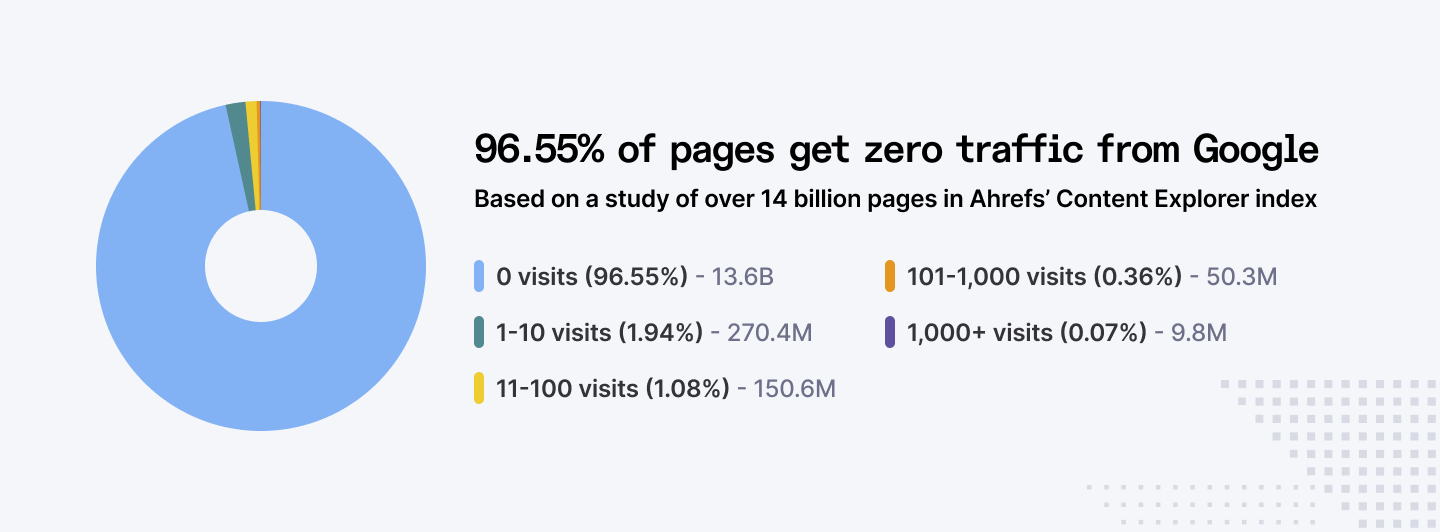
According to a study by Ahrefs, 96.55% of all web pages get zero traffic from Google. The pages that do rank share common traits. They target specific long-tail queries. They are technically sound. They answer questions clearly.
For recruitment teams, this means treating content like a product. Evergreen guides, salary comparison pages, and career roadmaps compound over time. Time-sensitive content like event recaps or quarterly hiring updates has a shorter shelf life. Both matter. But evergreen content builds the base. When that base is supported by white hat backlinks from relevant industry sites, it becomes easier for those resources to earn trust and keep bringing in qualified traffic.
Technical SEO still matters too. Page speed, mobile optimization, structured data, and internal linking all affect how search engines surface recruitment content. A career page that loads in 5 seconds on mobile will lose candidates before they read a word.
Recruitment teams that lack in-house search expertise often partner with agencies that specialize in building intent-driven discovery systems. Timmermann Group is an agency that helps organizations design and execute SEO strategies that treat search as infrastructure rather than a one-off campaign combining technical SEO, search-led content planning, and conversion-focused site structure.
4. Educational Content for Employer Authority and Trust
Summary: Educational recruitment content builds trust by helping candidates understand career paths, skills, and market conditions before any hiring conversation begins.
Candidates trust teams that teach before they recruit. This is not a new idea. But most recruitment teams still skip it.
Educational content includes career guides, industry explainers, skill transition roadmaps, and salary benchmark reports. This content does not sell a role. It helps candidates make better decisions. That builds trust.
A 2024 report from the Edelman Trust Barometer found that 63% of people trust a company more if it provides useful educational content before asking for anything in return.
5. Industry- and Tool-Specific Search Queries in Recruitment Content
Summary: Industry- and tool-specific content targets the exact technical language candidates use when researching roles, making it more discoverable and more relevant.
Generic career content does not rank well. It also does not convert. A post titled "5 Tips for Your Job Search" competes with millions of similar pages. A post titled "Best JavaScript Frameworks for Fintech Startups in 2025" targets a specific audience with specific intent.
Industry-specific language matters. Role-based terminology matters. Certifications, tools, and frameworks that candidates actually search for matter.
According to the 2023 Stack Overflow Developer Survey, 63% of developers use specific tool names when searching for career-related content. They search for "Kubernetes engineer salary" not "cloud infrastructure salary." They search for "React Native vs Flutter jobs" not "mobile development careers."
6. Comparison Content for Decision-Stage Candidate Choices
Summary: Comparison content performs best at the decision stage, helping candidates evaluate options and choose between roles, companies, or career paths.
When candidates are close to making a move, they compare options. This is decision-stage intent. It is the most valuable type of search traffic for recruitment.
Common comparison searches include "in-house vs agency developer roles," "startup vs enterprise engineering careers," and "contract vs full-time developer paths." These queries show that someone has already decided to make a change. They are now deciding where and how.
Comparison Type | Example Query | Candidate Signal |
| Work environment | "startup vs corporate engineering culture" | Evaluating culture fit |
| Compensation model | "contract vs full-time remote developer pay" | Comparing financial options |
| Career trajectory | "staff engineer vs engineering manager path" | Planning long-term growth |
| Location/model | "remote vs on-site developer jobs 2025" | Deciding work setup |
| Industry | "fintech vs healthtech developer roles" | Choosing a sector |
Comparison content works because it meets candidates at the moment of decision. They are not browsing. They are choosing. A well-written comparison page can be the reason someone applies to your company instead of a competitor.
7. Pre-Qualifying Content to Filter Candidate Fit
Summary: Pre-qualifying content sets clear expectations upfront, attracting aligned candidates while discouraging those who are not a good fit.
The best recruitment content does two things. It attracts the right people. And it repels the wrong ones.
Transparency about expectations is key. If a role requires 4 hours of overlap with US time zones, say so in your content. If the company moves fast and expects ownership from day one, write about that. If the salary range is fixed, publish it.
A 2024 study from SHRM found that 72% of candidates who left a new job within 6 months said the role did not match what was described during hiring. Content that is honest about trade-offs reduces this mismatch.
Clear expectations in blog posts, FAQ pages, and team culture articles help candidates self-select before applying. A developer reading about your company's async communication style can decide if it fits. This saves everyone time.
8. Search Visibility as Recruitment Risk Management
Summary: Search visibility functions as a form of hiring risk management by ensuring candidates are already familiar with an employer before urgent hiring needs arise.
Hiring often becomes urgent without warning. A key engineer leaves. A funding round closes and the team needs to double. A new product launch requires specialists fast.
Teams with strong search visibility can respond to these moments. Teams without it scramble. They post rushed job ads. They pay premium fees to agencies. They settle for whoever is available.
Being discoverable is a form of risk management. It means candidates already know your company when you need them most.
This principle extends beyond recruitment content. Legal and regulatory awareness also affects how candidates perceive employers. Firms such as Bursor & Fisher, P.A. highlight how employment law, compliance, and workplace protections increasingly shape employer brand perception. Candidates research company reputations, legal histories, and workplace policies. A Law Firm SEO Expert can help legal brands adapt to this shift by optimizing content for AI citations, entity authority, and trust-based search visibility. Transparency in these areas builds trust.
9. AI-Optimized Recruitment Content for LLM Retrieval
Summary: AI-optimized recruitment content is structured for retrieval by tools like ChatGPT and Perplexity, increasing visibility in AI-generated answers and summaries.
The way candidates discover content is changing. According to Forrester, an estimated 40% of knowledge workers in 2025 use AI tools like ChatGPT, Perplexity, or Gemini for career research. These tools do not show 10 blue links. They summarize content and present answers directly.
This changes how recruitment content should be structured. AI tools prefer content that is chunked into clear sections. Each section should make sense on its own. Headings should be descriptive. Paragraphs should be short.
Tone also plays a role in how content is interpreted and summarized. Integrating an AI humanizer API into your content workflow can help ensure recruitment pages sound natural and credible while remaining optimized for AI retrieval systems.
FAQ-friendly formatting helps too. When a candidate asks an AI tool "what is it like to work at a remote startup," the AI pulls from pages that answer that exact question clearly. Pages with vague or scattered information get skipped.
10. FAQ and Voice Search Content for Candidate Queries
Summary: FAQ-based content captures conversational and voice search queries by reflecting how candidates naturally ask questions about their careers.
FAQs mirror how real people talk to AI tools and voice assistants. Nobody says "optimal timing career transition." They say "is it worth switching jobs right now?"
Common FAQ-style queries include "how do recruiters evaluate career gaps," "what signals readiness for leadership roles," and "is remote work still growing in tech."
Google reported in 2024 that 27% of the global online population uses voice search on mobile. These voice queries are longer and more conversational than typed searches. Content structured as questions and answers captures this traffic.
The key is to write FAQs that sound natural. Use the same words candidates use. Avoid corporate language. A question like "Will I lose career growth by working remotely?" performs better than "What are the implications of remote employment on professional advancement?"
⭢ Learn how a modern HR tech stack integrates ATS, CRM, and HRIS systems to create a smarter, more efficient hiring process.
11. Content Refreshes to Maintain Accuracy and Authority
Summary: Regular content refreshes maintain credibility by ensuring salary data, role expectations, and market insights remain accurate and current.
The tech hiring market changes fast. An article about developer salaries from 2022 is already outdated. A guide to remote work policies written before the return-to-office wave of 2023 may be misleading.
Outdated content erodes trust. If a candidate reads a salary benchmark that is two years old, they question everything else on your site.
Recruitment teams that refresh content regularly maintain authority. This means updating statistics, revising role expectations, and reflecting current hiring trends. A page about "hiring developers" should reflect 2025 salary ranges, not 2023 numbers.
12. Intent Signal Measurement for Recruitment Effectiveness
Summary: Measuring intent signals instead of vanity metrics connects recruitment content directly to genuine candidate interest and hiring outcomes.
Page views are easy to track but don’t show whether a candidate is genuinely interested. A blog post with 10,000 views and zero applications added no value to your recruiting pipeline.
Intent signals are different. They show genuine engagement.
Metric | What It Tells You | Why It Matters for Recruiting |
| Time on page | Candidate read the full content | Indicates genuine interest in the topic |
| Scroll depth | Candidate engaged past the fold | Shows content held attention |
| Repeat visits | Candidate returned to your site | Suggests they are evaluating your company |
| Assisted conversions | Content influenced a later action | Connects content to actual applications |
| Source path | How candidates found you | Reveals which search queries drive pipeline |
A Harvard Business Review article on talent analytics noted that companies using intent-based metrics reduced their cost-per-hire by 30% compared to those tracking only traffic volume.
Time on page tells you if someone actually read your content. Scroll depth shows if they made it past the introduction. Repeat visits suggest ongoing interest. Assisted conversions reveal which content influenced an eventual application.
➡︎Still relying on cold outreach to find engineers? Index.dev helps you hire pre-vetted remote developers faster by combining global talent access with structured screening and reduced time-to-hire — so you don’t have to chase candidates who aren’t ready to move.
Frequently Asked Questions
How do recruitment teams attract high-intent candidates through search?
Recruitment teams attract high-intent candidates by creating content that matches the queries candidates search for during career exploration.
Problem-solution articles, salary comparisons, and career guides rank organically and engage prospects before they apply.
Is SEO still relevant for recruitment in the age of AI?
Yes. SEO remains essential because AI tools pull answers from well-structured, search-optimized content.
Clear headings, accurate data, and keyword alignment improve visibility in search engines and AI summaries.
What type of content converts best for recruitment?
Problem-focused articles and comparison guides convert best. They reach candidates at the decision stage when they are evaluating options and ready to act.
How long does recruitment content take to show results?
Most recruitment content gains meaningful organic traction in 3–6 months. Evergreen guides on salaries, career paths, and market conditions continue to attract candidates for years.
Why is chunked content important for AI visibility?
AI tools extract answers from clearly sectioned content. Breaking information into standalone headings and short paragraphs ensures it appears in AI-generated summaries and voice responses.
By implementing these 12 strategies, recruitment teams can consistently attract and engage high-intent candidates.
From optimising content for career-stage searches to leveraging AI retrieval and FAQs, each tactic builds a long-term talent pipeline.
Teams that invest in search-led, AI-optimized content reduce reliance on cold outreach, improve candidate quality, and create a predictable recruiting advantage.


