Your hiring process is only as powerful as the tools you have. Which means that your outdated ATS is costing you top candidates every day. And in today's high-speed hiring market, every minute counts.
In this guide, we show you how to spot seven clear warning signs in your current applicant tracking system and deploy AI solutions that transform those pain points into competitive advantages.
Skip the lengthy hiring process by using Index.dev's pre-vetted remote tech talent now.
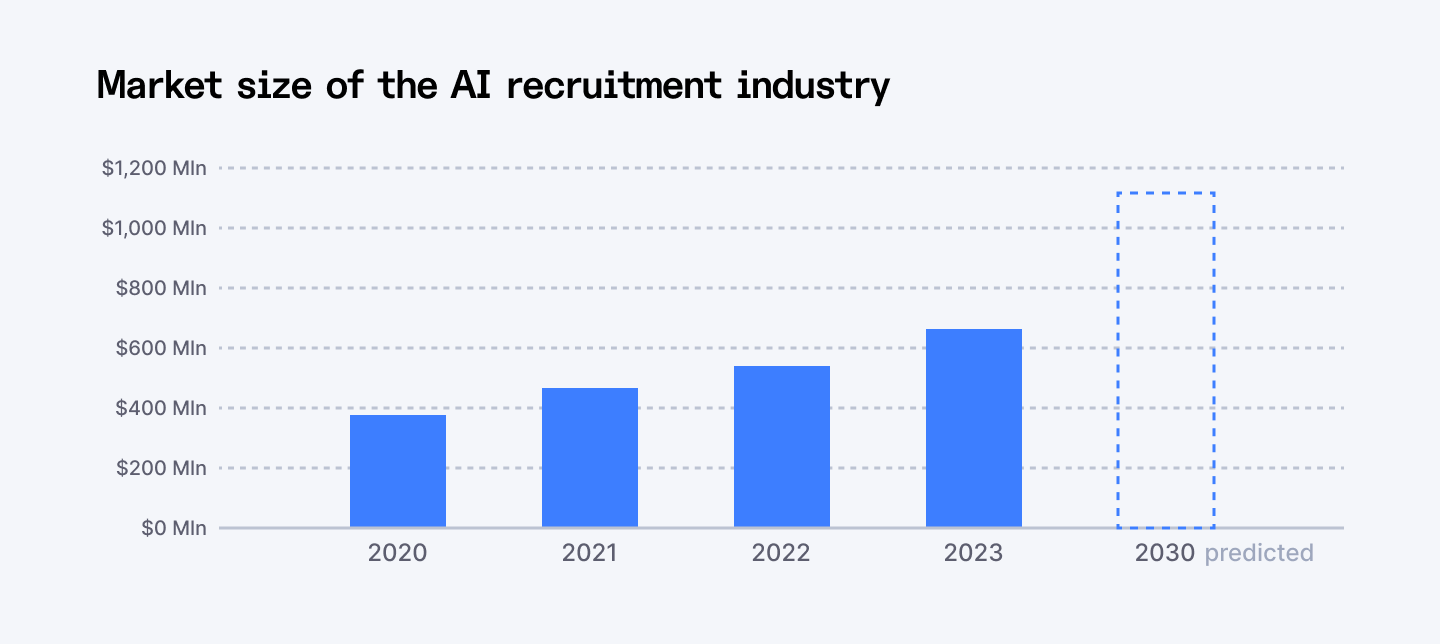
Source: DemandSage
Why Your Hiring Pipeline Stalls at 41 Days and How Does AI Mitigate This
The average time to hire manually takes about 41 days, a nightmare for teams looking to hire quickly. However, an AI applicant tracking system can solve these issues and help you to hire better candidates quickly.
Today's recruitment teams are under increasing pressure to drive timely filling of vacancies with quality candidates. Inefficient systems, such as Taleo and legacy versions of mainstay platforms, clog the system. They cause frustration for both the recruiters and the applicants.
Remote work has made the problem worse, as old tools struggle to handle more applications and candidates from different locations. Intelligent businesses are now embracing AI-driven solutions in order to remain ahead in the high-speed job market today.
So how does leveraging AI help remedy this? An AI applicant tracking system automates posting, screening, and reporting in real time, so you fill roles faster and smarter.
Find out what works and what doesn't when hiring developers using artificial intelligence.
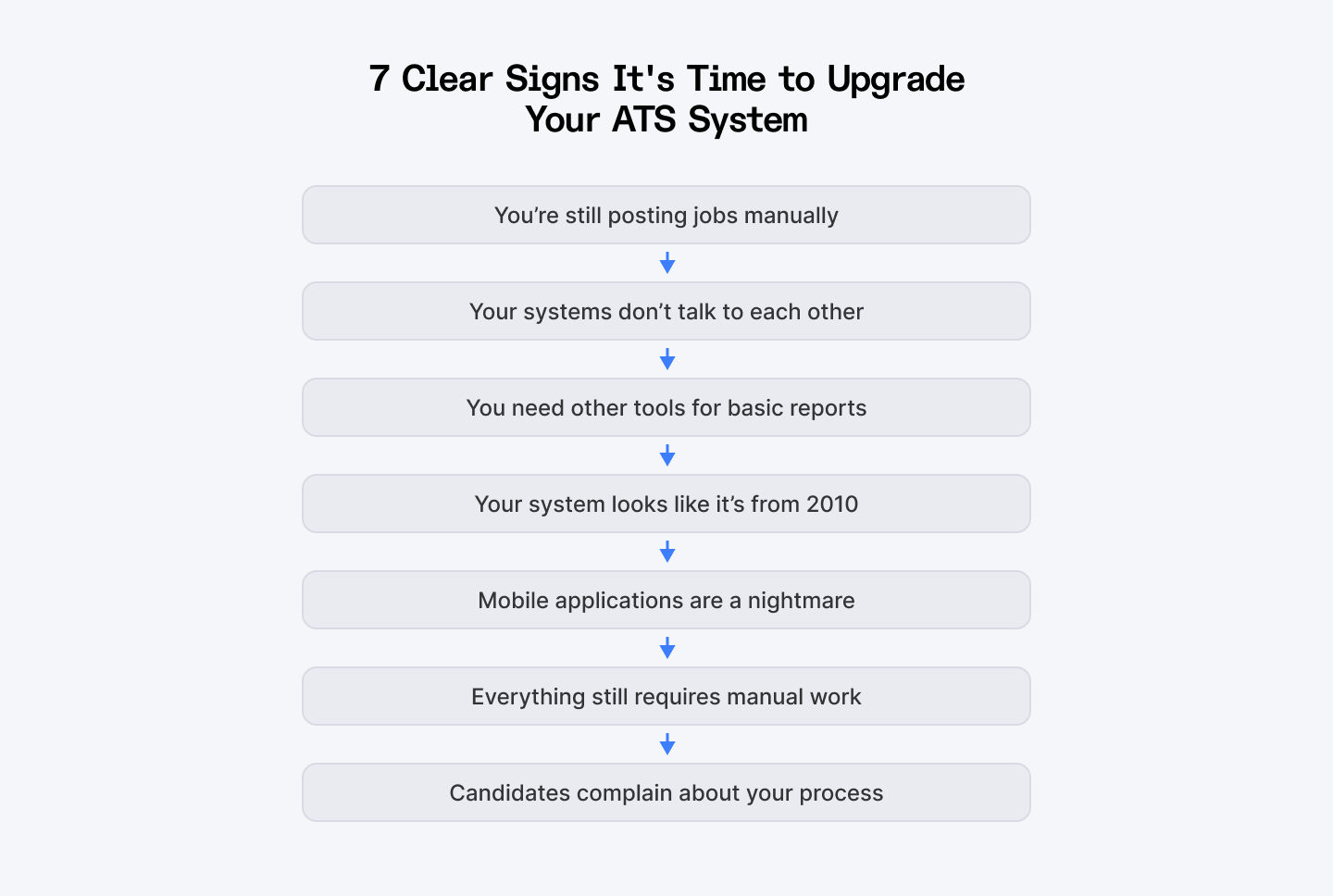
7 Clear Signs It's Time to Upgrade Your System with AI Solutions
Here are 7 unmistakable signs your existing system requires an upgrade and how new AI tools can address each issue.
Sign 1: You're Still Posting Jobs Manually
What's Wrong?
Manual posting burns your time. Most HR departments spend 8-12 hours weekly copy-pasting job ads across 20+ boards. This causes errors, takes an eternity, and makes it almost impossible to track results.
Manual posting also prohibits you from acting fast when immediate positions become available. Each minute spent on redundant tasks is a minute not spent speaking with candidates or refining your recruitment strategy.
How AI Corrects
The new AI applicant tracking system software can cross-post your jobs instantly to 50+ job boards simultaneously. The AI reads your job description and puts it in the right format for each website. The system learns where your best hires come from and prioritizes those boards.
Index.dev's platform uses smart posting that learns which job boards work best for your company. Time is saved, and higher-quality applicants are brought in. The site can optimise posting schedules for maximum exposure and re-post listings automatically to keep top positions on various job boards.
The Math
Automated posting saves companies 27% in hiring expenses. For technical positions earning £80,000+, this adds up to tangible savings in no time. Teams can also cut posting time by 80% and boost quality applications by up to 40%.
Sign 2: Your Systems Don't Talk to Each Other
What's Wrong
When your applicant tracking system is unable to communicate with your other tools, you are duplicating effort. Data gets lost between systems, and candidates become frustrated when they have to repeat themselves.
How AI Solves
These smart systems tie all of your tools together. Your AI applicant tracking system can pull data from LinkedIn, automatically send emails, and update your CRM without you lifting a finger. Everything stays in sync automatically.
Index.dev connects to popular tools like Salesforce and HubSpot. Thereby ensuring that when a candidate applies, their information appears everywhere you need it. The system can even send personalised follow-up emails based on the candidate's background.
Traditional ATS | AI-Powered ATS |
| Manual data entry | Automatic sync |
| Multiple logins needed | Single dashboard |
| Information gets lost | Everything connected |
| Takes hours to update | Updates instantly |
Sign 3: Reporting Feels Like a Chore
What's Wrong
If you're exporting data to Excel, building pivot tables, or using separate analytics tools just to see your hiring metrics, then your system is seriously outdated. It takes too much time and is difficult to catch issues early. Building monthly reports is now a chore that takes days rather than minutes.
So if you're rushing to compile information from various sources when you're asked for some updates by senior management, it’s time to change the system.
How AI Solves
- Instant dashboards.
- Key metrics—time‐to‐hire, source effectiveness, drop-off points—sit at your fingertips.
- Key metrics—time‐to‐hire, source effectiveness, drop-off points—sit at your fingertips.
- Predictive alerts.
- The AI can even predict which candidates are most likely to accept offers, helping you plan better. The system flags roles at risk of stalling and recommends where to focus.
- The AI can even predict which candidates are most likely to accept offers, helping you plan better. The system flags roles at risk of stalling and recommends where to focus.
- Automated exports.
- The system creates automated reports that can be shared with stakeholders instantly, showing trends and patterns that would take hours to identify manually.
- The system creates automated reports that can be shared with stakeholders instantly, showing trends and patterns that would take hours to identify manually.
- Result:
- You spend minutes, not days, on reporting—and you act on data while it’s fresh.
What metrics you should track:
- Time from application to hire
- Which job boards bring the best candidates
- Where candidates quit the process
- Cost per hire by department
Sign 4: Your System Looks Outdated
What's Wrong
Old systems with clunky interfaces turn candidates away. If your application form is hard to use or looks outdated, good candidates will apply elsewhere. Research shows that 80% of people on mobile phones give up on complicated forms.
How AI Fixes
These AI-powered systems create smooth, modern experiences that work perfectly on phones and computers. The best applicant tracking systems use smart forms that only ask relevant questions and can pull information from LinkedIn or CV files automatically.
An adaptive application process feels like using a modern app. Candidates can apply in just a few clicks, and the system is smart enough to ask follow-up questions based on their answers.
What good design includes:
- Works perfectly on mobile phones
- Loads quickly everywhere
- Simple, clear forms
- One-click apply options
- Progress indicators
Sign 5: Mobile Applications Are a Nightmare
What's Wrong
Your site looks fine on desktop but fails on phones. Load times lag. Chatbots crash. Nearly half of job seekers use their phones to look for work. If your system doesn't work well on mobile, you're missing out on lots of good candidates. This is especially important for younger workers who do everything on their phones.
How AI Fixes
These smart systems are built for mobile first. The AI applicant tracking system adjusts automatically for different screen sizes and makes applying easy with touch controls. Some systems even use chatbots to guide candidates through the application.
Sign 6: Everything Still Requires Manual Work
What's Wrong
You read every CV by hand and you rely on gut feel. But this invites bias and top candidates slip through. This is because inconsistent criteria undermines diversity and quality. Thereby, you risk bad hires and legal exposure.
How AI Fixes
The AI system scores 1,000 resumes in minutes against your success profile. TThe system learns from your hiring decisions and gets better over time. This removes bias and speeds up the process dramatically.
Comparison: Manual vs AI Screening
Manual Screening | AI Screening |
| 100 CVs = 8 hours | 1000 CVs = 2 minutes |
| Inconsistent results | Consistent criteria |
| Human bias present | Reduces bias |
| Easy to miss details | Catches everything |
Sign 7: Candidates Complain About Your Process
What's Wrong
Bad candidate experiences hurt your company's reputation. When people have trouble applying or never hear back, the referrals stop coming and it costs you future talent. This is especially damaging in tight professional communities where everyone knows each other.
How AI Fixes
These AI systems keep candidates informed throughout the process with automatic updates. The AI applicant tracking system can answer common questions instantly and schedule interviews without back-and-forth emails. This creates a professional experience that reflects well on your company.
Elements of great candidate experience:
- Automatic status updates
- Quick response times
- Easy interview scheduling
- Personalised communication
- Clear next steps
The Cost of Lagging Behind
Old systems cost businesses £50,000-£200,000 annually in lost productivity.
This consists of:
- Additional time wasted on manual procedures
- Good applicants walking away
- Bad hires that fail
- Decreased team productivity due to empty seats
By contrast, AI-powered recruiting delivers up to a 300% ROI in six months, often paying for itself in under 90 days.
Popular Options to Explore
When it comes to comparing ATS software options, Greenhouse vs Lever both have AI capabilities, but the difference is in having one that suits your specific requirements. Index.dev is unique in that it has all the above AI capabilities baked into one simple-to-use platform.
Need better tech hiring? Explore 17 AI recruiting tools that make finding software engineers easier.
Making the Switch
Begin by rating your existing system from 1-5 on each of the seven signs. Prioritise areas rated lower than 3 for quick improvement. Most platforms provide free trials so capitalize on it. Measure improvements in speed, quality, and cost and experiment with AI features prior to committing.
Calculate your potential savings by looking at:
- How long do positions stay open
- Cost per hire in your industry
- Time spent on manual tasks
- Candidate feedback scores
Conclusion
The hiring landscape is changing fast. Companies that embrace AI applicant tracking system technology now will have a major advantage attracting top talent in the future. Those that don't risk falling further behind as AI becomes the standard.
With the proper AI system, you can shift from a painful, time-consuming recruitment process to a competitive edge that enables you to build stronger teams more quickly. The technology is available today - the question is if you'll leverage it before your competitors do.
Stop losing great candidates to outdated systems. Discover how Index.dev's AI-powered recruitment platform can revolutionise your hiring process today.