Let's be honest about what we're dealing with. The old way of hiring is failing companies everywhere, and you've probably experienced this firsthand. Skill-based hiring is five times more predictive of job performance than hiring for education and more than two times more predictive than hiring for work experience. Yet most firms still ask "Where did you study?" rather than "What can you do?"
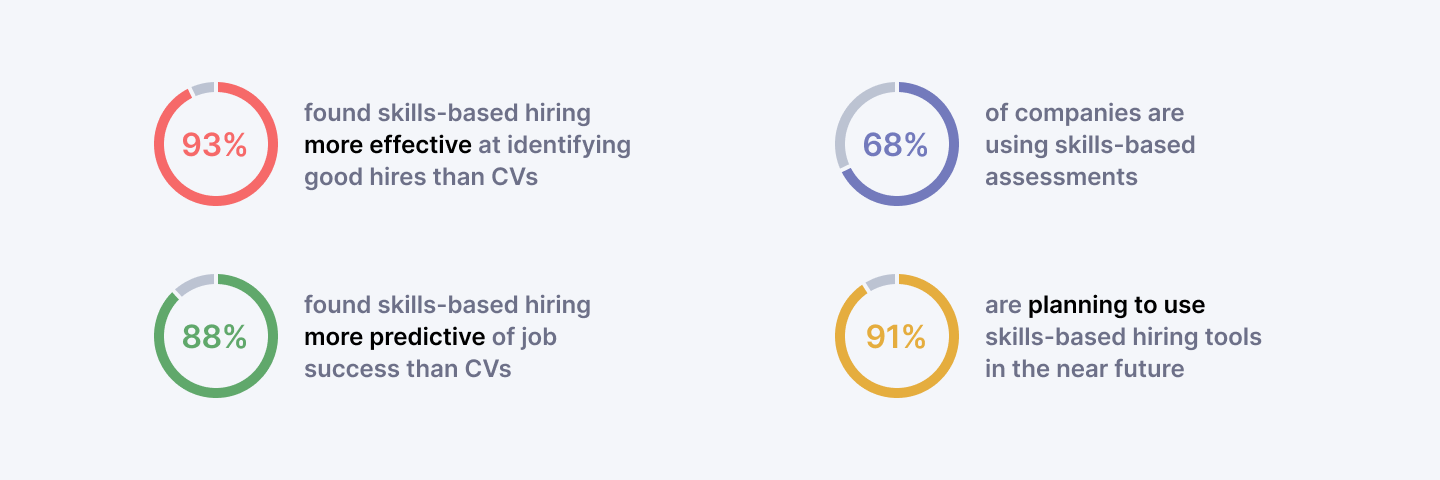
This fundamental disconnect between what companies need and how they hire is creating a crisis that's only getting worse. This is where skill-based hiring can make a difference.
To help you understand how skill-based hiring can transform your recruitment strategy, we have put together this comprehensive guide that explores proven methods used by industry leaders.
Hire the top 5% of vetted developers in 48 hours. Start your free 30-day trial on Index.dev and build teams based on skills, not degrees.
Traditional Hiring Is Broken, And It's Costing You
The broken hiring system creates real problems that you can't ignore. Brilliant individuals are rejected because they lack the proper piece of paper. Your business loses outstanding talent to competitors who think differently. Your teams remain trapped in outdated thought patterns. The entire system wastes your time and money.
Skills-based hiring turns everything on its head. It focuses on what individuals can actually do rather than where they attended school. In 2024, 81% of U.S. companies are embracing skills-based hiring, compared to 73% in 2023 and 57% in 2022. This isn't just a trend, it's the future of how we locate and bring on amazing individuals.
Research Shows Skills Matter More Than Degrees
The evidence is unequivocal, and it should change how you think about hiring. McKinsey studies demonstrate that competence is a better indicator of work performance than college degrees. When you select someone because of what they can do, they perform better at work.
Think about it logically. A computer science degree shows that someone studied programming four years ago. A coding test shows they can program right now. Which matters more for your team?
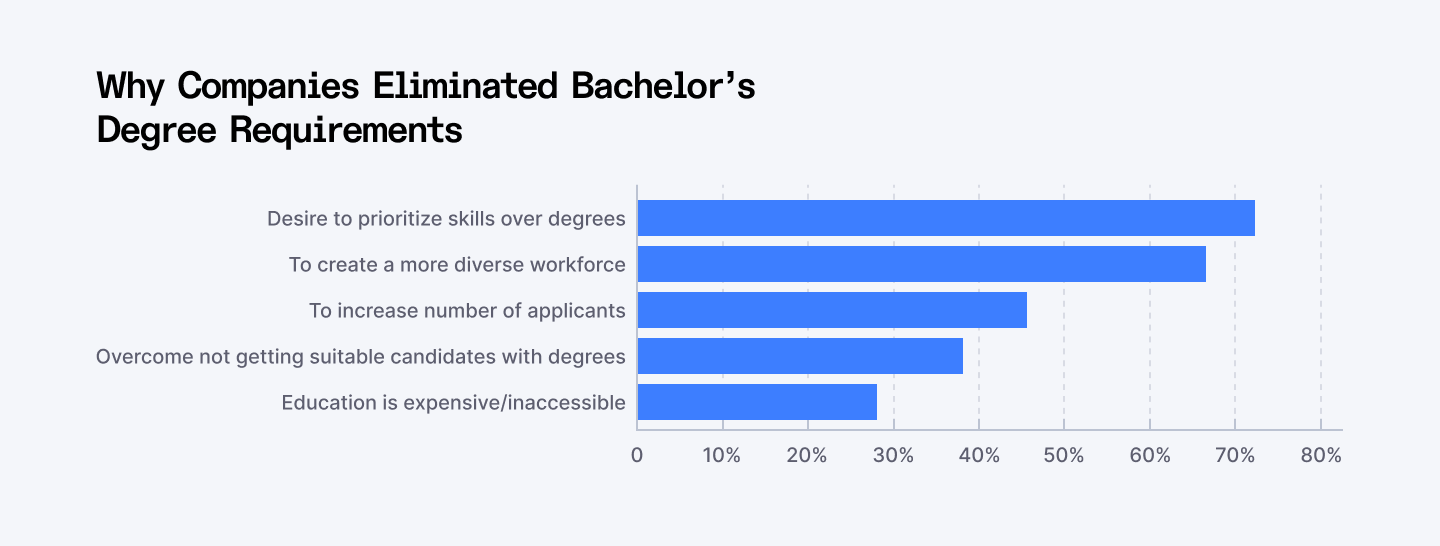
According to a McKinsey Global Survey, 87% of executives said they were experiencing skill gaps in the workforce or expected them within a few years. These gaps exist because companies focus on the wrong things when hiring.
Companies that use skill-based hiring fill these gaps faster. They find people who can solve real problems, not just people who know theory from textbooks.
Your Skills-First Workplace
Imagine that five years from now, your business lists a job opening for a software developer. Instead of asking for a computer science major, you specify what real skills you're looking for. You want someone to develop web applications, interact with databases, and solve complex problems.
Applicants provide coding samples rather than academic transcripts. They solve actual challenges that reflect your real work. The most qualified individual is hired, regardless of their educational background.
This future is already beginning. Index.dev assists businesses in creating these skills-first hiring platforms. Their platform maps out exactly what skills each role needs. Then it finds candidates who have those skills, wherever they learned them.
The result? Better hires, faster hiring, and teams that can actually do the work you need.
Discover which human skills are most valuable in an AI-driven job market and learn how to focus on hiring them.
How Major Companies Are Leading This Change
Google's Certificate Revolution
Google treats its online certificates the same as university degrees for entry-level jobs. Their data indicate these certificate holders perform as well as, or even better than, traditional graduates.
Google's strategy validates that learning can happen outside the classroom. Their certifications offer hands-on expertise that businesses genuinely require. Students learn by doing, not just by reading.
IBM's New Collar Jobs
IBM created "new collar" jobs specifically for people without traditional degrees. Half of their U.S. roles now welcome non-degree candidates. The results speak for themselves.
IBM's cybersecurity teams include many people who learned through hands-on experience. These employees are innovative thinkers and stay longer than traditional hires. They're more dedicated because they understand their company values what they can contribute, not where they studied.
Other Industry Leaders
Apple removed degree requirements from many positions. So did Google, Netflix, and dozens of other tech companies. They discovered something important: great programmers come from all backgrounds.
Boeing's apprenticeship program shows this, too. Their non-degree cybersecurity specialists often outperform traditional computer science graduates. They approach problems differently and think outside the box.
The Advantages of Skill-Based Hiring
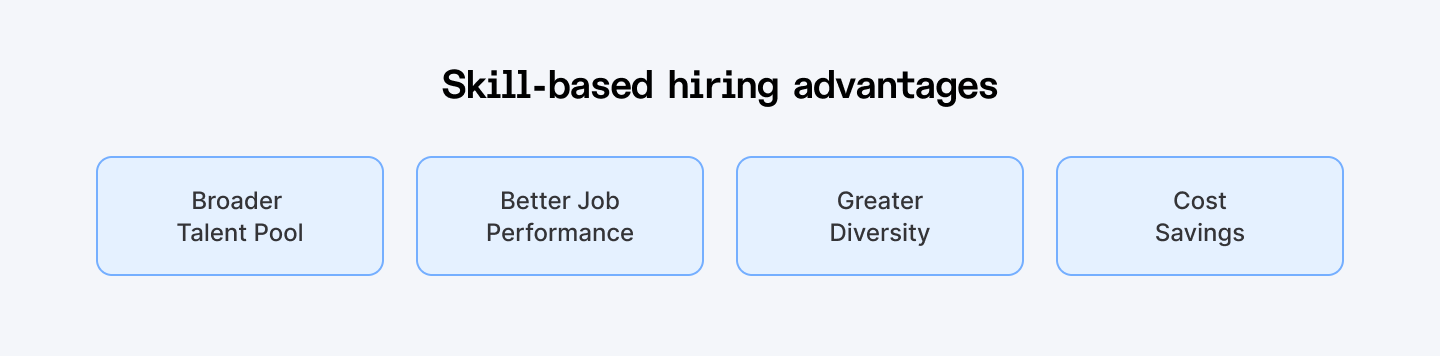
Broader Talent Pool
By eliminating degree requirements, you immediately reach millions more candidates. They're not second choices; they're accomplished individuals who learned in alternative ways.
Hiring for skills opens the door to:
- Self-taught developers who created remarkable projects
- Career changers with transferable skills
- Veterans who learned technical skills in the military
- Global talent from different educational systems
- Prodigies who bypassed traditional routes
Index.dev's platform makes it easy to find these candidates. It searches for skills, not credentials. Your talent pool grows from hundreds to thousands of qualified people.
Better Job Performance
People hired for their skills perform better because the match is more accurate. You know they can do the work before they start. There's less speculation.
Traditional hiring often results in mismatches. Someone may have an excellent degree but struggle with their specific tools. Hiring for skills helps avoid this problem.
Greater Diversity
Degree requirements inadvertently exclude many capable individuals from underrepresented groups. When you eliminate these barriers, your team becomes more diverse naturally.
Diversity of backgrounds equals diversity of perspectives. This creates better products, innovative solutions, and stronger business outcomes.
Cost Savings
Skills-based testing costs less than traditional hiring. You waste less time reviewing unqualified resumes. You make better, quicker decisions.
Index.dev's automated screening saves you even more time. The software finds the best candidates before human recruiters ever see them.
Skills vs Degrees Comparison
Traditional Hiring | Skill-Based Hiring |
| Focuses on credentials | Focuses on abilities |
| Limited talent pool | Broader candidate access |
| Higher mis-hire rates | Better job performance match |
| Slower hiring process | Faster decision making |
| Less diverse teams | More inclusive outcomes |
| Higher recruiting costs | Lower cost per quality hire |
Your Implementation Guide for Skill-Based Hiring
Step 1: Rewrite Your Job Descriptions
Start by removing degree requirements from your job posts. Replace "Computer Science degree required" with specific skills like "Python programming experience" or "Database design knowledge."
List the actual work someone will do. Describe the problems they'll solve. Focus on outcomes, not credentials.
Index.dev helps companies rewrite job descriptions effectively. Their workforce planning tools identify which skills each role really needs.
Step 2: Design Skills Assessments
Create tests that mirror real work. If someone will write code, have them write code. If they'll design systems, have them design systems.
Good assessments include:
- Technical challenges using your actual tools
- Problem-solving scenarios from real projects
- Portfolio reviews of previous work
- Short trial projects that show the thinking process
Step 3: Use Technology Wisely
Talent intelligence platforms automate the boring parts of hiring. They screen candidates, schedule interviews, and track results. This frees up your team to focus on evaluating skills.
Core Functions Your Platform Needs
Function | Purpose | Benefit |
| Skills Search | Find talent by specific capabilities | Access hidden talent pools |
| Assessment Integration | Combine different evaluation methods | Complete candidate picture |
| Development Tracking | Monitor skill growth over time | Support career progression |
Index.dev's AI examines candidate abilities, not just keywords. It finds people who can do the work, even if their resumes look different from what you expect.
Step 4: Train Your Team
Your hiring managers need to learn new evaluation methods. Teach them how to assess practical skills instead of academic credentials.
This training pays off quickly. Managers become better at spotting real talent and making accurate hiring decisions.
Step 5: Measure Your Results
Track how skill-based hiring affects your team. Look at:
- Time to fill positions
- New hire performance ratings
- Employee retention rates
- Team diversity metrics
- Overall productivity measures
Most companies see improvements in all these areas within six months.
Overcoming the Challenges You'll Face
1. Assessment Validity
Some managers worry that skills tests don't predict real job performance. The solution is designing better assessments that closely match actual work.
2. Bias in Evaluations
Human reviewers can still show bias during skills assessments. Use structured evaluation criteria and multiple reviewers to reduce this problem. AI-powered tools help too. They evaluate skills objectively without being influenced by candidate backgrounds.
3. Managing Resistance
Some hiring managers prefer traditional methods because they're familiar. Show them the data on improved performance and reduced turnover. Start with pilot programs in willing departments. Success stories convince skeptical managers better than presentations do.
4. Making the Change Work for You
The shift to skill-based hiring requires commitment from your leadership. Your HR teams need new processes. Your managers need training. Your technology systems need updates.
But the benefits justify the effort. Companies report faster hiring, better performance, and more diverse teams. Index.dev makes the transition smoother by providing both technology and guidance.
Start small with one role or department. Learn what works for your company. Then expand the approach to more positions. Remember that this change helps candidates, too. People want jobs where their abilities matter more than their educational credentials.
Learn the best practices for vetting software developers, including technical skills, soft skills, culture fit, and more.
Your Next Steps
Here's what we've discovered together: The future belongs to companies that recognise talent wherever it comes from. Skill-based hiring isn't just better for business, it's fairer for everyone.
Your next great hire might be someone who learned programming through online courses, solved problems through freelance work, or developed expertise through personal projects. Don't let outdated hiring practices cause you to miss them.
The evidence is clear, the benefits are proven, and the implementation path is straightforward. Companies like Google and IBM have shown us the way forward. Now it's your turn to act.
The question isn't whether you can afford to make this change. The question is whether you can afford not to make it while your competitors are already building stronger, more capable teams through skills-first hiring.
Start today. Your future talent and your competitive advantage depend on it.
Ready to build stronger teams through skill-based hiring under expert guidance? Discover Index.dev's talent intelligence platform and start hiring better developers today.