In 2023, the tech sector faced turbulent times. Big names like Google, Amazon, and Meta made headlines with significant layoffs, leaving many wondering about the future. As 2024 unfolded, the uncertainty continued. The rise and adoption of AI and generative technologies led to a shift to skill-based hiring. Opportunities remained scarce with a sluggish growth in tech hiring and constrained job openings. Many tech leaders hesitated, recalibrating their hiring strategies to keep pace with AI advancements, worried about making costly missteps. This caution resulted in a cooling labor marketing, creating a period of prolonged adjustment and reevaluation.
However, just like past cycles, the tech industry is proving its resilience and tech hiring is expected to bounce back in 2025. The AI, GenAi, and LLM frenzy is settling. The hiring targets are beginning to show promise. And the tech job is adapting to its new AI-driven reality, focusing on thoughtful, strategic, and quality-focused approaches to finding the right tech talent.
A recent Tech Hiring Trends report by Karat and Harris Poll highlights an important shift: the tech hiring is emerging from a multi-year slowdown. It’s a transformation that could change the way companies and candidates connect.
So, what does 2025 hold for tech hiring? Take a look at seven key trends and what each means to you as a tech leader, your company, your tech team, and your candidates.
Hire senior software engineers in just 48 hours with Index.dev. Access pre-vetted global talent and scale your tech team with ease!
1. Optimism Returns
While job postings for software engineers in the U.S. hit a five-year low, the tech industry is starting to look up. Companies are setting higher targets, averaging nearly 300 open software engineering roles—a 12% increase from last year. This positive trend isn’t limited to the U.S. Global hiring is also on the rise, with 81% of U.S. tech leaders planning to recruit talent abroad, compared to 73% the year before.
But this globalization comes with its challenges. As more U.S. jobs are offshored, competition for positions is set to heat up further. At the same time, companies are also leaning heavily on contractors. Reduced headcounts last year pushed 28% of U.S. tech leaders to prioritize hiring contractors, a cost-effective strategy that may increasingly take precedence over full-time roles.
Read More: How to Avoid Remote Work Pitfalls: 11 Tips for Tech Leaders
2. AI Skills Take Priority
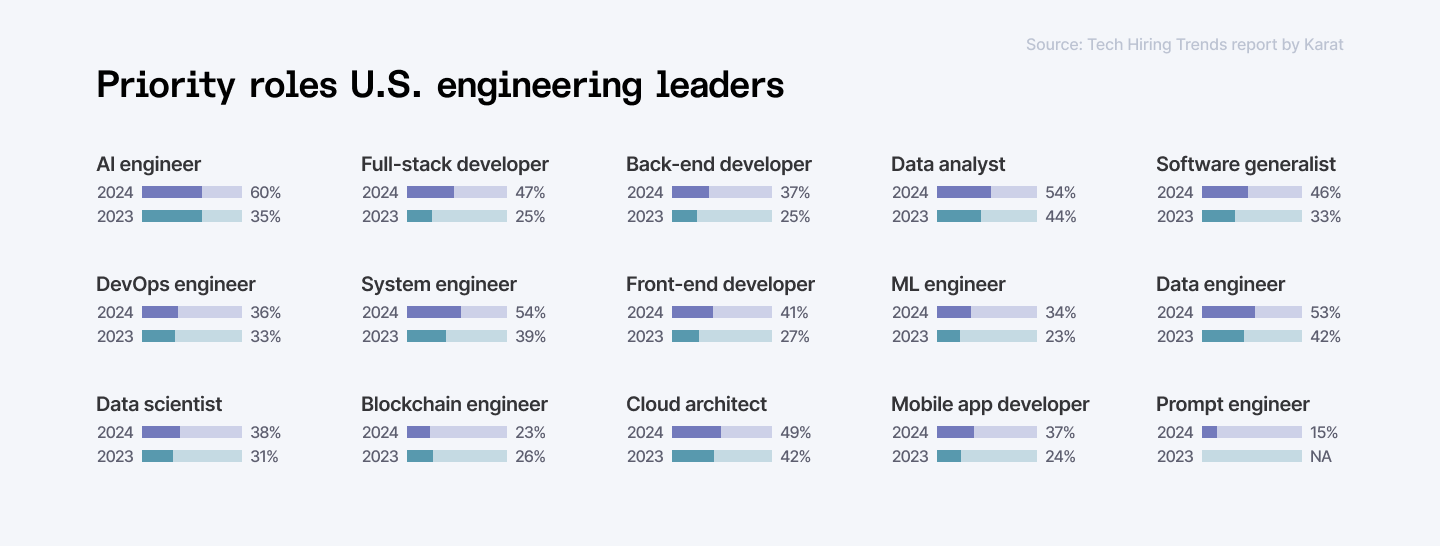
In 2025, AI skills are set to dominate hiring priorities. According to the same Karat report, 60% of U.S. engineering leaders plan to hire AI engineers, a significant jump from just 35% last year. Alongside AI engineers, data analysts and systems engineers rank among the top hiring priorities for U.S. tech companies. This AI-focused hiring will impact other software engineering roles. Full-stack developers, who play a crucial role in building and maintaining AI systems, are seeing second-largest increase in demand. And the focus on AI isn’t limited to specialized roles. Managers will start looking for candidates with a mix of AI-related competencies, including deploying AI functionalities via APIs, applying data science techniques, and integrating AI solutions into existing products.
But it doesn’t stop there. Companies will also prioritize "meta" AI skills—expertise in using AI tools to:
- Code more efficiently
- Train new AI models
- Apply machine learning techniques
- Interpret AI outputs
- Excel in prompt engineering
3. Quality Over Quantity
In 2025, the tech industry is moving away from volume hiring and focusing on quality instead. Companies will prioritize the impact of each new hire, being more deliberate and selective in their hiring decisions. In this employer-driven job market, organizations have the luxury of taking their time to find candidates who truly match their needs.This shift is reflected in the hiring process itself. Tech leaders already report an increase in the number of candidates progressing through multiple interview stages. With this thorough evaluation, they can make more informed decisions and improve the quality of their hires.
However, there's a catch: stretching out the interview process too long for that ‘outstanding’ hire can backfire. They simply might lose out on the best candidates. The best engineering talent won’t wait forever—they’ll move on if the process drags.
Interestingly, candidates are also becoming more selective. Many are holding out for roles that align ‘perfectly’ with their aspirations, even if it means waiting longer to make that ‘right’ move. Wage will remain a top motivator, but it won’t be the only factor. Many candidates will make career moves for as little as a $5,000 salary bump if the new role will match their flexibility, culture, and career development hopes.

4. Culture at the Core
In 2025, workplace culture will be non-negotiable for tech talent. We know from the Harvey Nash 2024 Global Tech Talent & Salary Report that software engineers increasingly value the company’s culture and working environment. In response, companies will step up their efforts to build cultures that ‘tick’ and hire for culture fit. This means looking for professionals whose attitudes, behaviors, and core values align with the company’s mission. It’s all about the ‘If you build it, they will come’ mindset—building a strong, authentic culture and showcasing it to the world. The payoff? Hiring high-performing, well-aligned talent who not only join the team but integrate quickly and stick around—because they simply enjoy showing up to work on Monday mornings.
These forward-thinking companies will also prioritize creating environments where every voice is heard and valued, life outside work matters, professional growth is prioritized, and everyone has the freedom and trust to do their best work.
Explore More: 10 Proven Strategies to Retain Your Best Tech Talent
5. Flexibility that Works for Everyone
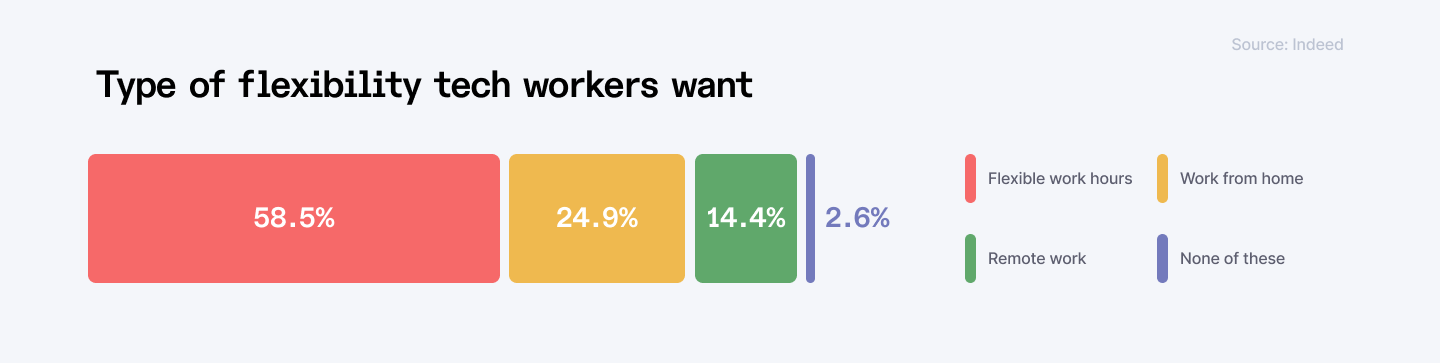
It’s no longer just about when and where people work. Companies that cling to rigid, traditional setups will find themselves losing out on top talent. The more adaptable your organization, the better your chances of building a workforce that’s engaged and motivated. This concept, known as Hybrid 360 (a term coined by Korn Ferry), will be a cornerstone of talent acquisition strategies. It’s the new standard for inclusive hiring and a key factor in retaining your tech workforce—or losing them if they don’t have enough of it.
So, what exactly is Hybrid 360? It’s about building a workplace that adapts to individual needs and unleashes everyone’s full potential. This means letting your employees work in ways that best suit their lives. Remote and hybrid work are now staples for most office jobs, with 76% of Korn Ferry’s survey respondents saying that their employers have shifted to hybrid work models.
6. FinTech’s Battle for Talent Heats Up
The rise of AI is shaking up the job market, and one of the biggest battlegrounds for tech talent is the fintech sector. As financial services increasingly lean into AI-driven innovations and digital transformation, banks and fintech companies are going head-to-head to attract the best tech workforce. For example, JPMorgan Chase is actively hiring software engineers and AI specialists to work on their AI-powered investment advisor, COIN. Stripe, a leading fintech company, increases its focus on AI talent to strengthen payment processing and fraud prevention technologies. Revolut and Plaid are also getting involved, offering competitive salaries and perks to bring in qualified software engineers.
The competition is intense. But it’s not just traditional tech giants battling for these professionals anymore. In order to compete for tech talent in 2025, fintech companies must act quickly, provide meaningful projects, and offer that much needed flexibility.
7. Hiring Is Getting Tougher
The rise of AI is transforming hiring—and not always for the better. Hiring managers are flooded with resumes that can slip through the screening processes thanks to the tweaks made by ChatGPT and other GenAI tools.
Some recruiters now rely on tools that help humanize AI-generated content so applications sound more authentic and reflect the candidate’s real communication style. This prompts companies to add extra exercises and interview stages to weed out unqualified candidates. But this cautious approach may backfire. Lengthy, overly complicated hiring processes risk driving top talent away.
According to industry surveys, nearly two-thirds of developers think two interview stages are optimal, while fewer than 20% see any value in a third stage. Furthermore, almost half of developers prefer in-person interviews, but only 6% appreciate coding challenges.
To make matters worse, the rise of ‘ghost jobs’ is having a corrosive effect on the hiring process as a whole. These are roles that companies post without any intention of filling, simply because they want to build a database of potential candidates. Therefore, hiring managers and candidates will have to work harder than ever to secure jobs in 2025.
Also Read: 11 Mistakes to Avoid When Hiring Remote Software Developers
Final Thoughts
Two years into this soft labor market, the dust is finally starting to settle. After last year’s AI boom, the shift to skill-based hiring, and predictions of economic collapse that never happened, many tech leaders found themselves stuck in endless planning. The gap between companies that adapted and those that didn’t widened. Today, hiring targets are up. Engineers who upskill and know how to get the most of AI tools are becoming more valuable than ever. And the best tech leaders are doubling down on talent evaluation, recognizing the outsized impact skilled professionals can have on their organizations.
In 2025, success will come to those who find balance—between technology and human connection, efficiency and personalization, flexibility and structure. The tech leaders who can merge data-driven decisions with personalized strategies will not only attract and retain the best talent but also achieve lasting business impact while minimizing risk through thoughtful action.
Yes, in tech hiring, making the wrong move can feel daunting. But staying stuck in overanalysis is a bigger risk. Aim for progress, not perfection. The time to act with purpose is now.
Index.dev connects you with vetted senior developers for your projects. Our remote talent has top technical skills, strong work ethics, and global experience.
What we offer:
- The top 5% of developers, designers, and project managers
- Hard-to-find experts for your toughest roles
- No hidden fees and a 30-day risk-free trial
Sign up on Index.dev to access a network of highly skilled developers for your project.