While 80,000 tech jobs opened in Indian startups and global startups raised $15M Series A rounds, they hired 17.5% fewer engineers. The bottleneck? Traditional hiring burns three months while competitors ship features. Money's flowing. Talent's scarce. And somehow, hiring still takes forever.
The old playbook—post on LinkedIn, sift through 200 applications that all look the same, schedule interviews for weeks—burns three months while your competitors ship features.
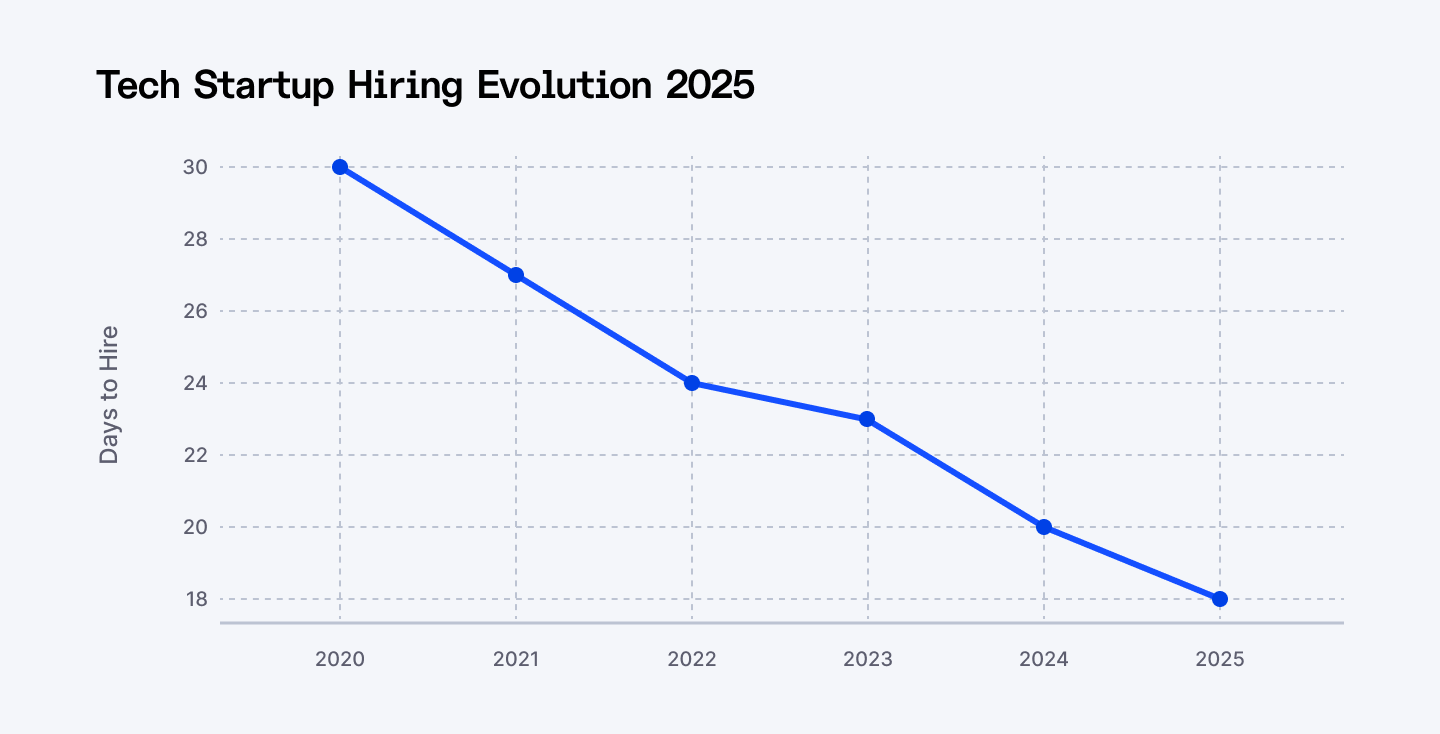
Tech startups cut time-to-hire from 30 to 18 days.
30 days to hire one engineer? That's a sprint cycle wasted on résumés. Pre-vetted platforms do it in 18. They save $16K–$25K per hire. They deliver 40-60% cost savings versus local hires without sacrificing code quality. This guide covers the five platforms startups actually use—not the ones with the biggest ad budgets, but the ones developers recommend on Reddit and Stack Overflow when nobody's watching.
Not sure which platform fits your needs? Here's the quick comparison:
| Platform | Vetting Rate | Time to Hire | Pricing Range | Best For | Geography Focus | Trial/Guarantee |
| Index.dev | 5% pass rate | 24-48 hours | Market rate + 0 fees | Startups needing technical depth & AI matching | Global (160+ countries) | 30-day money-back |
| Gun.io | Top 1% only | 1-2 weeks | $100-$200/hour | Well-funded startups needing elite US talent | US-based (70% have 10+ years exp) | Replacement guarantee |
| CloudDevs | 95%+ rejected | 24-48 hours | $45-$75/hour | Fast hiring on bootstrap budget | LATAM focus | Built-in trial weeks |
| Lemon.io | 98% rejection | 24 hours avg | $55-$85/hour | Ruthless vetting, tight budget | Eastern Europe (Ukraine focus) | 2-week replacement or refund |
| Proxify | 95%+ screened out | 2-12 days | $45-$200/hour | Global flexibility & scaling | 95+ countries | 48-hour candidate swap |
See detailed platform decision flowchart below to match your exact requirements.
Hire pre-vetted global engineers with Index.dev and get interview-ready talent in 48 hours.
Why Pre-Vetted Beats Playing Developer Roulette
Fast hiring without vetting is like skipping code review—you'll ship faster today, but you'll pay for it in bug reports tomorrow.
Replacing a bad hire costs 20-30% of their annual salary. That's $30K evaporated for a mid-level engineer who couldn't debug their way out of a nested loop. Turnover delays projects. Technical debt compounds. Every mis-hire pushes your launch date back another month.
Pre-vetted platforms basically outsource your first three interview rounds to people who've already screened thousands of developers. They know what "5 years of React experience" actually looks like versus someone who copy-pasted from Stack Overflow for six months.
The best platforms reject 95-98% of applicants. They don't just skim GitHub profiles—they run live coding tests, assess system design skills, verify English fluency, and gauge remote work readiness before anyone reaches your inbox.
Skills-based platforms cut time-to-hire by 25%—but only if their vetting goes deeper than "can you spell JavaScript?" Platforms accepting 10%+ of applicants aren't vetting—they're counting warm bodies.
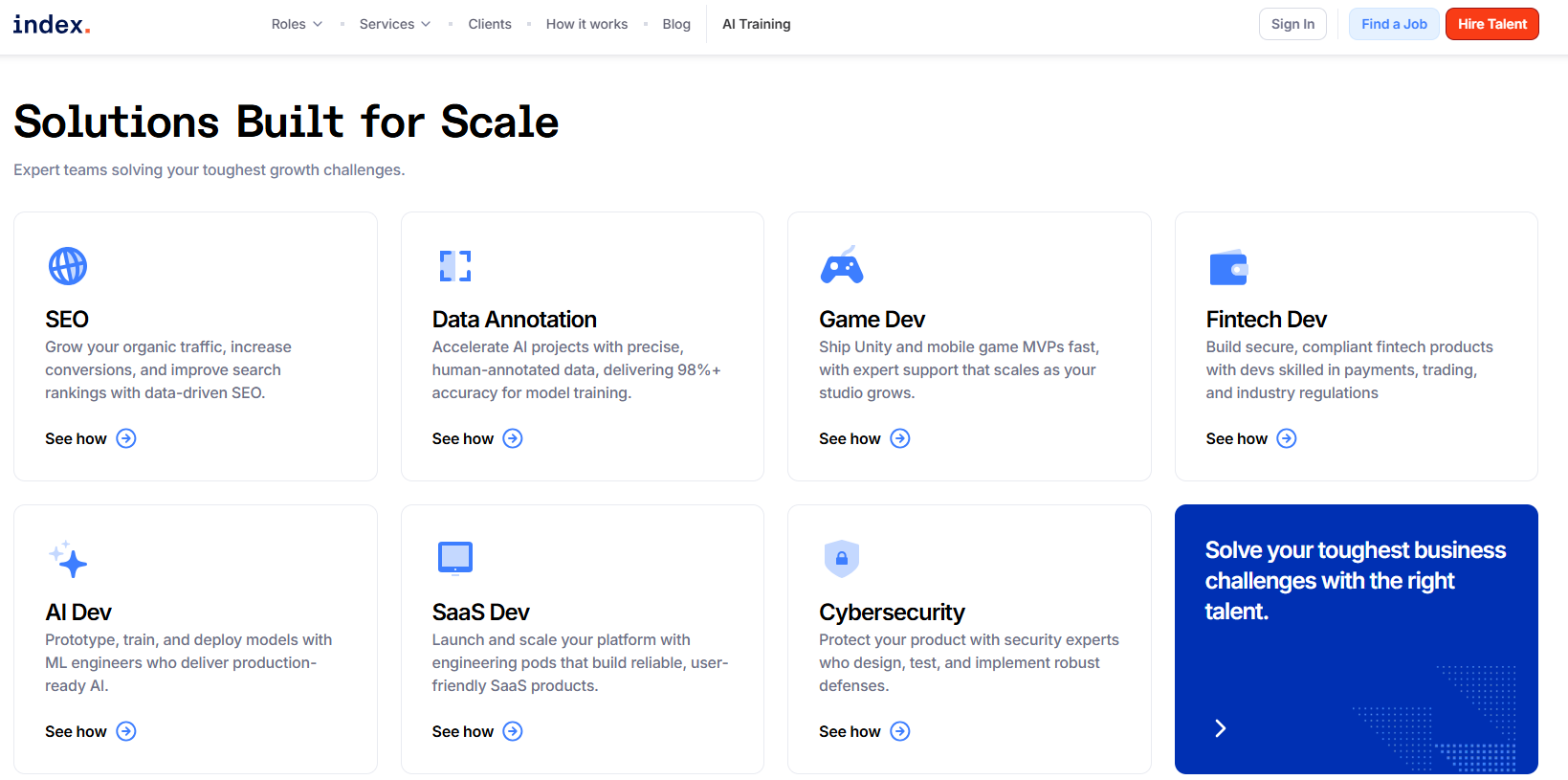
Index.dev — AI Does the Grunt Work, Humans Make the Call

Index.dev combines AI-driven screening with expert human matching to surface the top 5% of global engineering talent.
Translation? You skip the résumé theater and stop drowning in applications. The platform runs 12,000+ technical and cognitive assessments monthly, filtering candidates through background checks, soft skills interviews, technical deep dives, live coding sessions, and culture fit evaluations. Only 5.1% pass all stages.
Startups get 2-5 interview-ready candidates within 48 hours, with 97% placement success rates. The talent pool spans software developers, AI/ML engineers, UI/UX designers, DevOps specialists, and QA engineers across 160+ countries.
What works: Transparent pricing with no platform fees. 30-day free trials so you're not stuck with someone who interviews like a senior but codes like an intern. Dedicated account managers handle compliance, payroll, onboarding, performance tracking—all the stuff that makes hiring international talent feel like juggling flaming swords.
Index.dev also runs a US hub for teams needing local presence while accessing global talent pools. Need a single full-time hire? Done. Contract role? Covered. Entire engineering pod with end-to-end project management? That too.

Best for: Startups who want engineers that ship, not candidates who ace whiteboard interviews but freeze when the production server catches fire.
Want to hire smarter? Start with our guide to vetting developers.
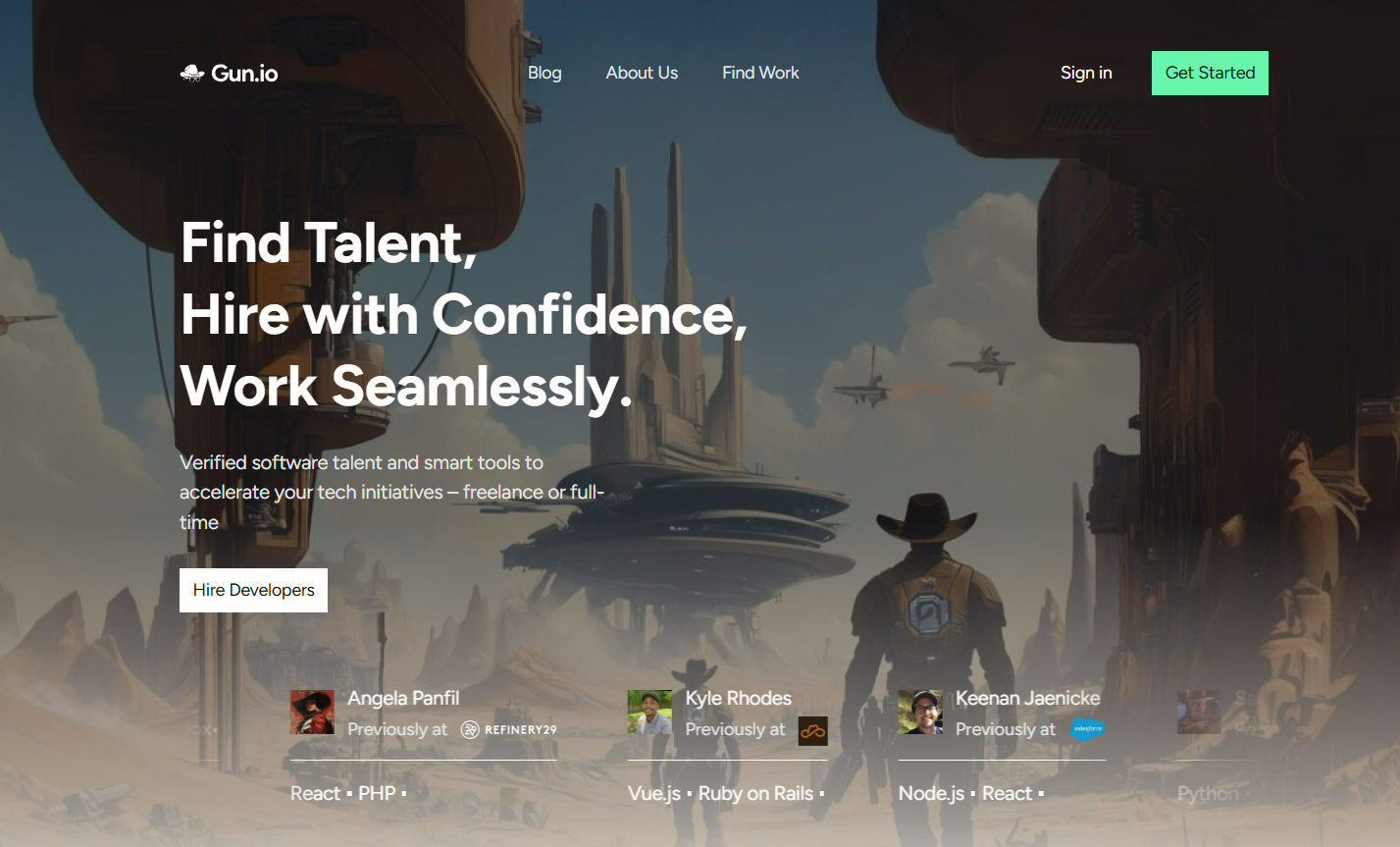
Gun.io — The Exclusive Club Your Startup Probably Can't Afford (But Maybe Should)

Gun.io operates like the country club of developer platforms—invite-only, selective, and expensive enough to make your CFO sweat.
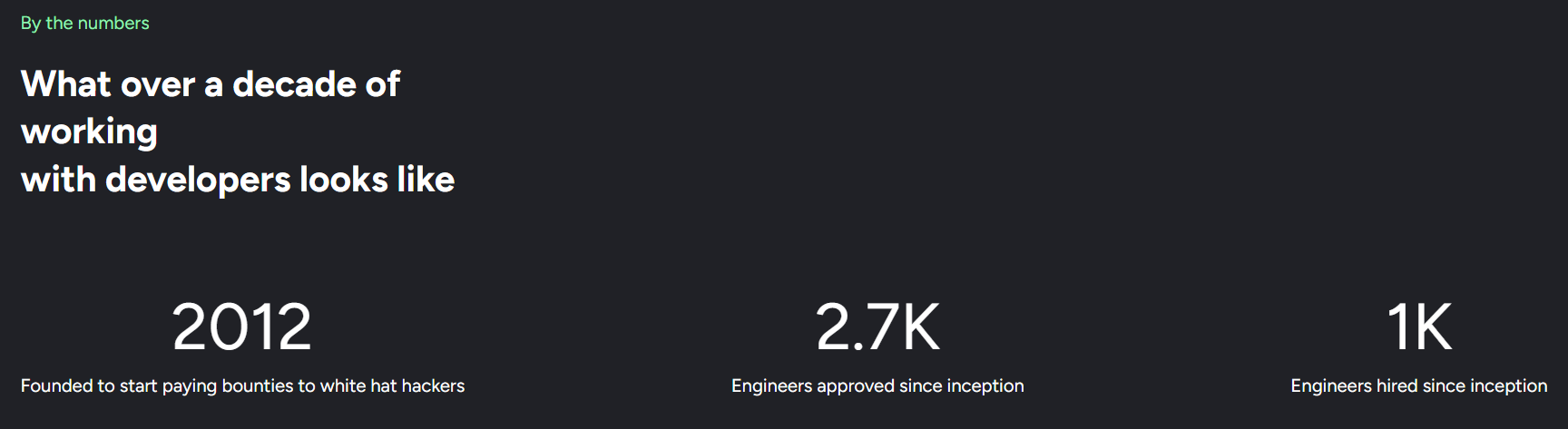
70% of developers have 10+ years of experience. Only 10% of applicants pass vetting—algorithmic assessments, portfolio reviews, live technical interviews conducted by senior engineers who've built systems that didn't collapse under their first traffic spike.
Rates run $100-$200/hour. Yes, that's steep. But Reddit developers consistently call Gun.io engineers "phenomenally better"—the kind who deliver ahead of schedule and actually read documentation before asking questions.
Gun.io handles everything: job posting, screening, interviewing, contracts, billing. Average hire time: 13 days.
The catch? Premium pricing locks out pre-seed teams still running on credit cards and optimism. Developers can get overbooked, occasionally causing scheduling gymnastics.
Best for: Well-funded startups willing to pay top dollar for battle-tested US-based engineers who've survived production disasters and lived to tell the tale.
CloudDevs — 24-Hour Matching, LATAM Talent, No Long-Term Hostages

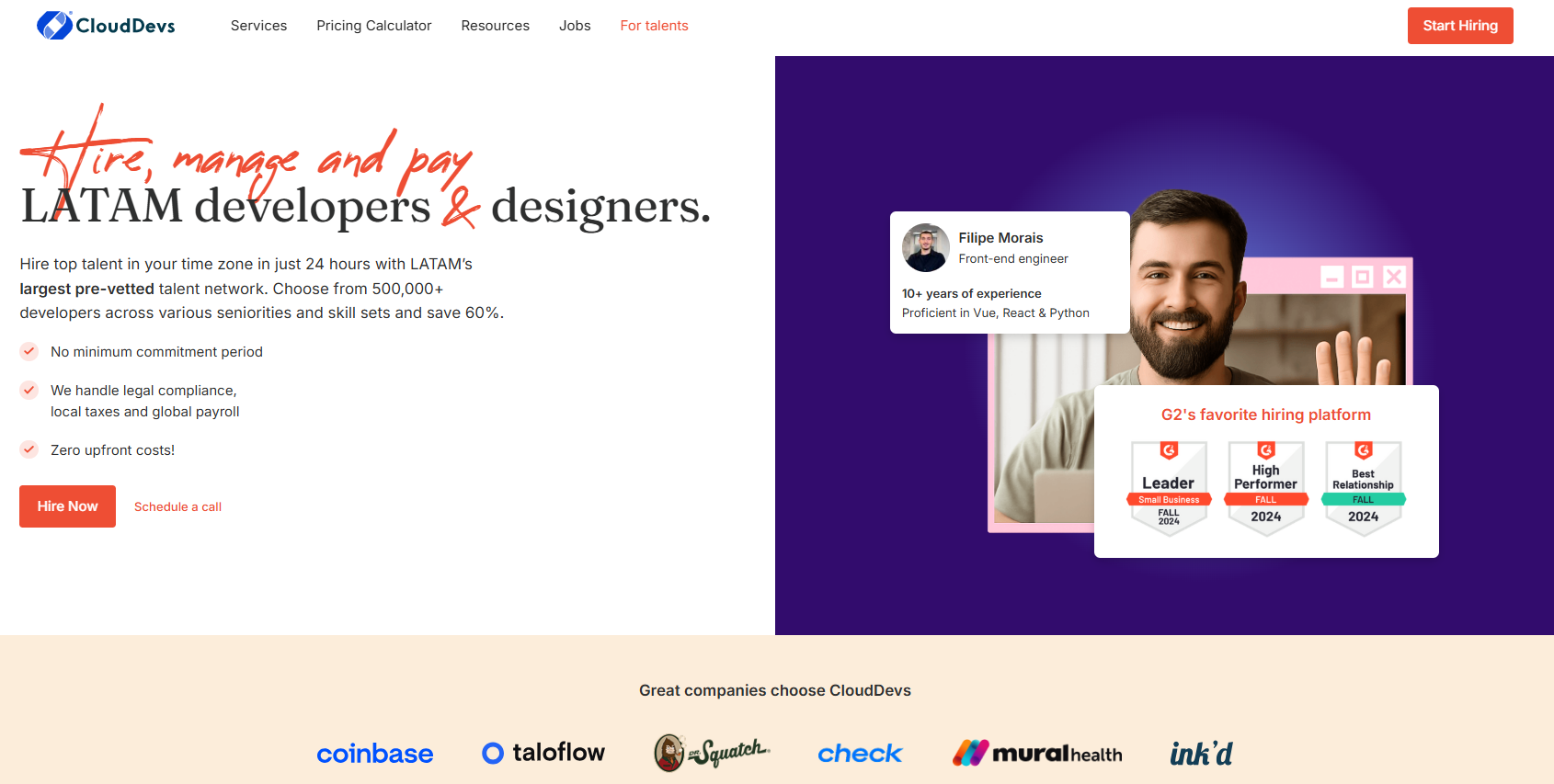
CloudDevs specializes in senior LATAM developers matched within 24 hours. Every developer goes through multi-stage vetting covering technical chops, English fluency, and remote work capabilities. No one who lists "proficient in all programming languages" on their LinkedIn makes it through.
Rates range $45-$75/hour with weekly pay-as-you-go billing. No contracts locking you in for six months while your developer quietly starts another job on the side. Built-in trial week reduces the risk of discovering your "React expert" last used hooks in 2020.
What makes CloudDevs stand out: Time-zone alignment with US clients and cost savings of 40-60% versus US hires. The platform targets React, Node.js, Python, and JavaScript specialists with immediate availability.
Real client feedback from G2 highlights developers who "quickly became valuable assets"—which is code for "they actually shipped features instead of attending meetings about meetings."
Trade-offs exist. Smaller design talent pool. Limited backend tooling for payroll management—you'll handle that yourself or through your accountant who already thinks startups are chaos incarnate.
Best for: Startups needing fast, cost-effective senior developers with US-compatible hours for MVP builds or feature acceleration.
Curious how the biggest hiring platforms stack up head-to-head? Read this deep comparison to see who really delivers the best talent for your team.
Lemon.io — The Ruthless Gatekeepers of Eastern Europe

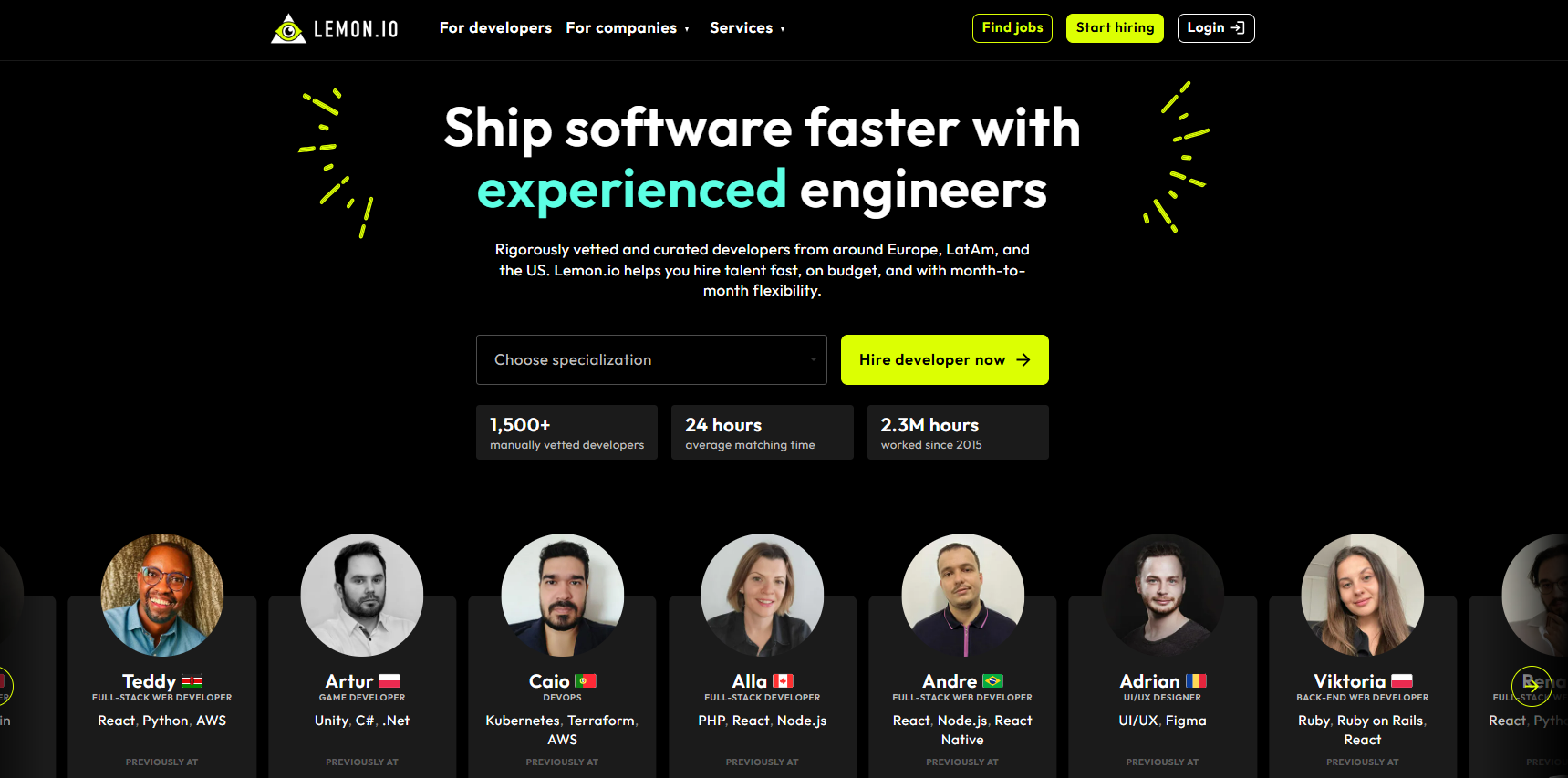
Lemon.io manually vets developers from Eastern Europe, Latin America, and the US with a 98% rejection rate.
Let that sink in. 98 out of 100 applicants get rejected. These folks don't mess around.
Average matching time: 24 hours. Minimum commitment: 160 hours—roughly one month of focused work, which is long enough to build something real but short enough to bail if things go sideways.
Developers undergo five-stage screening: live coding, technical interviews, communication assessments, portfolio reviews. The platform specializes in Python, Java, JavaScript, PHP, Blockchain, and Swift.
Pricing runs $55-$85/hour with no hidden platform fees. Two-week replacement or refund guarantee protects against bad matches. Security deposit structure protects both parties.
Trustpilot reviews praise the "shockingly fast" matching and developers who make founders "feel invincible." One startup worked with their Lemon.io developer for 1.5 years straight—that's the kind of retention most platforms hallucinate about in their pitch decks.
Trade-offs exist here too. A smaller talent pool limits options for obscure tech stacks. Geographic focus means less diversity than global platforms.
Best for: Budget-conscious startups launching MVPs or accelerating feature development with mid-to-long-term contracts.
Proxify — European Talent, Lightning Matching, Solid Reviews

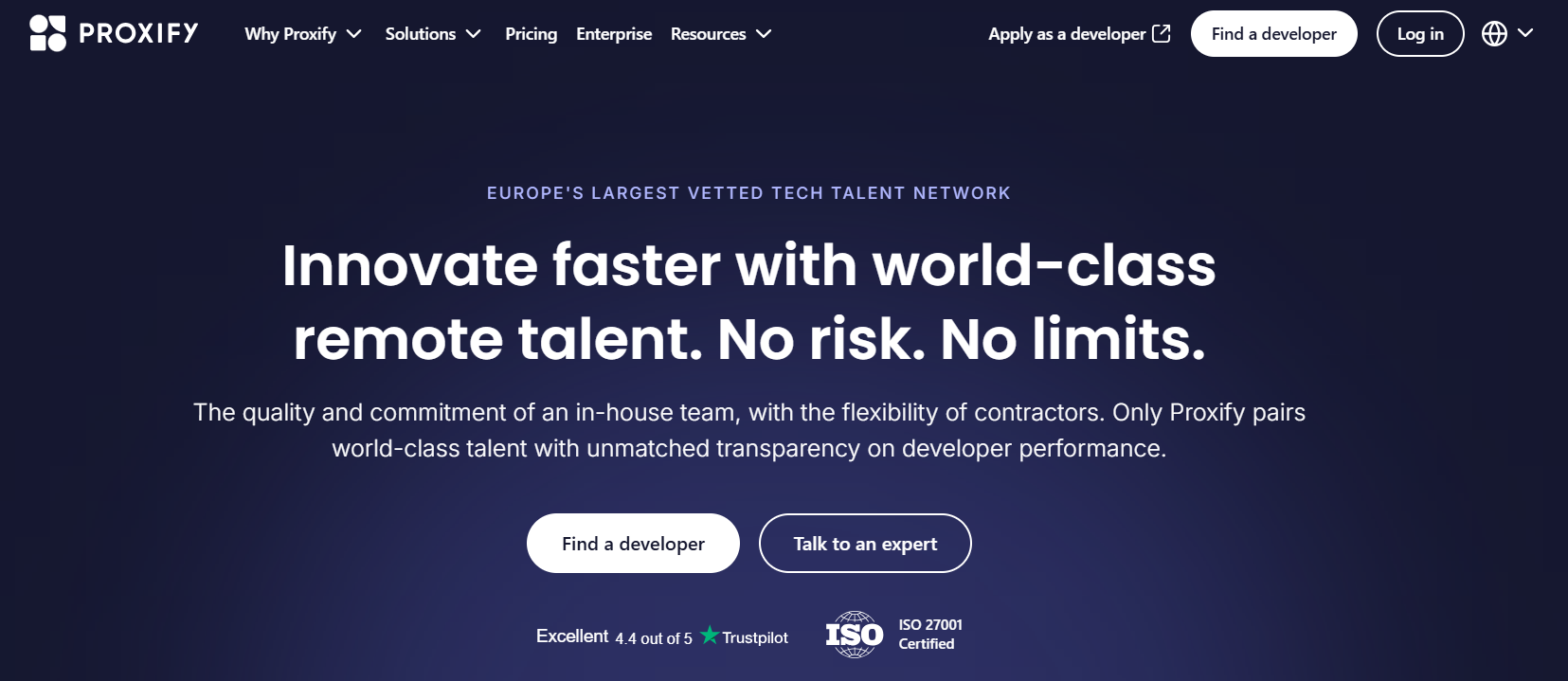
Proxify sources what they call the "elite 1% of global tech talent" with average experience of 8+ years.
Bold claim. But they back it up with 7-stage vetting conducted by seasoned developers—not recruiters armed with keyword checkers—who understand architectural trade-offs and can spot bullshit from three timezones away.
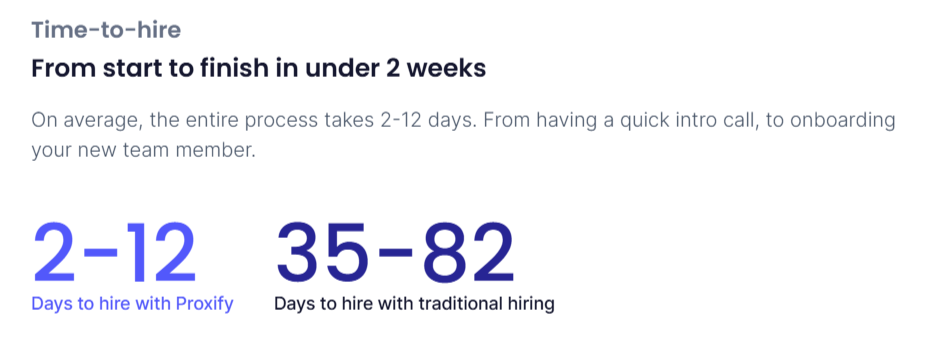
Matching happens in 2 days on average. Total time-to-hire: 2-12 days from intro call to first commit. That obliterates traditional 30-42 day hiring timelines.
Rates range $40-$65/hour with a 40-hour monthly minimum. Risk-free hiring model offers 48-hour candidate replacement if matches don't deliver.
Proxify developers integrate as "seamless extensions of internal teams"—attending standups, joining Slack channels, acting like they've been there since day one instead of treating your startup like a side gig between Netflix episodes.
The platform focuses on European talent with strong timezone overlap for US East Coast and UK teams. Trustpilot rating: 4.8.
Trade-offs: Some client reviews mention inconsistent customer service and occasional professionalism hiccups.
Best for: European and US East Coast startups needing senior developers who work regular business hours and don't ghost you mid-sprint.
Pick Your Platform Like You'd Pick a Framework
Budget drives everything, obviously.
Lemon.io and CloudDevs offer transparent $45-$85/hour pricing with no surprise fees. Index.dev provides flexible models for contract, full-time, and managed pod work. Gun.io charges premium rates for elite US talent—worth it if your runway allows.
Speed matters too.
Particularly when competitors ship while you schedule third interviews. Index.dev delivers matches in 48 hours. CloudDevs and Lemon.io average 24 hours. Proxify takes 2 days. All beat the traditional month-long hiring slog.
Geography impacts timezone fit.
CloudDevs specializes in LATAM talent. Lemon.io focuses on Eastern Europe. Proxify offers European developers. Gun.io emphasizes US-based engineers. Index.dev spans 160+ countries.
Compliance complexity favors full-service platforms.
Index.dev handles payroll, contracts, and legal compliance across 160+ countries—eliminating cross-border friction and saving you from Googling "how to pay a developer in Romania" at 2am.
Want a broader look at where the best freelance engineers come from? Dive into this full comparison of the top hiring platforms.
Red Flags Bigger Than Your Tech Debt
Some platforms look legit until you peek behind the curtain.
Vague vetting processes with no specifics.
If a platform won't tell you how they vet—just that they do—assume they're running background checks and calling it screening. Real platforms publish their acceptance rates, stages, and what actually gets tested.
Pricing that only appears after you "schedule a call."
Transparent pricing should be public. Platforms hiding rates behind sales calls usually have fees that don't make sense until you're already emotionally invested in a candidate.
No trial periods or replacement guarantees.
Platforms confident in their vetting offer 30-day trials and 48-hour replacements. Ones that don't? They know their matches are coin flips and they'd rather you eat the cost than fix it.
Generic developer profiles that could describe anyone.
"5 years of experience in web development" tells you nothing. Good platforms show GitHub activity, past projects, tech stack specifics, and communication samples—not LinkedIn bios copy-pasted into their database.
Agencies without technical depth to evaluate code.
If the people matching you with developers can't read a pull request, they're matching keywords, not skills. Their rigid processes can't flex with startup velocity, causing delays that cost you candidates who accept better offers while you're "following protocol."
Stop Interviewing, Start Shipping
Pre-vetted platforms solve the talent bottleneck. But execution still decides who wins.
- Define requirements like you're writing acceptance criteria.
- Vague job descriptions like "full-stack engineer needed" attract everyone and no one. Specify frameworks, languages, tools. Outline deliverables, timelines, collaboration style upfront—before you waste anyone's time.
- Vague job descriptions like "full-stack engineer needed" attract everyone and no one. Specify frameworks, languages, tools. Outline deliverables, timelines, collaboration style upfront—before you waste anyone's time.
- Use trial periods to test what interviews can't.
- 30-day trials reveal how engineers handle ambiguity, communicate under pressure, and integrate with your chaos. Interviews show you who practices LeetCode. Trials show you who ships.
- 30-day trials reveal how engineers handle ambiguity, communicate under pressure, and integrate with your chaos. Interviews show you who practices LeetCode. Trials show you who ships.
- Check their work, not their words.
- Request portfolio reviews and GitHub activity during selection. Past commits reveal code quality and learning commitment better than any whiteboard session ever could.
- Request portfolio reviews and GitHub activity during selection. Past commits reveal code quality and learning commitment better than any whiteboard session ever could.
- Integrate developers immediately, not eventually.
- Engineers attending standups, accessing docs, engaging with product discussions from day one contribute faster than those treated like contractors who'll disappear next quarter. Make them feel like part of the team, and they'll act like it.
- Engineers attending standups, accessing docs, engaging with product discussions from day one contribute faster than those treated like contractors who'll disappear next quarter. Make them feel like part of the team, and they'll act like it.
- Track what matters.
- Feature velocity, code quality, sprint completion rates—metrics refine hiring criteria and platform choices for next time. Gut feelings don't scale. Data does.
- Feature velocity, code quality, sprint completion rates—metrics refine hiring criteria and platform choices for next time. Gut feelings don't scale. Data does.
The 2025 startup game rewards speed without sacrificing quality. Pre-vetted platforms give you that edge—engineers who integrate smoothly, ship rapidly, and scale as you grow. Your competitors are still scheduling third-round interviews. You could be shipping features.
➡︎ Looking to hire vetted developers? Index.dev connects you with the top 5% of global talent, rigorously screened for technical skill, communication, and remote-work excellence. Hire fast, avoid bad hires, and onboard in 48 hours.
➡︎ Are you a senior developer looking for elite remote roles? Join Index.dev to access long-term projects with top global companies, competitive pay, and a vetting process that rewards real skill.
➡︎ Want to go deeper into hiring platforms, global talent markets, and affordable ways to build high-performance engineering teams? Dive into practical breakdowns like how to hire high-quality developers with limited budgets, where the strongest AI talent pools are emerging, what early-stage startups should use to recruit AI engineers, the best platforms to hire LATAM talent, and how AI can speed up every part of your hiring process.
Frequently Asked Questions on Pre-Vetted Hiring
Q1: Are pre-vetted platforms worth the cost?
Short answer: yes, if you value the runway. Traditional hiring costs $16K-$25K per hire in screening time, recruiter fees, and bad-hire risk. Pre-vetted platforms charge zero platform fees—you pay only developer rates ($45-$200/hour). Plus, 30-day trial periods let you test before committing. Math checks out.
Q2: How fast can I actually hire engineers through these platforms?
Index.dev and CloudDevs: 24-48 hours for initial matches. Proxify: 2-day average. Gun.io: 1-2 weeks for premium talent. Compare that to traditional hiring's 30-42 days. Most platforms deliver interview-ready candidates within one week—fast enough to keep your sprint cycle intact.
Q3: Do pre-vetted developers actually perform well long-term?
Index.dev: 97% placement success rate. CloudDevs: 95%+ client satisfaction. Lemon.io: Two-week replacement guarantee signals confidence. The vetting isn't theater—platforms reject 95-98% of applicants through live coding, system design, and soft skills assessments. You're getting the top 2-5% of global talent, not warm bodies with résumés.
Q4: Which platform should I choose for my startup?
Bootstrap budget: Lemon.io ($55-$85/hour) or CloudDevs ($45-$75/hour). Serious technical depth needed: Index.dev (AI matching, zero fees). Premium US talent: Gun.io ($100-$200/hour). Global flexibility: Proxify (95+ countries). Match platform to your budget, timeline, and technical complexity—not brand recognition.
Q5: What if the hired developer doesn't work out?
Most platforms offer safety nets. Index.dev: 30-day money-back trial. CloudDevs: Built-in trial weeks. Lemon.io: Two-week replacement or full refund. Proxify: 48-hour candidate swap. Gun.io: Replacement guarantee. Translation? You're not locked in. Test performance, team fit, and code quality before committing long-term.
Q6: Can I hire full-stack engineers or only specialists?
All five platforms cover full-stack talent. Index.dev excels at matching full-stack developers who handle front-end, back-end, and DevOps—ideal for startups building MVPs or scaling products. CloudDevs and Proxify also maintain deep full-stack pools. Looking specifically for full-stack expertise?
Check Index.dev's full-stack hiring page for specialized matching.
Q7: Do these platforms work for contract, part-time, or full-time hires?
Yes, across the board. Index.dev: Full-time, contract, or managed pods. CloudDevs: Flexible hourly contracts. Lemon.io: Pay-as-you-go contractors. Gun.io: Project-based or long-term. Proxify: Part-time to full-time scaling. Pick your commitment level based on budget and project scope. Most platforms let you scale up or down without penalties.