Let’s have an honest chat. Building a US tech team is tough. You’re told to "hire fast" but "maintain quality." You’re supposed to find senior engineers who are also "culture fits" and willing to work for equity that might be worth zero in three years.
And the cost? It’s not just the $160k salary. It’s the three months of dead air while you look for them. It’s the recruitment fees that make your CFO weep. It’s the sinking feeling when your "senior" hire spends their first month asking how to commit code to Git.
The 2025 market is a strange beast: a glut of juniors, and a famine of affordable specialists. Job postings for developers are down 70%, yet trying to hire a decent AI engineer feels like trying to book dinner with the president.
There's a better way. It doesn't involve settling for mediocrity or burning the runway. Let's talk about building a team that delivers.
Don’t know where to start? Good. Index.dev will do it for you, matching your needs to pre-vetted specialists in under 48 hours.
First, Let’s Get This Straight: What Is a Dedicated Team?
A dedicated team is simply this: a group of specialized mercenaries who work exclusively for you, but don't sit on your payroll.
They aren't freelancers juggling five other clients. They aren't an "outsourced agency" that charges you for a project manager you never meet.
They are your team. Your hand-picked crew of specialists—backends, frontends, QAs, and a project manager who keeps the whole operation humming—all 100% focused on your mission.
They work your hours. They attend your standups. They use your Jira. They argue with you about architecture. They live in your codebase, and answer only to you.
The only difference is they log off in Warsaw or São Paulo instead of San Francisco. You’re not paying for their health insurance, their 401k, or the fancy kombucha on tap. You're paying for pure, unadulterated output.
The 2025 Hunger Games: Welcome to the New Tech Job Market
Remember the good old days when you could post a job and get a flood of qualified applicants? Yeah, those are over—because the traditional hiring model is broken. The 2022-2023 tech reckoning didn’t just cause layoffs; it fundamentally rewired the market’s DNA.
Today, we're in a "barbell" market. On one end, you have a sea of junior developers and bootcamp grads fighting for scraps. On the other, you have a tiny, elite cadre of specialists who can name their price. The middle ground has vanished.
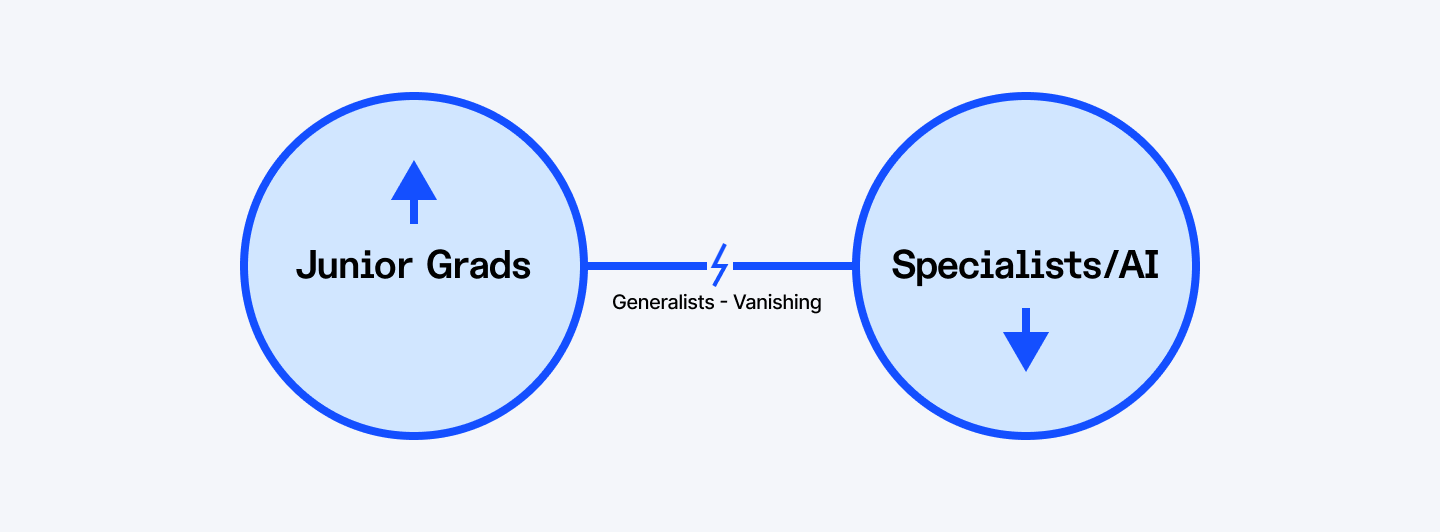
The AI job market 2025: The split between abundant juniors and scarce specialists. The generalists middle is collapsing.
Here is what the data is screaming at us, if we care to listen:
- The Gates Are Closed:
- New grad hiring at Big Tech cratered by 25% since 2023. For startups, it's even worse. Companies no longer have the appetite to train anyone. They expect you to arrive battle-ready.
- New grad hiring at Big Tech cratered by 25% since 2023. For startups, it's even worse. Companies no longer have the appetite to train anyone. They expect you to arrive battle-ready.
- The Middle is Dead:
- Companies are done hiring "mid-level" generalists. You either want a cheap junior to grind out tickets (which AI is doing anyway—hence the ‘Big Tech crater’) or a heavy-hitting specialist who can architect a system in their sleep.
- Companies are done hiring "mid-level" generalists. You either want a cheap junior to grind out tickets (which AI is doing anyway—hence the ‘Big Tech crater’) or a heavy-hitting specialist who can architect a system in their sleep.
- AI Isn't a Buzzword, It's the Password:
- Job postings mentioning AI and machine learning exploded by 56.1% in the first half of 2025 alone. If your team isn't fluent in Python, TensorFlow, and NLP, you're already a dinosaur.
- Job postings mentioning AI and machine learning exploded by 56.1% in the first half of 2025 alone. If your team isn't fluent in Python, TensorFlow, and NLP, you're already a dinosaur.
- The Great Unbundling:
- Companies are no longer hiring "software engineers." They're hiring Cybersecurity Architects, Cloud Migration Specialists, and Go Backend Engineers with gRPC experience. Specificity is the new currency.
- Companies are no longer hiring "software engineers." They're hiring Cybersecurity Architects, Cloud Migration Specialists, and Go Backend Engineers with gRPC experience. Specificity is the new currency.
- The "Shortage" is a Lie:
- There is no shortage of developers. There are millions of them. However, there is a huge deficit of qualified developers capable of passing an extremely tough technical interview.
- There is no shortage of developers. There are millions of them. However, there is a huge deficit of qualified developers capable of passing an extremely tough technical interview.
It's a maddening paradox: developer job postings are down by 70%, yet the industry is facing a projected shortage of 85.2 million skilled tech workers by 2030.
So, how do you win in this environment? You stop fishing in the same overfished pond as Google and Meta.
Looking for the best platforms to find skilled full-stack developers in the U.S.? We ranked the top 8 so you can hire faster.
How to Build a U.S. Tech Team Without Overpaying
Step 1: Be Ruthlessly Specific
Stop writing job descriptions like this: "Seeking a rockstar ninja developer. " Top talent reads that and immediately knows you don’t know what you’re doing. Just… stop.
You need a blueprint.
Start with the mission. What, exactly, are you building? Migrating a monolith to microservices? Launching a native iOS app? Building a predictive analytics engine?
- Don't say: "Backend developer."
- Say: "Python specialist with 5+ years in Django who understands asynchronous task queues and has scaled a Postgres DB to 10TB."
- Don't say: "Good communication skills."
- Say: "Must be able to explain a technical tradeoff to a non-technical PM without making them feel left out."
This specificity saves you time. It scares away the fakers. It attracts the pros who know exactly what they bring to the table.
Now, map roles to outcomes, not just technologies:
- Need a slick, responsive UI? You don’t need a "frontend developer." You need a React specialist who lives and breathes component-based architecture and state management.
- Scaling your user base? You don’t need a "backend developer." You need a Go or Python expert who understands horizontal scaling, database sharding, and caching strategies.
- Shipping faster? You don't need "DevOps." You need an infrastructure pro who can build a zero-downtime CI/CD pipeline using Kubernetes, Terraform, and GitHub Actions.
And please, define your budget. A US senior dev is $160k+. A senior dev in LatAm is $80/hour. Do the math. If you don't need them in your office for a whiteboard session every Tuesday, why are you paying the "San Francisco Premium"?
Step 2: Choose Your Arena – Onshore vs The World
Your team's location isn't just a pin on a map. It's the single biggest lever you can pull to control cost, speed, and talent quality.
- The Fortress (Onshore/US-Based):
- The Price: A king's ransom. $120k-$180k per head, annually.
- The Perk: Same time zone. No cultural friction. Perfect for projects that need constant, fluid communication.
- The Pain: Your talent pool is a puddle. High salaries, higher expectations, and a hiring process that moves at a glacial pace.
- The Price: A king's ransom. $120k-$180k per head, annually.
- The Outpost (Nearshore/Latin America):
- The Price: A smart investment. $60-$120 per hour.
- The Perk: Minimal time zone difference (think morning coffee syncs). High English proficiency and strong cultural alignment with the US. It’s the sweet spot for agile teams.
- The Pain: Can be slightly pricier than offshore, but you get what you pay for: real-time collaboration.
- The Price: A smart investment. $60-$120 per hour.
- The Global Grid (Offshore/Eastern Europe & Asia):
- The Price: Shockingly affordable. $20-$50 per hour. You can hire a whole team for the cost of one US engineer.
- The Perk: A bottomless ocean of talent. Deep technical expertise in almost any niche.
- The Pain: Time zones are a monster. This model demands military-grade documentation and asynchronous workflows. Not for the disorganized.
- The Price: Shockingly affordable. $20-$50 per hour. You can hire a whole team for the cost of one US engineer.
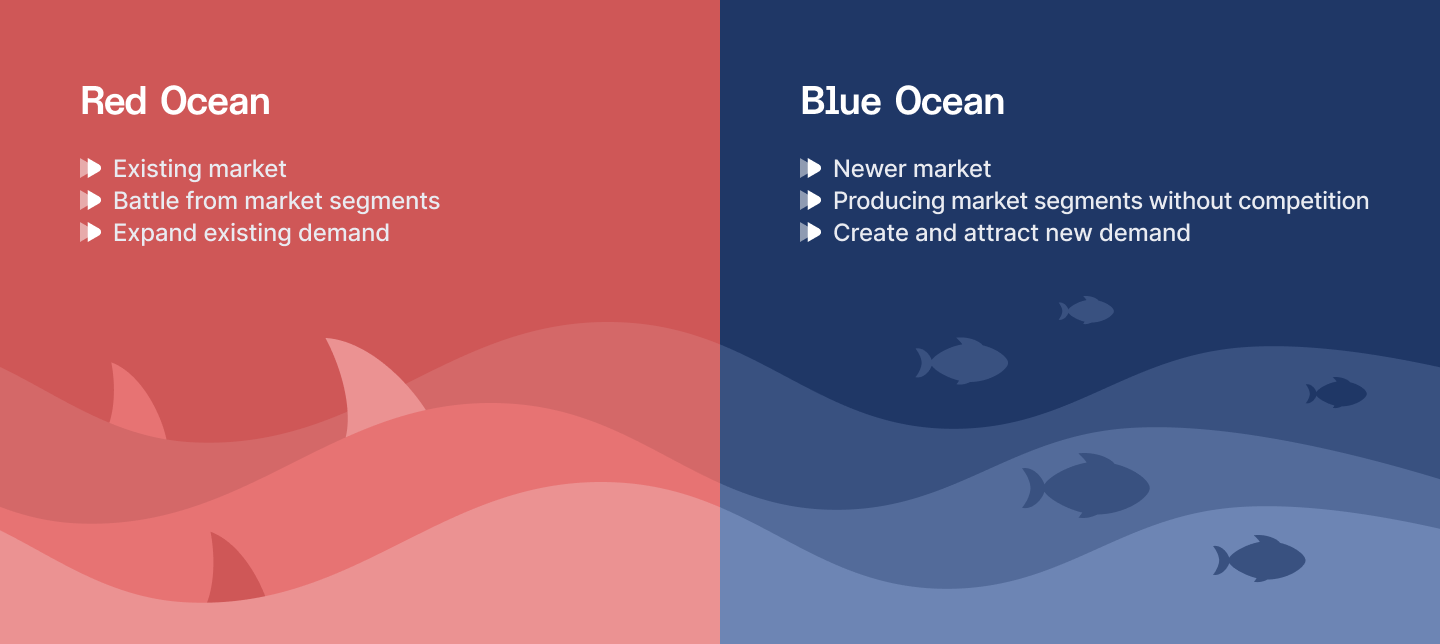
Red Ocean vs. Blue Ocean: Stop fighting for the same $160k engineer in San Francisco (Red Ocean). The untapped talent pools in LatAm and Eastern Europe (Blue Ocean) offer the same skills at half the cost—without the sharks.
Index.dev lives in the Nearshore and Offshore world, sourcing elite, pre-vetted talent from emerging tech hubs in LATAM and CEE. You get the skills without the Silicon Valley price tag.
Step 3: Assemble Your Crew – Don't Just Fill Seats
Building a team is like casting a movie. Every role matters, and chemistry is everything. A single miscast can ruin the entire production.
Your core cast includes:
- The Director (Project Manager): The one who reads the script, calls the shots, and keeps the production on schedule. Without them, you have chaos.
- The Architect (Software Architect): The visionary who designs the set. They decide if you're building a skyscraper or a sandcastle, ensuring it won't collapse later.
- The Engine Room (Backend Devs): They build the machinery that makes everything work. The unsung heroes who handle logic, data, and power.
- The Artists (Frontend Devs): They make it all look good. They turn the architect's blueprint into a beautiful, intuitive experience the audience loves.
- The Stunt Coordinator (DevOps Engineer): They rig the explosions and automate the dangerous stuff so everything happens smoothly and repeatedly.
- The Critic (QA Engineer): The person who watches every scene and points out every flaw, ensuring the final product is flawless before it hits the theater.
Don’t hire them all at once. Scale your team like a musician layering tracks:
- The Demo Tape (Discovery): A trio of a PM, an Architect, and a UX designer to map out the vision.
- The First Album (MVP): Bring in your frontend and backend leads, plus a QA engineer. A tight, focused band of 6-8.
- The World Tour (Enterprise Scale): Multiple "pods" of developers, each owning a feature, supported by dedicated DevOps and data teams.
Index.dev doesn't just give you a list of names. We help you assemble the right crew for your specific mission, ensuring you have the skills you need, exactly when you need them.
Step 4: The Vetting Gauntlet – Trust No One, Verify Everything
A bad hire is technical debt with a salary. It costs companies 60% of their operational budget.
You cannot afford to trust a resume. A resume is a marketing document. It is lies and exaggeration formatted in Times New Roman.
You need to see them work.
- Portfolio & GitHub:
- Don't just glance at it. Interrogate it. Is their GitHub a ghost town or a bustling city of commits? Look at the code. Is it clean, documented, and thoughtful, or a spaghetti monster? Public contributions are a massive green flag.
- Don't just glance at it. Interrogate it. Is their GitHub a ghost town or a bustling city of commits? Look at the code. Is it clean, documented, and thoughtful, or a spaghetti monster? Public contributions are a massive green flag.
- Live Coding:
- Not "reverse a binary tree on a whiteboard." Give them a real problem. "Here is a broken API endpoint. Fix it." Watch how they debug. Do they read the error logs? Do they Google the right things? (Yes, good devs Google things).
- Not "reverse a binary tree on a whiteboard." Give them a real problem. "Here is a broken API endpoint. Fix it." Watch how they debug. Do they read the error logs? Do they Google the right things? (Yes, good devs Google things).
- Take-Home Test:
- Give them a small, self-contained project that mirrors actual work. This filters out the smooth-talkers and shows you who can actually ship. Pro tip: Use a tool like HackerRank to detect plagiarism.
- Give them a small, self-contained project that mirrors actual work. This filters out the smooth-talkers and shows you who can actually ship. Pro tip: Use a tool like HackerRank to detect plagiarism.
- Pair Programming:
- Put them in a session with one of your senior engineers. This isn't a test of their coding skill; it's a test of their collaboration skill. Can they give and take feedback? Can they communicate their ideas clearly?
- Put them in a session with one of your senior engineers. This isn't a test of their coding skill; it's a test of their collaboration skill. Can they give and take feedback? Can they communicate their ideas clearly?
- Soft Skills:
- Can they say "no"? A developer who agrees to every deadline is a ticking time bomb. You want someone who pushes back and says, "That feature will take two weeks, not two days, and here is why."
- Can they say "no"? A developer who agrees to every deadline is a ticking time bomb. You want someone who pushes back and says, "That feature will take two weeks, not two days, and here is why."
Index.dev's vetting process is a gauntlet with a <5% acceptance rate. We run background checks, English and soft-skills screenings, technical exams, and multiple live interviews before a candidate ever reaches your inbox.
Step 5: Master the Art of Remote Control
Onboarding isn't a checklist; it's a launch sequence. A bad one ends in disaster.
- Day One, Hour One: All systems go. Access to GitHub, Jira, Slack. A configured GitHub Codespace so they can be coding in minutes, not fighting with local environments.
- Trust, but Verify: Manage outcomes, not hours. Remote leadership in 2025 is about asynchronous trust. Use data. Track cycle time, pull request size, and deployment frequency. Celebrate wins publicly. Address blockers privately.
- The Right Tools for the Job:
- Communication: Slack for real-time, Asana for projects.
- Collaboration: Figma for design, Miro for whiteboarding.
- Code: GitHub for repositories, VS Code Live Share for pairing.
- Documentation is King: If it's not written down, it doesn't exist. Invest in your READMEs. Your onboarding docs should be so good a stranger could deploy the app in an hour.
- The Buddy System: Pair them with an internal dev for the first week. Not to babysit, but to unblock. "Where are the API keys?" "Who do I ask about the database schema?"
Scaling should be as easy as adjusting a thermostat. With a dedicated team model, it is. Need to spin up a new feature squad? Done. Project winding down? Scale back without the HR drama.
Clients like Entrupy used Index.dev to scale from a single iOS developer to a 12-person team over two years, adding exactly the right specialists as their needs evolved.
The "Secret Sauce"
Look, building a tech team is hard. But it doesn't have to be stupid hard. You can do it the old way: Post on LinkedIn, sift through 500 resumes, interview 50 people, hire 2, fire 1, and repeat.
Or you can use Index.dev. We have a rigorous vetting process in place. We have a talent network of the best engineers in the world who just want to work remotely and help build groundbreaking projects.
- We vetted them.
- We handle the contracts.
- We manage the payments.
- You build the product.
It’s simple. It’s efficient.
Curious how to pick the right platform for hiring pre-vetted developers? This guide breaks down the must-know factors.
Conclusion
Ultimately, the model you choose isn't a cost decision—it’s a philosophy.
Are you building a company that collects employees, or one that ships product?
The old playbook is about headcount, location, and managing people. The new playbook is about outcomes, velocity, and managing a distributed system of talent. While your competitors are busy scheduling their fifth round of interviews for one role, your dedicated team can be on their third sprint.
That's not outsourcing. That's a time-to-market advantage. And frankly, it’s how the smartest companies are building software in 2025.
So stop building a team. Start building a dynasty.
➡︎ Looking to build a dedicated tech team in the U.S.? Index.dev connects you with the top 5% of global talent, rigorously screened for technical skill, communication, and remote-work excellence. Hire fast, avoid bad hires, and onboard in 48 hours.
➡︎ Want to go deeper into hiring platforms, global talent markets, and affordable ways to build high-performance engineering teams? Dive into practical breakdowns like how to hire high-quality developers with limited budgets, where the strongest AI talent pools are emerging, what early-stage startups should use to recruit AI engineers, the best platforms to hire LATAM talent, and how AI can speed up every part of your hiring process.