AI is the newest phenomenon, which will drastically change the environment of innovation in the near future. From caring for the patient’s health and improvement of the financial industry to manufacturing and changing the scales in favor of retailers, using AI projects brings new shifts in processes and opens new horizons for generating business values. As more and more industries start to use AI solutions in their day-to-day operations, it is crucial to ensure the success of the project.
However, the process of creating and implementing AI applications is a rather complex process that has to involve a team of professionals. Same as any other complex project, the idea in an AI project is achieved by the collaboration of many specialists with varying abilities. This begs the question: what does an appropriate team structure look like for an AI development project?
In this blog, we will explore in detail and discuss the major components that create the framework of AI organizations. As for such components, we will discuss possible approaches to the composition of the team, including its formation based on the characteristics of the project, complexity, and available resources. We will also assess ways through which enhancing collaboration and communication can lead to optimal performance of a diverse team. Lastly, we want to clearly identify the characteristics of an ideal team structure and demonstrate its influence on favorable project results.
Need expert developers for your AI project? Hire senior AI engineers through Index.dev to save 60% on your AI development costs.
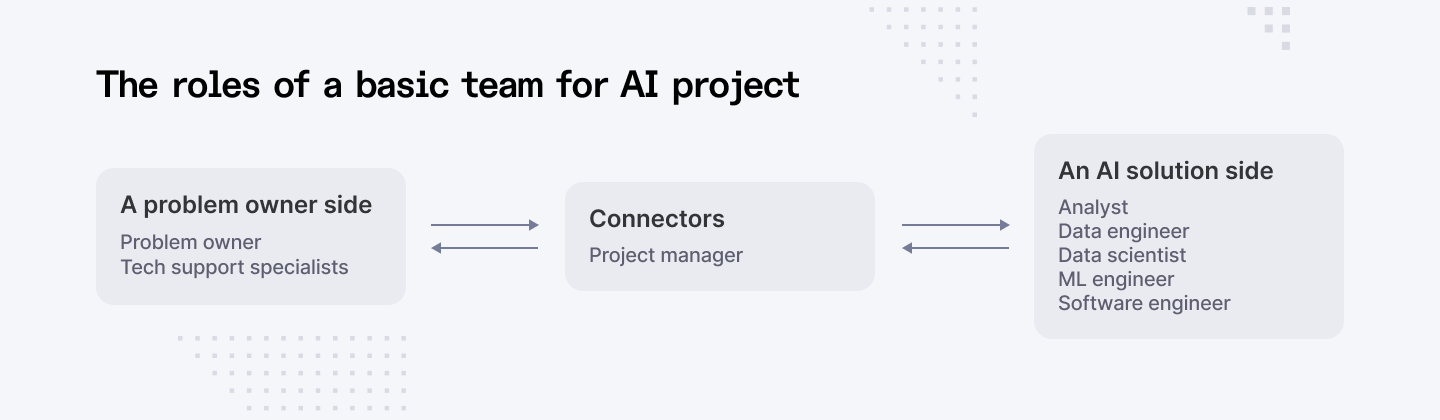
Core Team Roles and Responsibilities
1. Data Scientists:
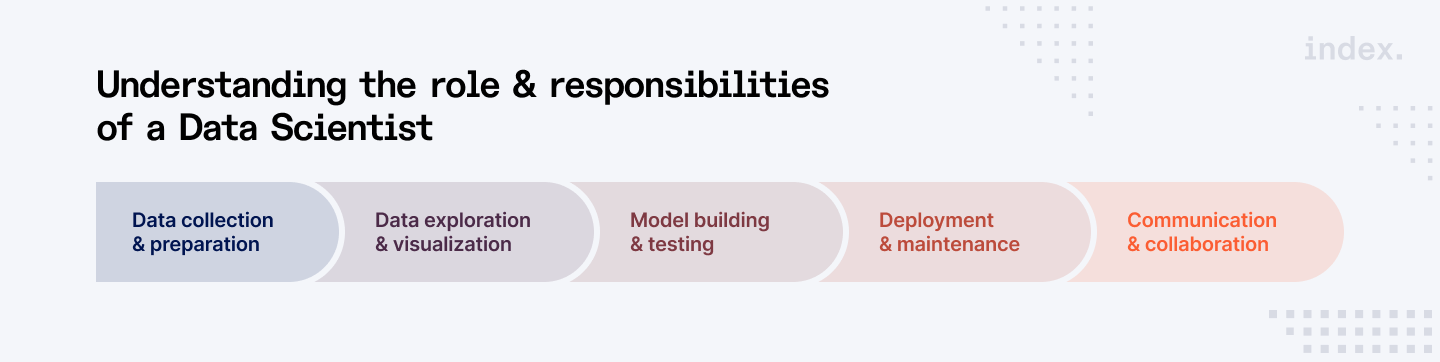
The people behind any AI project are data scientists who are the builders and experts that help in moving bulk data by creating architectures of how it should look after analyzing it. They are involved in the entire cycle of AI development from data gathering to implementation of the final model.
Data Wranglers: Taming the Raw Data Beast
The process starts with data buying. Domain knowledge specialists are always involved in the identification of potential data sources by data scientists to avoid inclusion of substandard data or data that is prohibited by the privacy laws. Here's where their data wrangling skills come into play. They format the data by data cleaning and data pre-processing stage, where they address issues related to data consistency, missing values and prepare the data for analysis. This pre-processing stage plays an important role since the quality of the AI model depends on the data provided.
One of the most important activities that data scientists have to perform is feature engineering. This involves identifying high level features (attributes) from the raw data that will be relevant for learning and modeling within the AI system. During this stage, it is common to use concepts such as reducing the number of dimensions, selecting features, or creating new features.
Choosing the Right Algorithmic Expertise
After getting the data in a format that can be worked on, data scientists use their knowledge of the various types of machine learning algorithms to determine the best algorithm to use for a given problem. This process of choosing an algorithm involves coming up with a SWOT (Strength, Weakness, Opportunity, and Threat) analysis of the algorithms, the data sizes that the algorithms can handle and the computational complexity of runtime, and the level of interpretability of the model that one desire.
For instance, a study aiming at achieving higher prediction rates will prefer models like support vector machines (SVMs) or random forests. However, if interpretability is the top priority for example when an individual wants to know why his/her loan application was rejected then a decision tree could be more suitable.
The Knowledge base of a Data Scientist
Data scientists or anyone practicing this form of analysis is extremely reliant on a strong list of tools and frameworks. Examples include Python based frameworks such as TensorFlow and PyTorch. All these platforms are open source and offer a rational solution for data wrangling, formulating models, along with their training. Also, data science professionals may use services such as Google Cloud AI Platform or Amazon SageMaker to develop and deploy models using pre-made services and elastic computer resources..
Beyond the Code: Communication and Collaboration
It's important to remember that data scientists are not lone wolves. Effective communication and collaboration are essential for success. They must clearly articulate their findings and data insights to other team members, particularly domain experts and machine learning engineers. This fosters a shared understanding of the problem and ensures smooth integration of the AI model into the final application.
AI model development is initiated and facilitated by data scientists. Their knowledge in data preprocessing, feature creation, choosing algorithms, and utilizing strong instruments is vital for transforming data into knowledge and creates the basis for effective Artificial Intelligence projects. When we discuss team formation in detail, we will understand how a machine learning engineer or a domain specialist works with a data scientist to implement such models.
Build a high-performing AI development team with top Data Scientists from Index.dev. Connect with expert talent in under 48 hours. Start your free trial!
2. Machine Learning Engineers:
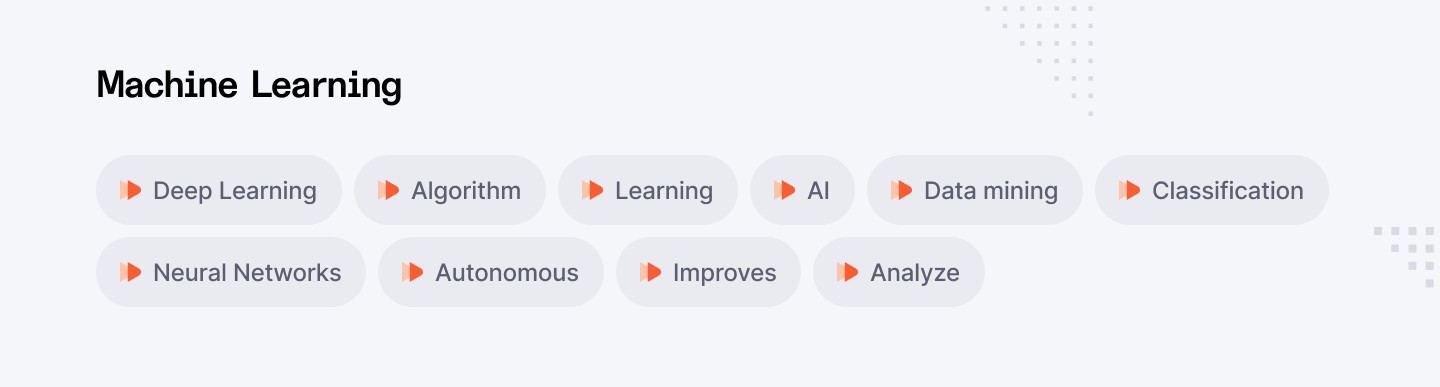
Machine Learning Engineers (MLEs) are professionals who work as middle men between theoreticians who develop the algorithms and implementers who put them into practice in applications. Their strength is in the ability to take a trained model and then transform it into a solution that can be deployed to production.
Building for Production
- Model Packaging and Deployment: It is essential to note that MLEs play the role of converting the trained model into information delivery format. This sometimes requires putting into a container with tools such as Docker to make it easier to deploy and run the model in different environments.
- Scalable Infrastructure: AWS SageMaker, Azure Machine Learning, or Google AI Platform are reliable cloud environments for deploying and scaling of the machine learning models. MLEs are able to effectively configure and manage resources for this model in order to accommodate live traffic and different loads.
- Serving Frameworks: There are existing solutions for serving models such as TensorFlow Serving or PyTorch Serving which come with fine tuned optimized interfaces for production. MLEs set up these infrastructures in a way that makes loading models, running inferences, and producing responses fast to reduce latency while improving the performance of models.
Monitoring and Maintaining the AI Pipeline
- Model Monitoring: Once deployed, MLEs implement robust monitoring strategies to track the model's performance in production. Metrics like accuracy, precision, recall, and F1 score are crucial for identifying potential performance degradation or data drift. Tools like Prometheus or Grafana can be used to visualize these metrics and alert MLEs of any anomalies.
- A/B Testing and Continuous Improvement: MLEs utilize A/B testing as a method for comparing the outcomes of one model with another or model with a different configuration. It enables the enhancement of the AI solution and adapts it to the environment’s new conditions since it does not rely on rule-based systems.
- MLOps Integration: The major goal of MLOps is the automation of the ML process. MLOps is a way to improve the processes of model deployment, monitoring, and model retraining for MLEs. It decreases the level of involvement from the human element, decreases the occurrence of errors and helps to become more flexible the environment in which the development occurs.
Expertise Beyond Deployment
While deployment is a core responsibility, MLEs also play a vital role in the development cycle:
- Model Optimization: Data scientists work with MLEs to improve the performance of a given model. This might include the steps of model pruning, quantisation or knowledge distillation so as to optimise the model size and complexity to be appropriate for deployment on constrained devices.
- Explainability and Interpretability: It is therefore important when using a model in decision making that we have to understand how the model arrived at its decision as this will foster trust and fairness. Based on the capabilities of MLEs, they can use tools such as LIME or SHAP in an endeavour to explain the model’s predictions while facing the model with insights regarding factors that influence its outputs.
Machine learning engineers build productionized AI solutions that other people in the company can use. Domain knowledge in cloud platforms, model deployment, and monitoring allow the AI models not only to work fine but also properly utilized as well as adjusted to adapt to the realities. They are important for the successful outcomes supporting the developing AI projects of the increasing complexity of MLEs.
Read also: 6 AI Model Optimization Techniques You Should Know
Build a high-performing AI development team with top Machine Learning engineers from Index.dev. Connect with expert talent in under 48 hours. Start your free trial!
3. AI Engineers:
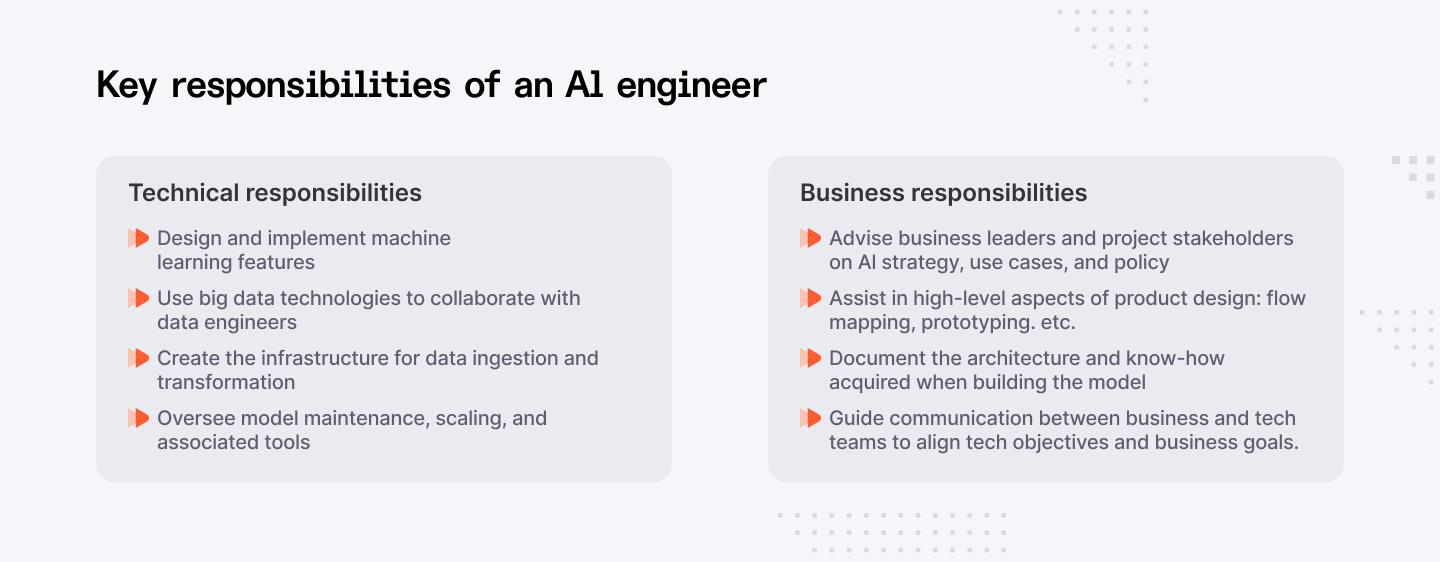
Ai Engineers have a very important function of translating the methodology developed on the basis of an AI model to real life situations. It can be visualised as an AI model as a powerful engine but to deliver the power it requires a perfect body (hardware and software infrastructure) and then a perfect tuning mechanism (integration). Take a closer look at what they do and how they do that based on their roles and specialization.
Building the Foundation: Infrastructure for the AI Model
- API Development: Ai engineers have the role of engineering and implementing APIs, which provide the communication links between the AI model and other applications. These APIs describe the manner in which the model takes in data, how it handles them, and the format used in rendering the outcome or results.
- Example: Typically in a recommender system, the API may take user data and a product data and call the AI recommendation model, and then return the results to the user interface.
- Database Management: The models used in the deployment of artificial intelligence require reliable methods in the storage and access of data. IT specialists in the shape of Ai engineers are responsible for designing and maintaining the specific model’s databases. That could mean fine tuning the database structures to accommodate the large volumes of training data or real-time predictions.
- Example: Creating a time-series database for continually storing the sensor data applied in an anomaly detection model (e. g., InfluxDB).
Seamless Integration: Connecting the AI Model to Existing Systems
- Integration Expertise: AI teams, mostly Ai engineers, have the capacity of incorporating the model into meaningful organization’s systems, for example, CRM or ERP systems. This makes it easy to incorporate the insights generated by the AI model into the Information systems routinely used by organisations.
- Example: Using a fraud detection model in processing a payment system to quickly detect potentially fraudulent transactions that require further investigation.
- User Interface (UI) and User Experience (UX) Design Considerations: Ai engineers work with UI/UX designers to ensure that even when the predictions and insights arising from the AI model are complex, the end-users can easily understand them. This may involve looking at creation of panels like windows or interfaces to enhance the use of the AI by making it less complex.
- Example: Creating an interface through which a financial analyst can be able to analyze the risk forecasts that have been done by the loan default prediction model.
Framework Selection: Tools for Tailored Development
The actual development frameworks applied by Ai engineers vary depending on the AI project and the type of the intended interface. Here are some prominent examples:
- Web Frameworks: Python for instance has many Web frameworks and these are some of the Web frameworks that can be used in the development of a web application that interfaces with AI models such as Django, Flask among others.
- Mobile Frameworks: Creating the mobile apps that utilize the AI would need development environments and tools that are for example, React native for JavaScript or Flutter for Dart.
- Cloud-based Frameworks: Cloud services like AWS, Azure or GCP can also need the comprehension of some frameworks used by those platforms to deploy and manage the AI model’s environment.
AI engineers are the technical architects of the proposed solution who utilize the AI model to execute necessary solutions. Their experience is associated with the selection of the appropriate framework for building and integrating AI models into the project environment as well as fine tuning the whole construct for successful and effective results.
Read also: Top 5 Programming Languages For AI Development in 2024
Build a high-performing AI development team with top AI engineers from Index.dev. Connect with expert talent in under 48 hours. Start your free trial!
4. AI Project Manager:
The key player in any AI development project is the Project Manager (PM) who is responsible for coordinating various professionals during the course of the project. This role contains the following responsibilities which are crucial to the achievement of AI outcomes. Here's a deep dive into their responsibilities and the crucial aspects of their leadership:
Planning, Scheduling, and Resource Allocation
- Project Initiation: The PM’s major role in the initiation stage entails creating objectives, setting out the project’s parameters, and identifying outcomes. This includes identifying requirements that highlight the feasibility of a project and developing a roadmap for such a project, in the form of a project charter.
- Project Breakdown Structure (PBS): The PM breaks down the project into smaller parts that could easily be handled by the project team. This PBS acts as a basis for developing sophisticated work schedules with practicable timeframes and checkpoints.
- Resource Management: The PM effectively assigns people, equipment, and software support depending on the requirements of the project and the relation between tasks. This entails coordination of internal team experience, potential and actual outsourcing relationships and successful deployment of resources allocated to a project.
Communication Management and Agile Methodologies for Adaptability
- Facilitation and Communication: The PM also has to be the channel of communication with all the stakeholders ensuring free flow of information between the members from different disciplines (data scientists, engineers, domain experts). In their organization, different communication media such as daily meetings, reporting, and status reports are used to ensure that everyone is on the same page.
- Agile Methodologies: Realizing that AI projects form closed cycles, the PM uses Agile project management approaches. This guarantees the system’s ability to change with the current demands, making adjustments to integrate different data sources and fine tuning of the AI model depending on the feedback obtained. To address this challenge, it is possible to use the Kanban boards and sprints to focus on the amount of work completed and show the scholars the issues that should be fixed quickly in order to make adequate decisions.
- Risk Management: The PM holds this responsibility as it entails the identification and management of risks in the course of the project. This encompasses issues that may hinder the quality of the data or the performance of a given model as well as factors outside the team’s control such as inability to source for funds or changes in legislation.
Read also: How to Master Agile Methodology: A Deep Dive into Scrum
Examples and Visuals:
- It may be useful to have a very basic example of a Gantt chart to illustrate how a PM may divide an AI project by phases (e. g., data collection, model development, deployment) into tasks and anticipated timing.
- Mention Jira or Asana as the most commonly used project management tools and describe the role that these tools play in the work of a PM, namely, advancing the management of tasks and progress tracking.
A competent Project Manager plays the crucial role of an effective team leader in the development of AI solutions. Through formal planning, resource management, and effective communication the PM makes sure that the project is properly managed, unites changes, and meets the stakeholders’ expectations by delivering a meaningful AI solution. The leaders should embrace the aspects of value needed in the PMs, such things as technical competency, effective leadership and expertise in the effective completion of elaborate projects that call for new innovations such as AI.
Build a high-performing AI development team with top AI Project Managers from Index.dev. Connect with expert talent in under 48 hours. Start your free trial!
5. Subject Matter Experts
Data scientists and engineers are normally skilled in constructing and deploying AI models but they may not have adequate overall knowledge of the particular purpose an AI project intends to serve. So, when it comes to this, Subject Matter Experts (SMEs) are engaged to help out. SMEs remain the link between the academic theories of AI, and the real world implementation of the same.
Understanding the Problem Domain
SMEs are experts in the specific sector where the AI project will be implemented, thus they bring the domain knowledge into the project. They are immensely knowledgeable about the difficulties, complexity and the processes occurring in that particular field. For instance, in a project implementing an artificial neural network for medical diagnosis a SME could be a proven doctor with years of practice in diagnosing particular illness.
Value of SME Insights
SMEs offer invaluable insights that directly influence the success of an AI project. They can:
- Define the problem accurately: SMEs help translate real-world problems into well-structured, actionable tasks for data scientists and engineers. For example, an SME in finance could help define the specific types of fraudulent transactions the AI model should detect.
- Identify relevant data sources: SMEs guide the team towards accessing the appropriate data sets for training the model. They can pinpoint the types of data that best capture the nuances of the problem domain and avoid irrelevant information.
- Inform feature engineering: SMEs collaborate with data scientists to determine the most relevant features to extract from the data. These features act as the building blocks for the machine learning model and directly influence its performance.
- Interpret model outputs: SMEs play a crucial role in interpreting the model's outputs and translating them into actionable insights for the specific domain. This ensures that the model's predictions are aligned with real-world scenarios and business needs.
Collaboration with the AI Team
SMEs don't operate in isolation. They work closely with data scientists and engineers throughout the project lifecycle. Here's how this collaboration unfolds:
- Data selection and cleaning: SMEs provide guidance on data quality and relevance. They can help identify potential biases or inconsistencies within the data that could skew the model's predictions.
- Model development: SMEs can participate in brainstorming sessions to discuss potential algorithms and model architectures suitable for the problem domain. Their feedback is crucial for ensuring the model addresses the specific challenges effectively.
- Model evaluation: SMEs play a key role in evaluating the model's performance beyond traditional metrics like accuracy. They can assess the model's effectiveness in a real-world context, considering factors specific to the domain.
Example: AI-powered Fraud Detection
Imagine an AI project developing a system to detect fraudulent credit card transactions. Here's how an SME (e.g., a fraud analyst) can collaborate with the AI team:
- Problem Definition: The SME helps define the specific types of fraud the model should detect (e.g., identity theft, unauthorized purchases).
- Data Sources: The SME identifies relevant historical data sets containing transaction details, flagged fraudulent transactions, and customer information.
- Feature Engineering: The SME works with the data scientist to identify features within the data that best indicate fraudulent activity (e.g., unusual purchase locations, sudden increase in transaction amounts).
- Model Evaluation: The SME helps assess the model's ability to detect different types of fraud beyond just overall accuracy. They can also analyze false positives to refine the model further.
Domain experts are not just advisors; they are integral members of the AI development team. Their deep domain knowledge and collaborative spirit bridge the gap between theoretical AI concepts and practical applications. By leveraging SME insights throughout the project lifecycle, organizations can build more robust and effective AI solutions that deliver real value in the intended domain.
Read also: How to Hire Skilled Developers for Startups
The Bottom Line
While this blog provides a comprehensive overview of key roles and responsibilities, it's essential to recognize that the optimal team composition may vary based on project-specific requirements, organizational culture, and resource availability. Flexibility and adaptability are key to building a high-performing AI team. As the AI landscape continues to evolve, so too must our approach to team building.
Would you like to explore specific aspects of AI team building in more detail, such as team culture, leadership, or organizational structure?
Index.dev is a powerful remote work platform that can help you scale your engineering team with high-performing, curated AI talent remotely.
Why hire AI engineers from Index.dev?
- Versatility in Programming Languages: Index.dev's AI technologists are proficient in Python, C++, R, and Java.
- Strong Statistical Skills: Our AI engineers at Index.dev excel in probability and statistics, architecting durable AI models like Hidden Markov and Gaussian Mixture with precision.
- Advanced Data Engineering Practices: With tools like AWS S3, Redshift, Power BI, Tableau, and OpenCV, our AI engineers create efficient ETL pipelines.
- Specialization in AI Model Construction: Our AI engineers specialize in building robust AI models, leveraging extensive expertise in machine learning algorithms.
Read more: Vetting High-Performing Tech Talent: Our Rigorous 4-Step Process
Building a high-performing AI team requires a thoughtful approach to team culture, leadership, and organizational structure. By leveraging the capabilities of Index.dev, you can improve your team-building efforts and ensure that your AI initiatives are successful.
If you're interested in exploring any specific aspect further or have questions about how to implement these strategies, feel free to ask!