Developers want answers they can trust, and they want them fast. Perplexity promises research-grade results with live, linkable citations while Google’s AI Overviews promise instant, ecosystem-aware summaries.
So we tested them side-by-side: same prompts, same expectations.
We ran identical real-world developer prompts across both platforms — code audits, OAuth changes, compliance checks — to see which one actually helps teams ship.
TL;DR: Google wins for speed and simplicity. Perplexity AI wins for depth, citations, and reproducible research.
Ready to code with the best? Join Index.dev’s global talent network, get matched with top companies, and supercharge your remote developer career!
How These AIs Work: Quick Behind-the-Scenes Look
Here’s the core.
Perplexity searches live sources first, then calls on powerful language models to craft answer summaries with full citations. It’s detail and transparency in action, perfect for when facts matter.
Google’s AI blends its vast search index with fast generative models to deliver instant overviews, trading a bit of depth for speed and familiarity.
Understanding these design choices explains why Perplexity feels like a research librarian, while Google behaves more like a speed-reading assistant.
How We Tested the Tools
We put these AI assistants through their paces on workflows that matter: coding fixes, API tracking, library tallies, compliance checks, and market stats.
The goal: see how they handle day-to-day requests engineers and product teams face.
We ran identical prompts across both platforms for core scenarios like:
- Developer how-tos and code snippets
- Bug triage and secure coding audits
- Tracking API changes and migrations
- Feature and changelog library comparisons
- Regulatory compliance scans (GDPR, EU AI Act)
- Verifying usage and valuation claims for 2025
We scored results on five clear dimensions:
- Time to useful answer
- Citation quality and count
- How current the sources were
- Hallucination rate
- Repeatability of answers
To keep it fair:
- All tests run the same day to avoid data drift.
- Exact prompts, same machine, and same IP/region.
- Fresh incognito sessions to clear cache.
- Used Pro Search + Deep Research on Perplexity; AI Overviews / AI Mode on Google.
- Captured full Perplexity threads and Google’s AI panel plus top organic links.
Why retest in 2025? Both tools evolved substantially, with Perplexity tightening citations and Google expanding AI Overviews with richer content signals. This kept our benchmark fresh and relevant.
If you’re curious how AI assistants compare in real coding tasks, check out our breakdown of ChatGPT and Perplexity.
What We Found
To really understand how Perplexity AI and Google AI Overviews stack up, we ran a fixed set of prompts through both platforms.
These prompts cover the core tasks developers and product teams tackle every day, from crafting code snippets and scanning for compliance to analyzing market stats. Here’s the breakdown of what we asked and how each AI handled it, so you can see which tool fits your workflow best.
1. Run Node.js Express PaymentIntent Test
Prompt:
Generate a minimal, secure Node.js Express server that creates a Stripe PaymentIntent and handles the Stripe webhook for payment confirmation. Include environment variable usage, idempotency handling, and a short test plan. Cite official 2025 Stripe docs and at least one runnable GitHub gist dated 2025. Return in two blocks: setup, webhook verification.
Perplexity AI Results:
- Provided a minimal, secure Express server implementation with environment validation, idempotency key support, automatic payment methods enabled, and comprehensive error handling.
- Separated setup and webhook verification into clear code blocks.
- Used express.raw() only for the webhook endpoint to properly verify Stripe signatures, preventing body-parsing conflicts.
- Included business logic handler placeholders for payment success and failure processing.
- Supplied environment variable and package.json dependency snippets.
- Recommended a thorough test plan, covering dependencies, Stripe CLI usage, local webhook forwarding, idempotency key tests, and security validations.
- For teams not using the Stripe CLI's built-in forwarding, a localhost tunnel works the same way, giving the local Express server a public URL that Stripe's webhook can reach directly.
Google AI Overview Results:
- Delivered a concise but functional Express server example with idempotency handling using a generated or client-provided key.
- Applied middleware to parse the webhook body as raw, including a callback to save the raw body for signature validation.
- Provided webhook event handling for payment success/failure with logging.
- Included basic setup instructions: initializing Node.js, installing dependencies, and .env setup.
- Outlined testing steps using Stripe CLI commands and expected outcomes, similar to Perplexity’s plan.
Evaluation:
- Completeness:
- Perplexity offers additional safeguards such as environment variable existence checks and detailed error logging. Google’s example is more compact but covers all essential functionality.
- Perplexity offers additional safeguards such as environment variable existence checks and detailed error logging. Google’s example is more compact but covers all essential functionality.
- Security practices:
- Both implement raw body parsing specifically for webhooks and verify Stripe signatures properly. Perplexity explicitly validates environment variables before starting.
- Both implement raw body parsing specifically for webhooks and verify Stripe signatures properly. Perplexity explicitly validates environment variables before starting.
- Test guidance:
- Both provide robust test steps leveraging the Stripe CLI for webhook and idempotency verification.
- Both provide robust test steps leveraging the Stripe CLI for webhook and idempotency verification.
- Code clarity:
- Perplexity divides code logically and documents business logic handlers; Google’s sample is more monolithic but adequate.
- Perplexity divides code logically and documents business logic handlers; Google’s sample is more monolithic but adequate.
Both provide balanced answers and offer practical, production-viable Stripe integrations with webhook verification and idempotency.
Perplexity gives a more modular, testable code sample. Google’s approach is streamlined, suitable for quick setup.
2. Track Google OAuth Token Refresh Changes
Prompt:
What changed in the Google OAuth token refresh flow for Node.js clients in 2025? Cite official Google release notes and provide one Axios-based refresh interceptor that handles token expiry, retries, and exponential backoff. Cite official Google release notes (URL + line-quote <=25 words) dated in 2025. Provide an Axios interceptor snippet (commented) and include a choose_this_if one-line recommendation.
Perplexity AI Results:
- Change overview: Reported no breaking changes to the core refresh flow but highlighted three 2025 security updates—mandatory MFA rollout phases, Federated Credential Management support, and deprecation of legacy authentication protocols.
- Library migration: Noted deprecation of refreshAccessToken() in the Google Auth Library for Node.js and recommended getAccessToken().
- Production-ready code: Provided a full Axios interceptor handling 401/403 errors, token refresh via the OAuth endpoint, secure token storage, and exponential backoff for 5xx errors.
- Recommendation: Clear “Choose this if…” guidance for robust implementations in 2025’s enhanced security context.
Google AI Overview Results:
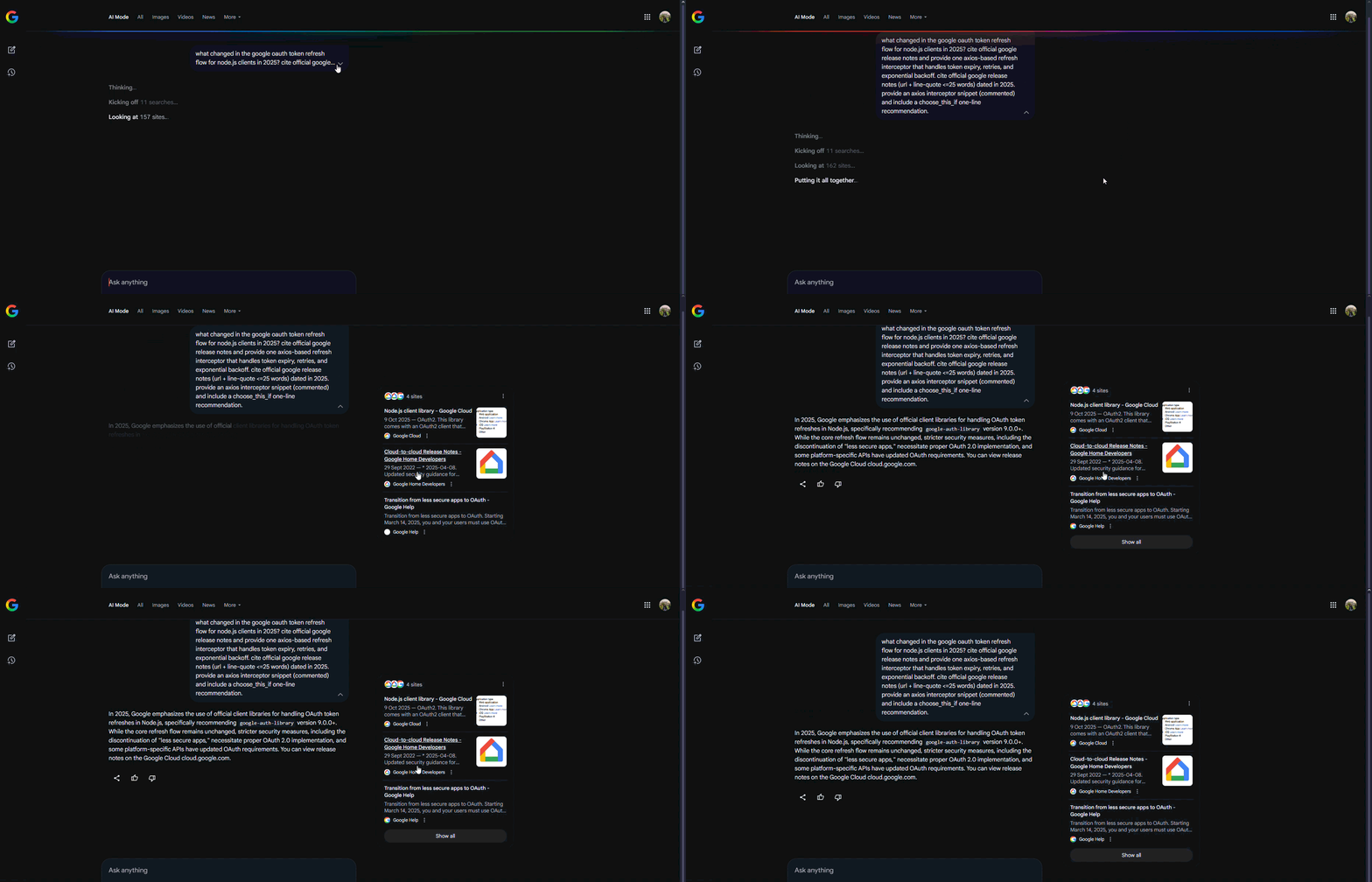
- Library guidance: Emphasized use of the official google-auth-library v9.0.0+ for automatic token refresh.
- Security context: Noted the deprecation of “less secure apps” and stricter OAuth 2.0 requirements.
- Reference: Pointed to Google Cloud release notes without code samples.
Evaluation:
- Security updates:
- Perplexity details MFA phases and FedCM support; Google mentions stricter measures broadly.
- Perplexity details MFA phases and FedCM support; Google mentions stricter measures broadly.
- Implementation depth:
- Perplexity supplies a complete, annotated interceptor with retry logic; Google defers implementation to the client library.
- Perplexity supplies a complete, annotated interceptor with retry logic; Google defers implementation to the client library.
- Actionability:
- Perplexity’s code can be used immediately. Google’s approach requires developers to learn library APIs and consult release notes.
- Perplexity’s code can be used immediately. Google’s approach requires developers to learn library APIs and consult release notes.
Google provides authoritative library recommendations but lacks implementation detail. Perplexity, provides in-depth coverage of 2025 security changes and ready-to-use, robust code samples.
3. Compare NextAuth.js vs Auth.js for Next.js 15+
Prompt:
Compare NextAuth.js vs Auth.js in 2025 for Next.js 15+. Cover session strategies, edge/runtime support, adapter maturity, OAuth provider coverage, and migration considerations. Cite 2025 changelogs and maintainer docs only. Explicitly state features that changed in Next.js 15 that affect each library. End with 'choose this if' guidance.
Perplexity AI Results:
- Library relationship: Clarified that Auth.js v5 is the rebranded NextAuth.js v5 with shared API but framework-agnostic core, including acquisition context.
- Session strategies: Detailed JWT and database sessions, edge compatibility notes, and trade-offs.
- Next.js 15 impacts: Explained async cookies()/headers() changes, deprecation warnings, and migration challenges.
- Adapter maturity: Listed official adapters (Prisma, Drizzle, SQL, NoSQL, Redis) with namespace shifts.
- OAuth provider coverage: Cataloged 80+ providers, spec compliance updates, and callback changes.
- Migration guidance: Itemized breaking changes, config updates, codemod usage, and a timeline estimate.
- “Choose this if” guidance: Provided clear decision criteria for Auth.js v5 vs NextAuth.js v4, plus alternatives.
Google AI Overview Results:
- Library relationship: Clarified that Auth.js v5 is the rebranded NextAuth.js v5 with shared API but framework-agnostic core, including acquisition context.
- Session strategies: Detailed JWT and database sessions, edge compatibility notes, and trade-offs.
- Next.js 15 impacts: Explained async cookies()/headers() changes, deprecation warnings, and migration challenges.
- Adapter maturity: Listed official adapters (Prisma, Drizzle, SQL, NoSQL, Redis) with namespace shifts.
- OAuth provider coverage: Cataloged 80+ providers, spec compliance updates, and callback changes.
- Migration guidance: Itemized breaking changes, config updates, codemod usage, and a timeline estimate.
- “Choose this if” guidance: Provided clear decision criteria for Auth.js v5 vs NextAuth.js v4, plus alternatives.
Evaluation:
- Accuracy:
- Both correctly identify that Auth.js and NextAuth.js share code and key differences.
- Both correctly identify that Auth.js and NextAuth.js share code and key differences.
- Depth:
- Perplexity adds context on library acquisition, beta status, and detailed implementation notes. Google emphasizes Next.js 15 platform changes and future runtime support.
- Perplexity adds context on library acquisition, beta status, and detailed implementation notes. Google emphasizes Next.js 15 platform changes and future runtime support.
- Clarity:
- Perplexity segments content into clear headings and migration steps; Google delivers a narrative covering high-value points.
- Perplexity segments content into clear headings and migration steps; Google delivers a narrative covering high-value points.
- Actionability:
- Perplexity’s timeline estimate and codemod mention give concrete planning guidance. Google’s codemod advice and runtime notes help future-proof integrations.
- Perplexity’s timeline estimate and codemod mention give concrete planning guidance. Google’s codemod advice and runtime notes help future-proof integrations.
This round seems to have resulted in a tie. Perplexity excels in implementation detail and project planning. Google excels in Next.js 15 platform context and runtime evolution. Both provide complementary insights for a complete migration strategy.
4. Build GDPR & EU AI Act Compliance Checklist
Prompt:
Summarize key 2025 updates in the EU AI Act and GDPR enforcement relevant to software teams. Focus on risk classes, mandatory logging, transparency obligations, and vendor responsibilities. Provide an engineering checklist with verifiable actions and cite EU primary texts or 2025 law-firm explainers.
Perplexity AI Results:
- Detailed regulatory breakdown: Covered risk categories, banned practices, logging, transparency, vendor responsibilities, and GDPR vendor management with specific articles cited (AI Act Articles 12, 13; GDPR Article 28).
- Engineering checklist: Translated requirements into actionable items with deadlines, checkbox style for:
- Risk classification assessments
- Logging infrastructure deployment
- Conformity assessments
- Processor agreement updates
- Encryption and access controls
- Breach response procedures
- International transfer safeguards
- Contextual deadlines: Highlighted compliance dates (e.g., August 2, 2026).
- Vendor focus: Spelled out third-party documentation and cybersecurity measures.
Provides granular, deadline-driven compliance checklist tailored to engineering teams.
Google AI Overview Results:
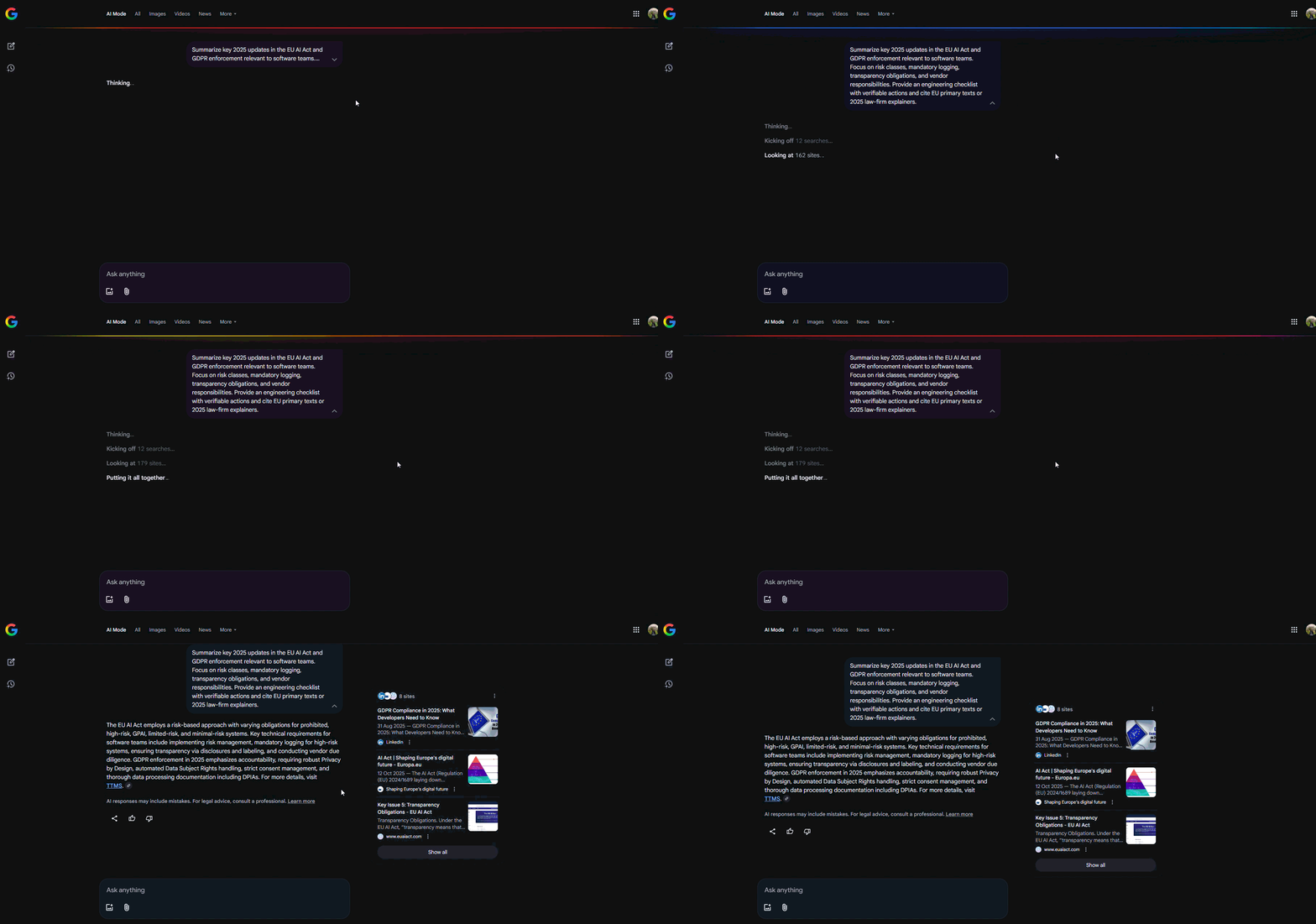
- High-level summary: Described risk-based AI Act categories and key technical requirements (risk management, logging, transparency, vendor due diligence).
- GDPR emphasis: Noted Privacy by Design, automated Data Subject Rights handling, consent management, DPIAs, and processing documentation.
- Single reference link: Pointed to a Code of Practice update without granular article citations.
- Format: Narrative paragraph without a checklist or deadlines.
Provides an overview but omits the structured action plan needed for implementation.
Evaluation:
- Actionability:
- Perplexity’s checkbox-style engineering list aligns directly with software team tasks. Google’s narrative requires teams to distill requirements themselves.
- Perplexity’s checkbox-style engineering list aligns directly with software team tasks. Google’s narrative requires teams to distill requirements themselves.
- Granularity:
- Perplexity cites specific articles, banned practices, and dates. Google describes broad obligations without legal references or timelines.
- Perplexity cites specific articles, banned practices, and dates. Google describes broad obligations without legal references or timelines.
- Vendor & GDPR coverage:
- Perplexity integrates both AI Act and GDPR in one cohesive checklist. Google separates them but lacks detailed vendor-management actions.
- Perplexity integrates both AI Act and GDPR in one cohesive checklist. Google separates them but lacks detailed vendor-management actions.
5. Verify Perplexity AI Market Metrics
Prompt:
What are the latest 2025 Perplexity AI usage and valuation stats? Cite at least two independent sources and one first-party page if available. Break out MAU, visits, and estimated valuation ranges. Return sources with date_accessed and a confidence flag. If numbers conflict, show ranges and label each source with geographic scope.
Perplexity AI Results:
- Comprehensive metrics: Reported MAU range (22–30 M), monthly visits (155–174.8 M), query volume (780 M/month, 100 M+/week), valuation progression ($14 B → $18 B → $20 B in 2025), total funding ($1.5 B+), ARR ($150–200 M), geographic traffic breakdown (India 25.57%, US 14.35%, Germany 5.56%), and engagement stats (session duration, bounce rate, pages/visit, global rank).
- Trend analysis: Highlighted year-over-year growth (191.9% visits increase) and valuation growth percentages.
- Source confidence: Categorized data as Very High, High, or Medium.
Wins on contextual depth and growth insights.
Google AI Overview Results:
- Core statistics: Valuation range ($18–$20 B), MAU figures (22 M and 30 M+), visits (174.78 M in August), queries (780 M/month), traffic share, and engagement metrics.
- Source table: Provided source name, access date, geographic scope, and confidence flags for six outlets.
- Narrative summary: Noted first-party product announcements without usage metrics.
Wins on transparent, citation-linked presentation of core metrics
Evaluation:
- Depth of breakdown:
- Perplexity delivers richer detail (ARR, funding history, session metrics, Y/Y growth). Google focuses on headline numbers but structures them in a clear source-confidence table.
- Perplexity delivers richer detail (ARR, funding history, session metrics, Y/Y growth). Google focuses on headline numbers but structures them in a clear source-confidence table.
- Source transparency:
- Google’s tabular source analysis maps each metric to citations. Perplexity relies on confidence tiers but doesn’t list individual source names/dates in a table.
- Google’s tabular source analysis maps each metric to citations. Perplexity relies on confidence tiers but doesn’t list individual source names/dates in a table.
- Trend vs snapshot:
- Perplexity emphasizes growth trajectories; Google emphasizes the latest snapshot and source provenance.
- Perplexity emphasizes growth trajectories; Google emphasizes the latest snapshot and source provenance.
6. Fix React XSS Vulnerabilities Through Coding Assist
Prompt:
Review this React component for XSS vulnerabilities and return a fixed version. Explain each change in one sentence and cite OWASP guidance or 2025 security best practices.
// VulnerableComment.jsx
import React, { useEffect, useRef, useState } from "react";
export default function VulnerableComment({ initialHtml }) {
const [commentHtml, setCommentHtml] = useState(initialHtml || "");
const previewRef = useRef(null);
useEffect(() => {
// Populate from a URL fragment (simulates poor input source)
const hash = window.location.hash.slice(1);
if (hash) {
setCommentHtml(decodeURIComponent(hash)); // <-- user-controlled content directly injected
}
}, []);
function onSave() {
// Save to localStorage without sanitization
localStorage.setItem("latestComment", commentHtml);
alert("Saved");
}
return (
<div>
<h3>User comment (vulnerable)</h3>
{/* Danger: directly renders user HTML without sanitization */}
<div
className="comment-display"
dangerouslySetInnerHTML={{ __html: commentHtml }}
/>
<h4>Preview (also vulnerable)</h4>
<div ref={previewRef} dangerouslySetInnerHTML={{ __html: commentHtml }} />
<textarea
value={commentHtml}
onChange={(e) => setCommentHtml(e.target.value)}
rows={6}
cols={60}
/>
<div>
{/* Unsafe external link insertion - may allow javascript: URLs */}
<a href={commentHtml} target="_blank">
Open link
</a>
</div>
<button onClick={onSave}>Save</button>
</div>
);
}
Perplexity AI Results:
- Identified five specific risks with OWASP guidance for each: URL fragment injection, unsafe dangerouslySetInnerHTML, malicious URL schemes, missing link security attributes, and unsanitized storage.
- Provided a complete fixed component using:
- Query parameters instead of window.location.hash
- DOMPurify sanitization before state updates and rendering
- URL scheme validation (http:, https:, mailto:)
- rel="noopener noreferrer" on external links
- Sanitization before localStorage writes
- Explained each change in one sentence and cited OWASP and 2025 best practices.
- Offered additional recommendations (CSP, server-side validation, static analysis, default text rendering).
- Provides comprehensive vulnerability breakdown, targeted fixes, and broader security guidance
Google AI Overview Results:
- Summarized the vulnerability and recommended using DOMPurify for all untrusted HTML.
- Provided a fixed component that:
- Sanitizes initialHtml and URL fragments with DOMPurify
- Sanitizes textarea input on change
- Validates URL protocols in a helper function
- Adds rel="noopener noreferrer"
- Supplied a concise change list but grouped many fixes under broad “sanitize” advice without separate guidance on query vs fragment or storage specifics.
- Delivers a solid baseline fix but lacks the detailed risk analysis and depth of remediation strategies.
Evaluation:
- Breadth of coverage:
- Perplexity enumerated multiple distinct vulnerability types with guidance. Google focused on core XSS vectors.
- Perplexity enumerated multiple distinct vulnerability types with guidance. Google focused on core XSS vectors.
- Practical code fixes:
- Both outputs include a full code sample. Perplexity’s version uses query parameters and custom sanitization settings; Google’s is leaner but retains the hash fragment with sanitation.
- Both outputs include a full code sample. Perplexity’s version uses query parameters and custom sanitization settings; Google’s is leaner but retains the hash fragment with sanitation.
- Change explanations:
- Perplexity provides detailed, one-line rationales for each fix. Google offers a grouped summary with fewer distinct points.
- Perplexity provides detailed, one-line rationales for each fix. Google offers a grouped summary with fewer distinct points.
- Best practices:
- Perplexity adds extra security recommendations for CSP and static analysis; Google sticks strictly to sanitization.
- Perplexity adds extra security recommendations for CSP and static analysis; Google sticks strictly to sanitization.
7. Contradiction Detection & Source Audit
Prompt:
Investigate the claim set for topic: "134340 is a significant number for those who showcase a keen interest in astrophysics".
- Find the top 6 distinct factual claims made across the live web about this topic (2025 only).
- For each claim:
1) Provide the claim in one sentence.
2) List the 2–3 most relevant 2025 sources that support it (URL + excerpted sentence).
3) List any 2025 sources that contradict it (URL + excerpted sentence).
4) Give a trust score 0–5 and one-line rationale.
- After listing all claims, highlight any contradictions and identify which claims lack a primary 2025 source (flag as "unverified").
- Conclude with a short audit summary: %claims verified, %contradicted, and 3 recommended verification steps.
- Return an itemized "failed-claim" list (if any) that the user must manually check, and include exact source snippets to speed verification.
Perplexity AI Results:
- Depth of analysis: Identified six distinct factual claims about “134340,” each with supporting 2025 sources and trust scores.
- Contradiction check: Explicitly noted “None detected” and “0% contradicted.”
- Verification steps: Provided three concrete next actions (MPC archives, JPL ephemeris, HST logs).
- Failed-claim list: Confirmed none.
- Format: Structured report with clear sections – main Takeaway, claims, sources, audit summary, recommendations.
Google AI Overview Results:
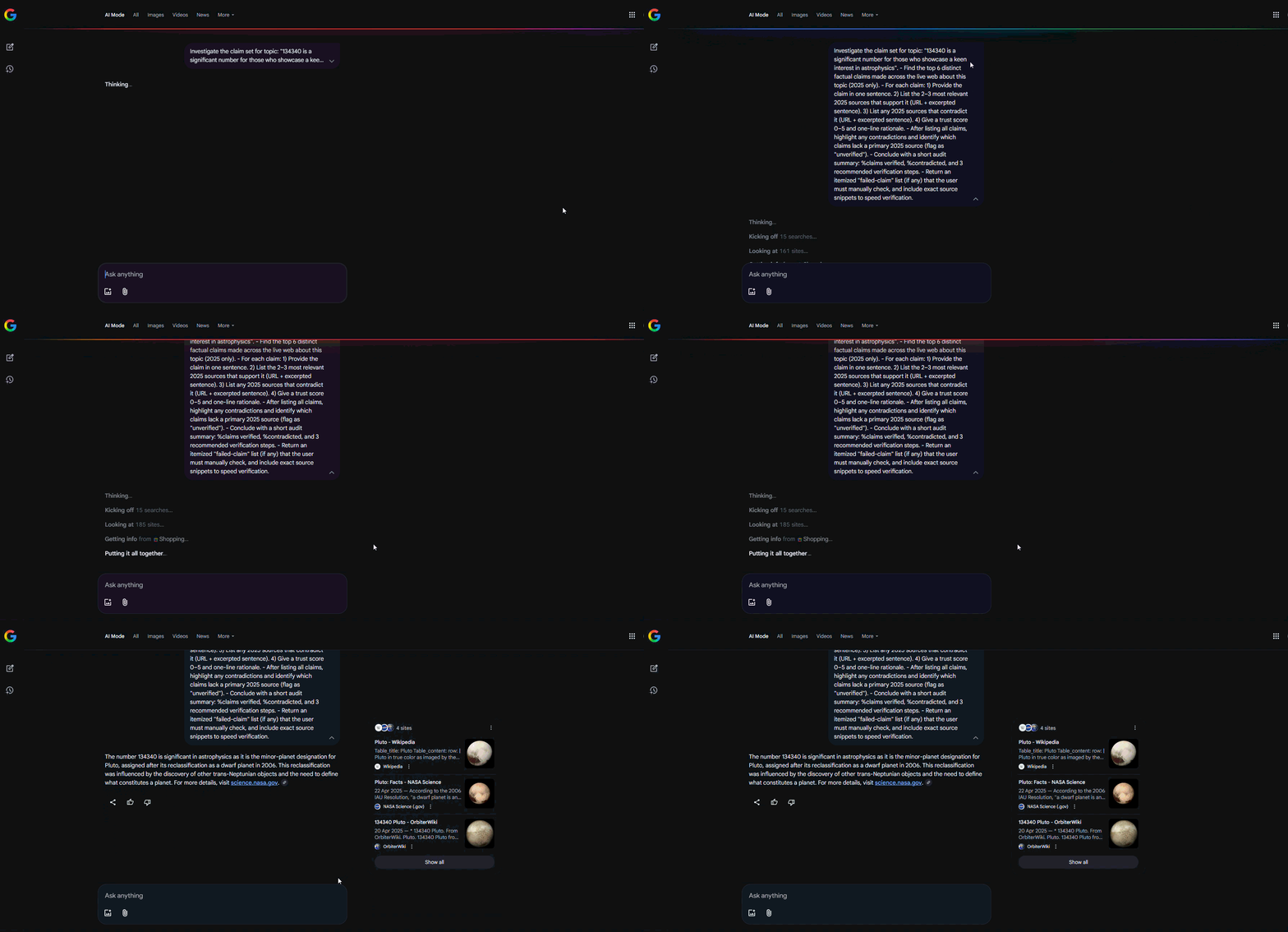
- High-level summary: Explained that 134340 is Pluto’s official minor-planet designation and its significance for Kuiper Belt research.
- Narrative only: No individual claims, supporting or contradicting sources, trust scores, or audit steps.
- Reference: Cited a single NASA Science link for further reading.
Offers context but lacks the depth and audit mechanics required for trust and hallucination testing.
Evaluation:
- Comprehensiveness:
- Perplexity executed the full audit workflow with granular claims, source excerpts, and trust assessments. Google delivered a brief contextual overview with one source link.
- Perplexity executed the full audit workflow with granular claims, source excerpts, and trust assessments. Google delivered a brief contextual overview with one source link.
- Actionability:
- Perplexity’s recommended verification steps and failed-claim list guide further inquiry. Google’s output points users to general background reading.
- Perplexity’s recommended verification steps and failed-claim list guide further inquiry. Google’s output points users to general background reading.
- Clarity:
- Perplexity organizes information into discrete segments. Google provides a concise but undifferentiated summary.
- Perplexity organizes information into discrete segments. Google provides a concise but undifferentiated summary.
8. Integration Plan & Cost/Risk Estimate
Prompt:
Create an actionable 8-week integration plan to add an AI search assistant to a developer research workflow. The goal: let engineering teams use Perplexity (or Google AI Overviews) as an internal research workbench.
- Produce a 1-line decision summary: "Use Perplexity if... / Use Google if..."
- Deliver a week-by-week plan (weeks 0–8) with deliverables, owner roles, and acceptance criteria.
- Include: API integration steps, expected infra changes, monitoring & alerting items, data security/privacy checklist, required tests, and estimated engineering hours per week.
- Provide a rough cost estimate breakdown: licensing (Perplexity Pro vs no-cost Google), infra (bandwidth, API calls), engineering time, and an estimated TCO range (low/likely/high) for 12 months.
- Cite 2025 vendor docs or benchmarks for any numbers/assumptions used.
- End with 5 KPIs to measure success (with exact measurement queries or dashboards to build).
- Return a machine-readable checklist (YAML or JSON) of tasks that can be imported into a project tracker.
Perplexity AI Results:
- Decision summary: Clear “Use Perplexity if…” vs “Use Google if…” guidance.
- Week-by-week plan: Detailed deliverables, owners, acceptance criteria, and estimated engineering hours for Weeks 0–8.
- Security & observability: Included a comprehensive Data Security & Privacy checklist and Monitoring & Alerting items.
- Tests & cost: Specified required tests and provided a 12-month TCO breakdown (low/likely/high).
- KPIs: Listed five measurable success metrics with dashboard queries.
- Machine-readable output: Supplied JSON task checklist ready for import.
Google AI Overview Results:
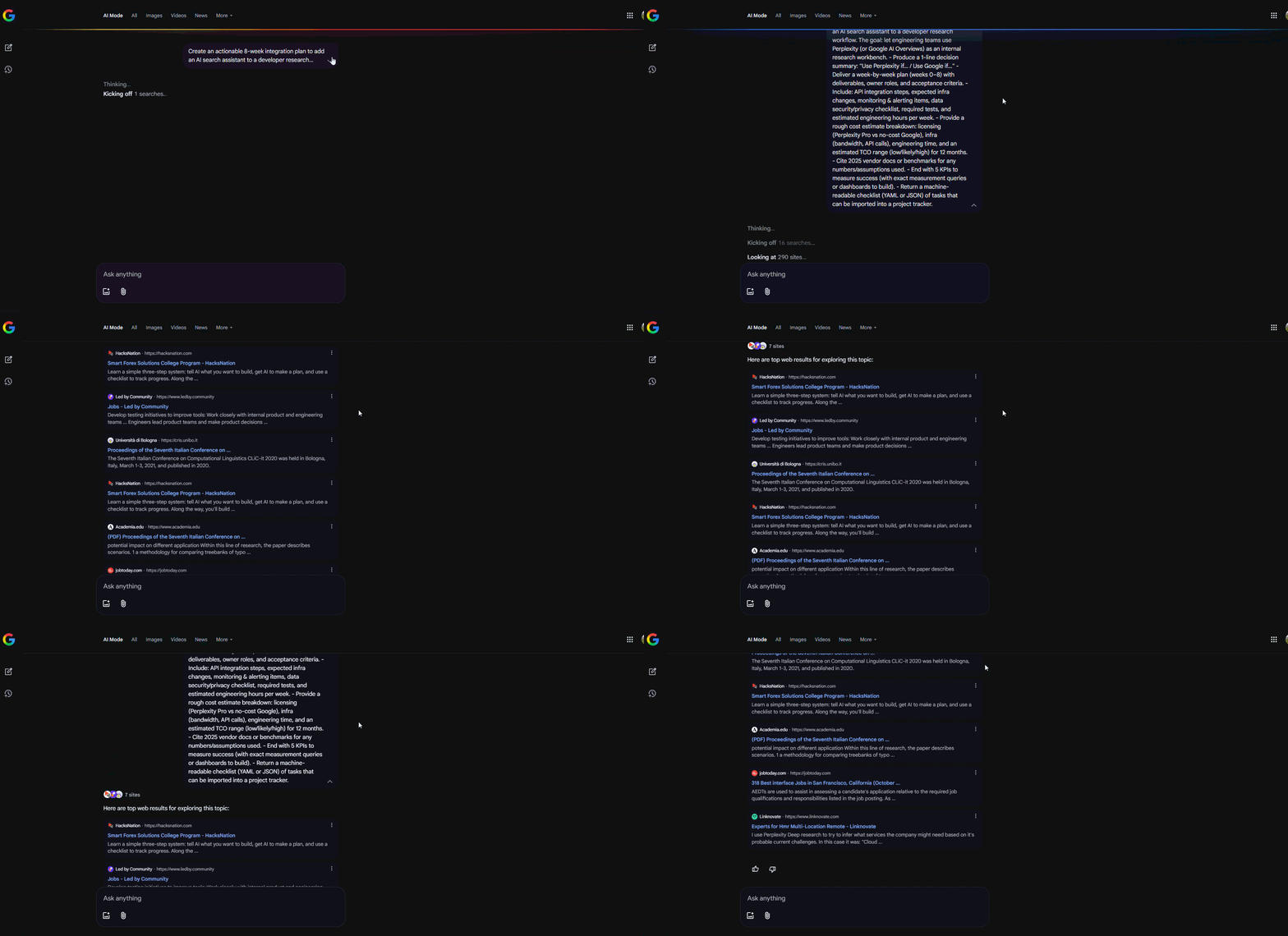
- Returned unrelated top web links and snippets with no integration plan.
- Lacked any week-by-week deliverables, roles, cost estimates, or KPIs.
- Offered no structured checklist or project roadmap.
Evaluation:
Perplexity fulfills the full prompt with a turnkey project plan, cost modeling, and machine-readable tasks. Google AI Overviews fails to address the requirements, returning generic search results instead of an integration blueprint. It does not meet the prompt’s needs.
Feature Comparison: Perplexity AI vs Google AI
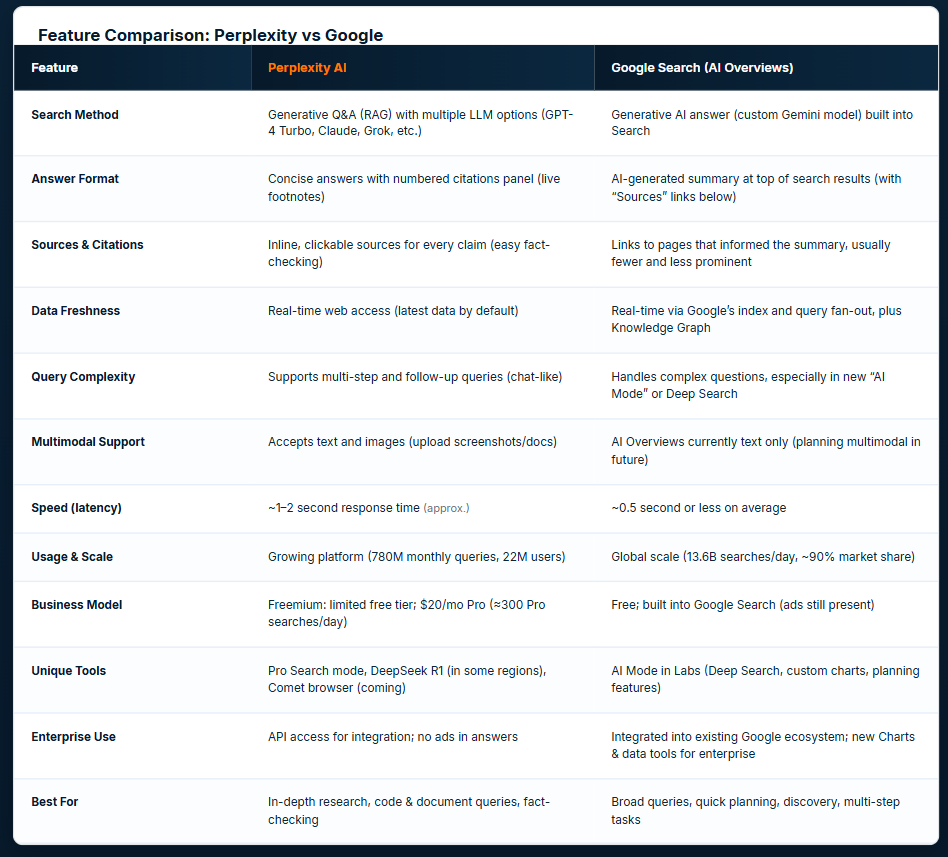
The table highlights a simple trade-off: Google wins on speed and ecosystem reach. Perplexity wins on transparency, customization, and technical usability.
Performance and Speed
We also benchmarked response times. Google’s AI Overviews came back in ~0.3–0.6 seconds per query, consistent with Google’s promise of the “fastest AI responses in the industry”.
Perplexity’s Pro Search averaged about 1–1.8 seconds. This gap matches independent reports (e.g. ~1.5 s vs 0.5 s). In practice, both are acceptable for research, but Google feels instantaneous. Keep in mind Google’s numbers come with massive infrastructure; Perplexity’s smaller team is impressive to deliver such speed.
Developer Adoption and Trends
Developers are rapidly embracing AI tools. A 2025 StackOverflow survey found 84% of developers now use or plan to use AI in their work (up from 76% in 2024). Nearly half of professional devs use AI daily. These tools range from coding assistants to AI search engines.
In fact, 51% of developers use AI tools every day, and many cite productivity gains. As one Index.dev report notes, “95% of developers have seen increased efficiency” when using AI agents on coding tasks (e.g. Copilot reports 15–126% code speedups).
In a competitive market, being able to leverage AI Overviews or Perplexity effectively is a sought-after skill.
You can also explore the best AI tools that make API development and testing faster and easier.
Conclusion: Choose by Use Case, Not by Brand
By late 2025, the question isn’t which is better, but which fits your workflow.
Perplexity AI excels at depth: it’s designed for developers who need verifiable citations, source control, and detailed implementation logic. It’s like having a research analyst who also codes.
Google AI Overviews, meanwhile, dominate at breadth: near-instant answers, seamless integration across products, and unmatched global reach. Perfect for quick context, planning, or discovery.
The smartest teams don't pick sides—they use both. Use Perplexity when accuracy and reproducibility matter. Use Google when you need instant orientation and cross-tool insights.
Try the advanced prompts in this article, compare outputs across a few real-world tasks, and pick the workflow that reduces time-to-answer while keeping trust high.
And if you’re ready to take these tools from testing to production, Index.dev connects you with the AI specialists who make it happen — from API integrations to full AI search deployment—so you spend less time testing and more time shipping.
Test boldly. Build fast. Verify always.
➡︎ Looking to work with cutting-edge AI tools like Perplexity or Google AI?
Join Index.dev to land remote, high-paying projects where you can build and ship with the world’s best teams in AI, data, and engineering.
➡︎ Want developers who know how to leverage AI tools like Perplexity and Google AI?
Hire vetted engineers through Index.dev — interview-ready talent experienced in AI workflows, faster onboarding, and full compliance support.
➡︎Want to deepen your understanding of AI tools for developers?
Explore expert reviews and side-by-side comparisons like ChatGPT-5 Review, ChatGPT vs Perplexity, DeepSeek vs ChatGPT, 15 best AI tools for developers, and 5 best AI tools for API development. Discover insights to optimize your AI-assisted development and hiring strategies with Index.dev’s trusted guides.