Hiring a Java developer feels like being a recruiter playing whack-a-mole.
You post on LinkedIn, watch 200 candidates materialize, screen through the noise for two weeks, find someone who looks reasonable, make an offer, and then they ghost you on day two of employment. Or worse: they stick around, produce code that breaks production at 2 AM, and now you've burned six months of runway and a team's sanity trying to untangle their mess.
This blog gives you the short answer upfront—who to pick and when—plus a framework so you don't end up hiring another dud. By the end, you'll know which platform prevents your specific hiring disaster.
Hiring Java developers this month? Index.dev matches you with senior backend engineers in 48 hours. Vetted, timezone-aligned, and risk-free for 30 days.
Why This Matters (The Real Cost)
Here's what no one talks about: one bad hire costs $150,000 to $450,000+ in total losses. That's not just salary. According to ValueCoders' 2025 analysis, the hidden costs pile up—salary burn ($70K–$80K for half a year), your senior engineers babysitting mediocre code ($40K–$50K), technical debt rework ($25K–$50K), and lost deals from delayed features ($50K–$125K).
Meanwhile, every day a Java engineering seat sits empty? That's $1,082/day in lost productivity bleeding out.
Comparison at a Glance
| Platform | Match Time | Vetting Level | Pricing | Trial/Guarantee | Ideal For |
| Index.dev | 48 hours | Very high — live tests, tech depth, culture | Premium | 30-day risk-free + replacement guarantee | Fast, senior, zero hiring risk |
| Toptal | 24–48 hours | Extreme — top 3% only | High $100–$200+/hr | Risk-free trial | Elite architects, mission-critical |
| Gun.io | ~13 days | High — tests + live interviews | Mid-high $60–$150/hr | Outcome-focused | Rapid scaling, proven talent |
| YunoJuno | ~5-14 days | Very high — rigorous vetting, ~50% acceptance rate | Mid-high $60–$150/hr | Portfolio-verified | Premium freelancers, established agencies |
| Arc.dev | 3–5 days | High — AI + pair programming | Mid $60–$150/hr | No formal trial | Global reach, verified performers |
| Revelo | 3–5 days | High — live tests, communication, English | Mid $50–$70/hr | 14-day risk-free | Cost-effective LATAM talent |
Which Platform Stops Your Biggest Hiring Problem?
The six platforms below each solve different hiring constraints. Your job is picking the one that prevents your worst-case scenario.
1. Index.dev — Eliminate Hiring Risk Entirely

The Problem It Solves:
You don't have 41–82 days to hire. You don't have $450,000 to burn on a bad decision. You need Java developers this month. And you want the U.S.-based developers who share your timezone, not remote workers halfway across the globe.
Index.dev launched its U.S. Hub specifically to address this. For the first time, U.S. companies can hire U.S. developers without timezone headaches—developers in the same country, working the same hours, understanding American business culture natively.
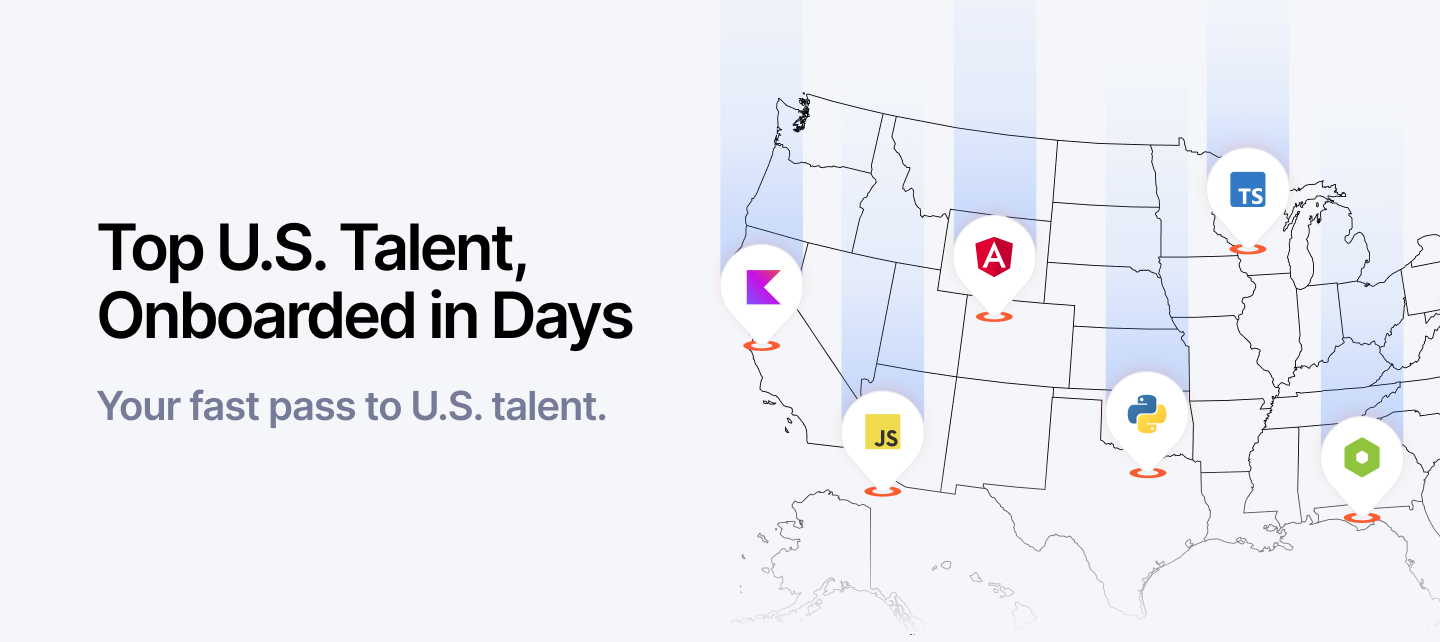
But the U.S. Hub isn't just geographically local, it's still Index.dev's ruthlessly curated network. Only the top 5% pass screening. You get matched with senior backend engineers in 48 hours and start a 30-day risk-free trial.
Index.dev already powers U.S. teams at Perforce Software, Entrupy, Genemod, and Inveniem. The U.S. Hub is just making it official and scaling it.
How it works:
Submit your Java requirements (Spring Boot microservices, enterprise backend systems, cloud-native apps). Index.dev's matcher handpicks 2–3 pre-screened candidates in 1–2 days. You interview only verified profiles. No resume pile. No wasted screening time.
The 30-day trial is the differentiator. You actually work with the developer before committing. If they don't deliver, replacement is free. That eliminates hiring risk entirely.
Vetting rigor:
Every candidate passes technical assessments covering Java fundamentals, Spring Framework expertise, database design (SQL/NoSQL), cloud deployment (AWS/Azure). They complete live coding interviews testing real-world problem-solving. Soft skills evaluation covers English proficiency, communication clarity, and remote work capability—the stuff that kills remote teams.
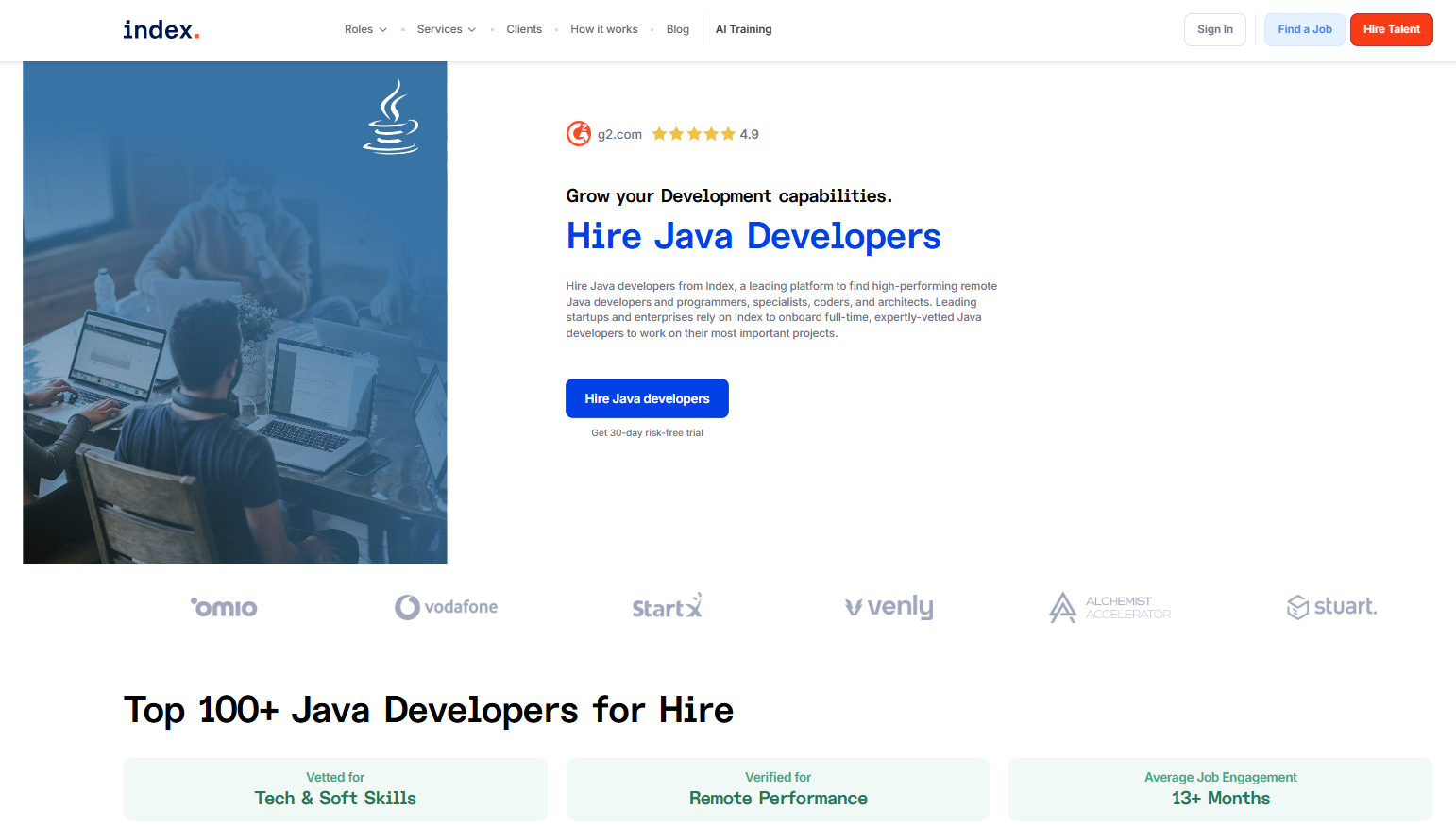
Our reports show a 97% conversion rate from trial to placement. Average engagement exceeds 14 months.
When to use Index.dev (U.S. Hub):
If you can't afford a $150K+ mis-hire AND you want U.S.-based developers working your timezone, use Index.dev. The 30-day trial + replacement guarantee de-risks the hiring decision. That $150K consequence becomes zero risk. Plus: no timezone friction.
- You need developers this month, not in 41+ days
- Hiring risk is existential (startup runway is tight)
- You have internal capacity to evaluate during the trial
- Budget flexibility exists for premium pricing
Pros: 48-hour matching, senior-only talent, 97% conversion rate, 30-day risk-free trial, replacement guarantee, managed compliance.
Cons: Premium enterprise pricing, requires clear scope definition upfront.
Learn how to reduce risks when hiring offshore developers.
2. Toptal — When Mission-Critical Means No Room for Error

The Problem It Solves:
You're building a system that can't fail. Cost overruns aren't acceptable. Architecture mistakes compound exponentially.
Toptal accepts only the top 3% of applicants after brutal multi-stage screening. These developers have shipped systems at Shopify, Motorola, Oracle. You get architects, not junior tutorials.
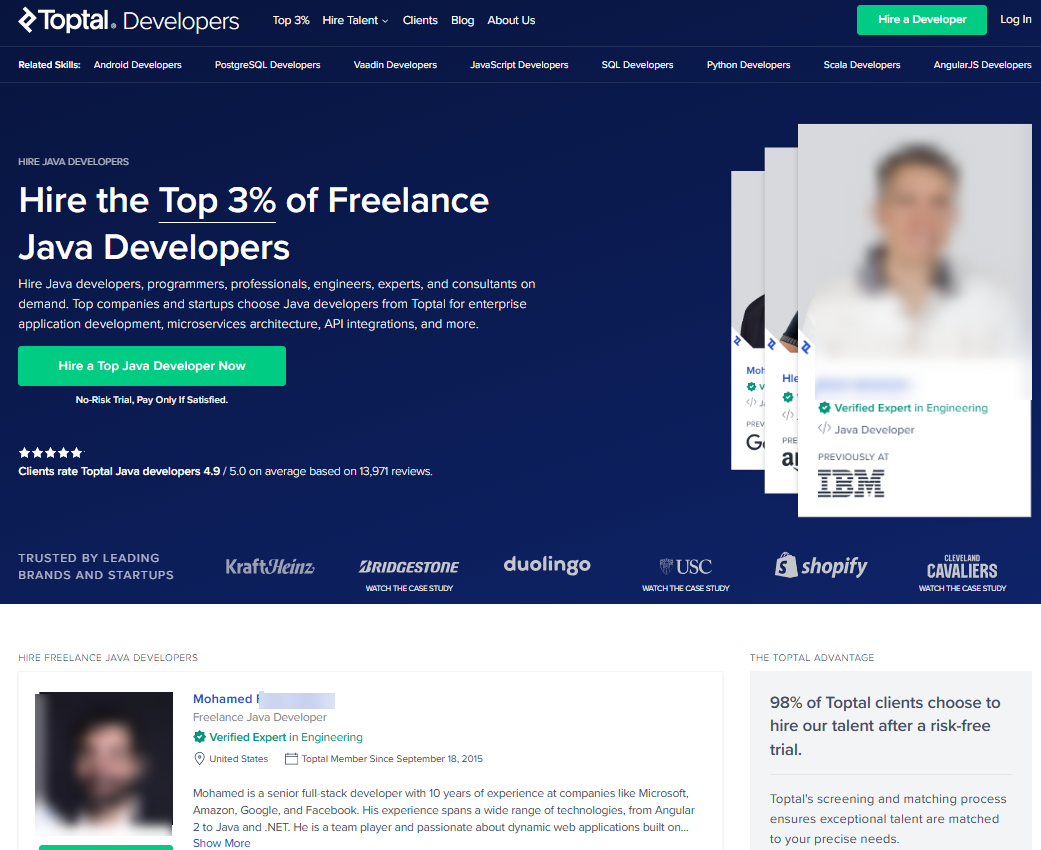
A dedicated engineering lead runs your consultation. Matches arrive in 24–48 hours. Each profile includes detailed work history, completed projects, and verified client reviews. Risk-free trial basis—pay only if satisfied.
Vetting depth:
Rigorous combination of interviews, algorithm tests, live coding challenges, and English proficiency checks. Candidates must demonstrate expertise in major Java stacks, architectural thinking, and clear communication of complex solutions.
Pricing reality:
$100–$200+ per hour (client-side). Toptal takes 50–60% markup. A senior Java architect costs $17,000–$35,000+ monthly.
High? Yes. But if one architecture mistake costs six months and half your budget to fix, Toptal's premium prevents that consequence.
When to use Toptal:
- Your project is mission-critical (production systems at scale)
- Budget isn't constrained
- You need an architect, not just a coder
- Hiring risk on this role is unacceptable
Pros: Top 3% talent only, 24–48 hour matching, proven client base (Fortune 500 companies), reliable quality, risk-free trial model.
Cons: Expensive ($100–$200+/hr), 50–60% platform markup, primarily remote requiring timezone coordination.
3. Gun.io — If You're Scaling Rapidly Without Gambling

The Problem It Solves:
You need rapid scaling without gambling on unknown developers. Speed matters, but quality can't be sacrificed.
Gun.io is a boutique platform matching companies with Silicon Valley–caliber Java developers. Average time-to-hire: 13 days. Developers average 10+ years of experience.
Gun.io uses AI-driven matching plus human recruiter oversight. Database: 5,000+ vetted engineers. Submit your job. Their system presents verified candidates in 3–5 days. Gun.io assigns a dedicated customer success manager throughout onboarding.
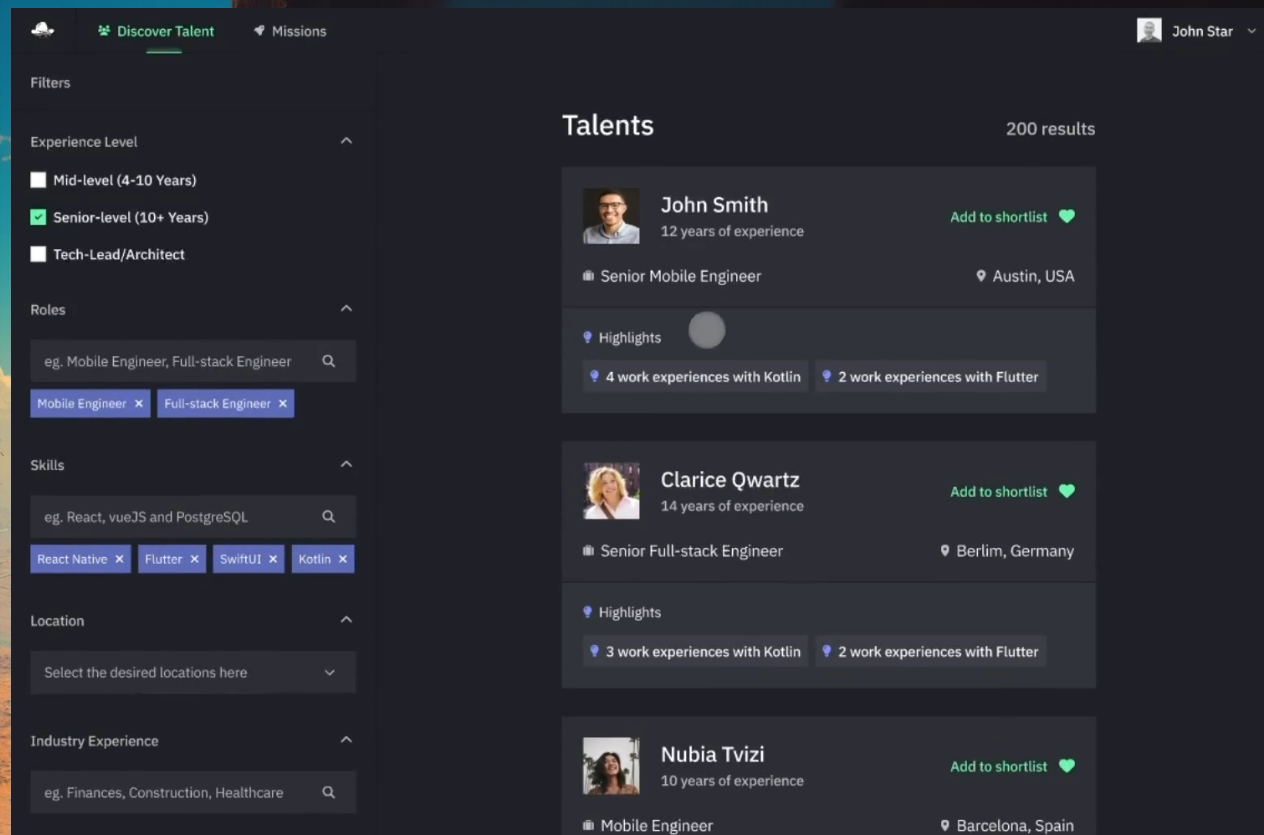
Example: A peek at Gun.io’s extensive dashboard that enables you to shortlist candidates based on your desired skills and requirements.
Vetting process:
Technical tests plus live interviews with Gun.io engineers. Performance metrics tracked on every developer: code quality, communication, hours logged—all visible. No surprises.
Pricing:
Engineers start $60/hr, reach $150+/hr for specialists. 20% project fee on full-time placements. Zero hidden fees beyond the quoted rate.
When to use Gun.io:
- You're scaling rapidly (multiple concurrent hires needed)
- 13-day timeline is acceptable (faster than traditional, slower than Index.dev)
- You want outcome-focused matching, not volume
- You have internal project management capacity
Pros: 13-day average turnaround, outcome-focused matching, payroll handled, global EOR support, transparent 20% placement fee, clients include Cisco and Amazon.
Cons: Higher hourly rates ($60–$150+), 20% placement fee, limited junior talent availability.
Next up: Check out the best platforms to hire back-end engineers.
4. YunoJuno — If You Want Curated Premium Talent From Proven Agencies

The Problem It Solves:
You're tired of sifting through unvetted freelancers. You want developers from proven agencies and established boutique firms, not solo contractors posting from their garage. YunoJuno connects you with pre-vetted talent who've worked with companies like Google, IBM, Nike, and BBC.
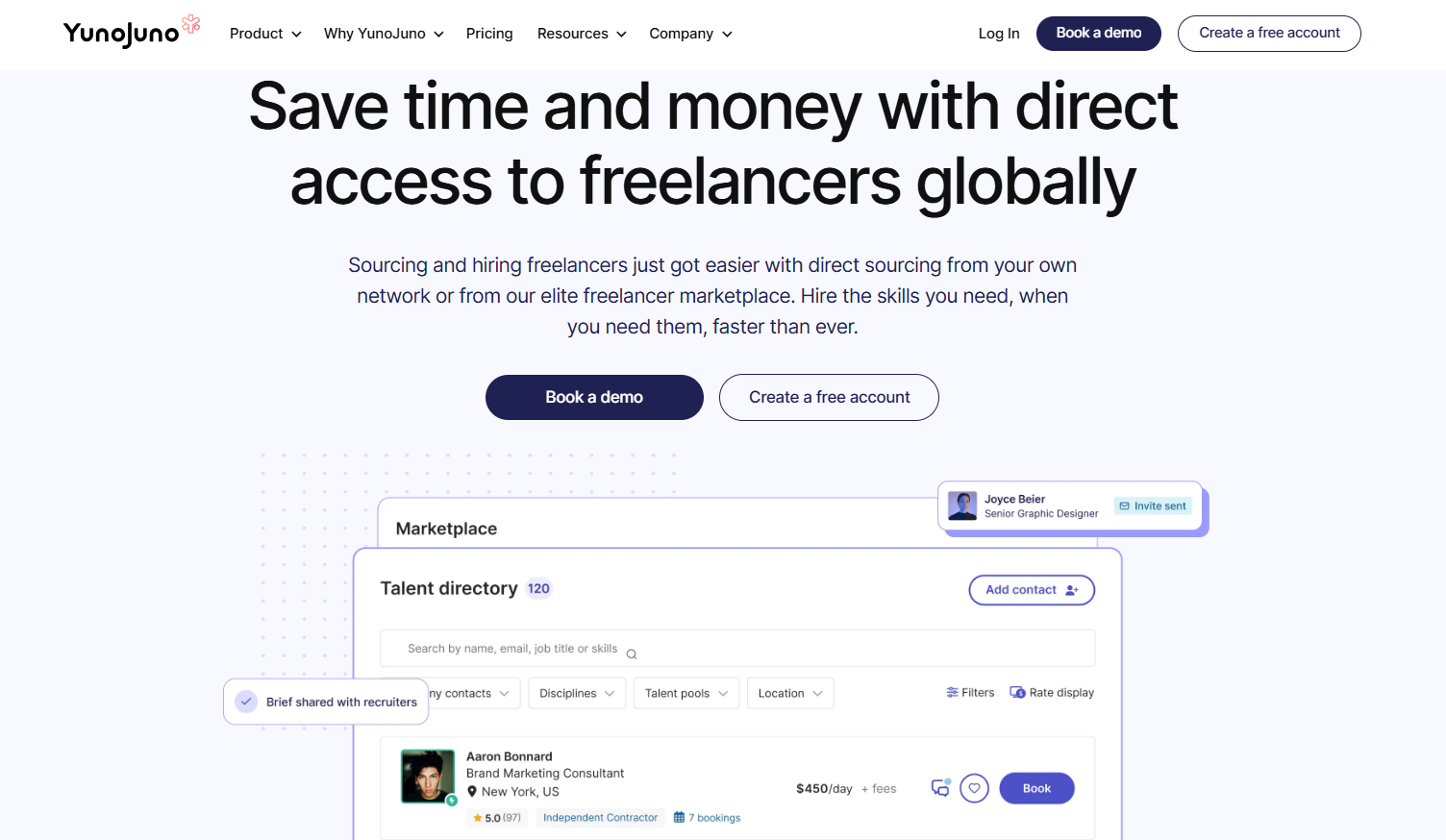
YunoJuno is a curated freelancer marketplace that vets talent rigorously before they're accepted. Unlike open platforms where anyone can claim expertise, YunoJuno reviews skills, background, experience, and client references before onboarding developers. The result: only 50% of applicants are accepted.
The network includes agencies, boutique firms, and senior individual developers—not entry-level hustlers.
How it works:
Post your Java project requirements on YunoJuno with your specific needs: microservices architecture, Spring Boot, AWS deployment, whatever. YunoJuno's talent team reviews your brief and matches you with pre-vetted developers or agencies who specialize in Java backend work. You review profiles, past project work, and client testimonials.
Reach out directly to your preferred match. Discuss scope, timeline, and rate. Hire or request interviews.
No resume spam. No profile bloat. Just serious developers with proven track records.
Vetting Process:
YunoJuno's vetting process is strict.
- Skills assessment: Java fundamentals, Spring Framework depth, system design thinking.
- Background check: work history verified, client references confirmed.
- Communication evaluation: English fluency, responsiveness, ability to articulate technical concepts clearly.
- Portfolio review: actual shipped projects visible.
Only developers who pass all stages get approved. Average acceptance rate: ~50%. Your talent manager on YunoJuno can also help guide the matching process if you need support.
Pricing:
Rates vary based on experience and project scope. For Java backend specialists: $60–$150+/hr typical range. Senior architects or boutique agency leads: $150+/hr.
YunoJuno operates as a marketplace—you negotiate rates directly with developers. No platform markup. You pay what you agree; developers keep 100% (YunoJuno takes percentage from developers, not companies).
When to use YunoJuno:
Use YunoJuno when you value developer quality and track record over speed. If you have well-defined Java projects and can afford premium developers, YunoJuno delivers vetted talent who've proven themselves with Fortune 500 clients.
Best for companies that prioritize expertise over turnaround time.
- You're hiring for a specific Java backend role (not generalist positions)
- You want developers with proven client work and portfolio history
- You're willing to pay market-rate+ for quality and reliability
- You want to work with established agencies or senior freelancers, not juniors
- Timeline is flexible (typically 5–14 days to hire)
Pros: Rigorous vetting (~50% acceptance rate), portfolio-driven evaluation, established developers/agencies, no platform markup on rates, talent team support, 90% of briefs filled within 24 hours once posted.
Cons: Slower than AI-matching platforms (5–14 days vs. 3–7 days), higher hourly rates reflect quality, smaller pool than job boards, contract/freelance model (not full-time), portfolio review requires careful evaluation on your end.
5. Arc.dev — Global Talent With Proven Track Records

The Problem It Solves:
You want global talent with proven capabilities, not just resume screening.
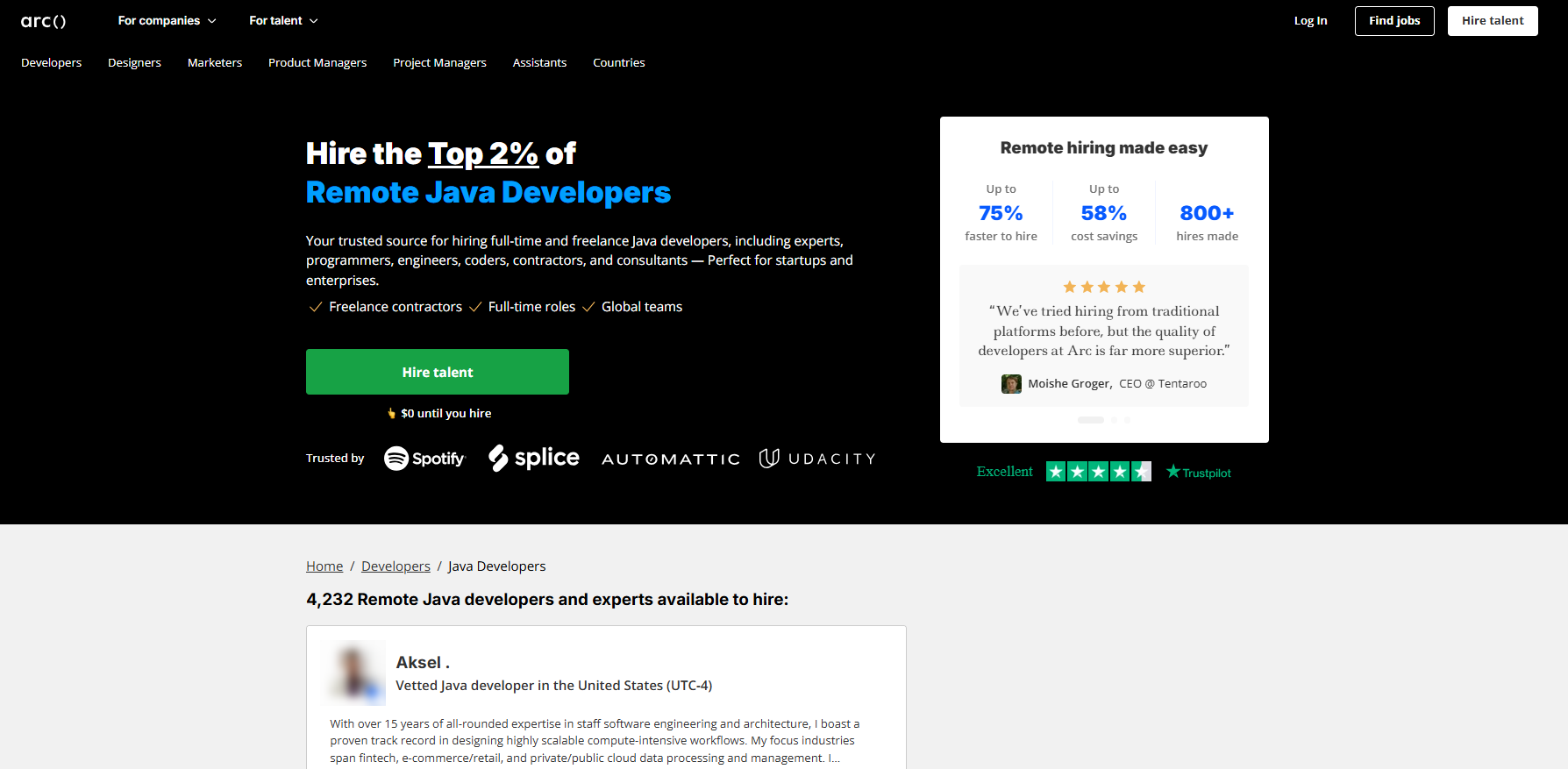
Arc.dev uses machine learning to identify top 2% global tech talent. They screen candidates across four stages: profile review, communication assessment, technical interview, and ongoing performance monitoring.
The AI component works because it screens work history, GitHub contributions, Stack Overflow participation, and technical depth. Humans then review AI recommendations.
How It Works:
Submit your job. Arc's system presents vetted candidates in 3–5 days. Most developers start $60/hr, reach $150+/hr for specialists. Arc works with HubSpot, Splice, Shopify.
Vetting rigor:
Profile screening filters obvious rejects. Communication assessment via video intro or live interview—proving they explain complex code in clear English. Technical interview uses live coding and pair programming. Ongoing performance monitoring catches issues early.
When to use Arc.dev:
- You want global reach without sacrificing vetting quality
- Timeline is 3–5 days acceptable
- You prefer contract/freelance arrangements
- Budget is reasonable ($60–$150/hr)
Pros: Global talent pool, AI-powered screening, 3–5 day turnaround, proven track record, reasonable pricing, transparent vetting.
Cons: No formal trial period, primarily contract/freelance model, less direct control than curated networks.
6. Revelo — LATAM Talent When Budget Constraints Are Real But Quality Can't Slip

The Problem It Solves:
You need cost-effectiveness without sacrificing quality. Budget constraints are real.
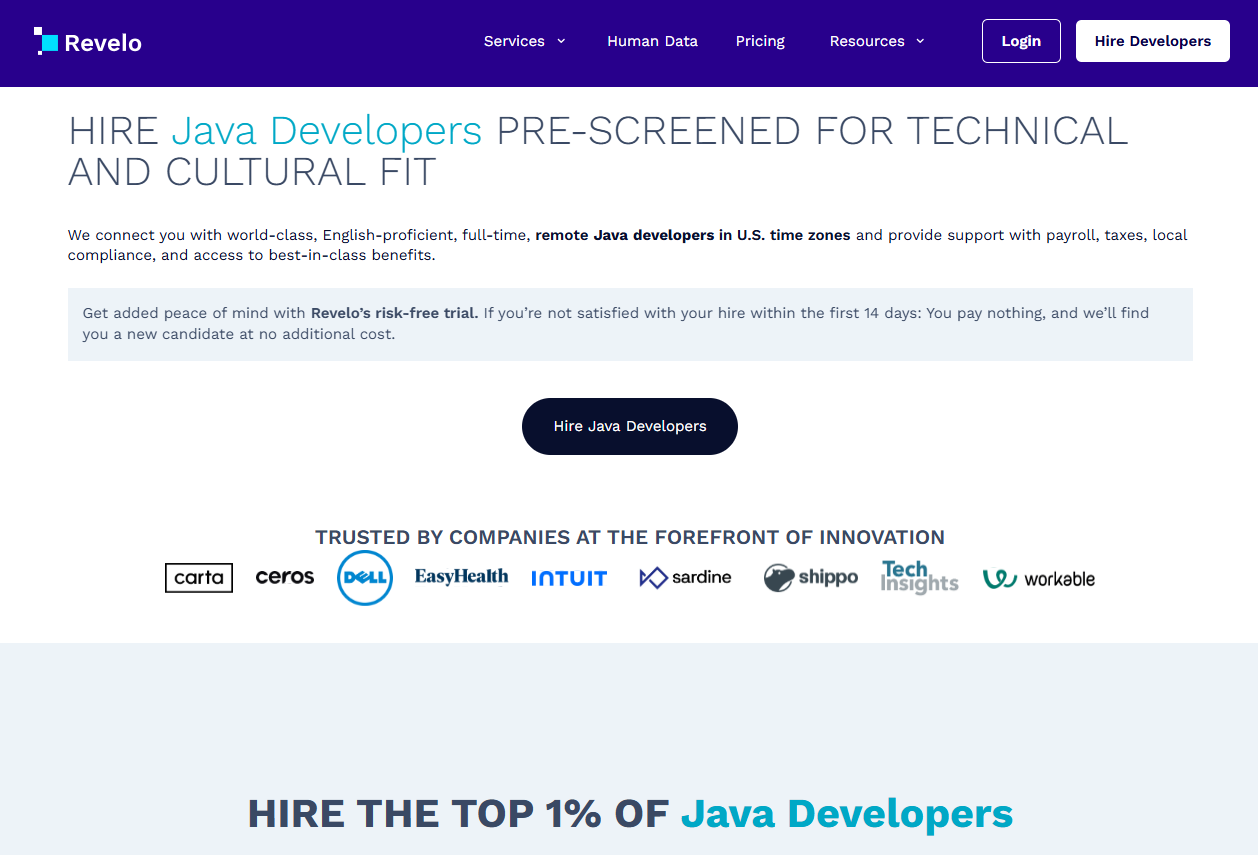
Revelo connects U.S. companies with pre-vetted developers from Latin America. Same vetting rigor as Index.dev, regional pricing advantage, 14-day risk-free trial.
Pool: 300,000+ pre-vetted tech professionals. Matching speed: 3–5 days. Rates: $50–$70/hr for mid to senior talent. One-time $500 deposit covers vetting and shortlist. No contracts. No long-term commitments.
Every developer passes three-stage vetting: online coding challenges, 45-minute live technical interview, English proficiency assessment. Only top 1% advance.
Revelo handles payroll, taxes, and local compliance across LATAM. No local entity needed on your end.
LATAM advantage:
Serious backend talent. Spring Boot expertise runs deep. Cloud architecture knowledge is strong. U.S. East Coast timezone overlap is genuinely useful (not ideal, but workable). Developers command reasonable rates.
When to use Revelo:
- Budget constraints are real and pressing
- You need developers fast but have 3–5 day flex
- Timezone differences are acceptable
- You value cost-effectiveness equally with quality
Pros: 3–5 day matching, 30–40% lower rates than U.S. talent, 14-day risk-free trial, same vetting rigor as premium platforms, compliance/payroll handled, strong backend pool.
Cons: Timezone coordination required (not 1:1 overlap), primarily LATAM talent, fewer US East Coast hours available.
How to Screen Java Developers Effectively
Most hiring managers make the same mistake: they trust resumes. Don't.
- Quiz candidates on shipped projects.
- "Which production systems have you built with Spring Boot? Show us real code." If they can't walk you through a live system, move on.
- "Which production systems have you built with Spring Boot? Show us real code." If they can't walk you through a live system, move on.
- Request GitHub repositories.
- Look for microservices architecture, REST API design, database optimization, and CI/CD pipeline setup. Code quality matters more than quantity.
- Look for microservices architecture, REST API design, database optimization, and CI/CD pipeline setup. Code quality matters more than quantity.
- Run live technical interviews.
- Present a real business problem: "Design a high-traffic order processing system. How do you handle 10,000 requests/second? What about data consistency?" Evaluate system design thinking, not just syntax.
- Present a real business problem: "Design a high-traffic order processing system. How do you handle 10,000 requests/second? What about data consistency?" Evaluate system design thinking, not just syntax.
- Ask about failure recovery.
- "Tell us about a production outage you fixed. What went wrong? How did you prevent it next time?" Battle-tested developers answer this clearly. Junior developers flounder.
- "Tell us about a production outage you fixed. What went wrong? How did you prevent it next time?" Battle-tested developers answer this clearly. Junior developers flounder.
- Prioritize Java depth over breadth.
- Strong candidates excel in one or two core stacks (Spring Boot, Quarkus, Micronaut). They understand trade-offs deeply. Don't hire the "fullstack can do anything" type.
- Strong candidates excel in one or two core stacks (Spring Boot, Quarkus, Micronaut). They understand trade-offs deeply. Don't hire the "fullstack can do anything" type.
- Assess soft skills equally.
- Remote Java work requires clear communication and proactive problem-solving. During interviews, listen for how they explain technical decisions. Do they ask clarifying questions? Can they admit when they're unsure?
Read our definitive guide to hiring developers for actionable insights from Index.dev experts.
Bottom Line
Speed or budget? That's your decision point.
Need someone this month? Start with Index.dev (48 hours, risk-free). Want elite architects? Toptal justifies the premium. Need scale and experimentation? YunoJuno or job boards work. Building a long-term pipeline? Revelo and LinkedIn are essential.
Pick the one that prevents your worst consequence from happening.
But here's what most companies miss: platforms don't hire developers. You do. The vetting process—your process—determines whether you end up with someone who ships code or someone who burns six months of your runway.
Do this:
- Define the role. Not "Java developer." Actual specifics: Spring Boot microservices, AWS, DynamoDB, CI/CD pipelines. Success metrics. Deliverables by week 4.
- Choose the platform. Stop overthinking it. Match the platform to your constraint: need someone in 48 hours? Index.dev. Scaling 5 positions simultaneously? Gun.io. Budget is tight? Revelo.
- Run the trial. This isn't optional. Have your lead engineer pair-program a real sprint. Not a take-home assignment. Not a whiteboard. Real work, real deadline, real code that ships.
- Score ruthlessly. Code quality. Can they communicate clearly? Do they ask good questions? Do they admit what they don't know? Do they ship on deadline?
- Extend or replace. Most trial periods end with hiring. Some end with replacement—and that's fine. That's the point of the trial.
Companies that do this systematically hire better Java developers faster than 90% of their competitors. Not because they're smarter. Because they're systematic.
Your runway won't wait for the perfect hiring process. Neither should you.
➡︎ Ready to hire senior Java developers without risk? If you need Java developers, visit Index.dev's hiring page or schedule a quick call. Our talent team assesses your needs and connects you with candidates on demand. With proven vetting and dedicated support, Index.dev helps you hire with confidence.
➡︎ Are you a Java developer looking for high-impact work? Join Index.dev to access long-term US projects, fast hiring cycles, and a platform built to match you with roles that fit your expertise.
➡︎ Want to dive deeper into developer hiring and talent strategies? Explore our guides on how to effectively vet software developers to avoid costly mis-hires, proven strategies to retain your best tech talent, the top platforms to hire backend developers in the USA, our comprehensive developer onboarding process, and 5 common reasons developers fail job vetting.