You need Android developers who ship fast, not disappear after two sprints.
Here's the problem: Android dominates with 70% of global mobile market share. Your competitors are already there. Most hiring platforms? They're built for generalists. You need specialists who know Kotlin, Jetpack Compose, and can architect complex systems without micromanaging.
How do companies scale from 1 Android developer to 10 without losing their minds? They stop hiring by hope and start hiring by process.
This isn't another comparison chart dressed up as thought leadership. This is what separates wasted hiring budgets from scaled teams.
The stakes are real. A bad Android hire costs 30-50% of their annual salary when you account for onboarding chaos, code rewrites, and turnover. The average Android developer in the USA earns $130,711—meaning a mis-hire can run you $40K-$65K before they even ship broken code.
Most platforms aren't built for this. That's what we're about to fix.
Done with hit-or-miss Android hires? Hire pre-vetted developers through Index.dev: live coding tested, culture-fit checked, and ready to deliver from day one.
What Actually Separates Platforms
Not all hiring platforms work the same.
- Bad platforms: Find people who list "Android" on LinkedIn. Quick, cheap, dangerous.
- Good platforms: Vet technical skills through interviews and code samples. Better, but still incomplete.
- Great platforms: Verify remote work capability, communication clarity, and cultural alignment. Plus they guarantee results through risk-free trials.
That last part matters. If a platform won't bet their own money on a developer, they're not confident in their vetting.
In 2025, platforms must handle modern Android stacks. 87% of US Google Play apps use Kotlin—not Java. Developers need Jetpack Compose, Android SDK, RESTful APIs, MVVM architecture. Generalist platforms won't cut it. You need specialists.
This is why these six platforms exist. They're built for this market.
Explore must-have tools and code editors for Android development.
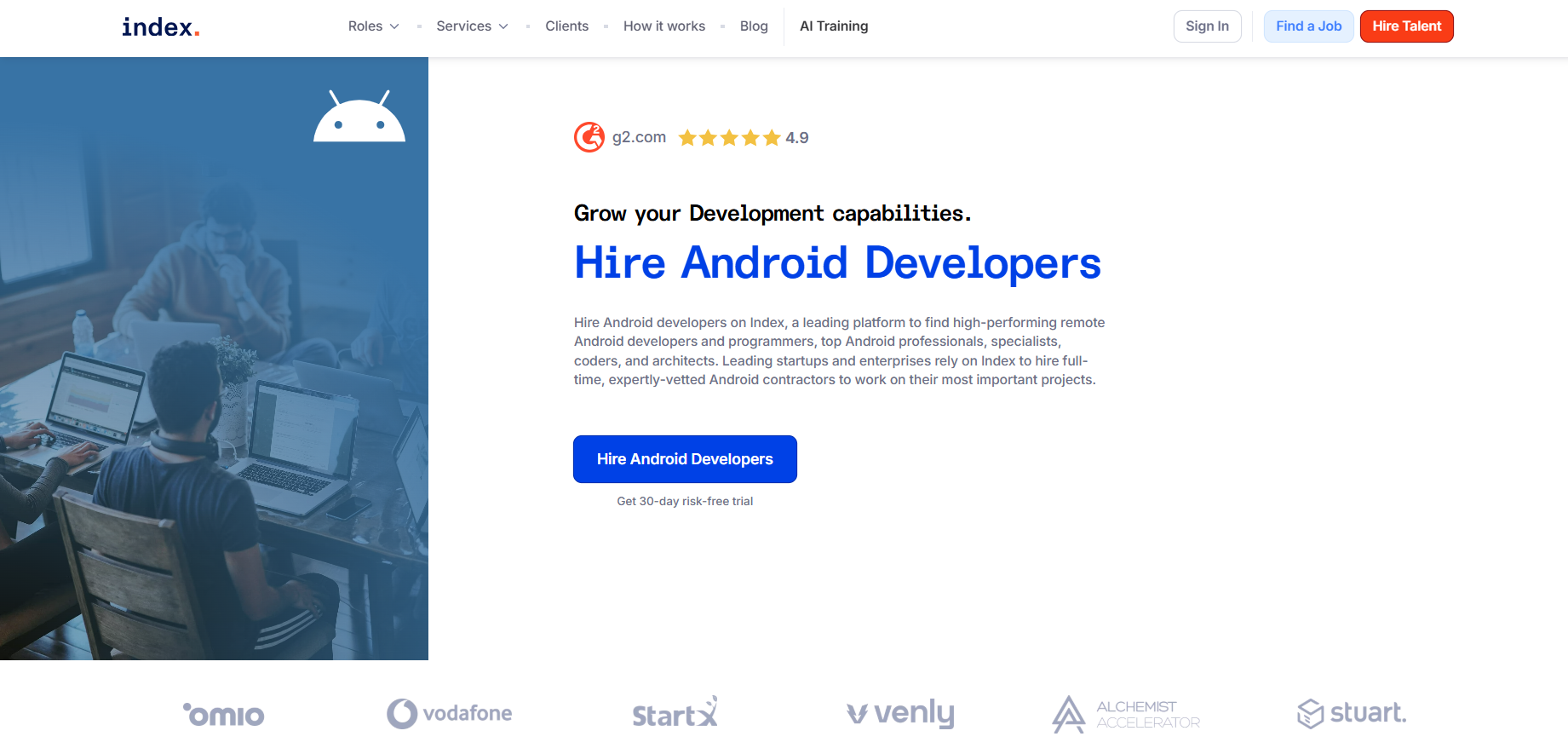
1. Index.dev: Pre-Vetted Developers in 48 Hours

You submit requirements Monday morning.
Wednesday morning, you interview three developers who can actually code.
That's Index.dev. No keyword-matched juniors. No "senior" developers who've never shipped production.
Only the top 5% of applicants make it through. Each one passes algorithmic screening, live technical interviews, soft skills evaluation, and remote work readiness checks.
The result? 90% of Index.dev partners hire the first candidate suggested.
And if same-timezone matters? Index.dev just expanded. It launched the US Hub—adding American-based developers to their global network of 20,000+ vetted professionals. Same vetting rigor. Local timezone. Native understanding of US compliance and business culture.
Real example: NetRefer needed senior data engineers fast. "The implementation of Index.dev allowed us to gain access to proven data engineers within a short period, swiftly qualify potential candidates, and simplify screening evaluations," their Head of Product Delivery said. They built a distributed team while Index.dev handled compliance and payroll across countries.
Pricing: $60-$80/hour. No hidden fees. 30-day risk-free trial—pay nothing if the developer doesn't work out.
Average engagement: 13+ months. That's not luck. That's quality.
When to use: Mission-critical Android apps. Full-time remote teams. Zero tolerance for bad hires.
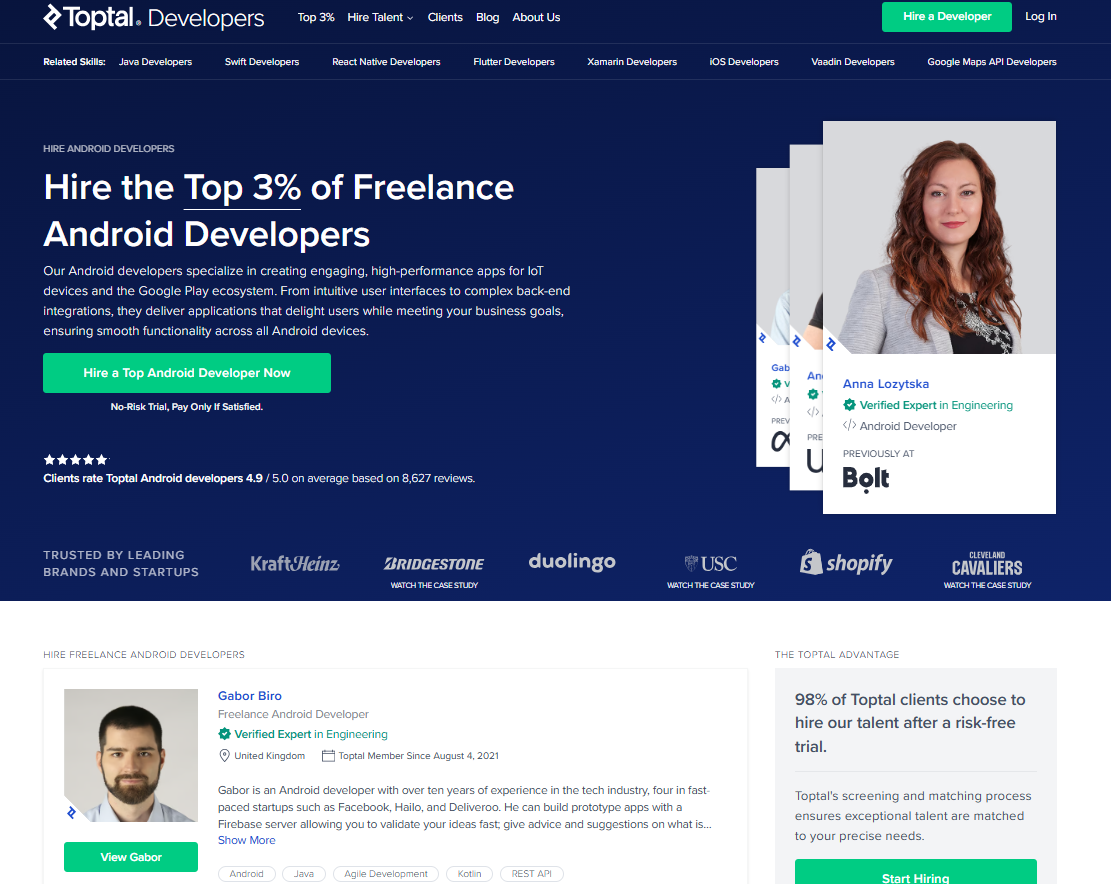
2. Toptal: Top 3% of Freelance Talent

Toptal doesn't compete on speed. They compete on credentials.
Their screening process has three stages: algorithmic filtering, technical interviews, and test projects. They turn away 97% of applicants. The developers who survive? They've built apps with millions of users. They've architected systems at scale.
The trade-off is price and friction.
Expect $60-$150/hour plus a mandatory $79/month subscription. Toptal takes 30-50% commission. That overhead funds their famous vetting infrastructure.
It works when project complexity justifies premium pricing. Blockchain integrations. AR/VR features. System design that can't fail.
When to use: Enterprise projects. Specialized technical work. When hiring the cheapest developer is a recipe for disaster.
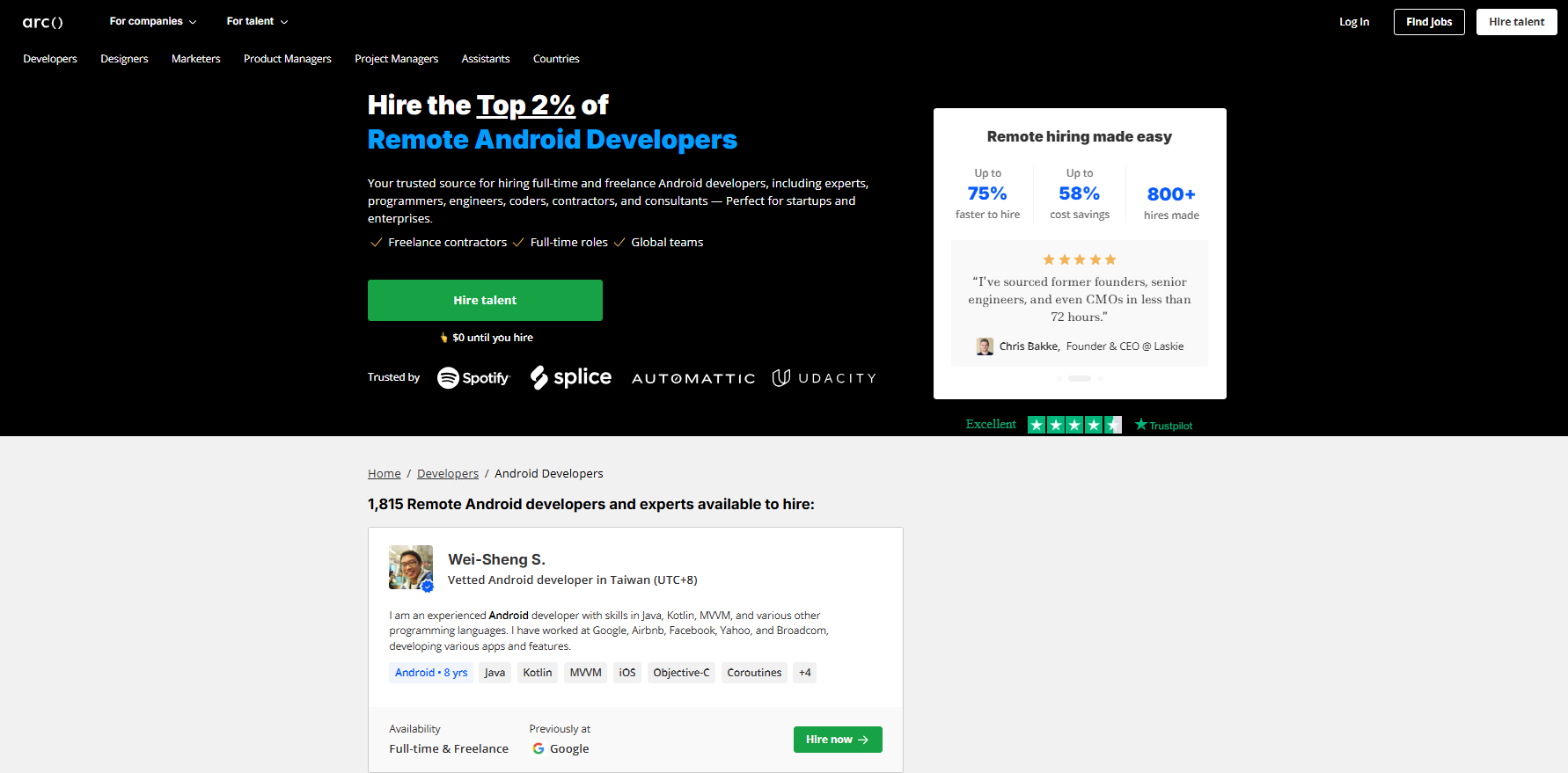
3. Arc.dev: 450,000 Developers, AI-Matched in 72 Hours

Arc.dev plays a different game: volume with speed.
Their HireAI tool uses GPT-4 to match candidates without manual screening. You describe what you need in natural language. The system finds fits. You interview shortlisted candidates within 72 hours.
Pricing: $50-$100/hour depending on experience and location.
Arc.dev handles compliance and payroll through Deel/Remote partnerships—critical for companies scaling internationally without legal headaches.
The platform shines when you need flexibility. Full-time, freelance, project-based. No long-term commitments required.
Android developers here specialize in Kotlin, Jetpack Compose, and modern Android frameworks. Many have millions of app downloads under their belt.
When to use: MVPs launching fast. Team augmentation without long-term contracts. Cost-sensitive hiring across geographies.
4. Revelo: Full-Time Latin American Talent, Integrated Payroll

Revelo flips the hiring model.
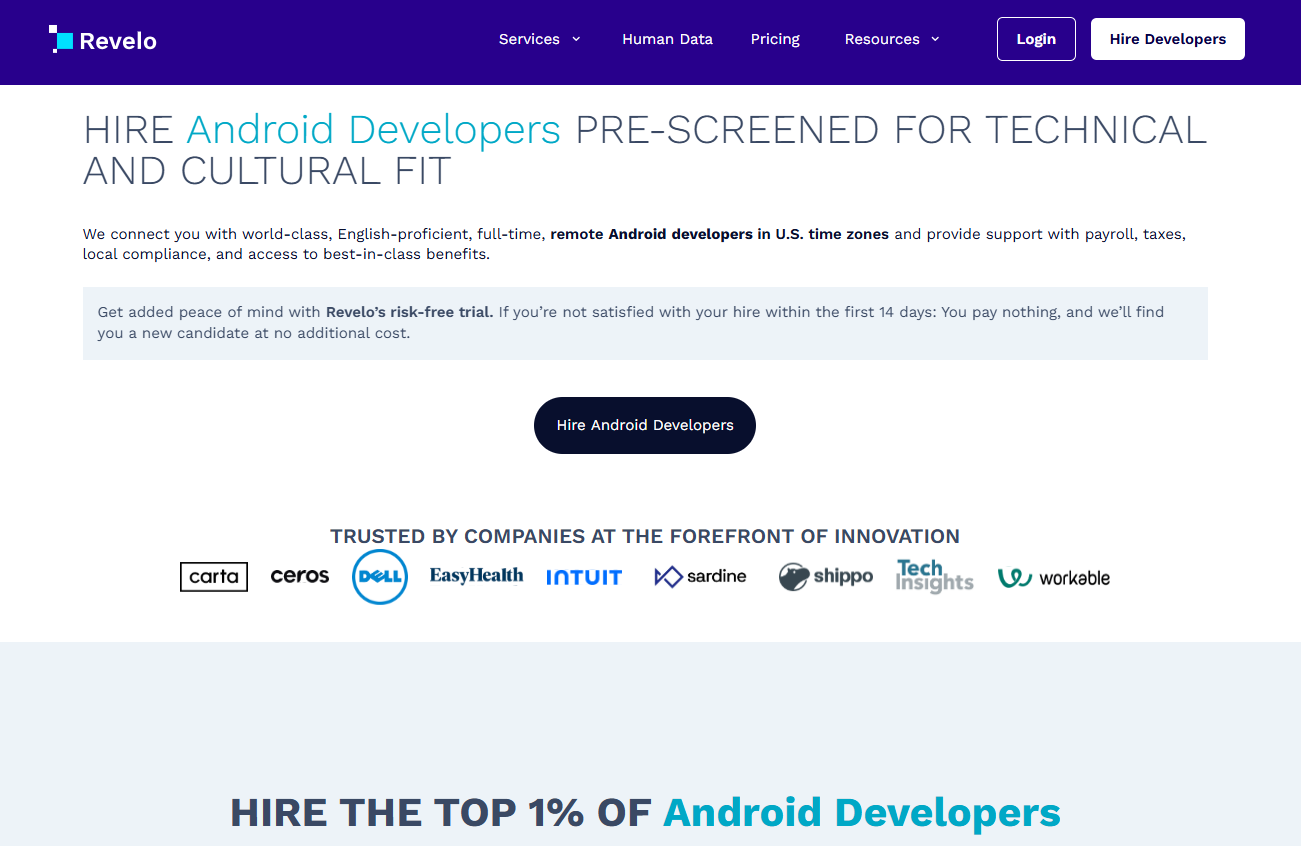
Instead of hunting talent, they've built a pre-vetted pool exceeding 300,000 technology professionals, with only the top 2% accepted. They focus on Latin America—developers who work US hours synchronously without the 12-hour timezone tax.
Shortlist arrives in 3-5 days.
Pricing: $50-$70/hour plus a one-time $500 flat fee to initiate collaboration.
Here's where Revelo shines: full integration. They handle payroll, benefits, taxes, compliance. You don't call an accountant. You don't wrangle contractors across borders. They do it.
This model works best for companies seeking cost-effective, full-time remote talent without long-term contracts.
14-day satisfaction guarantee—pay nothing if the match fails.
The platform's geographic focus on Latin America provides a different talent pool and cost structure than global platforms like Index.dev or Arc.dev. To put into perspective, companies typically save 30-50% compared to US hires while gaining developers who work in your timezone and understand US business culture.
When to use: Building permanent remote teams. Cost-conscious scaling. Zero appetite for compliance complexity.
5. Gun.io: Elite Senior Developers, Manually Vetted

Gun.io has a strict door policy.
About 10% of 1,000 monthly applicants make the cut. Each one gets interviewed by senior engineers. Each one brings 10+ years of production experience.
Time-to-hire: 13 days. Gun.io's talent team does the resume hunting so you don't waste engineering time.
Pricing: $60-$120/hour for Android specialists.
Gun.io developers excel in native Android development using Kotlin and Java. They've built production apps, optimized performance for millions of users, and worked with modern architectures like MVVM and Clean Architecture. Communication skills receive equal weight—all developers speak fluent English.
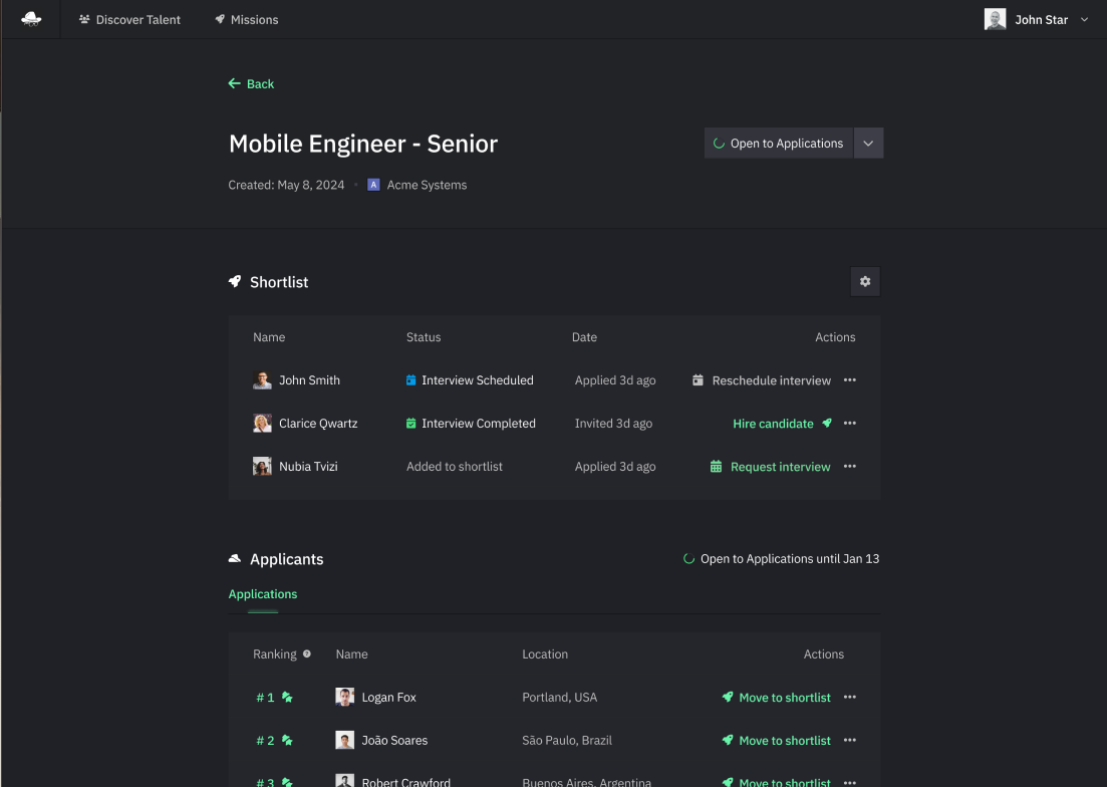
Gun.io developers excel at native Android development, MVVM architecture, and performance optimization for apps with millions of users. They communicate like professionals—not contractors trying to close the deal.
The philosophy: senior talent who contributes from day one, not developers who need six weeks to ramp.
When to use: Projects where you can't afford learning curves. Seasoned developers who ship refined code. Architecture decisions that matter.
6. Flexiple: Vetted in 5 Hours, Matched in 72 Hours

Flexiple treats hiring like an emergency room—fast without sacrificing quality.
100+ Android developers vetted through a rigorous 5-hour evaluation process. Developers rated 4.9/5 across 10,152 client reviews. 72-hour matching guarantee.
Pricing: $30-$100/hour based on expertise. No platform commission—developers keep their full rate.
The model differs from dedicated staffing platforms: Flexiple is flexible. Project-based work. Sprint augmentation. Full-time roles. Whatever fits your roadmap.
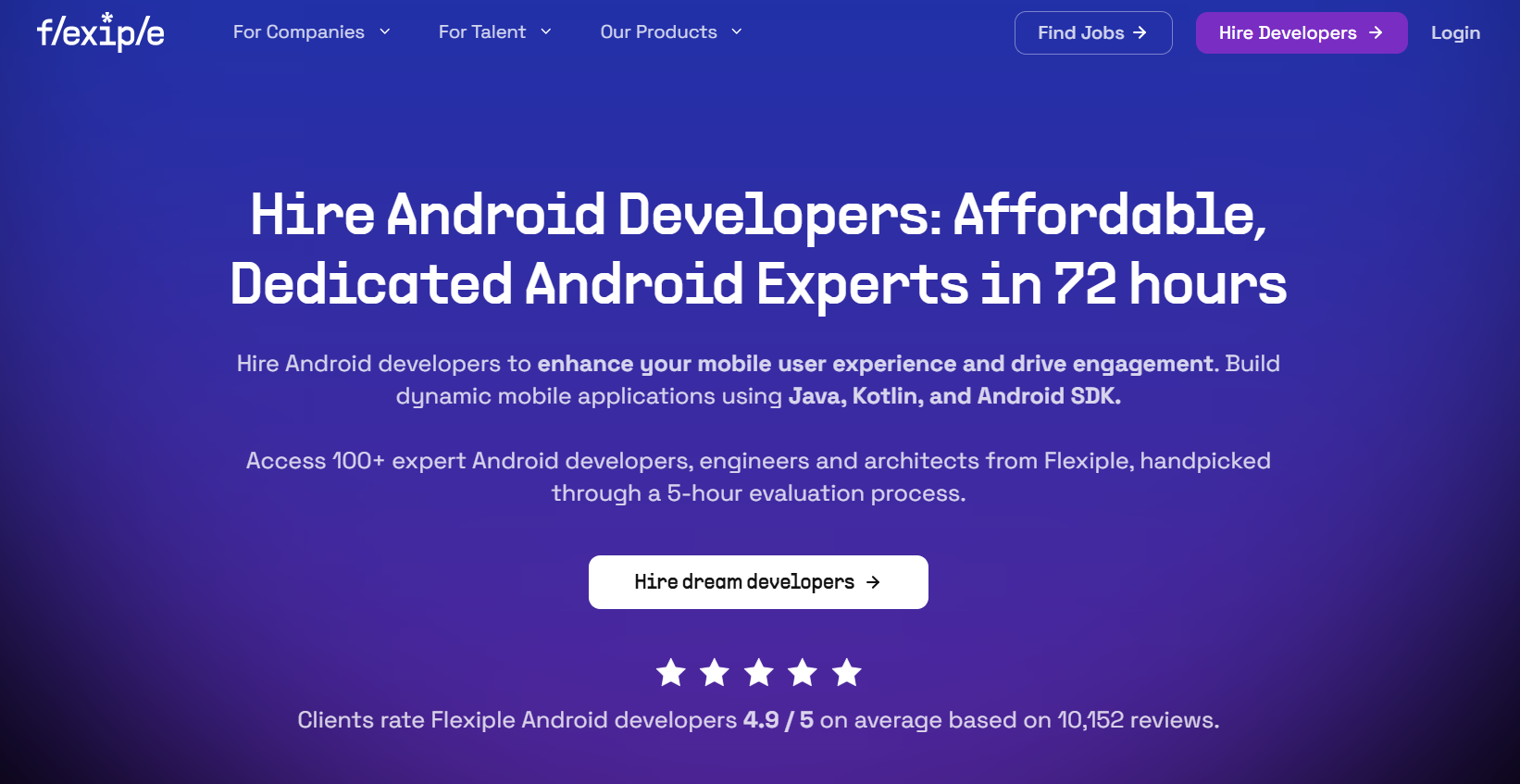
Developers specialize in Kotlin, Java, Jetpack Compose, and modern Android frameworks. Many have shipped production apps. All prove they work remotely before onboarding.
When to use: Rapid team augmentation. Sprint-based hiring. Flexible projects without long-term commitments. Budget-conscious scaling.
Don’t miss: 50+ top interview questions and answers for senior Android developers.
How to Choose the Right Platform
Match the platform to your hiring priorities.
- Need Android developers by Friday?
- Arc.dev or Flexiple. Index.dev still hits 48 hours for matching—but you're interviewing pre-vetted candidates vs. raw talent that needs vetting.
- Arc.dev or Flexiple. Index.dev still hits 48 hours for matching—but you're interviewing pre-vetted candidates vs. raw talent that needs vetting.
- Building a permanent remote team?
- Revelo. They handle payroll, benefits, and taxes. Developers work in your timezone. You sleep without compliance anxiety.
- Revelo. They handle payroll, benefits, and taxes. Developers work in your timezone. You sleep without compliance anxiety.
- Project complexity matters more than speed?
- Toptal or Gun.io. Toptal for specialized tech (AR, blockchain, system design). Gun.io for battle-tested senior developers who code like architects.
- Toptal or Gun.io. Toptal for specialized tech (AR, blockchain, system design). Gun.io for battle-tested senior developers who code like architects.
- Scaling a high-growth tech team?
- Index.dev. Case study: Venly needed to double their engineering team building blockchain NFT marketplaces. Index.dev matched them with high-qualified Angular and Java developers in under a month—work that normally takes three. CEO Tim Dierckxsens noted the developers "moved technical metrics from weeks to days." That's what accurate matching delivers.
Conclusion
You came here because hiring Android developers feels impossible. We showed you six platforms that make it possible. Now you know what separates platforms that find people from platforms that find developers—the difference is vetting rigor, matching speed, and honest guarantees.
The real insight? Your hiring problem isn't a platform problem. It's a standard problem.
Most companies lower standards when they get desperate. They hire fast because they hired slow. They hire cheap because they panicked. Then they pay $40K to fire the wrong person and start over.
The six platforms here exist because companies stopped accepting that trade-off.
Index.dev doesn't compete on price—they compete on certainty. Revelo doesn't compete on speed—they compete on integration. Flexiple doesn't compete on credentials—they compete on flexibility. Each one picked a different hill to own.
Your job isn't to pick the "best" platform. Your job is to pick the platform that stops making you compromise on what matters most. Pick your standard. Then pick your platform.
➡︎ Tired of Android developers who ghost after two sprints? Index.dev matches you with the top 5% in 48 hours—Kotlin experts who've shipped production apps, passed live technical vetting, and come with 30-day risk-free trials. No keyword spam. Just developers who actually deliver.
➡︎ Are you an Android developer looking for high-impact work? Join Index.dev to access long-term US projects, fast hiring cycles, and a platform built to match you with roles that fit your expertise.
➡︎ Want to dive deeper into developer hiring and talent strategies? Explore our guides on how to effectively vet software developers to avoid costly mis-hires, proven strategies to retain your best tech talent, the top platforms to hire backend developers in the USA, our comprehensive developer onboarding process, and 5 common reasons developers fail job vetting.
Frequently Asked Questions (FAQs)
Q1: What's the actual difference between "vetted" and "pre-screened"?
Vetted means platforms test coding ability, soft skills, and remote work readiness. Pre-screened means they filter resumes for keyword matches. Vetted takes weeks; pre-screened takes hours. Index.dev and Toptal vet. LinkedIn pre-screens.
Q2: Can I hire part-time Android developers through these platforms?
Yes, but not all. Index.dev focuses on full-time roles. Toptal and Flexiple offer both. Arc.dev and Revelo are flexible on contract length. Gun.io is primarily senior full-time. Check platform terms before applying.
Q3: Do these platforms handle taxes and compliance for remote developers?
Depends on location. Index.dev and Revelo handle payroll/compliance for contractors. Toptal and Arc.dev partner with services like Deel (you manage). Flexiple is developer-to-company. Verify with the platform before hiring internationally.
Q4: How long does onboarding actually take?
Matching takes 48 hours to 2 weeks depending on platform. Onboarding (developer integrated, productive) takes 2-6 weeks. Faster platforms don't always mean faster productivity. Plan accordingly.
Q5: What if the developer doesn't work out?
Index.dev offers a 30-day replacement guarantee. Toptal has a 2-week satisfaction period. Revelo offers a 14-day guarantee. Arc.dev and Flexiple: case-by-case. Read contracts before signing. Good platforms will replace bad matches.
Q6: Is it cheaper to hire from Latin America vs. Eastern Europe?
Latin America: $30-70/hour. Eastern Europe: $40-100/hour. Both work US time zones. Latin America is generally cheaper; Eastern Europe often has deeper technical credentials. Cost isn't quality—Revelo's top 2% from Latin America costs like Arc.dev's global average.
For detailed regional breakdowns, see Index.dev's guide on LATAM vs. Eastern Europe hiring.
Q7: How do I know if I need a senior vs. mid-level Android developer?
MVP/prototype: mid-level works. Production apps at scale: senior needed. Complex architecture decisions: senior. Team expansion: mix of both. The interview process will reveal gaps. Better to hire a senior overqualified than junior underqualified.