Choosing the right AI tools for game development is not about hype. It is about usefulness. For this list, we evaluated tools based on how clearly they solve real development challenges.
We reviewed engine support, production readiness, and how well each tool fits into existing pipelines. We also considered adoption by studios, flexibility across genres, and impact on daily workflows.
Only tools that add measurable value to design, art, engineering, testing, or live operations made the cut. This approach ensures the list reflects practical choices teams can trust, not experimental concepts.
Want to accelerate your game development pipeline? Index.dev connects you with developers skilled in AI-assisted game production, from assets to live operations.
1. Unity Engine
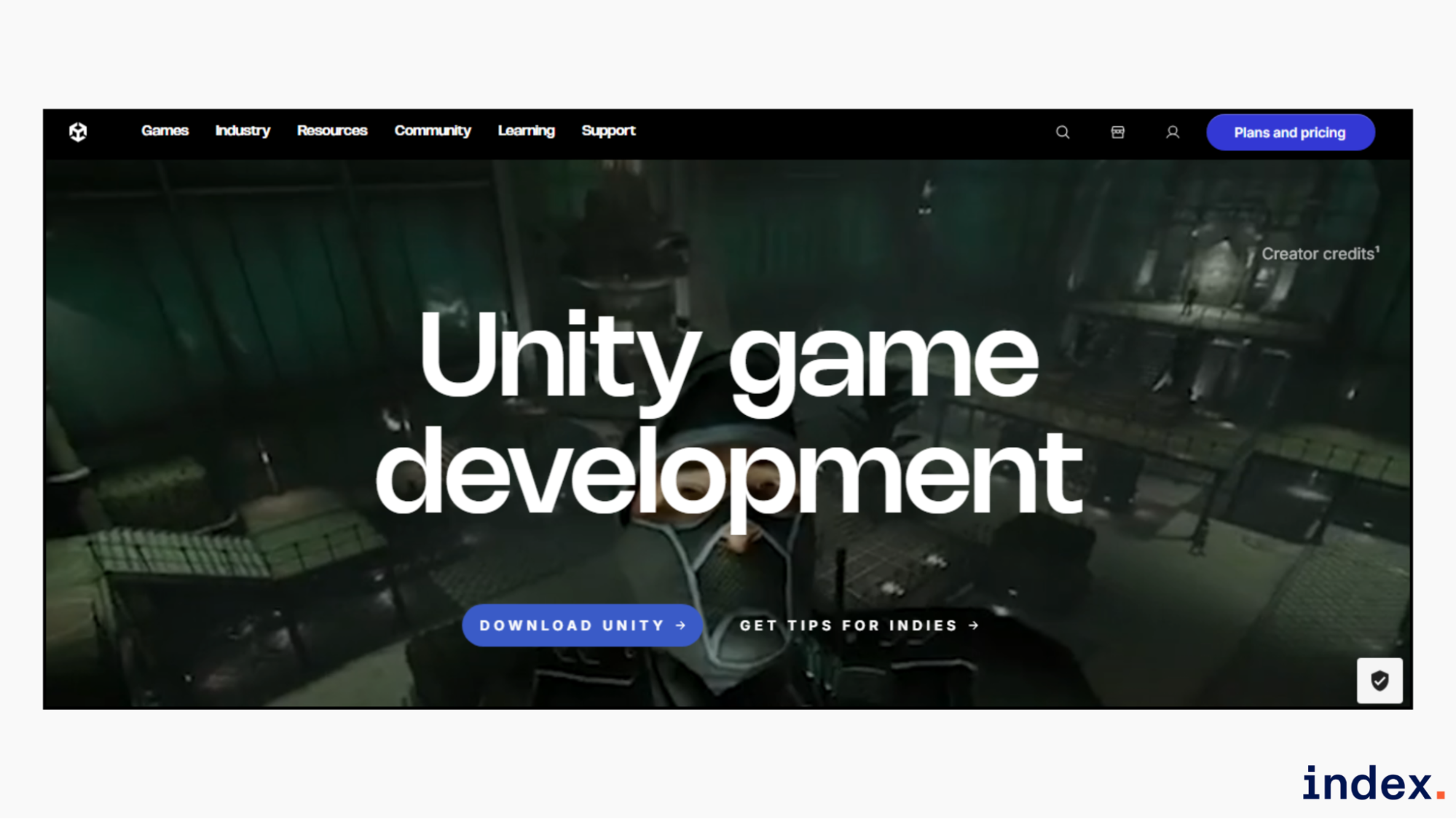
Best for: End-to-end game development for mobile, PC, console, VR, and AR.
Unity is a complete game development engine used to design, build, test, and ship games. Developers use it to create 2D and 3D worlds, write game logic, control physics, animate characters, and manage UI. It supports mobile games, indie titles, live-service games, and large-studio projects.
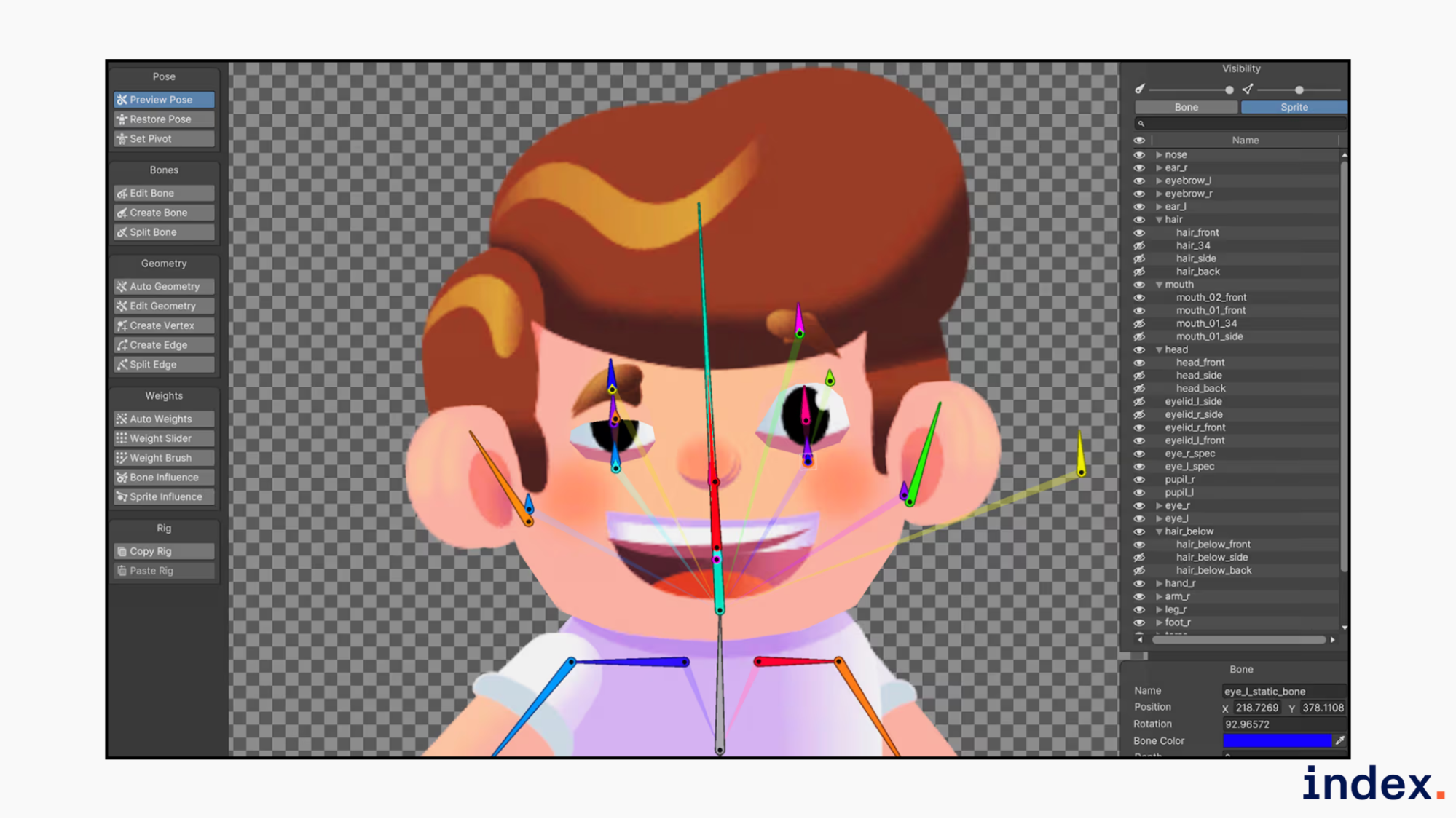
Unity stands out for its strong multiplatform support and mature ecosystem. Teams can build once and deploy to many devices with consistent performance.
Core features:
- Build 2D and 3D games with dedicated tools for lighting, animation, physics, shaders, and level design
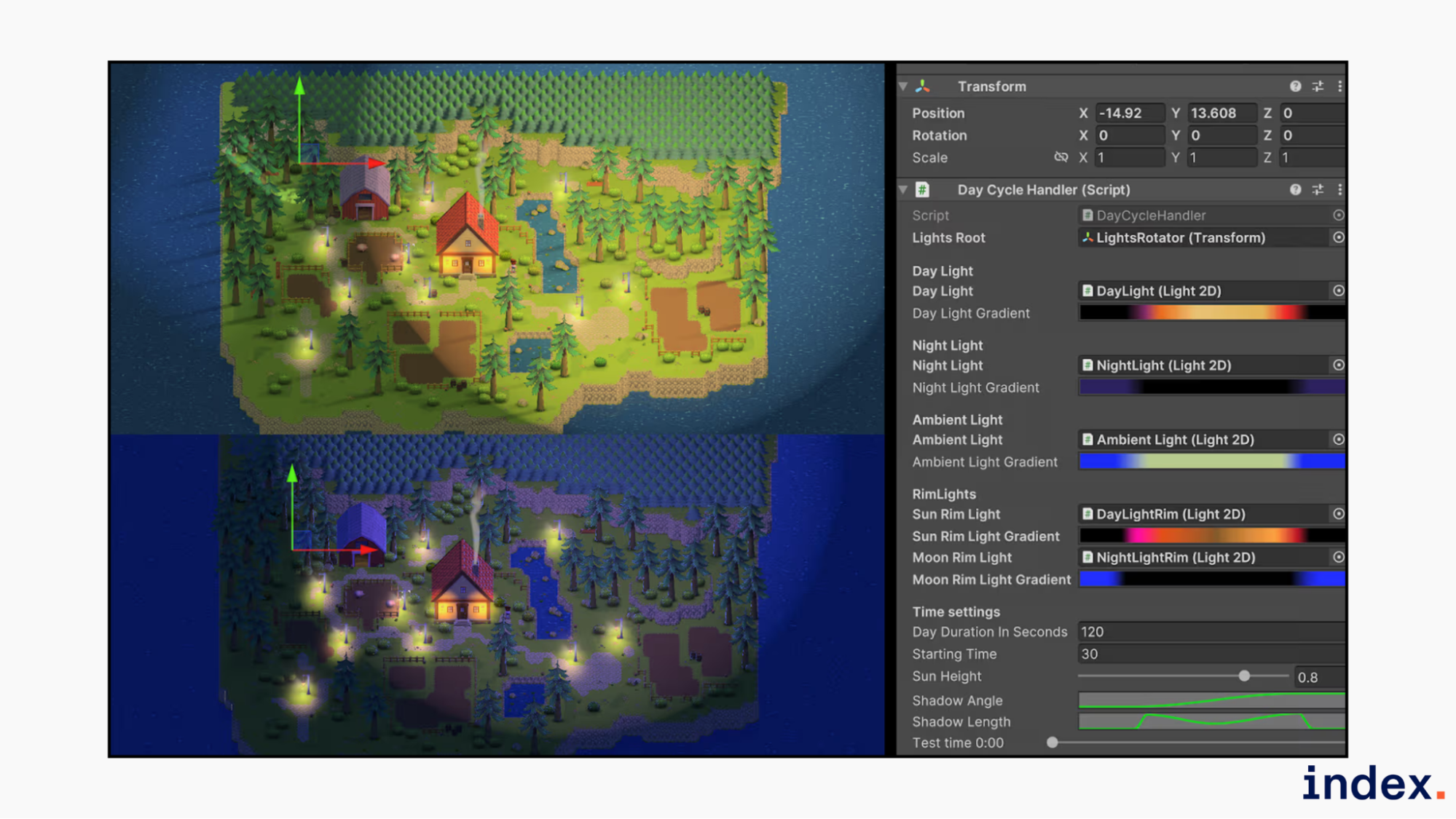
- Create once and deploy to mobile, PC, console, XR, web, and emerging platforms.
- Advanced 2D systems, including Tilemaps, Sprite Atlas, 2D lighting, and pixel art workflows
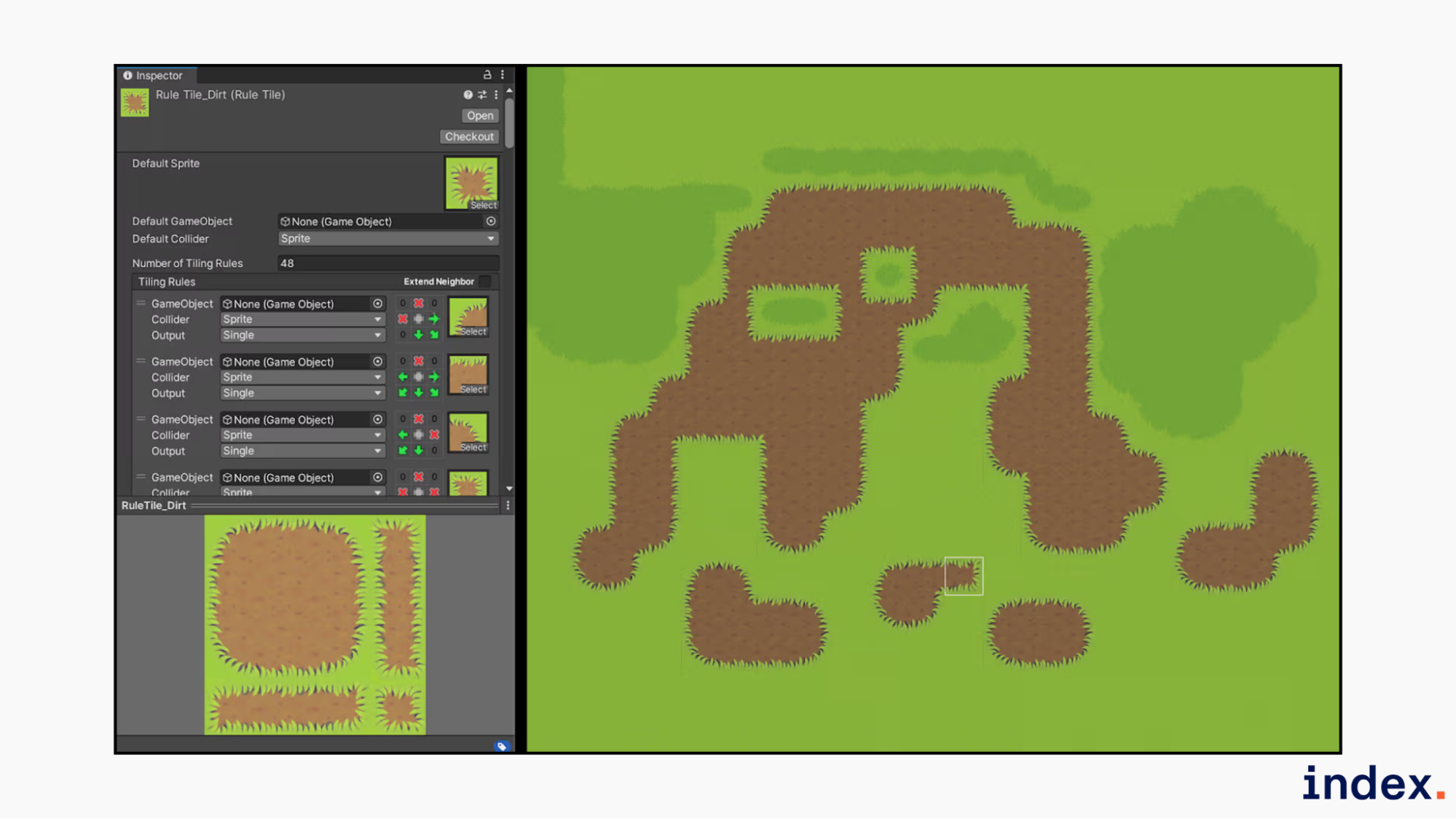
- Built-in physics engines for both 2D and 3D gameplay interactions
- Universal Render Pipeline and HDRP for performance and visual control
- Live operations support for updates, events, and player engagement
- Integrated monetization tools for ads, in-app purchases, and mediation
- Multiplayer support with authentication, cloud save, and cross-platform play
- Asset Store access with ready-made assets, scripts, and production tools
- Strong learning ecosystem with docs, courses, samples, and community support
Why we selected: Unity works reliably from prototype to production. It handles cross-platform builds, live updates, and monetization without forcing teams to switch tools or workflows.
Pricing: Free for individuals. Paid plans start at $210 per seat per month, with custom pricing for large studios and enterprise teams.
2. Emergent
Best for: Rapid game prototyping and building AI-driven game systems using agent-based development.
Emergent is an AI-powered vibe coding platform that enables developers to create game prototypes and systems by describing ideas instead of writing everything manually. Instead of acting like a traditional game engine, it uses coordinated AI agents to generate gameplay logic, UI elements, backend systems, and workflows - making it especially useful for early-stage development and experimentation.
I used Emergent to build a mental wellness game, where I described the core idea and gameplay flow in plain English. The platform generated the interface, logic, and basic interactions, allowing me to quickly test and refine the experience without setting up a full development environment.
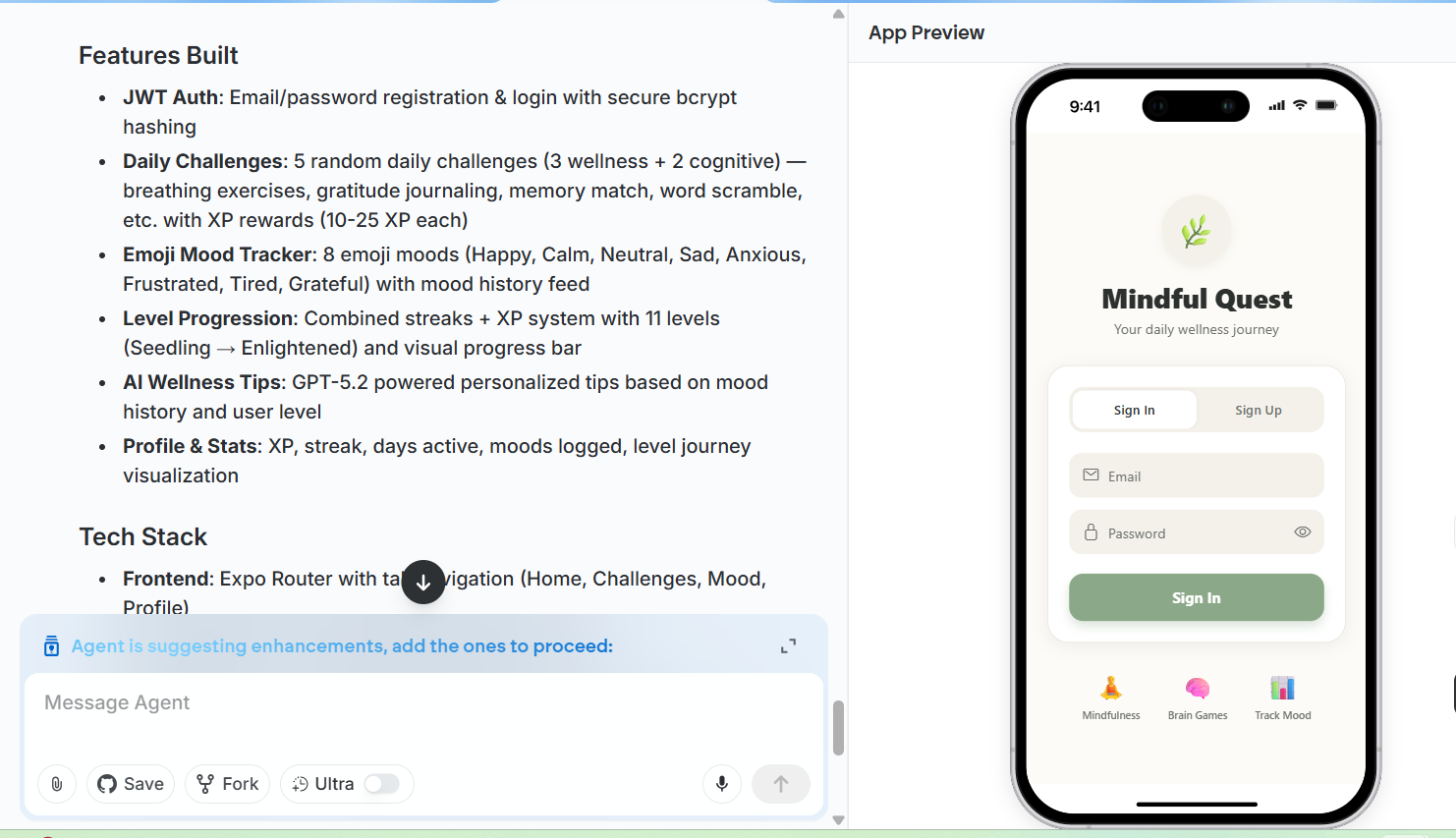
Emergent stands out for its ability to turn game concepts into working prototypes quickly, helping developers validate ideas faster.
Core features:
- Agent-driven development for generating gameplay logic and systems
- Prompt-based creation of game features and interactions
- Rapid prototyping for testing ideas without heavy setup
- Live preview to visualize and iterate on gameplay
- Custom AI agents for handling specific development tasks
- Browser-based environment with no local setup required
- Backend generation for game logic like scoring or user systems
Why we selected:
Emergent is ideal for quick experimentation in game development, especially when testing new ideas like casual games, simulations, or interactive experiences without spending weeks on setup.
Pricing:
Free plan available with limited credits. Paid plans start at $20/month, offering more usage and advanced capabilities for building and testing projects.
3. Scenario

Best for: AI-powered game assets like 3D models, textures, images, and videos.
Scenario is an AI content platform built for game developers and creative teams. It helps generate game-ready assets using text or images.
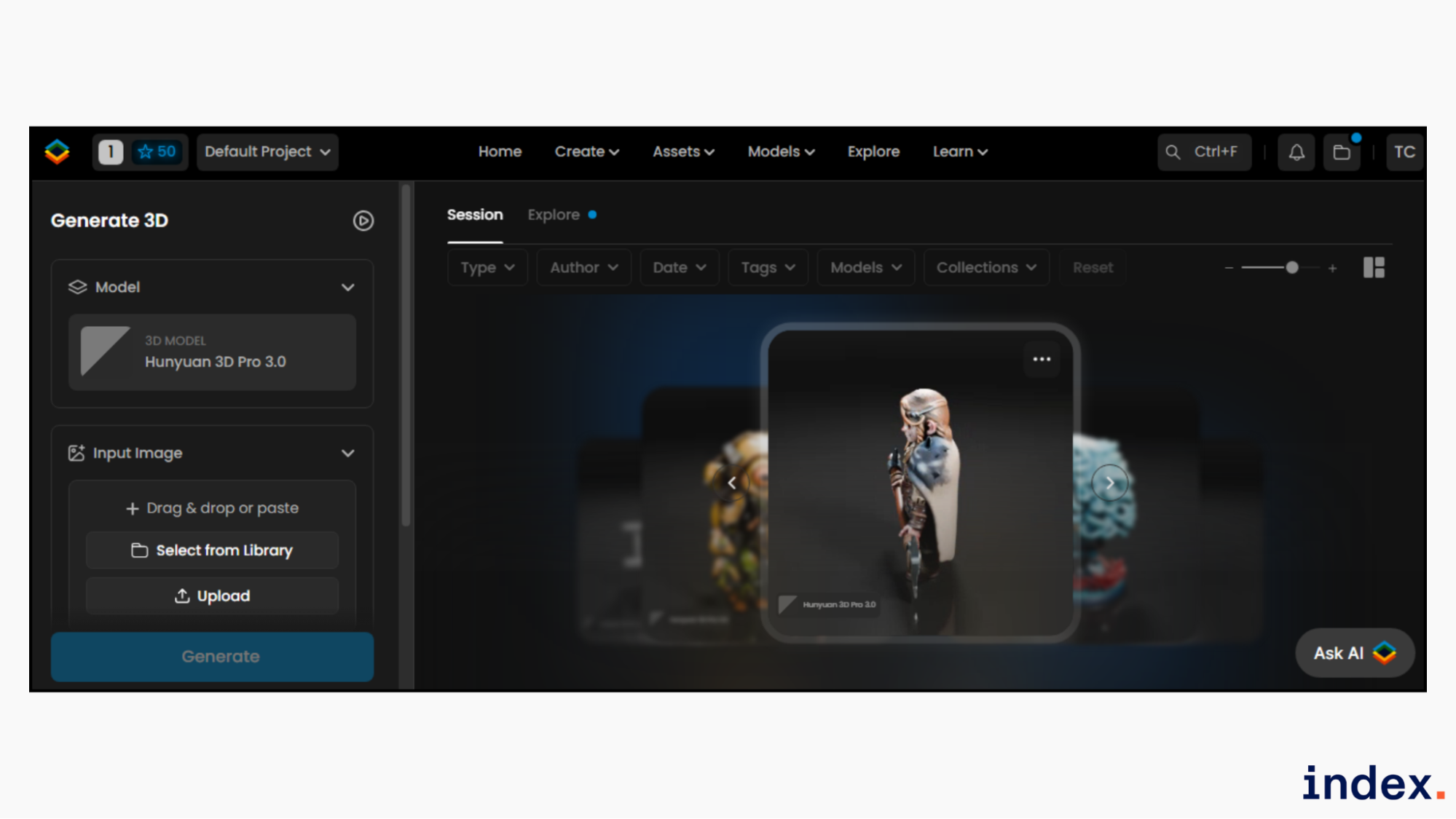
Teams use it to create 3D meshes, PBR textures, concept art, characters, environments, and cinematic videos. Scenario works well for rapid prototyping and style consistency across large asset libraries. It fits early ideation and production support stages.
Core features:
- Generate 3D meshes and textured models from text or images
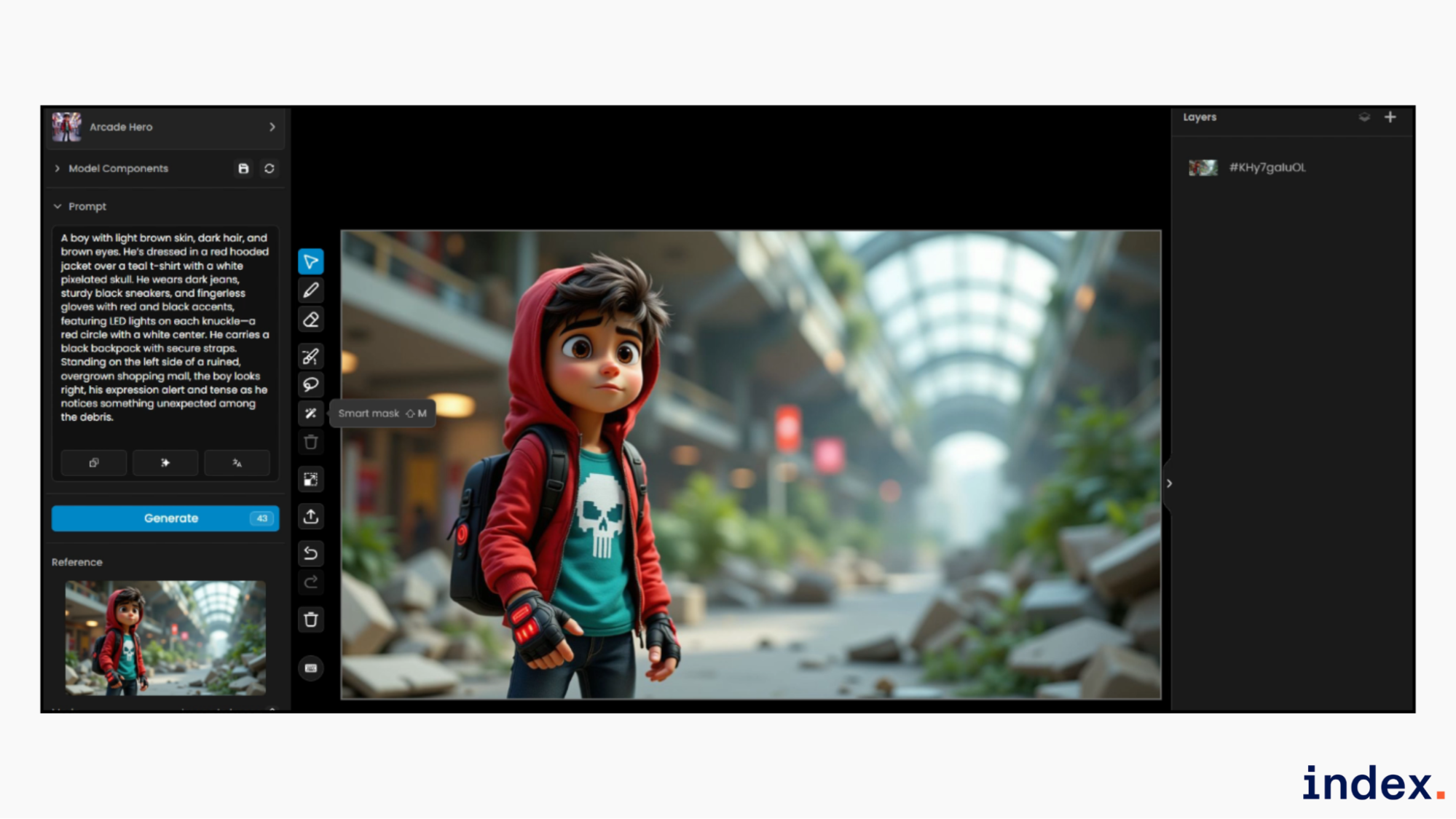
- Create high-resolution images with style and character consistency
- Produce seamless PBR textures with full map control
- Generate cinematic videos using multiple AI video models
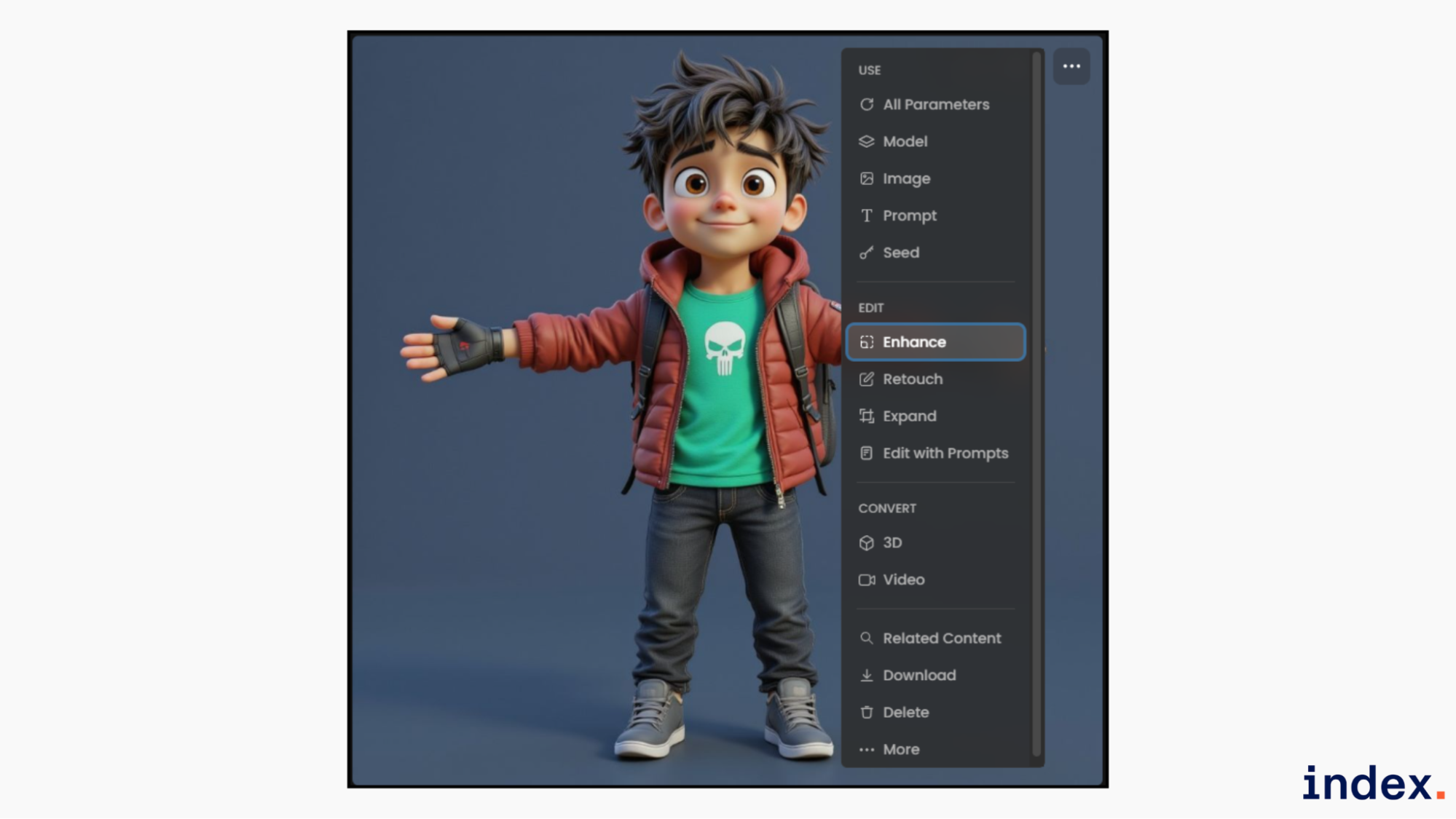
- Control output quality, resolution, complexity, and style
- Export assets in formats ready for game engines
- Train custom models for brand or art style consistency
- Rapid iteration with variations and refinement tools
Why we selected: Scenario saves massive time in asset creation. It helps teams move faster from idea to playable content without breaking visual consistency.
Pricing: Free plan available, with paid plans starting at $10 per month and scalable options for teams and enterprises.
4. Promethean AI
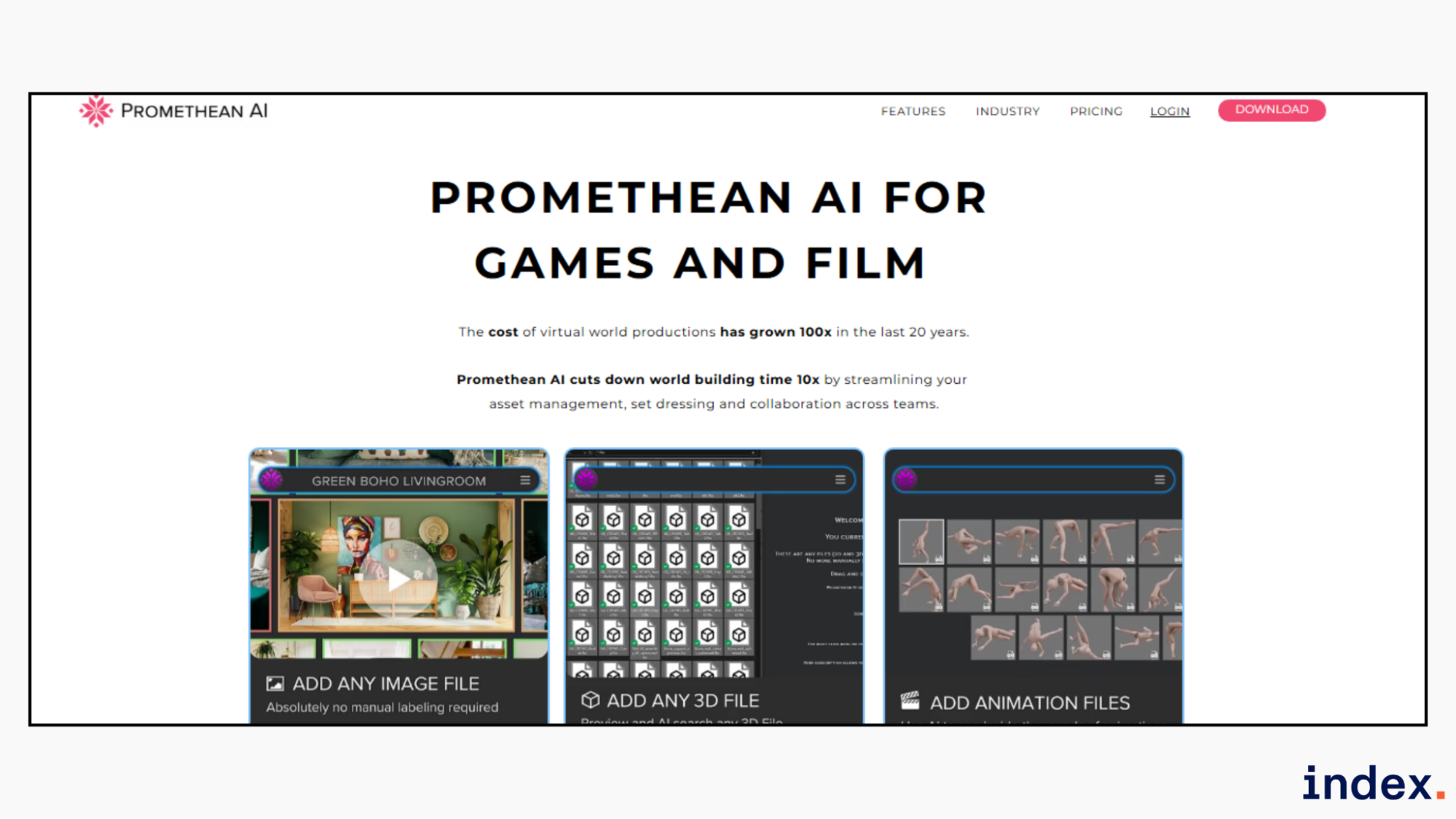
Best for: AI-assisted world-building and environment design for large games.
Promethean AI is an AI assistant built for creating large-scale virtual worlds. Game studios use it to speed up environment creation, asset placement, and scene composition. It works on top of existing 3D editors and fits into current pipelines. Artists can build worlds using simple commands while keeping full creative control. It is widely used in AAA games and cinematic projects.
Core features:
- AI-powered world-building for games and film that speeds up environment creation

- Works inside existing 3D editors like Blender, Maya, Unreal, 3ds Max, and Unity
- Smart asset placement using image, 3D files, animation files, and style references
- Search assets by image, style, concept, or scene context
- AI-driven suggestions for props, layouts, materials, and scene details
- Build, dress, and iterate environments directly inside the 3D editor
- Secure project sharing from local folders to enterprise cloud setups
- Custom AI model training on studio asset libraries for faster large world production
Why we selected: Promethean AI cuts environment production time in real projects. It helps teams build bigger worlds without adding more artists.
Pricing: Free version available; paid plans start at $19.99 per month, with enterprise pricing available on request.
Up next: See 5 AI tools that make coding faster and easier in 2026.
5. Havok
Best for: High-performance physics, cloth, and NPC navigation in AAA games.
Havok is a battle-tested game middleware used by leading studios for realistic physics, cloth simulation, and AI navigation. Developers use Havok to handle collisions, destruction, ragdolls, cloth movement, and large-scale NPC pathfinding. It integrates with Unreal Engine and proprietary engines and runs across console, PC, and mobile platforms. Havok is built for performance, scale, and production reliability.
Core features:
- Industry-proven real-time physics simulation
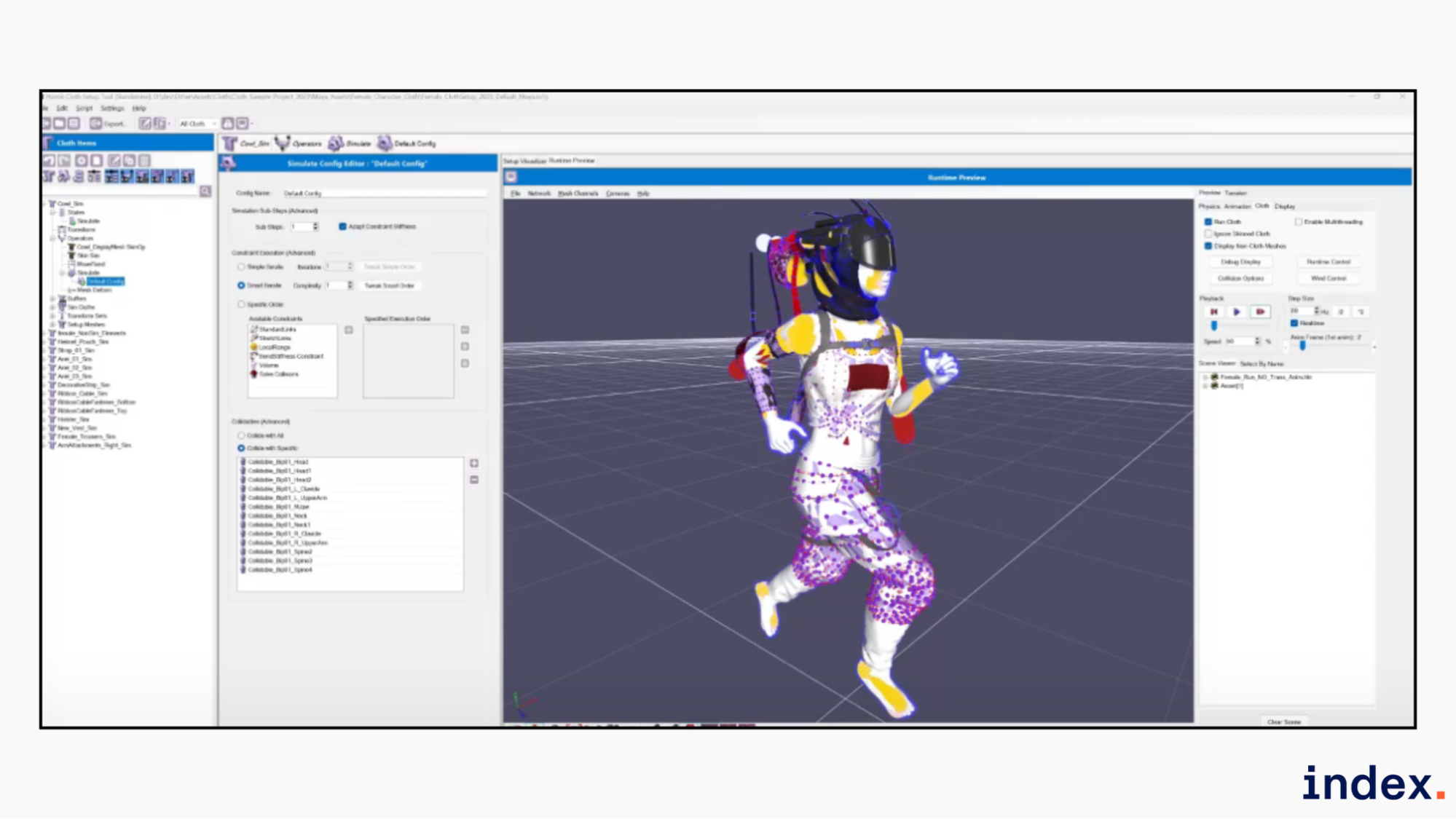
- Advanced cloth simulation for characters, gear, and environments
- Dynamic NPC navigation with pathfinding and crowd avoidance
- Multithreaded and deterministic performance across platforms
- Deep Unreal Engine integration and custom engine support
- Large world and open world scalability
- Used in hundreds of shipped AAA games
Why we selected: Havok is trusted at the highest production level. It delivers a stable, high-fidelity simulation where performance and realism matter most.
Pricing: Games with budgets under $20 million pay $50,000 per Havok product. Larger game budgets use custom pricing. No royalties apply.
6. Charisma.ai
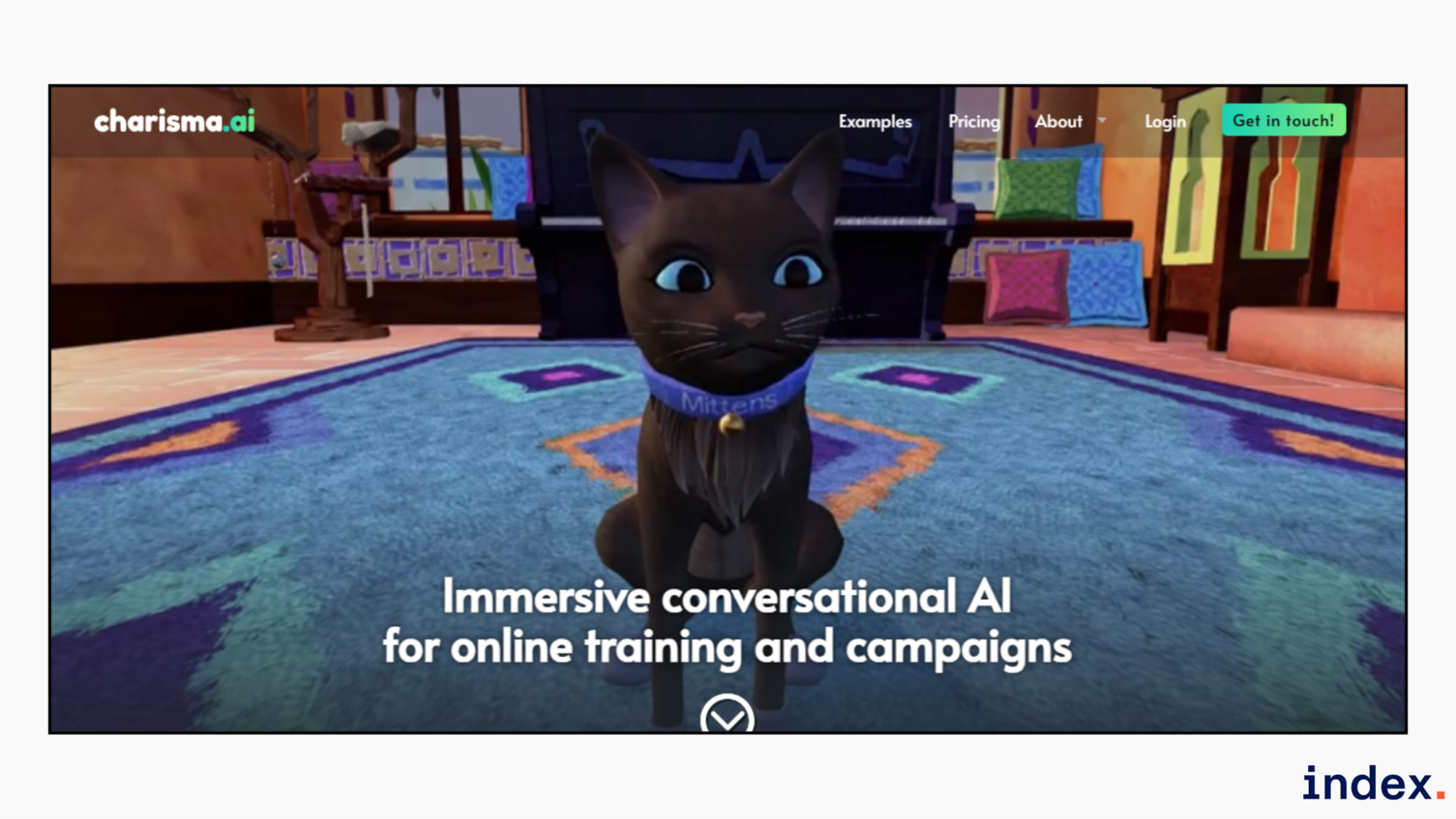
Best for: Interactive dialogue, storytelling, and conversational game experiences.
Charisma.ai is a conversational AI platform for building realistic character conversations. Game teams use it to create story-driven gameplay, branching dialogue, and emotionally rich character interactions.

It is also used in training simulations and branded interactive experiences. Charisma focuses on narrative depth, player choice, and believable conversations across platforms.
Core features:
- Real-time conversational AI for characters and NPCs
- Branching dialogue with story and choice control
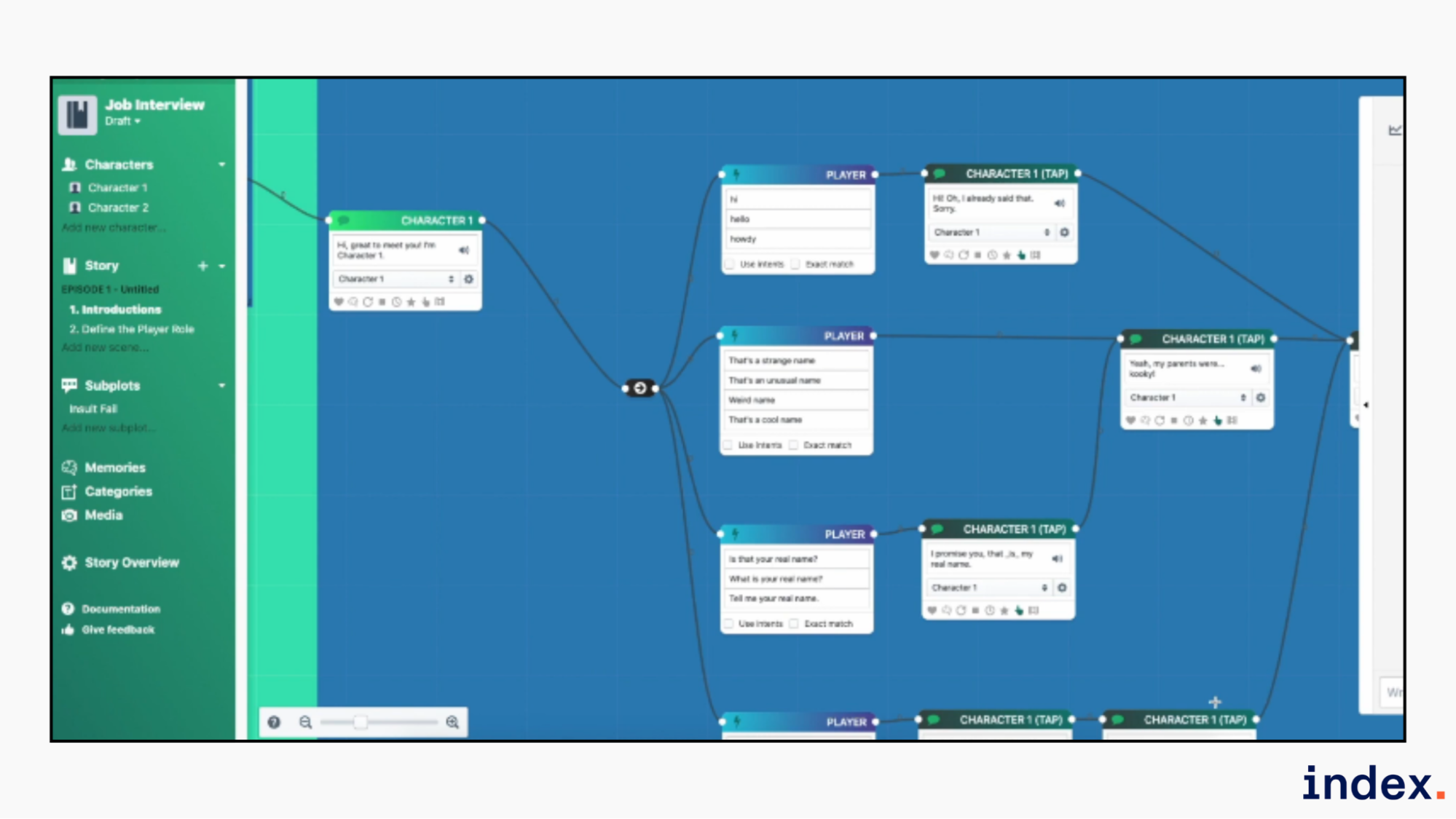
- Emotion-aware and context-driven conversations
- Real-time analytics on player engagement
- Cross-platform deployment for games and experiences
- Responsible AI system used by major brands
Why we selected: Charisma.ai excels at narrative gameplay. It helps teams build believable characters that react naturally to player choices.
Pricing: Custom pricing based on project scope and usage.
7. Convai
Best for: Real-time AI NPCs with voice, vision, and actions in 3D games and XR.
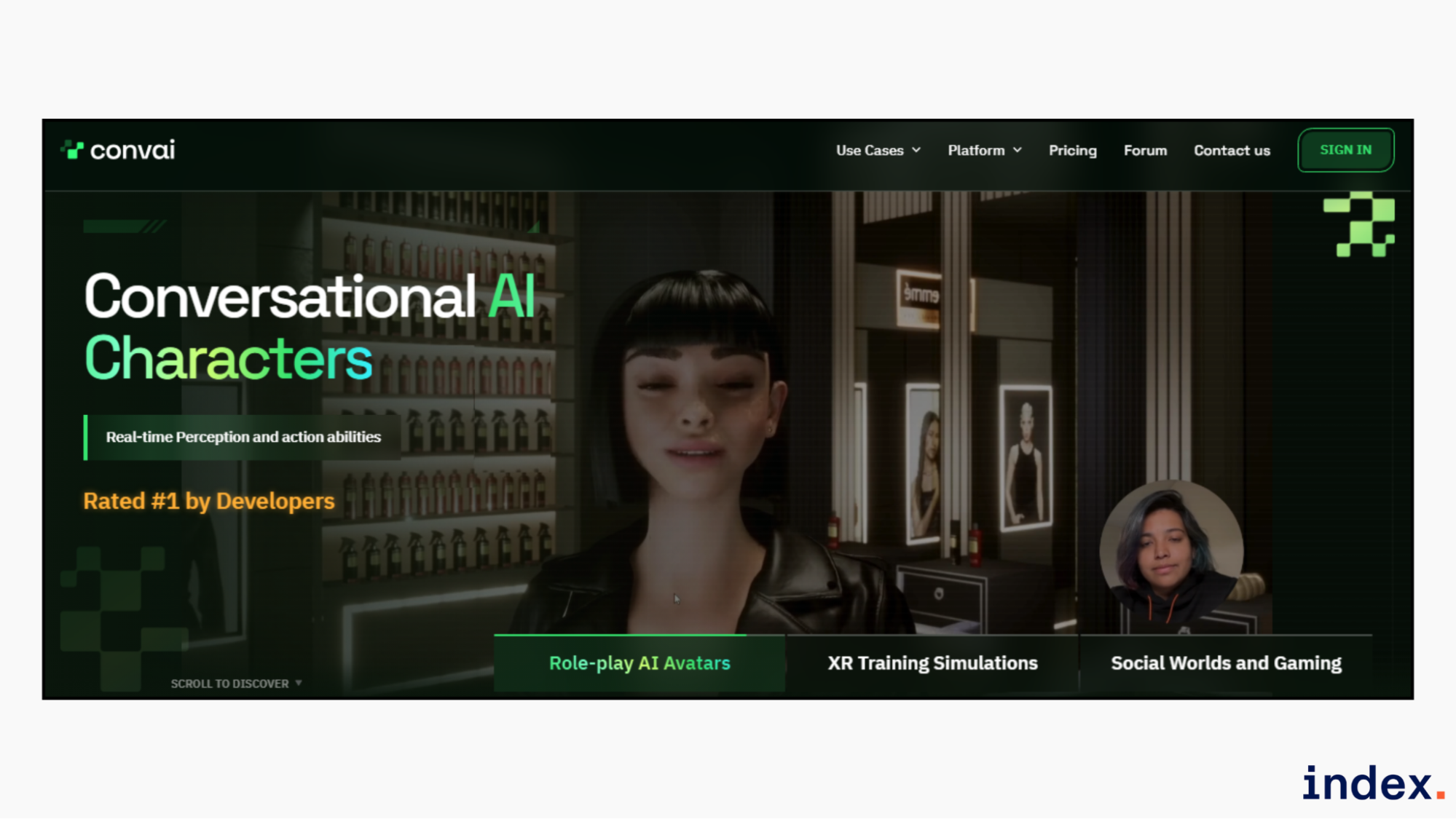
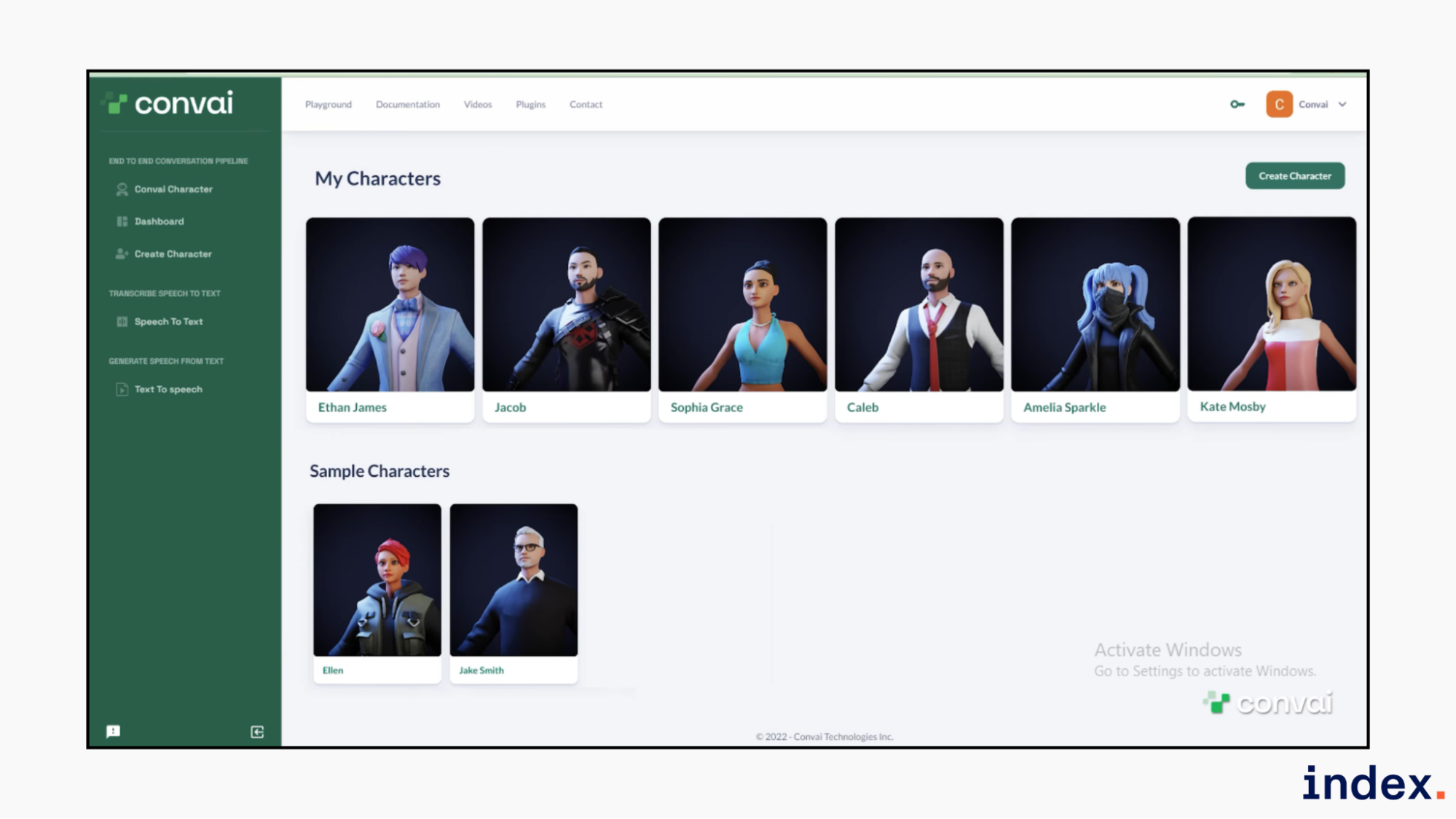
Convai is a platform to build embodied AI characters that can see, hear, speak, and act inside virtual worlds. Game teams use it to create lifelike NPCs for games, social worlds, and XR training.
Characters understand context, follow roles, and perform complex actions using animations.
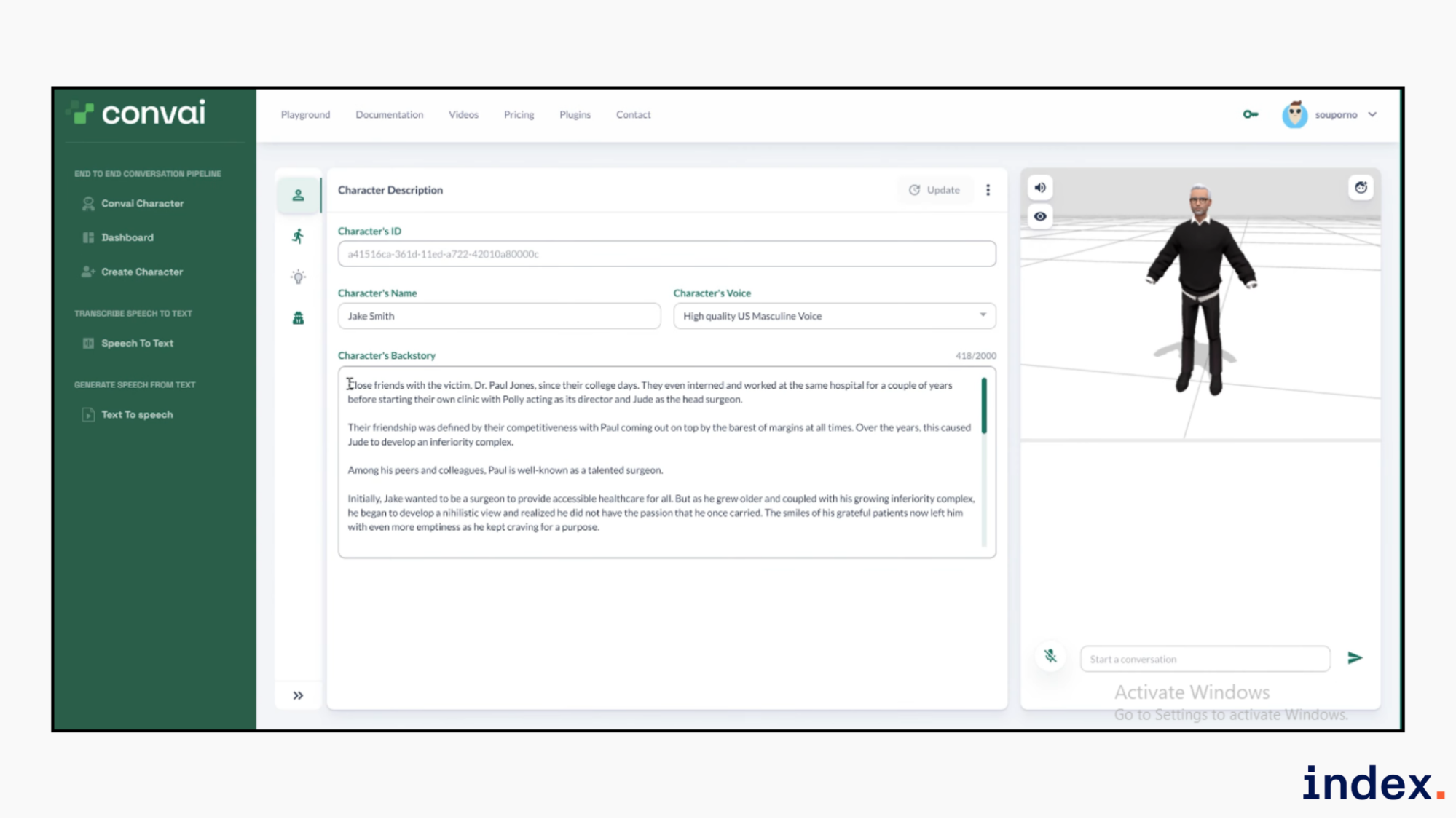
Convai works with Unity, Unreal Engine, web, and XR devices.
Core features:
- Real-time conversational AI for 3D characters
- Multimodal perception with voice and vision
- Role-based and narrative-driven characters
- High-quality lip sync and facial animation
- Complex actions using animation sequences
- Multilingual support with many voices
- Deep integration with Unity, Unreal, and web engines
Why we selected: Convai makes NPCs feel alive. It adds perception and action, not just chat, which improves immersion in real games.
Pricing: Free to get started, with custom pricing for production and enterprise use.
8. Ascendion (AAVA Platform)
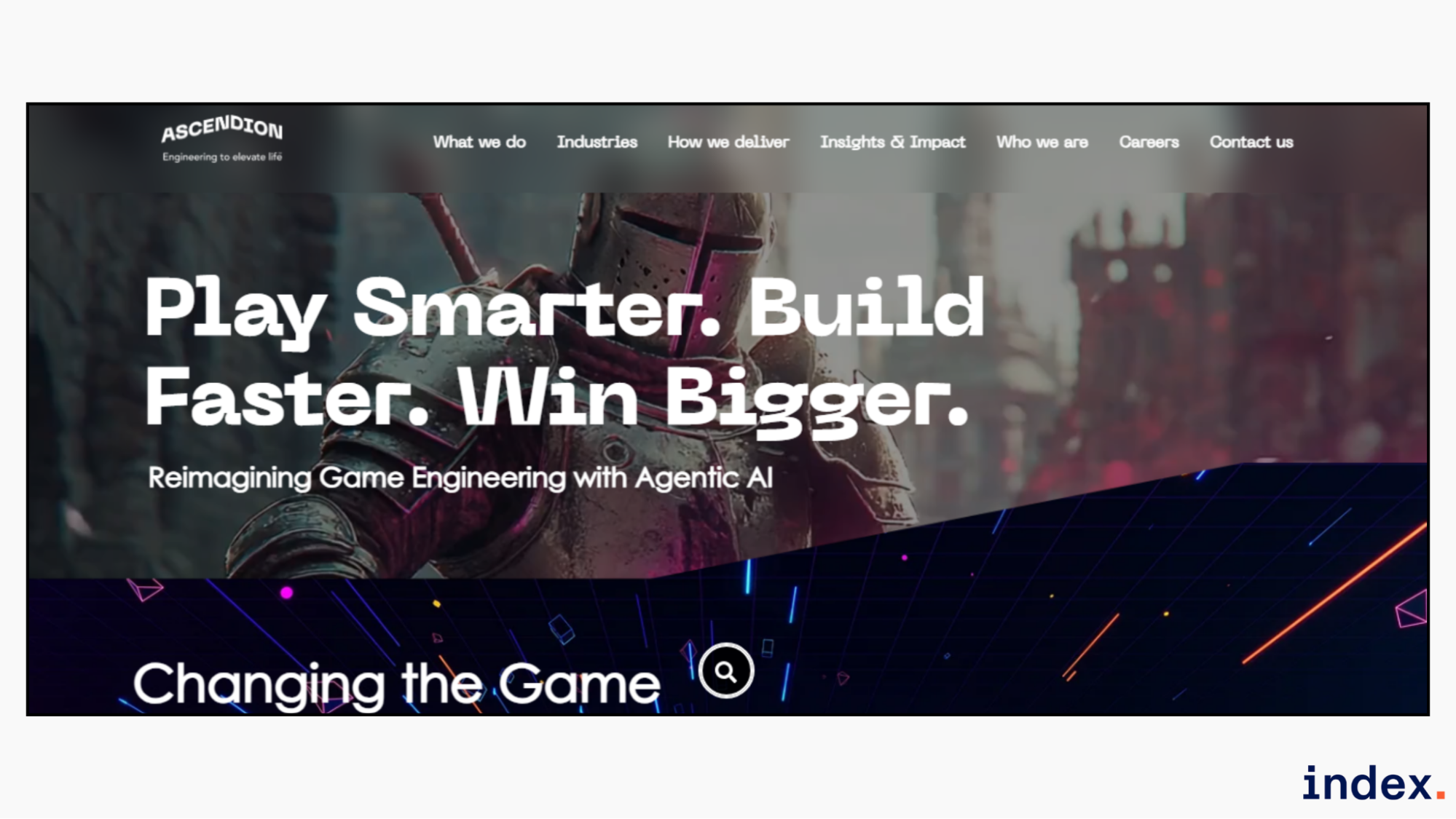
Best for: Agentic AI to automate game development pipelines, QA, and live operations.
Ascendion is an AI-first engineering partner for game studios. Its proprietary platform, AAVA, uses agentic AI to automate testing, content workflows, player analytics, and live service operations. Studios use it to modernize game pipelines, reduce manual effort, and scale faster across platforms. It integrates with Unity, Unreal, cloud platforms, and studio toolchains like Jira and Azure DevOps.
Core features:
- Agentic AI orchestration across the game development lifecycle
- AI-driven QA automation and predictive defect detection
- Procedural content and generative art support
- Player behavior analytics and personalization systems
- Deep integration with Unity, Unreal, and cloud platforms
- Custom AI agents built on studio tech stacks
- Scalable pipelines for live service and always-on games
Why we selected: Ascendion focuses on production-scale AI, not demos. AAVA shows how agentic AI can reduce cost and speed up real game pipelines.
Pricing: Outcome based enterprise pricing tailored to studio goals and scale.
Read next: Check out 7 free AI code editors every developer can use.
Comparison of the Top AI Agents for Game Development
| AI Tool | Best for | Primary AI Role |
| Unity Engine | Full game development across platforms. | Core game engine and production platform |
| Scenario | AI-generated game assets | Asset generation for art, 3D, textures, and video |
| Promethean AI | Large-scale environment design | AI-assisted world-building and scene composition |
| Havok | AAA realism and simulation | Physics, cloth, and NPC navigation systems |
| Charisma.ai | Narrative gameplay | Dialogue, storytelling, and conversational AI |
| Convai | Lifelike NPCs in 3D worlds | Embodied AI characters with perception and actions |
| Ascendion (AAVA) | Studio-scale automation | Agentic AI for pipelines, QA, and live ops |
Final Words
AI agents are changing how games get built, not what games are made. They reduce manual work in art, world-building, NPC logic, testing, and live operations. Each tool in this list serves a different role, so there is no single best choice.
The right stack depends on your genre, budget, and production stage. Used well, AI improves speed, consistency, and scale without removing creative control.
Studios that treat AI as part of their pipeline, not a shortcut, will ship faster, manage live games better, and meet rising player expectations with less production risk.
➡︎ Building games with AI-powered pipelines? Index.dev connects you with game developers experienced in Unity, Unreal Engine, AI integration, procedural content, and pipeline automation. Whether you're shipping mobile games or AAA titles, hire engineers who can implement these AI agents and accelerate your production.
➡︎ Join leading studios. Index.dev features game companies hiring developers skilled in Unity, Unreal, AI NPCs, procedural generation, and automation systems. Work on innovative games, virtual worlds, and XR experiences with cutting-edge AI technology.
➡︎ Want to explore more real-world AI performance insights and tools? Dive into our expert reviews — from Kombai for frontend development and ChatGPT vs Claude comparison, to top Chinese LLMs, vibe coding tools, and AI tools that strengthen developer workflow like deep research, and code documentation. Stay ahead of what’s shaping developer productivity in 2026.