
You know the cliché: "hire slowly, fire quickly." Nobody follows it. Most of you are hiring fast, hoping slowly, and firing in panic.
The platform you choose doesn't fix that. But it does determine how many bad hires you wade through before finding someone decent.
Three platforms dominate right now: Toptal, Proxify, and Upwork. From 10,000 feet, they look the same. But the mechanics are completely different. One won't vet developers at all. Another gate keeps so aggressively only 3% of applicants make it through. The third splits the difference.
Here's what you actually need to know to pick the right one in 2025.
Looking for top developers fast? Index.dev connects you with pre-vetted candidates in 48 hours—no hidden fees, no long waits.
What These Platforms Are
The core difference isn't philosophy—it's operational model. Here's what each platform actually does:
Upwork = Marketplace
You post a job. 200 people apply. 190 are lying. The platform takes a cut. That's it. They don't vet. They don't care. You're the QA department.
Toptal = Quality Gatekeeper
Their entire brand is "top 3%." They make this real by running developers through five rounds of hell. Live coding. Real projects. Panel interviews. It takes forever. You pay for that scarcity.
Proxify = The Pragmatist's Compromise
They vet hard (2-3% acceptance). They move fast (2 weeks). Rates don't require a Series B. Developers are good, not unicorns. You get working developers, not influencers.
If you're spending your entire hiring budget just to find out someone lied about React experience, you're on Upwork.
If you're OK eating 8 weeks of calendar and $500+ upfront because the hire absolutely cannot fail, you're on Toptal.
If you want developers ready to work in a month without selling a company, Proxify's where you land.
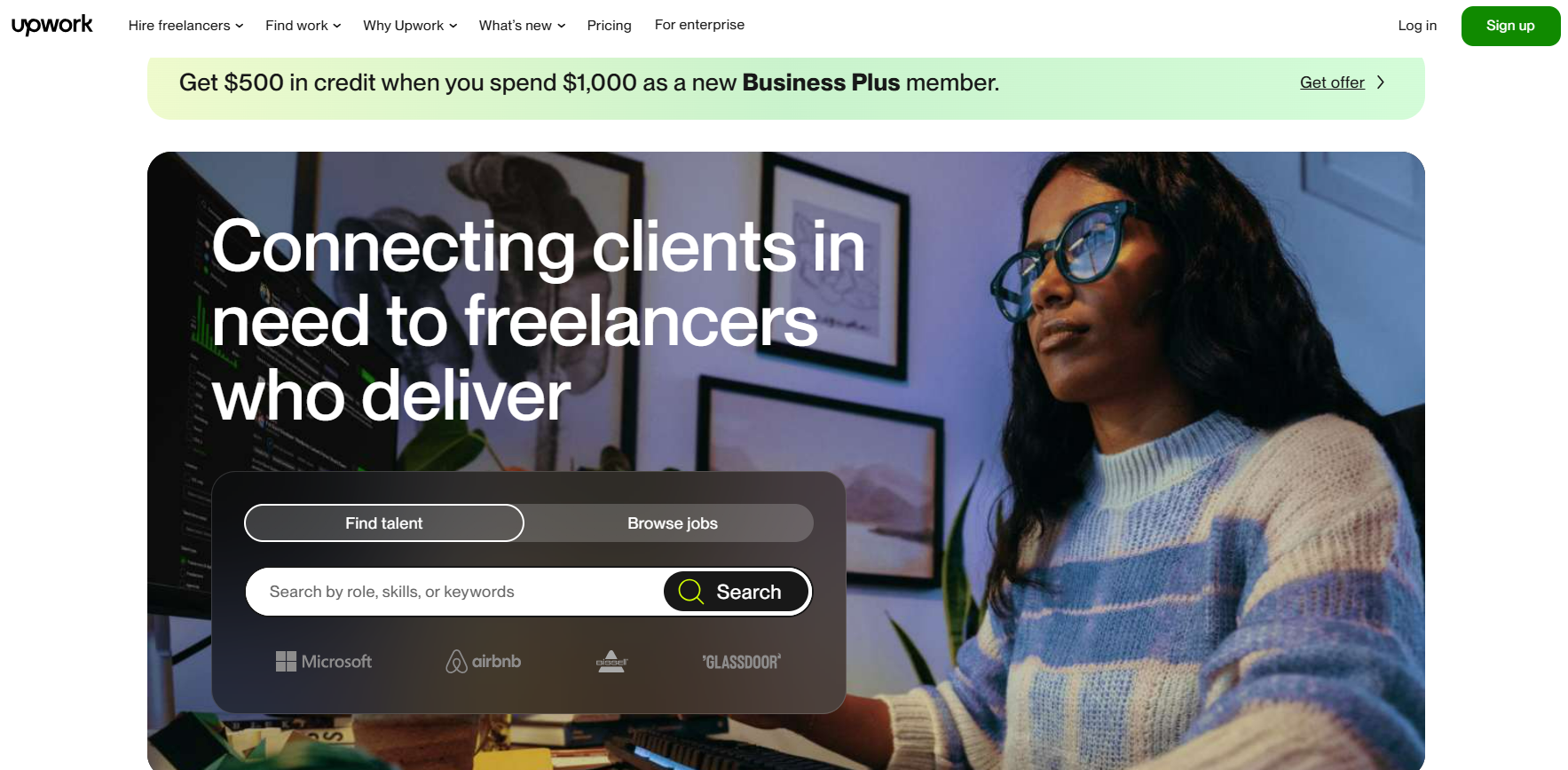
1. Upwork: The Marketplace Model

Let's be blunt: Upwork hosts 12 million freelancers. That's not a selling point—it's a credibility tax.
No technical screening. Just a profile, portfolio, and whatever testimonials someone scrounged up. You're responsible for distinguishing signal from noise.
You do the vetting. Personally. By reading cover letters and praying.
The cost math:
- Developer: $20-$100+/hour
- Platform fees: 5-20% + per-hire charges
- Your time screening: Steep
- Your time replacing bad hires: Steeper
Clients on Upwork spend roughly $5,000 per project on average. Most are startups or small teams with defined tasks—UI polish, bug fixes, temporary workload spikes.
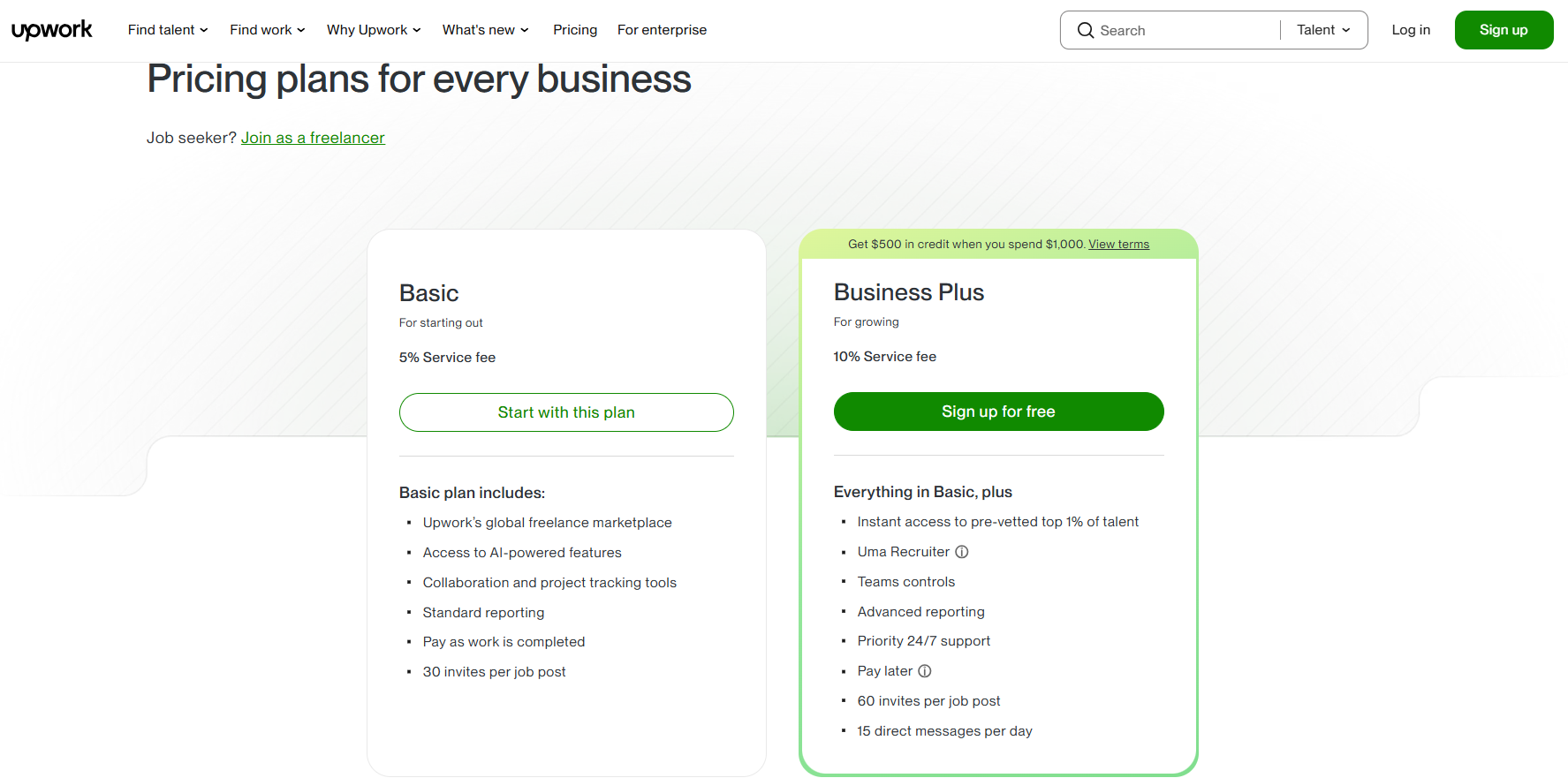
The platform makes money from service fees: 20% for projects under $500, 10% for projects between $500-$10,000, and 5% for anything over $10,000. But it’s this exact variable service fee structure that makes budgeting weird.
You can't predict the true cost. The platform keeps that murky on purpose.
Real talk: If you're auditing three developers to find one decent one, your effective cost per hire balloons fast.
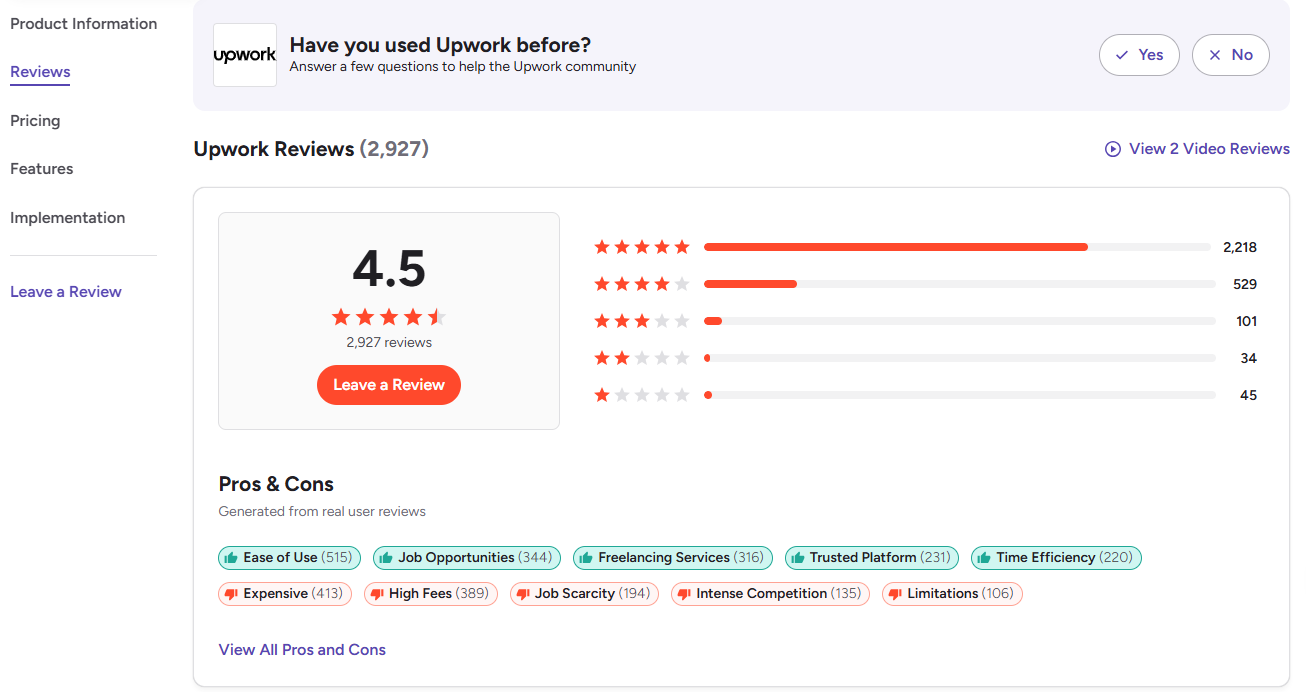
Upwork has a 4.5 star rating on G2, but scroll the reviews and you'll see the same complaint repeated: support goes quiet when things break.
When to use Upwork
You need a one-off task (WordPress tweaks, design refinements, email cleanup). Scope is tight. The timeline is short. You can screen candidates yourself or have a technical co-founder. You're OK with turnover.
Example: Your startup needs a landing page built. Post Friday. Get three proposals Saturday. Hire Monday. Live Tuesday. Cost: $300-800. Vetting effort: Your lunch break.
See which freelance platforms connect you with qualified software developers and cut through the noise of endless applications.
2. Toptal: The "We Gatekeep Talent" Playbook

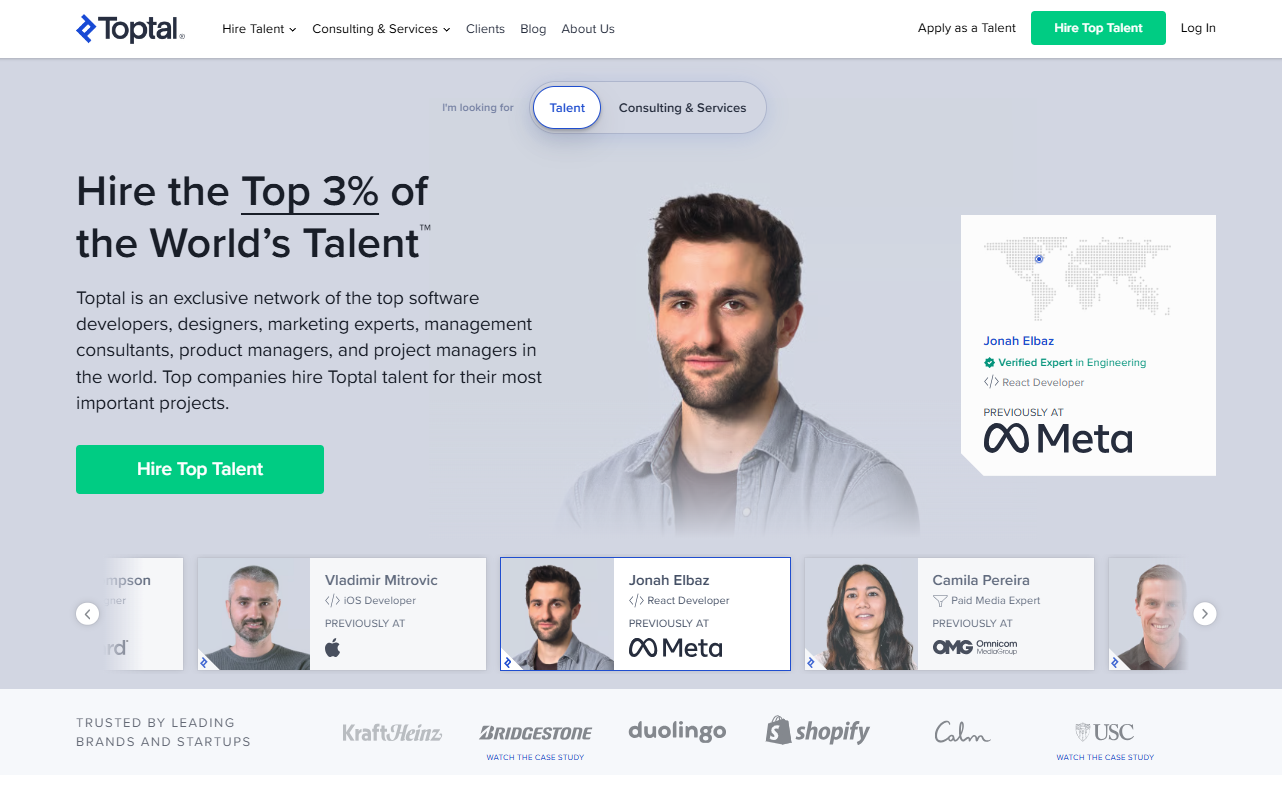
Toptal brags about accepting only the top 3% of applicants. They're not exaggerating. Their screening process is genuinely brutal.
How brutal?
- Stage one: Language and personality assessment. 26.4% of candidates pass.
- Stage two: In-depth technical evaluation with coding challenges. 7.4% advance.
- Stage three: Live interviews with expert screeners. 3.6% pass.
- Stage four: Real-world test projects over 1-3 weeks. 3.2% get through.
By the end, you're looking at roughly 0.003% of initial applicants actually joining the platform.
This is risk elimination. Toptal developers charge $100-$200+ per hour. They also charge a $79 monthly subscription just to browse talent plus $500 upfront applied to your first hire.
You're not paying for developers. You're paying for a vetting system.
The timeline: 4-8 weeks. Not because they're slow. Because they're thorough.
When to use Toptal
Your project is complex, mission-critical, or infrastructure-heavy. You can't afford to hire wrong. You have a budget and patience. You're building a core product, not shipping a feature.
Example: A fintech company rebuilding their payment processing system. Can't risk a hire who doesn't understand distributed systems. Post via Toptal. Wait 6 weeks. Get someone who passed five rounds. Cost: $100-150/hour for 12 weeks = ~$18,000+. Vetting effort: Toptal's problem, not yours.
The catch? Reddit is full of developers frustrated with Toptal's quality-to-price ratio.
You're locked into their process and pricing structure. One developer with 5 years on the platform: "Most jobs cap out at $70/hour. On Upwork I get $150+." It's not that Toptal developers are worse. It's that Toptal doesn't always match supply to demand.
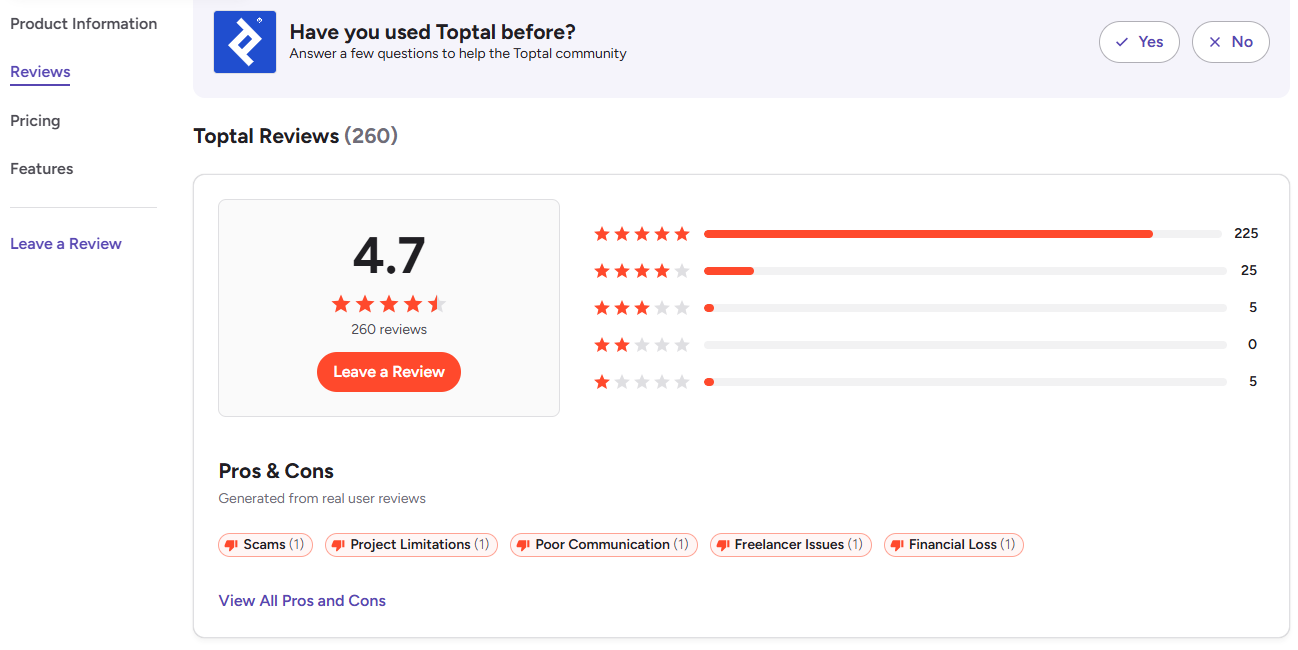
Toptal has 4.7 stars on G2 and Trustpilot, though users note that transparency around pricing could improve.
Looking for Toptal alternatives? Explore 10 platforms that could save you time, money, and hiring headaches.
3. Proxify: The "Vetted But Fast" Middle Ground

Proxify sits between the other two. They accept approximately 2-3% of monthly applicants. Each month, 20,000+ developers apply. 400-600 make it through.
Not as brutal as Toptal. But still rigorous.
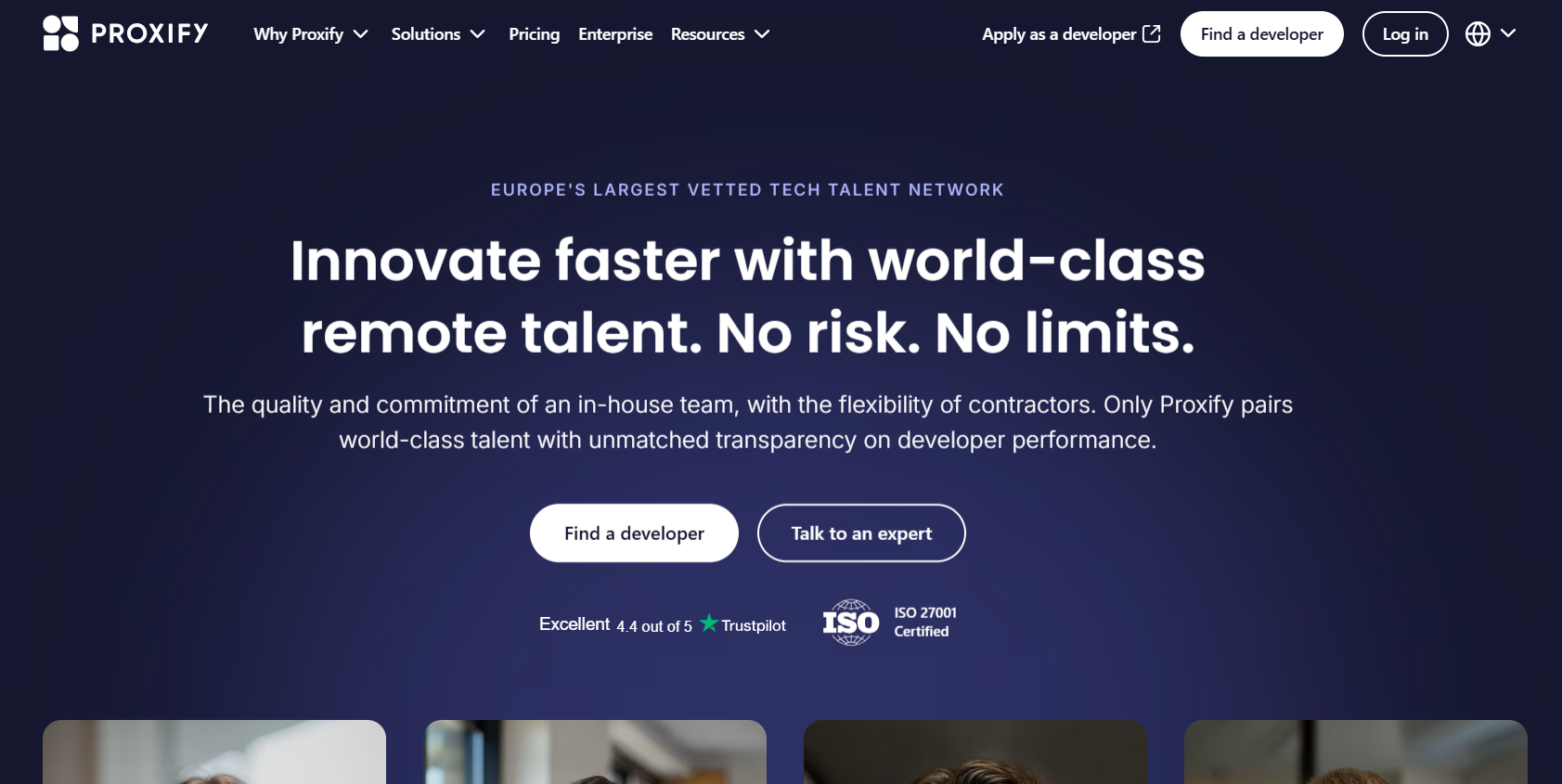
Their process: application screening, intro interviews, Codility tests, live coding interviews, final review.
It's compressed into 2-3 weeks instead of Toptal's month-long gauntlet.
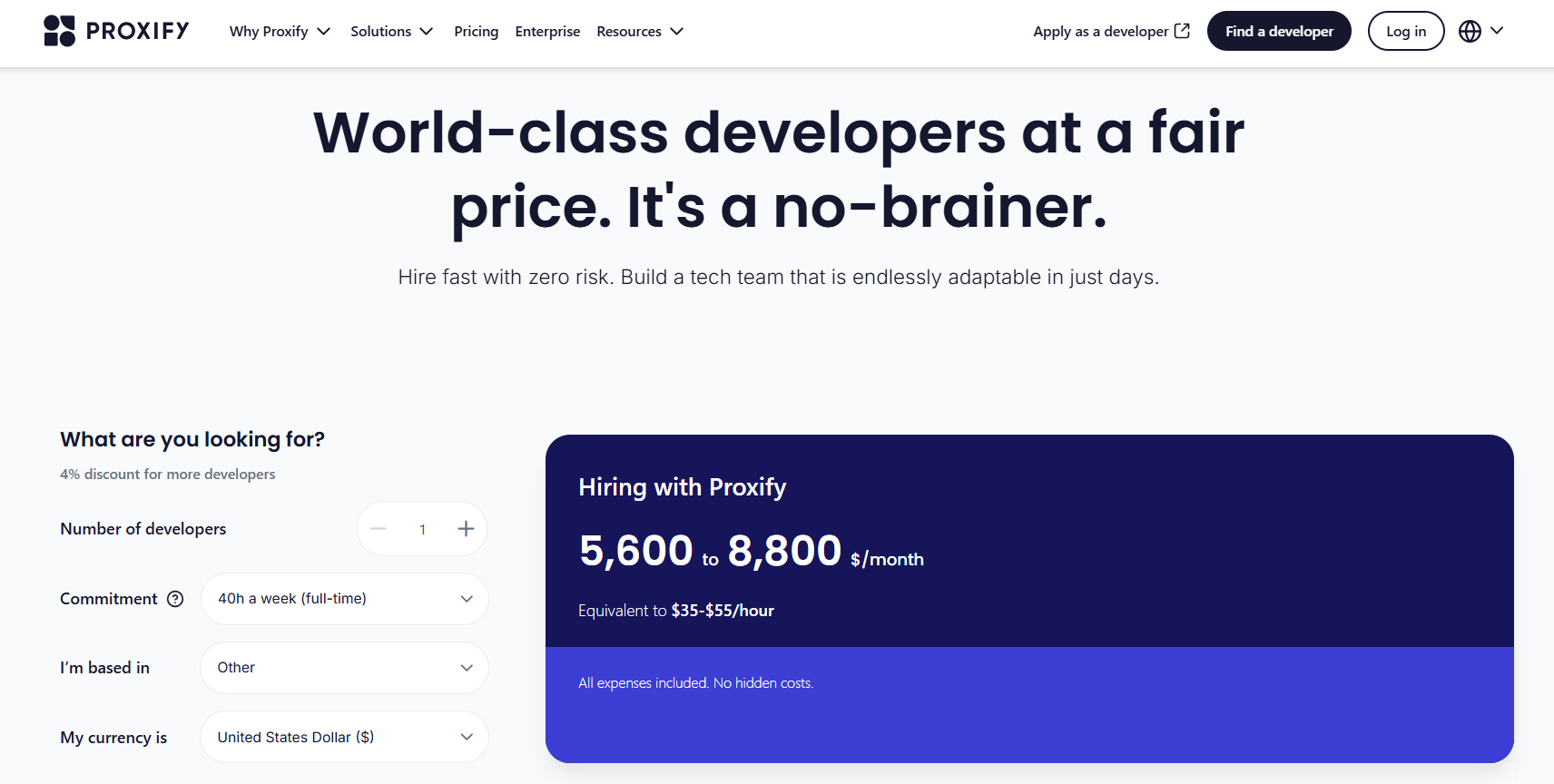
Pricing is fixed: $5,600-$8,800 monthly for full-time (40 hrs/week), or $35-$55/hour.
No hidden fees. No subscription charges. No $500 deposits. Just transparent rates.
Developers come from Latin America, Eastern Europe, Asia—places with solid technical education, English proficiency, and lower US cost bases.
The math:
- Developer: $35-$55/hour
- Platform fees: $0 (included)
- Timeline: 2 weeks to candidates, 2 weeks to onboarded
- Your vetting effort: 1 interview per candidate
They present hand-picked candidates in 2 days average.
You interview. They handle contracts, compliance, payroll.
Developers are sourced from Latin America, Eastern Europe, and Asia—regions with strong technical education and English proficiency but lower cost bases than the US.
When to use Proxify
You need vetted developers but don't have 8 weeks. Budget won't support $150/hour. You're hiring for 2-3 month engagements or building a small team. You want the quality of Toptal without the wait or price.
Example: An e-commerce startup scaling React for Q4. Need two developers. Can't wait 8 weeks. The budget won't handle $150/hour × 12 weeks × 2 people. Proxify: 2-week timeline, $45-55/hour, pre-vetted. Start month one instead of month two.
The trade-off? You're onboarding developers you didn't personally interview. That takes trust. Most teams adapt in week two. Some never do.
Next up: Discover the top tools that help early-stage startups find skilled AI developers fast.
The Real Cost Comparison
Nobody talks about total cost of ownership. They talk about hourly rates.
The math is murkier once you factor in everything:
| Factor | Upwork | Toptal | Proxify |
| Vetting Rate | None | Top 3% | Top 2-3% |
| Developer Cost | $20-$100+/hr | $100-$200+/hr | $35-$55/hr |
| Platform Fees | 5-20% service fee + $14.99/contract | $79/month subscription + $500 deposit | Included (no hidden fees) |
| Vetting Burden | You do all screening | Platform screens, you interview for fit | Platform handles 95% of vetting |
| Guarantee | 7-day refund (hourly) | 3-dev trial, refund if all fail | 7-day satisfaction guarantee |
| Hourly Cost | $20-$100+ | $100-$200+ | $35-$55 |
| Time to Hire | 3-5 days | 3-8 weeks | ~2 weeks, developers presented in 2 days |
Upwork's low rates seem attractive until you factor in cost per hire. If you're auditing three developers to find one good one, your effective rate for the hire you actually use balloons. Plus, Upwork's variable service fees starting May 1, 2025 now range from 0-15% depending on client demand for specific work types—less predictable than the old fixed structure.
Toptal's premium pricing reflects labor. You're not paying for developers; you're paying for their screening system to eliminate risk.
Proxify hits a sweet spot: rigorous vetting (2-3% acceptance rate) with pricing that reflects global talent rather than US markets. The 2-week timeline is aggressive but real—they quote developers in 2 days average.
Trial Periods and Guarantees
All three platforms offer some form of protection. The terms matter more than you'd think.
Upwork allows you to not pay if you're unsatisfied in the first 7 days (on time-tracked hourly work). Escrow holds funds until you approve deliverables. It's transactional protection, not quality assurance.
Toptal offers a "no-risk trial period": you can try up to three different developers if the first doesn't work out. If all three fail, you get a refund on that $500 deposit. The catch? You're cycling through candidates across multiple weeks, compressing an already long hiring window.
Proxify offers a 7-day satisfaction guarantee. If the developer isn't the right fit within that week, they'll present another option. The difference is speed. Proxify can surface a replacement faster than Toptal because their bench is smaller but constantly refreshed.
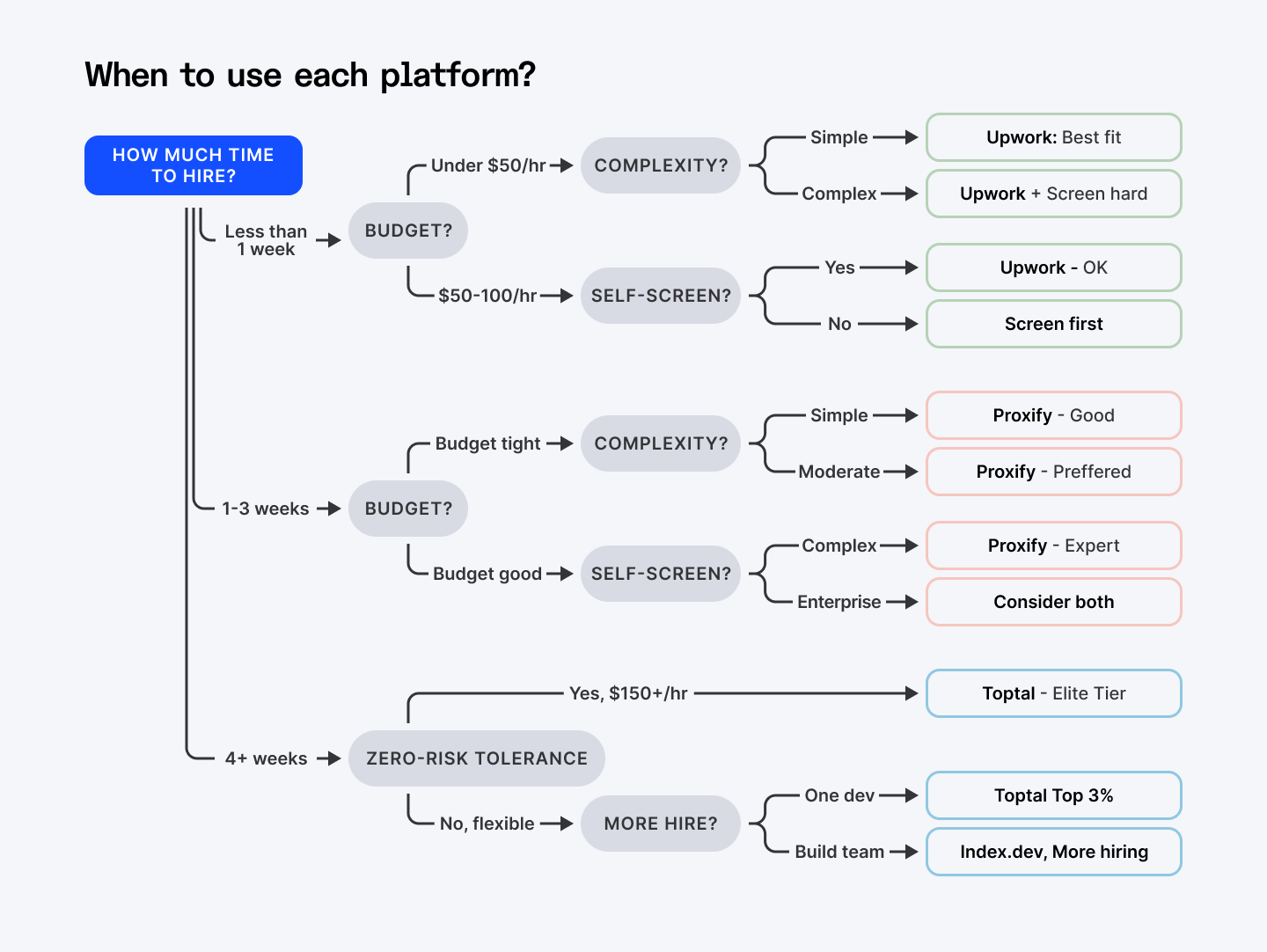
When to Use Each Platform
Choose based on project type, not just budget.
The AI/LLM Elephant in the Room
Developer hiring changed in 2024-2025. AI tooling broke everyone's screening assumptions. All three platforms are quietly struggling with this.
A developer who couldn't solve algorithms in 2020 might be a machine with Claude in 2025. Someone who aced live coding might be helpless without AI.
Toptal's five-stage process was built for a pre-AI world. They're quietly struggling with this.
Proxify's real-world Codility tests map better to how actual development works now. They're not perfect, but practical.
Upwork? You're on your own. Their hands-off approach means you have to evaluate for AI literacy yourself.
For 2025 hires, look for developers who can articulate their AI workflow: what they offload to models, what they handwrite, how they validate AI code. That matters more than raw algorithm performance.
Hidden Fees Nobody Mentions
Upwork's per-hire fee ($14.99) compounds fast. Testing three developers = $45 before anyone works. Then the variable fees (0-15%) kick in. You don't know your real cost until the invoice arrives.
Toptal's $500 deposit isn't refunded if you hire. It's applied to your first invoice. Sounds fine until you're holding capital for 8 weeks and the hire doesn't work out. You get the deposit back, but you've lost two months of cash flow.
Proxify has no hidden fees. The cost of entry is psychological: onboarding developers you didn't personally screen takes trust. Most teams get over it. Some resent it forever.
2025 Market Dynamics
The freelance platform market grew 15% in 2024 and is expected to continue at that pace through 2030.
Remote work adoption hit a plateau in 2024-2025: roughly 25-30% of software engineering roles are fully remote now, with another 28% hybrid. This is actually down from pandemic peaks, but still dramatically above pre-2020 levels.
Platform consolidation is real. Developers go where clients are. Clients go where talent is. That creates a winner-take-most game.
Toptal wins on brand trust with enterprise. Proxify wins on speed and transparency. Upwork wins on market saturation and zero friction.
For your team in 2025, the question is simple: Do you need guaranteed quality (Toptal), balanced speed + quality (Proxify), or maximum optionality at the cost of your time (Upwork)?
What Index.dev Does Differently

If you're evaluating alternatives, Index.dev operates on a curation-plus-AI model. Like Toptal, we screen aggressively (top 5% of applicants). Like Proxify, we offer transparent fixed pricing and fast matching. We use AI to surface candidates, but humans to verify fit.
The process:
- 1 minute to post a job.
- 48 hours to get 3 hand-picked, interview-ready candidates.
- 2-3 days to hire and onboard.
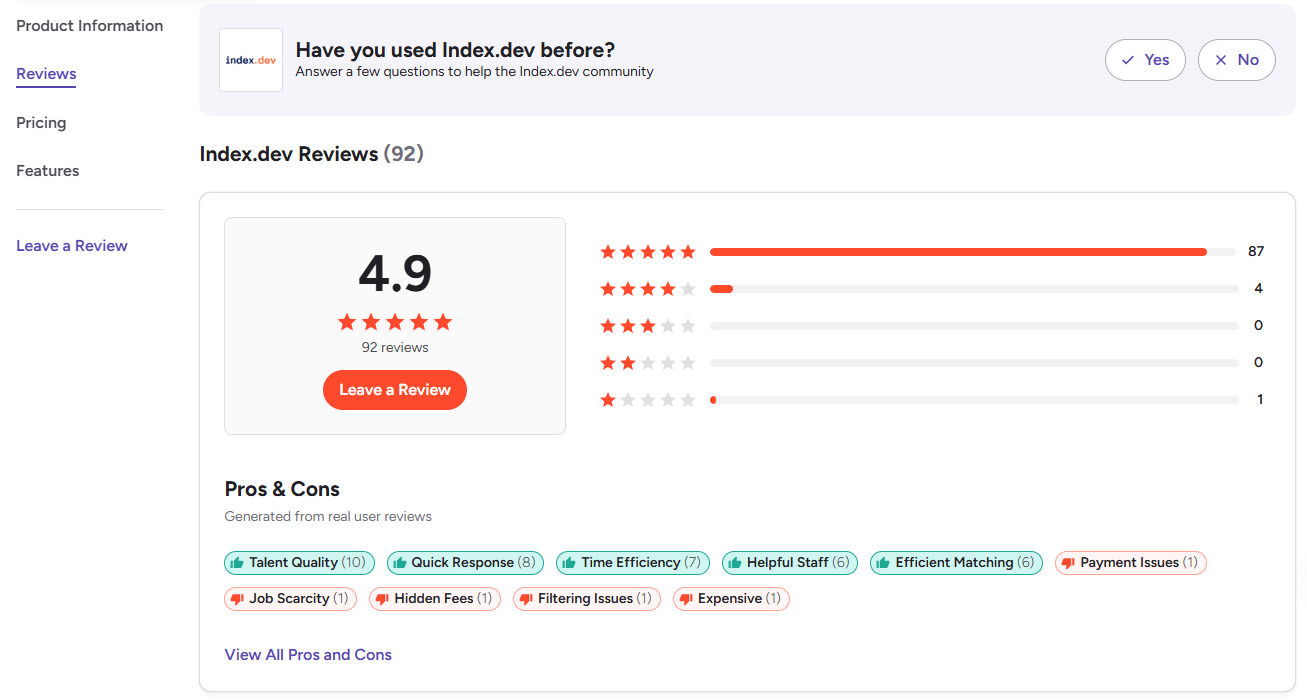
Our G2 rating is 4.9/5, with particularly strong feedback from US-based companies valuing compliance and quality assurance.
The Bottom Line
Upwork works if you're good at screening.
Toptal works if you have a budget and can wait.
Proxify works if you want vetted talent without the Toptal tax.
None of these platforms magically solve hiring. They just shift the burden. Upwork puts it on you. Toptal handles it (and charges). Proxify shares it—they screen hard, you make the final call fast.
For most startups and scaling teams in 2025, Proxify or a vetted alternative makes sense. The 2-3% acceptance rate gives confidence. Fixed pricing prevents surprises. Real-world vetting reflects how developers actually ship code with AI.
The real question isn't which platform is "best." It's which one matches your timeline, budget, and risk tolerance.
Pick that. Then move.
➡︎ Compare platforms or skip the hassle. Hire skilled developers through Index.dev and get them working in days, not weeks.
➡︎ Want to dive deeper into developer hiring and talent strategies? Explore our guides on how to effectively vet software developers to avoid costly mis-hires, proven strategies to retain your best tech talent, the top platforms to hire backend developers in the USA, our comprehensive developer onboarding process, and 5 common reasons developers fail job vetting.


