Leading engineering teams is about making decisions that compound, building systems that scale, and creating environments where talented people do their best work.
Your board wants transformation. Your team wants clarity. Your customers want products that actually work. And you're standing in the middle, making decisions that will determine whether your organization accelerates or stalls.
I've pulled together 15 books that actually matter for engineering managers, CTOs, and heads of engineering. They're practical guides organized into five categories that cover the full scope of technical leadership: how you lead yourself and others, how you build and manage teams, how you think strategically about technology and innovation, how you integrate AI responsibly and effectively, and how you design processes that don’t slow everyone down.
Let's get into it.
Join Index.dev to work remotely with top companies that value strong engineering leadership, smart processes, and real impact.
Essential Reads on Leadership
1. Peter Drucker, The Effective Executive: The Definitive Guide to Getting the Right Things Done
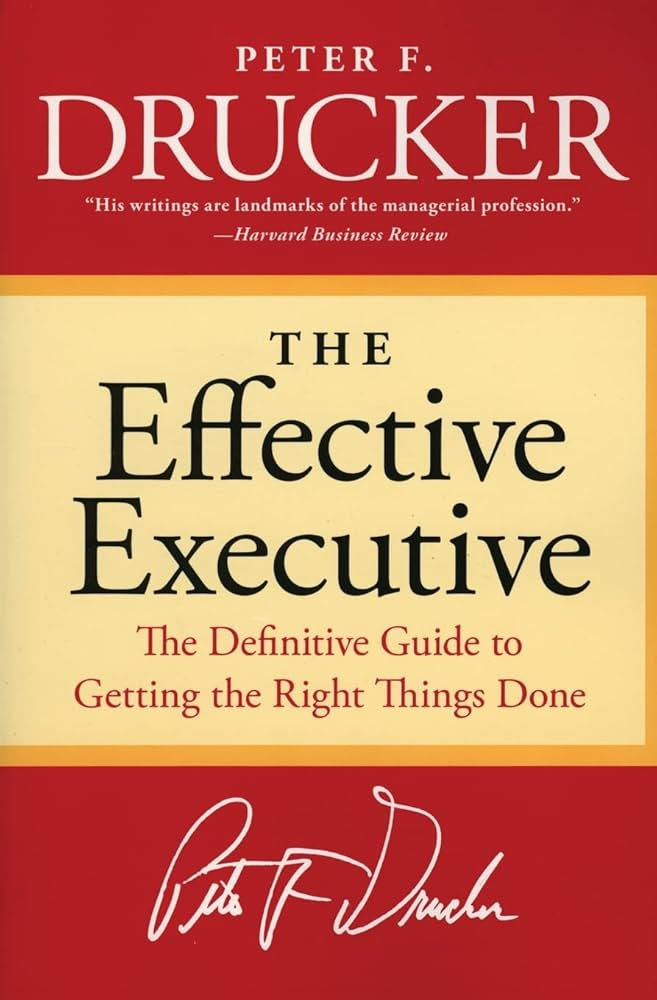
If there is one uncomfortable truth engineering leaders eventually face, it is this: being smart is not the job. Being effective is.
Peter Drucker wrote The Effective Executive long before cloud, DevOps, or AI entered the conversation, yet it remains painfully relevant for CTOs, Heads of Engineering, and engineering managers today. Drucker was not interested in vision decks. He cared about output. Results. Impact. What moves an organization forward.
Drucker’s core idea is simple and ruthless:
The executive is measured by their ability to get the right things done. Not more things. Not harder things. The right things.
For engineering leaders drowning in meetings, Slack threads, roadmap churn, and urgent but low-value decisions, this book reads like a direct intervention.
Rather than focusing on talent or intelligence, Drucker zooms in on habits. Effectiveness, he argues, is learned. And that is good news. The book breaks effectiveness down into five practices that every leader must deliberately build.
- First, managing time. Drucker treats time as the scarcest resource, not headcount or budget. He forces you to confront how much of your calendar is consumed by noise, status updates, and reactive work. If your time is fragmented, your team’s priorities will be too.
- Second, focusing on contribution. The author pushes leaders to ask a question that most never slow down to answer: what contribution is expected of me that would materially change outcomes? This reframes leadership away from activity and toward leverage.
- Third, leveraging strengths. Build on strengths, yours and your team’s, instead of trying to fix every weakness. High-performing teams are not balanced by force. They are designed intentionally around complementary strengths.
- Fourth, ruthless prioritization. Drucker does not believe in multitasking at the leadership level. He believes in doing one important thing at a time. This idea challenges engineering leaders who try to run multiple transformations in parallel: new architectures, new processes, new tools, new org structures.
- Finally, decision-making. Treat decisions as commitments, not opinions. Druckner emphasizes clarity, accountability, and follow-through.
For IT leaders, The Effective Executive works as a mirror. It exposes where your time leaks, where your focus drifts, and where you confuse effort with impact.
2. Hank Rainwater, Herding Cats: A Primer for Programmers Who Lead Programmers
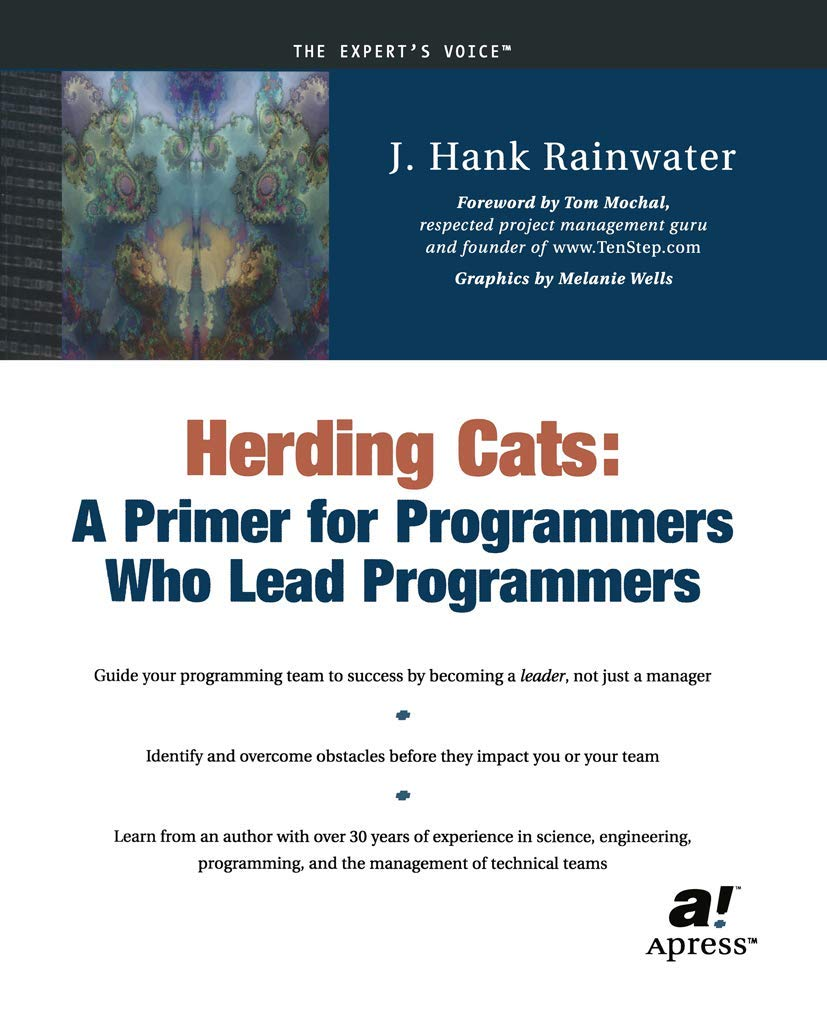
Herding Cats is written for people who suddenly find themselves leading programmers and realize very quickly that traditional management advice does not work here. Rainwater understands the mindset of engineers because he has lived it. The book reads like a field manual passed down quietly from someone who has made every mistake already.
At its core, the book is about respect. Respect for how programmers think, how they work, and why they resist poorly designed processes.
Rainwater breaks down common programmer personality types, not to stereotype, but to help leaders place people where they can actually do their best work. This is especially relevant for engineering managers who struggle with mismatched roles, underutilized talent, or quiet burnout.
One of the book’s strengths is its practicality. Rainwater goes deep into the unexciting parts of the job:
- Running meetings that do not waste cognitive energy
- Hiring people who will raise the bar instead of slow the team down
- Addressing performance issues before they rot the culture.
He is honest about firing, misalignment, and the cost of avoiding hard conversations.
The book also draws a clear line between leadership and micromanagement. Rainwater argues that programmers do not need constant oversight. They need clarity, trust, and technical credibility. He emphasizes the importance of technical leadership through architecture, design decisions, and code reviews, not as control mechanisms, but as shared standards that keep teams aligned.
A valuable part of the book is its focus on the manager’s relationship with their own boss. Engineering leaders often get crushed between delivery pressure from above and execution reality on the ground. Rainwater offers grounded advice on how to communicate constraints, negotiate deadlines, and protect the team without losing credibility.
The underlying lesson holds up:
Managing engineers is less about authority and more about environment. Your job is to remove friction, create clarity, and let smart people do meaningful work.
3. Gallup, Strengths Based Leadership: Great Leaders, Teams, and Why People Follow
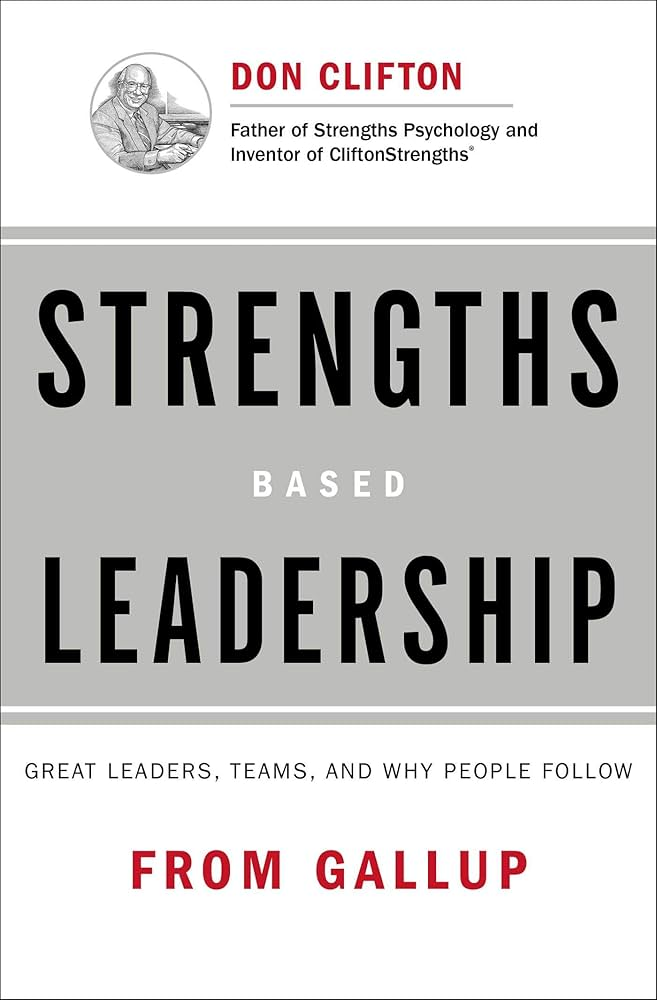
Most engineering leaders are trained to spot gaps. Weak code. Weak process. Weak performance. Gallup asks you to flip that. What if your job is not to fix people, but to position them?
Strengths Based Leadership, written by Tom Rath and Barry Conchie and backed by decades of Gallup research, is built on a simple idea:
Teams perform best when leaders invest in strengths, not when they obsess over weaknesses.
For IT leaders raised on optimization and problem-solving, this reframing can be transformative.
This book is grounded in data from more than a million teams, tens of thousands of leaders, and thousands of followers asked a blunt question: why do you follow this person? Gallup identifies three responsibilities that consistently define effective leaders.
- First, they know their own strengths and actively invest in the strengths of others. Self-awareness here is not a soft skill. It is a leadership multiplier.
- Second, they build teams with complementary strengths. This matters deeply in engineering organizations where diversity of thinking drives better architecture, better trade-offs, and more resilient systems.
- Third, strong leaders meet four basic needs of their followers: trust, stability, compassion, and hope. In technical environments, these needs often go unnamed but unmet needs show up fast as disengagement, attrition, or quiet resistance to change.
What makes this book especially useful for engineering managers and CTOs is that it helps leaders move from vague ideas about culture to concrete decisions about hiring, role design, feedback, and growth paths. It also gives language to something many tech leaders feel but struggle to articulate: that alignment beats control.
Essential Reads on Team Management
4. Claire Hughes Johnson, Scaling People: Tactics for Management and Company Building
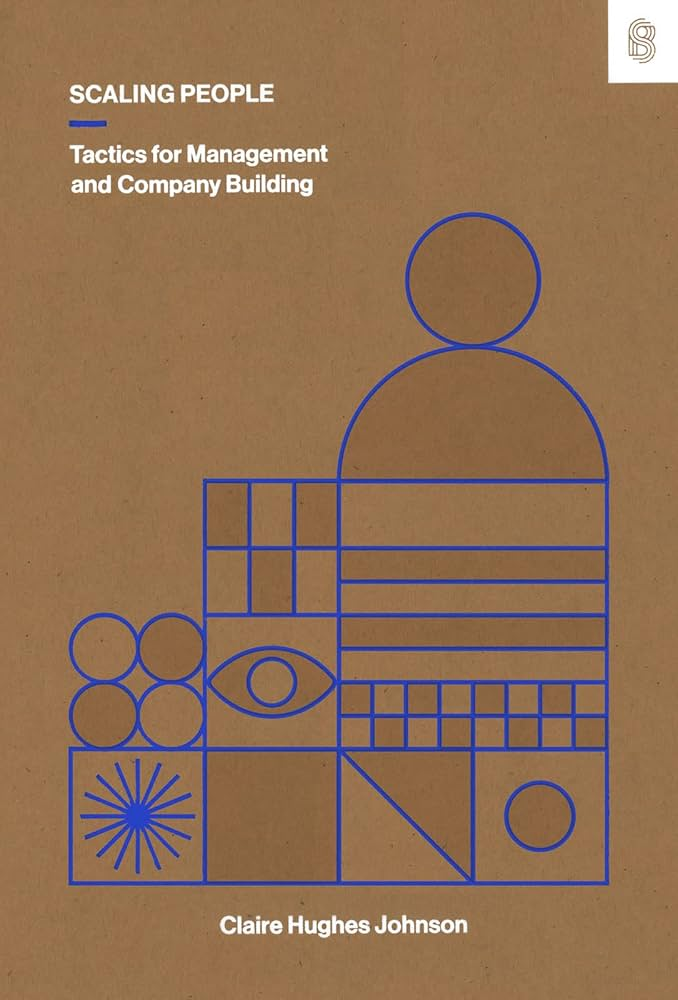
Most engineering teams do not fail because of bad code. They fail because the systems around the people never evolved.
Claire Hughes Johnson knows this firsthand. She helped scale Google and later Stripe during periods when growth was fast, messy, and unforgiving. In Scaling People, she focuses on the questions leaders quietly struggle with as teams grow:
How do you add structure without killing speed, introduce process without suffocating autonomy, and lead consistently when the company no longer fits in one room?
This is a working manual for building people systems that hold under pressure. Johnson treats management as an operating system, not a personality trait. The book walks through the fundamentals leaders often postpone until it is too late: clear role definitions, decision ownership, hiring standards, performance expectations, and feedback loops that actually close. She shows you how to write strategy documents at different altitudes: the three year vision, the annual plan, the quarterly objectives, the weekly priorities. For engineering organizations, where ambiguity compounds quickly, these foundations prevent burnout, misalignment, and silent failure.
One of the book’s strengths is its empathy. Johnson acknowledges that scaling people is emotionally hard. Leaders must make decisions that affect careers, growth, and morale while still shipping product. She does not pretend there is a shortcut. Instead, she offers frameworks and templates that make consistency possible, even when leadership bandwidth is stretched thin.
This book works because Johnson has lived through the specific problems engineering orgs face during hypergrowth. She knows what it's like when your architecture can scale but your decision-making processes can't. She's giving you the playbook to scale both.
5. Camille Fournier, The Manager’s Path: A Guide for Tech Leaders Navigating Growth and Change
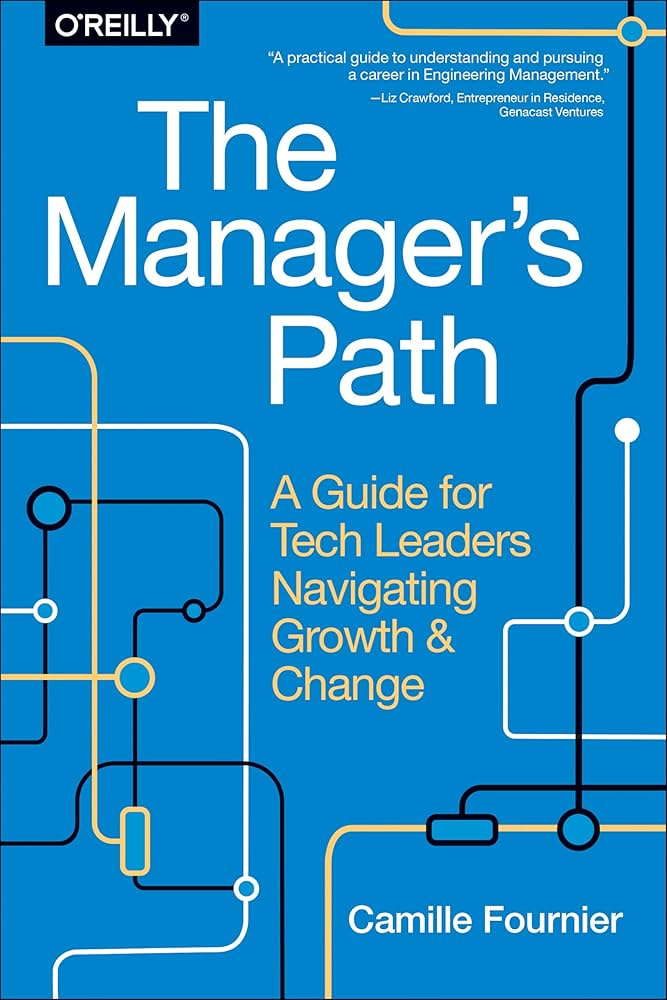
Camille Fournier went from engineer to CTO at Rent the Runway, which means she lived through every awkward transition technical leaders face. This book is her way of giving you the map she wishes she'd had.
Most engineers become managers by accident. You're good at your job, so someone promotes you. Suddenly you're responsible for other people's careers, performance reviews, and happiness, and nobody taught you how. Fournier gets it. She was you.
The Manager's Path treats leadership as a skill tree. You don't go from engineer to manager overnight. There are stages: mentor, tech lead, engineering manager, manager of managers, senior leader. Each stage requires different skills, and Fournier walks through all of them with brutal honesty about what happens at each level.
For new engineering managers, the early chapters are gold. Fournier explains how to run effective 1:1s, how to give feedback that people can act on, and how to delegate without either micromanaging or abandoning people. She talks about the identity crisis that hits when you realize you're not going to be the one writing the critical code anymore.
The middle section covers managing teams: how to balance technical involvement with letting your team own decisions, how to shield your team from organizational chaos while keeping them informed, how to handle the person who's brilliant but toxic. She gives you frameworks to think through the tradeoffs.
What separates this book from generic management advice is Fournier's technical credibility. She understands that engineering managers still need to be technical. You can't review architecture if you don't understand distributed systems. You can't push back on unrealistic timelines if you don't know what's actually complex. She shows you how to stay technical enough to be effective without becoming the bottleneck who has to approve everything.
The later chapters on managing managers and building culture are essential as you scale. Fournier explains how your job changes when you're no longer close to the code or even close to the people writing it. You're setting direction, building systems, and shaping the environment where others lead. It's a completely different game.
6. Michael D. Watkins, The First 90 Days: Proven Strategies for Getting Up to Speed Faster and Smarter
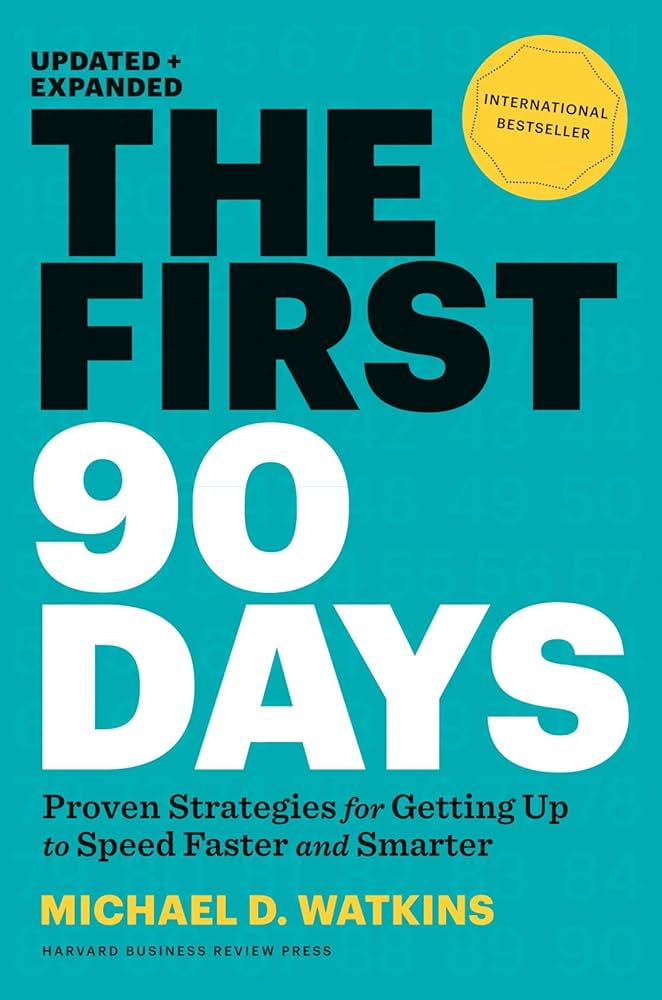
Michael Watkins is a professor at IMD Business School who's spent decades studying why leaders fail during transitions. His research is clear:
Most leadership failures happen in the first few months, not because people lack talent, but because they misread the situation and make avoidable mistakes.
This book is about not screwing up when the stakes are highest. Whether you're stepping into your first engineering management role, taking over a troubled team, or joining a new company as a senior leader, the first 90 days determine whether you succeed or flame out. Watkins gives you a framework for diagnosing what kind of situation you're walking into and adjusting your approach accordingly.
For engineering leaders, this is critical. If you inherit a team with technical debt, cultural issues, and delivery problems, you can't fix everything at once. Watkins walks you through how to prioritize: secure early wins that demonstrate you understand the real challenges, build coalitions with people who have influence, and create a vision that people actually want to follow.
The section on accelerating your learning is particularly valuable for technical leaders moving into new domains. Watkins gives you a structured approach to getting up to speed: who to talk to, what questions to ask, how to avoid getting trapped in echo chambers where everyone tells you the same sanitized version of reality. He pushes you to find the people who'll tell you the truth, even when it's uncomfortable.
What makes this book work for engineering leaders is Watkins' focus on the technical and organizational challenges you face simultaneously. You're not just learning a new codebase or product. You're learning the political landscape, the decision-making culture, the unwritten rules about what's acceptable.
Learn the top mistakes in managing remote developers and how to avoid them for a more engaged team.
Essential Reads on Strategy, Technology, and Innovation
7. Frank Slootman, Amp It Up: Leading for Hypergrowth by Raising Expectations, Increasing Urgency, and Elevating Intensity
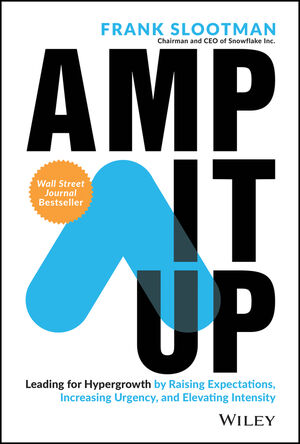
Frank Slootman has led three companies to massive scale: Data Domain, ServiceNow, and Snowflake, which had the largest software IPO in history. He's someone who's repeatedly taken enterprise software companies from good to exceptional, and this book is his playbook.
Slootman's approach centers on three principles: raise your standards, increase urgency, and elevate intensity. That sounds like generic motivational advice until you read what he actually means.
- Raising standards means stopping the acceptance of "good enough" work. If your team ships features that barely meet requirements instead of delighting users, you're training them to be mediocre. Slootman pushes leaders to set a bar so high that it makes people uncomfortable, then give them the support to reach it.
- Increasing urgency doesn't mean rushing or cutting corners. It means eliminating the organizational sludge that turns two week projects into two month slogs. Slootman is ruthless about killing pointless meetings, bureaucratic approval processes, and decision-making theater. He wants you to ask constantly: why does this take this long? Most of the time, the answer is "because that's how we've always done it."
- Elevating intensity is about focus. Slootman argues that diffused effort kills companies. You can't be great at ten things. You need to identify the two or three initiatives that actually matter and pour all your energy into them. Everything else is noise.
What makes this book valuable for technical leaders is Slootman's background in enterprise software. He understands long sales cycles, complex products, and technical stakeholders. He's not telling you to "move fast and break things" like a consumer app. He's showing you how to operate with extreme focus and speed in environments where precision matters.
Critics say Slootman's approach is too intense, that it burns people out. He'd probably agree it's not for everyone. But if you're leading an organization that needs to move from incremental progress to exponential growth, this book shows you what it takes. It's not about working longer hours. It's about working with clarity, purpose, and zero tolerance for waste.
8. Clayton M. Christensen, The Innovator’s Dilemma: When New Technologies Cause Great Firms to Fail
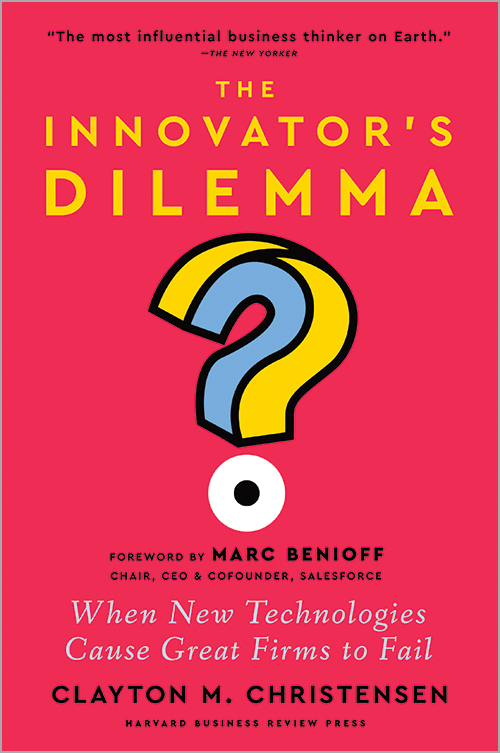
Clayton Christensen was a Harvard professor who spent his career studying why successful companies fail. Not struggling companies, successful ones. Companies doing everything their customers asked, investing in R&D, listening to their best clients, and still getting destroyed by upstarts they initially dismissed.
Christensen introduces the concept of disruptive innovation, and it's not what most people think. Disruption doesn't come from better technology. It comes from simpler, cheaper, more convenient solutions that established companies ignore because they don't serve their most profitable customers. By the time the new technology improves enough to compete, it's too late.
His example of disk drives is perfect. Established manufacturers kept making better, higher capacity drives for mainframes and enterprise servers because that's where the margins were. When smaller, lower capacity drives appeared for personal computers, the incumbents dismissed them. Too small, not good enough for serious applications. But those smaller drives got better fast, and suddenly the market shifted underneath the leaders who were too busy serving their existing customers to notice.
For engineering leaders today, this is directly applicable to AI. You're watching the same pattern play out. AI tools that seem limited or gimmicky right now will improve rapidly. The question is whether you're investing in them early when they're "not good enough," or waiting until they're mature and you've already lost ground.
Christensen's framework helps you identify when to disrupt yourself. He explains why you can't just ask your customers what they want. Your best customers will tell you to keep improving what you're already doing. They won't ask for the thing that makes your current product obsolete. This is why innovation has to come from the edges, from small teams with permission to build for markets that don't look attractive yet.
The book introduces the concept of sustaining versus disruptive innovation. Sustaining innovations make your existing products better: faster, more features, higher quality. Every company is good at this. Disruptive innovations create new markets or radically simplify existing ones. Most companies are terrible at this because it requires ignoring your best customers and investing in things that don't make financial sense in the short term.
9. Will Larson, An Elegant Puzzle: Systems of Engineering Management

Will Larson has scaled engineering teams at Digg, Uber, and Stripe, which means he's seen every flavor of organizational chaos. This book is his attempt to bring systems thinking to the messy, human problems of engineering leadership.
Larson treats management challenges like engineering problems: complex systems with patterns you can recognize and optimize. But unlike code, you're working with people, politics, and constraints you can't always control. The elegance comes from finding solutions that work with human nature instead of against it.
He tackles the questions engineering leaders actually lose sleep over:
- When do you split a team?
- How many engineers should report to one manager?
- When should you pay down technical debt versus shipping new features?
- How do you handle migrations that span quarters without killing team morale?
These are the daily decisions that determine whether your organization accelerates or stalls.
His framework for team sizing is particularly useful. Larson argues that teams have states: they're either falling behind, treading water, repaying debt, or innovating. Most teams are stuck in the first two states, firefighting constantly. The goal is to staff teams well enough that they can dig out, pay down debt, and eventually get to a place where they can build new things. He gives you specific heuristics: how many engineers it takes to move between states, how to recognize when a team is underwater, when adding people helps versus making things worse.
What separates this book from generic management advice is Larson's engineering background. He understands that technical decisions are strategic decisions. Whether you build a platform team, how you structure on-call, how you handle production incidents, these aren't just operational details. They shape your culture and determine what kind of work is possible.
Larson also tackles the hardest part of engineering leadership: balancing execution with people development. He gives you frameworks for career ladders, promotion processes, and performance management that don't feel like bureaucratic checkbox exercises. His approach is pragmatic. You need structure as you scale, but it should support good decision making.
Essential Reads on Artificial Intelligence
10. Ethan Mollick, Co-Intelligence: Living and Working with AI
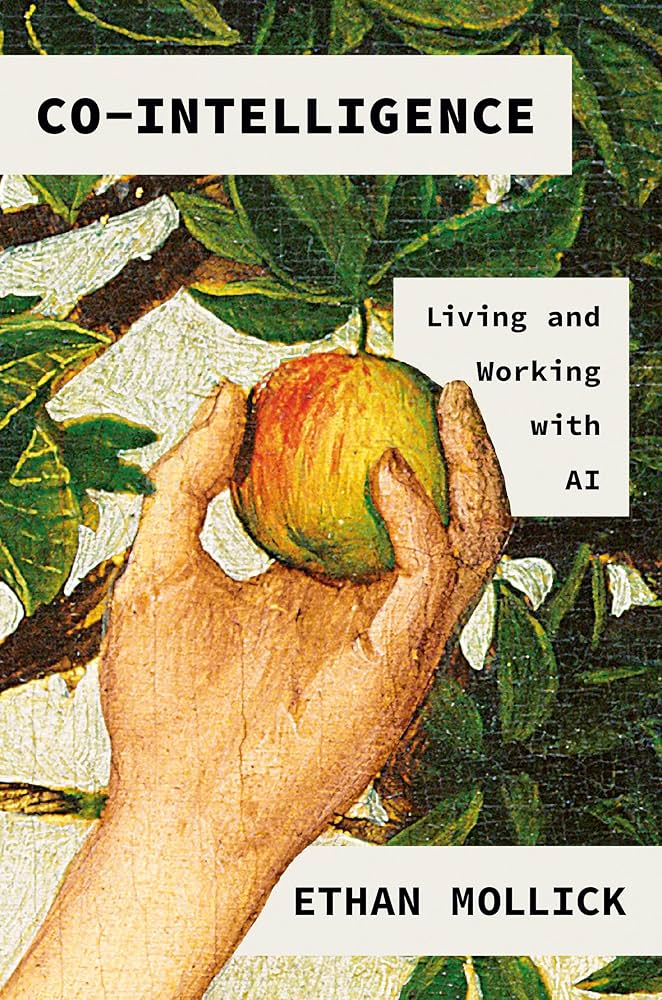
Ethan Mollick is a professor at Wharton who runs one of the most practical AI newsletters out there. When ChatGPT launched in November 2022, he immediately started experimenting, pushing boundaries, and documenting what worked. This book is the distillation of that hands-on exploration.
The central insight:
We're not just getting better tools. We're getting a new kind of thinking partner, and most people have no idea how to work with it yet.
Mollick's approach is refreshingly grounded. He treats AI like a capable but flawed coworker who's just joined your team. You need to understand its strengths, work around its weaknesses, and figure out how to collaborate effectively.
The book is packed with tangible examples Mollick has tested with his students and in real business contexts.
- How to use AI for brainstorming without letting it flatten your thinking into generic outputs.
- How to prompt it to challenge your assumptions instead of just agreeing with you.
- How to delegate research, writing, and analysis while maintaining quality control.
For engineering leaders, the most valuable section covers AI as a tool for thought. Mollick shows how to use AI to explore solution spaces faster, prototype concepts that would take days in hours, and pressure test architectural decisions by having the AI argue against them. He's not suggesting you let AI make decisions. He's showing you how to use it to think more clearly and comprehensively.
Mollick also tackles the organizational challenge. If your team isn't experimenting with AI, they're falling behind. But if they're using it without guidelines, they're creating risk. He gives you frameworks for establishing AI policies that enable innovation without creating chaos. What should be AI-assisted versus AI-generated versus human-only? How do you audit AI-produced work?
This book works because Mollick is an optimist with his eyes open. He sees AI's potential to amplify human capability, but he's clear-eyed about the risks: over-reliance, skill atrophy, the erosion of critical thinking. His goal is to help you harness the power without losing what makes human judgment valuable.
11. Robb Wilson, Age of Invisible Machines: A Practical Guide to Creating a Hyperautomated Ecosystem of Intelligent Digital Workers
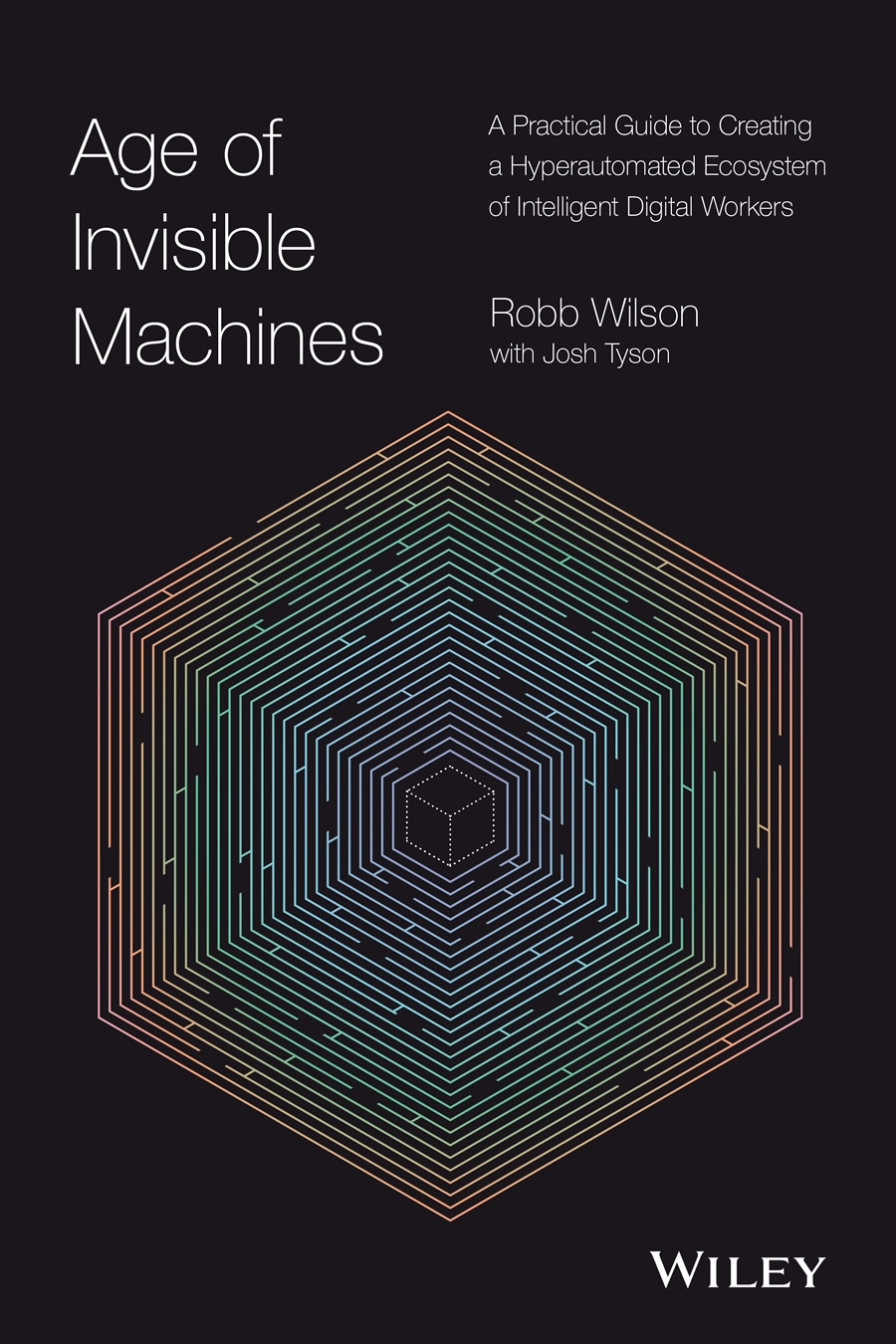
Robb Wilson built OneReach.ai, a company that's processed over a billion conversational AI interactions. This book came out before the ChatGPT explosion, which makes it more impressive. Wilson saw where this was headed and wrote the playbook for what he calls "hyperautomation": building ecosystems of AI agents that handle work invisible to end users.
The core idea:
We're moving past apps and interfaces toward intelligent systems that anticipate needs and execute tasks without you asking. The machine layer becomes invisible because it's ambient, always working.
Wilson's background in conversational AI gives him a practical lens most AI books lack. He's showing you how to build systems where AI agents handle customer support, process transactions, route requests, and coordinate workflows without human intervention for routine cases.
For engineering leaders, the value is in Wilson's architectural approach. He walks through how to design AI systems that integrate with your existing stack, how to orchestrate multiple specialized agents instead of building one monolithic system, and how to handle the transition from human-driven to AI-augmented to fully automated processes. This matters because most organizations are stuck trying to bolt AI onto systems designed for human operators.
The section on building AI teams is particularly relevant. Wilson argues you need a new kind of hybrid role: people who understand both the business domain and AI capabilities. Pure engineers often build technically impressive systems that don't solve real problems. Pure business people specify requirements that AI can't actually deliver. You need translators who can bridge that gap.
Wilson also tackles the question of when to automate versus when to keep humans in the loop. His framework: automate high-volume, low-complexity interactions completely. Augment medium-complexity tasks where AI assists humans. Keep humans fully in control of high-stakes, high-complexity decisions. This sounds obvious, but most organizations get it wrong by trying to automate everything or nothing.
The chapter on no-code and low-code AI development is forward-looking. Wilson predicts that organizations will increasingly "write software" by configuring AI agents rather than coding from scratch. We're seeing this now with tools like ChatGPT and Claude that can generate working code from descriptions. For engineering leaders, this raises questions about what your team should be building versus configuring.
12. Tomas Austin, Ethical AI Leadership: A Practical Guide for Managers Navigating Responsible Technology Implementation
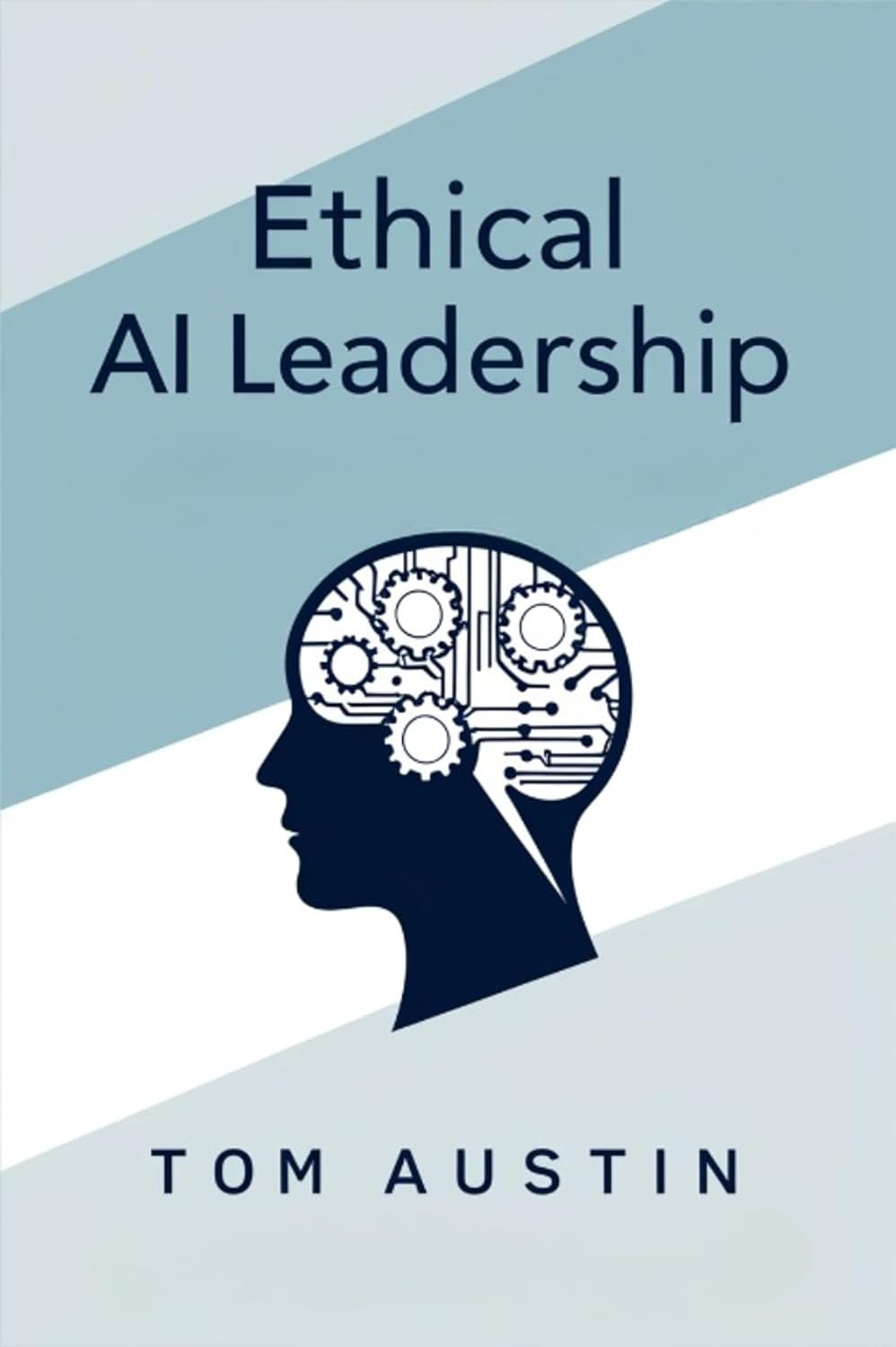
Tomas Austin wrote this book because technical leaders are making consequential decisions about AI without frameworks for thinking through the implications. You're deploying systems that affect hiring, performance evaluation, customer access, and resource allocation. If you get it wrong, the damage compounds at scale.
Global AI regulations tightened significantly in 2025. The EU AI Act, California's AI transparency requirements, and sector-specific regulations mean you can't just move fast and figure out ethics later. You need frameworks now.
Austin's approach is practical. He's helping you navigate the decisions you're making:
- Should this system be explainable?
- How do we test for bias?
- What happens when the AI makes a decision we don't understand?
- Who's accountable when it goes wrong?
The section on bias is essential for engineering leaders. Austin walks through how bias enters systems: through training data that reflects historical discrimination, through proxy variables that correlate with protected characteristics, through optimization metrics that prioritize efficiency over fairness. More importantly, he shows you how to test for it. You can't just assume your model is fair because you didn't intentionally discriminate. You have to measure outcomes across different groups and fix disparities.
The chapter on transparency and explainability hits a tension every technical leader faces. Users and regulators increasingly demand to know how AI systems make decisions. But modern AI, especially deep learning, is often a black box. Austin doesn't pretend there's an easy answer. He shows you how to balance model performance with interpretability, when to choose simpler explainable models over complex accurate ones, and how to communicate AI decisions to non-technical stakeholders.
Curious how AI is shaping the future of tech? Check out our top 10 AI books that every engineering leader should read.
Essential Reads on Better Technical Process
13. Dr. Nicole Forsgren, PhD, Gene Kim, and Jez Humble, Accelerate: The Science of Lean Software and DevOps: Building and Scaling High Performing Technology Organizations
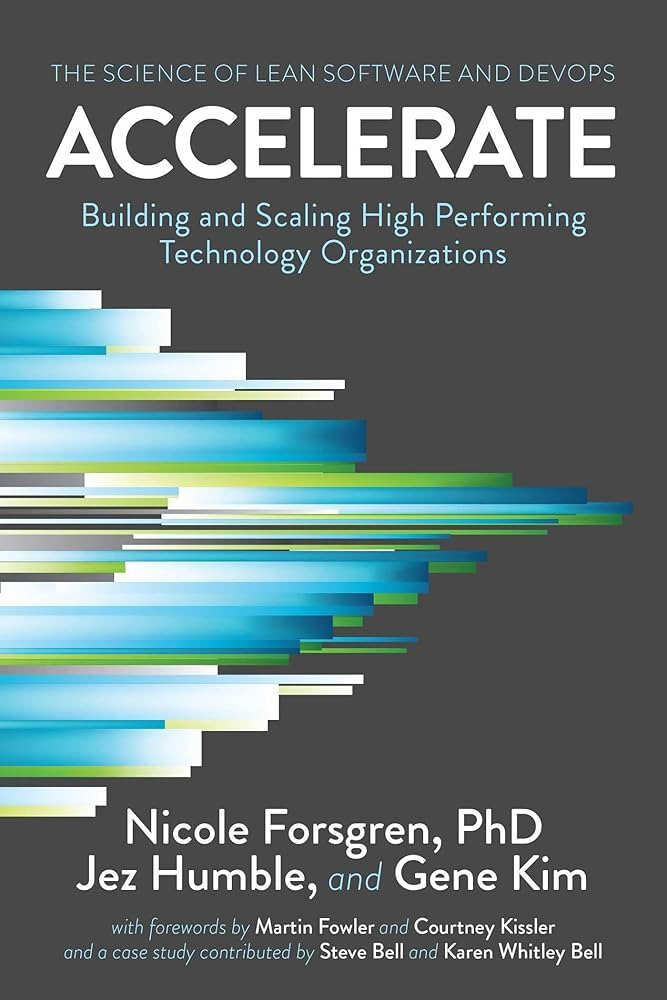
Nicole Forsgren, Jez Humble, and Gene Kim spent four years analyzing data from thousands of organizations through the State of DevOps reports. They were measuring what makes tech teams effective, using rigorous statistical methods to identify what actually correlates with high performance.
The result is the most data-backed book on software delivery you'll find.
The core finding challenges conventional wisdom:
Organizations with high performing technology teams grow faster, are more profitable, and dominate their markets. The gap between high and low performers isn't incremental. It's exponential.
Forsgren and her co-authors identified four key metrics that predict organizational performance:
- Lead time (how long from commit to production)
- Deployment frequency (how often you ship)
- Mean time to restore (how quickly you recover from failures)
- Change fail percentage (how often deployments cause problems)
These metrics matter because they measure tempo and stability simultaneously.
What makes this book essential for engineering leaders is the research on what drives these metrics. The authors tested dozens of practices: automated testing, trunk-based development, deployment automation, monitoring, database change management. They identified which ones actually move the needle and which are just cargo cult practices that waste time.
The findings are sometimes counterintuitive. Manual approval processes don't improve stability. They slow you down without reducing failures. Automated testing does improve both speed and quality, but only if tests are fast and developers trust them. Architecture matters more than technology choices. Teams working on loosely coupled systems deploy more frequently regardless of whether they're using microservices, monoliths, or something else.
The book also tackles technical debt directly. High performers don't ignore it. They address it continuously as part of normal work. Low performers treat it as something to fix later, which means it accumulates until it cripples velocity. The research shows you can't "go fast now, clean up later." That approach guarantees you'll slow down.
The section on leadership is particularly valuable. Transformational leadership, where leaders inspire and intellectually stimulate their teams, correlates strongly with software delivery performance. Command and control doesn't. For engineering leaders trying to change their organization, this matters. You can't mandate your way to high performance. You have to create the conditions where it emerges.
14. Marty Cagan, Inspired: How to Create Tech Products Customers Love
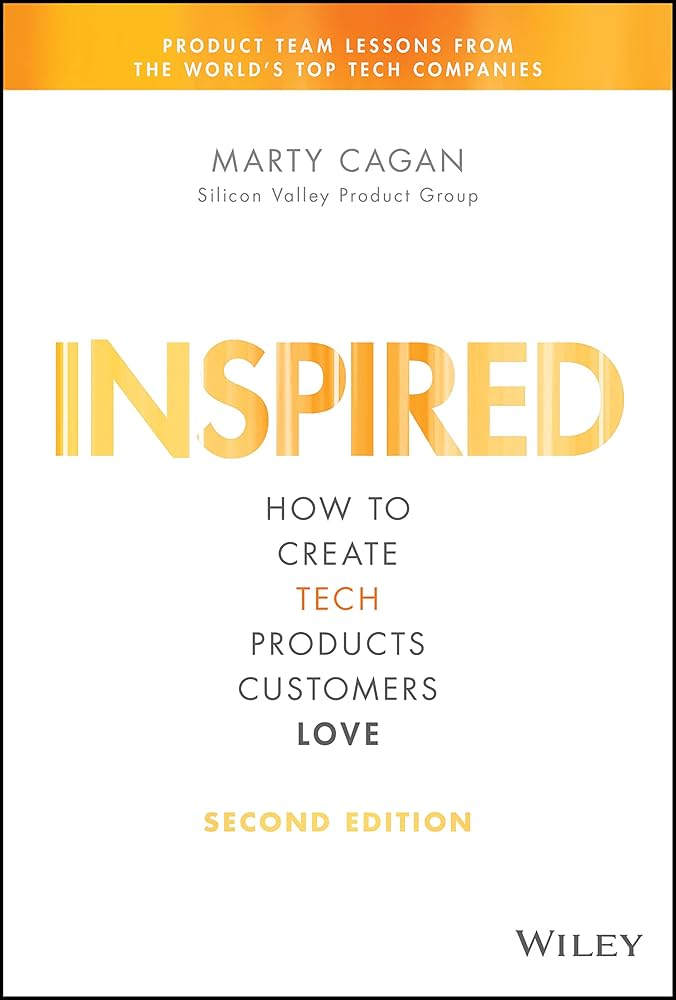
Marty Cagan spent years as an executive at companies like HP, Netscape, and eBay, then founded Silicon Valley Product Group to advise startups and established companies on product management. He's seen what works at scale and what collapses under pressure. This book distills that experience into a framework for building products people will want.
The central argument:
Most companies build products wrong. They treat engineering as a feature factory, taking requirements from stakeholders and building what they're told. High performing product organizations work completely differently. They empower teams to solve problems, not implement solutions.
Cagan's model centers on product discovery: the work you do before you build anything. Most organizations skip this. Someone decides what to build, writes specs, and hands them to engineering. Months later, the feature ships and nobody uses it. Cagan shows you how to validate ideas fast through prototypes, customer interviews, and experiments. You learn what won't work before you waste engineering capacity building it.
For engineering leaders, the most valuable section covers how to structure product teams. Cagan advocates for empowered, cross-functional teams with a product manager, designer, and engineers working together from discovery through delivery. The product manager defines the problem and success metrics. The designer explores solutions. Engineers assess feasibility and often suggest better approaches. Everyone owns the outcome.
The book also tackles the relationship between product and engineering directly. Cagan argues these functions must be partners, not adversaries. Product managers who throw requirements over the wall create resentment. Engineers who dismiss customer insight as irrelevant build technically impressive features nobody wants. High functioning teams have mutual respect and shared accountability.
Cagan also addresses scaling challenges. What works with one product team breaks with ten. He shows you how to maintain autonomy and empowerment as you grow, how to coordinate across teams without creating dependency hell, and how to build a product culture that persists as you hire.
The book profiles companies like Netflix, Google, and Adobe, showing how they apply these principles. But you can't just copy their practices. You have to adapt them to your context. A startup achieving product-market fit needs different processes than an enterprise company with millions of users.
15. Paul R. Daugherty, H. James Wilson, Human + Machine: Reimagining Work in the Age of AI
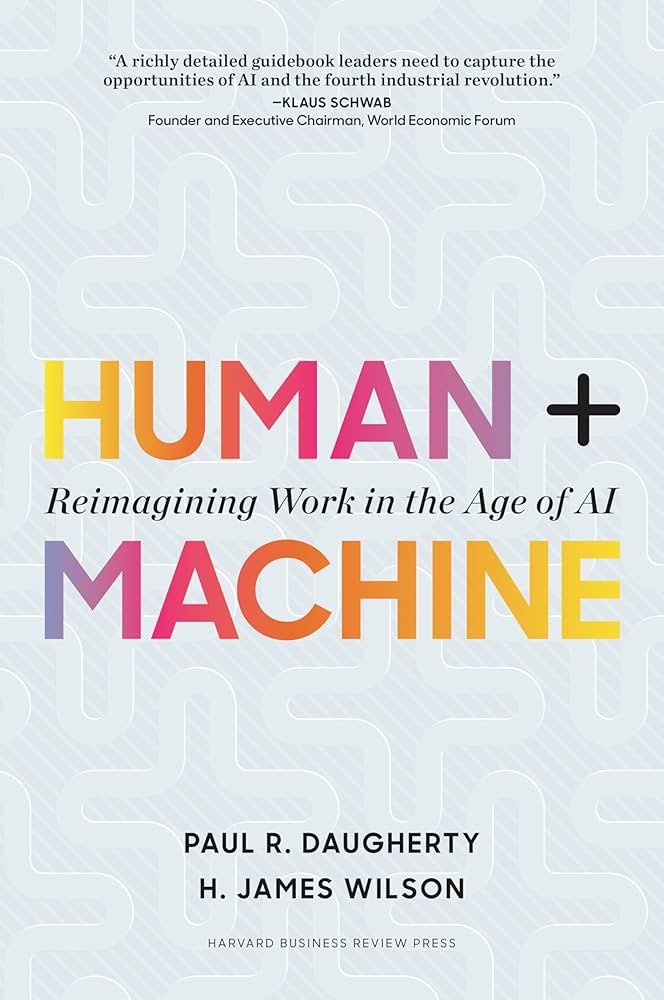
Paul Daugherty and James Wilson are leaders at Accenture who've advised over 1,500 organizations on AI implementation. They wrote this book because they kept seeing the same mistake: companies treating AI as either a threat that replaces workers or a tool that automates existing processes. Both approaches miss the opportunity.
The insight that drives this book:
The real value comes from reimagining work itself, creating new hybrid roles where humans and machines collaborate in ways that weren't possible before.
Daugherty and Wilson identify what they call the "missing middle": new types of work that emerge when AI handles routine tasks and humans focus on judgment, creativity, and relationships. They're entirely new roles that require both human skills and deep understanding of AI capabilities.
The authors describe six categories of hybrid roles. Trainers who teach AI systems, explainers who interpret AI decisions for stakeholders, sustainers who ensure AI systems operate ethically and reliably. These roles don't exist on most org charts yet, but the companies winning with AI are creating them. For engineering leaders, this means rethinking how you structure teams and what skills you hire for.
What makes this book valuable for technical leaders is the focus on process transformation. Most organizations use AI to make existing processes faster. Daugherty and Wilson show you how to redesign processes from scratch around AI capabilities. Instead of automating a human approval workflow, you create a new workflow where AI handles routine approvals instantly and routes complex cases to humans with full context. The process itself changes.
The book also tackles the cultural challenge directly. AI adoption fails more often from organizational resistance than technical limitations. People don't trust systems they don't understand. They resist changes to workflows they've mastered. Daugherty and Wilson give you frameworks for building trust: transparency about how AI makes decisions, clear governance about when humans override machines, and involving employees in designing new processes rather than imposing them.
What separates this book from other AI business books is the emphasis on collaboration over replacement. The authors aren't naive about automation. They acknowledge AI will eliminate some jobs. But they show with data that companies creating these new hybrid roles see better outcomes: higher employee engagement, faster innovation, and stronger financial performance than companies that simply automate.
This book is the "management playbook" for the next decade. It’s bold, data-backed, and focuses on the most important asset you have: the synergy between your people’s creativity and your machines’ scale.
Think senior developers are just about experience? Learn the key traits that truly define a senior engineer.
Conclusion
Information is cheap, but insight is expensive. You can read every blog post and follow every "thought leader" on LinkedIn, but true leadership comes from the disciplined application of deep ideas.
If you're new to leadership or feeling like you're drowning in tactical work, start with Leadership. Drucker and Rainwater will give you frameworks for effectiveness and managing technical teams. If your team is scaling and the systems that worked at ten people are breaking at fifty, go to Team Management. If you're making big bets on technology or trying to position your organization for the future, dive into Strategy. If AI is transforming your industry and you're not sure how to respond, the AI section will ground you. And if your processes feel like they're slowing you down instead of helping, Better Process will show you what correlates with high performance.
Reading won't make you a better leader by itself. But it will give you new ways of seeing problems, language for challenges you've struggled to articulate, and confidence that other people have experienced what you're facing and come out stronger.
➡︎ Ready to lead? These books are your roadmap from senior engineer to impactful technical leader. And when you're ready to put these principles into practice, Index.dev connects you with remote engineering leadership roles at companies that value great leadership. Explore leadership opportunities →
➡︎ Want to explore more insights on ATS tools, AI hiring, and global tech recruitment? Check out related articles such as the Paradox AI recruitment chatbot review, AI startup tech stack for 2026, remote AI hiring challenges, mitigating risks when hiring offshore talent, top countries for AI developer ROI, choosing the right AI transformation partners, and evaluating developers for AI/ML expertise. These guides offer deeper frameworks, tool comparisons, and data-driven insights to help you hire smarter and scale engineering teams globally.