Sometimes it’s about growth. Sometimes it’s just business. And sometimes, staying put is more dangerous than leaving.
Even in the AI era, finding and keeping the best development talent remains one of the hardest problems software companies face. Not because there aren't enough developers out there. But because senior developers have options. The kind that let them walk away the moment something feels off.
If you want to keep your best people, you have to understand the invisible forces pushing them away. Below, we explore the top reasons senior developers quit software companies. But more than that, we unpack what these exits reveal about leadership, culture, and the hidden truths of working in tech.
Hire top senior developers who stay. Index.dev connects you with vetted engineers ready to make an impact from day one.
Why Developer Turnover Hits Hard
Let's talk numbers, because that's the language leadership understands.
When a senior developer quits, leadership often looks at the "replacement cost" as a line item in a budget. In reality, you aren't just losing a salary; you’re losing a library of institutional knowledge, the "glue" that holds your sprint cycles together, and the mentor who teaches your juniors.
The high price of ‘Goodbye’
- Replacing a senior technical hire isn't just a few thousand bucks. Between recruitment fees (often 20-25% of salary), onboarding lag, and the ‘productivity debt’ while the new hire ramps up, you’re looking at 100% to 150% of their annual salary just to get back to zero.
- If that senior dev was a technical lead or architect, the cost of replacement can skyrocket to over 200%. This reflects the massive strategic gap they leave behind.
Why do they leave?
- 24% of developers leave because of money, but not in the way you think. They're not chasing Silicon Valley salaries. They're frustrated that the only way to get a meaningful raise is to have an offer letter from somewhere else.
- 40% leave because they see no path forward. They aren’t talking about titles, they’re talking about the chance to work on more challenging problems.
- But the biggest predictor of turnover isn't compensation. It’s toxicity. You can pay someone 20% above market, but if they have to deal with "hero culture," lack of psychological safety, or constant "fire drills," they’ll eventually take a pay cut just to breathe again.
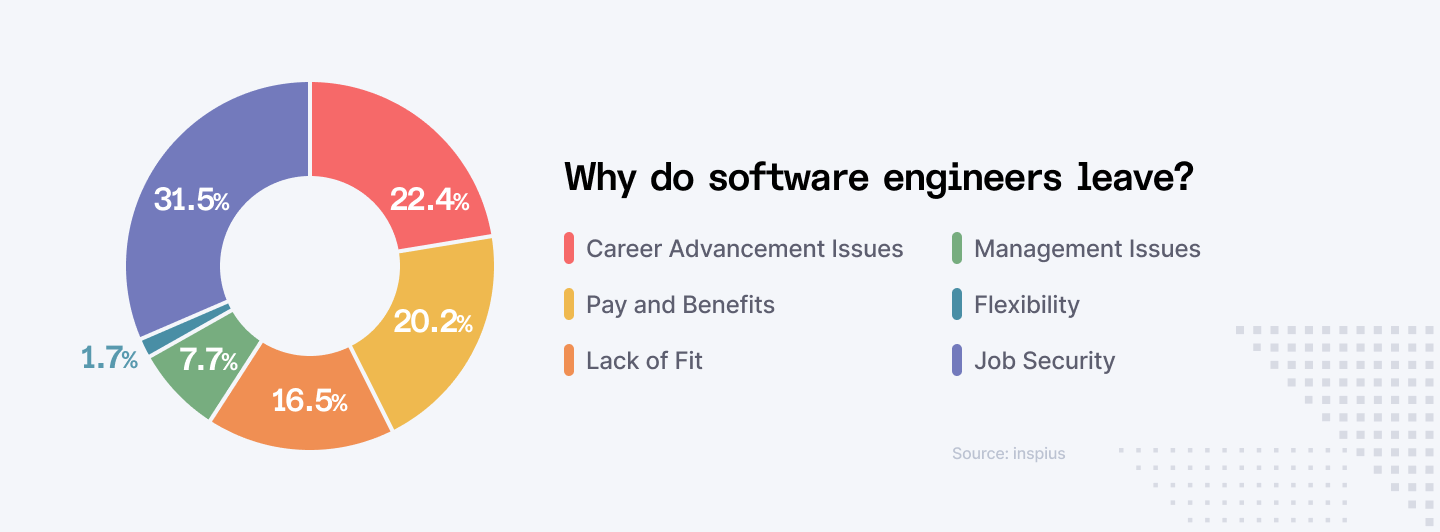
Most companies treat developer turnover as an HR metric. It's not. It's a mirror showing you exactly what kind of software company you are, not the one you claim to be in your job postings.
Up next: Learn what truly separates senior developers from the rest, beyond years of experience or job titles.
…
Understand why developers leave and take action before your top talent starts looking elsewhere.
Why Senior Developers Really Quit
Reason 1: You’re Paying Them Like They’re Replaceable
Money isn't everything. But pretending it doesn't matter is how you lose everyone.
Compensation isn't just about money. It's about respect. It tells senior developers how much their expertise, judgment, and effort matter to the company. When pay falls short, it sends a simple, undeniable message: you’re not valued enough.
24% of developers cite insufficient pay as their main reason for leaving. But here's the part that should make you uncomfortable: they're not leaving because they're greedy. They're leaving because staying feels like losing.
The inflation
Giving someone a 3% raise when inflation is running at 5% isn't a raise. It's a pay cut with a bow on it. And senior developers can do math. They know that staying loyal means getting progressively poorer, year after year.
Most developers believe the only way to get a real raise is to leave. You've trained them to think this way. Every time you lowball annual reviews while hiring new people at market rate, you're teaching your best engineers that loyalty is a tax they pay for staying.
When they ask, it's already too late
When a senior developer asks for a raise, they've already updated their resume. They've probably already had a few conversations. If you say no, they leave. If you say yes, they stay for six months and still leave, because now they know they had to fight for what they should have been given.
But if you initiate the raise? If you walk into their office and say "I've been looking at the numbers, and we need to adjust your compensation"? That's leadership. That's retention.
The exception that proves the rule
Can you retain underpaid developers? Sometimes. Maybe they're passionate about your mission. Maybe they've built deep friendships on the team. Maybe the technical challenges are genuinely world class.
But here's the thing: people have mortgages. They have families. They have futures to fund. And eventually, even your most dedicated engineers will do the math and realize they can't afford to be loyal anymore.
Reason 2: Bad Management Drives Their Talent Out the Door
For senior developers, a great manager is often the reason they stay. A poor one is almost always the reason they leave.
There’s a saying that never gets old because it keeps being true: people don’t quit companies, they quit managers. In software, this hits harder than anywhere else. When nearly seven out of ten developers leave within two years, leadership stops being a soft skill and becomes a retention strategy.
Senior developers don’t need micromanagers. They need context, trust, and clarity. Poor management in software rarely looks like outright incompetence. It looks like constant priority changes, vague feedback, decisions made without technical input, and leaders who confuse control with leadership. Over time, even the most patient developers burn out.
The manager's impossible job
Developers' needs are fluid. What motivated them six months ago doesn't motivate them today. The senior engineer who loved heads-down coding last quarter might be craving architecture decisions now. The tech lead who thrived on mentoring might be burning out from too many meetings.
Great managers see this coming. They're paying attention. They're asking questions. They're noticing when someone who used to speak up in standups suddenly goes quiet. They're catching the warning signs before the resignation letter hits their inbox.
What poor leadership looks like in software
It's not just about being "mean" or "micromanaging," though those are classics. Poor leadership in software companies shows up in specific ways:
- Decision-making paralysis.
- When engineers pitch ideas and get stuck in approval hell, when architecture decisions sit in limbo for months, when every change requires five layers of sign-off. Senior developers didn't get senior by avoiding decisions. They got senior by making them.
- When engineers pitch ideas and get stuck in approval hell, when architecture decisions sit in limbo for months, when every change requires five layers of sign-off. Senior developers didn't get senior by avoiding decisions. They got senior by making them.
- Communication black holes.
- When strategic context disappears between leadership and engineering. When developers build features without understanding why. Senior engineers can handle bad news. They can't handle being kept in the dark.
- When strategic context disappears between leadership and engineering. When developers build features without understanding why. Senior engineers can handle bad news. They can't handle being kept in the dark.
- Recognition blindness.
- When a developer ships something game-changing and hears nothing. When the only feedback is about what's broken, never about what's working.
- When a developer ships something game-changing and hears nothing. When the only feedback is about what's broken, never about what's working.
Mentorship is the new retention
Look at what works. Google didn't lower turnover by accident. Their G2G (Googler-to-Googler) program proves that seniors stay when they feel like part of a continuous cycle of growth. Starbucks runs leadership training focused on emotional intelligence, communication, and coaching. Result? 70% retention rate in an industry known for churning through people.
Investing in leadership capability is one of the most practical ways to reduce turnover. Companies that train managers to communicate clearly, coach instead of command, and recognize effort see meaningful drops in attrition.
Reason 3: They’ve Outgrown Your Ladder
When developers leave for growth, it’s rarely because they want to abandon the company. It’s because staying would mean standing still.
Senior developers leave when they feel their trajectory is flattening while their capability keeps rising. Sometimes the direction they want to grow simply doesn’t exist inside the company. Sometimes it exists, but not fast enough.
This is the hardest reason to fix because no one is doing anything “wrong.” The developer is still delivering. The team is still functioning. And yet, something feels off.
The ‘shadow role’ trap
Many senior developers are already doing the next job unofficially. They lead architecture discussions without the title. They mentor others without recognition. They carry responsibility without authority. Over time, that gap becomes impossible to ignore. When the promotion doesn’t materialize, the fastest way forward often isn’t internal. It’s external.
The growth ceiling
Career growth in software doesn’t happen by accident. It requires active planning. Leaders need to sit down with developers and be brutally honest. What does the next level actually require? Where are the gaps today? What work will stretch them instead of just keeping them busy? Avoiding these conversations is one of the fastest ways to lose great people.
Sometimes the growth a developer wants leads toward management. That path depends on timing and open roles, which you can’t always control. But you can prepare them. Let them operate as your second in command. Involve them in decisions. Expose them to the realities of leadership. Just don’t promise outcomes you can’t guarantee.
The three ‘E’s you're ignoring
Organizations love to talk about the three Es: experience, expertise, and exposure. Then they promptly provide none of them.
- Experience means giving people assignments that stretch them. Genuinely new challenges that make them a little bit uncomfortable.
- Expertise means creating space to go deep. To master a new language or framework that benefits the stack. To become the person everyone asks when something breaks. To give the tech talk.
- Exposure means visibility to leadership, to other teams, to the broader engineering community. Bringing them into the room where the big decisions happen
Reason 4: The Company Lost Its Way or Is Failing
If a company is in "survival mode," their loyalty to you is zero. They are focused on the bottom line, not your professional legacy.
Sometimes it's not about what you did wrong. It's about what the company became. And senior developers? They see it coming before anyone else.
When the ship starts taking on water
Unless you're in the C-suite, there's no shame in leaving a sinking ship. When a software company starts burning cash, reshuffling org charts, and cutting costs faster than it can explain the strategy, stress becomes part of the job. Even if your role feels safe, the environment doesn’t. Constant layoffs, outsourcing, and reactive decisions slowly erode focus and pride in the work.
In theory, this is where heroes are made. In practice, it’s exhausting. You’re asked to do more with less, stay positive while friends disappear from Slack, and believe in a future that leadership can’t clearly articulate.
Sharp leadership changes often accelerate this moment. New leaders bring new priorities, and sometimes the wrong people end up in charge. Suddenly, decisions feel disconnected from reality. Process replaces progress. Meetings multiply. Engineers adapt at first, because that’s what good engineers do. But when day-to-day work starts feeling absurd rather than challenging, the signal is clear. If your job starts to resemble a bad tech comic strip, it stops being funny very quickly.
Cutting the product team
Then there’s the hardest cut of all: losing the product or team you believed in. When a product is shelved or a team dissolved, it hits deeper than a reorg. Senior developers invest emotionally in what they build. They carry context, history, and pride in that work. When it’s erased overnight, staying can feel disorienting or even disrespectful.
Some leave out of protest. Others because of survivor’s guilt. Many simply feel lost, unsure where they fit next. In those moments, walking away isn't a weakness. In some cases, staying would be stranger than leaving.
Reason 5: Burnout Hit Hard, and You Didn’t Notice
Burnout is preventable. But prevention requires admitting that how you're operating now is unsustainable.
Burnout doesn’t always come from working too hard. Sometimes it comes from working too long on things that no longer make sense. Maybe you’ve been grinding for months, shipping nonstop, fixing the same bugs over and over. Maybe the codebase is so fragile that every change feels like pulling the wrong wire. Or maybe the company’s values no longer match yours, and every day feels heavier than the last. Often, it’s all of it at once.
Or maybe it’s all of the above.
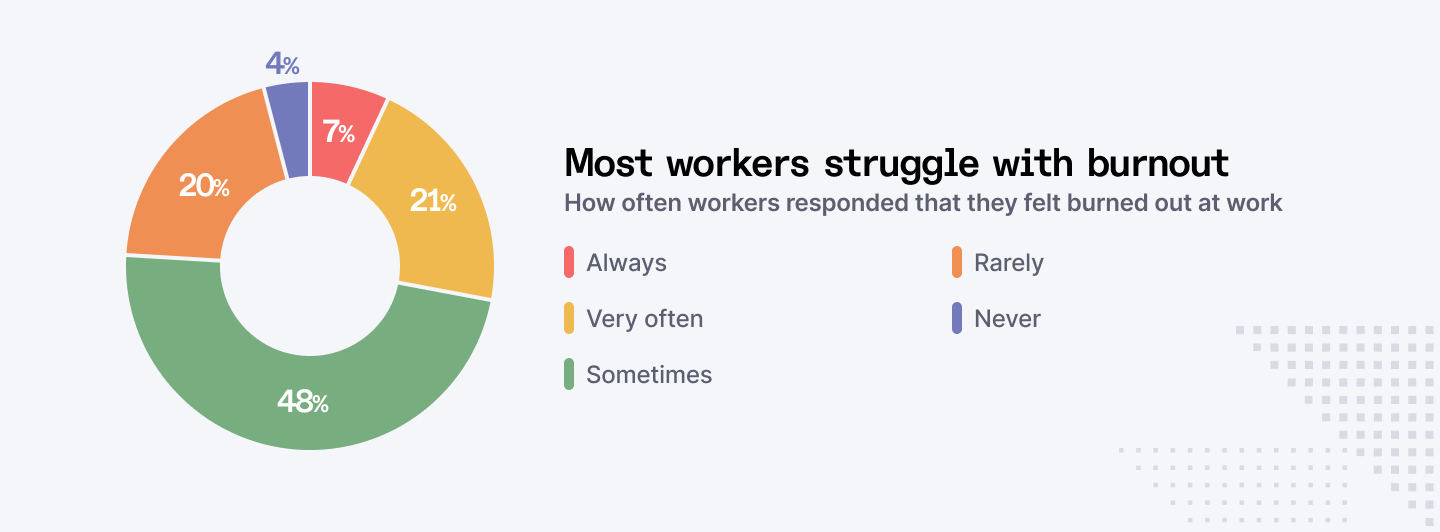
Software burnout builds slowly
Software burnout is unique. It’s not just long hours. It’s cognitive overload. Constant context switching. Unrealistic deadlines. Shipping fast while knowing the quality isn’t there. Being asked to move faster on foundations that were never built to last. Senior developers carry this weight more than most. They see the cracks early, and they’re often the ones expected to hold everything together.
Developers don't sign up to be firefighters
Firefighting cultures burn people out quickly. When teams are stuck in permanent urgency mode, developers stop building and start reacting. Every day becomes damage control. Over time, pride in the work disappears.
Burnout also hits high performers who struggle to let go. Senior developers often take on too much responsibility. They fix everything, mentor everyone, and step in wherever there’s a gap. Delegation feels slower than doing it themselves. Eventually, the pace becomes unsustainable, and the exhaustion catches up.
When developers reach this point, the exit looks different for everyone. Some line up a calmer role that better matches their pace and values. Others leave without a plan, choosing uncertainty over another month of running on empty. That decision rarely comes out of nowhere.
The signs you’re missing
Burnout is a system failure. Leaders who pay attention can see it coming. Energy drops. Curiosity fades. Great developers stop pushing back and start disengaging. Regular check-ins matter. So does listening without trying to immediately fix or minimize the problem.
If you want to reduce turnover, you have to understand what’s really draining your people. Not just how fast they ship, but how they feel while doing it. Because once burnout sets in, retention becomes irrelevant.
Reason 6: “Awesome Culture” Became Micromanagement
Fix your culture or lose your people. There's no third option.
Toxic culture rarely announces itself on day one. In fact, it often looks impressive at first. The perks are shiny. The office is polished. Everything you need is right there, so you never have to leave.
And that’s the point.
In many software companies, culture becomes a subtle form of control. Long hours are normalized. Hustle is celebrated. Being always available is framed as commitment. For some, this environment is energizing. For many senior developers, it becomes exhausting.
Culture is the "Operating System" of your team
Think of culture as the OS of your company. You can have the best "apps" (the smartest developers) and the best "hardware" (the best tech stack), but if the OS is buggy and riddled with malware, like micromanagement or lack of trust, the whole system will crash.
Research shows that a negative culture is ten times more likely to drive someone away than low pay. You can pay a senior dev a king’s ransom, but if they feel undervalued or constantly watched, they will walk.
What ‘toxic’ looks like in software
Poor culture shows up in small ways first. Feedback that only flows one way. Mistakes that trigger blame instead of learning. Leaders who say the right things publicly but behave differently under pressure. Over time, these signals accumulate, and senior developers notice. They always do.
Culture isn’t defined by perks or mission statements. It’s defined by daily behavior. How leaders respond when things go wrong. How disagreement is handled. Whether transparency is real or performative. When leadership behavior doesn’t support sustainable growth, productivity breaks down, no matter how good the systems look on paper.
Alignment over amenities
As Michael McCarthy from Harvard points out, it’s about the alignment of values. If a developer values deep work and technical excellence, but the company values "performative busyness" and shipping half-baked features to hit a quarterly goal, that friction will eventually lead to an exit.
A healthy culture is an honest one. It’s a place where leadership admits when a pivot was a mistake and where engineers are treated as business partners.
Reason 7: The Code Is Dying, and No One Cares
When a product is "winning," leadership often stops investing in the engine.
Senior developers don’t just leave because of money, management, or culture. They leave because the tools, code, and systems they work with betray them every day. Fragile codebases and stagnant technology are silent killers of engagement, pride, and retention.
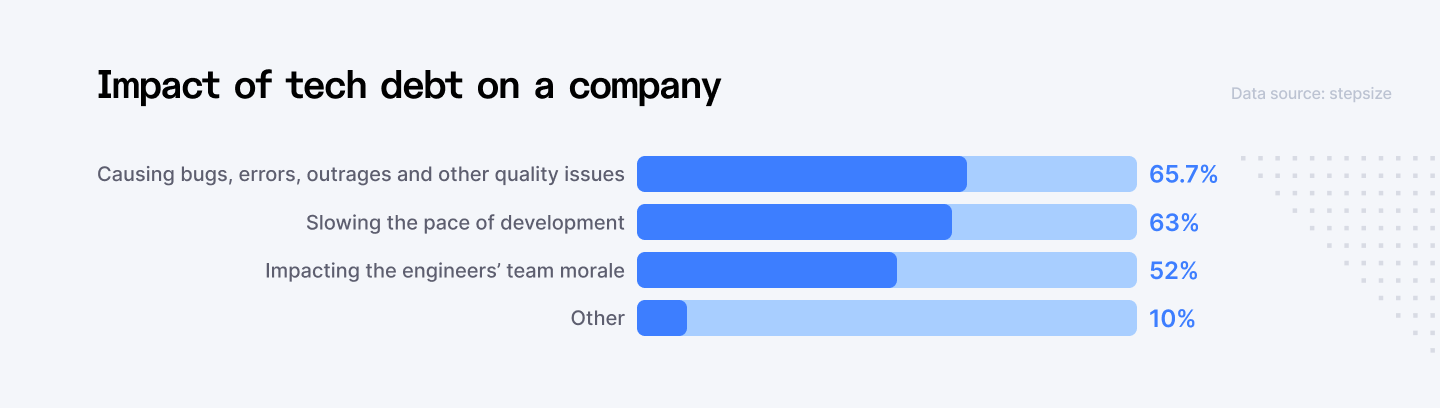
When the codebase becomes the enemy
Here's what fragile code does to a team: it turns every change into a gamble. Developers stop being creative because creativity means risk, and risk means production might go down, and production going down means everyone's weekend is ruined. So they get conservative. They add more duct tape to the duct tape. They copy-paste instead of refactor because at least copy-paste is predictable. They write code they're ashamed of because the alternative is spending three weeks untangling a mess nobody has time to fix properly. And eventually, they hate coming to work.
Stagnant technology compounds the problem
A company might be making nine figures selling a product, but if the internal systems, workflows, and development standards are stuck in the past, developers feel trapped. They see opportunities to innovate, but are forced to work with outdated frameworks, rigid processes, or obsolete tooling.
Reason 8: They’re Invisible, and Their Impact Goes Unseen
When work feels pointless, leaving is a rational decision to reclaim control, pride, and purpose in a career that’s too short to waste.
Recognition matters. Developers want to feel that their work is seen, valued, and connected to something bigger than themselves. When their contributions are ignored, when achievements go unacknowledged, or when managers fail to create psychological ownership, engagement erodes fast. Without recognition, even the most talented engineers can feel like invisible cogs in a machine.
Cogs in the machine
There's a special kind of soul death that comes from feeling like a cog. When your work is so disconnected from impact that you genuinely don't know why you're building what you're building. When features ship and you have no idea if anyone uses them. When you're just executing tickets from a backlog that appeared from nowhere.
Senior developers especially need to understand the "why." Because they're experienced enough to know that "why" determines "how." That context shapes solutions.
The impact void
Here's a pattern that plays out at almost every software company: you hire a talented developer with promises of greenfield projects, new initiatives, exciting technical challenges. They join expecting to build the future.
Then reality hits. They spend 80% of their time on maintenance work. Minor enhancements. Bug fixes. Keeping the lights on. The "exciting new project" keeps getting pushed back for "just one more urgent fix."
And six months in, they realize they were sold a vision but delivered a grind. Without variety or challenge, curiosity dulls. Motivation drops.
Roadblocks everywhere
Roadblocks make things worse. In any software organization, developers notice when bureaucracy, siloed processes, or poor tooling keeps them from delivering new capabilities. Nothing frustrates a senior engineer more than knowing what could be built, but being blocked by inefficiencies or unnecessary restrictions. When their creativity and problem-solving are constantly constrained, the message is clear: your talent is irrelevant here.
Reason 9: The Work Lost Its Meaning
You can buy a developer’s time, but you cannot buy their passion. If you don't align their work with their internal compass, they’ll eventually follow that compass right out the front door.
Sometimes developers leave not because of pay, management, or culture, but because they’ve simply lost their spark. Passion is fragile, and if the tech you’re building or the stack you’re using stop being meaningful, engagement fades fast.
When the tech stack becomes a prison
Not every product is exciting. Not every company is changing the world. And that's fine. Developers can build boring products if the technical challenges are interesting. They can work with legacy stacks if the problem space is compelling.
But, when they’re writing CRUD apps in a framework that peaked in 2012 and when they're maintaining systems that nobody wants to touch... they start lying to themselves. "It's fine. It pays well. It's stable."
And at this moment, part of them has already checked out.
When alignment disappears
The most dangerous moment? When a developer realizes they're spending their finite career capital on work that isn't building toward anything they care about. That the skills they're developing aren't skills they want. That the problems they're solving aren't problems they find interesting. That they're trading years of their professional life for... what, exactly?
Once that question forms, you've already lost them. They might stay for a few more months. They might even stay productive. But they're gone.
The passion death spiral
When developers lose passion for their work, it's usually a leadership failure. You hired someone with specific passions and motivations. Maybe they loved distributed systems. Maybe they were excited about user experience. Maybe they wanted to work on hard data problems. They told you this in the interview.
And then you put them somewhere else. Or the project pivoted. Or priorities shifted. And now they're doing work that has nothing to do with what energizes them. Work that doesn't play to their strengths. Work they're good at but don't care about. And you wonder why they seem disengaged.
…
Why would they stay with you when staying means grinding through work they don't care about using tools they don't want to use?
How to Keep Senior Developers from Walking Out the Door
Strategy 1: Pay Like You Mean It
Competitive pay is a statement. It tells senior developers that you see their expertise, their judgment, and their impact, and that you’re willing to invest in them long-term.
- Start with data, but don’t stop there.
- Benchmarking salaries is table stakes. The real advantage comes from being proactive. Don’t wait for annual reviews or for employees to ask for raises. Watch the market, track emerging skills, and reward contributions in real time.
- Benchmarking salaries is table stakes. The real advantage comes from being proactive. Don’t wait for annual reviews or for employees to ask for raises. Watch the market, track emerging skills, and reward contributions in real time.
- Think beyond base salary.
- Bonuses, equity, profit sharing, or unique financial incentives communicate that you value ownership, accountability, and long-term alignment. Professional development budgets, conference stipends, and learning stipends are signals that growth is part of the job.
- Bonuses, equity, profit sharing, or unique financial incentives communicate that you value ownership, accountability, and long-term alignment. Professional development budgets, conference stipends, and learning stipends are signals that growth is part of the job.
- Flexibility is a strategic tool, not a perk.
- Remote work, adjustable schedules, or even “innovation sabbaticals” allow developers to work in ways that amplify their creativity and maintain energy. Flexibility should accelerate work.
- Remote work, adjustable schedules, or even “innovation sabbaticals” allow developers to work in ways that amplify their creativity and maintain energy. Flexibility should accelerate work.
Tie compensation to mission impact. Reward developers for building things that shape your product’s future, solve critical technical challenges, or mentor others in ways that multiply capability. This turns pay into a leadership lever. You’re investing in influence, innovation, and retention.
Strategy 2: Make Growth Non-Negotiable, Not Optional
Cold fact: 68% developers stick around when you fuel their skills, but 63% who quit point straight at dead-end paths. Software moves at warp speed. Senior devs know it. They crave the rush of mastering Rust for your next backend pivot or Grok-level AI agents. Stagnate them, and they bolt.
- Make growth non-negotiable.
- Carve clear ladders: junior to staff, staff to principal, with milestones tied to shipped impact, like leading a microservices refactor that slashes latency 40%.
- Carve clear ladders: junior to staff, staff to principal, with milestones tied to shipped impact, like leading a microservices refactor that slashes latency 40%.
- Ditch cookie-cutter training.
- Launch shadow sprints: pair seniors with your top squad on live experiments, like prototyping serverless chaos engineering. They absorb talent firsthand and return as force multipliers.
- Launch shadow sprints: pair seniors with your top squad on live experiments, like prototyping serverless chaos engineering. They absorb talent firsthand and return as force multipliers.
- Upskilling as a defensive strategy.
- Investing in employees creates "professional options." Many leaders fear that training developers makes them more "hirable" for competitors. The counter-intuitive truth: if you don't train them, they’ll leave because they feel their skills are rotting. If you do train them, they’ll stay because you are the only place where they are becoming better as professionals.
Feed their fire, and they build your future.
Strategy 3: Build a Playground for Innovation
Retention is about giving developers the space, tools, and trust to do what they do best: create software that matters.
- Start by removing obstacles.
- Outdated tools, unclear requirements, excessive context switching, and uncontrolled technical debt are silent killers of engagement. Fix them before they escalate.
- Outdated tools, unclear requirements, excessive context switching, and uncontrolled technical debt are silent killers of engagement. Fix them before they escalate.
- Protect deep work.
- Limit unnecessary meetings, administrative tasks, and micro-managing check-ins. Uninterrupted time is essential for senior engineers to stretch their skills, innovate, and feel ownership of their projects.
- Limit unnecessary meetings, administrative tasks, and micro-managing check-ins. Uninterrupted time is essential for senior engineers to stretch their skills, innovate, and feel ownership of their projects.
- Automate the mundane.
- Repetitive tasks that don’t require human ingenuity should disappear from their day. Bots for ticket triaging, CI/CD rituals, even PR summaries via LLMs.
- Repetitive tasks that don’t require human ingenuity should disappear from their day. Bots for ticket triaging, CI/CD rituals, even PR summaries via LLMs.
- Autonomy is the ultimate retention tool.
- The best engineers aren't motivated by being told what to do; they’re motivated by being told why it matters and then being trusted to find the path.
- The best engineers aren't motivated by being told what to do; they’re motivated by being told why it matters and then being trusted to find the path.
- Feedback and recognition matter.
- Regular code reviews, constructive discussions, and acknowledgment of contributions prevent small frustrations from snowballing. Show developers that their work is seen, valued, and connected to the bigger picture.
- Regular code reviews, constructive discussions, and acknowledgment of contributions prevent small frustrations from snowballing. Show developers that their work is seen, valued, and connected to the bigger picture.
- Train managers to be enablers, not controllers.
- Leadership drives 70% of team engagement. Managers who focus on collaboration, problem-solving, and removing blockers create environments where developers thrive instead of survive.
- Leadership drives 70% of team engagement. Managers who focus on collaboration, problem-solving, and removing blockers create environments where developers thrive instead of survive.
Think beyond DevOps. Focus on the developer experience. Minimize backend distractions, reduce friction, and maximize time spent on meaningful product work.
Strategy 4: Put Developers in the Driver’s Seat
Power hoarding kills software companies. Senior developers want to shape the product, the technology, and the future of the company. Shut them out of choices? They check out. Pull them in, and ownership explodes: better tech, tighter alignment, motivation that sticks.
- Start with technical ownership.
- Let senior engineers weigh in on system design, technology choices, and architectural patterns. Their experience leads to smarter decisions and more maintainable systems, but it also signals trust.
- Let senior engineers weigh in on system design, technology choices, and architectural patterns. Their experience leads to smarter decisions and more maintainable systems, but it also signals trust.
- Extend influence to project planning.
- Involve developers in sprint planning, task prioritization, and timeline assessments. Let them challenge assumptions and highlight technical realities. This produces achievable goals, reduces friction, and reinforces alignment.
- Involve developers in sprint planning, task prioritization, and timeline assessments. Let them challenge assumptions and highlight technical realities. This produces achievable goals, reduces friction, and reinforces alignment.
- Empower autonomy through self-service.
- Practices like Infrastructure as Code, automated pipelines, and standardized CI/CD frameworks let engineers provision environments, deploy applications, and manage resources independently.
- Practices like Infrastructure as Code, automated pipelines, and standardized CI/CD frameworks let engineers provision environments, deploy applications, and manage resources independently.
- Design systems for independence.
- Microservices, modular architectures, and automated governance checks allow developers to make decisions within clear boundaries. Autonomy means structure that magnifies impact.
- Microservices, modular architectures, and automated governance checks allow developers to make decisions within clear boundaries. Autonomy means structure that magnifies impact.
Empowerment is strategic investment. Developers who feel in control of what and how they build become advocates, innovators, and anchors for your team.
Strategy 5: Kill the Corporate Fog
Trust is the glue that keeps senior developers engaged. Without transparency, even the best pay, perks, and projects can’t prevent turnover. Developers need to understand why things happen, not just what they’re told to do.
- Start by explaining the “why.”
- Whether it’s a pivot in product strategy, a change in architecture, or a shift in priorities, give the business and technical context.
- Whether it’s a pivot in product strategy, a change in architecture, or a shift in priorities, give the business and technical context.
- Create consistent feedback loops.
- One-on-ones are essential. These conversations uncover technical roadblocks, career aspirations, and hidden frustrations before they snowball into turnover risks.
- One-on-ones are essential. These conversations uncover technical roadblocks, career aspirations, and hidden frustrations before they snowball into turnover risks.
- Listen actively.
- Developers who feel heard are far more engaged. Ask, reflect, and adapt based on what you hear.
- Developers who feel heard are far more engaged. Ask, reflect, and adapt based on what you hear.
- Show vulnerability.
- Developers are far more likely to trust leaders who own up to errors and limitations. Honesty is part of the culture.
- Developers are far more likely to trust leaders who own up to errors and limitations. Honesty is part of the culture.
Try to ensure that your senior engineers have access to the same high-level market and product data that the leadership team does. When people have the same information as the CEO, they tend to make the same high-level decisions.
Strategy 6: Recognize, Reward, and Their Amplify Impact
Recognition is a daily leadership tool that fuels motivation, engagement, and retention. Senior developers want to see that their work matters. Not just in code, but in impact.
- Celebrate wins in real time.
- Senior developers operate in a world of immediate feedback loops (compilers, test suites, deployments). Your recognition should match that cadence. Did someone optimize a query that saved $2k in monthly cloud costs? Shout it out today. Did a senior mentor a junior through a difficult PR? Acknowledge it in the team stand-up.
- Senior developers operate in a world of immediate feedback loops (compilers, test suites, deployments). Your recognition should match that cadence. Did someone optimize a query that saved $2k in monthly cloud costs? Shout it out today. Did a senior mentor a junior through a difficult PR? Acknowledge it in the team stand-up.
- Highlight growth and learning.
- Mastering a new framework, mentoring a junior engineer, or contributing to internal knowledge sharing deserves public acknowledgment.
- Mastering a new framework, mentoring a junior engineer, or contributing to internal knowledge sharing deserves public acknowledgment.
- Leverage peer recognition.
- A compliment from a CEO is nice, but a compliment from a fellow Senior Architect is gold. Peers are the only ones who truly know how hard a specific problem was to solve.
- A compliment from a CEO is nice, but a compliment from a fellow Senior Architect is gold. Peers are the only ones who truly know how hard a specific problem was to solve.
- Reward strategically.
- Provide growth-centered incentives: conference attendance, dedicated learning budgets, or leading technical initiatives.
- Provide growth-centered incentives: conference attendance, dedicated learning budgets, or leading technical initiatives.
Recognition is the cheapest and most effective retention tool you have, yet it’s the one leaders forget to use. If you don't acknowledge your best people, your competitors will do it for you during their recruitment calls.
Read next: Discover practical ways to lead senior developers, keep them engaged, and get the best out of your team.
Wrapping Up
If you want to know why your senior developers are leaving, stop looking at your exit interviews. They’re usually polite lies anyway. Instead, ask yourself:
What does an unmotivated, ready-to-quit developer actually feel?
They feel unappreciated (or underpaid). They feel lonely, bored, stuck, and ultimately, apathetic.
When a developer hands in their notice, it is almost never a sudden decision. It is the final result of months spent feeling like a cog in a rusting machine.
To keep your best people, your job is simple but hard: you must transform those five negative states into their opposites. You must ensure they feel valued, connected, challenged, growing, and deeply passionate about the mission.
You can invest in your people now, or you can pay the 150% replacement tax later. You can build a place where the best engineers in the world want to do their life's work, or you can be a temporary stop on their way to someone who values their skills.
➡︎ Stop losing your best engineers. Find experienced developers through Index.dev who fit your culture, mission, and long-term goals.
➡︎ Want to learn more about global AI hiring and offshore developer markets? Explore these quick reads from Index.dev experts: Setting up an offshore team in Eastern Europe, safely hiring offshore developers, top AI talent countries, LATAM vs Eastern Europe comparisons, and LLM developer costs. Discover how to find, hire, and manage AI talent globally, and make smarter, data-driven hiring decisions.