Every day, 2.5 million blog posts get published. Hundreds claim to cover AI and machine learning. Most are recycled press releases, vendor marketing dressed as insight, or surface-level content written by people who've never shipped a model to production.
Meanwhile, your job got harder. AI capabilities that took months to develop now take weeks. Models that cost millions to train are suddenly free and open source. Regulations that didn't exist last quarter are now compliance requirements. The gap between leaders who know what's happening and leaders who think they know is widening fast.
That’s where the right AI/ML blogs come in. Some show you the horizon of AI research. Some teach your teams practical techniques for building models that work at scale. Others guide you through ethical pitfalls, governance challenges, or high-stakes infrastructure decisions. Together, they form a leadership toolkit for making smart AI decisions.
In this article, we’ve handpicked the blogs that matter most for executives who want to lead AI teams, shape strategy, and make technology decisions with clarity and confidence. From academic breakthroughs to open-source ecosystems, enterprise-grade tools, and real-world business applications, these resources will sharpen your perspective and help you act decisively in a world moving faster than ever.
Ready to build the next generation of AI? Join Index.dev to find high-impact, remote AI/ML roles at the world’s most innovative companies.
11. AI Trends
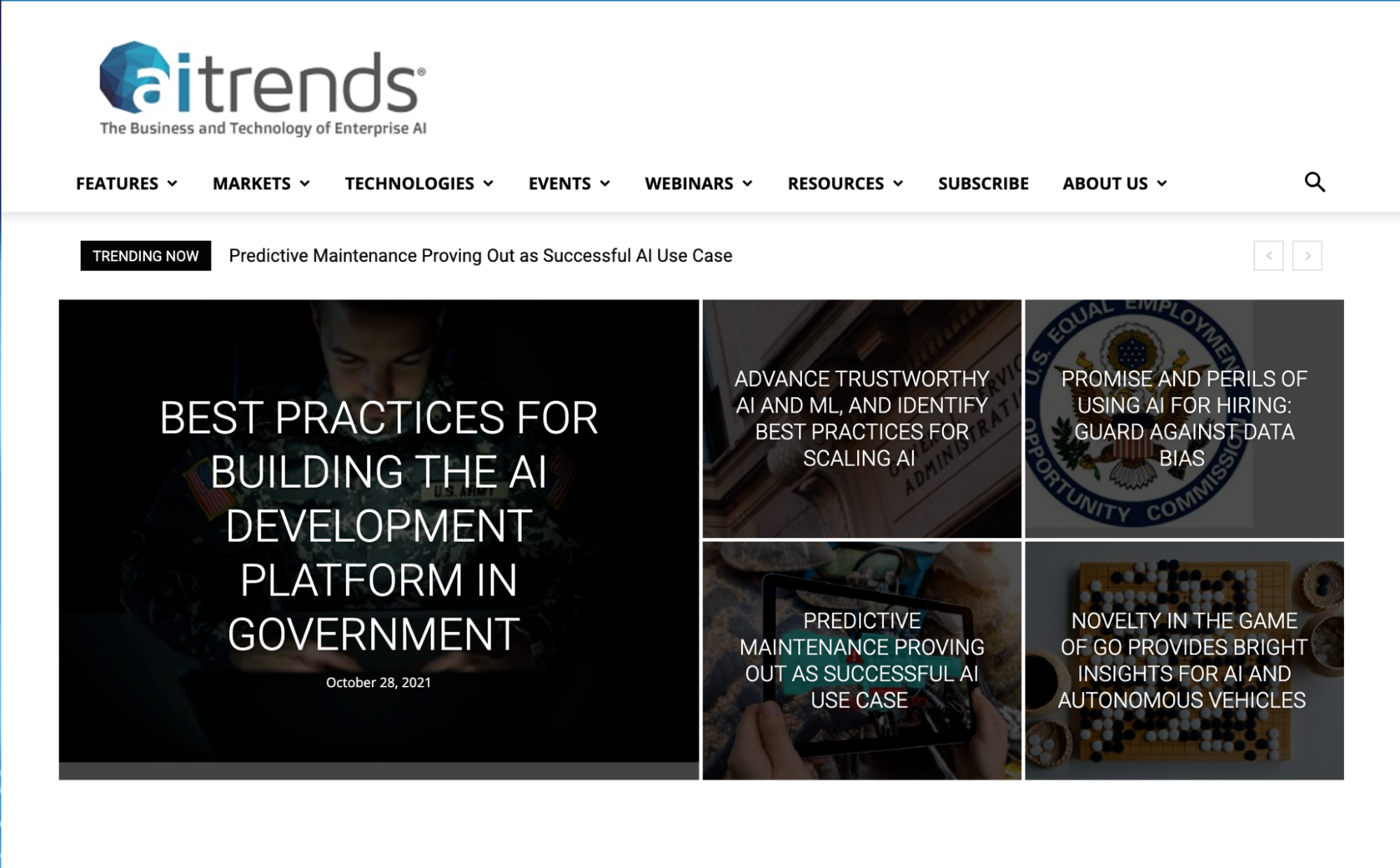
As a tech leader, your biggest challenge in 2026 is justifying the massive capital expenditure to the rest of the C-suite. AI Trends is your cheat sheet for the business of AI. It provides the high-level case studies and ROI frameworks you need to turn a technical roadmap into a strategic business pillar. If you need to explain to your CEO why your ‘Agentic AI’ pilot is a revenue driver rather than a cost center, this is where you get your ammunition.
Founded long before the AI/ML breakthrough, AI Trends has established itself as the "Harvard Business Review" of the AI sector. It's built on a foundation of high-level journalism and executive interviews, focusing on the intersection of technology and corporate strategy.
Use it to benchmark your progress against other Fortune 500 leaders and to identify the ‘blue ocean’ opportunities that your technical team might miss.
What’s under the hood
- Exclusive interviews with leaders from OpenAI, Microsoft, and Google.
- Practical analysis of AI's impact on high-stakes sectors like fintech, healthcare, and cloud.
- Data-driven articles that show exactly where enterprises are seeing productivity gains and where they are wasting compute.
10. Machine Learning Mastery
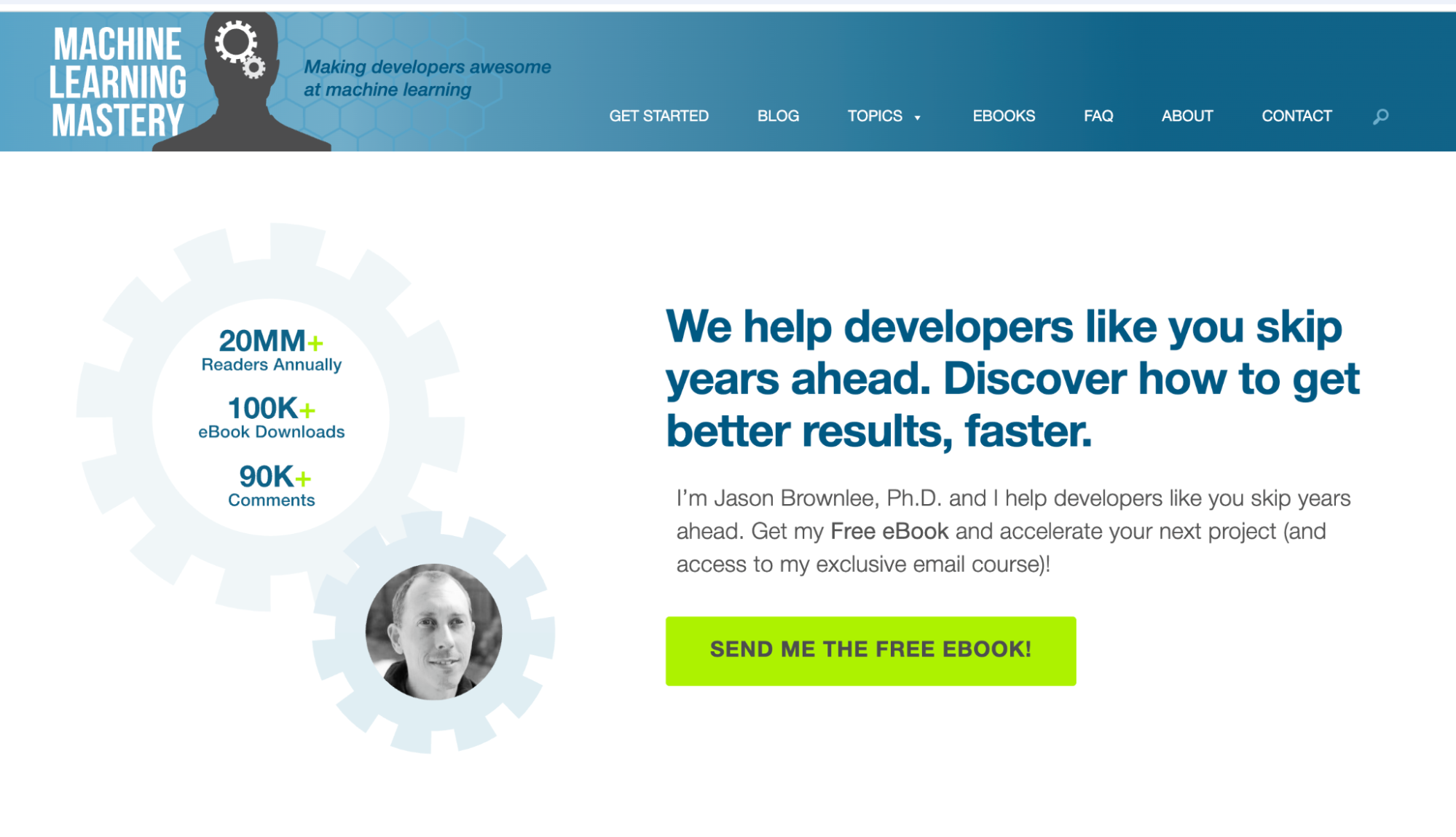
Your engineering team will often get bogged down in the ‘mathematical purity’ of a model. You need them focused on the ‘operational utility.’ Founded by Dr. Jason Brownlee, a developer turned AI educator, Machine Learning Mastery shares the lessons he learned building real-world machine learning systems. It provides the clear-cut, step-by-step logic required to take a raw concept and turn it into a deployed service. In 2025, it has pivoted hard into Agentic AI and LLM Tool Calling, teaching AI devs how to move past ‘chatting’ with AI and start building systems that act.
For leaders, this blog solves a specific problem: upskilling existing teams. Your experienced software engineers don't need to become research scientists. They need to understand ML well enough to integrate it effectively, evaluate vendor claims, and communicate with specialists. Machine Learning Mastery is that bridge.
Read this when you're building ML capability in teams that don't currently have it. Or when you need to refresh fundamentals without academic overhead.
What’s under the hood
- Practical tutorials on building self-correcting agent loops that actually complete business tasks.
- How to make Python (the language of AI) run at the speed of your business requirements.
- Small Language Model (SLM) fine-tuning: How to take models like Mistral or Phi-3 and make them outperform GPT-4 for specific, niche enterprise tasks.
9. MarkTechPost
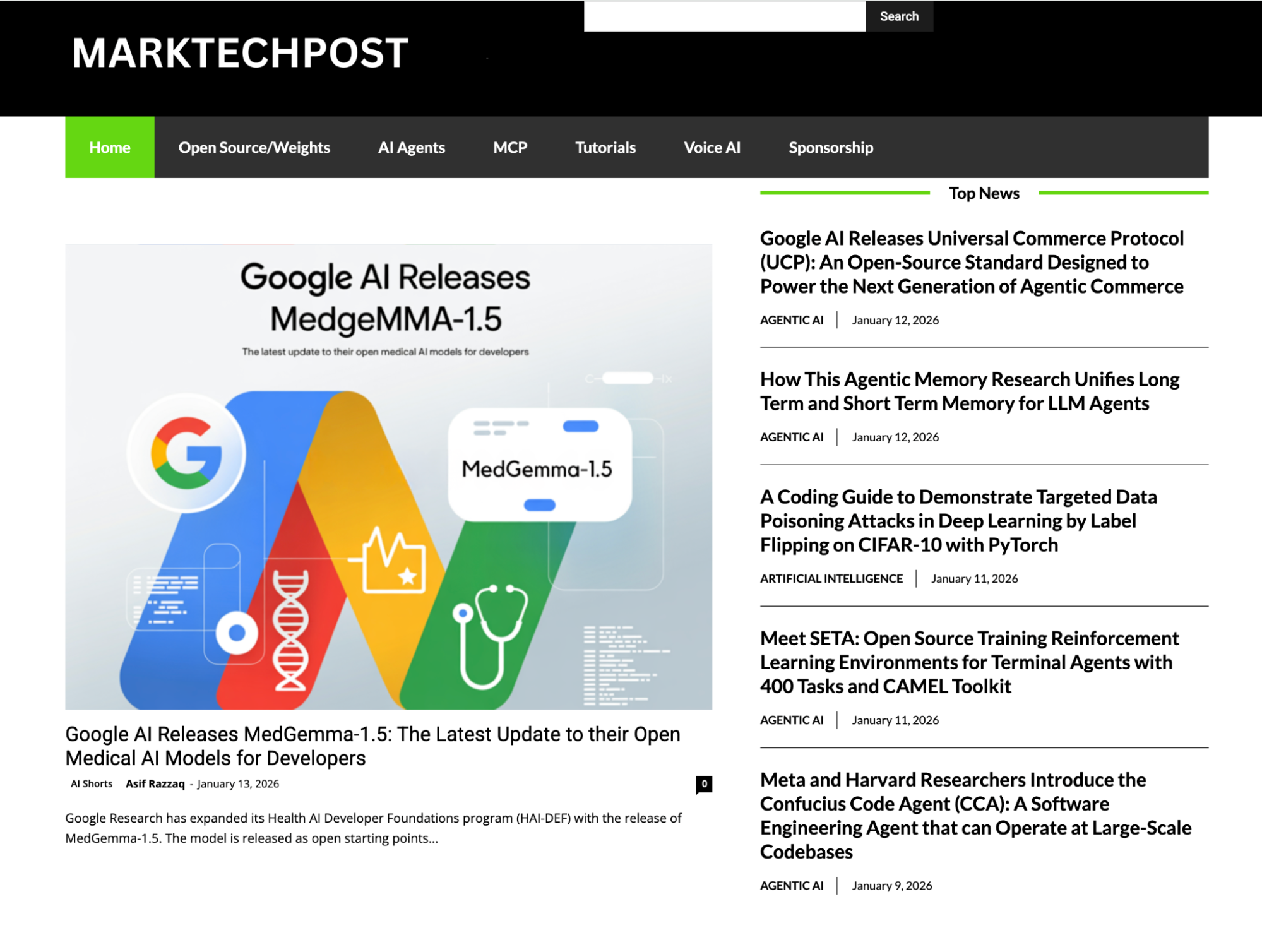
MarkTechPost is your high-frequency trading desk for AI research. In 2026, the gap between a paper appearing on arXiv and it becoming a competitive threat is practically zero. This platform gives you the technical shorthand to decide which breakthroughs require a pivot and which are just academic noise.
Based in California and led by Asif Razzaq, MarkTechPost has built a massive community of over 1.5 million professionals, keeping you ahead of the curve with updates on large language models, machine learning, computer vision, reinforcement learning, federated learning, and NLP.
MarkTechPost bridges the gap between high-level strategy and low-level code. Use it to verify if your engineering team’s proposed "new" architecture is actually state-of-the-art or if there’s a more efficient, open-weights version that just dropped. It’s the ultimate tool for architectural agility.
What’s under the hood
- Real-world guides on LangGraph, multi-agent orchestration, and memory graphs.
- Constant updates on Small Language Models (SLMs) and efficient inference, crucial for CTOs looking to slash cloud costs.
8. Holistic AI
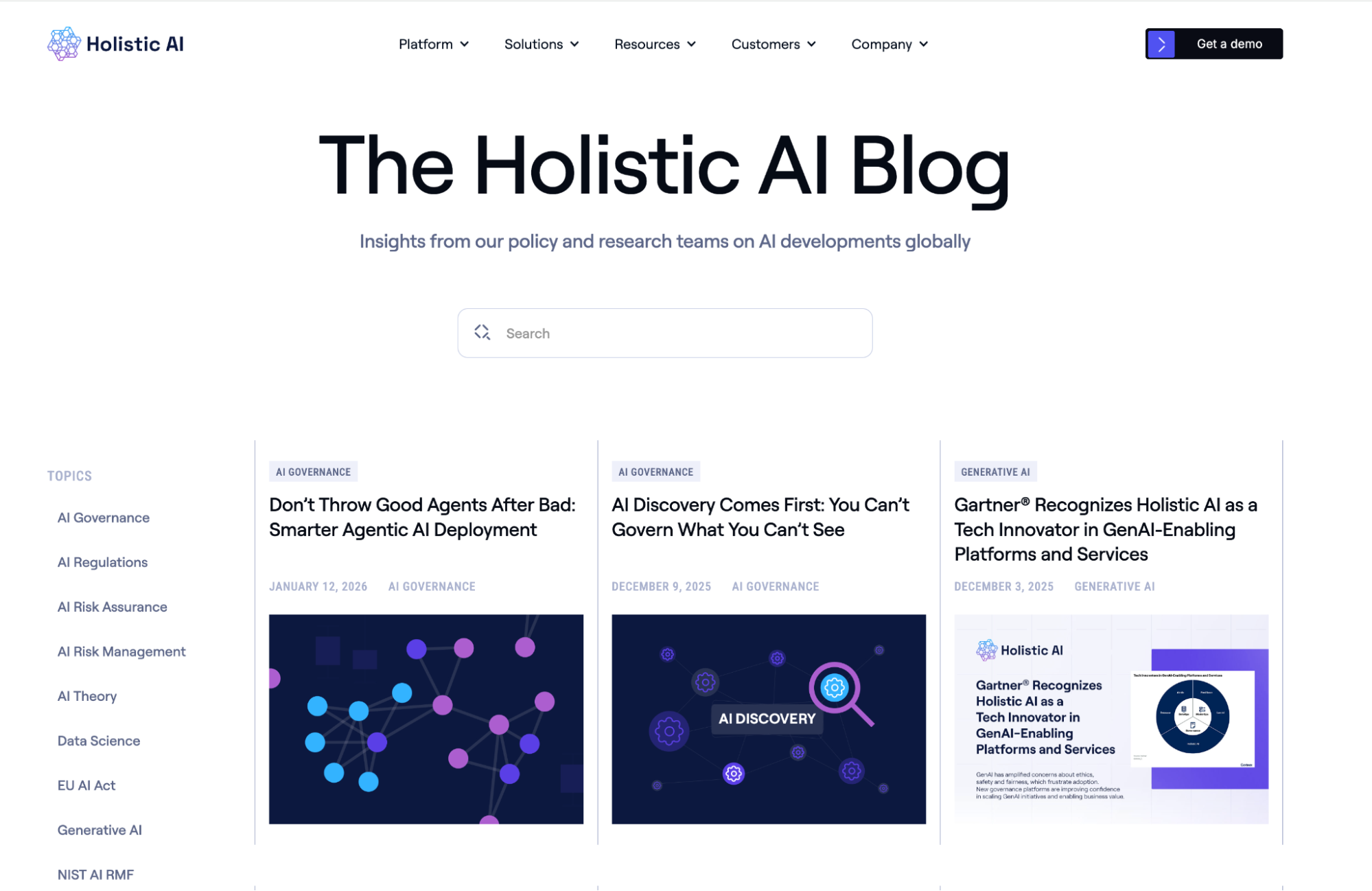
As a tech leader, you’re no longer just responsible for uptime; you’re responsible for integrity. Holistic AI exists for leaders who understand that truth. With the EU AI Act fully operational and U.S. federal oversight tightening, this blog provides the specific technical frameworks you need to prove your systems are fair, transparent, and auditable.
Founded out of University College London (UCL) by Dr. Emre Kazim (a philosopher-ethicist) and Dr. Adriano Koshiyama (a machine learning expert), Holistic AI represents the necessary synergy between humanities and hard science. It reframes ethics as strategy.
Holistic AI is for the CTO who understands that Trust is a performance metric. In a market flooded with ‘black box’ solutions, being the leader who can mathematically demonstrate fairness and security is a massive competitive moat.
Use this blog to turn compliance from a bottleneck into a specialized feature that wins enterprise contracts. Additionally, make sure as a CTO that you follow the latest industry news using newsletters such as CTO Executive Insights and others.
What’s under the hood
- Practical methodologies for protecting against model inversion and data poisoning.
- Real-time updates on the EU AI Act, synthetic-content labeling mandates, and sector-specific rules in fintech and healthcare.
7. Hugging Face Blog
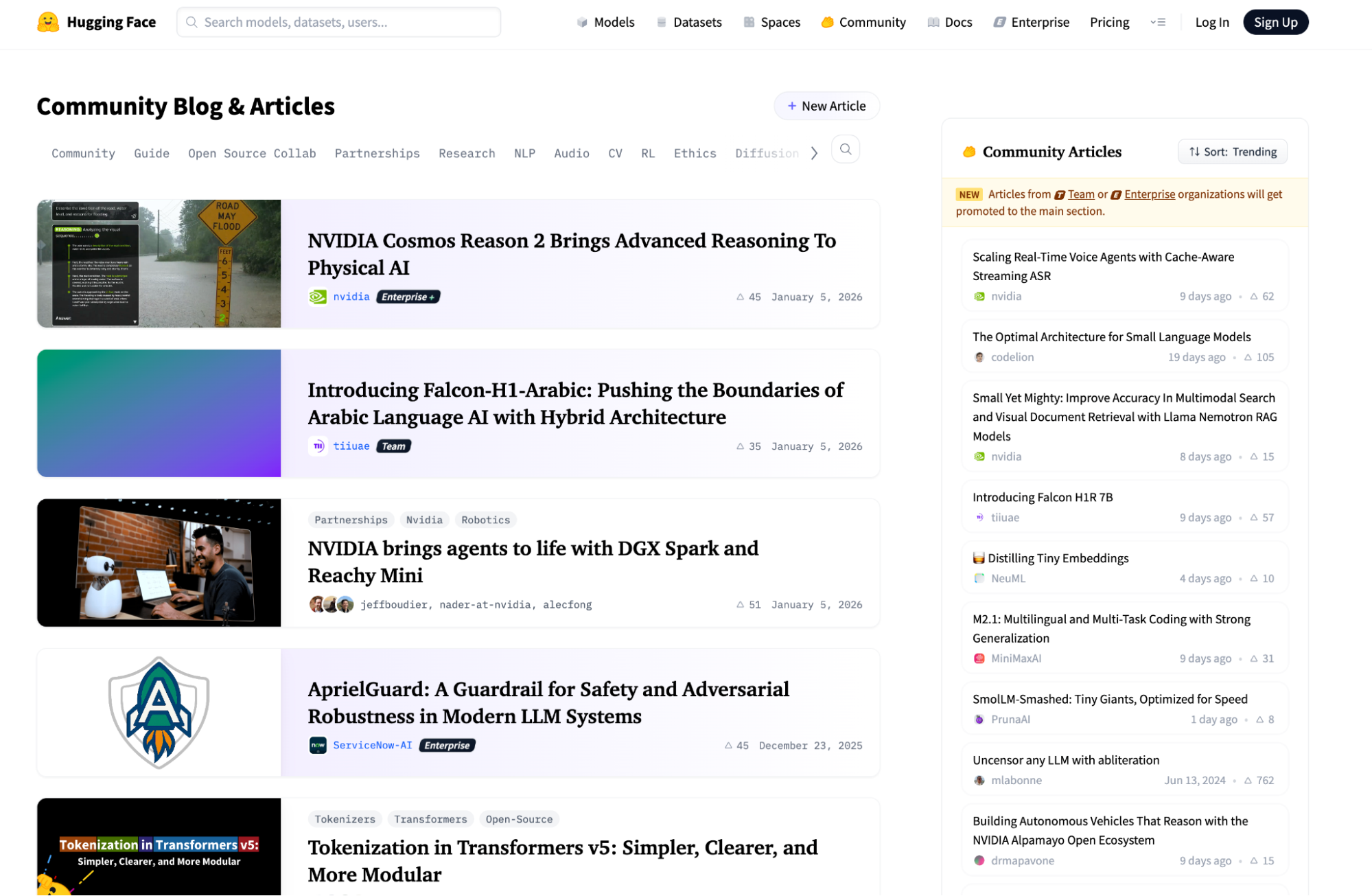
Dependency on a single closed-source provider is a massive strategic risk. Hugging Face is your insurance policy and your innovation lab. For a tech leader, this blog is the blueprint for model sovereignty—the ability to own, fine-tune, and deploy your own intelligence without being taxed by a Big Tech gatekeeper every time you hit an API.
The Community Blog sits at the heart of open-source machine learning, covering NLP, large language models, and the real mechanics of taking models from research to production. You’ll see practical work around BERT, GPT, fine-tuning strategies, deployment patterns, and tooling that teams use every day.
Beyond that, the ecosystem includes hands-on courses, collaborative projects, and hackathons that lower the barrier to experimentation. Posts are written by the team and the community, which means you’re learning from people who are building, breaking, and improving these systems in public.
Led by Clement Delangue and Julien Chaumond, Hugging Face has become the ‘central nervous system’ of the AI world. It’s a community of millions. If your goal is to build vendor-agnostic, high-performance systems, you need to be reading their community updates every single week.
What’s under the hood
- Deep dives into how to connect LLMs to your data sources without leaking your IP.
- Practical, punchy guides on how to take a massive model and shrink it down so it runs for pennies on your own hardware.
- Moving beyond chat into agents that perform tasks, use tools, and solve multi-step problems.
Want practical AI insights? Dive into a curated reading list that shows which AI books engineering leaders are turning to in 2026.
6. Towards Data Science
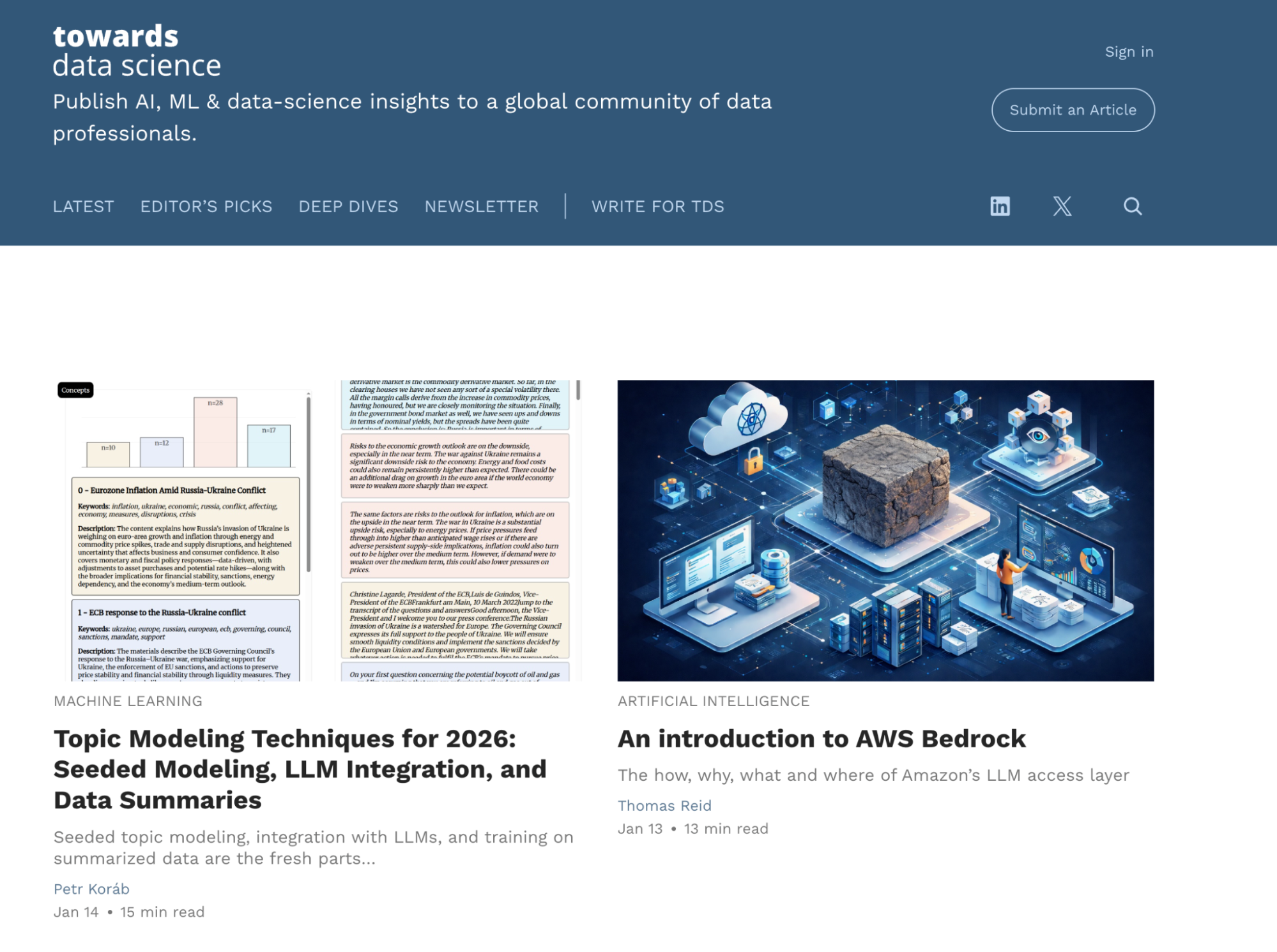
Towards Data Science is where you go to verify the technical depth of your strategy. Launched in 2016 as a community-driven publication, it has grown into one of the most practical resources for applied machine learning and data science. You’ll find clear tutorials on algorithms, deployment pipelines, self-supervised learning, data engineering, and modern programming techniques that actually show how things work.
Acquired in 2024 by Insight Media Group, TDS has evolved from a Medium publication into a massive global authority. It’s powered by a rigorous editorial team led by names like Ludovic Benistant and Ben Huberman. They curate the collective experience of thousands of senior practitioners who are in the trenches of the "Agentic Development Life Cycle" (ADLC).
Use it to understand the SDLC-to-ADLC shift and to ensure your team isn't just playing with AI but is building robust, scalable, and observable systems.
What’s under the hood
- Moving beyond simple prompting to building self-improving LLM workflows.
- Deep dives into why RAG systems fail as datasets grow and how to maintain high-recall retrieval.
- Strategic insights on high-quality documentation and automated testing.
5. AWS Machine Learning Blog
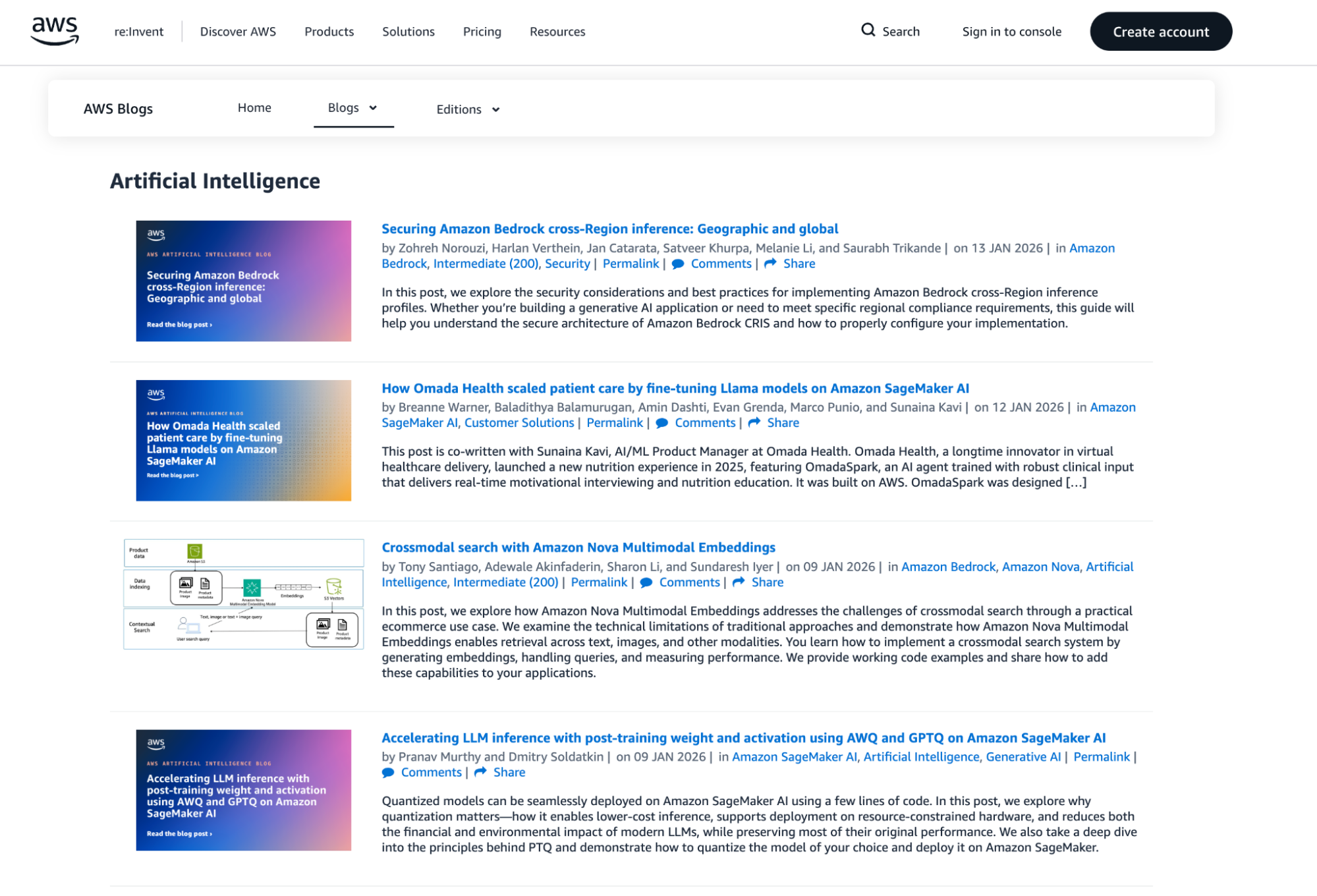
If you want to understand how AI moves from prototype to production at global scale, the AWS Machine Learning blog is essential reading. This is where Amazon shares how it invests in AI and turns research into cloud services teams can use. You’ll find deep insights into AWS AI services, design choices, and trade-offs behind tools like Amazon SageMaker. Topics range from model training and deployment to data labeling, security, and privacy.
Driven by the vision of Amazon CTO Dr. Werner Vogels, this blog pulls from thousands of AWS engineers who manage more ML workloads than anyone else on the planet. It’s a direct line to the architects who built the foundation of the modern internet, now focused entirely on the Agentic AI transition and Cloud-Native Intelligence.
Use this blog to move beyond the hype of prompt engineering and into the hard work of MLOps and Cost Optimization.
What’s under the hood
- Deep dives into building autonomous agents that execute transactions, manage APIs, and handle multi-step reasoning.
- Practical frameworks for governance, bias detection, and Zero Operator Access (ZOA) security, essential for regulated industries like fintech and healthcare.
4. NVIDIA Blog
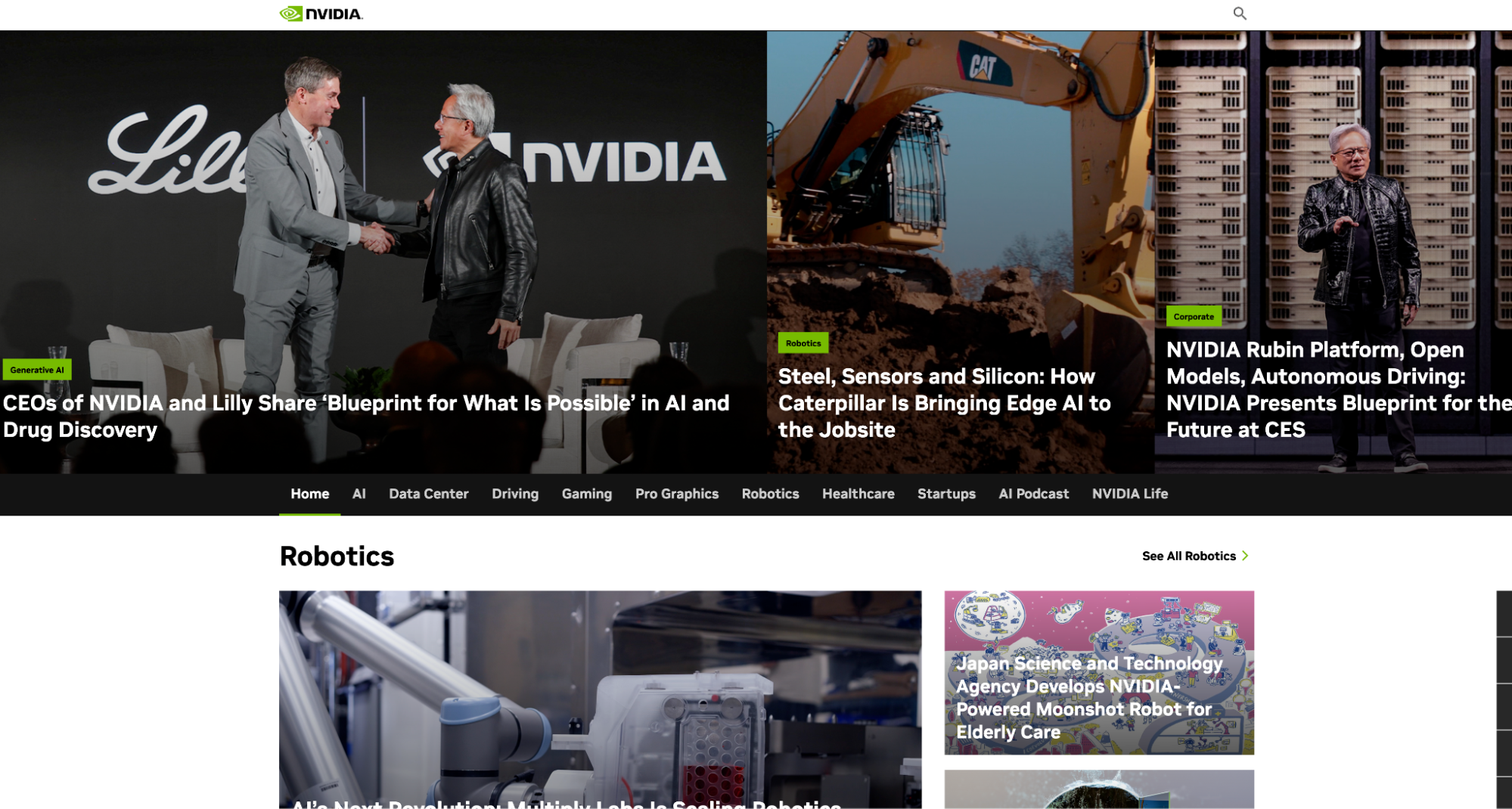
While others talk about digital chatbots, NVIDIA blog is showing you how to shift from Generative AI to Agentic & Physical AI. It’s where you learn to build the AI factories that will run the next decade of industry, moving beyond software into robotics, climate modeling, and real-time industrial simulation. The blog explores how AI is reshaping healthcare, data centers, autonomous machines, and entire industries. You’ll gain insight into performance breakthroughs, system-level thinking, and how large-scale AI workloads are run.
Under the relentless leadership of Jensen Huang, the NVIDIA blog has transformed into a high-density feed of full-stack innovation. It captures the synergy between Blackwell hardware and the NIM (NVIDIA Inference Microservices) software layer. They are no longer just selling GPUs; they are providing the reference architectures for sovereign AI and industrial automation.
What’s under the hood
- Deep dives into open models designed specifically for Agentic AI.
- Breakthroughs in using AI to bridge the gap between digital drug discovery and real-world medicine.
- Blueprints for modernizing data centers into high-performance intelligence hubs.
3. KDnuggets
KDnuggets is your antidote to Vibe Coding. While the rest of the world is distracted by shiny UI and chat interfaces, this platform focuses on the brutal reality of Data Engineering and MLOps. For a leader, it’s the best place to understand why the vast majority of ML projects still fail (spoiler: it’s almost always the data quality) and how to fix the pipeline before it drains your budget. The blog covers the whole pipeline: NLP implementations, computer vision workflows, data engineering patterns, model deployment strategies. Articles discuss what breaks, what's overhyped, and what quietly works when you need reliability.
Founded by Dr. Gregory Piatetsky-Shapiro, a literal pioneer in data mining and machine learning, KDnuggets has been documenting the evolution of AI since before most of your junior developers were born. It’s now steered by a collective of high-level editors and practitioners.
What’s under the hood
- Deep dives into optimizing compute and moving from bloated LLMs to efficient Small Language Models (SLMs).
- Real-world frameworks for data contracts, governance, and observability that keep your systems from hallucinating.
- Strategic shifts from being a mere developer to becoming a systems architect who can handle the Agentic AI
2. The BAIR Blog
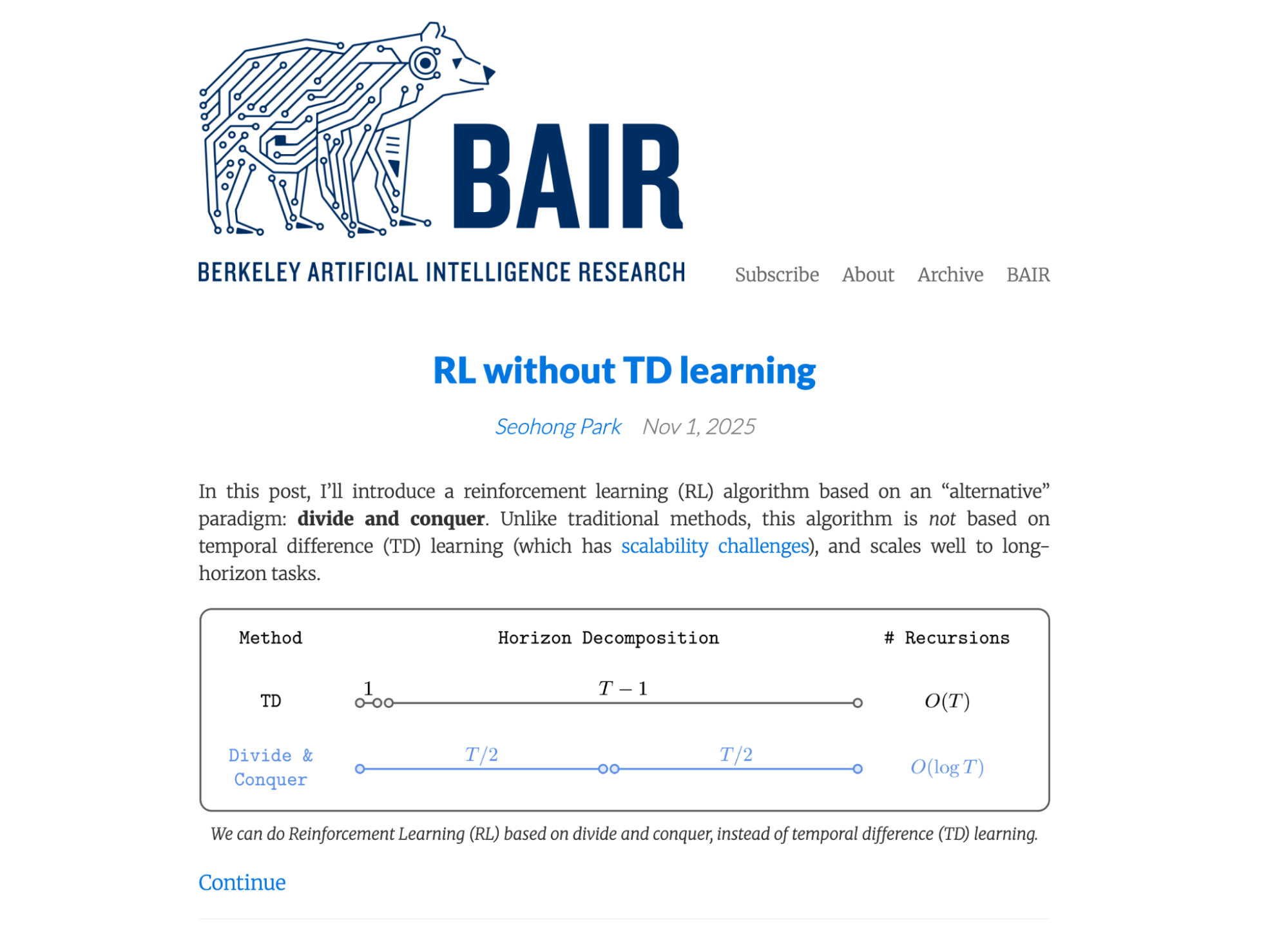
If you wait for a feature to appear in an OpenAI or Anthropic release note, you’ve missed the strategic window. The Berkeley Artificial Intelligence Research (BAIR) blog is where the fundamental physics of AI are rewritten 18 to 24 months before they become commercial reality.
Students, post-docs, and faculty share breakthroughs in robotics, computer vision, reinforcement learning, and interpretable large language models. They go beyond flashy demos, diving into research that tackles real-world challenges like data bias, model robustness, and security in AI systems. You’ll find deep explorations of projects like CausalWorld, an open-source framework for robotic transfer learning, and Concept Bottleneck, which pushes interpretability in AI.
BAIR is essential because it provides unfiltered truth. While vendors try to sell you ‘magic,’ BAIR shows you the raw mechanics: the failures, the bottlenecks, and the theoretical ceilings. It’s the best place to architect your tech stack for 2027 while your competitors are still struggling with 2025's problems.
What’s under the hood
- Moving beyond monolithic models to modular, reliable architectures.
- Practical breakthroughs in how machines interact with the physical and digital world.
- Serious, unvarnished research into prompt injection, jailbreaking, and data discrimination.
1. MIT News
While other blogs focus on what AI is, MIT focuses on what AI does to your organization, your architecture, and your P&L. It helps you move from experimental pilots to operational reality. Coming straight from one of the world’s most pioneering institutions, their AI section cuts across the full stack: machine learning breakthroughs, ethics frameworks, policy implications you'll be dealing with next quarter. MIT knows their work ends up in production systems, regulatory frameworks, and boardroom decisions. And they write accordingly.
This is the combined intelligence of CSAIL (Computer Science and Artificial Intelligence Laboratory) and MIT Sloan. It’s where the world’s most advanced engineering meets the sharpest business strategy. It’s about the long game. Follow this if you want to build a resilient digital architecture that doesn't just use AI, but is fundamentally rewired by it.
What’s under the hood
- Deep dives into how super-agents are moving from simple chatbots to autonomous systems that reason and execute across your entire supply chain.
- Research on how AI is impacting software engineering roles and where the real ROI is hidden.
- Policy and ethics as strategy: Moving beyond "feel-good" ethics into the hard legal and security realities of the EU AI Act and global data sovereignty.
Quick Reference: Blog Comparison
Blog | Core Topics | Best Suited For | Target Audience |
| MIT News AI | Machine learning breakthroughs, AI ethics, policy implications, cross-disciplinary AI applications | Strategic decisions with regulatory implications, understanding policy landscape, foundational research | C-suite executives, technical leaders navigating regulation and public scrutiny |
| BAIR Blog | Robotics, computer vision, reinforcement learning, LLM interpretability, transfer learning | Long-term R&D planning, understanding frontier research, anticipating next-generation capabilities | CTOs, VP Engineering, Research Directors planning 12-18 month roadmaps |
| KDnuggets | MLOps, data engineering, NLP, computer vision, practical tutorials, career development | Day-to-day implementation, team skill building, tool evaluation, hiring decisions | Engineering managers, senior engineers, data science team leads |
| NVIDIA Blog | Deep learning, hardware-software optimization, digital twins, industry-specific AI applications | Understanding compute economics, hardware investment decisions, capability planning | Infrastructure leaders, technical strategists, teams with compute-intensive workloads |
| AWS ML Blog | SageMaker, cloud deployment, scalability patterns, cost optimization, production ML infrastructure | Production deployment, cloud infrastructure decisions, scaling existing systems | Cloud architects, DevOps leads, engineering teams running ML at scale |
| Towards Data Science | Applied ML tutorials, data engineering, programming techniques, practical guides, real-world case studies | Solving specific implementation problems, learning from practitioner experience, debugging production issues | Individual contributors, engineering teams, technical managers seeking peer knowledge |
| Hugging Face | Open-source models, NLP, model deployment, fine-tuning, community-driven development | Building with open models, avoiding vendor lock-in, rapid prototyping, cost optimization | Architects, senior engineers, teams prioritizing flexibility and control |
| Holistic AI | AI governance, regulatory compliance, bias mitigation, risk management, ethical AI frameworks | Compliance preparation, risk mitigation, responsible AI implementation, audit readiness | CTOs, legal teams, compliance officers, risk management leaders |
| MarkTechPost | LLMs, computer vision, reinforcement learning, federated learning, rapid research updates | Staying current with fast-moving developments, competitive intelligence, quick capability assessment | Technical leaders in competitive markets, innovation teams, ML practitioners |
| Machine Learning Mastery | Foundational ML concepts, practical implementation tutorials, step-by-step guides | Upskilling existing teams, onboarding new ML practitioners, building foundational knowledge | Software engineers transitioning to ML, junior ML engineers, self-directed learners |
| AI Trends | Business impact of AI, executive interviews, strategic AI adoption, market analysis | Board communication, business case development, cross-functional alignment | C-suite, business leaders, executives managing AI transformation |
The CTO's Synthesis: Knowing What to Read When
Reading isn’t the job—filtering, applying, and deciding is. The value of these blogs isn’t in following them all blindly, it’s in knowing which to turn to when.
1. The Strategy & Vision Layer
- Use BAIR when you're planning 18 months out.
- For research-driven insight into robotics, LLMs, and emerging AI methods, it shows what’s coming next so you can anticipate change. Read this when you're setting technical direction or deciding where to invest in R&D.
- For research-driven insight into robotics, LLMs, and emerging AI methods, it shows what’s coming next so you can anticipate change. Read this when you're setting technical direction or deciding where to invest in R&D.
- Use MIT News to align your strategy.
- This is for the boardroom. Their work influences policy and shapes public discourse. Read this before you commit to an approach that might become legally problematic or politically toxic. MIT shows you where the boundaries are moving.
- This is for the boardroom. Their work influences policy and shapes public discourse. Read this before you commit to an approach that might become legally problematic or politically toxic. MIT shows you where the boundaries are moving.
- Use AI Trends to see the business of AI.
- Business context, executive framing, ROI justification. Read this before board meetings or when translating technical strategy into business language.
- Business context, executive framing, ROI justification. Read this before board meetings or when translating technical strategy into business language.
2. The Architectural & Engineering Layer
- Use Hugging Face to build for yourself.
- Open-source LLMs, deployment patterns, and hands-on projects let your engineers experiment, prototype, and push boundaries safely and quickly.
- Open-source LLMs, deployment patterns, and hands-on projects let your engineers experiment, prototype, and push boundaries safely and quickly.
- Use Towards Data Science to turn ideas into execution.
- Someone already solved your problem and documented it. Read this when your team hits implementation challenges or when you need diverse perspectives on the same technical issue.
- Someone already solved your problem and documented it. Read this when your team hits implementation challenges or when you need diverse perspectives on the same technical issue.
- Use NVIDIA Blog to think big.
- Learn how high-performance compute and AI intersect, from healthcare to autonomous systems, and envision what’s possible when software meets hardware at scale.
- Learn how high-performance compute and AI intersect, from healthcare to autonomous systems, and envision what’s possible when software meets hardware at scale.
- Use Machine Learning Mastery for the "How-To."
- Ground yourself in the hands-on skills your teams rely on, so you can lead with authority, mentor effectively, and make smarter technical decisions.
- Ground yourself in the hands-on skills your teams rely on, so you can lead with authority, mentor effectively, and make smarter technical decisions.
3. The Operational & Risk Layer
- Use KDnuggets to keep your data pipelines from leaking cash.
- Tutorials that work, tools that scale, patterns that survive production. Read this when you're evaluating technologies or upskilling engineers who need practical skills fast.
- Tutorials that work, tools that scale, patterns that survive production. Read this when you're evaluating technologies or upskilling engineers who need practical skills fast.
- Use MarkTechPost to stay fast.
- New model drops, capability announcements, research that's hours old instead of weeks. Read this daily if you're in a race. Weekly if you just need to stay current.
- New model drops, capability announcements, research that's hours old instead of weeks. Read this daily if you're in a race. Weekly if you just need to stay current.
- Use AWS ML Blog when you need production infrastructure.
- Real scaling patterns, actual cost optimization, security that passes audits. Read this when you're deploying systems that can't fail or when cloud costs are getting uncomfortable.
- Real scaling patterns, actual cost optimization, security that passes audits. Read this when you're deploying systems that can't fail or when cloud costs are getting uncomfortable.
- Use Holistic AI to lead responsibly.
- Governance, bias mitigation, and ethical deployment frameworks give you the confidence to build AI your company—and society—can trust. Read this before you ship anything customer-facing or enter a regulated industry.
- Governance, bias mitigation, and ethical deployment frameworks give you the confidence to build AI your company—and society—can trust. Read this before you ship anything customer-facing or enter a regulated industry.
If your role goes beyond writing code, explore the books that help engineering managers sharpen judgment, lead teams better, and make smarter technical decisions.
Wrapping Up
In 2026, 80% of organizations will have integrated AI into production, but most will fail to see an ROI. The winners are those who build model Sovereignty and agentic Workflows that they actually own.
You now have the full roadmap. You have the academic foresight of BAIR, the strategic depth of MIT, the tactical grit of KDnuggets, and the industrial power of NVIDIA.
Use these tools to challenge your team, question your vendors, and build a tech stack that is resilient, ethical, and profitable.
➡︎ Reading the right AI blogs is step one. Put the knowledge to work by joining teams building real AI systems through Index.dev.
➡︎ Want to go deeper into where AI is really headed? Explore more Index.dev insights on AI literacy and what it means in 2026, how AI is reshaping application and cloud development, and which industries are closest to a real AI tipping point. You can also dig into practical perspectives on why forward-deployed engineers matter, plus hands-on model comparisons that break down DeepSeek versus ChatGPT, how it stacks up against Claude, and which open-source Chinese LLMs are gaining serious traction.